Most people try to store dog food so it stays fresh by dumping the whole bag into a plastic bin and calling it done. That bin is usually the problem. It is not airtight, it sits wherever there happens to be floor space, and nobody has scrubbed it since the dog was a puppy, so last month's kibble oil is seasoning this month's dinner.
The bag the food came in is a better container than the bin you bought to replace it. That sounds backwards until you look at what the bag actually is: a multilayer barrier built to keep oxygen and light away from the fat in the kibble. A snap-lid bin does none of that, and a clear bin does the opposite, because light ages food just as surely as air does.
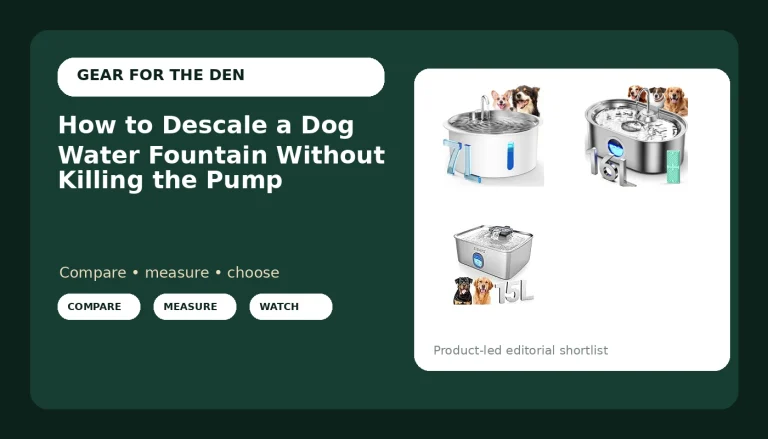
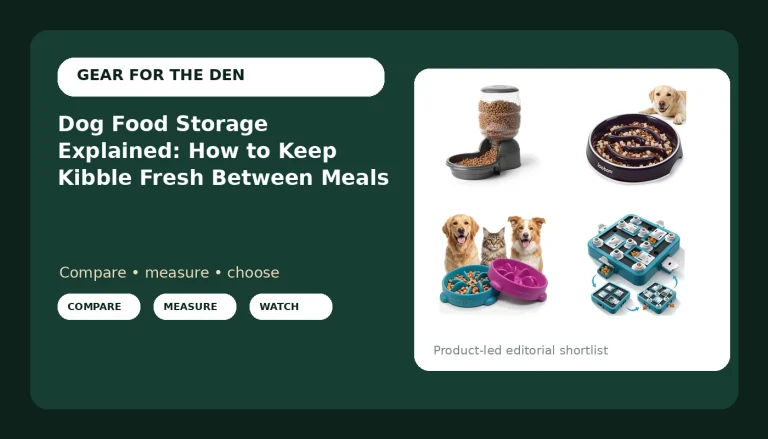
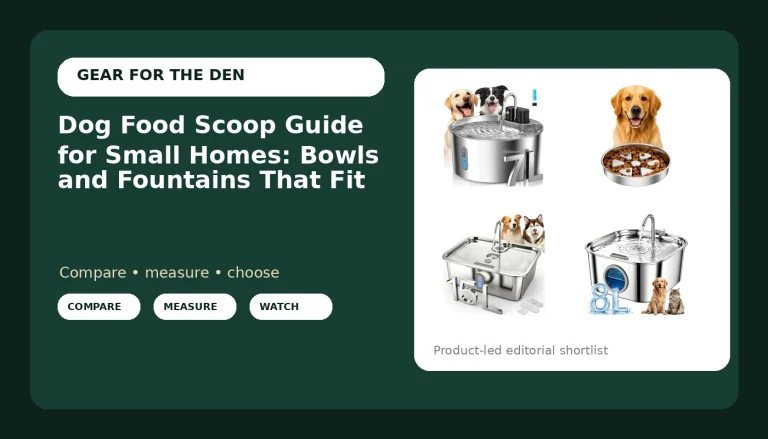
The fix is a routine, not a purchase. It takes about a minute per bag and it costs nothing. The gear comes in at the other end, at the bowl, which is where the last piece of the puzzle lives: food that sits out all afternoon is going stale in front of you no matter how well you stored it.
Why you should trust me
I write about dog gear for Gear for the Den, and I have fed dogs out of the same kitchen for a long time. My own two, a rotating cast of fosters, and one counter surfer who could open a cabinet with his nose have all eaten from bags I stored badly and bags I stored well, and the difference is not subtle. Stale kibble smells like crayons and old oil. Fresh kibble smells like almost nothing.
I have thrown out more food than I want to admit, and every bag I lost taught me something. The advice below is the version I wish someone had handed me years ago: keep the bag, seal the bag, store it cool and dark, and wash whatever holds it before the next one goes in. If your bigger problem is a dog who inhales dinner in forty seconds, how to slow down a fast eater is the deeper guide, and it pairs with this one.
How I picked and how I tested
The three feeders below are not storage hardware. They are the other half of the same job, which is how the food leaves the bag. I picked them because almost every question I get about how to store dog food so it stays fresh turns into a question about feeding within two sentences.
My testing was boring and I am not going to dress it up. I did not weigh anything, I did not time anything, and I did not put a meter on a bowl. What I did was read every listing line by line, compare it against the criteria that actually decide whether a bowl works, and keep the three that solve three different problems. The criteria:
- Bowl capacity: the bowl has to hold a full meal for the dog in front of you. The stainless bowl below is listed at 2.5 cups, which covers a medium or large breed's dinner.
- Slow feed ridges: the ridges are the point, and they are also where old food hides. Wide, shallow ridges rinse clean. Tight maze patterns do not.
- Non slip base: a bowl that skates across tile is a bowl that gets flipped, and flipped food is wasted food.
- Dishwasher safe: a bowl that cannot go in the dishwasher gets washed less often, and a bowl that gets washed less often holds oil and odor. Check the listing wording on any bowl before you count on it.
- Feeding height and width: a wider bowl sets the food lower and spreads it out, which matters more for medium and large breeds than any decorative pattern.
I also looked at what these are not. None of them is a storage container, and none of them is a water bowl. If you run a fountain, the water capacity and the filter cartridge matter for the same reason the bag does, because standing water and a dirty filter are their own freshness problem.
What to feed it in once you store dog food so it stays fresh
The feeders below are the serving end of the routine. If you want the short version of how to put away dog food so it stays fresh, it is this: the bag is the container, the bin is just a cabinet, and the bowl is where the clock restarts. Here are the three I would buy, in the order I would buy them.
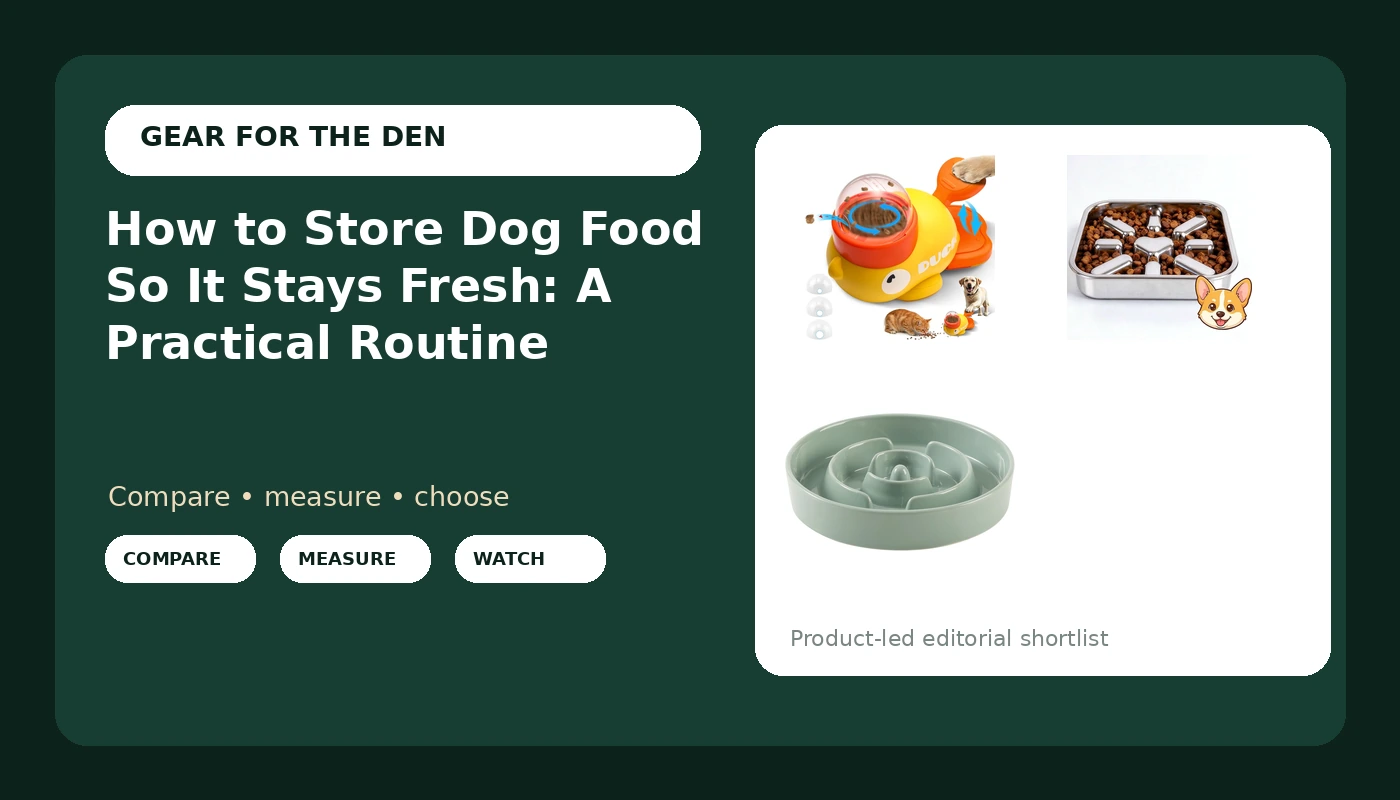
Budget pick: Duck Dog Slow Feeder Puzzle Toy, 3 Adjustable Openings, Treat Dispenser
Budget pick
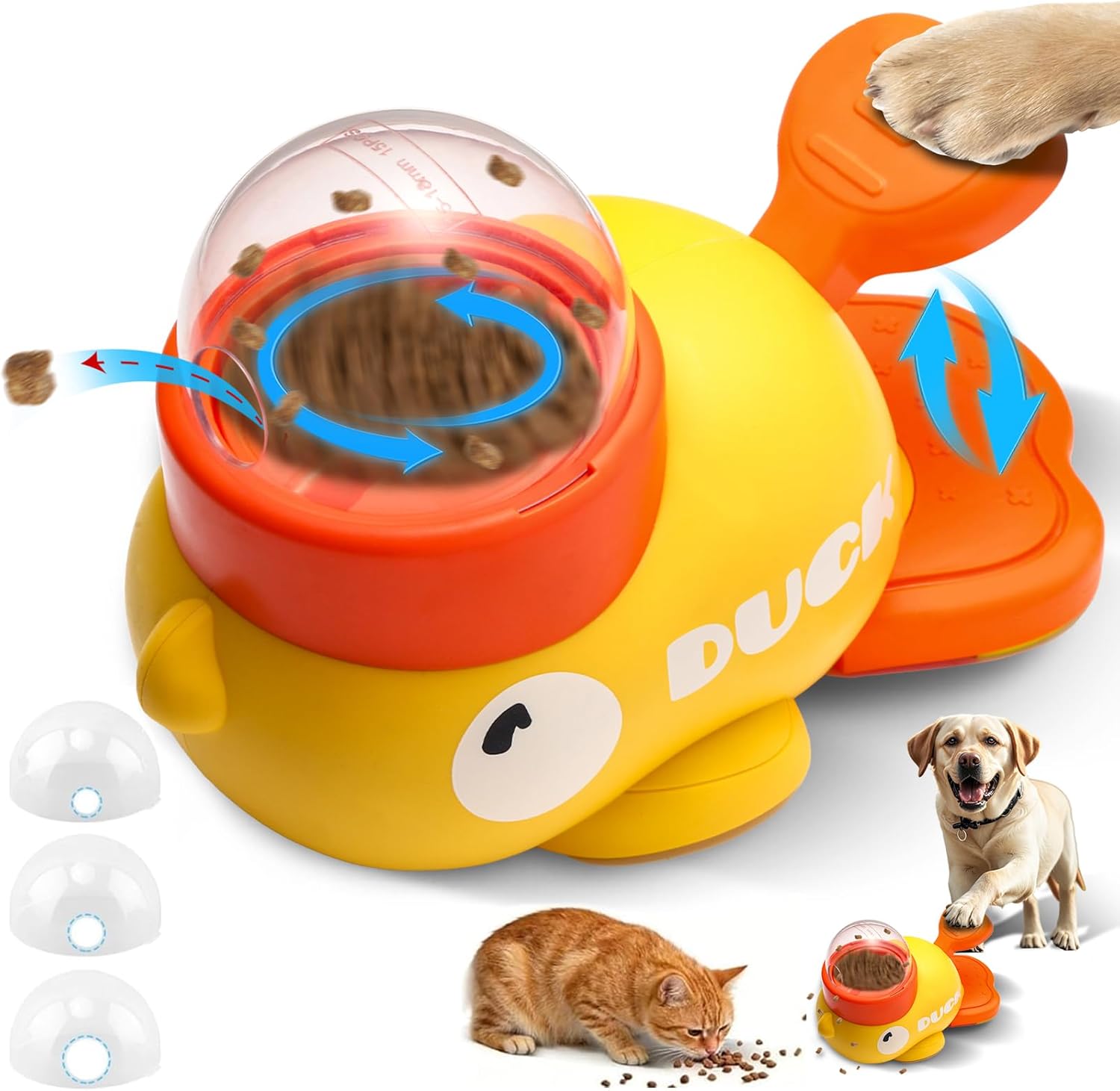
Duck Dog Slow Feeder Puzzle Toy, 3 Adjustable Openings, Treat Dispenser
This is the cheapest way to stretch a meal, and it is the one I would hand to someone whose dog finishes a bowl before the coffee is poured. The three adjustable openings let you set how easily kibble falls out, so the same toy works as a slow feeder for a fast eater and as a treat dispenser for a dog that needs a job with dinner. Check current Amazon price.
A meal that takes ten minutes is a meal that does not sit in a bowl going stale, and that is the whole connection to storage. The downside is material: plastic holds oil in a way that stainless and ceramic do not, so the pieces need a real rinse after every meal, not a quick shake under the tap.
Flaws but not dealbreakers: It comes apart, which means more than one piece to wash, and a hard chewer should not be left alone with it. This is a supervised-meal tool, not a crate toy.
Anyone with a fast eater who wants to spend as little as possible on the fix will be happy here.
Our pick: Stainless Steel Slow Feeder Dog Bowls for Medium Large Breeds, 2.5 Cups
Our pick
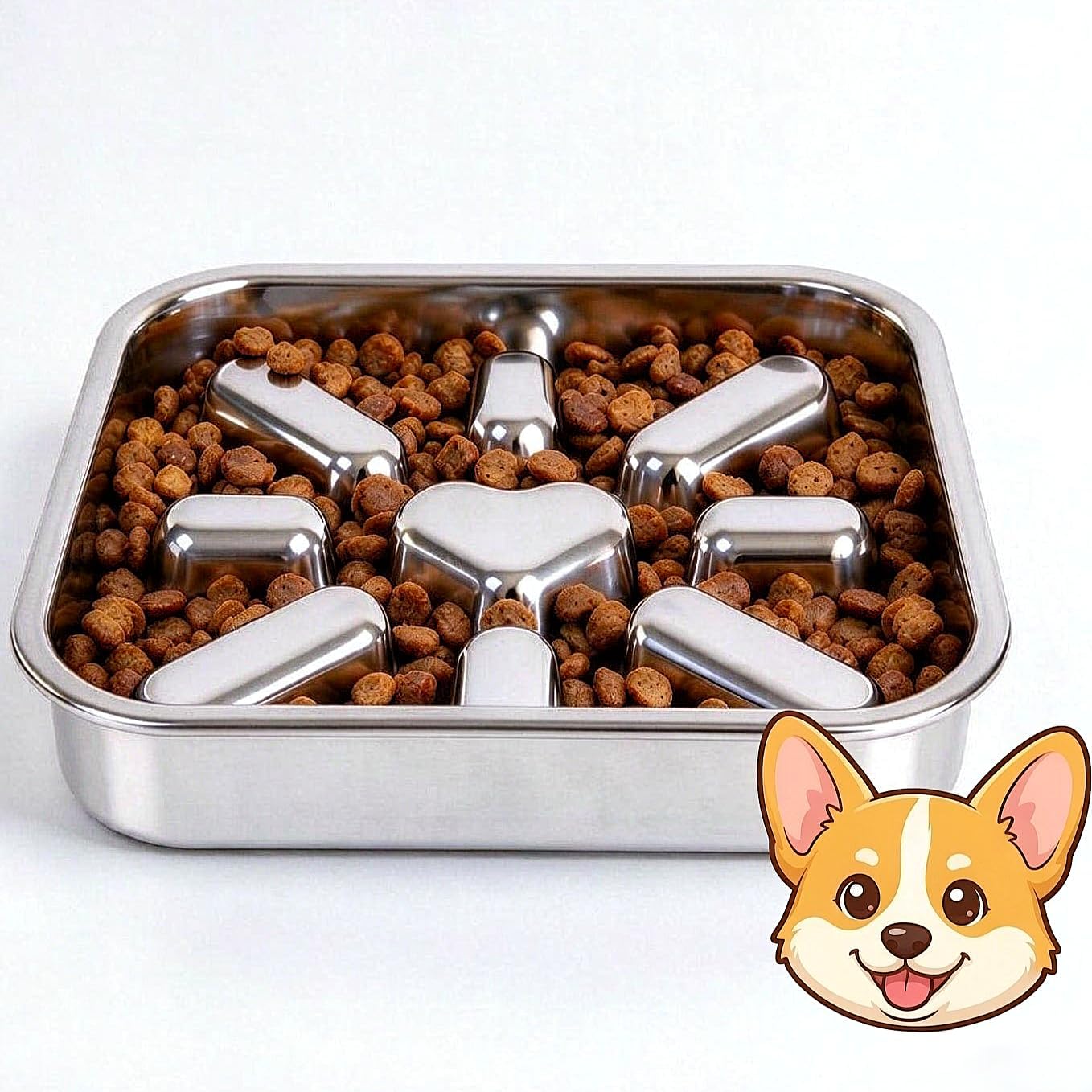
Stainless Steel Slow Feeder Dog Bowls for Medium Large Breeds, 2.5 Cups
Stainless is the material I want touching food I am trying to keep fresh. It does not absorb oil the way plastic does, it does not hold odor, and it does not stain, which means the bowl you washed yesterday smells like nothing today. The 2.5-cup capacity is a real meal for a medium or large breed, and the slow feed ridges break up a gulper's pace without turning dinner into a puzzle they quit on. Check current Amazon price.
The non slip base matters more than the marketing suggests. On tile, a bowl that slides gets pushed into a corner, tipped, and dumped, and dumped food goes in the trash. A bowl that stays put keeps the meal where it belongs.
Flaws but not dealbreakers: Ridges mean more surface area to scrub if you wash by hand, and the bowl is wide enough to eat cabinet space. If your dog has a flat face, a deep slow feeder is the wrong shape entirely.
Anyone with a medium or large dog who wants one bowl that outlasts the puppy phase should start here.
Upgrade pick: Havniva Ceramic Slow Feeder Dog Bowls, 8.3 in Slow Feeder for Medium Breed
Upgrade pick
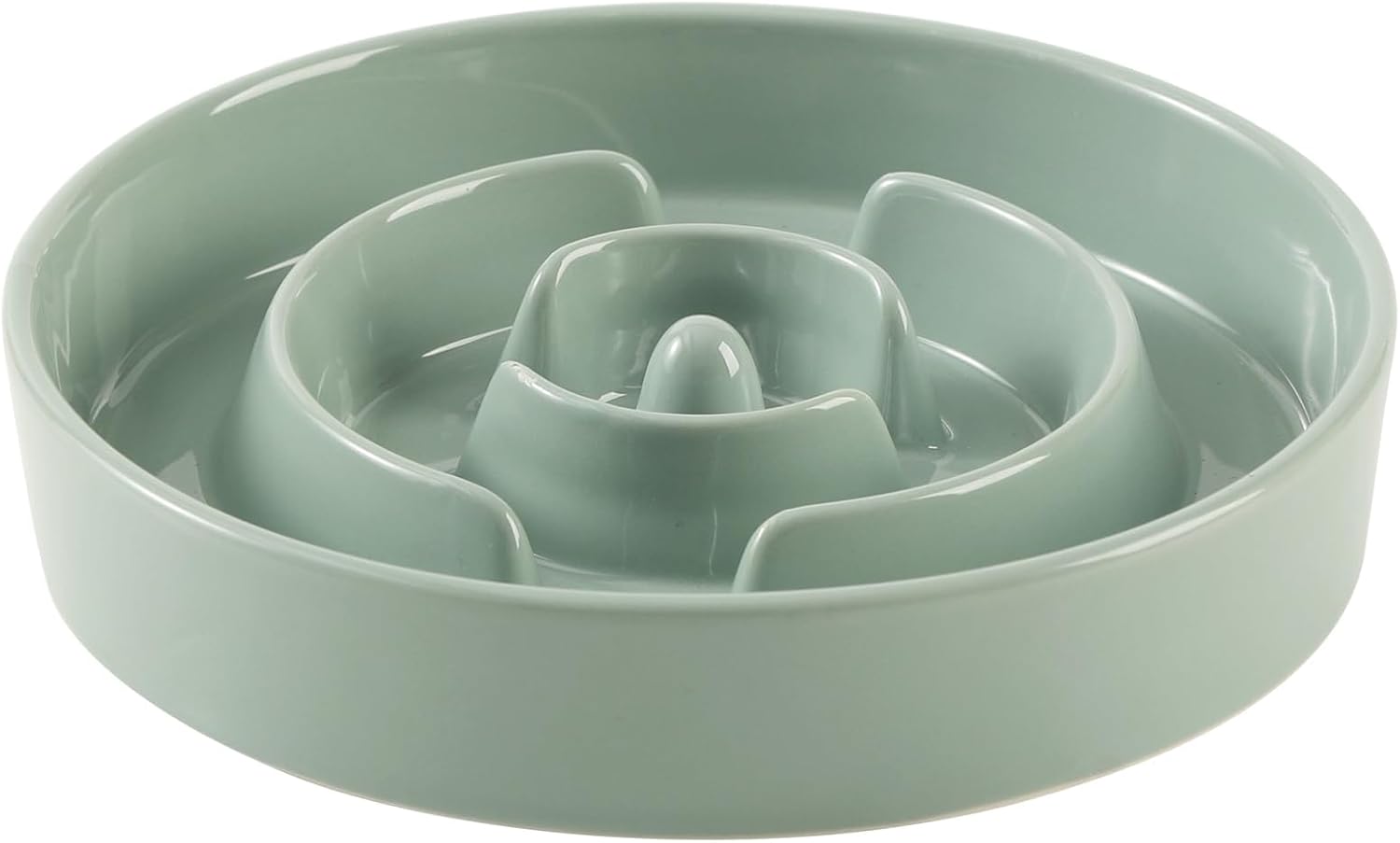
Havniva Ceramic Slow Feeder Dog Bowls, 8.3 in Slow Feeder for Medium Breed
Ceramic is the upgrade for two reasons that have nothing to do with how it looks. It is heavy, so it stays where you put it even when a medium breed leans into it, and it does not hold oil or odor at all, which is the same reason ceramic is what people reach for when they want something to taste clean. At 8.3 inches across, the bowl is wide and shallow, so food spreads out instead of stacking up, and the feeding height stays low for a medium breed. Check current Amazon price.
The slow feed ridges are molded into the ceramic rather than cut into plastic, so there is no seam for kibble dust to collect in. It is the most likely of the three to be dishwasher safe, though you should confirm that on the listing before you count on it.
Flaws but not dealbreakers: Ceramic chips when it hits tile, and it is heavy enough that you will notice it on a high shelf. If your dog picks up their bowl and carries it around the room, this is not the one.
Anyone who wants the last bowl they buy for this dog should look here first.
The actual storage routine
Now the part you came for. This works with any kibble, any bag, and any bin you already own, and it takes about a minute per bag. It is the same routine every time you store dog food so it stays fresh, and if you only do one thing on this list, do step two.
Step one: Read the bag before you open it. Every bag carries a best-by date and a lot code. Photograph both before the bag goes into the bin. If your dog ever gets sick, the lot code is the first thing the vet or the manufacturer will ask for, and the bag you threw away in week one was the only place it lived. Write the date you opened the bag on the bag itself with a marker while you are standing there.
Step two: Keep the food in the bag it came in. This is the step everyone skips and it is the one that matters most. The bag is a multilayer barrier built for exactly this job: it keeps oxygen out, keeps light out, and slows the fat in the kibble from going rancid. Pouring kibble into a plastic bin throws that barrier away and replaces it with a wall of plastic that does not seal.
Step three: Press the air out and seal the bag. Roll the top of the bag down from the open end, pressing the air out as you go, then clip it, fold it, or tuck it under itself. Oxygen is what turns fat rancid, and the air sitting in an open bag is the cheapest thing you will ever get rid of.
Step four: Put the sealed bag inside the container. Now the bin earns its keep. Its job is not to touch the food. Its job is to protect the bag from light, humidity, pests, and the dog. An airtight seal on the bin is a bonus, not a substitute for the bag, and a clear bin in a bright kitchen is worse than an opaque bin in a pantry.
Step five: Pick a cool, dark, dry spot. Not the garage, where the temperature swings. Not the laundry room, where the humidity does. Not next to the water heater or the coils on the back of the fridge. A pantry shelf at room temperature is the target, because heat and moisture speed up the aging of kibble, and both of them live in the garage.
Step six: Keep the scoop clean and dry. A wet scoop grows mold, and a scoop that lives in the bin drags old oil from the bottom of the container into fresh food. Wash it when you wash the container, and keep it dry between uses. If your dog drinks from a fountain, give the water side the same treatment: a large water capacity buys you time between refills, but it does not buy you cleanliness, and the filter cartridge schedule is not optional.
Step seven: Wash the container between bags. When the bag is empty, the bin gets washed before the next one goes in. Kibble dust at the bottom of a bin goes rancid, and it will flavor everything you pour on top of it. Hot soapy water, a full dry, and only then the new bag. If your container is dishwasher safe, use the dishwasher.
Step eight: Serve it, then put the rest away. Food that sits in a bowl all afternoon is going stale in front of you, and a dog that grazes is a dog that leaves food out. Feed on a schedule, pick up what is not eaten, and put it back in the sealed bag instead of leaving it in the bowl. This is where a slow feeder earns its place: the meal lasts longer, the dog finishes it, and nothing is left sitting out. If you are still working out how to put away dog food so it stays fresh at the bowl, start with portion size. A smaller meal gets finished, and a finished meal does not sit.
The competition and why it lost
The obvious alternatives here are containers rather than feeders, and it is worth saying why none of them replaces the routine.
The plastic pet food bin with a gasket lid is the default purchase. It is fine as an outer shell and it loses as a primary container, because most of them are not actually airtight, and the ones that are still have you pouring loose kibble against a plastic wall that holds oil and odor. Use it to hold the bag, not the food.
The cereal dispenser with the pour spout seals better than a bin and it is genuinely convenient, but the hopper is clear, which means light, and the mechanism is one more thing to wash. It is a fine answer for a small dog and a small bag. It is a bad answer for a forty-pound bag that will sit there for a month.
The vacuum canister is the best of the alternatives and the most annoying to live with. You have to seal it every single time, and one skipped seal leaves you with a gasket bin full of stale food. It works. It is just more steps than rolling a bag.
A bag clip on its own is not enough either, though it beats nothing. It closes the bag, which is the important part, but it leaves the bag on the floor in the light where the dog can reach it.
None of the three feeders in this guide is a storage product, and that is on purpose. They are what you feed out of once the food is stored, which is the half of the job that decides whether the last cup of the bag tastes like the first.
What this all costs
The storage routine costs nothing. You already own a bag, and you probably already own a bin. The two things that cost money are the two people skip: a container that seals well enough to hold a bag, and a bowl that gets the food eaten instead of ignored.
The feeders here are a one-time purchase, and prices in this category move around, so check the current listing before you decide. Spread over the years you will own the bowl, the per-day number rounds to nothing. Compare that to the cost of the food you throw out because it went stale in an open bag in the garage, and the bowl pays for itself the first time you save a bag.
If you want to spend money where it actually helps, spend it in this order:
- A container that fits your bag, so the bag goes in instead of being poured out.
- A bowl that matches your dog's size and speed. A slow feeder for the gulper, a wide shallow bowl for the medium breed, a puzzle toy for the dog who needs a job with dinner.
- A second bowl, so one is always clean and dry. A dirty bowl is a freshness problem you can solve for the price of a bowl.
Everything else is optional. The bag is the container. The bin is a cabinet. The bowl is where you stop the clock.