A kitten who shreds the corner of a sofa is not being spiteful, bored, or badly raised. Scratching is a normal, load-bearing part of how cats shed the outer sheath of their claws, stretch the muscles through their shoulders and back, and leave both a visual and a scent mark on the territory they treat as theirs. Kitten scratching behavior explained in plain terms matters because the habit that shows up on a nine-week-old's tiny claws is the same habit a five-year-old cat repeats on the same sofa arm, only with more force behind it. The useful question is not how to stop scratching, because you cannot and should not, but how to move it onto a surface you own on purpose and how to shield the furniture while the lesson is still sinking in.
Quick answer
Kitten scratching behavior is normal from roughly the first month of life and stays intense through the first year, when claws, shoulders, and confidence are all growing at once. The workable plan has two halves: give the kitten a stable, tall, inviting surface to scratch and put it where the kitten already scratches, then cover the furniture you cannot move until the new habit sticks. No single item solves scratching on its own. Redirect surfaces and furniture guards address different parts of the same problem, and most households end up using both for a few months.
Four useful options
| Model | Best fit | What stands out |
|---|---|---|
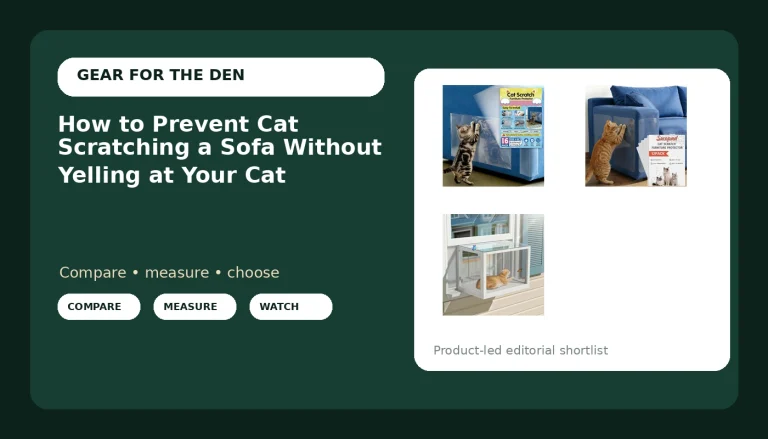
| miwoowim 3-Piece Cat Scratcher Set, Oval Bowl Nest for Indoor Cats | Kittens that need a legal target | A three-piece set built around an oval bowl nest for indoor cats |
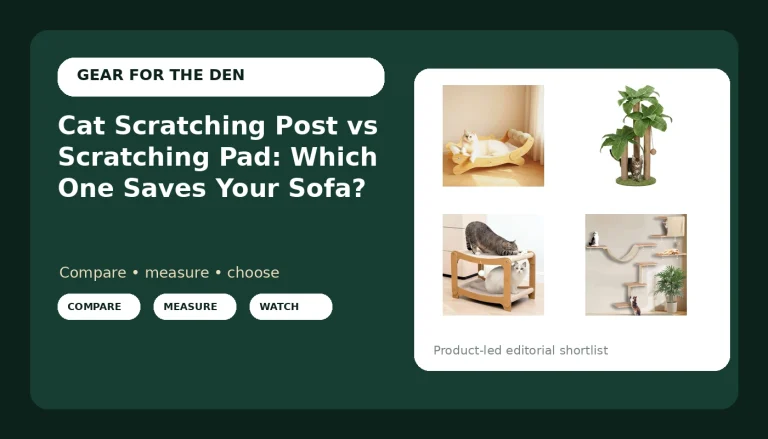
| Polamg Cat Scratch Furniture Protector, 12-Pack Clear Sofa Guards | Sofa corners and a few high-traffic spots | Twelve clear sofa guards in one pack |
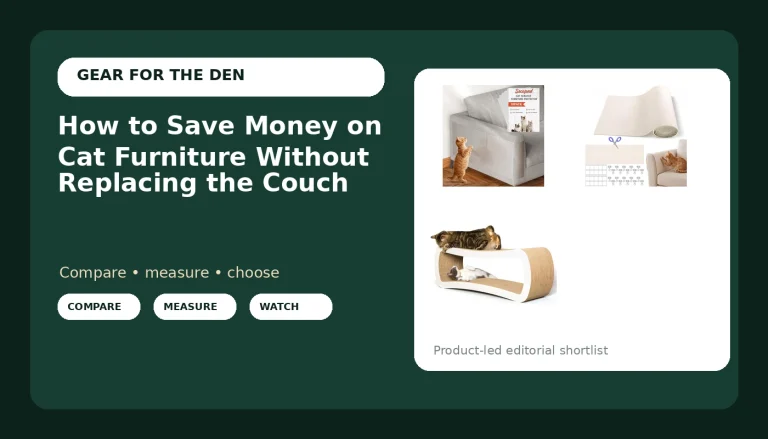
| Secopad 18 PCS Cat Scratch Furniture Protector, Couch Protector, 17IN | Long couch arms and wide panels | Eighteen pieces at 17 inches each |
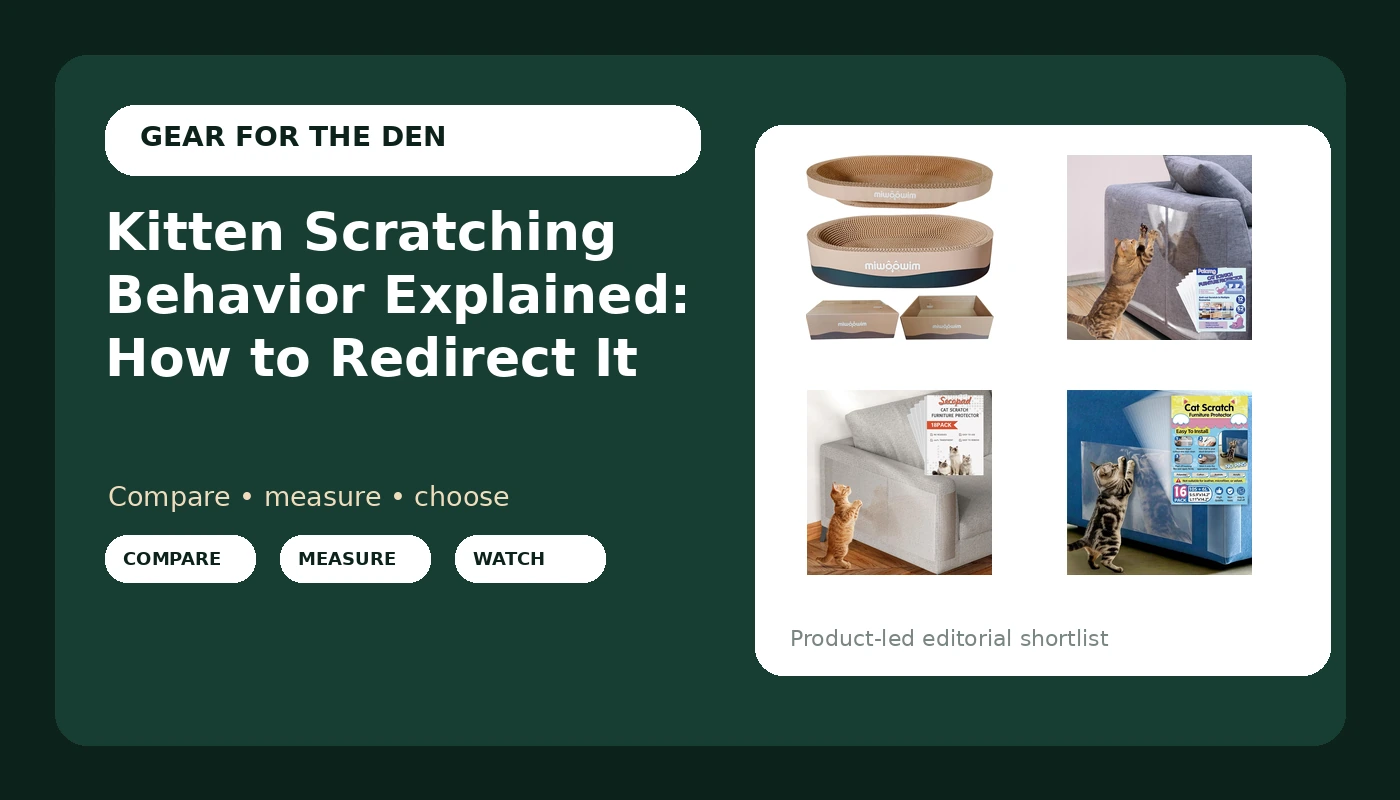
| 16 Pack No Pins Self Adhesive Anti Cat Scratch Furniture Protector | Extra rooms and budget top-ups | Sixteen self-adhesive sheets with no pins |
The redirect: miwoowim 3-Piece Cat Scratcher Set, Oval Bowl Nest for Indoor Cats
A scratching surface only works if the kitten actually uses it, and that is the trade-off to plan around. Placement beats decoration: a piece tucked behind a door in a spare room gets ignored, while the same piece pushed against the arm of the couch the kitten already attacks gets used within days. Stability matters just as much, because a surface that slides or rocks mid-pull teaches the kitten to avoid it. If your kitten rears up and pulls downward, you want a vertical option tall enough for a full stretch; if it crouches and rakes sideways, a horizontal piece suits it better. Offer both orientations for the first month, then keep the one the kitten picks.
The corner guard: Polamg Cat Scratch Furniture Protector, 12-Pack Clear Sofa Guards
Furniture guards are a holding action, not a lesson. They buy you the weeks a kitten needs to build a habit somewhere else, and they work best when they go on before the fabric is already shredded. The practical limits are worth knowing up front: how well any adhesive sheet clings, and how cleanly it lifts later, depends on the upholstery underneath, so test one piece on a hidden area before covering the visible arm of a couch. Corners and the front edge of a cushion take the most abuse, which is why a multi-piece pack tends to make more sense than one large sheet. Anchor type matters here too, in the sense that you want the guard to stay put under a pull without anything driven into the frame.
The wide coverage: Secopad 18 PCS Cat Scratch Furniture Protector, Couch Protector, 17IN
Longer pieces solve a problem that corner guards do not: a kitten that rakes down the entire side of an upholstered arm will simply work past a small square. Wider coverage also hides seams better, so the furniture looks less like it is under repair. The trade-off is installation time and the fact that a larger sheet is harder to reposition once it is down, which is another reason to test adhesion on a hidden panel first. If you are protecting one couch and a chair, a pack of this size gives you room to overlap pieces along the edge where claws land hardest.
The budget top-up: 16 Pack No Pins Self Adhesive Anti Cat Scratch Furniture Protector
This is the pack you add when the first order runs short, or when a kitten starts working a second chair in another room. Pin-free adhesive is a genuine advantage on upholstery you care about, since staples and pins leave permanent marks even after the kitten outgrows the habit. The limitation is the same as with any adhesive film: it holds best on smooth, taut fabric and less well on loose weaves or heavily textured material. Cover the spots the kitten actually targets rather than wrapping the whole sofa, and expect to replace the sheets that take the most punishment.
Prices and availability may change. Product images, names, and retailer links are matched to verified listings. No current price, rating, stock status, or measured result is stated here without current evidence.
What normal kitten scratching behavior looks like
Kittens begin testing their claws within the first few weeks of life, first on littermates and soft bedding, then on whatever furniture is closest. By eight to twelve weeks, scratching has become deliberate and repeatable. A kitten scratches after waking, after eating, after a hard play session, and after any moment that raises its arousal level. The motion is worth understanding because it explains the damage: the cat anchors its front paws, pulls its body backward, and drags the claws through the surface. That pulls away the loose outer husk of each claw and gives the shoulders and back a full stretch. Paw pads also carry scent glands, so a scratched surface is a message board as much as a manicure station.
There is no single ideal kitten scratching behavior that every cat follows. Some kittens rear up and rake vertically down a sofa side or a post. Others crouch and pull horizontally across carpet or a low box. Many do both, and a few develop a firm texture preference, sisal over carpet or carpet over cardboard. Watching how your kitten scratches tells you what to buy. A vertical scratcher handed to a horizontal scratcher becomes a piece of furniture the cat ignores.
Problem scratching is a question of placement, not intent. Scratching a couch is normal cat behavior performed in an inconvenient spot. Correct kitten scratching behavior, from the cat's point of view, is the same motion applied to something you chose for it, which is why the fix is to make the legal target more attractive and the illegal one less rewarding. Punishment does not remove the need to scratch. It usually just moves the scratching somewhere you are not watching. For the wider room setup, see our guide to cat home and multi-cat gear.
Matching the setup to the kitten
Height and stability matter more than style. A vertical scratcher needs to be tall enough for a full stretch, and it must not tip or wobble, because a surface that moves mid-scratch teaches the kitten to avoid it. A piece that is too short gets scratched only along the top edge and is abandoned quickly. A piece that rocks sends the kitten straight back to the couch, which never moves.
The same logic applies if you are adding a cat tree at the same time. Look at platform height, shelf depth, and perch width, since a kitten with room to stretch on a stable platform scratches that platform instead of the couch arm. Check the weight limit before assuming a tall tower will hold a growing cat, and consider the anchor type if you plan to secure it against a wall. Note the hammock fabric if the piece includes one, because loose weaves that snag claws tend to be avoided. Carrier size is a separate decision with no bearing on scratching, but a kitten that travels calmly is easier to get to the vet if a claw issue ever needs a look.
- Watch where the kitten scratches for two or three days and note whether the motion is vertical, horizontal, or both.
- Place a scratching surface next to the spot the kitten already uses, not in a back room where it will never be found.
- Make that surface stable by pressing it against a wall, anchoring it, or weighting the base so it does not shift under a full pull.
- Cover the targeted furniture with guards while the new habit forms, rather than rearranging the room around the kitten.
- Trim the claw tips every week or two and reward the kitten every time it uses the legal surface.
Setting up a room that survives a kitten
- Put the scratcher where the scratching already happens. A surface in the room the cat actually uses gets used; one in the basement does not.
- Offer both orientations for the first month, one vertical and one horizontal, then keep whichever the kitten chooses.
- Trim claws on a schedule. Short tips do less damage between sessions and make the whole household calmer.
- Cover the corners and the front edge of the couch arm first, since that is where most kittens start, and leave the guards on for a few weeks after the scratching stops.
- Interrupt only if you catch the kitten mid-scratch, then immediately carry it to the legal surface and reward use there.
Which option should you choose?
Choose the miwoowim 3-Piece Cat Scratcher Set, Oval Bowl Nest for Indoor Cats when the kitten needs a legal target and you want more than one surface to test in different rooms. Choose the Polamg Cat Scratch Furniture Protector, 12-Pack Clear Sofa Guards when the damage is concentrated on a few corners and edges and you want clear pieces that do not dominate the room. Choose the Secopad 18 PCS Cat Scratch Furniture Protector, Couch Protector, 17IN when the target is a long couch arm or a wide panel that needs continuous coverage. Choose the 16 Pack No Pins Self Adhesive Anti Cat Scratch Furniture Protector when you want extra sheets for several rooms or a second couch and prefer an adhesive sheet over anything pinned.
One caveat applies to all four. How well a guard adheres, and how cleanly it comes away, depends on the fabric and the adhesive, and no claim about residue or upholstery damage is made here. A guard also protects furniture without teaching the kitten anything. The teaching happens at the scratcher, and it takes repetition.
The bottom line
The short version of kitten scratching behavior explained is this: the kitten will scratch, and the only open question is what it scratches. Buy a stable surface tall or wide enough for a full stretch, place it where the scratching already happens, cover the furniture you cannot move, and keep the claw tips trimmed. Expect weeks rather than days, and expect to adjust placement once or twice after watching what the kitten actually prefers. Nothing here guarantees a result, because kittens differ in texture preference, orientation, and how quickly they form habits, but a redirect plus a guard covers both halves of the problem at once.