Every spring the same message lands in my inbox, and it is always some version of the long line leash vs gps dog collar question. The dog is eight months old. The recall is flawless in the kitchen. The moment the gate opens, the dog discovers a continent. I have walked that road with a string of fosters, and I have made most of the available mistakes: a retractable lead that turned into a whipping cord, a rope line that burned a stripe across my palm, and a tracking collar that beeped cheerfully from inside a blackberry thicket while the dog ignored it completely. What follows is the comparison I wish someone had handed me, built around four long lines I would actually put on a dog and a straight answer about when a collar is the smarter buy.
For most dogs, a long line does more for recall than a GPS collar ever will, because a collar tells you where your dog is and a line teaches your dog to stay with you. The four lines below cover the lengths people actually train on, from a 10-foot starter to a 30-foot working line, and they run from a budget nylon option to a waterproof lead with an aviation aluminum carabiner.
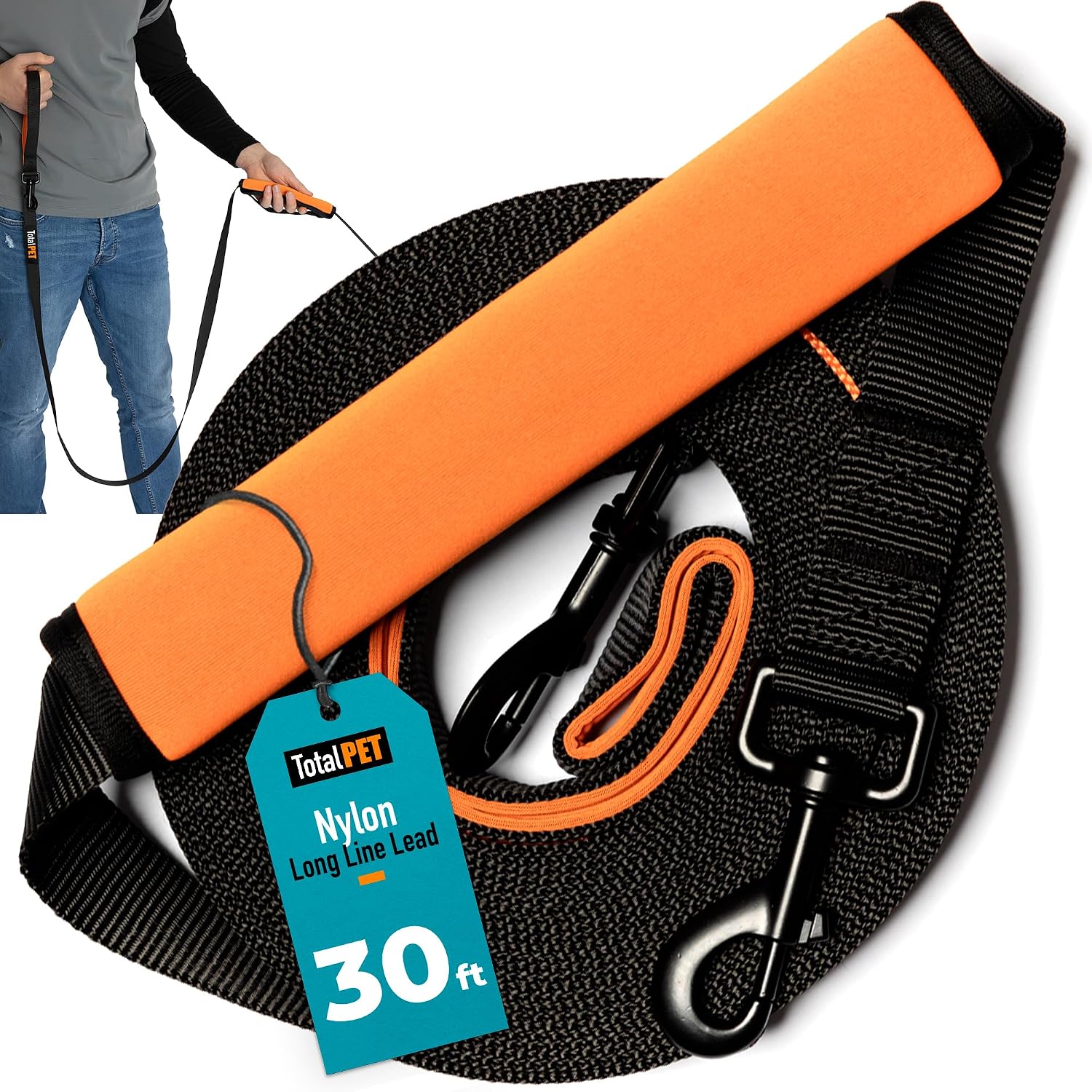
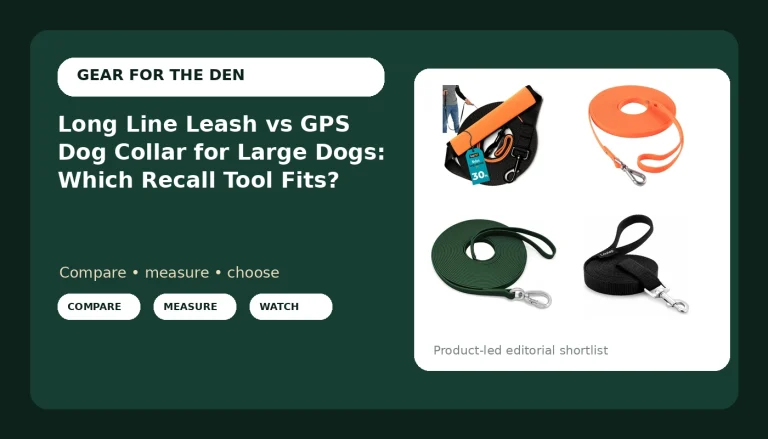
30ft Long Leash for Dogs, nylon, heavy duty
A full 30 feet of plain, heavy duty nylon built for recall work at a distance
Nylon soaks up water, stiffens when wet, and burns bare hands on a hard stop
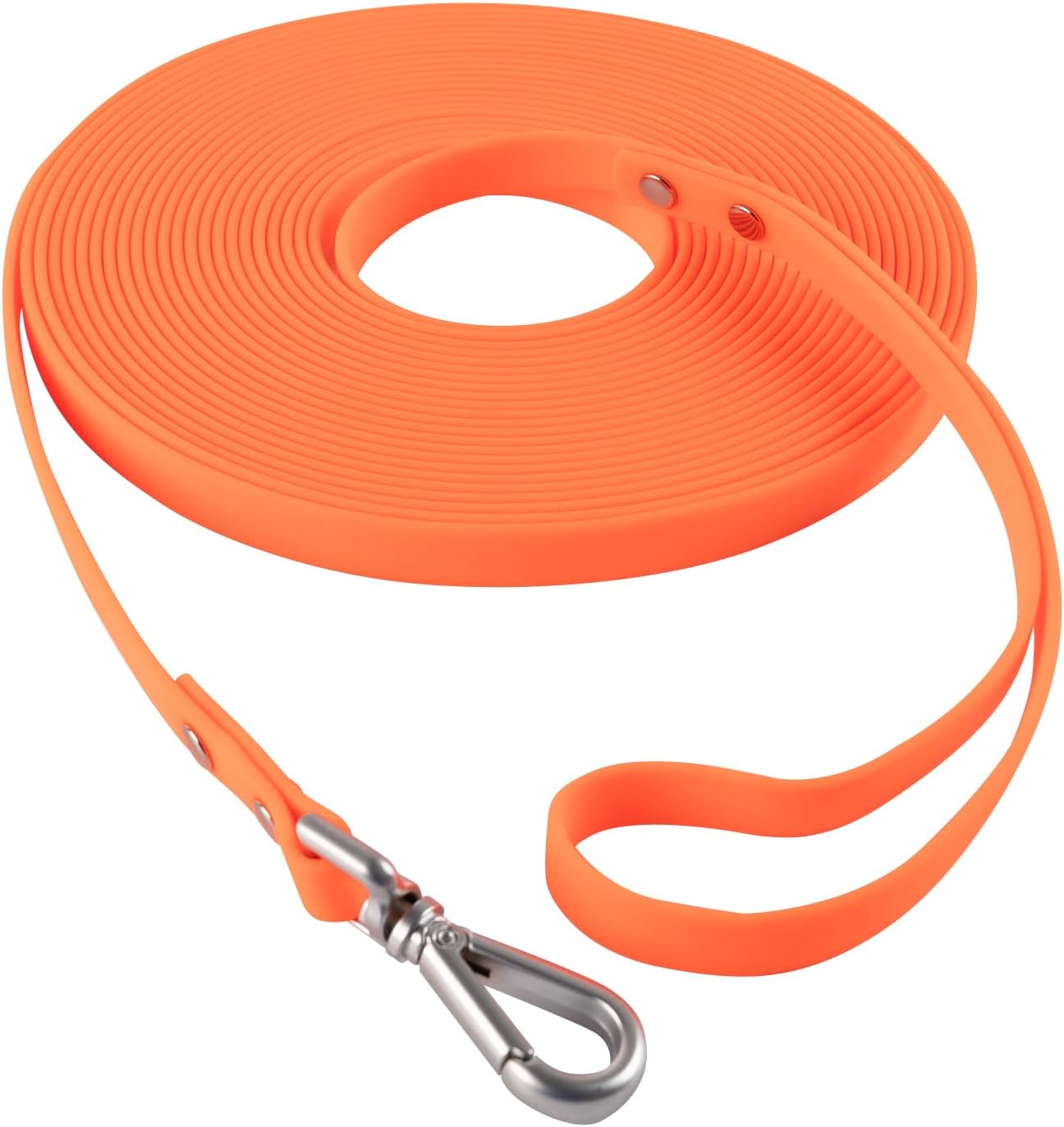
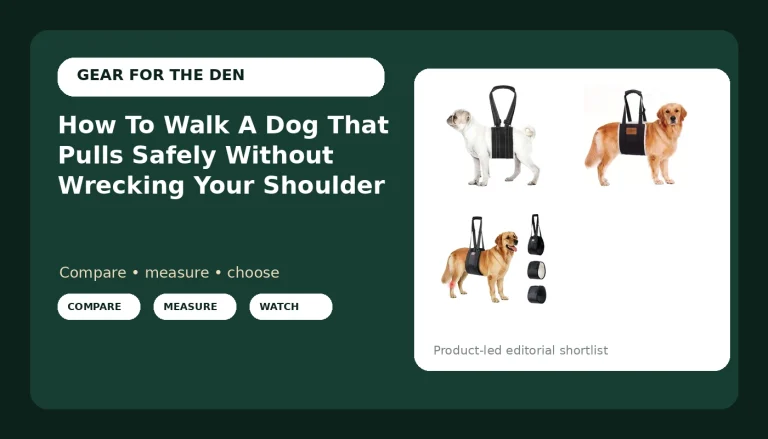
AUMAILI Dog Training Long Leash, waterproof, orange
Waterproof webbing in a high visibility color, sold in 10, 15, 20, 30 and 50 foot lengths
The linked version is the 10-foot, which is a starter length rather than a working line
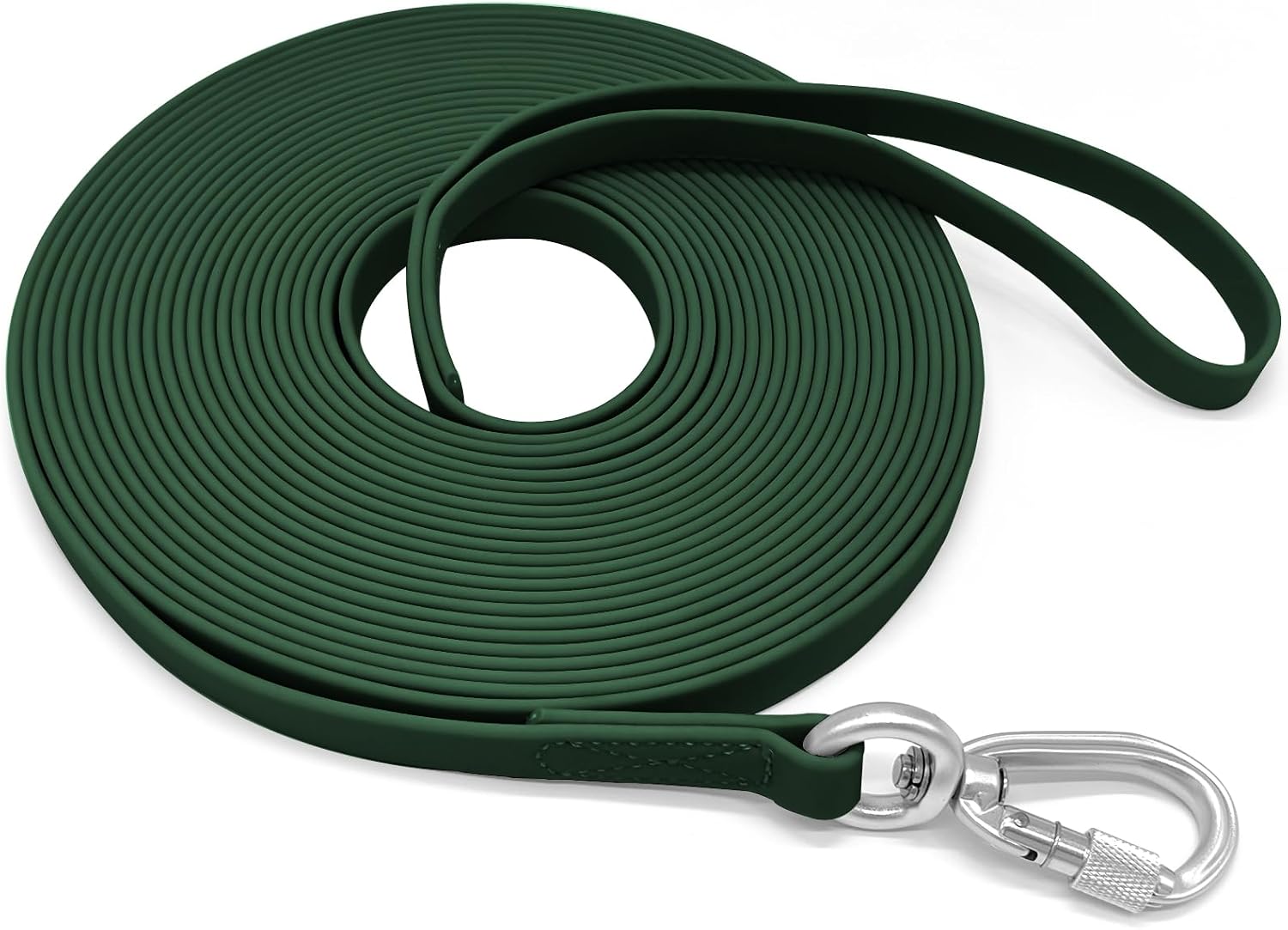
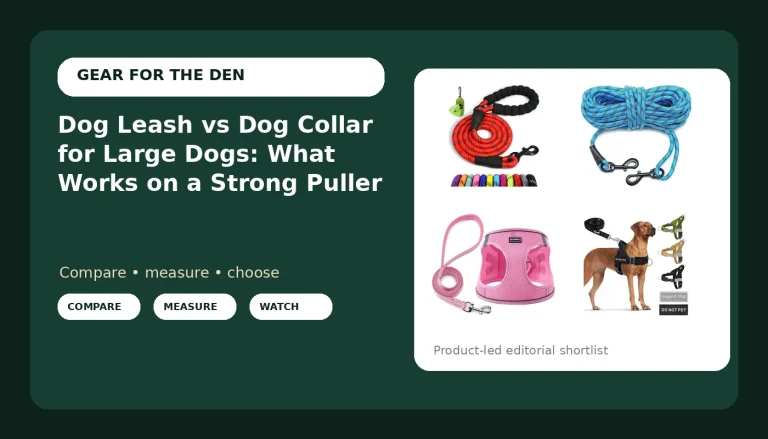
ZALER Long Dog Leash, waterproof, odor proof, forest green
Waterproof and odor proof with a named aviation aluminum carabiner clip, six lengths available
Costs more than the plain nylon line and the padded handle line
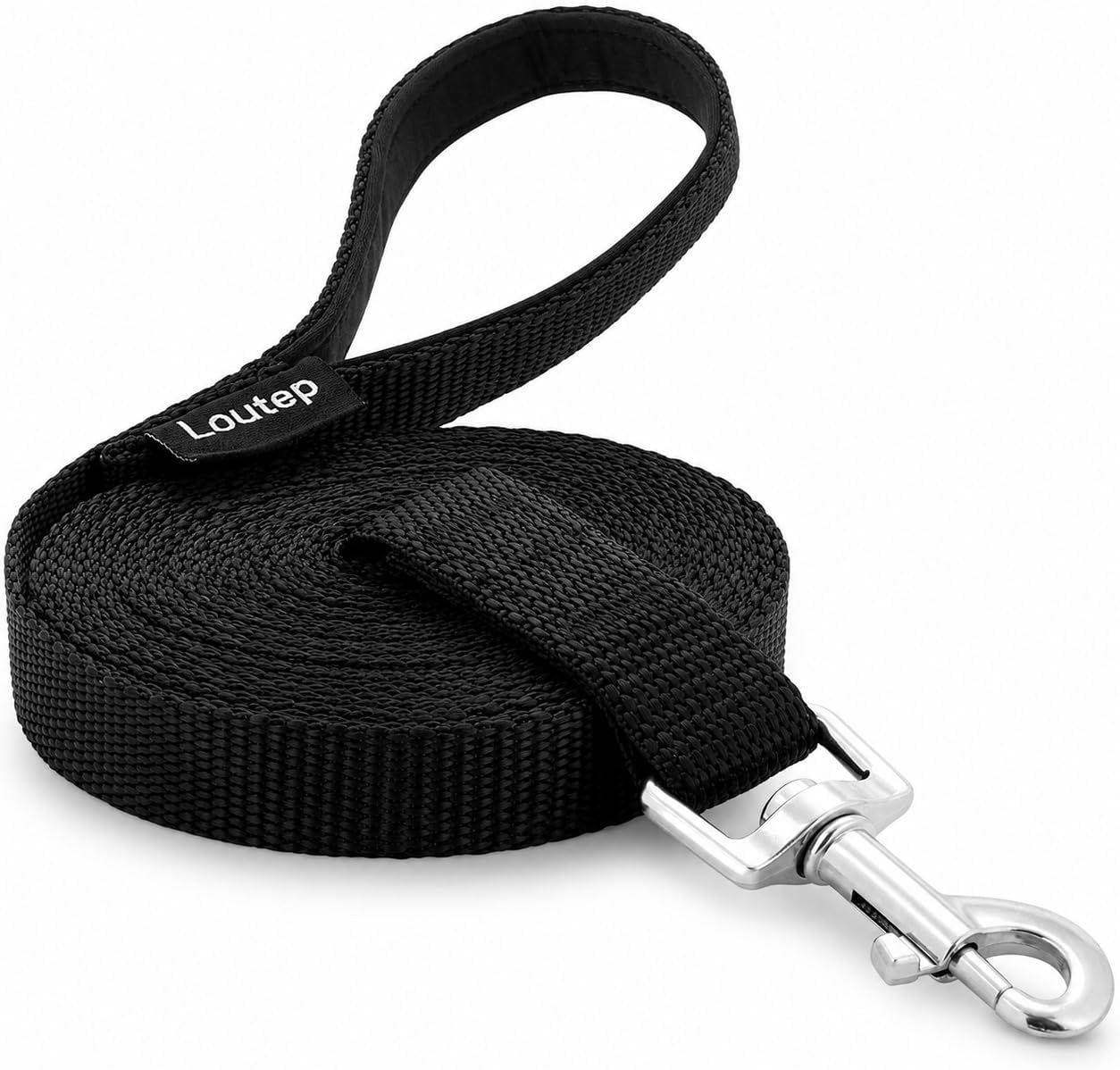
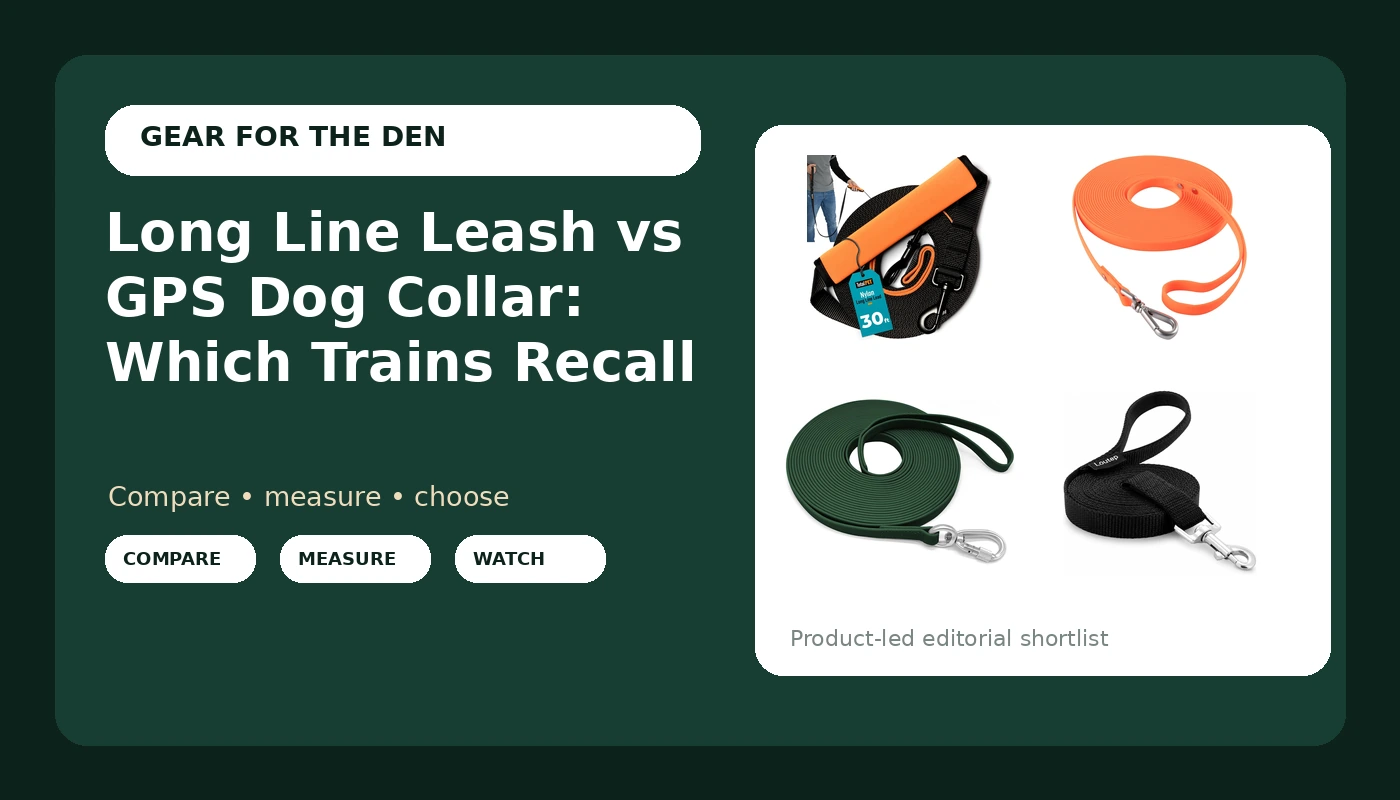
Loutep Long Line Dog Training Leash, padded handle, 30 ft
Thirty feet with a padded handle at the lowest entry point of the four
No waterproof coating and no named hardware, so it is a fair weather line
Prices and availability may change.
How I judge a long line
A long line is a simple object, and that simplicity is exactly why the small details decide whether it is pleasant or miserable to use.
Leash length. A 10-foot line is a training tool for a puppy or a dog who is just learning that the world is bigger than the yard. Thirty feet is the working length for recall at a distance. Fifty feet is for open fields and handlers with good line management. Buy for the stage your dog is in, not for the field you hope to reach in two years.
Material. Nylon is cheap, strong, and heavy when wet. Waterproof coated webbing, the kind the AUMAILI and ZALER lines use, slides through grass, sheds mud, and does not soak up a lake. If your training happens anywhere near water, this is the deciding factor.
Hardware. A snap hook that opens under load is a disaster at 30 feet, because the dog is already running when it happens. An aviation aluminum carabiner is heavier than a stamped snap and much harder to twist open.
Handle and drag. A padded handle saves your hand during a bolt. A line with no handle at all is a rope with a clip on it, and you will feel the difference the first time your dog tests the end.
Everything else on a summer walk, from boot sizing to a traction sole to a cooling fabric harness, is secondary to one question: can you stop your dog from reaching the road? Fit matters as much as the line itself. A harness with a snug chest strap and a front clip gives you something to steer with when the dog hits the end, and a flat collar alone is the wrong anchor for a long line.
Why the long line leash vs gps dog collar debate is about two different jobs
A long line and a GPS collar are not really competitors. They answer different questions.
A long line answers: can I stop my dog from reaching the road? It is a physical connection, and physical connections do not need charging. The leash length is whatever you choose, the failure mode is a broken clip or a dropped loop, and the training happens because your dog learns that drifting past the end of the line has a consequence.
A GPS collar answers: where is my dog right now? The gps range on a decent unit is measured in miles, and the battery life is measured in days or weeks depending on how often it reports. That is genuinely useful for a dog who runs deer on a large property, or a hound who follows a scent line out of earshot. But the collar does not teach a recall. It gives you a dot on a map and, on some models, a tone or a vibration you can condition into a cue. That conditioning is real training, and it takes weeks of repetition.
Search gps dog collar vs long line leash and you will get pages of collar marketing. The honest answer is that the two tools solve different problems, and most people need the rope first, because you cannot track your way out of a dog who has never learned to check in.
The four lines, and who each one suits
30ft Long Leash for Dogs. This is the plainest tool in the group and the one I would hand to a first-time long line user. It is nylon, it is heavy duty, and the listing calls it ideal for both large and small breeds, which is worth taking seriously. A 30-foot line on a 12-pound terrier behaves nothing like a 30-foot line on a 90-pound shepherd, and the extra drag of a heavy line is something a small dog feels at the end of the line. The trade-off is nylon itself. It soaks up water, gets stiff when wet, and it will burn your hands if you grab it while the dog is running. Gloves are not optional with this one. If your training happens on dry grass and you want a line that outlasts your dog's enthusiasm, this is the straightforward pick. Visit on Amazon
AUMAILI Dog Training Long Leash. Waterproof, orange, and sold in 10, 15, 20, 30 and 50 foot lengths, with the 10-foot version linked here. The short length is not a compromise, it is a stage, and it is the stage most people skip. Ten feet is enough room for a puppy to make a wrong decision and enough line that you can still correct it without a wrestling match. Orange is a genuinely useful choice too: a high visibility line is easier to find in tall grass and easier for other people at the park to see. Move up to 30 feet when the dog is checking in reliably at 10, not before. Visit on Amazon
ZALER Long Dog Leash. Waterproof, odor proof, and the only line in this group that names its hardware: an aviation aluminum carabiner clip, offered in 6, 10, 15, 20, 30 and 50 foot lengths, with the 30-foot forest green version linked here. The odor proof claim matters more than it sounds. A wet nylon line that lives in a car trunk develops a smell you cannot un-smell, and a coated line that does not hold onto that smell is easier to live with. The carabiner is the other selling point. It is heavier than a stamped snap hook and much harder to twist open under load. If you want one line that covers a puppy and then a grown dog, this is the one to grow into. Visit on Amazon
Loutep Long Line Dog Training Leash. Thirty feet, black, with a padded handle, and the lowest entry point of the four. The padded handle is the feature people underrate until the first full speed bolt, at which point a bare nylon loop feels like a wire. This is the line I would suggest for a handler who is not sure they will stick with long line work, because the cost of finding out is small. What you give up is the waterproof coating and the named hardware, so treat it as a dry weather line rather than a lake day line. Visit on Amazon
Non-negotiable: hardware you can trust at thirty feet
Whatever line you buy, one rule matters more than the rest. Never let the line touch the ground in a way you cannot control. Thirty feet of line on the ground is a trip hazard for you, a tangle for the dog, and a snare for anything it wraps around. Loop the slack in your hand, keep it short, and never wrap it around your wrist. If a dog bolts with a line wrapped around your wrist, you are going with the dog.
The second non-negotiable is the anchor point. A flat collar plus a running dog plus a sudden stop at the end of a line is a neck injury waiting to happen. Use a harness with a snug chest strap and a front clip for steering, and attach the line to a back point for the long work. Most takes on the difference between long line leash and gps dog collar skip this entirely, but the harness is doing more for your dog's spine than either tool.
A third rule that costs nothing: check the clip before every session. Not once a month, every time. Gate gates wear, springs weaken, and a clip that fails at 30 feet fails at the worst possible moment.
What the specs actually tell you
Listings for long lines are thin on useful detail, so read them the way you would read a spec sheet.
Waterproof or nylon. Waterproof is a coating on webbing, and it changes how the line behaves in wet grass, mud, and shallow water. Nylon is stronger per dollar and heavier per foot when it is wet.
The clip. A snap hook with a narrow gate can open when the line goes slack and then snaps tight. A carabiner or a locking clip is worth paying for, and it is the single most common point of failure on a cheap line.
The handle. Padded, bare, or none at all. A line with no handle is a rope with a clip on it, and you will feel the difference the first time your dog decides to test the end.
What the listings cannot tell you is how your dog behaves on the line. That is not a spec, and it is the whole point. Any comparison of the long line leash vs gps dog collar comes down to the same thing: one tool gives you physical control in the moment, the other gives you information after the fact. A line can be handed to a friend, used in a parking lot, and packed in a bag without a charge. A collar cannot.
When a GPS collar is the better buy
There are real cases where the collar wins, and I am not going to pretend otherwise.
If your dog is an escape artist who clears a six-foot fence and runs a subdivision, a line will not help you. You need to know where the dog is, and that is a gps range and battery life problem, not a training problem. The same goes for a hound or a husky who goes deaf to everything at 400 yards, and for a deaf dog who cannot hear you call at all. A collar with a vibration cue can be conditioned into a recall cue, and for some dogs that is the only cue that lands.
The collar is also the better tool for a dog who is already reliable and works beyond the distance you can cover with rope, like a hunting dog on a big property. In that case the collar is a safety net, not a training device.
Whether you land on a long line leash or gps dog collar, the training plan does the work. A collar with a vibration mode and no conditioned response is just an expensive way to watch your dog leave.
What I'm watching next
The 50-foot versions of the AUMAILI and ZALER lines are on my list for field recall work, because 30 feet runs out fast in open ground and 50 feet changes the handling problem completely. I am also watching how coated webbing holds up through a winter of wet grass, and whether an odor proof claim survives a season in a car trunk.
For now the advice is boring and it does not change. Buy a line, use it every day for six weeks, and treat a GPS collar as a backup for the dogs who genuinely need one. The line is where the recall gets built, and no amount of tracking technology replaces a dog who has learned to check in on his own.