The dog leash vs dog collar for large dogs question sounds simple until you are standing on a sidewalk with a 90-pound dog leaning hard into a squirrel. One piece of gear goes around the neck, the other goes in your hand, and because the two are sold together so often it is easy to treat them as a single decision. They are not the same job. A collar is a fitting and identification tool that can also carry a leash; a leash is the connection between your hand and whatever the dog is wearing. Separate those two roles and the shopping stops being confusing.
The short answer: for most large dogs the control point should be a harness, and the leash should be a padded 6-foot lead. The collar stays on for tags and as a backup point. That is the part most guides skip. In the dog leash vs dog collar for large dogs comparison, a collar alone is the wrong control point for a dog that can pull an adult off balance, and the leash you clip to it matters just as much as the collar itself.
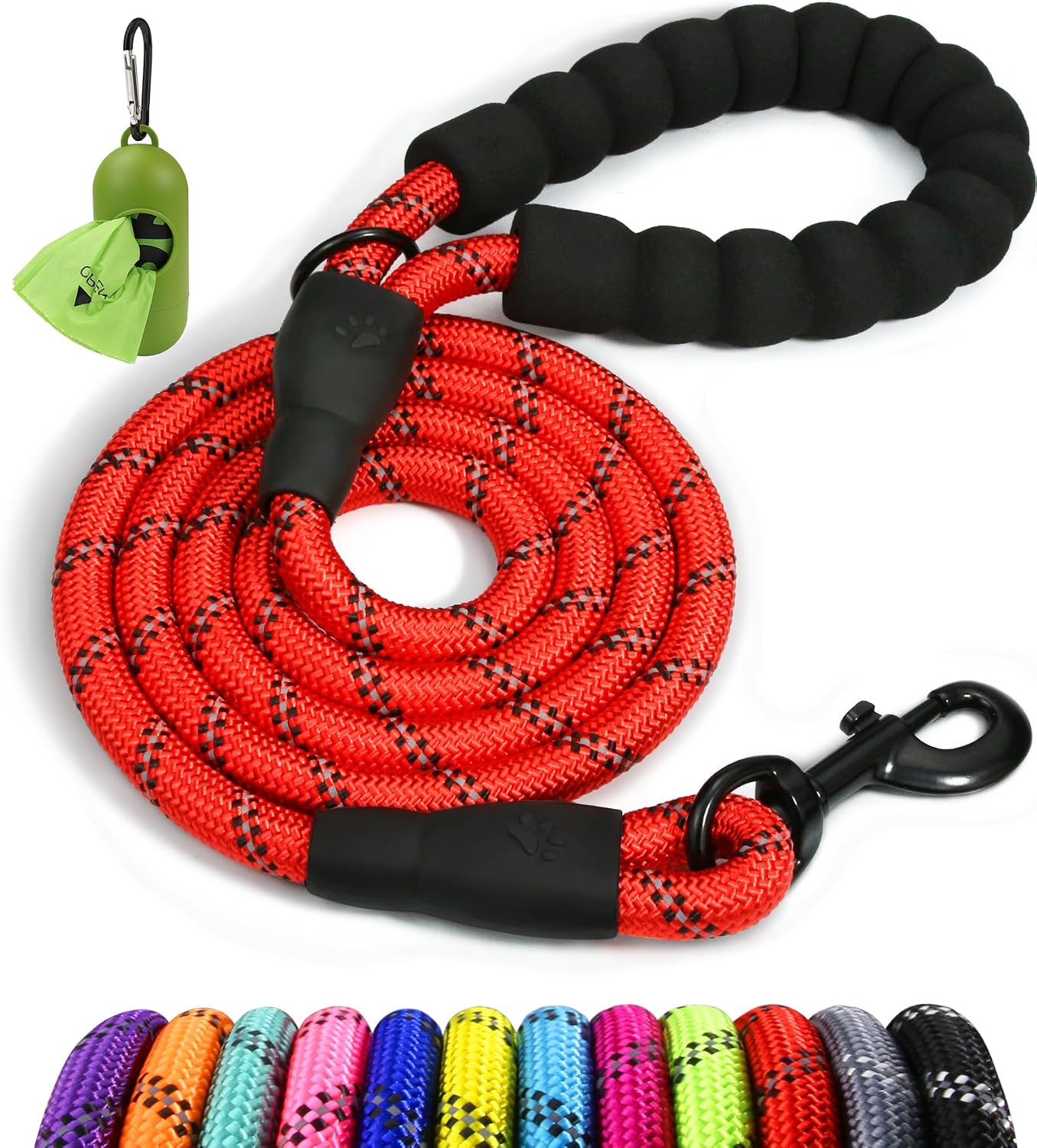
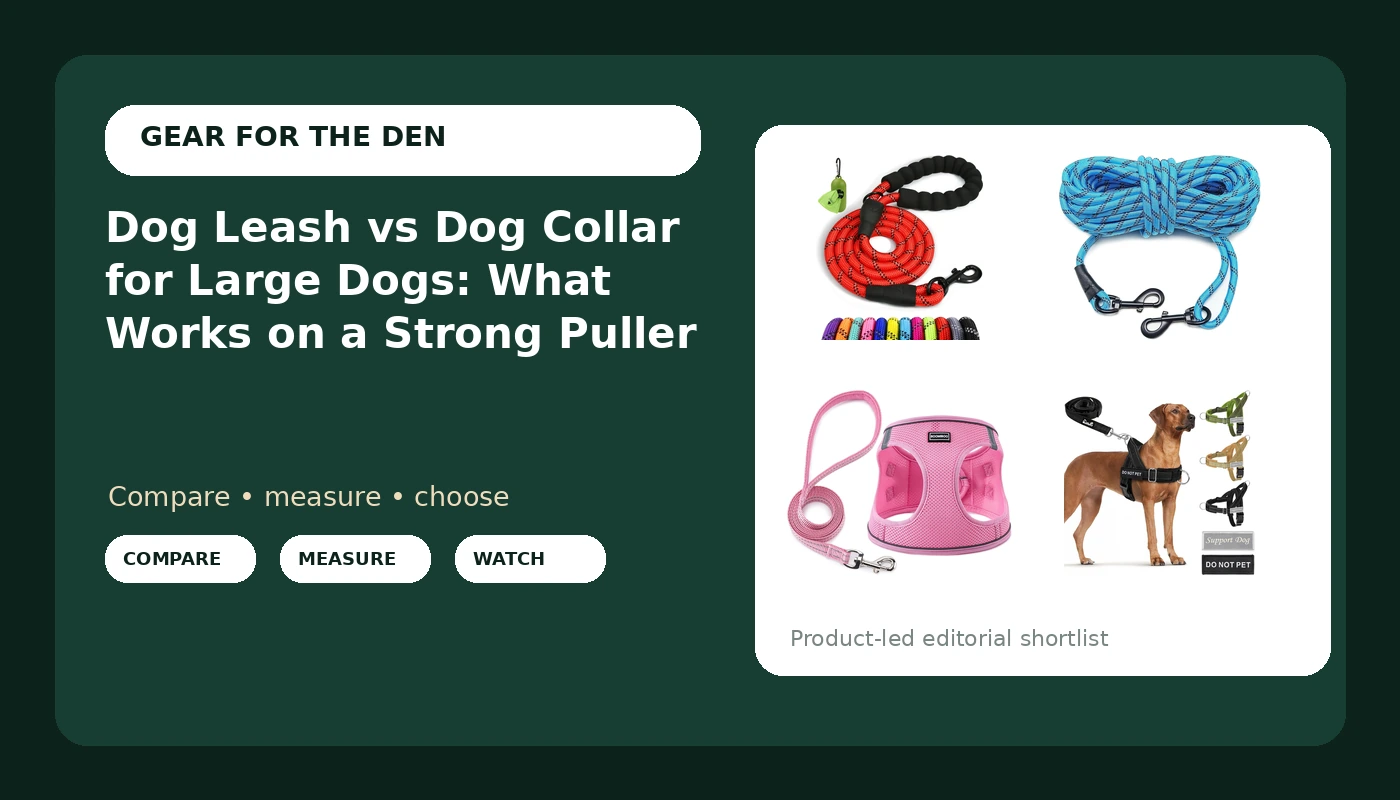
Taglory Rope Dog Leash for Medium Large Dogs, 6 FT Padded Handle, Red
Rope body with a padded handle and a leash length that suits everyday sidewalk walks; built for medium and large dogs
It is a leash only, so you still need a collar or harness to clip it to, and rope can fray if a chewer gets hold of it
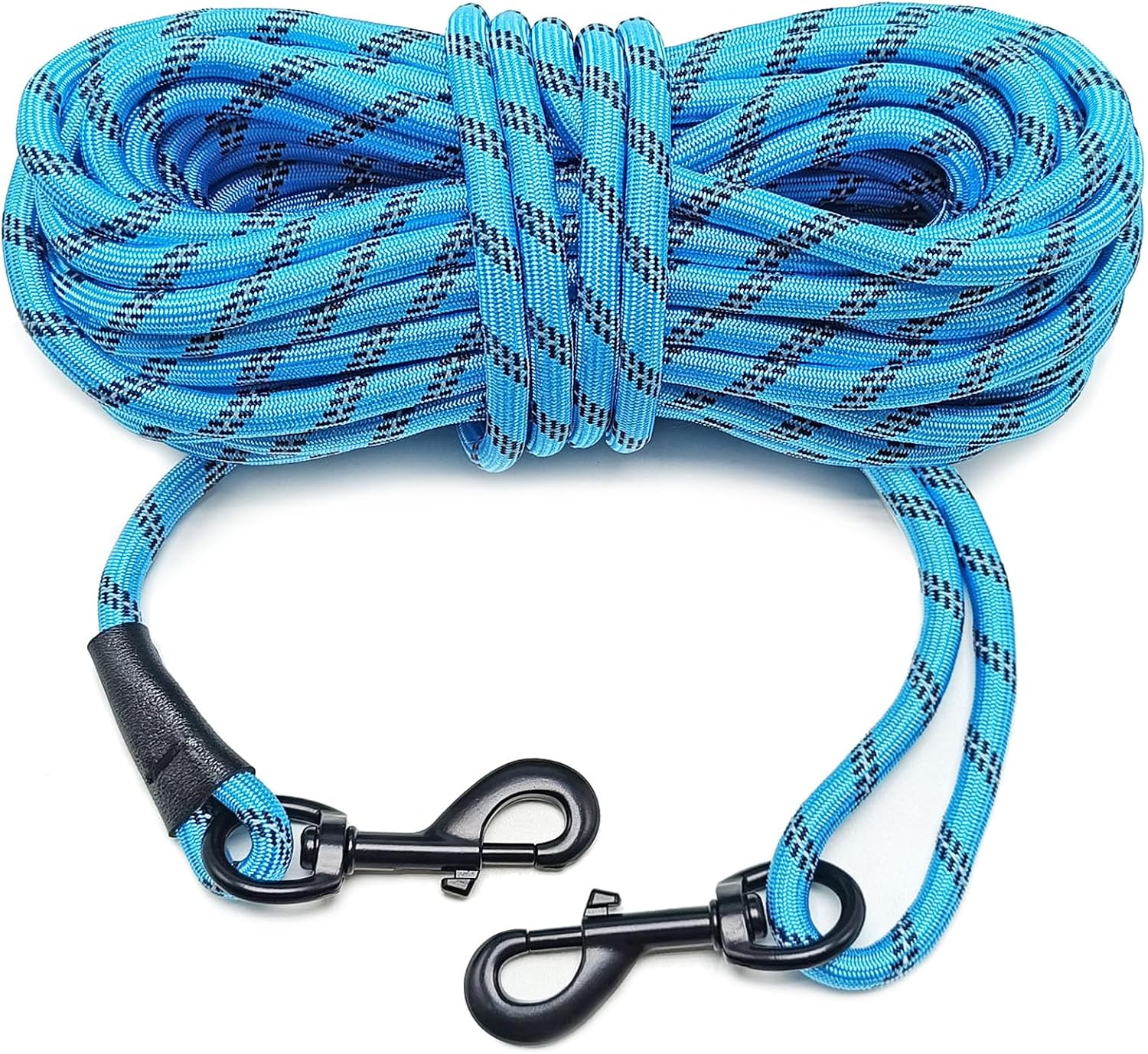
30FT Long Dog Leash for Medium Large Dogs, 3/8" Reflective Nylon Rope
Reflective nylon rope that stays visible at dusk and 3/8 inch thickness that is easy to hold for a long session
Thirty feet is a training tool, not a street leash; it tangles fast and needs open ground
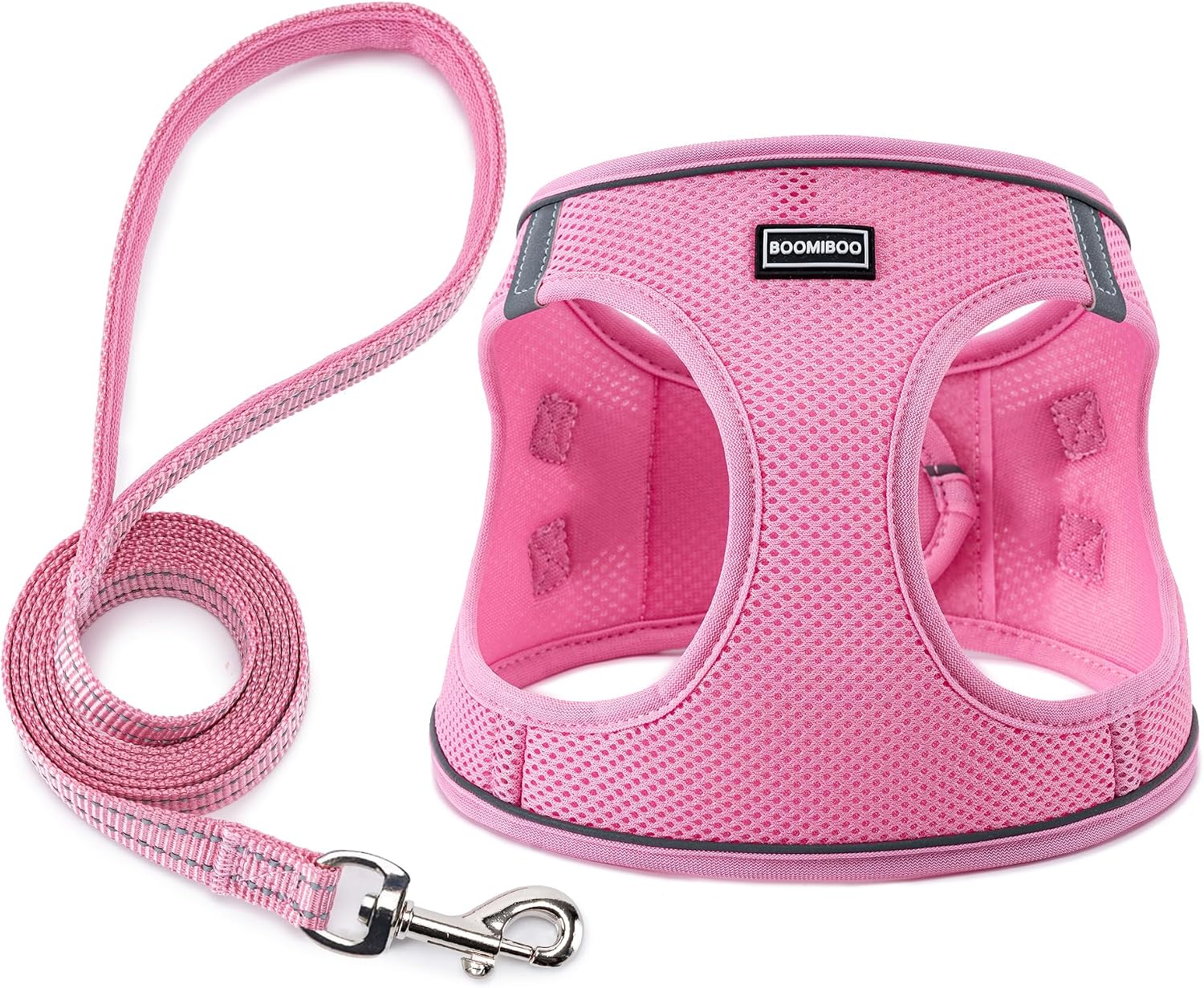
Dog Harness with Leash Set, Step-in Adjustable Puppy Pet Vest, Pink XS
Matched harness and leash in one box, step-in design, adjustable straps that are quick to put on
The XS sizing is built for puppies and small dogs, so it will not fit the chest strap of a large dog
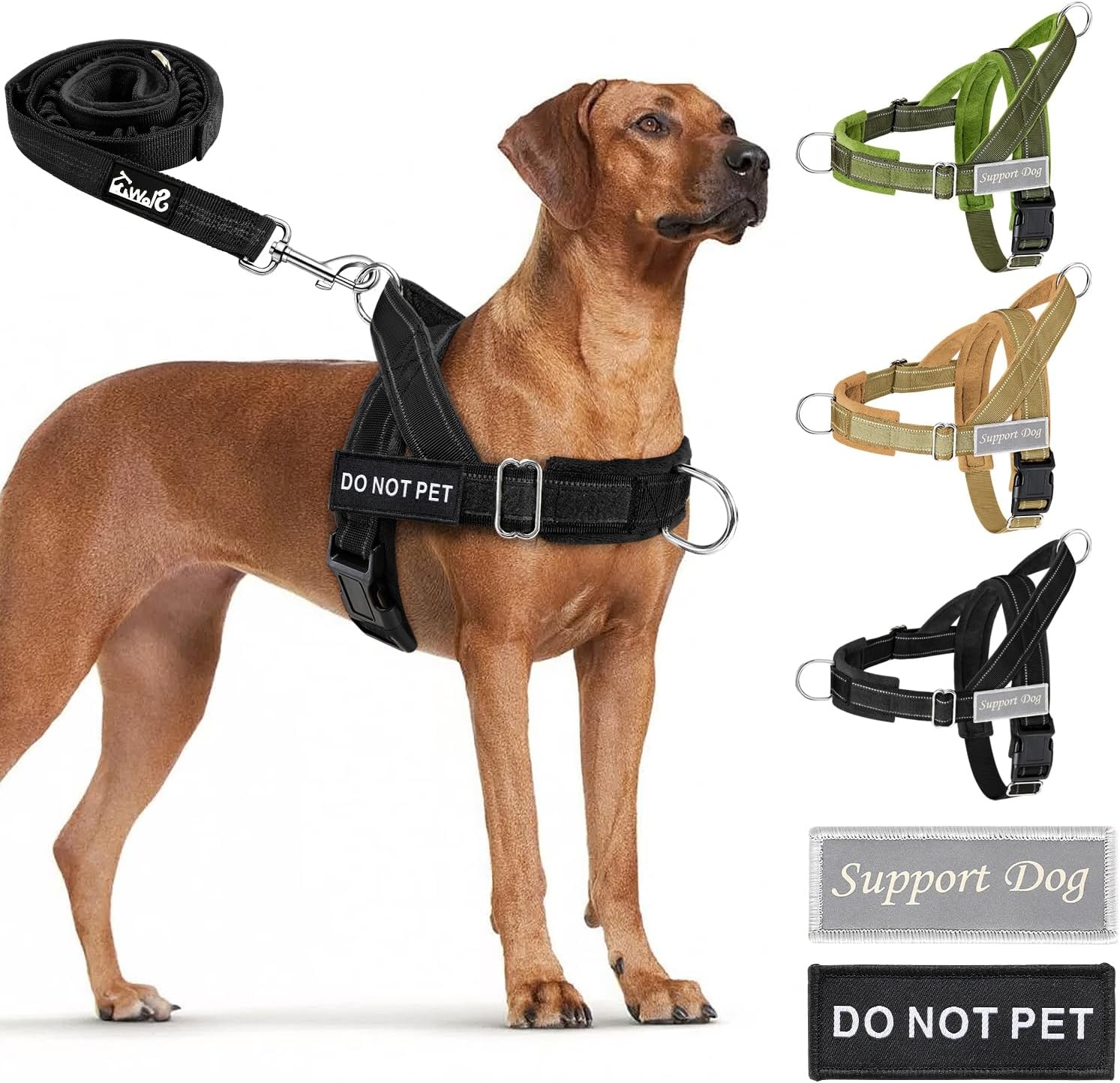
SlowTon No Pull Dog Harness and Leash Set, Heavy Duty, Soft Padded
No-pull design with soft padding and heavy duty webbing, sold as a complete walking kit
Bulkier and warmer than a plain collar or a minimal harness, and padded gear needs a careful fit check every time
Prices and availability may change.
Why the dog leash vs dog collar for large dogs debate gets it backwards
A flat collar sits across the trachea and the front of the neck. On a small dog that is mostly a comfort question. On a large dog it becomes a force question, because the same pull that feels like a firm tug in your hand is concentrated on a few inches of neck. That is not an argument against collars. It is an argument against letting a collar be the place where all the force lands on every single walk.
A leash does a different job. It transfers force from the dog to your hand, and it decides how much slack, how much warning, and how much room you have when something interesting appears at the end of the block. Search results for dog collar for large dogs vs dog leash usually frame the two items as competitors. They are not competitors. The collar holds identification and a backup attachment point, while the leash and the walking gear in front of it do the steering.
How to judge a leash before you buy
Four things decide whether a leash works on a big dog, and none of them are the color.
Leash length. Six feet is the standard for a reason. It gives a large dog room to sniff and walk without handing you a slack line you cannot gather quickly. Longer lines have their place, but they belong to training, not to a walk down a busy street.
Handle padding. A dog that surges puts real load through a thin strap. A padded handle or a rope loop that spreads pressure across the palm is the difference between a controlled walk and a numb hand on the way home.
Hardware. Look at the clip, not the label. A solid bolt snap or a trigger clip with a swivel is what keeps a strong dog attached, and it is the first part to fail on cheap gear.
Material and visibility. Nylon webbing is light and easy to wipe clean. Rope holds up to abrasion and stays comfortable in the hand. Reflective strands matter if you walk before sunrise or after dark, which is most of the winter for a lot of people.
One more category worth naming so you can skip it: retractable leads. On a large dog, a thin cord under constant tension is a hand injury and a control problem at the same time. A fixed leash with a long line for training covers the same ground more safely.
What a collar still does well
A collar is the right home for tags, and in many places it is the legal requirement. It is also the fastest place to grab a dog for a quick hold, and it is where most people attach a leash for the short trip from the car to the vet's door. A limited-slip or martingale style can be a reasonable choice for a dog with a narrow head who backs out of a flat collar, because it tightens only partway instead of choking down.
Fit is simple to check. Two fingers should slide under a flat collar without forcing it, and the collar should sit high on the neck rather than down at the shoulders. A collar that slides off over the ears is a collar that will be lost at the worst moment.
What a collar is not: a place to tie a dog out, and not the control point for a dog that lunges. If your dog hits the end of the leash hard, move the attachment to a harness and leave the collar for identification.
Chest straps, front clips, and why harnesses change the walk
A harness moves load off the neck and spreads it across the chest strap and the shoulders. The geometry matters more than the padding.
A front clip sits on the dog's chest and turns the dog toward you when it pulls, which is why no-pull designs put the attachment there. A back clip sits between the shoulder blades and is the better choice for a dog that already walks politely, or for a hike where you want the leash out of the way of the legs. Some harnesses offer both, and switching between them is a legitimate training tool rather than a marketing gimmick.
Fit is the whole game. Two fingers should slide under every strap, the chest strap should sit behind the shoulder rather than across it, and the dog should be able to walk, sit, and lie down without the harness shifting or rubbing. Step-in designs are quick to put on a wiggly dog. Over-the-head designs tend to offer more adjustment range, which matters more on a large dog whose girth changes with coat and conditioning.
What each of these four actually is
Four pieces of gear come up constantly in this category, and they do four different things.
Taglory Rope Dog Leash, 6 ft, padded handle. This is the plain daily lead: a rope body with a padded handle, sized for medium and large dogs, in a length that suits neighborhood walks and vet visits. It assumes you already have a collar or a harness to clip it to, which is exactly how the leash half of the dog leash vs dog collar for large dogs decision should be treated. Visit on Amazon
30 ft Reflective Nylon Rope Long Leash. This is a training line, not a walking leash. The 3/8 inch rope is thick enough to hold comfortably and the reflective weave helps in low light. Thirty feet of leash length means thirty feet of rope to manage, so it belongs in a park, a field, or a fenced yard where you are practicing recall, not on a sidewalk with traffic. If you are new to long lines, start with a basic long line recall routine before you take one to open ground. Visit on Amazon
Step-in Adjustable Vest Harness with Leash Set, Pink XS. A matched harness and leash in one purchase, with a step-in design and adjustable straps. The XS sizing is the important detail: this is built for puppies and small dogs, and it will not fit the chest of a large dog. It earns a place here as the reminder that harness sizing is not one-size-fits-all, and that a set sold as a set is only useful if the size is right for your dog. Visit on Amazon
SlowTon No Pull Harness and Leash Set. Heavy duty webbing with soft padding and a no-pull design, sold with a matching leash. This is the closest thing here to a complete large-dog walking kit, and the padding is aimed at dogs who lean into the gear. Bulk is the trade-off: a padded harness is warmer, it holds more dirt, and it is more fabric to check after a muddy walk. Visit on Amazon
Trade-offs the spec sheets hide
Catalog pages pile on numbers that have nothing to do with this decision. GPS range and battery life belong to a tracker collar, not to a leash. Traction sole and boot sizing belong to dog boots. Cooling fabric belongs to a summer vest. None of those specs tell you whether a leash is comfortable in your hand or whether a harness will rub behind the shoulder after a mile.
The specs that do matter are boring: leash length, clip type, strap width, adjustment range, and total weight. If a listing leads with anything else, read the sizing chart twice and measure your dog's girth behind the front legs before you order.
Dog leash or dog collar for large dogs: how to decide today
If your dog walks on a loose leash and you are heading to the mailbox, a collar and a 6-foot lead is fine. If your dog pulls, lunges, or simply outweighs your ability to hold a line, put the attachment point on a harness with a front clip and keep the collar for tags. If you are teaching recall, a long line in an enclosed space is the tool, and it is not a replacement for the 6-foot leash you use the rest of the time.
Whether you pick dog leash or dog collar for large dogs, the fit check takes ten seconds and prevents most of the problems people end up blaming on the gear.
The difference between dog leash and dog collar for large dogs
At its core, the difference between dog leash and dog collar for large dogs is about where force travels and what each item is for. The collar identifies and holds a backup point. The leash connects and controls distance. A harness decides whether that control lands on the neck or spreads across the chest. Buy the leash and the harness for the walk, and buy the collar for the tag.
Do you need both?
Yes, and this is the least glamorous answer in the category. A collar with current tags is the piece of gear that gets your dog home if a gate is left open or a screen door pops. A harness and a properly sized leash are the pieces that make the walk safe for both of you. A matched set covers the leash and harness in one purchase, which is convenient, but check the size before you commit, because an XS vest on a large dog is a paperweight.
What to buy first
Start with the walk you actually take. Most large-dog owners end up with three items: a collar for tags, a padded 6-foot leash for daily walks, and a harness for control. Add a long line later if you are working on recall, and treat it as training equipment with its own rules.
If you only buy one thing today and your dog pulls, buy the harness and clip the leash you already own to the front. If your dog walks politely and you just need a better lead in your hand, the padded rope leash is the simplest upgrade. Either way, the collar stays on, and that is the whole point of the dog leash vs dog collar for large dogs question: not which one wins, but which one does which job.