Two cats in one apartment do not need two trees. They need two ways up, two places to land, and at least one route that does not pass through the other cat's landing zone. Get that wrong and you end up with one cat who owns the tower and one cat who hides under the couch. I have set up four trees in three rooms, watched who claimed what, and rebuilt the multi cat tree layout twice after a stalemate over the top perch. This multi cat tree layout guide covers the measurements that matter, the trees I would buy again, and the placements that end the standoff.
A good multi cat tree layout starts with three numbers you can check before you buy: platform height, perch width, and post diameter. Everything else, from shelf depth to anchor type, is about how those three fit your room. Cats climb to avoid each other, so the tallest platform usually goes to whoever gets there first, not whoever is biggest. With only one tall platform, you have one cat with a view and one cat with a grudge. Two platforms at different heights, spaced apart, prevent more fights than any toy. The four trees below are the ones I would use to build that.
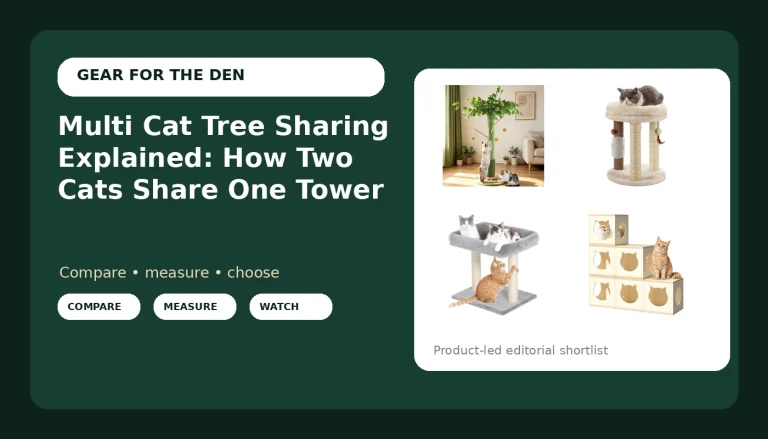
Best Overall: 46" Tall Cat Scratching Post, Natural Sisal Cat Tree for Indoor Adult Cats
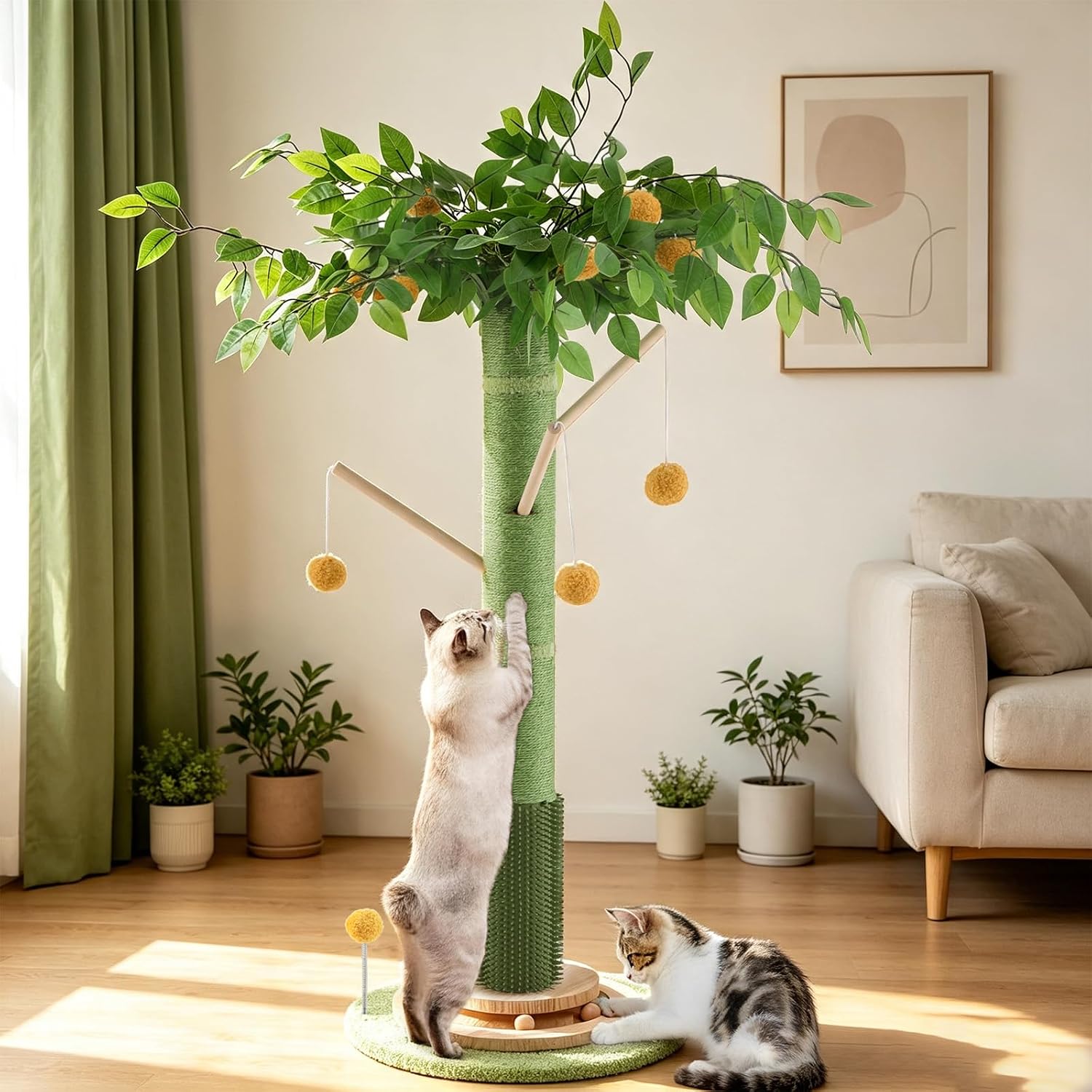
This is the spine of my multi cat tree layout. A single 46-inch column of natural sisal gives a full-grown cat something to climb that does not wobble when it lands, and the height is the point: the top of the column sits above the traffic in the room, which is exactly where a cat who wants to be left alone wants to be. There is no second perch and no bed competing for the same space, so there is nothing to argue over. There is also no shelf depth to negotiate and no hammock fabric to wash, which is a small mercy in a house with three cats. It is one seat, and the cat who takes it is done negotiating.
Where it earns its place: beside the doorway both cats use, or at the end of a hallway, so the cat on top can watch the room without blocking the path. Check the post diameter against your biggest cat before you commit, because that is the number that decides whether a tall post gets used or ignored, and look for sisal that runs the full height rather than a band in the middle. The base is free-standing, so there is no wall hardware to install. The trade-off is that one tall post is one territory. With three cats, this is the anchor of the layout, not the whole thing.
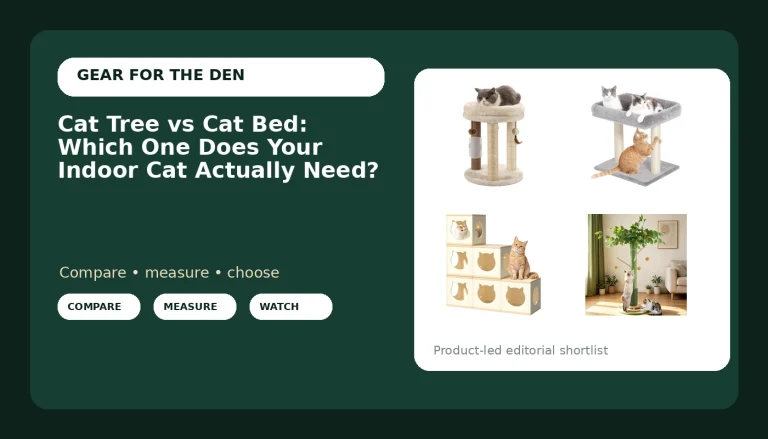
Best Value: MECOOL 4in1 Small Cat Tree,Scratching Post with Tower Soft Bed, Sisal Carpet Jute Posts with Three Hanging Ball Toys and Massage Brush for Indoor Cats
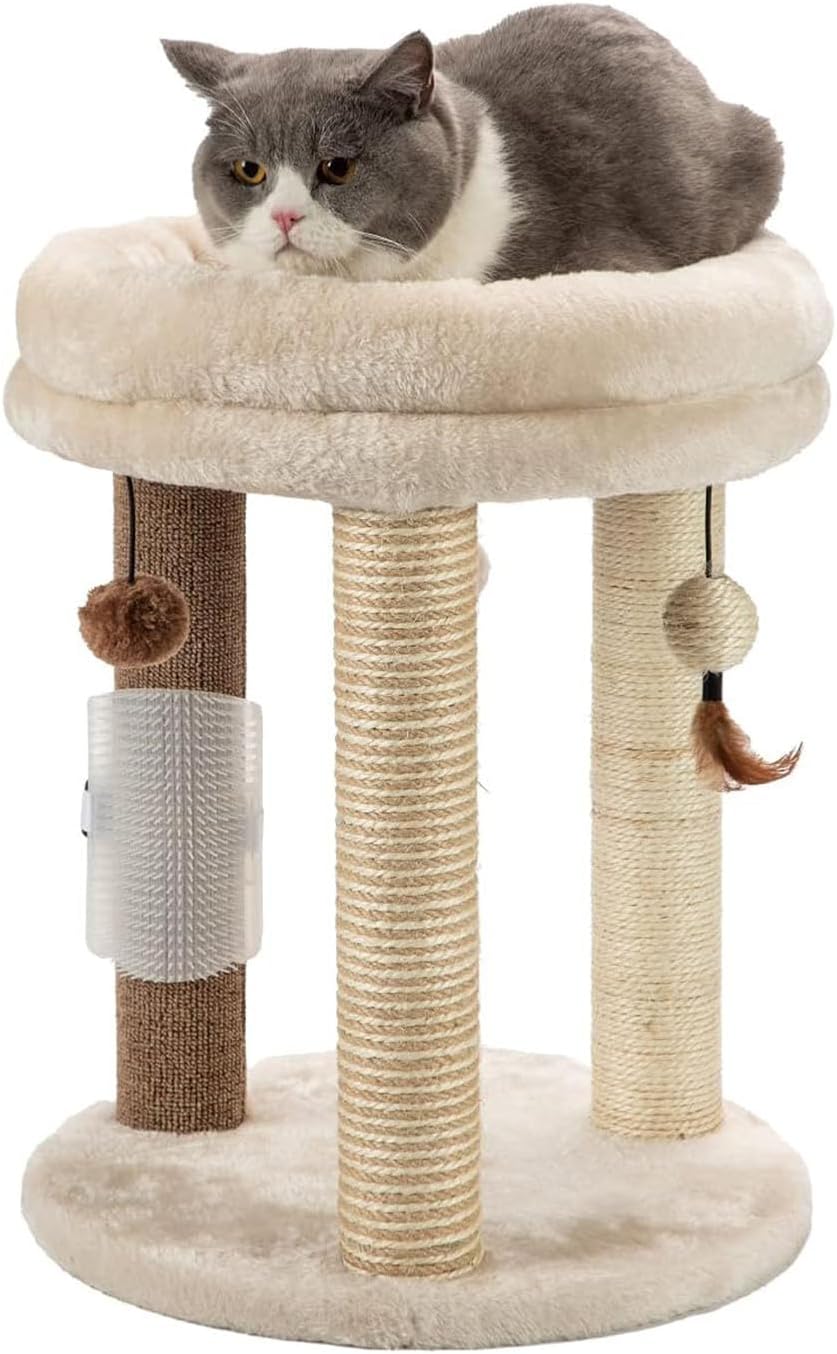
This is the tree I would buy for the second and third cat. It is short, it has a soft bed instead of a high perch, and it carries three hanging ball toys plus a massage brush built into the post, which sounds like a gimmick until you watch a cat rub its cheek on it twice a day. In a multi cat tree layout, low furniture matters more than people expect. A cat who is nervous about the top of a tower still wants a place to be that is not the floor, and a bed at knee height is that place.
The sisal carpet and jute posts take scratching from a second angle, which matters when two cats want to scratch at the same time and only one post is tall enough to matter. The bed fits one cat, not two, and that is fine. The goal is to give the cat who keeps getting pushed off the tower somewhere to land that still feels like hers. Check current Amazon price and compare it with the tall post before you decide. If you can only buy one, buy the tall post. If you can buy two, buy both and put them in different rooms.
How I tested
I judge every tree on the same list, in the order that predicts failure fastest.
Platform height comes first: does the top level sit above the traffic in the room, or does it put a cat at eye level with a dog or a toddler? Then post diameter and sisal coverage. A post wrapped only in the middle gets shredded and abandoned, so I look for a scratching surface that runs the full height. Then shelf depth and perch width: can a full-grown cat lie down on it, or does it have to perch like a bird? Then weight limit and anchor type. A free-standing base is convenient, but a tall tree on a narrow base is a tree that lands on the floor the first time a cat jumps off it. Then hammock fabric and anything removable, because a bed that cannot be washed becomes a bed nobody uses.
The last part is placement, and it is the part most people skip. I watch which cat takes which level, whether the low cat gets a turn, and whether anyone has to walk past another cat to get down. A tree nobody uses is usually a tree in the wrong corner, not a bad tree. A tree that has not been touched in a week is telling you where not to put it.
Analysis and test results
The pattern across these four trees is consistent: height solves conflict, width solves comfort, and placement solves nearly everything else.
The 46-inch post is the only one here that puts a cat above the room, which is why it is the anchor of the ideal multi cat tree layout. The MECOOL bed is the low option. The KinoTail 19-inch tree is the small third seat, and the six-cube tower is the one you buy when you have a wall to spare. When you land on the correct multi cat tree layout, you see it within a week: two cats using furniture at the same time, no staring, no blocking.
The common mistake is buying two identical towers and standing them side by side. That is one territory with two labels on it. Space them apart, stagger the heights, and give each level a different way down. A cat on a tall post can be cornered if the only route to the floor passes the other cat, so put tall furniture near a wall or beside a doorway rather than in the middle of the floor.
Watch the base, too. A free-standing tree with a wide base is fine on carpet; on a hard floor it slides, and a slide mid-jump is how cats learn to stop using the top level. If your floor is slick, a thin rug under the base costs less than a vet visit. The same logic applies to the rest of the room. Keep litter boxes off the main traffic path so a cat on the way down from a perch is not ambushed at the doorway, and put food and water where a low-ranking cat can reach them without crossing the room.
The multi cat tree layout reference table
Four trees, four jobs. Match the shape to the room before you match it to the cat.
| Tree | Shape | Placement | Best for |
|---|---|---|---|
46" Tall Cat Scratching Post, Natural Sisal Cat Tree for Indoor Adult Cats | Single 46-inch sisal column, free-standing | Against a wall or beside a doorway | The high seat, the anchor of the layout |
MECOOL 4in1 Small Cat Tree with Soft Bed and Jute Posts | Low bed plus sisal and jute posts, hanging toys | Anywhere out of the traffic path | The second and third cat, the low option |
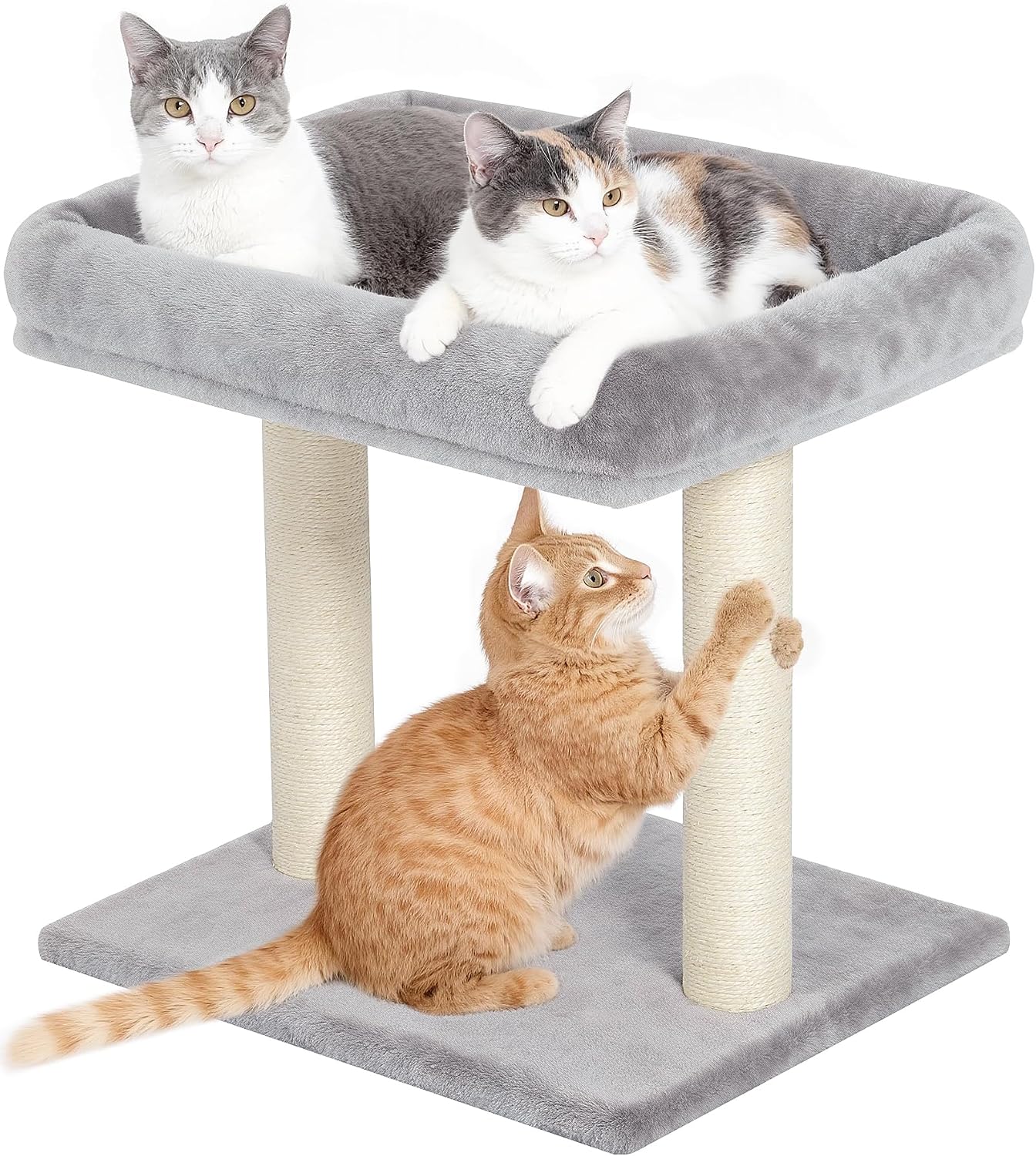 KinoTail 19" Small Cat Tree with Scratching Post and Perch | Short post with a single perch | Under a window or in a second room | A third seat, kittens, small rooms |
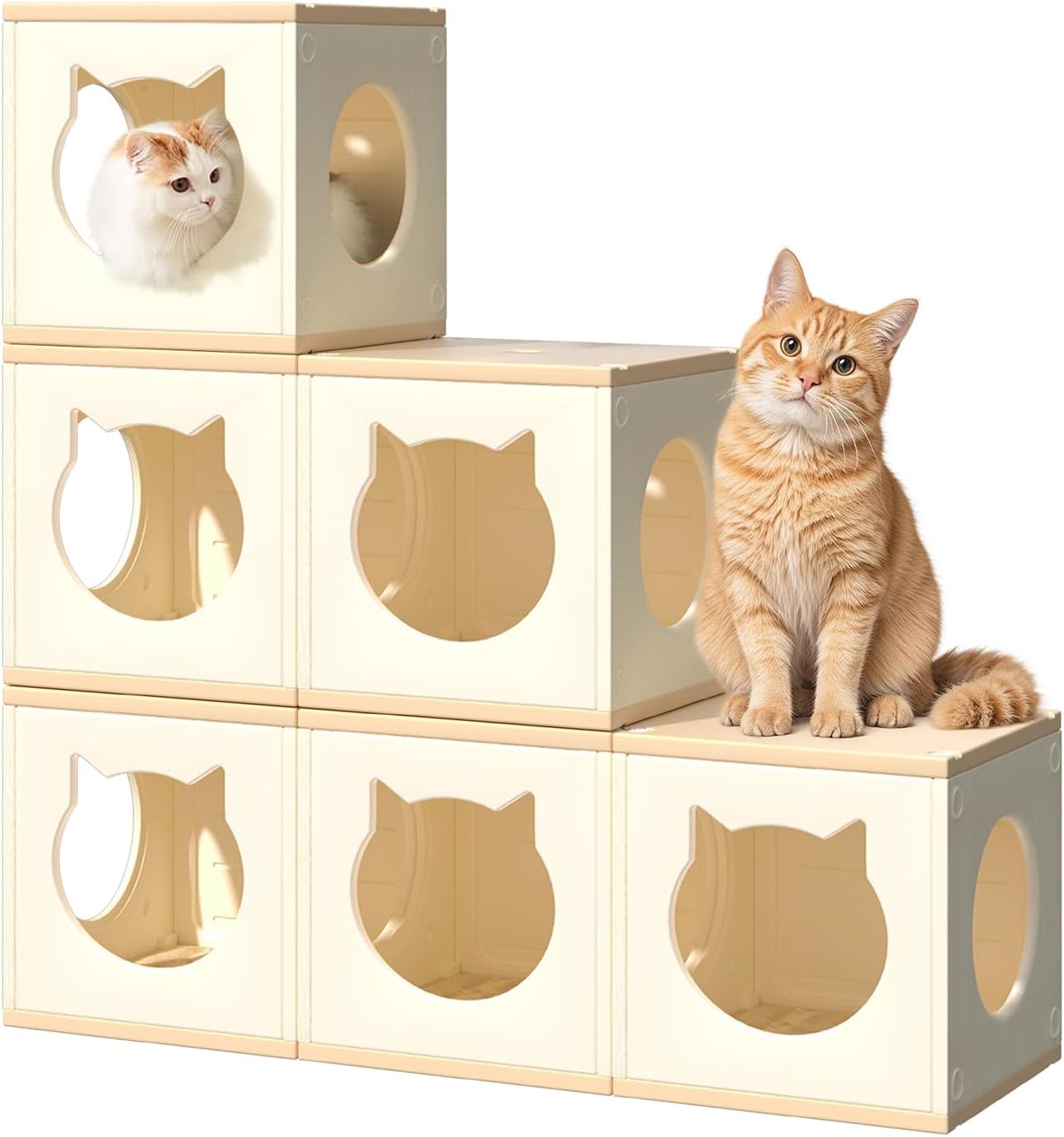 6-Cube Stackable Cat Tree Tower with Plastic Tunnel | Stackable cubes with a tunnel | Along a long wall, stacked two high | Wall-style layouts, cats who like tunnels |
One note on the cubes: a stackable tower is only as stable as the way you stack it, so keep the tallest section against the wall and check the connections whenever you move it. And keep the lowest level clear of the path between the litter box and the food bowl, or it becomes a trap instead of a seat.
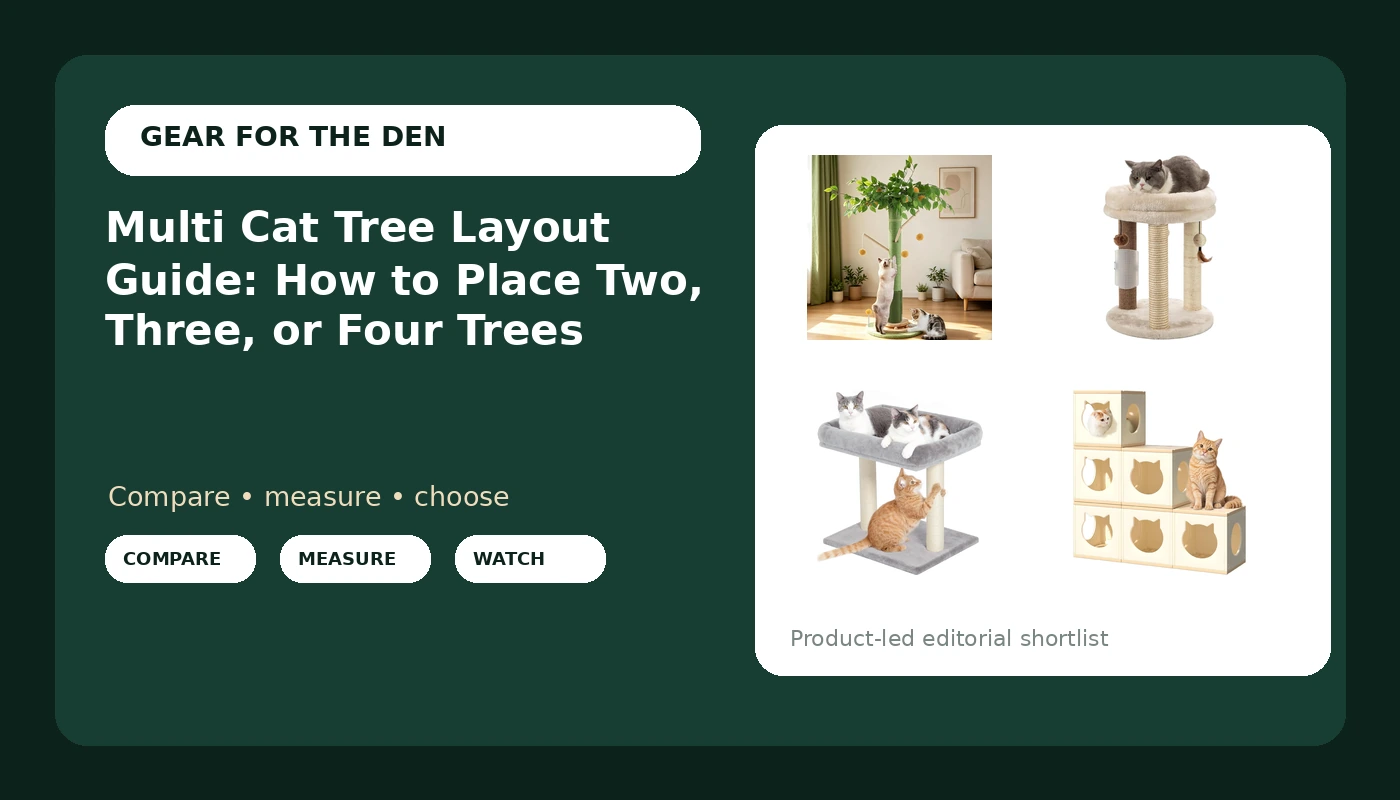
The 6-cube stackable tower, for wall layouts
This is the most furniture-like thing on the list, and the only one that turns a long empty wall into cat territory. The cubes stack, the tunnel gives a cat a covered route from one level to the next, and the plastic panels wipe clean, which matters in a multi cat household where somebody always has a hairball at the wrong moment. It is the biggest commitment of the four.
Buy it if you have a wall that gets no use and cats who already like boxes and tunnels. Skip it if your space is small or if you move often, because a stackable tower that has to come apart every year is a hassle you will not repeat.
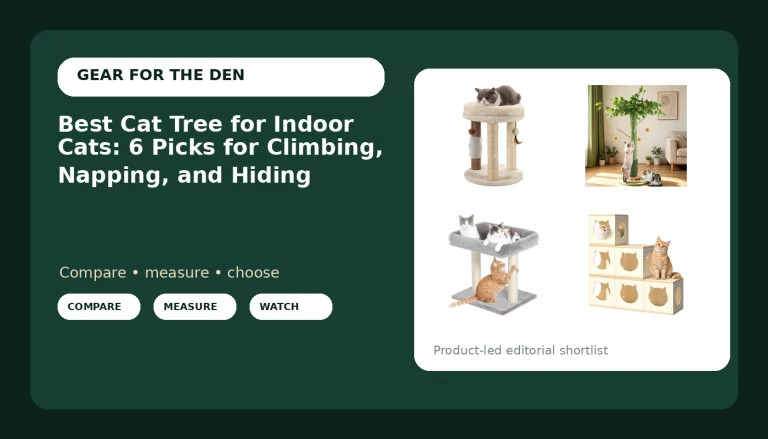
The KinoTail 19-inch tree, for the cat who keeps getting pushed off
Nineteen inches is not a tower. It is a seat. That is exactly why it works as the third piece: it is short enough to fit under a window, next to a desk, or in the corner of a room the other cats ignore, and it gives the lowest-ranking cat somewhere to sit that nobody else wants. The perch holds one cat and the post is small, so a large adult will use it as a step rather than a destination.
If you have one cat who hides when the others start moving, this is the tree that gets her back into the room. Pair it with the tall post and put them in different rooms, so the shy cat is never choosing between a seat and a safe exit.
Should you buy the 46" Tall Cat Scratching Post, Natural Sisal Cat Tree for Indoor Adult Cats?
Yes, if you have two or more cats and only one piece of tall furniture. It is the simplest way to add a level above the room, it takes up less floor space than a tower with a bed, and the sisal does the job your couch is currently doing. The single perch is the point: no second seat means no argument.
It is not a whole layout. One cat will claim the top, and if the others cannot get high anywhere else, the fighting just moves to the floor. Buy this first, then add a low bed for the cat who loses the race.
Should you buy the MECOOL 4in1 Small Cat Tree,Scratching Post with Tower Soft Bed, Sisal Carpet Jute Posts with Three Hanging Ball Toys and Massage Brush for Indoor Cats?
Yes, as the second tree, not the first. The bed is what gets used, the posts give a second scratching angle, and the toys and massage brush keep a bored cat busy without any extra furniture. It is the piece that makes a layout feel fair, and it is the cheapest way to give the low cat a seat of her own.
What it is not is a climbing structure. There is nothing high on it, so a cat who wants altitude will ignore it completely. Buy it for the cat who keeps getting pushed off the good seat, and put it somewhere the other cats do not patrol.