Two cats, one tower, and a standoff at the top perch. That is the scene multi cat tree sharing is meant to prevent, and it is why so many cat trees that look generous in a product photo turn into a single contested seat in a real living room. Cats are territorial about elevation, about resting spots that carry their scent, and about the routes they use to cross a room. A structure with one high perch and one way up reads to a pair of cats as a single resource with a queue attached.
The fix is less about buying something bigger than about buying something better distributed. You want more than one high spot, more than one scratching surface, and landing routes that let a cat come down without walking straight through another cat's space. Below is what actually drives that decision, plus four options that solve it in different ways.
Quick answer
Here is multi cat tree sharing explained in one line: you are not buying one tree for two cats, you are buying enough separate stations that each cat can claim one. A single tall post with a single perch rarely works in a multi-cat home, because it creates one premium spot and a line of cats waiting for it. The pattern that holds up is either several smaller trees spread around the room, or one modular structure with several levels, perches, and scratch surfaces. Match platform height and perch width to your largest cat, check how the tree is anchored, and aim for at least one more resting spot than you have cats.
Four useful options
| Model | Best fit | What stands out |
|---|---|---|
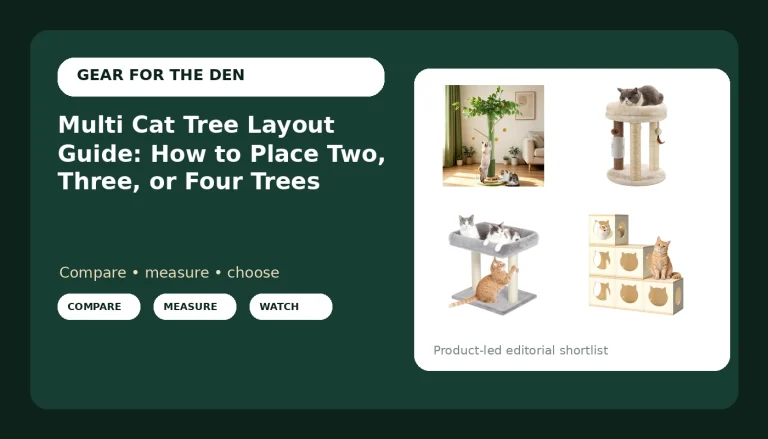
| 46" Tall Cat Scratching Post, Natural Sisal Cat Tree for Indoor Adult Cats | Cats that want height and a full-length scratch surface | A single tall post wrapped in natural sisal, sized for adult cats |
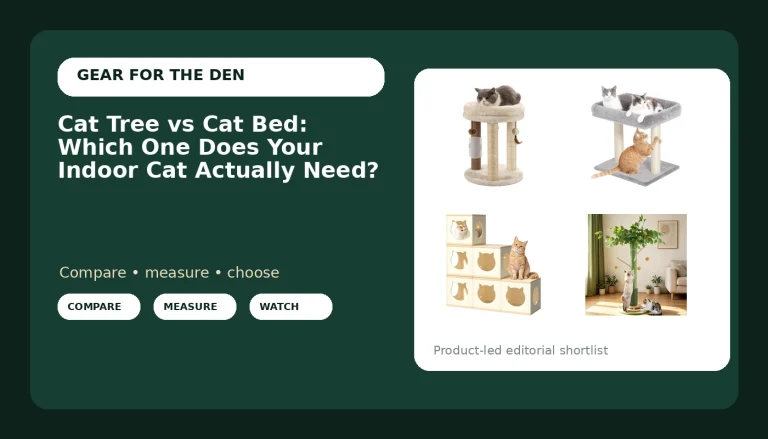
| MECOOL 4in1 Small Cat Tree,Scratching Post with Tower Soft Bed, Sisal Carpet Jute Posts with Three Hanging Ball Toys and Massage Brush | A first multi-cat tree in a small room | A soft bed, jute posts, hanging toys, and a massage brush in one compact unit |
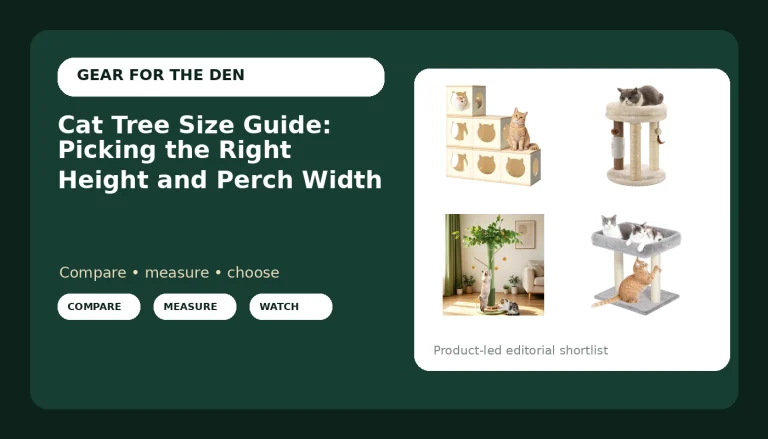
| KinoTail 19" Small Cat Tree with Scratching Post for Indoor Cats with Perch | Kittens, senior cats, and tight corners | A low, single-perch tree with a scratching post and a small footprint |
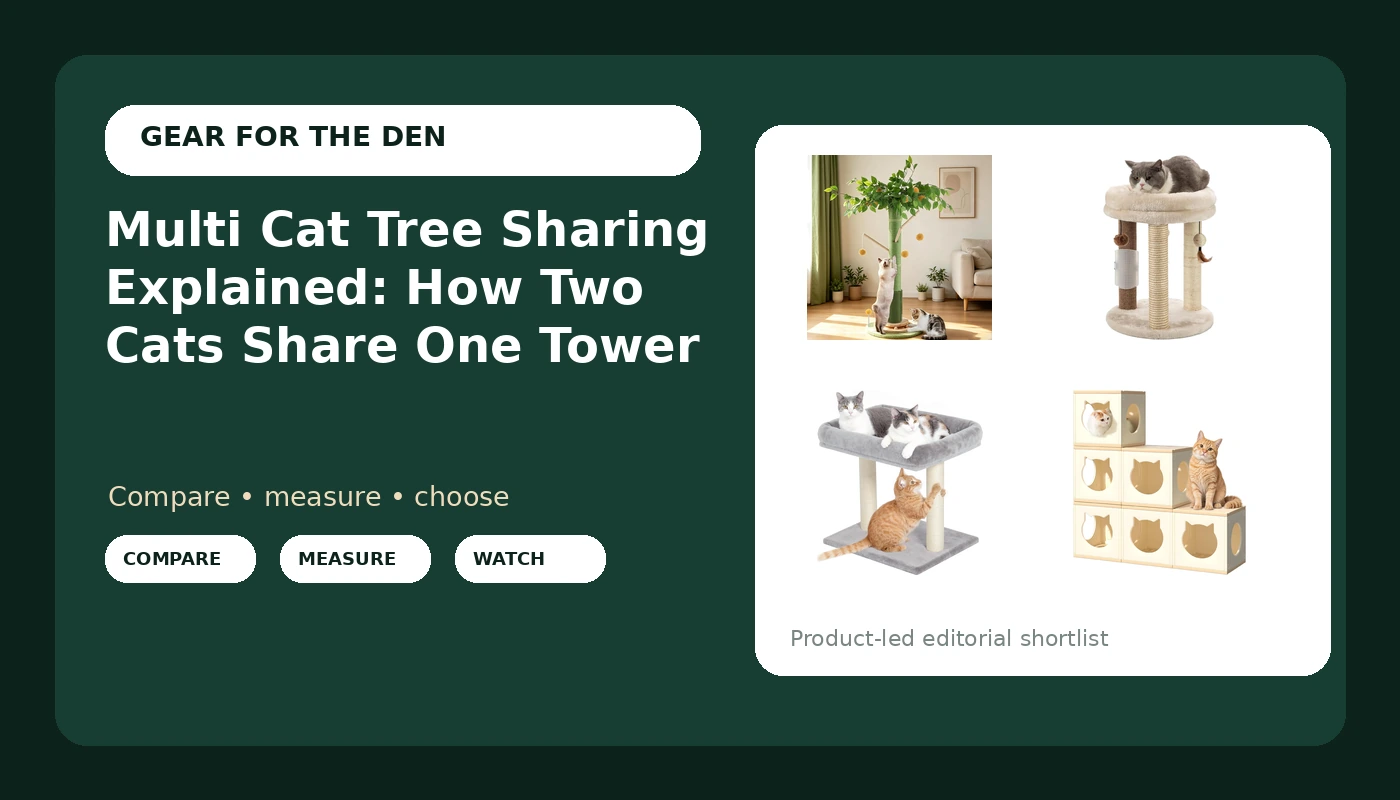
| 6-Cube Stackable Cat Tree Tower, Plastic Cat Tunnel for Indoor Cats | Households that want to build height and routes over time | Six stackable cubes with a plastic tunnel, arranged rather than fixed |
Tall vertical station: 46" Tall Cat Scratching Post, Natural Sisal Cat Tree for Indoor Adult Cats
A single tall post is the most direct answer for a cat that wants height, and in a multi-cat room it works best as one station among several rather than the only structure. The trade-off is easy to picture: one post means one main landing spot, so a second cat either waits or finds somewhere else to be. Post diameter matters more than height for scratching, because a cat needs to wrap its front paws around the post and pull to full stretch, and a post that is too thin flexes and gets ignored. Place this one where a cat can watch the room from the top, and add a second, lower resting option nearby so the cat on the floor is not staring up at a rival.
Compact starter: MECOOL 4in1 Small Cat Tree,Scratching Post with Tower Soft Bed, Sisal Carpet Jute Posts with Three Hanging Ball Toys and Massage Brush
The appeal here is consolidation: a bed, scratch posts, hanging toys, and a brush in one small footprint, which suits a studio apartment or a corner that cannot take two separate trees. The trade-off is that consolidation and separation pull in opposite directions. A multi-cat household wants stations that sit physically apart, and a four-in-one unit puts most of its value in one place. Used as the main tree, it can still work if you add a second, simpler station elsewhere in the room. Used as the only cat furniture you own, it is more likely to produce a cat that guards the bed. Check perch width before you commit, because the bed is the premium spot and the smallest cat usually loses that argument.
Small-space perch: KinoTail 19" Small Cat Tree with Scratching Post for Indoor Cats with Perch
This sits at the low end of the vertical range, and that is the point. A 19-inch tree suits a kitten, a senior cat that no longer jumps well, or a room where you want a scratch surface and a perch without a tall structure in the middle of it. The trade-off is capacity: a low perch is easy to reach, which also makes it easy for another cat to displace. Perch width and shelf depth decide whether an adult cat can actually settle there, and a perch that is too small becomes a launch pad rather than a resting spot. This works well as a second or third station in a multi-cat setup, especially for the cat that keeps getting bumped off the high perch.
Modular system: 6-Cube Stackable Cat Tree Tower, Plastic Cat Tunnel for Indoor Cats
The cube tower takes a different approach: instead of choosing a fixed shape, you build one. Six stackable cubes and a plastic tunnel let you create multiple levels, separate entries, and routes that do not force two cats through the same opening. That flexibility is what makes it interesting for multi cat tree sharing, because you can add height without adding a single contested ladder. The trade-offs are assembly, floor space, and cost, plus a plastic surface that will not satisfy a cat looking for sisal to dig into. Anchor type and weight limit matter most here, since a tall stack of cubes puts more leverage on whatever is holding it upright.
Prices and availability may change. Product images, names, and retailer links are matched to verified listings. No current price, rating, stock status, or measured result is stated here without current evidence.
What multi cat tree sharing actually requires
Cats do not share a perch so much as take turns on it, and the terms of that arrangement are usually set by whoever is bigger, faster, or more motivated. That is why a tree that works for one cat can fail for two even when nothing about the tree has changed. What changes is competition: the same platform becomes a resource worth defending, and the cat that loses the first round often stops using the tree entirely.
Look at a tree as a set of resources rather than a piece of furniture, and the shopping criteria get concrete:
- Platform height. A tree with one high platform creates one premium spot. Two or three platforms at different heights, ideally with different sightlines, spread the value around.
- Perch width. A perch has to fit a curled adult cat. A perch narrow enough that paws hang off the edge gets abandoned or used only as a step.
- Shelf depth. Depth matters for the same reason. Shallow shelves suit perching and watching; deeper ones suit sleeping.
- Post diameter. Cats need to wrap their front paws around a post and stretch. A post that is too thin flexes under that pull and stops being attractive.
- Hammock fabric. If a model includes a hammock, the fabric and how it attaches decide whether it holds a cat without sagging into an unusable bowl.
- Anchor type. Tall structures need to be secured. Whether the tree uses a wall strap, a wide base, or both affects where it can safely live.
- Weight limit. Any manufacturer-stated limit applies to the whole structure and to individual platforms, and it is worth checking before the heaviest cat claims the top shelf.
There is no single ideal multi cat tree sharing layout. A two-cat apartment with one window needs a different arrangement from a house with a hallway, a landing, and a sunroom. The correct multi cat tree sharing plan is the one where every cat has a route out of any spot it can get into, and where no single platform is the only place worth being. A crowded tree also shows up outside the home: a cat that has to compete for space is a cat that fights a carrier size that does not let it stand and turn on the way to the vet.
How to plan multi cat tree sharing before you buy
Plan the arrangement before you buy anything. The most common mistake is buying for the room in a product photo rather than the room you actually live in.
- Count your cats, then add one. Two cats want three usable resting spots, because the third spot is what prevents a standoff over the second.
- Walk the room and mark the stations. Put them apart, ideally out of direct sightline of each other, with a clear path between them.
- Measure your largest cat against the specs. Platform height, perch width, and shelf depth should suit the biggest cat in the house, not the smallest.
- Check the scratch surfaces. Post diameter and material decide whether a cat uses the post or the arm of your couch.
- Plan the anchor before the tree arrives. Decide which wall or corner takes a strap, and confirm the weight limit covers your cats.
Practical guidance for a calmer multi-cat tree
- Spread stations around the room instead of clustering them in one corner, so no single cat can guard the only route. Our notes on cat tree placement in small apartments cover the same idea.
- Put the highest perch where a cat can watch the door and the window, but not where it blocks the only path to the food bowl.
- Watch for guarding in the first week. If one cat camps the ladder, add a second way up rather than moving the tree.
- Refresh scent regularly. Rubbing a shared blanket or a little catnip on each platform encourages every cat to use all of them.
- Recheck the anchor type and hardware as cats grow, and re-tighten anything that has worked loose.
Which option should you choose?
Choose the 46" Tall Cat Scratching Post, Natural Sisal Cat Tree for Indoor Adult Cats when you want height and a full-length sisal scratch surface, and you have room for a second station nearby. Choose the MECOOL 4in1 Small Cat Tree,Scratching Post with Tower Soft Bed, Sisal Carpet Jute Posts with Three Hanging Ball Toys and Massage Brush when you want one compact unit covering bed, scratch, and play in a small room and can add a simpler second station later. Choose the KinoTail 19" Small Cat Tree with Scratching Post for Indoor Cats with Perch when you have a kitten, a senior cat, or a tight corner and need a low perch with a scratch post. Choose the 6-Cube Stackable Cat Tree Tower, Plastic Cat Tunnel for Indoor Cats when you want to build levels and separate routes over time and you are prepared to assemble and anchor a larger structure.
Nothing above is a measured claim. What separates these options is layout, not marketing copy: check the current listing for the platform height, perch width, shelf depth, post diameter, weight limit, and anchor type of the exact model before you buy, because specifications can change between versions of the same tree.
The bottom line
Multi cat tree sharing comes down to supply. Cats do not negotiate over a single perch; they either avoid the tree or one cat claims it and the other gives up. Give each cat its own station, its own scratch surface, and a way down that does not pass through another cat's space, and the tower stops being a contested resource. If you can only add one thing, add a second resting spot rather than a taller one.