Three senior dogs have shared this house over the years, and the question I get asked most often is the one I ask myself every time a stiff-hipped foster arrives: non slip dog mat vs dog cot for senior dogs, which one actually helps? I have watched a twelve year old Labrador refuse to cross a hardwood hallway, then walk the same route without a wobble once a rug went down. I have also watched a dog that could not rise from tile stand up on its own from a cot. The answer is not brand loyalty. It comes down to friction, bed height, and how much help your dog will still accept from you.
The short answer: for a senior dog on smooth flooring, a non slip dog mat wins, because the slipping happens under the paws and that is exactly where a mat puts its grip. A cot wins when your dog can still step up unaided and needs to sleep off cold, hard ground. Most households need the mat first and the cot second.
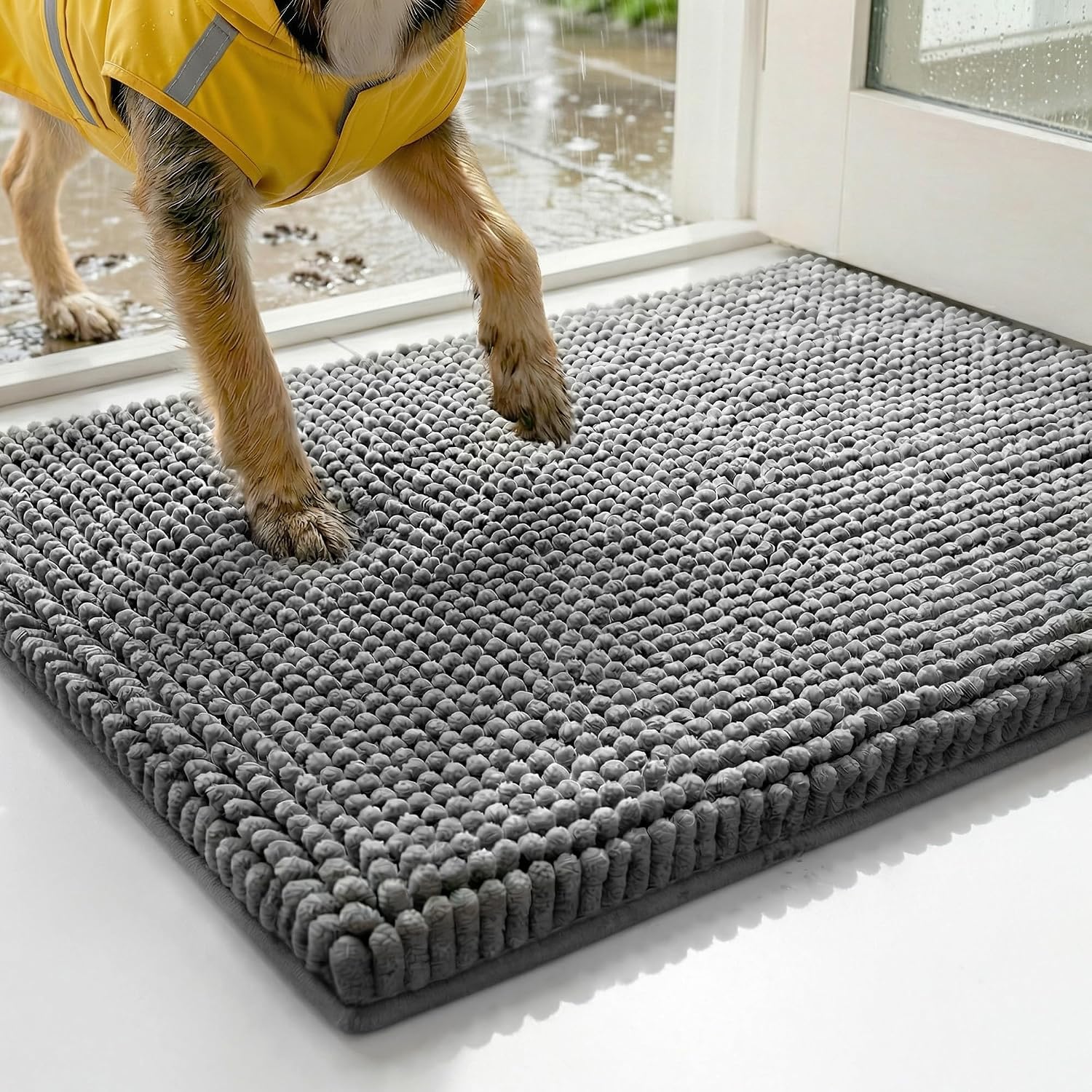
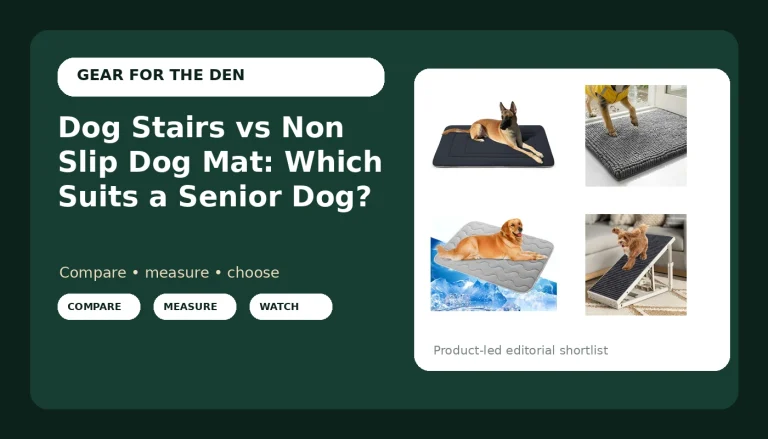
Deconovo Absorbent Chenille Dog Mat for Muddy Paws, Non Slip, TPR Backing
Lowest-cost way to add real grip at a doorway; TPR backing holds on tile and hardwood; chenille soaks up wet paws
No padding at all, so no hip support; too thin to sleep on for long stretches
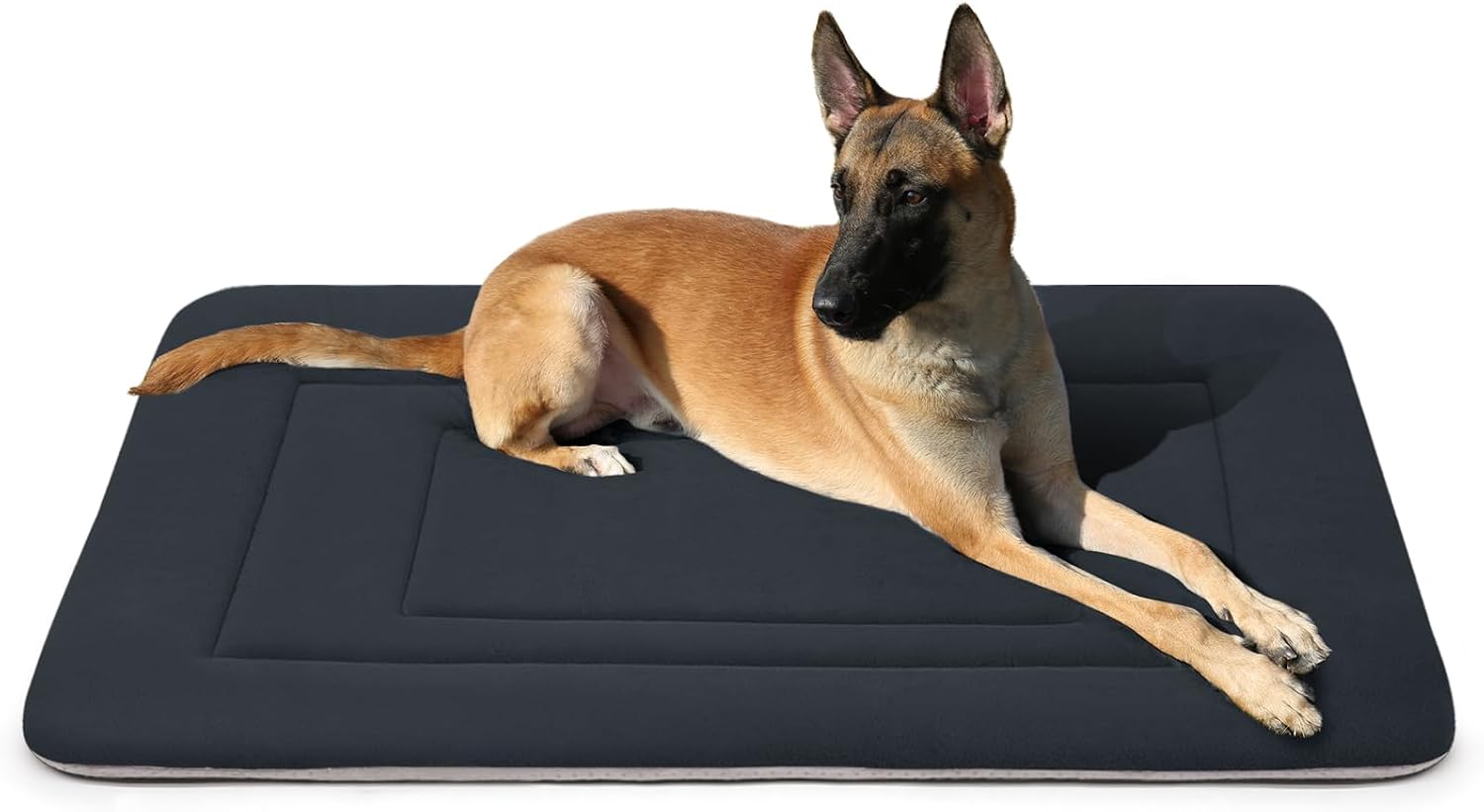
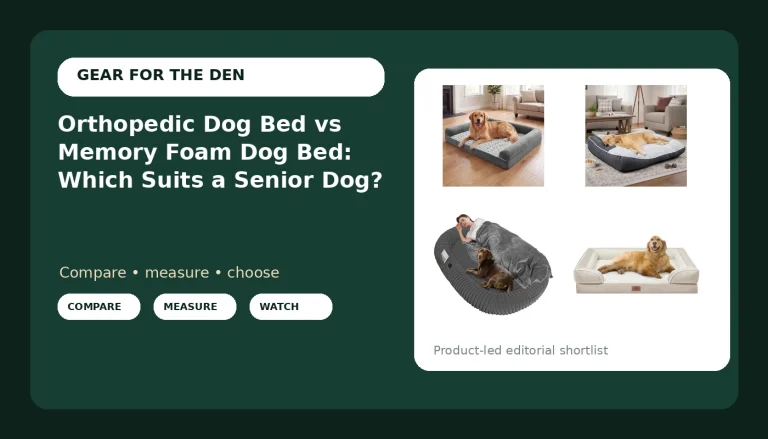
JoicyCo Dog Bed Soft Dog Crate Bed Pad Mat, 42 in Non Slip Bottom Washable Beds for Large Dogs, Pet Bed Mattress Kennel Pad, Dark Blue Gray
42 inch size fits a large crate; non slip bottom keeps it on the tray; washable for accidents
No published foam density, so the support that matters most is the spec the listing leaves out
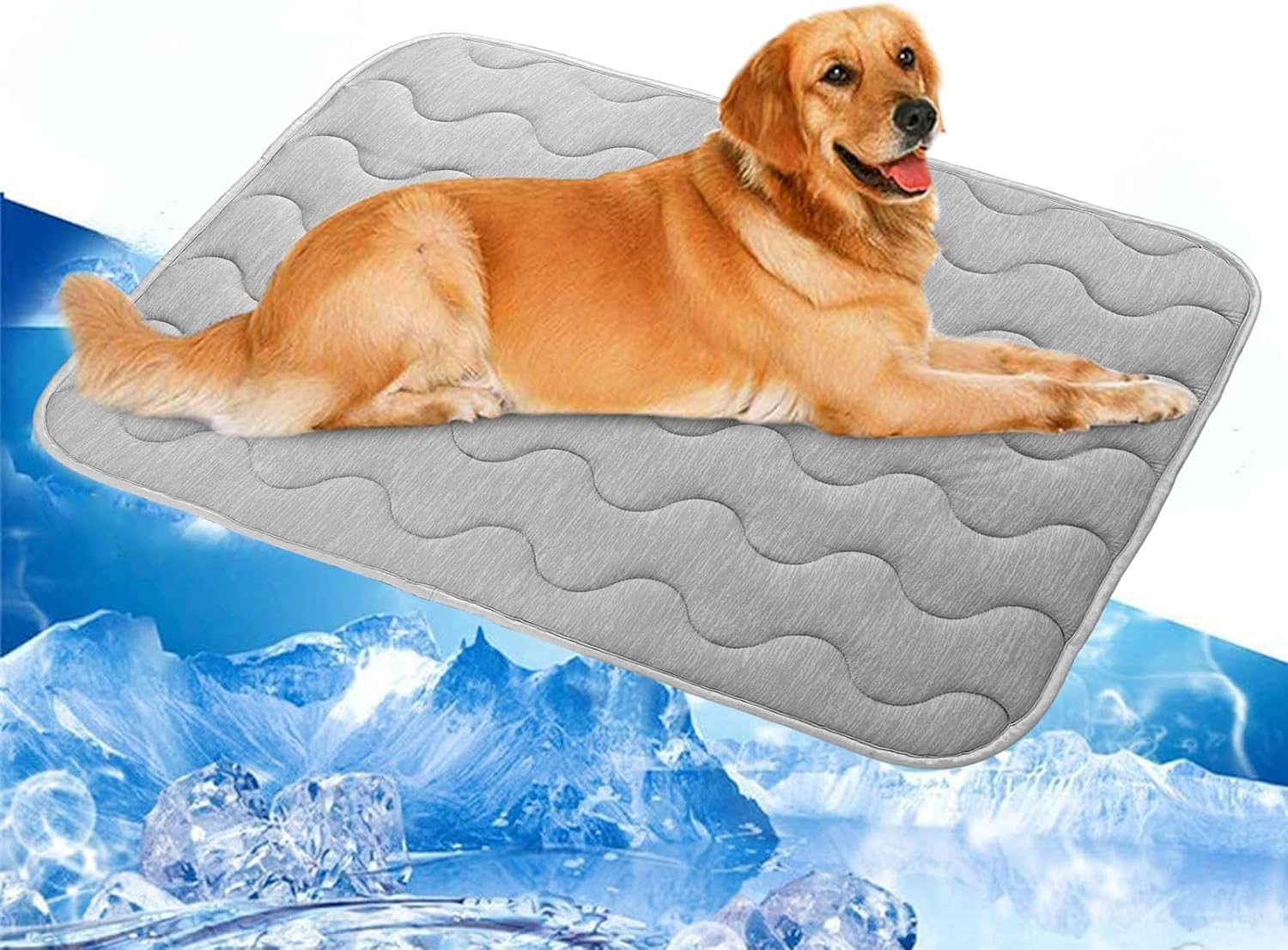
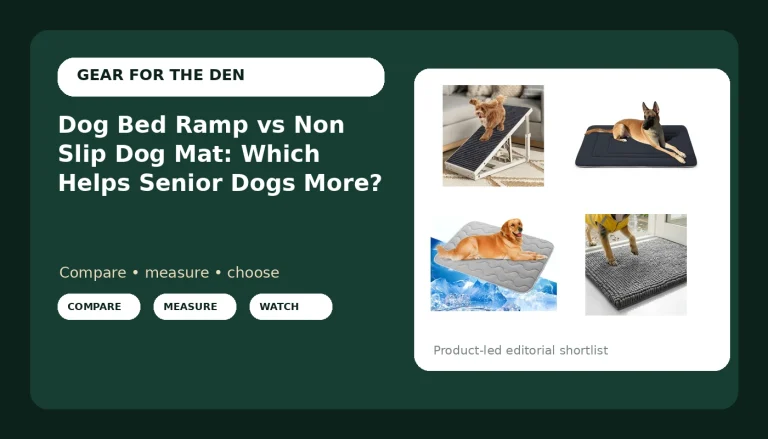
Nacaro Extra Large Dog Cooling Mat,39.4''*27.6'' Washable Cooling Pet Pad, Q-MAX>0.45,XL Portable Kennel Puppy Bed for Summer,Non Slip Sleeping Blanket Pet Pads (Grey,100L x 70W cm)
Extra large footprint for a big dog; washable; Q-MAX above 0.45 gives a genuinely cool contact surface in summer
Passive cooling fades on long naps; it is not a padded bed and will not cushion a hip
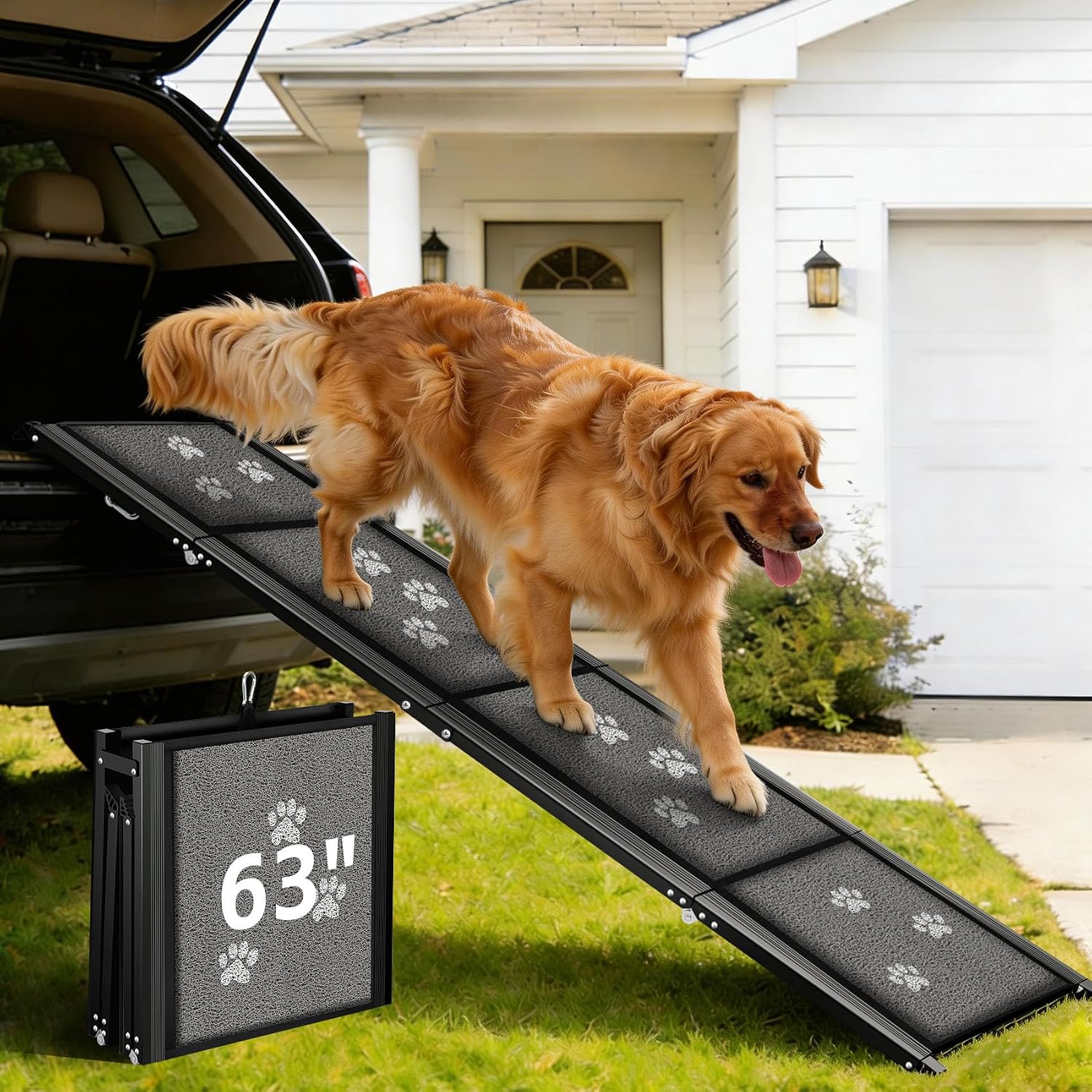
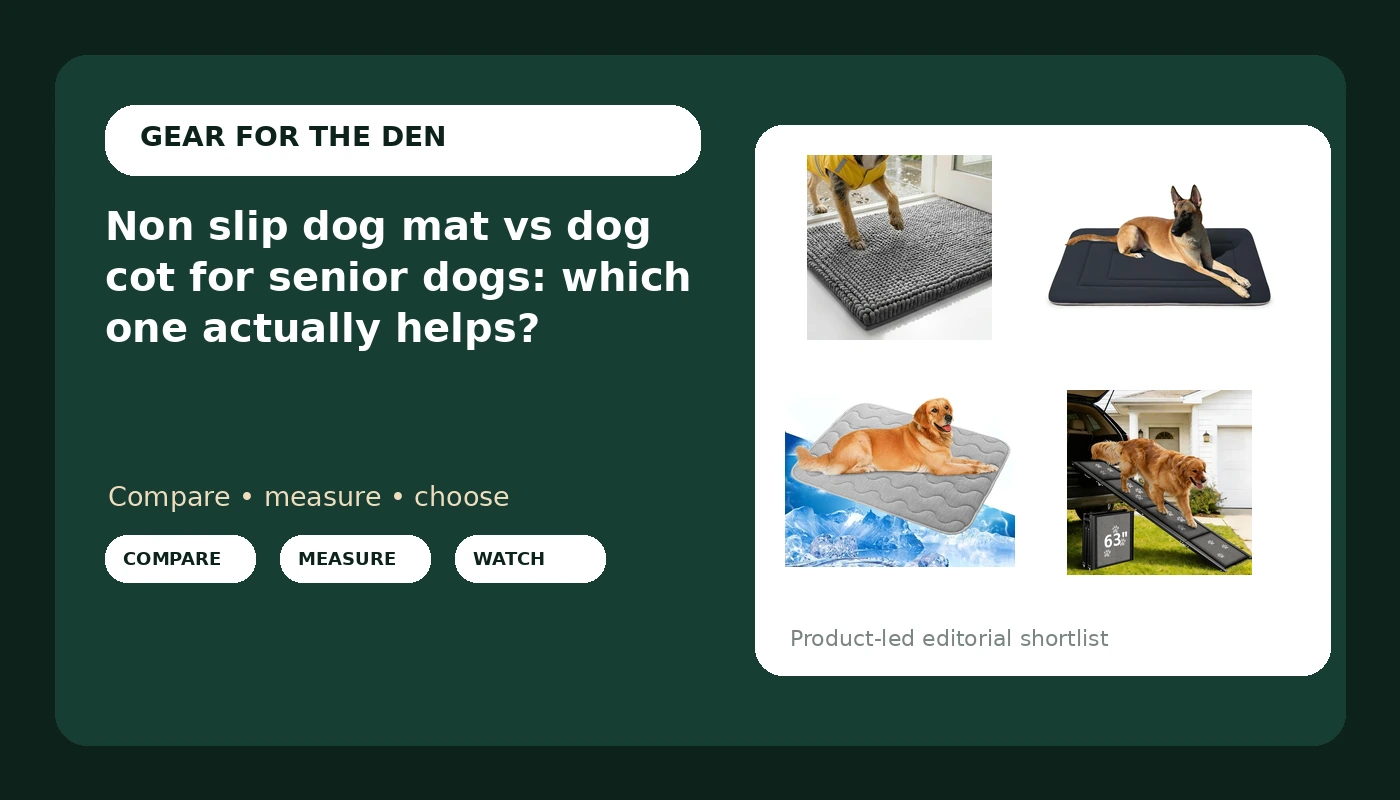
Dog Ramp for Car 63" Long & 17" Wide Portable Ramps for Large Dogs Non Slip Rug Surface Extra Wide Steps for SUV Camper Jeep and Truck Folding Pet Ramp Supports Up to 250LBS
63 inches of length for a shallow ramp angle; 17 inches wide for a wide stance; non slip rug surface; 250 pound capacity
Only solves the car, not the house; needs storage space and a flat landing at both ends
Prices and availability may change.
How I judge gear for senior dogs
Senior dogs do not need more gear. They need gear that removes one specific obstacle. A mat removes slick flooring. A cot removes a cold, hard floor and the effort of rising from it. A ramp removes the height of a car bumper that your dog can no longer clear comfortably. Every product in this comparison gets judged on three questions: does it change what the dog can physically do, does it survive a wash, and does it stay where you put it? Foam density, weight capacity, and non slip backing are the specs that decide those answers. Pattern and color are not specs.
non slip dog mat vs dog cot for senior dogs: the real dividing line
The difference between non slip dog mat and dog cot for senior dogs is altitude, not quality. A mat is a floor-level fix. It sits at bed height zero, so nothing about your dog's routine changes except the surface under its paws. A cot lifts the dog six to ten inches off the ground, which changes the temperature it sleeps at, the pressure on its elbows, and the amount of effort required to lie down and get up.
That last point is the trap. A cot with a soft, hammock-style deck can be excellent hip support for a dog that can still step up, because the fabric gives slightly and takes pressure off the joints. The same cot is useless, or worse, for a dog with weak rear legs, because bed height becomes a wall. Before you buy anything, watch your dog get up three times on a bad day. If it can step over a two inch lip unaided, a cot is realistic. If it needs a running start, or if it drags its rear feet, start with a mat and talk to your vet about a low platform bed instead.
Traction first: what a non slip backing actually does
Slipping does not happen when your dog stands still. It happens at push-off, when the rear legs drive forward and the paws need a surface that resists them. A non slip backing solves half of that equation by gripping the floor. The top surface has to do the rest.
That is why the material on top matters as much as the rubber on the bottom. Chenille, the looped fabric on the Deconovo mat, has a lot of texture for paws to bite into, and it absorbs water at the same time. The Nacaro pad uses a smoother, cooler face and relies on its backing to stay put. Both approaches work on tile and hardwood. Neither works as well on thick pile carpet, because the carpet already gives the paws something to grip, and the mat becomes a trip hazard for a dog that drags its feet.
The Deconovo chenille mat: absorbency for muddy paws
This is the smallest commitment in the batch, and for a senior dog it does two jobs at once. The chenille pile soaks up muddy paw water at the door, and the TPR backing keeps the whole thing from sliding when a dog pushes off it. TPR, or thermoplastic rubber, is the same family of material used on the bottom of non slip rugs, and it grips hard flooring better than the stitched dots you see on cheap mats.
Where it loses: there is no padding and no hip support. A dog that needs cushioning under an arthritic hip will not get it here. It is a traction tool, not a bed.
The JoicyCo crate pad: foam density and crate fit
The JoicyCo pad is the one in this group that behaves like a bed. At 42 inches it fits a large crate, and it is built as a kennel pad rather than a floor mat, which means it is meant to sit inside a crate tray where it cannot wander. The non slip bottom does the same job as the Deconovo backing, just in a smaller footprint.
The spec that matters, and the one the listing does not give you, is foam density. Density decides whether a pad compresses flat under a 70 pound dog in a month or holds its shape for years. Without a published number, judge it by thickness and by how the pad feels when you press the center with your palm. If it bottoms out under your hand, it will bottom out under your dog's hip, and a crate pad that flattens is a crate pad that stops helping.
The Nacaro cooling mat: heat, joint mobility, and summer floors
Senior dogs run hot. Thick coats, slower circulation, and long naps on warm floors all push a dog toward the coolest spot in the house, which is usually the bathroom tile. The Nacaro mat gives that instinct a designated place to happen: 39.4 by 27.6 inches of washable cooling pad with a non slip base, sized for an extra large dog.
The number worth understanding here is Q-MAX, a contact-coolness rating for fabrics. Higher values pull heat away from skin faster, and a Q-MAX above 0.45 is the range cooling textiles aim for. That tells you the surface will feel cool on contact. It does not tell you the pad will stay cool through an eight hour night, because no passive cooling mat does that without a gel layer or a fridge. Treat it as a summer nap pad and an easy-to-clean surface for a dog with joint mobility problems, not as air conditioning.
When a cot wins: bed height, hip support, and weight capacity
The non slip dog mat vs dog cot for senior dogs debate usually ends right here, at the step up. A cot earns its place when your dog can still climb onto it. Two things decide that: bed height and weight capacity. Most cots sit six to nine inches off the floor, and a senior dog that clears that height without hesitating gets real benefits. Air circulates under the deck, pressure points rest on a slightly springy surface, and the dog is not lying on a floor that pulls heat out of its joints.
Weight capacity matters more than most people expect. A cot rated well below your dog's weight will sag in the middle, which turns hip support into a hammock that traps a dog in a dip and makes standing up harder. If your dog is at the top of a cot's range, size up or look at a low platform bed instead. And if your dog has lost bladder control, a cot with a removable, washable cover is far easier to live with than any foam pad, because liquid runs through the deck instead of soaking into it.
The car is a different problem: ramp angle and lift capacity
Neither a mat nor a cot solves the tailgate. A senior dog that walks across the living room without trouble still cannot jump into an SUV, and lifting a large dog in and out of a car is how owners hurt their own backs.
The Dog Ramp in this batch addresses that directly: 63 inches long, 17 inches wide, folding, with a non slip rug surface and a stated lift capacity of up to 250 pounds. Length is the spec to focus on, because ramp angle is a function of length and vehicle height. A 63 inch ramp against a typical SUV tailgate produces a much gentler angle than the 40 inch ramps sold as universal solutions, and a gentler angle is the difference between a dog that walks up on its own and a dog that plants its feet and refuses. The 17 inch width also matters for a large dog with a wide stance, and the non slip rug surface is the same principle as the mats above: grip under the paws at push-off.
Check your dog's weight against the 250 pound rating before you buy, and measure the sill height of your own vehicle rather than trusting the one in the product photos.
Non slip backing is non-negotiable
A mat that slides is worse than no mat at all, because a dog that trusts a surface and then feels it move will stop trusting floors entirely. Three things to check:
- Backing material. TPR and natural rubber grip. Sprayed-on dots wear off in the wash.
- Wash behavior. A backing that survives ten cycles is worth more than a prettier pattern.
- Floor type. Grip ratings are written for hard floors. On thick carpet, a mat can bunch and become the hazard.
If you already own a mat that slides, a cheap rug pad underneath fixes it for less than a replacement costs.
What the listings promise, and what they do not
Three of these four listings publish a real spec. The Nacaro mat states a Q-MAX above 0.45. The ramp states a 250 pound capacity and a 63 inch length. The JoicyCo pad states its 42 inch size and non slip bottom. The Deconovo mat states its TPR backing and absorbent chenille face.
What none of them publish is foam density, and that is the number that predicts whether a padded mat will still be supportive next winter. That is not a reason to avoid these products. It is a reason to buy the padded option from a seller with an easy return window, press it with your palm when it arrives, and send it back if it flattens to the floor.
Should you buy a cot before a mat?
No. Buy the mat first, unless your dog already steps onto furniture without help. A mat costs a fraction of a cot, it fixes the problem behind most senior dog falls, and it works in every room, in the car footwell, and in front of the food bowl. If you have read a dog cot for senior dogs vs non slip dog mat comparison somewhere else and came away thinking the cot is the upgrade, remember that a cot only helps a dog that can get onto it. Traction helps every dog, at every stage.
Whether you end up with a non slip dog mat or dog cot for senior dogs, the sequence is the same. Fix the floor first. Watch how your dog moves for a week. Then decide whether it needs a raised sleeping surface, and if it does, measure the step up and compare that to what your dog clears today. The non slip dog mat vs dog cot for senior dogs decision is really a question about your dog's rear legs, not about which product is better made.
What I'm testing next
Two things are queued for this category. First, a low platform bed roundup for dogs that cannot clear a standard cot, since bed height eliminates most cots for senior dogs before any other spec gets a vote. Second, a look at whether washable covers hold up after repeated accidents, which is the question readers ask most after they have already bought a mat. If a cover cannot survive twenty washes with its backing intact, it does not belong in a house with an aging dog.