If your senior dog has started pausing at the edge of the couch or scrambling for grip on the kitchen tile, you have probably already searched dog stairs vs non slip dog mat and gotten two completely different product categories back. That is the first thing worth untangling, because they are not competing versions of the same purchase. Stairs, or a ramp doing the same job, change the geometry of the climb. A mat changes the grip under the paws once the climb is over. Mix the two up and you end up with a ramp your dog walks around, or a mat that never gets used because the real problem was the bed height all along.
The short answer: if your dog slips on hard floors, buy the mat first. If your dog is already trying to get onto the bed or couch and failing, the height solution comes first. Most senior dogs end up needing both, but the order matters, because the friction that shows up every single day is almost always the floor.
Here is how the four products we looked at split across those two jobs.
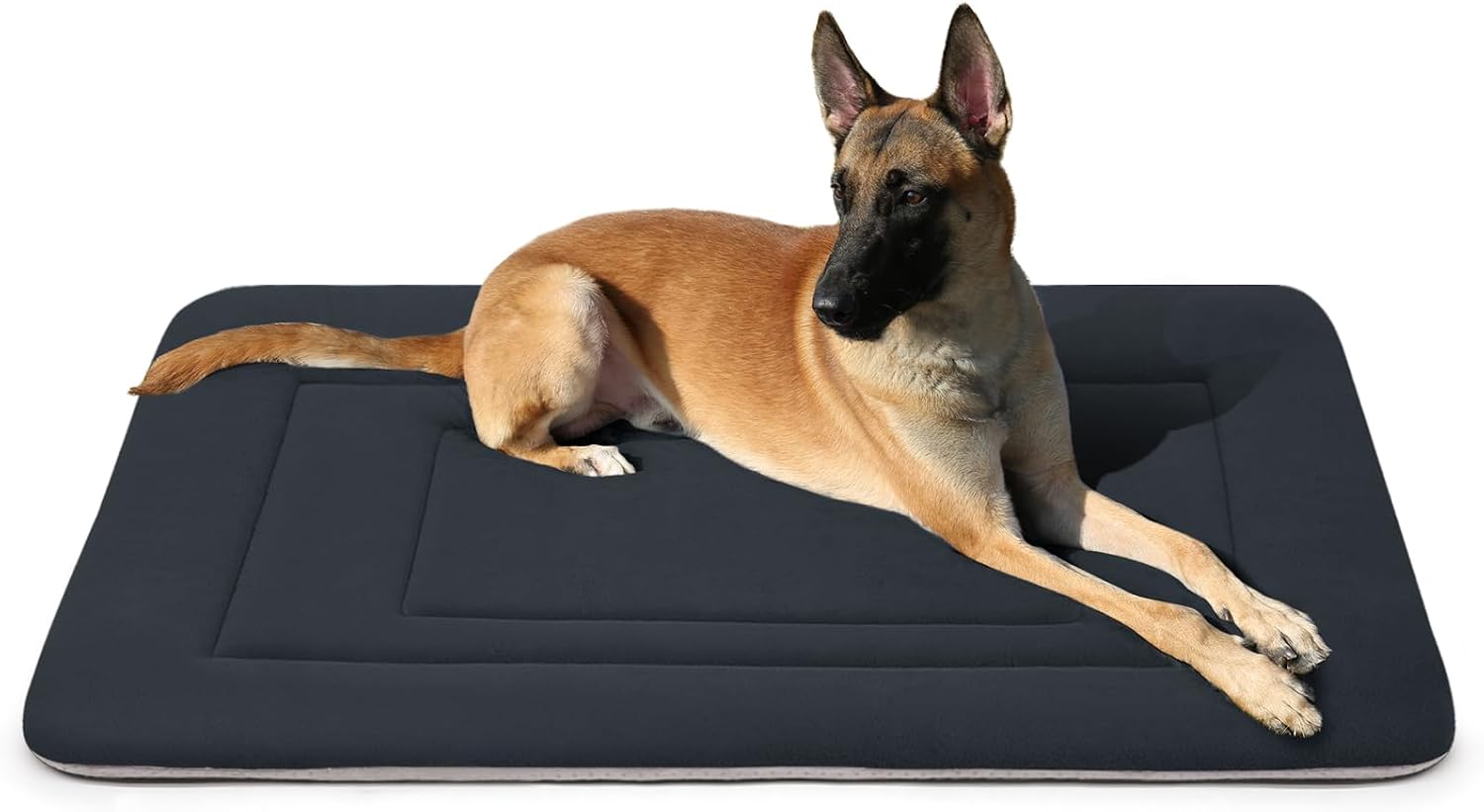
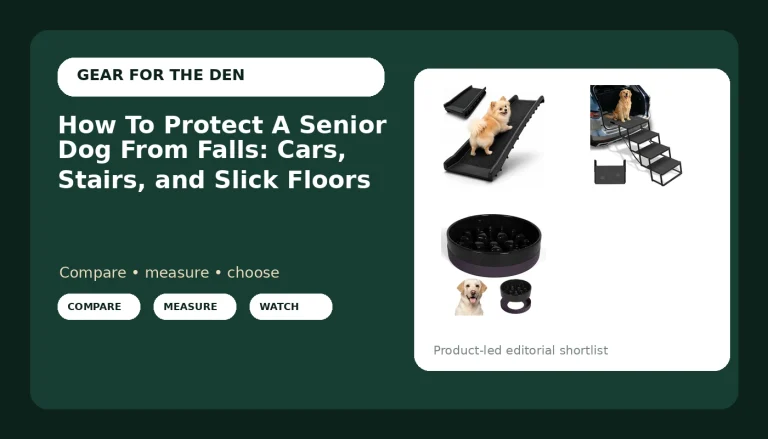
JoicyCo Dog Bed Soft Dog Crate Bed Pad Mat, 42 in
42 in footprint fits large dogs, washable cover, non slip bottom keeps it planted in a crate
It is a sleep surface only, adds no height and publishes no foam density
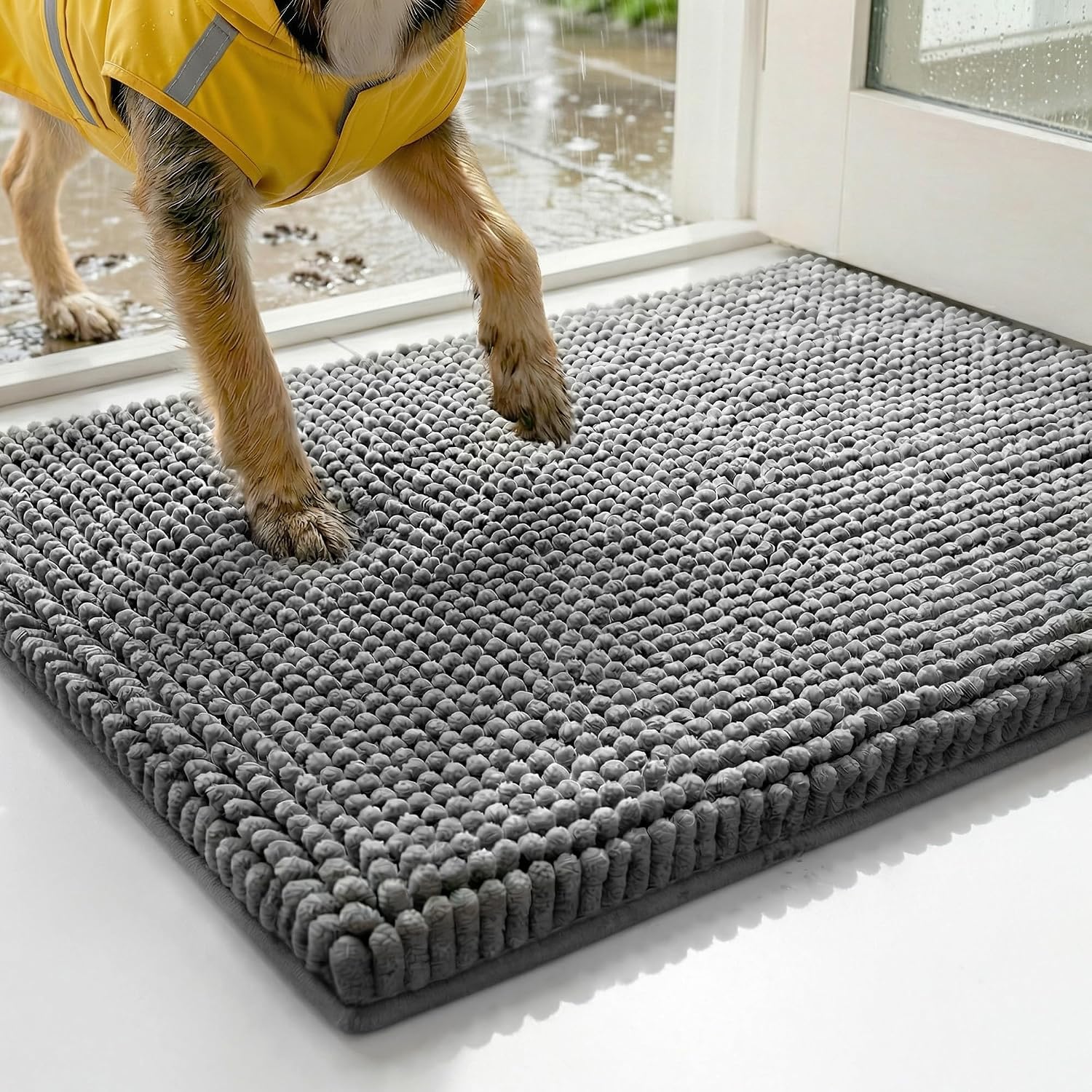
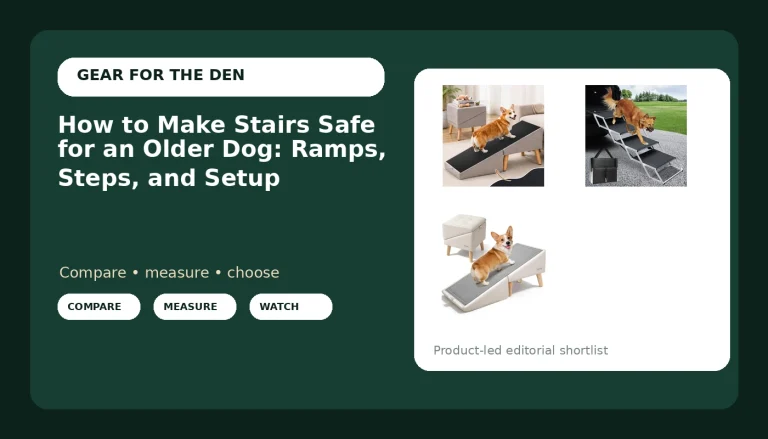
Deconovo Absorbent Chenille Dog Mat for Muddy Paws, Non Slip, TPR Backing
Chenille pile absorbs muddy paw water and the TPR backing holds on tile
Thin entryway mat with no cushioning for hips or elbows
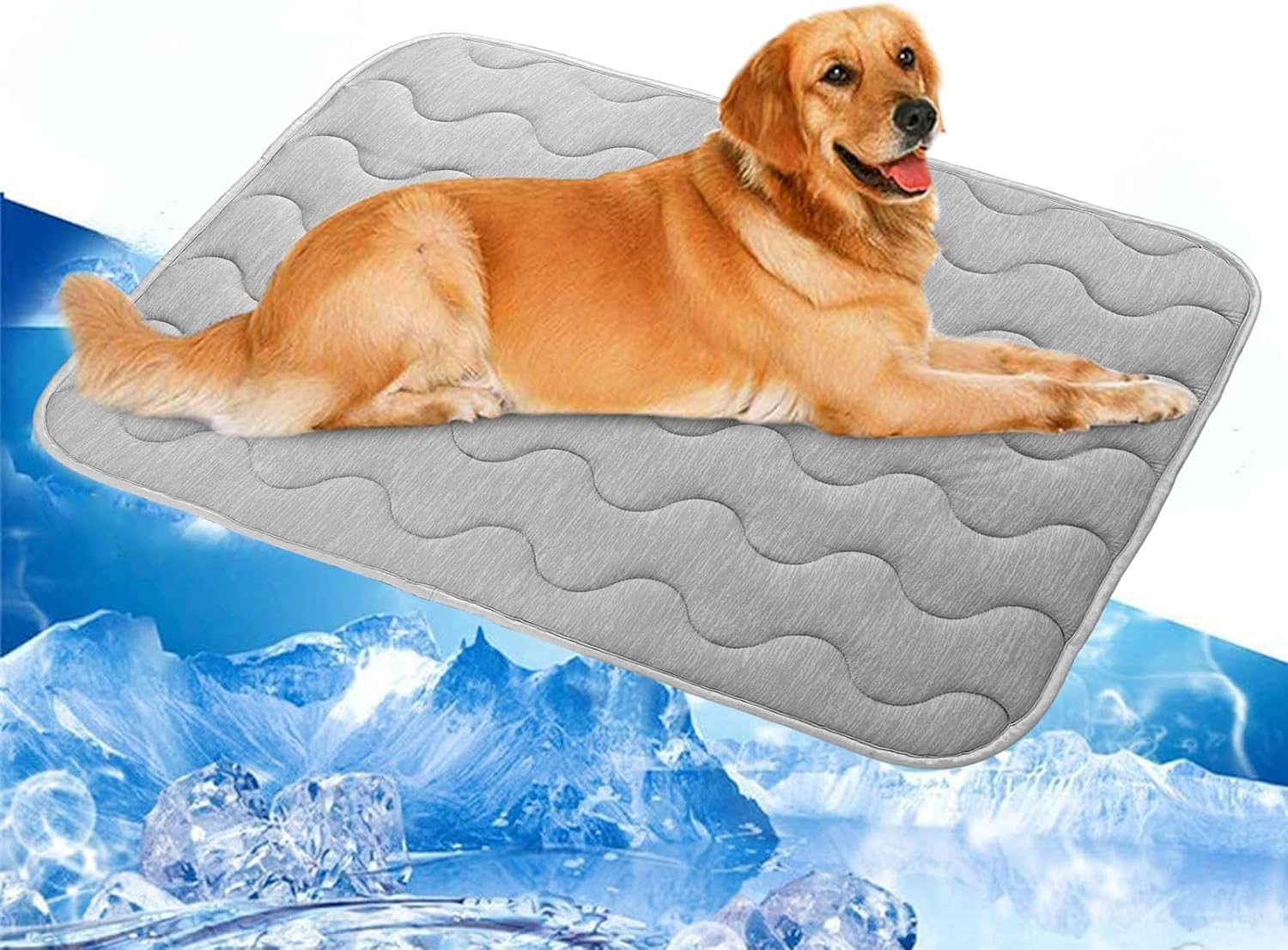
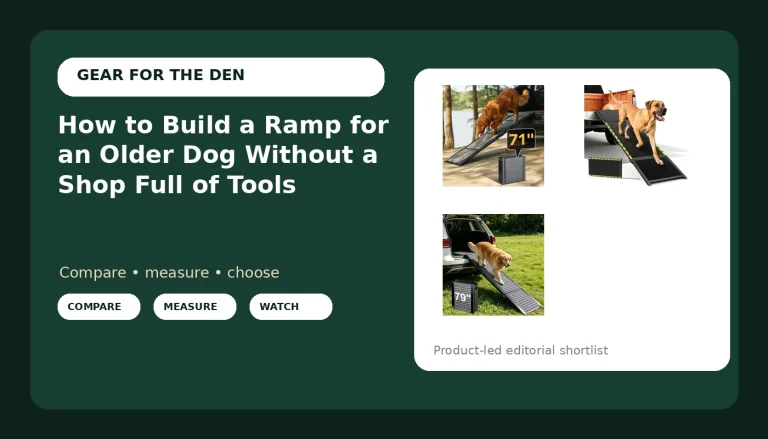
Nacaro Extra Large Dog Cooling Mat, 39.4 by 27.6 in, Washable, Non Slip
XL footprint, washable, listed Q-MAX above 0.45 for genuine contact cooling
Seasonal cooling only, no joint support, no height
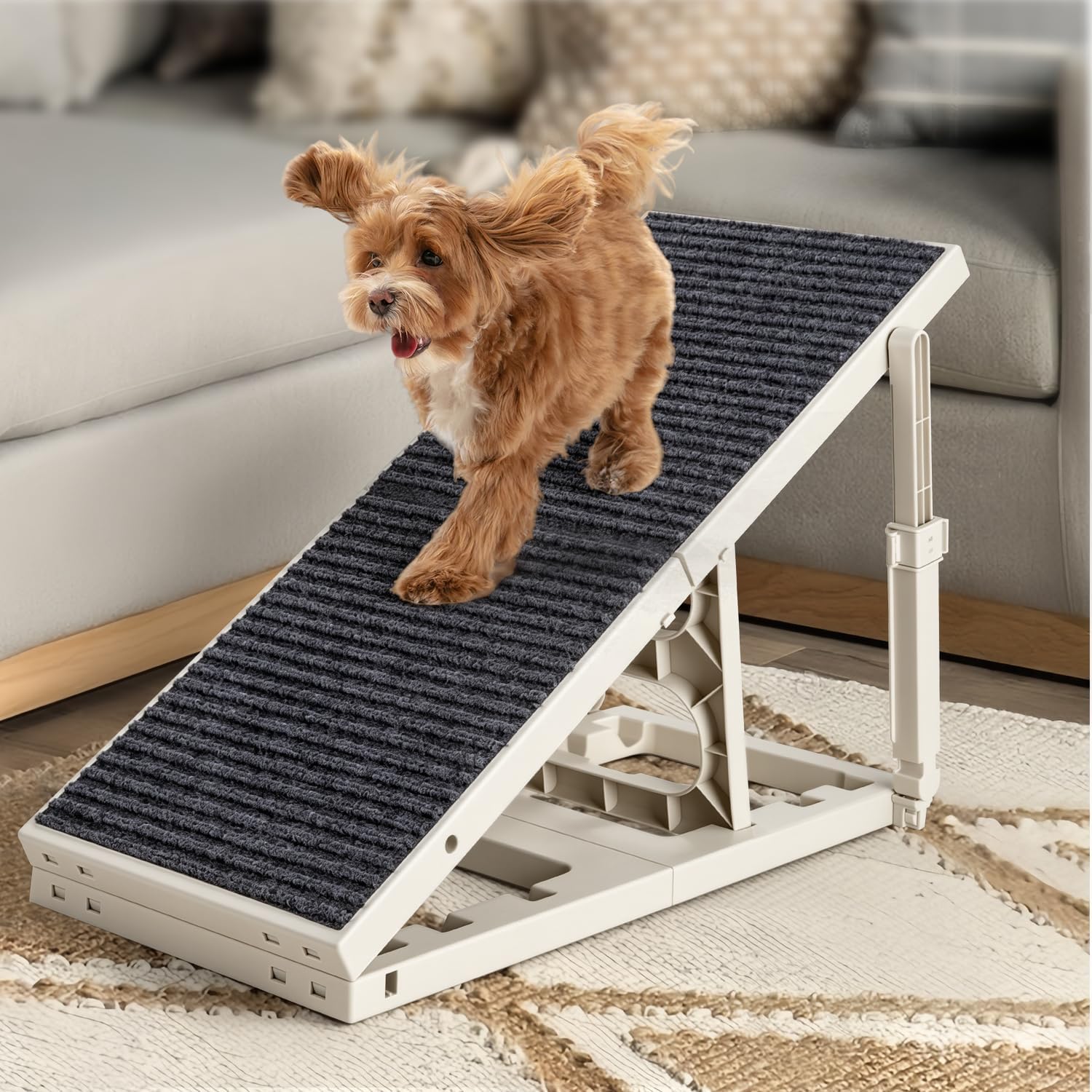
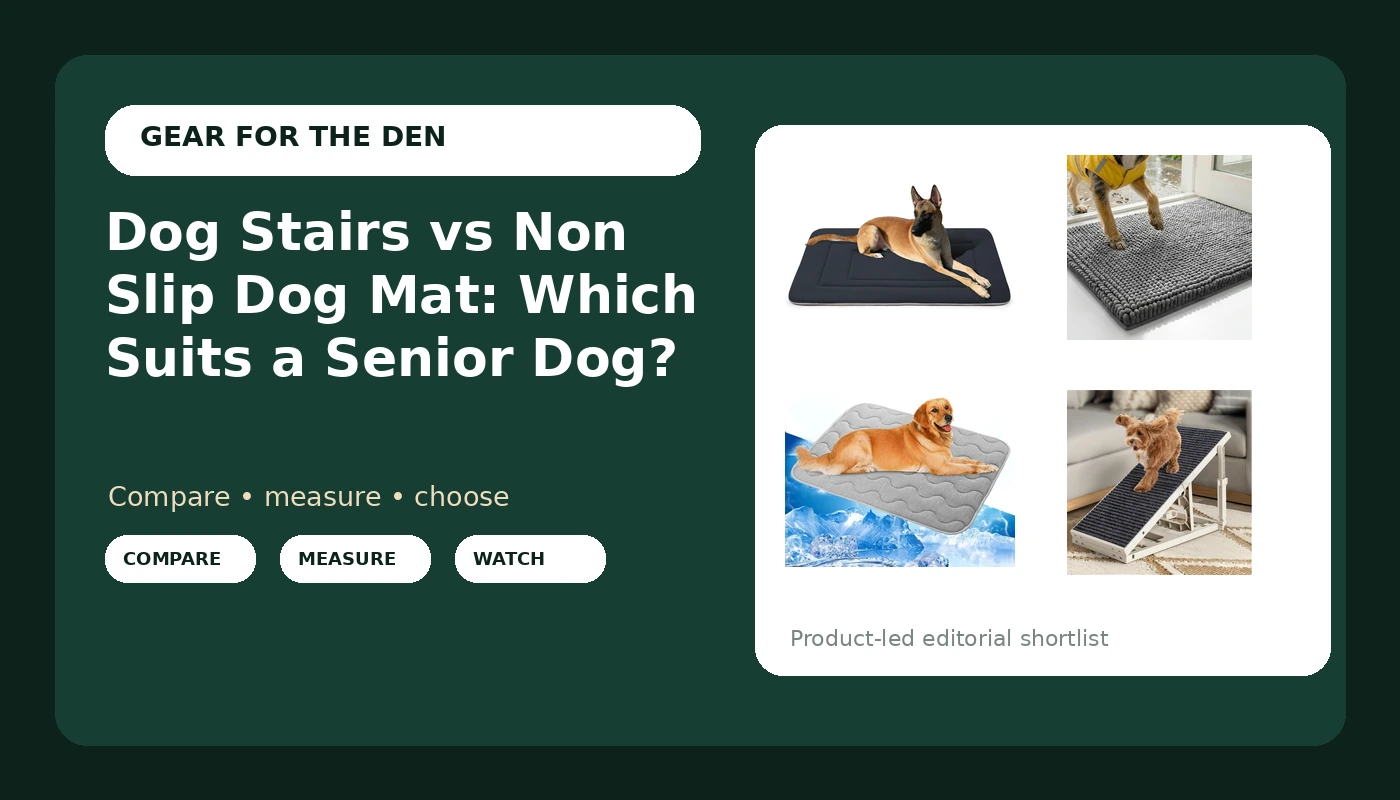
Pawzone Dog Ramp for Bed Couch with Upgraded Support, 3 Levels Height 14 to 18 in, 30LBS Capacity, Foldable and Non Slip
Adjustable 14 to 18 in height, folds flat, non slip walking surface
30 lb capacity rules out most large dogs, which is the group that needs it most
Prices and availability may change.
How we evaluate mats and ramps for senior dogs
We are not going to pretend a mat is complicated. What we compare is what the listings actually commit to: the footprint in inches, the backing material, whether the cover is washable, the listed weight capacity, the adjustable height range on a ramp, and how the product expects to be used. That last one is where most buying mistakes happen. A 42 inch crate pad and a 39 inch cooling mat look similar in a photo and do completely different jobs.
The other thing we refuse to treat as a binary is grip. "Non slip backing" describes a category, not a guarantee. A TPR backing on a chenille mat and a rubberized bottom stitched onto a crate pad both claim traction, and both behave differently on tile than they do on low pile carpet. If your dog is slipping, the surface under the mat matters as much as the mat itself.
Dog stairs vs non slip dog mat: what each one actually does
A ramp or a set of stairs is a height tool. It exists to remove a jump, and its usefulness is measured in two numbers: the height it reaches and the angle it creates. Bed height and couch height are not the same, which is why adjustable ramps exist at all. Too steep and a senior dog with limited joint mobility will not trust it, no matter how good the traction is.
A mat is a traction tool. It does not remove a jump or lower anything. What it does is give a dog with weakening rear legs a surface that does not slide out from under them while they stand up, turn around, or push off. That sounds minor until you watch a dog hesitate on a bare floor for ten seconds before every movement. Hip support and joint mobility start with not slipping in the first place.
That is the whole distinction. If the problem is vertical, a mat cannot fix it. If the problem is horizontal, a ramp cannot fix it.
The three mats here, and the different jobs they do
The JoicyCo crate pad is the sleep surface of the group. It is a 42 inch pad, sized for large dogs, with a non slip bottom and a washable cover, built to sit inside a crate or kennel or on the floor as a mattress pad. For a senior dog that spends most of the day lying down and needs a stable, grippy spot to push up from, this is the shape of the answer. It is not a height solution, and it is not pretending to be one.
The Deconovo chenille mat is the entryway mat. Chenille is an absorbent pile fabric, which is why it is sold for muddy paws, and the TPR backing is there to keep it from sliding when a dog hits it at speed. Think of it as the mat that handles the door, the water bowl, and the hallway. It is the cheapest thing in this comparison and the least like a bed, which is fine as long as you are not expecting cushioning.
The Nacaro cooling mat is the seasonal one. It is an extra large pad at roughly 39 by 28 inches with a listed Q-MAX value above 0.45, washable, with a non slip base. Q-MAX is a measure of how quickly a surface pulls heat away from skin, so a higher number means a cooler feel on contact. In summer, for a heavy coated dog that sprawls on tile to cool down, this is the mat that does something the other two cannot. In January it is a flat pad.
Three mats, three jobs, and only one of them is really about joint mobility in the sense most senior dog owners mean.
The ramp side: when height is the problem
The Pawzone ramp is the only product here that changes elevation, and it is the one to read carefully. It folds, it has a non slip walking surface, and it adjusts across three levels from about 14 to 18 inches, which covers a low couch and a fair number of beds. It is rated for 30 pounds.
That number is the whole story for this category. Thirty pounds is a medium dog, and this article sits under senior and large dogs. If your Labrador is 70 pounds, this ramp is not the one you want, no matter how good the rest of the design is. Weight capacity is the first filter on any ramp, before ramp angle, before surface texture, before anything else. Buy a ramp that is not rated for your dog and you have bought a piece of furniture with a countdown timer on it.
If your dog is inside that 30 pound window, the adjustable height is genuinely useful. A ramp that is too shallow is a tripping hazard, and a ramp that is too steep is a refusal waiting to happen. Matching the ramp angle to the surface your dog actually uses is the difference between a tool and a doorstop.
Weight capacity, lift capacity, and joint mobility
Weight capacity is the number that decides whether a ramp is even in the conversation, but lift capacity is the number that decides your back. If your dog is too heavy to lift onto the bed, you are choosing between a ramp rated for their weight and a set of steps rated for their weight. A mat does not enter that conversation at all, which is exactly why non slip dog mat vs dog stairs is a slightly misleading framing. The two products are not alternatives, they are two halves of one setup.
Joint mobility is the outcome you are buying, and it comes from removing the two things that hurt: the jump and the slip. Stairs and ramps handle the jump. Mats handle the slip. Neither one is a substitute for the other, and neither one is a treatment for anything. If your dog is showing real pain or a sudden change in how they move, that is a vet conversation, not a gear conversation.
Foam density, hip support, and the specs that do not tell you much
Here is where a lot of senior dog shopping goes sideways. Hip support is a claim that depends on foam density, and foam density is a number most mat listings simply do not publish. A crate pad described as soft is not automatically supportive. A cooling mat is a gel or fiber surface designed to move heat, not to cushion a hip.
None of the mats in this comparison advertise orthopedic foam or a published density figure, so treat them as traction and comfort surfaces rather than as joint support. If hip support is the actual goal, you are shopping for an orthopedic bed with a stated density, and that is a different article. What these mats do well is the part that gets overlooked: giving a dog a stable place to stand up.
The difference between dog stairs and non slip dog mat shopping
The difference between dog stairs and non slip dog mat shopping is the question you ask before you type anything into a search bar. For stairs and ramps, the questions are: how high is the surface, how much does my dog weigh, and will my dog actually use it. For mats, the questions are: what surface is underneath, where does my dog slip, and does the mat need to be washable.
Answer those separately and the category stops being confusing. If you are still deciding between dog stairs or non slip dog mat, start with the one your dog fails at today. A dog that will not jump onto the couch needs the ramp. A dog that jumps fine but lands badly on tile needs the mat.
One more thing worth saying out loud: the cheapest mat in this group costs a fraction of the ramp, and that is not an accident. Traction is cheap. Elevation is not. That does not make the mat the better purchase, it just means the low cost of entry makes it the obvious first experiment.
Should you buy the mat or the ramp first?
Buy the mat first if your home has hard flooring and your dog's daily problem is standing up, turning around, or walking without sliding. Buy the height solution first if your dog is already standing at the couch and asking, or if you are lifting them on and off furniture more than once a day. In that second case, check the weight rating before anything else, because a 30 pound limit rules out most of the dogs this category is written for.
If you need both, do not buy them in the same week. Add the mat, watch how your dog moves on it for a few days, then decide whether the jump is still the problem. A dog that stops slipping often stops hesitating at the furniture too, because the hesitation was never really about the height. That is the pattern that makes the dog stairs vs non slip dog mat decision feel bigger than it is.
What we are watching next
Two things. First, cooling mats with published Q-MAX numbers are still rare, and the Nacaro listing is one of the few that puts a figure on it, so we want to see whether that becomes a normal spec or stays a marketing line. Second, we want more ramps rated well above 30 pounds, because the senior dog that most needs a ramp is frequently the large dog that a 30 pound capacity excludes. Until that changes, large dog owners are mostly shopping mats, and that is a real gap in the category.