Soft crate covers and hard crate covers solve the same problem from two directions, and the argument between them usually starts in a driveway. One is fabric that folds down to the size of a paperback, the other is a rigid panel that refuses to sag, and the dog in the back seat does not care which one you chose as long as it stops sliding around. That is the honest frame for soft crate cover vs hard crate cover: not which material is better in the abstract, but which one matches how you drive, how big your dog is, and how much cargo space you are willing to hand over. This guide walks both camps and uses four pieces of gear to show where the line actually falls, including the hard-bottom options, the safety hardware that works with either, and the small accessory that handles the walk at the other end of the trip.
For most dogs that ride in a back seat, a hard-bottom cover is the better default. A rigid platform bridges the footwell gap, holds its shape under a dog that stands and turns, and gives large or senior dogs something flat to push off from. A soft cover wins when storage and fast transfers matter more than structure, or when the dog is small enough that the seat itself is already a stable surface.
Here is how the four products in this comparison line up, and what each one gives up to get there.
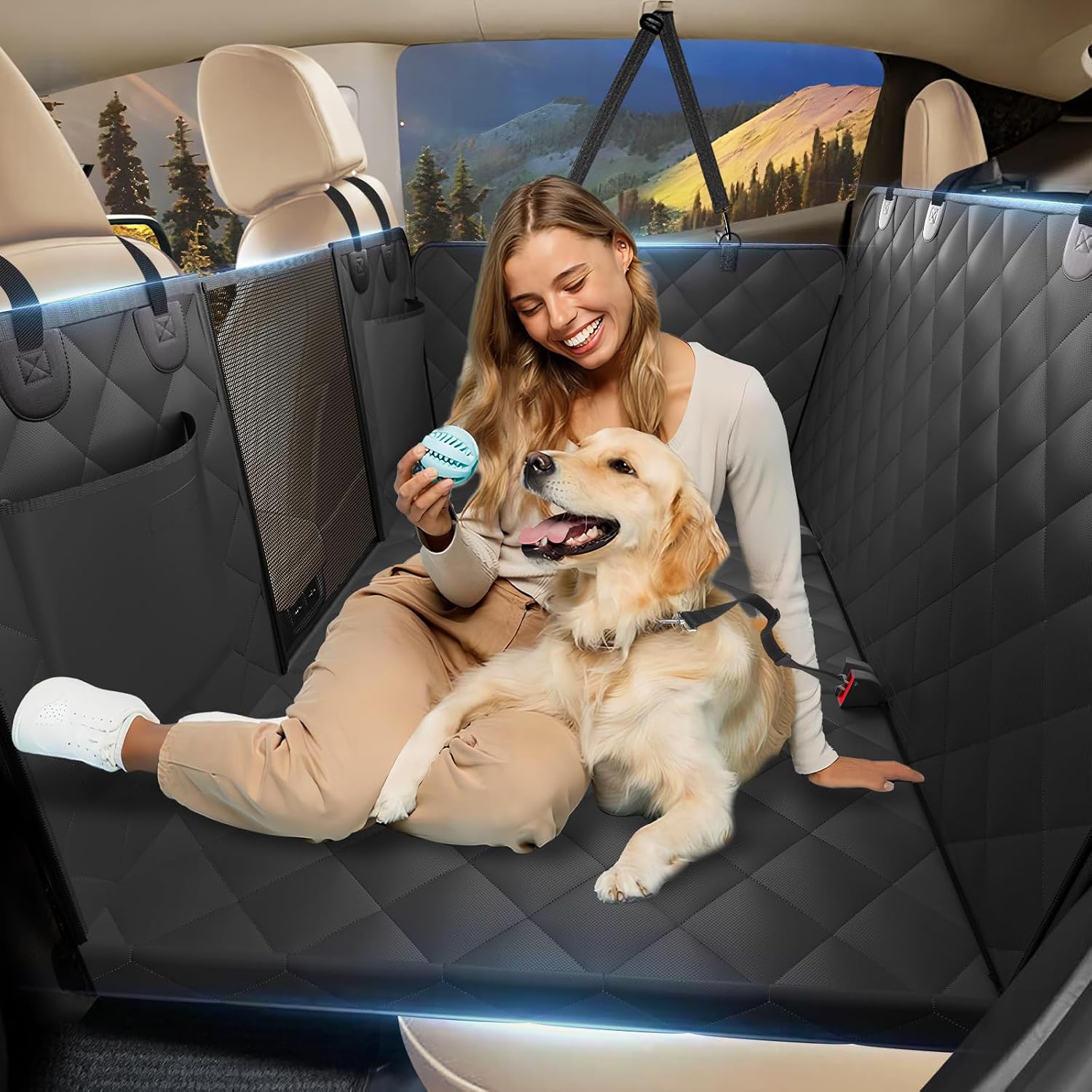
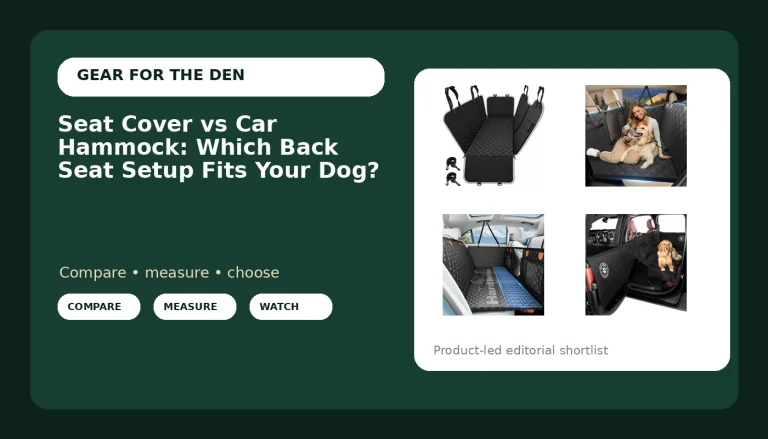
Btefd Back Seat Extender for Dogs, Hard Bottom Dog Hammock for Car & SUV
Hard bottom panel spans the footwell, and the hammock sides anchor high enough to keep hair, drool, and muddy paws off the bench
The bulkiest of the group to fold and store, and the raised sides eat into cabin height
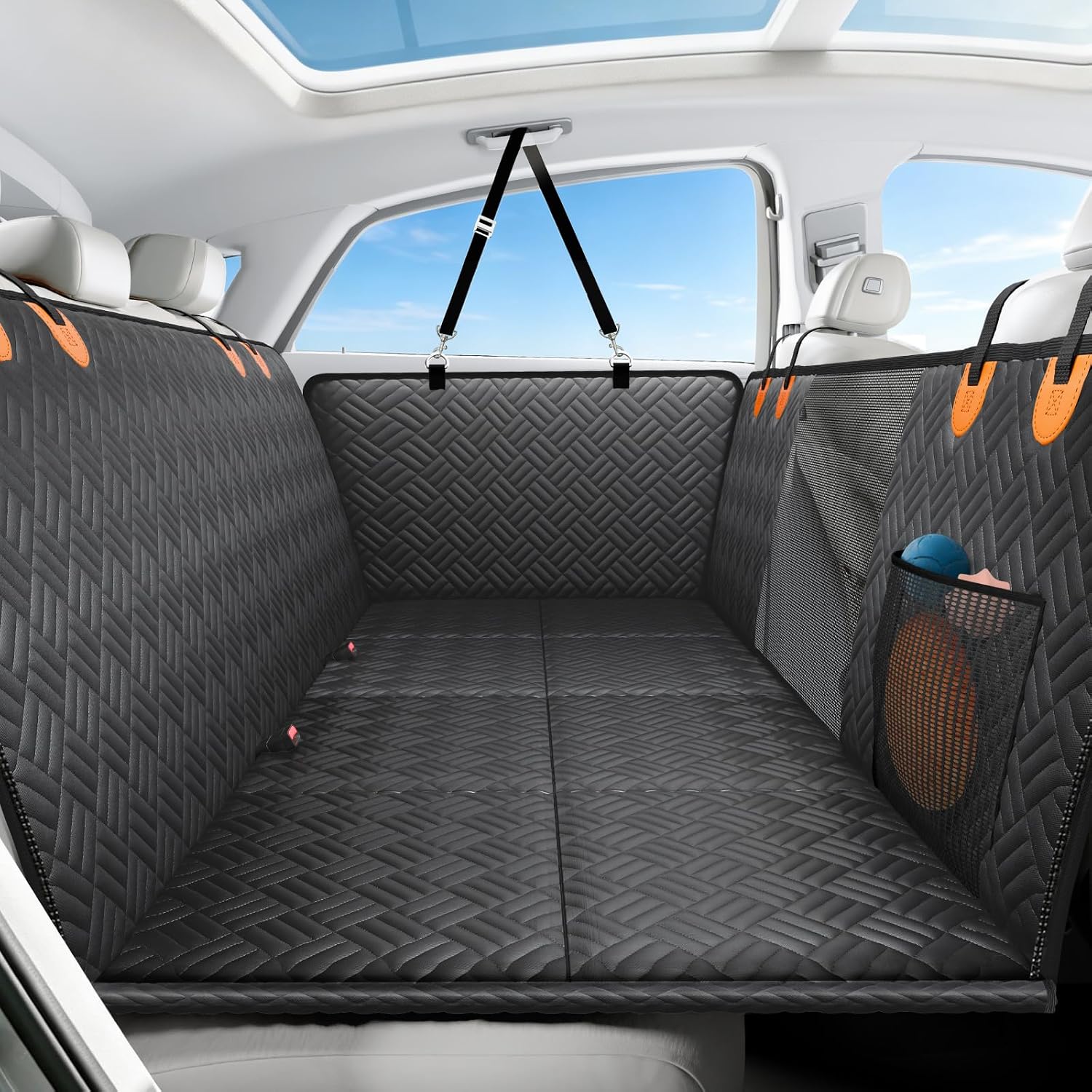
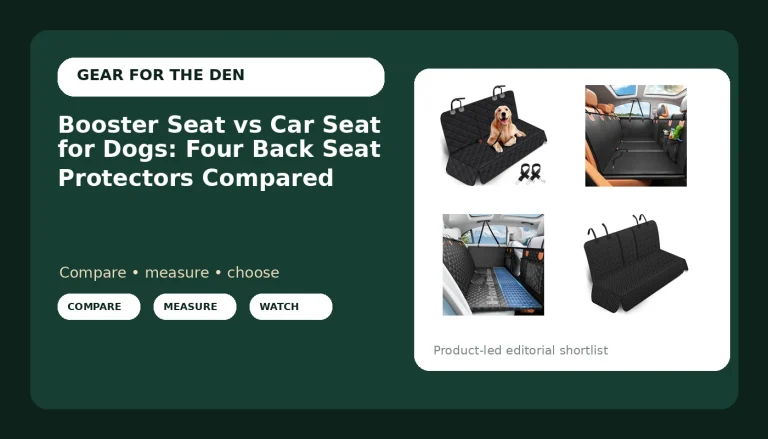
Dog Car Seat Cover for Back Seat, Hard Bottom Back Seat Extender for Dog
Same rigid platform idea in a flatter profile, which suits a dog that prefers to lie down rather than nest
Less containment than a hammock, so hair and drool still reach the door panels
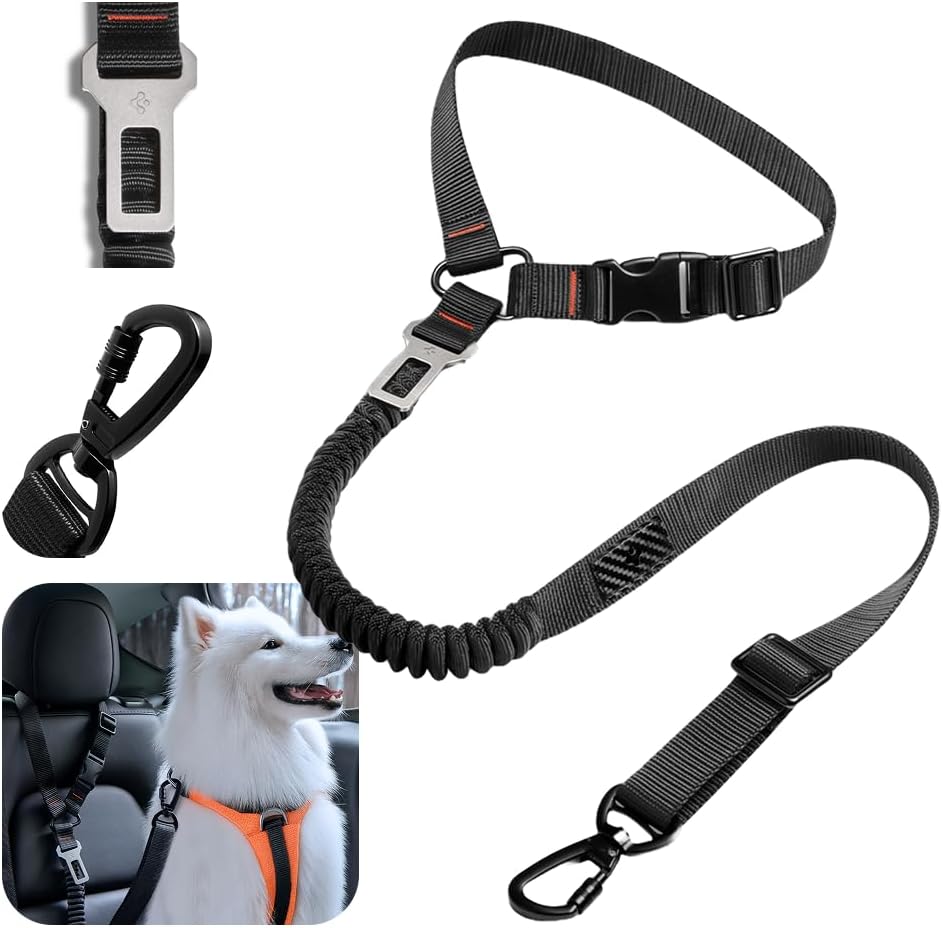
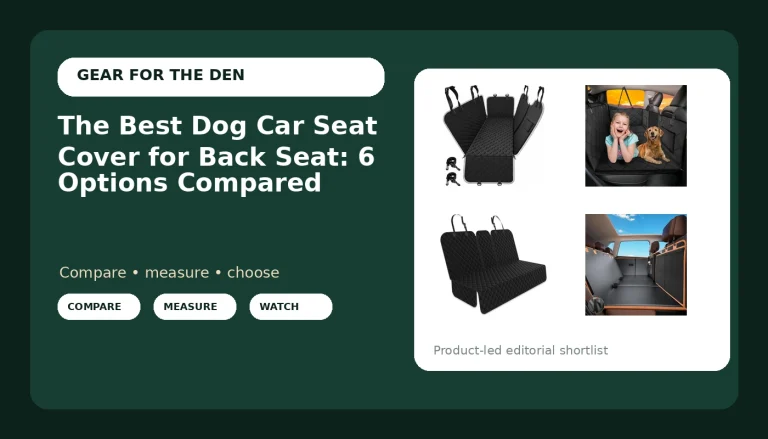
Spigen 2 in 1 Car Seat Belt Tether for Dogs (Headrest & Seatbelt Buckle)
Two mounting options mean it works whether you run fabric or a board, and it packs flat in a glovebox
It is a tether, not a restraint system, and it only does its job on a dog wearing a harness
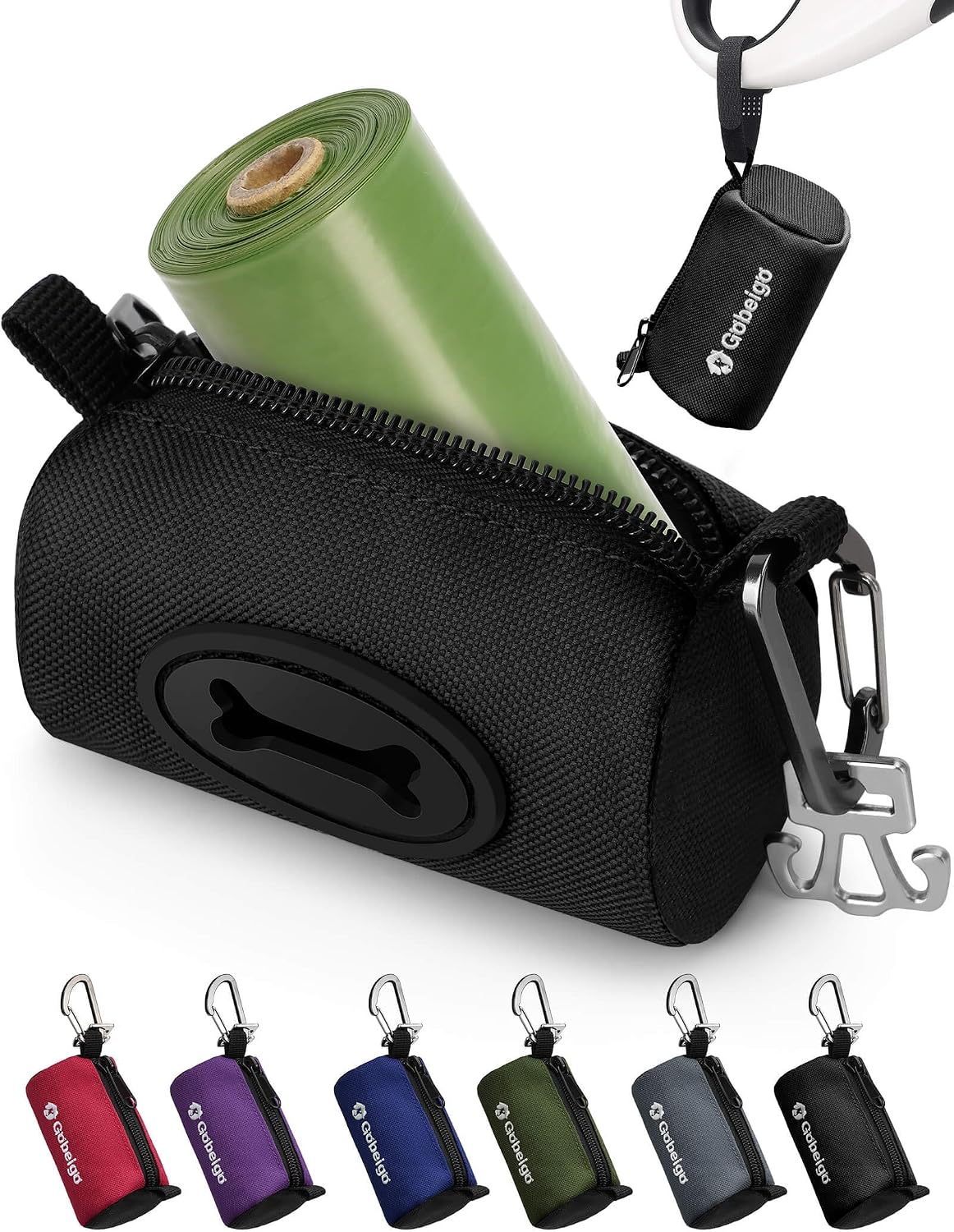
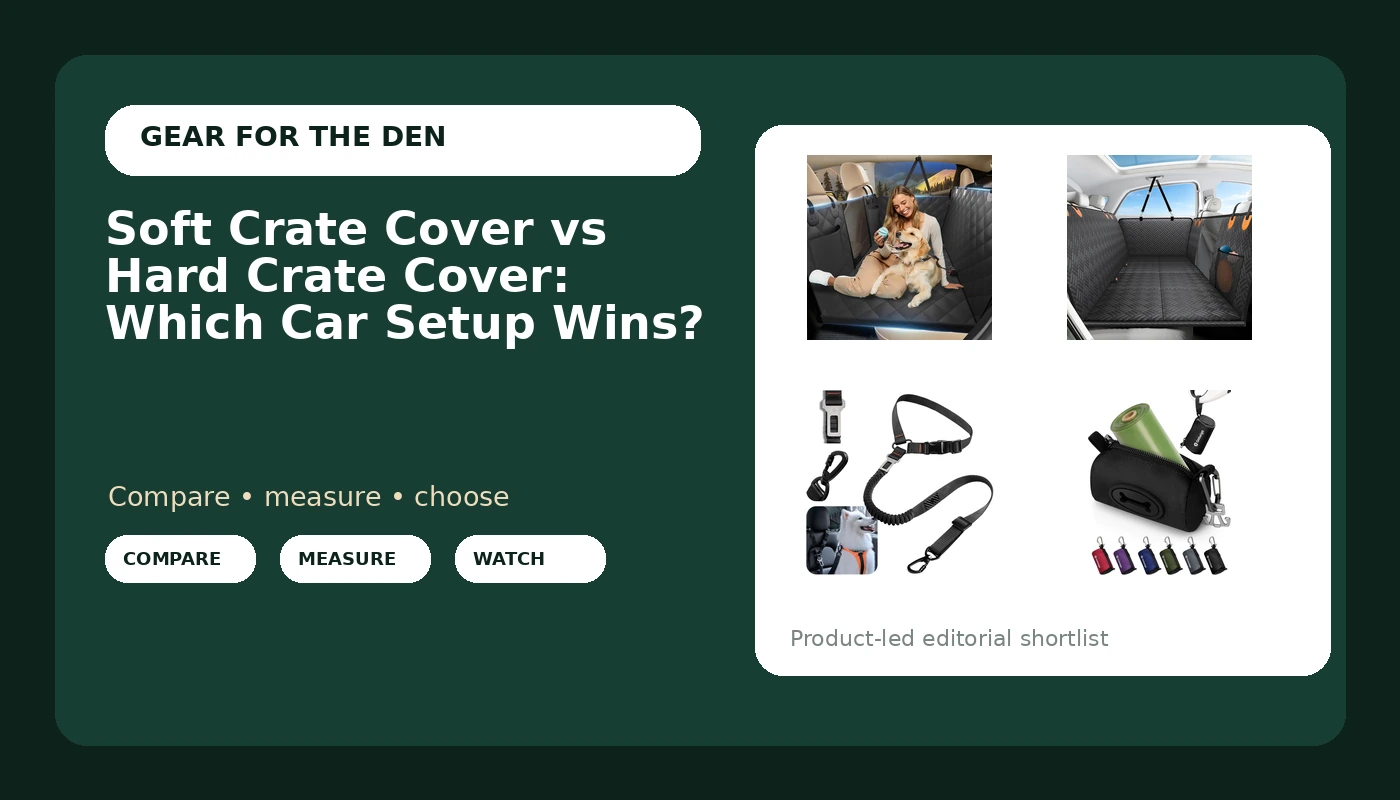
Gobeigo Dog Poop Bag Holder with Used Bag Carrier(Black)
Clips to a leash or a bag and carries a full bag instead of making you hold it
Nothing to do with the cover decision, it is the accessory for the walk after the drive
Prices and availability may change.
How soft crate cover vs hard crate cover plays out in a car
Inside a house, a crate cover is usually a fabric panel that drapes over a wire crate for shade and privacy. In a car, the same choice turns into a question about surface. Soft covers are quilted or oxford fabric, sometimes with a non-slip backing, and they follow the contours of the bench, including the dip where the seat meets the backrest. Hard covers add a board, usually wrapped in the same fabric, that spans the bench or reaches across the footwell to create a flat floor.
The difference shows up the moment the dog moves. Fabric compresses under a paw, so a dog that stands and shifts its weight sinks slightly and the cover bunches toward the middle. A board does not compress, so the dog gets the same surface at the door as it does at the far window. If you are choosing a soft crate cover or hard crate cover for a dog that is anxious in the car, that consistency is worth more than packability, because a dog that slips once will brace for the rest of the ride.
Framed the other way, hard crate cover vs soft crate cover is also a question about who the cover is really for. If it is for you, fabric wins on storage and washing. If it is for a dog that needs to feel the floor hold still under its feet, the board wins.
Soft covers: fabric that folds, drapes, and forgives
A soft cover is the option you can pull out of a tote bag with one hand. It machine washes, it layers over an existing seat protector, and it costs a fraction of what a rigid setup runs. Fabric also breathes, which matters more than most people expect: a woven cover lets some air move under the dog, while a solid panel with tall sides can turn the back seat into a warm pocket on a summer drive.
The weakness is structural, not cosmetic. Fabric sags into the footwell gap, which means a dog that steps forward lands lower than it expects. It slides on leather, it needs re-tucking after every hard brake, and hair weaves into the weave in a way that a wipe-down cannot fix. If your dog rides in a soft-sided carrier or a crate with a backpack frame strapped to the seat, the cover is really a liner, and a liner is exactly what fabric is good at. For a dog that stands the whole trip, a soft cover is a rug, not a floor.
Hard covers: rigid panels and hard-bottom platforms
The hard camp splits into two shapes, and both show up in this comparison. The Btefd Back Seat Extender is the hammock version: a hard bottom panel with raised fabric sides that anchor to the headrests, so the dog sits in a shallow tub that catches hair and mud instead of letting it run into the seat seams. The Dog Car Seat Cover for Back Seat takes the flatter route, extending the bench forward with a hard bottom and lower walls, which suits a dog that likes to stretch out rather than curl into a corner.
Both give the dog a surface that does not move. That matters for large dogs, for seniors with stiff hips, and for any dog that has learned to dread the car because the seat feels unstable. The cost is bulk. A board does not fold into a glovebox, it takes up a shelf in the garage, and the raised sides of a hammock reduce the headroom a tall dog has to stand. A hard cover is also sized to one bench, so it does not move between cars the way fabric does.
Carrier dimensions, cabin size, and weight limit
Before you pick a side, measure. Bench width is the first number, because a hard extender that is too wide will not sit flat and one that is too narrow leaves a gap at the door where a paw can drop through. Seat depth from the backrest to the front edge of the cushion is the second, since that is the distance the board has to bridge. Headrest spacing comes third, because hammock anchor straps only work if there is something to loop them around, and some rear headrests are fixed or missing entirely.
Then check the weight limit. The board itself is rarely the weak point. The straps, buckles, and stitching are, and a cover rated for a forty-pound dog may flex and creak under a ninety-pound one. If your dog travels inside a crate or carrier that sits on the seat, the number that matters is the carrier dimensions, not the bench, because the cover is only there to protect the upholstery underneath. Cabin size cuts both ways as well: a compact sedan bench can be too narrow for a full-width extender, while a three-row SUV may need the widest size the maker offers.
Ventilation, booster height, and the small details
Ventilation is the trade-off nobody lists on the box. A hard cover with tall hammock sides blocks the airflow that a bare seat would allow, and a dog that pants in a seventy-degree car is often hot because the sides trapped the air, not because the outside temperature was high. If you drive in a warm climate, a flatter hard cover or a breathable fabric cover keeps the dog cooler.
Booster height is the small-dog version of the same problem. A dog that cannot see out tends to stand, and a standing dog on a soft cover is a sliding dog. A hard-bottom extender with a slight rise does part of that work, and a dedicated booster does the rest. A collapsible bowl in the door pocket handles water stops without rolling around, and it folds flat enough to live under the seat. Add a hammock anchor check to your routine too: straps stretch, and a strap that has gone slack lets the whole cover shift on the first turn.
The difference between soft crate cover and hard crate cover in daily use
Daily life is where the difference between soft crate cover and hard crate cover stops being theoretical. Cleaning is the clearest split. A soft cover goes into the washing machine, but the hair that has woven into the fabric comes out slowly, and a muddy cover needs a full cycle before it is usable again. A hard cover wipes down in a minute, but its fabric skin still traps hair at the seams, and you cannot put the board in a washer.
Storage and switching follow the same pattern. Fabric lives in a corner of the trunk and moves between cars in seconds. A board lives on a shelf and stays with one vehicle, which is fine until you borrow your parents' sedan for a vet run. Drying time matters in wet seasons, since water sits between a board and its cover and can turn musty if you fold it away damp. Neither option is high maintenance. They just fail in different ways, and you should pick the failure you can live with.
Accessories that finish either setup
Two accessories belong in the conversation because they work regardless of which cover you land on. The Spigen 2 in 1 Car Seat Belt Tether for Dogs attaches either to a headrest or into a seatbelt buckle, which means it fits a hammock with headrest straps and a flat extender with none. It keeps a dog from climbing into the front seat, and it should be paired with a harness rather than a collar. It is not a substitute for a crash-tested crate, and it is not sold as one.
The Gobeigo Dog Poop Bag Holder with Used Bag Carrier is the other end of the trip. It clips to a leash or a bag, and the used bag carrier holds a full bag instead of leaving you to carry it or tuck it into a door pocket where it leaks. It has nothing to do with cover materials, which is exactly why it belongs on the list: the drive is only half of an outing, and the gear that fails on the walk is the gear you remember.
Trade-offs worth accepting
With a soft cover, you accept sliding, re-tucking, and a surface that gives under a paw. In exchange you get something that washes, packs, and costs little. With a hard cover, you accept bulk, less airflow, and a fit that is tied to one vehicle. In exchange you get a floor that behaves like a floor.
The compromise most people land on is a hard bottom with soft sides, which is what both extenders in this comparison already are. That combination gives a dog a stable platform while keeping the fabric walls that catch hair and mud. What neither option does is restrain a dog in a crash. A cover protects the car and stabilizes the ride. If your dog panics, or if you routinely drive at highway speed with the dog loose, the cover is a comfort item and a crate is the safety item.
What to check before you buy
- Measure bench width, seat depth, and headrest spacing before ordering anything rigid.
- Confirm the weight limit covers your dog, and remember the straps are the weak point.
- Decide whether you need hammock walls or a flat platform, based on whether your dog curls or stretches.
- Check that the fabric layer can be wiped or removed for washing.
- Confirm your dog already owns a well-fitted harness if you plan to add a tether.
- Think about where the cover lives when it is not in the car.
If you are still deciding between soft crate cover vs hard crate cover, the tiebreaker is the surface your dog stands on. Buy the board if the seat moves under your dog. Buy the fabric if the seat is already stable and your trunk is already full.
—
Disclosure: as an Amazon Associate, Gear for the Den earns from qualifying purchases. Prices and availability are set by Amazon and can change at any time.