Terrarium size for gecko setups is not a number you look up once and forget. The footprint of the enclosure decides how far a heat lamp has to throw warmth before the basking temperature is right, how much floor a UVB bulb can actually cover, how deep the substrate depth can go, and how many hides fit without crowding the animal out of its own walking space. Pick a tank that is too small and every other parameter gets harder to hold steady: the warm end overheats, the cool end disappears, and the humidity range swings wildly between mistings. This terrarium size for gecko explained guide covers how tank size, lighting, and heating hardware scale together, using four currently listed bulbs as concrete examples of what suits which enclosure.
Quick answer
Size the enclosure around the adult animal, not the hatchling you brought home. As a working rule, a gecko needs a tank long enough for several body lengths of walking room, plus a warm end, a cool end, and a humid hide that do not overlap. Care sheets commonly suggest a 20-gallon long for juvenile leopard geckos and a 40-gallon breeder or a 36 by 18 by 18 inch front-opening enclosure for adults, while arboreal geckos such as crested geckos need height far more than floor area. The ideal terrarium size for gecko keeping is the smallest enclosure that still lets you hold a stable basking temperature and a usable humidity range with the equipment you actually own. No single number fits every species, so treat any figure as a starting point and let your thermometer and hygrometer confirm it.
Four useful options
| Model | Best fit | What stands out |
|---|---|---|
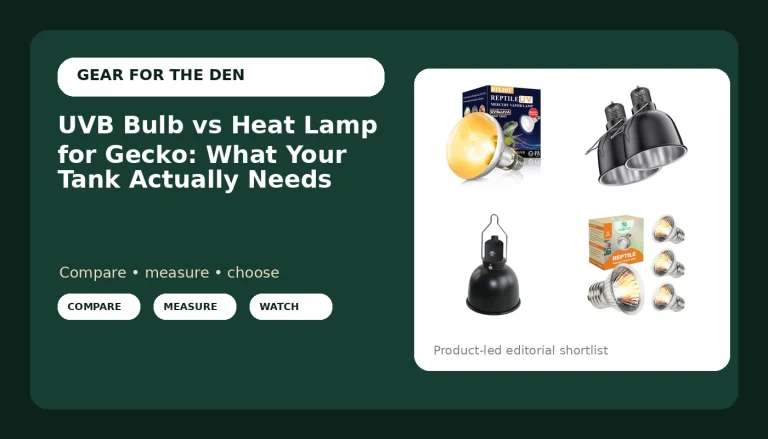
| REPTI HOME Reptile Heat Lamp Bulbs, Simulate Natural Sunlight Heat Light Bulb, 2 Pack 100W Amphibian Terrarium Basking Spot Lamp for Reptile, Bearded Dragon, Lizard, Turtle, Snake | Larger enclosures that need a strong basking spot | 100W basking bulbs in a two pack, positioned as a natural sunlight simulation |
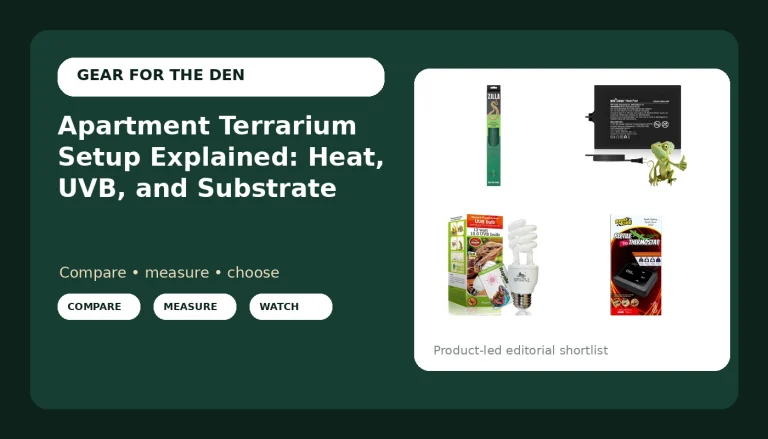
| Jugbuy UVB Reptile Light Bulb 5.0, 23W UV Spiral Compact Florescent Terrarium Lamp Ideal for Tropical Reptiles Bearded Dragon Hermit Crab Turtle Leopard Gecko Tank Chameleons Iguanas Snake – 2 Pack | Mid-size tropical and crepuscular setups | 5.0 UVB output at 23W in a screw-in spiral format, sold as a two pack |
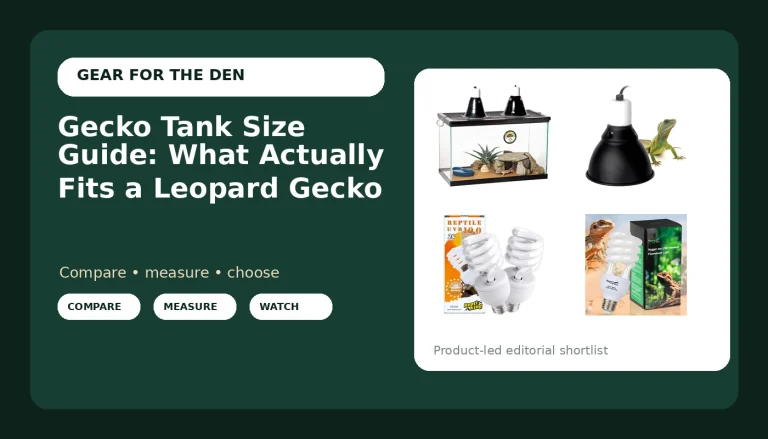
| UVB Bulb for Reptiles, 5.0 13W UVB Light for Reptiles, Hygger zoo UVA UVB Reptile Light Bulb Reptile UVB Bulb UVB Light for Hermit Crab Snake Chameleon Reptile Lamp Terrarium Lamp for Tropical Reptile | Small or grow-out enclosures | 5.0 UVB output at 13W, a low-wattage option for tropical species |
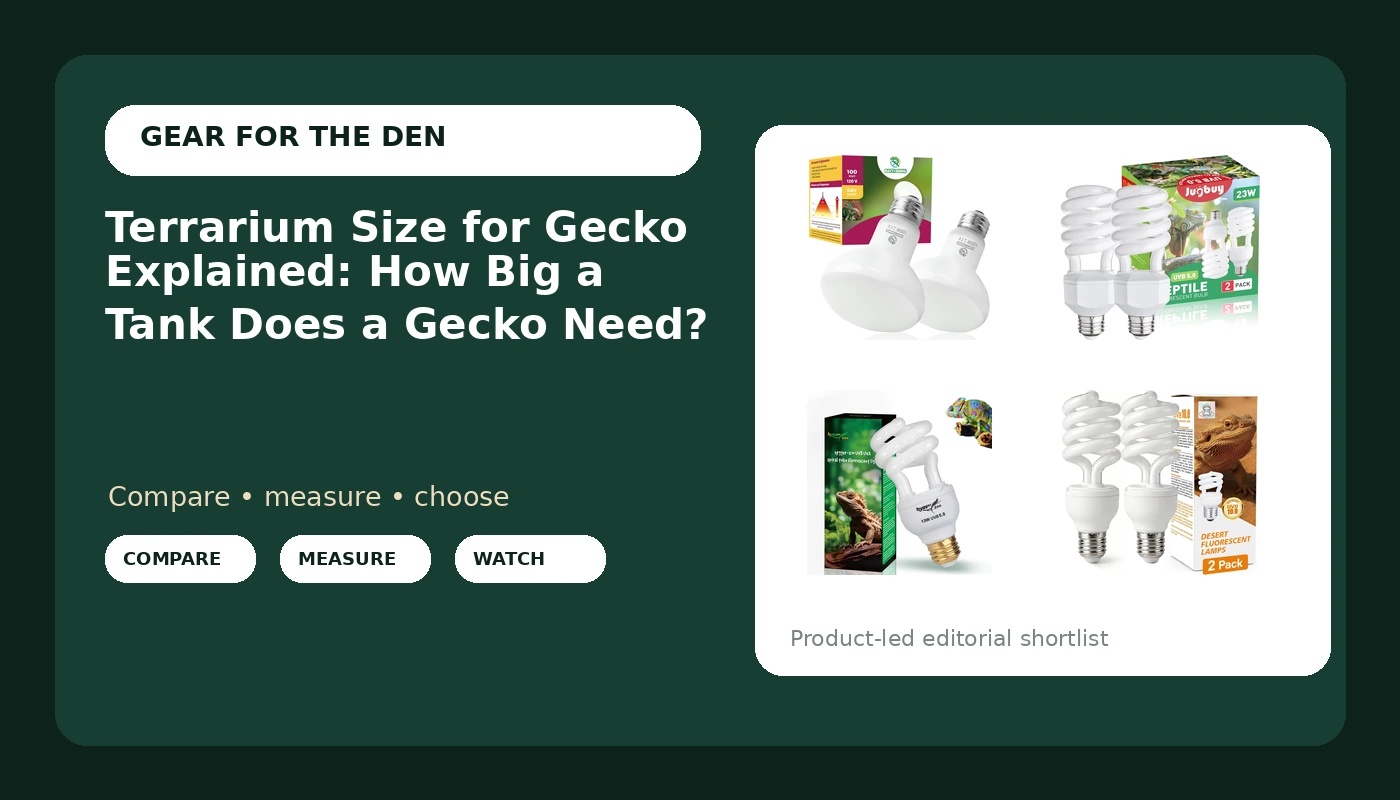
| Reptile UVB Bulbs, 26W 10.0 UVA UVB Light Lamp for Terrarium, 2 Pack | Desert-style setups that need stronger UVB | 10.0 UVB output at 26W, supplied as a two pack |
The basking source: REPTI HOME Reptile Heat Lamp Bulbs
A 100W bulb is a lot of heat, which is exactly why it belongs in a bigger footprint. In a large enclosure it can hold a proper basking temperature at one end while leaving the cool end genuinely cool, and the spare bulb in the pack covers a mid-winter failure. In a small tank the same bulb can drive the whole enclosure past a safe thermostat range in minutes, so it needs a dimmer or a proportional thermostat rather than an on and off switch. Distance is your other control: raising the dome a few inches lowers the surface temperature on the basking rock without changing the bulb.
Mid-size UVB coverage: Jugbuy UVB Reptile Light Bulb 5.0, 23W
Spiral compact bulbs concentrate their UVB output into a fairly narrow cone, so they work best where the gecko has a defined basking ledge or open floor area to sit under. In a 20 to 40 gallon tank that usually means one fixture over the warm end, with the animal able to move in and out of the beam on its own. In a much wider enclosure you will either need a second fixture or a reflector to spread the light, because UVB falls off both with distance and with angle away from the center of the cone.
Compact UVB for smaller tanks: UVB Bulb for Reptiles, 5.0 13W
Low wattage does not mean low output at the animal, because a 13W spiral in a shallow tank can sit much closer to the basking surface than a larger bulb would allow. That makes it a reasonable fit for a quarantine bin, a juvenile enclosure, or a compact front-opening tank where a 23W or 26W bulb would create more heat than the space can shed. The trade off is coverage: expect to use it over a small footprint, and recheck the UVB output at the gecko's back whenever you change the distance between the fixture and the animal.
Higher output UVB: Reptile UVB Bulbs, 26W 10.0
A 10.0 bulb delivers more UVB at a given distance than a 5.0, which is useful when the fixture has to sit well above the animal, as it does in a tall enclosure or behind a deep dome. The same characteristic makes it a poor match for a shallow tank where the bulb ends up a few inches from the gecko, since the animal cannot escape a beam it cannot get out from under. Match the rating to the gap, not to the label alone.
Prices and availability may change. Product images, names, and retailer links are matched to verified listings. No current price, rating, stock status, or measured result is stated here without current evidence.
How terrarium size for gecko setups changes the lighting math
Enclosure dimensions decide where heat and UVB actually land, which is why the tank comes before the bulb. A basking bulb creates a cone of warmth, so the wider the enclosure, the wider the dome or the higher the wattage needed to keep the hot end warm without cooking the middle of the tank. In a tall arboreal setup the same bulb sits much further from the animal, and distance rather than wattage sets the surface temperature on the basking ledge.
UVB behaves the same way. Spiral compact bulbs throw useful UVB over a fairly narrow circle, so they suit a small or medium footprint where the gecko can sit under the beam and move out of it. A larger floor area usually needs a second fixture, a reflector dome to concentrate the beam, or a linear tube that spreads light across more of the tank. The UVB output at the animal's back is what counts, and it drops quickly with distance, which is why a bulb set up correctly over a 12 inch gap can be wrong over a 24 inch tall enclosure.
Under-tank heating follows the same rule of scale. A heat mat wattage that suits a 10-gallon tank will struggle to move the floor temperature of a 40-gallon breeder, and an unregulated mat in a small tank can push the warm hide past a safe thermostat range. A thermostat probe sitting on the substrate surface under the warm hide is the only reliable way to know what the gecko is actually resting on.
What to check before you buy the glass
Work through these five steps before you order an enclosure, because each one changes what hardware you need.
- Measure the adult, not the baby. Look up the adult length and body weight for the species, then choose an enclosure that still looks roomy when the gecko reaches that size.
- Decide whether you are buying floor space or height. Terrestrial geckos such as leopard geckos need a long footprint with a clear warm-to-cool gradient, while arboreal geckos need vertical space and climbing structure.
- Sketch the heat gradient on paper. Mark the basking spot, the cool hide, and the distance from the bulb to the basking surface, then pick a wattage that can hold the target basking temperature across that distance.
- Match UVB to the gap and the species. A 5.0 bulb suits many tropical and crepuscular geckos, a 10.0 suits setups with more distance or stronger UVB needs, and both need rechecking whenever the fixture moves.
- Plan the furniture before the glass arrives. Hide size, substrate depth, a water dish, and a humid hide all compete for the same floor, and overlapping them defeats the point of a larger tank.
Practical guidance for sizing a gecko enclosure
- Buy the adult-size enclosure first where budget and space allow, since upgrading later costs more than buying once.
- Keep the enclosure out of direct window sun, because a greenhouse effect can push temperatures past anything a thermostat can correct.
- Run every heat source through a thermostat and check the surface under the warm hide rather than the air temperature alone.
- Leave the mesh top clear of stacked items so the humidity range and airflow stay where you set them.
- Weigh the gecko monthly for the first year. A growing animal that suddenly needs a bigger tank will tell you through appetite and behavior before the enclosure looks small to you.
Which option should you choose?
Choose the REPTI HOME Reptile Heat Lamp Bulbs when you are heating a large footprint and need a strong basking spot with a spare bulb on hand. Choose the Jugbuy UVB Reptile Light Bulb 5.0, 23W when you are lighting a mid-size tropical or leopard gecko tank and want screw-in UVB over a defined basking area. Choose the UVB Bulb for Reptiles, 5.0 13W when the enclosure is small or shallow and a higher-wattage bulb would add more heat than the space can handle. Choose the Reptile UVB Bulbs, 26W 10.0 when the fixture has to sit well above the animal or the species needs more UVB per fixture. The correct terrarium size for gecko keeping is the one that lets your chosen bulb and heat source hold stable readings at both ends of the tank, so measure before you commit and adjust the hardware to the glass rather than the other way around.
Every figure above is a starting point drawn from general care guidance and from the product listings themselves. Enclosure recommendations vary between keepers and between individual animals, and nothing here replaces a thermometer, a hygrometer, and a thermostat reading taken inside your own setup.
The bottom line
Terrarium size for gecko keeping drives everything downstream. A bigger enclosure gives you a real temperature gradient and room for proper hides, but it also demands more heat, wider UVB coverage, and more careful placement of every fixture. A smaller enclosure is easier to heat, yet it leaves less margin for error when a bulb is too strong or too close. Buy the enclosure your adult gecko will need, then size the heat lamp, the UVB bulb, the thermostat range, and the substrate depth to that space, and let readings from your own tank make the final call.