Anyone who feeds a cat has watched the same scene: the bowl slides, the kibble ends up on the mat, and the cat walks off halfway through the meal. The tilted cat bowl vs elevated cat bowl question lands in my inbox at least once a month, usually from someone whose cat has started dragging food onto the floor or whose flat-faced cat seems to fight the rim at every meal. Both designs lift food off the ground, and both claim to protect the spine. The real difference between tilted cat bowl and elevated cat bowl comes down to geometry: one angles the food surface toward the cat's mouth, the other simply raises it to a comfortable height. That single choice changes how far your cat has to reach, how much whisker contact happens at the rim, and how well the dish handles wet food. This comparison covers four raised feeders, from a 15° tilted porcelain set to a plastic slow feeder, and matches each one to the cat it actually suits.
The best raised feeder for most cats is the KITCHENLESTAR Elevated Cat Bowls set, because the 15° tilt does the job a plain raised bowl only half does. It pairs a food dish with a matching water bowl, so one purchase solves the whole feeding station, and the porcelain has enough weight that a determined cat will not push it across the kitchen. The limits are a fixed angle and a fixed height. If your cat inhales its food, the Bikabpet silicone slow feeder is the more useful buy. If your cat has a flat face, start with the wide shallow ceramic bowl.
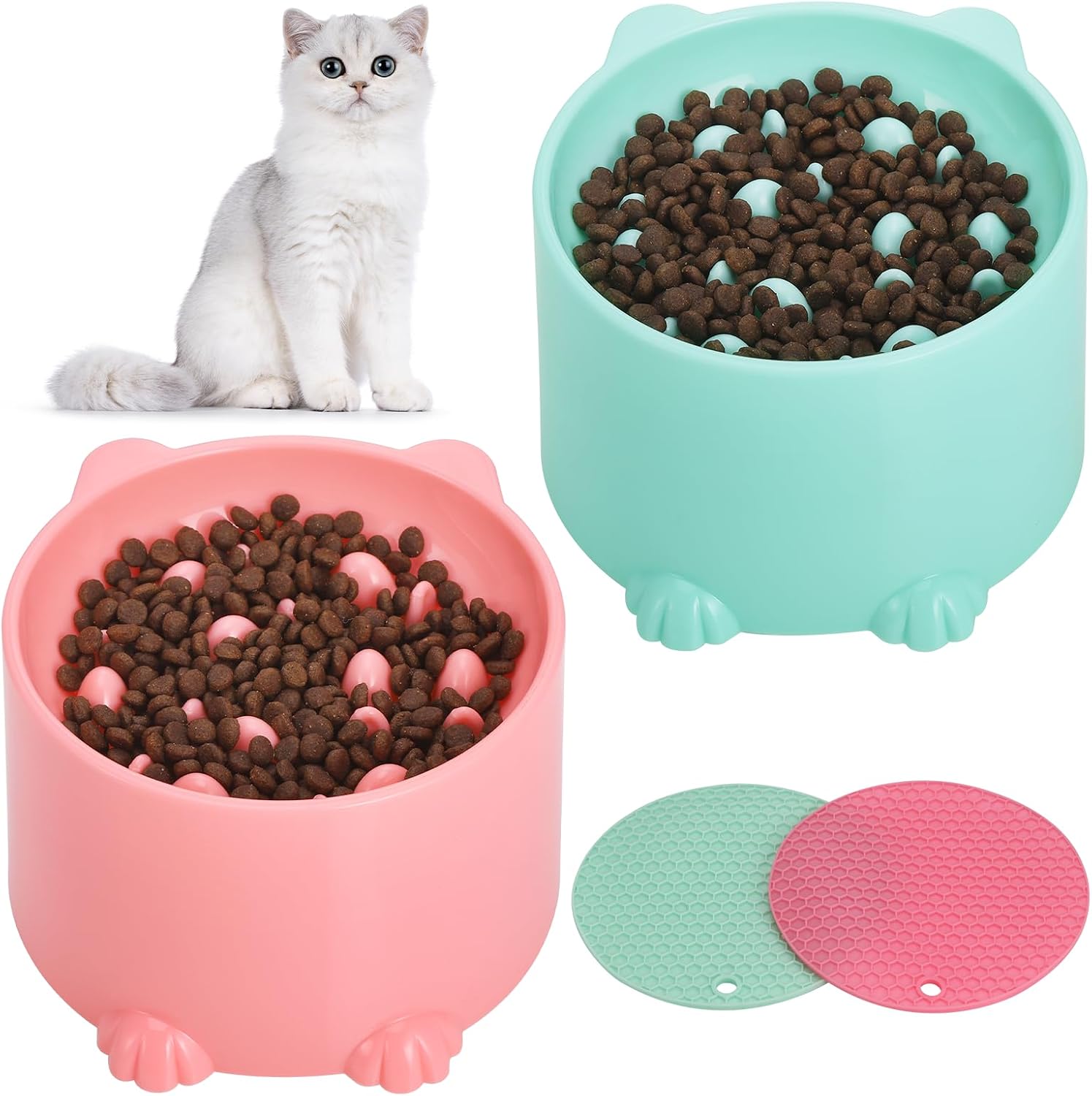
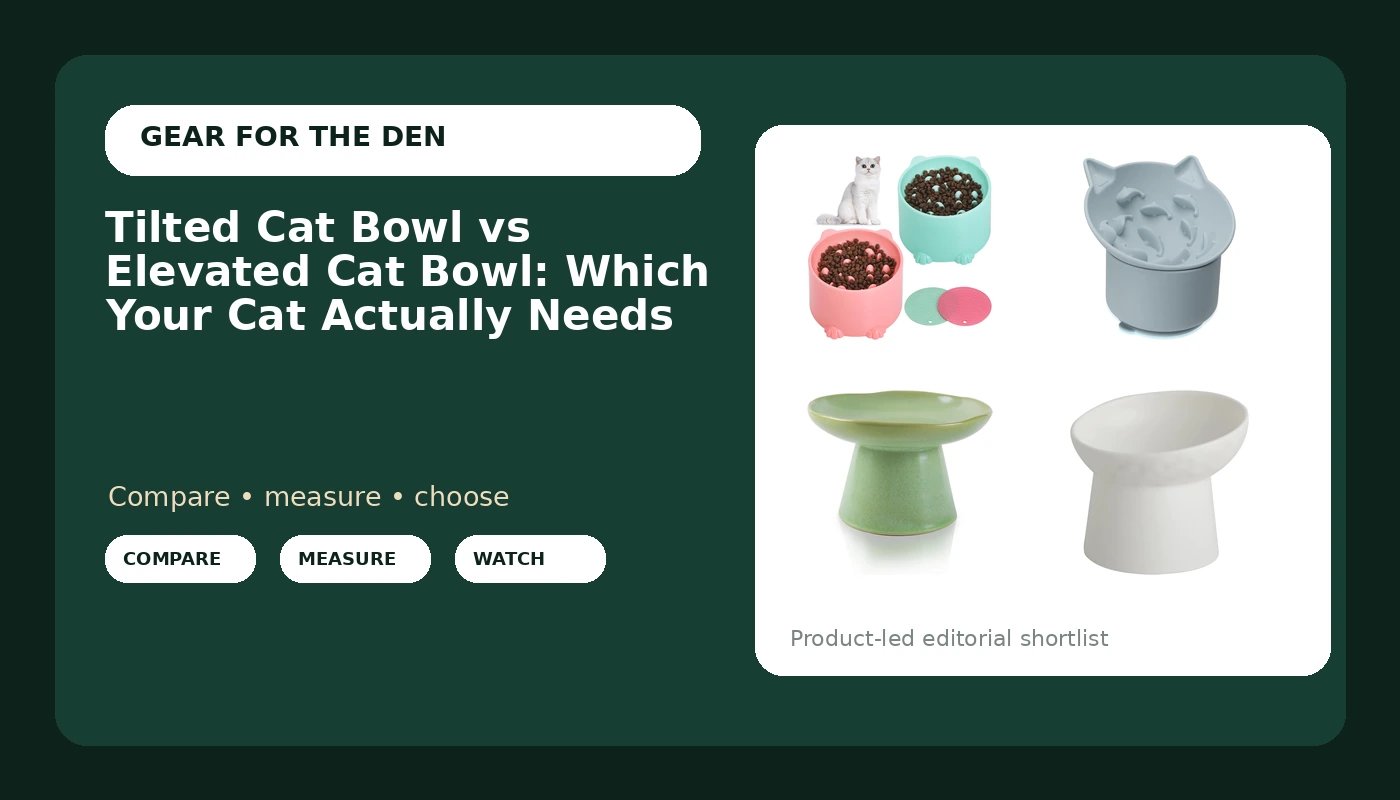
TranRantic 2 Pcs Raised Slow Feeder Cat Bowl, Plastic Elevated Cat Slow Feeder Bowl with Anti-Skid Mat, Raised Slow Cat Feeder for Dry and Wet Food (Green&Pink)
Two bowls and an anti-skid mat in one box, raised pattern slows a fast eater
Plastic is light and scratches, and the green and pink pair will not suit every kitchen
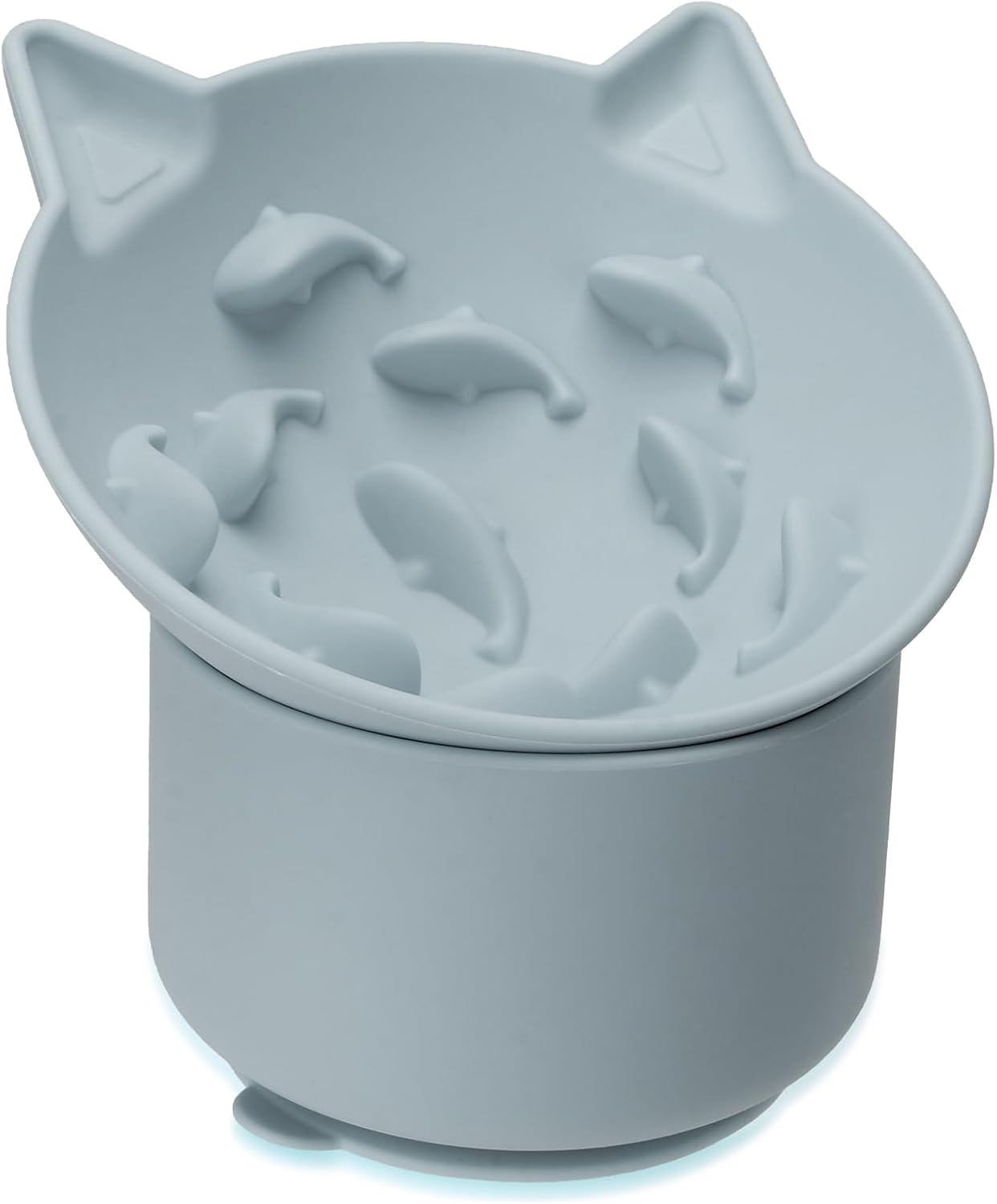
Bikabpet Silicone Cat Slow Feeder, Elevated Slow Feeder Bowl Tilt Design, Suitable for Dry and Wet Food, Adjustable Angle, Cat Food Puzzle with Suction Cup(Gray)
Adjustable tilt angle, suction cup holds it still, works with dry or wet food
Silicone needs a real scrub, and the puzzle pattern is a lot of work for a calm eater
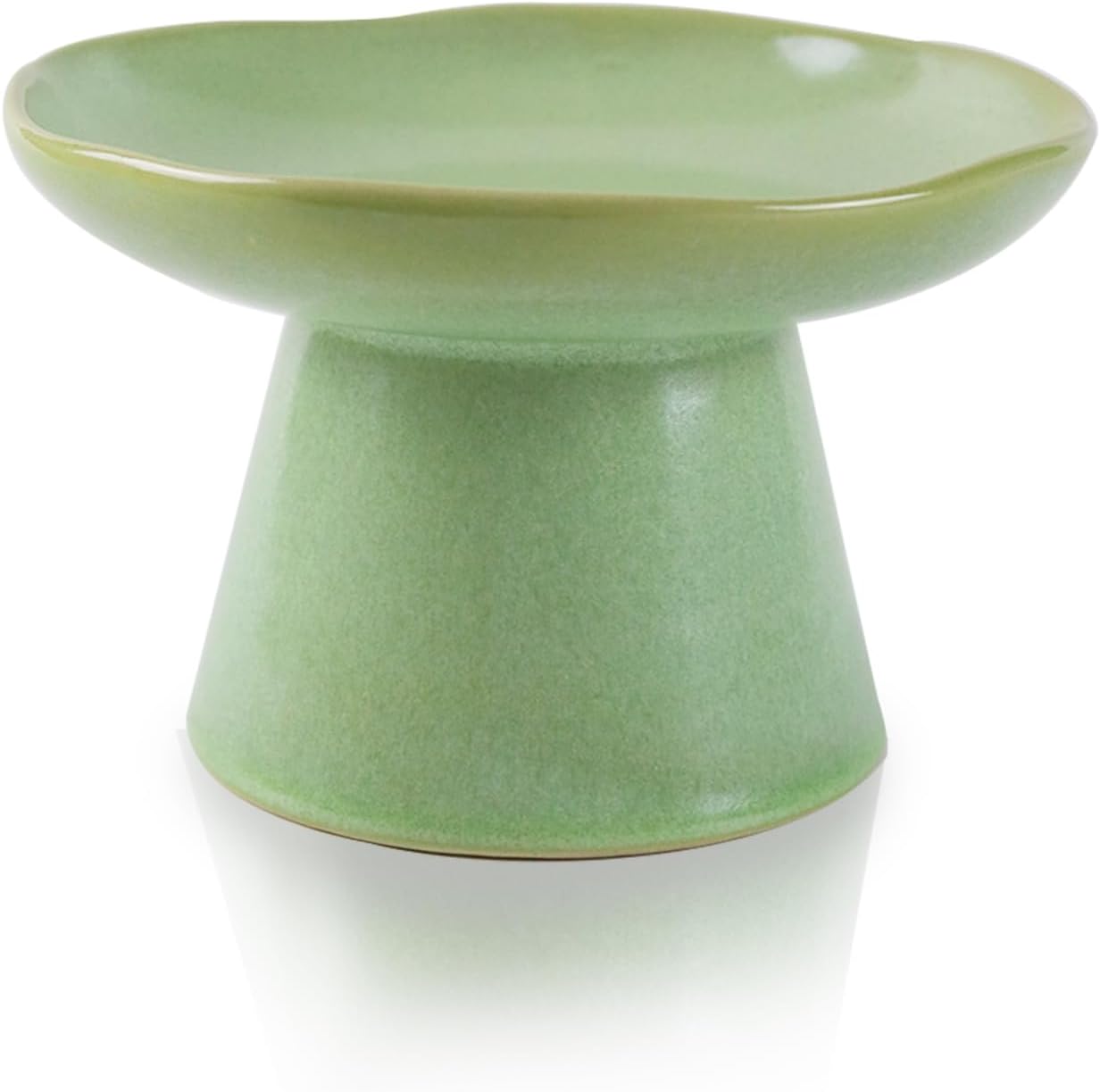
Wide Shallow 6.1" Raised Cat Bowls, Ceramic Elevated Food Bowl for Flat Faced Cats and Small Dogs, Porcelain Feeder Bowl, Stress Free, Protect Cat’s Spine, Green
Wide, shallow ceramic is the friendliest shape for flat-faced cats
Single bowl, no water side, and green is the only finish
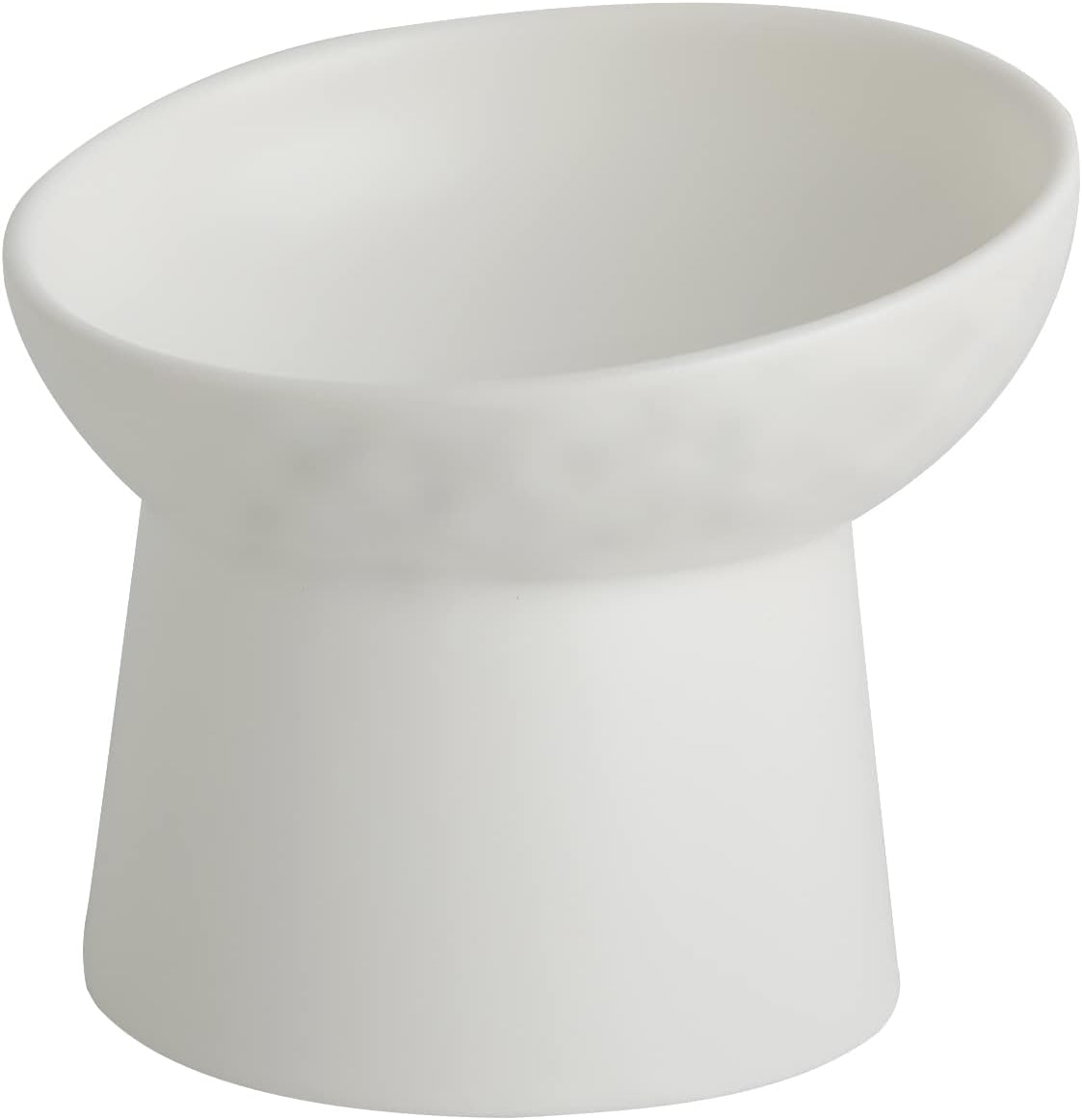
KITCHENLESTAR Elevated Cat Bowls, 15° Tilted Ceramic Raised Cat Food and Water Bowl Set, Whisker-Friendly Porcelain Pet Feeder Dishes for Indoor Cats and Small Dogs,White,5.2 Inch,1 Pack
15° tilt plus a matching water bowl, porcelain weight, whisker-friendly rim
Fixed angle and height, and the set takes more floor space than a single dish
Prices and availability may change.
How I judge a raised cat bowl
A raised feeder looks like a simple object, but a handful of details decide whether a cat actually uses it.
Elevation angle comes first. A tilted bowl sits somewhere between 10 and 20 degrees off horizontal, so gravity keeps the food piled at the low edge. A raised bowl stays level and simply sits higher. That angle is the difference between food that stays within reach and food that spreads flat and has to be chased around the dish.
Bowl width and depth come next. Wide and shallow beats narrow and deep for almost every cat. A shallow dish keeps whisker clearance generous, and it lets a flat-faced cat reach the last piece without pressing its nose into ceramic.
Whisker clearance is the spec nobody lists, and it is the reason a cat eats three bites, walks off, and comes back an hour later. If the rim brushes the whiskers on every bite, the meal becomes a chore.
Material and weight decide stability. Porcelain and ceramic have the mass to stay put on a hard floor. Plastic is lighter and generally needs a mat or a suction base to hold still.
Portion size matters if you are feeding a gulper. A slow feeder only helps when the portion you serve actually fits the pattern, otherwise the food sits on top and the cat eats at normal speed.
That is the whole checklist, and none of it is a brand feature. All of it is geometry, and geometry is what your cat notices.
What the tilted cat bowl vs elevated cat bowl split really comes down to
When people search elevated cat bowl vs tilted cat bowl, they usually want to know whether the extra angle is worth paying for. The short answer is that a raised bowl solves height, while a tilted bowl solves height and reach.
A flat raised bowl lifts food to roughly chest level, which takes load off the neck and shoulders. That is a real improvement for an older cat with stiff joints or a cat that regurgitates after meals. But the cat still drops its head to a level surface and scoops, and the last third of the bowl is always more work than the first.
A tilted bowl changes the shape of that effort. Food collects at the low edge, so the cat eats from a small pile that stays put, and the neck stays closer to neutral. For flat-faced cats, the angle also keeps the nose from pressing into the side of the dish.
Most of the tilted cat bowl vs elevated cat bowl debate is really about the last two inches of the meal. The cat that abandons a level bowl halfway through often finishes a tilted one, and that is the whole argument in a sentence.
Whether you choose a tilted cat bowl or elevated cat bowl, the mat underneath matters as much as the dish. A feeder that slides mid-meal teaches a cat to eat fast and leave, which undoes the benefit of the height in the first place.
The trade-off with tilt is that it is usually fixed. A 15° bowl is 15° forever, so if your cat is unusually tall or still a kitten, the angle can be wrong for a while. Adjustable designs solve that, and they are the reason the silicone option below exists.
The tilted options: fixed 15° versus adjustable
The KITCHENLESTAR Elevated Cat Bowls are the cleanest expression of the tilted idea. The set is porcelain, the tilt is 15°, and the food dish comes with a matching water bowl, which matters more than it sounds: a cat that eats at a raised station usually wants to drink in the same place. The 5.2 inch width gives reasonable whisker clearance, and the rim is shallow enough that a flat-faced cat can work the edges. White porcelain hides nothing, so you will see every crumb, which is either a feature or a chore depending on your standards.
Water capacity is the one number worth checking yourself. Pour a measured amount into the water side, then compare it against what your cat drinks in a day. A raised water bowl that runs dry by evening is not doing its job, and a set like this one is easier to top up than a fountain you have to disassemble.
The Bikabpet silicone slow feeder takes the opposite approach. Instead of one fixed angle, the tilt is adjustable, and the bowl is built as a puzzle rather than a plain dish. It handles dry and wet food, and the suction cup base holds it in place on tile, which is the failure point on most lightweight feeders. Silicone holds odors and needs a real scrub rather than a rinse, and a cat that eats calmly will find the pattern irritating rather than helpful. For a cat that finishes a portion in ninety seconds and then looks for more, that irritation is the point.
Between the two, the porcelain set is the better everyday dish and the silicone puzzle is the better behavior tool. They are solving different problems, and a household with one fast eater and one slow eater may end up wanting both.
The elevated options: wide shallow ceramic and the plastic pair
The Wide Shallow 6.1" Raised Cat Bowls are the answer for a flat-faced cat. A wide, shallow porcelain surface means the nose never has to go into a tunnel, and the raised height still takes pressure off the neck. The listing names flat-faced cats and small dogs as the target, and the shape supports that claim. It is a single bowl with no water side, so you will need a second dish for water, and green is the only finish available.
The TranRantic raised slow feeder is the budget two-cat answer. You get two plastic bowls and an anti-skid mat in the box, and both bowls are molded with a raised pattern that slows a fast eater. Plastic is the compromise: lighter, more prone to scratching, and more likely to slide if the mat is not used. The upside is that two bowls plus a mat is a complete multi-cat station out of one box, and the green and pink pair makes it easy to keep two cats on their own dishes without guessing whose is whose.
The trade-off between these two is shape versus capacity. The wide ceramic bowl is the better single-cat dish for a flat-faced cat, and the twin set is the better choice when two cats eat at once and at least one of them bolts its food.
Slow feeders change the conversation
Two of the four bowls here are slow feeders, and that changes what you are buying. A slow feeder is not a better bowl in general. It is a bowl for a specific problem: a cat that eats too fast, vomits afterward, or steals from another cat's dish.
The Bikabpet handles that with an adjustable tilt and a puzzle surface. The TranRantic handles it with a molded pattern across two bowls and a mat. The KITCHENLESTAR set and the wide shallow ceramic bowl do not slow anything down at all. They are designed to make eating easier, which is the opposite goal, and that is why they sit at the top of this list for ordinary cats and at the bottom for gulpers.
If your cat eats at a normal pace, a slow feeder adds work to every meal for no benefit. If your cat finishes in under a minute, no amount of tilting will fix that, and the pattern is the only thing that will.
Portion size is the variable to watch. A slow feeder only slows a cat when the food actually settles into the channels rather than sitting on top of them. A large kibble in a shallow maze does nothing at all, and a small kibble in a deep one can be genuinely difficult.
What these bowls do not cover
None of the four is a water fountain, and that is worth saying plainly because the category gets muddled. Water capacity, pump noise, filter type, and microchip range are fountain specs. They belong to a different product, and none of them apply here.
The KITCHENLESTAR set includes a water bowl, not a fountain. It holds whatever you pour into it and it stays where you put it. If your cat ignores standing water, a bowl will not fix that. Moving water and a carbon filter might.
What a raised bowl does well is the mechanical half of feeding: height, angle, whisker clearance, and stability. What it cannot do is make water more appealing or keep it fresher for longer. Judge these four on the mechanical half, and shop separately if your cat needs moving water.
Should you buy one bowl or a set first?
If your cat has never eaten from a raised dish, buy one bowl first and give it a week. Cats are conservative about new objects, and a bowl that is the right height but the wrong shape gets rejected as fast as one that is too low. Watch three things: whether the cat finishes the portion, whether food ends up on the mat, and whether it walks away and comes back.
Buy the set if you already know your cat eats at a raised station, or if you are building a station from scratch. The KITCHENLESTAR set covers food and water in a single purchase, which is the simplest complete setup here. Buy two slow feeders if you have two fast eaters, because sharing one puzzle bowl is a recipe for a standoff at dinner.
The one thing I would not do is buy a slow feeder and a plain bowl at the same time for the same cat. Pick the problem you actually have, and let the geometry follow from it.
What I'm watching next
Two things. The first is adjustable tilt in non-silicone materials. The Bikabpet proves that a variable elevation angle is useful, and it is the feature I expect to move into ceramic and porcelain designs over the next year, because the cleaning problem with silicone is real and it is the main thing keeping that bowl out of daily rotation for a lot of households.
The second is bowl width. The wide shallow ceramic bowl is wider than most of what the category offers, and wider is almost always better for whisker clearance. If that shape shows up in a food and water set with a tilted side, that is the bowl most cats should be eating from.
For now, the four feeders above cover the real spread: two tilted, two raised, two slow feeders, and one set that handles food and water together. The tilted cat bowl vs elevated cat bowl decision comes down to shape, not brand. Match the geometry to your cat's problem and the label on the box matters far less than the angle of the food.