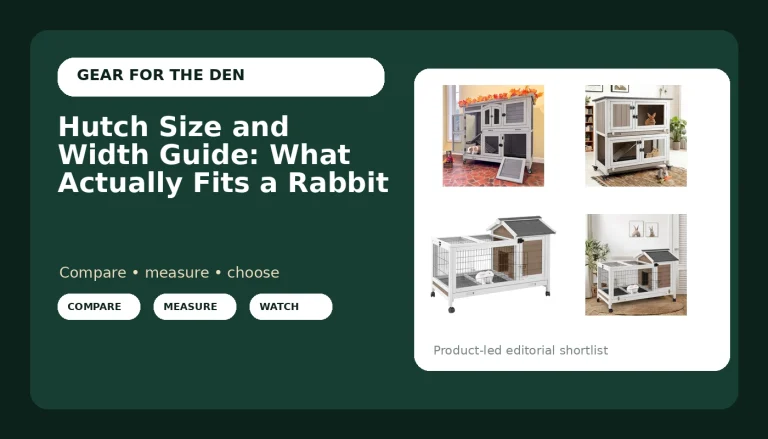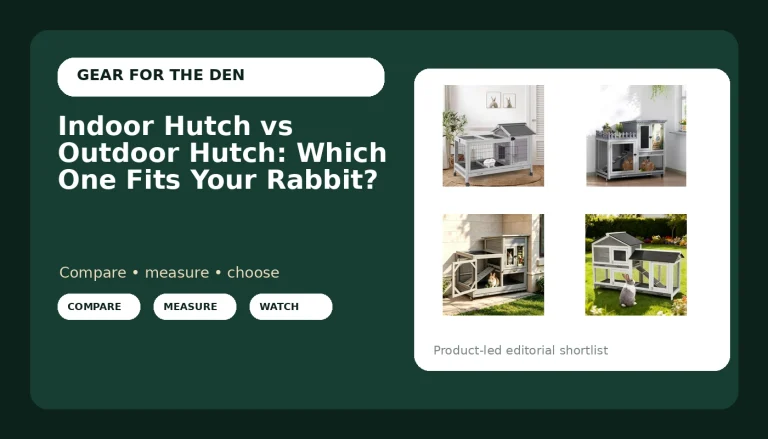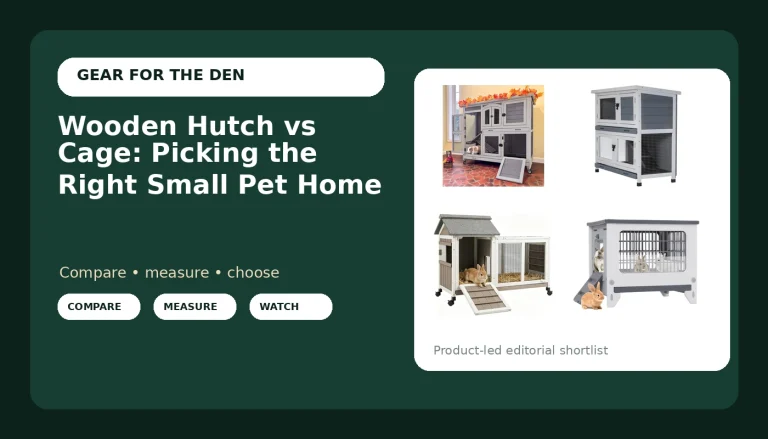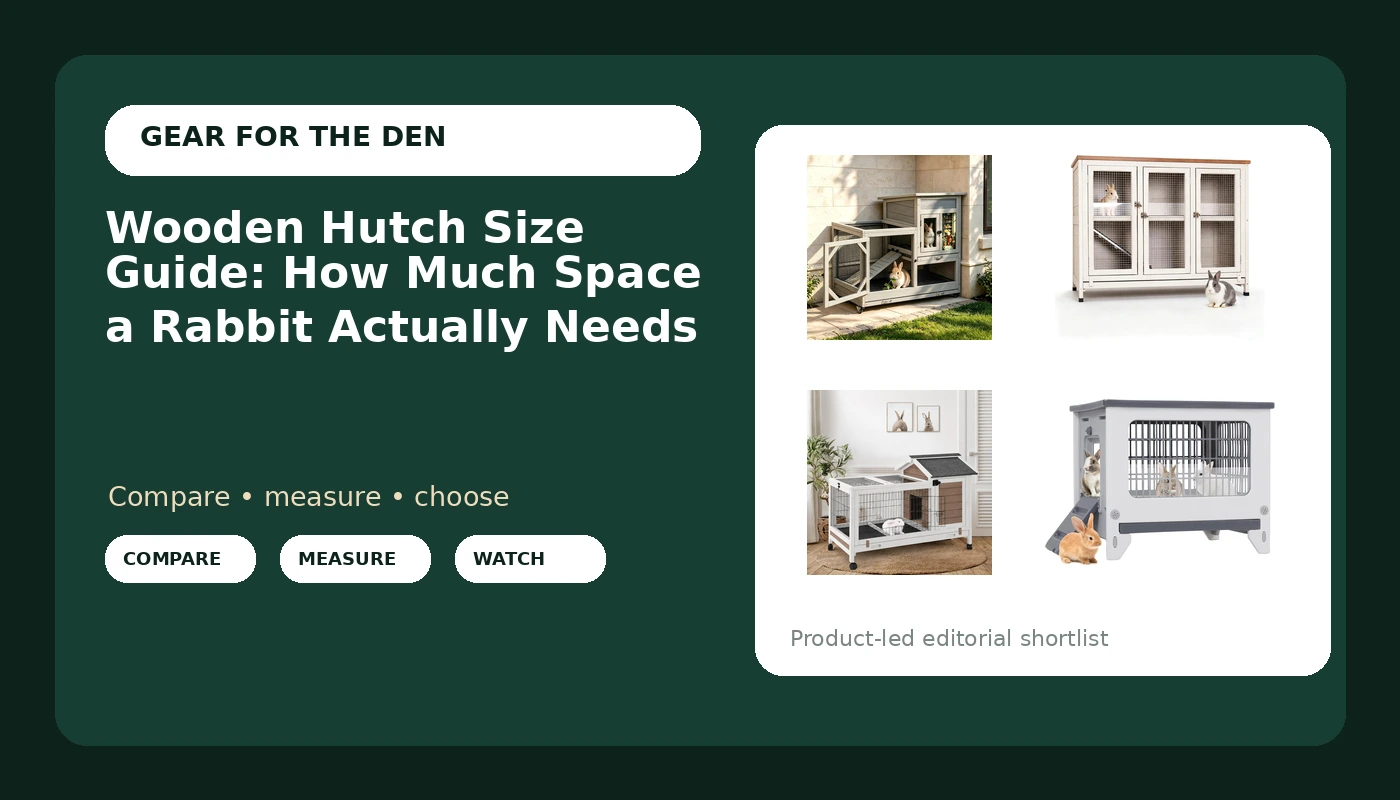
Most people buy a hutch by looking at a photo, then measure the gap under the stairs afterward. That is backwards, and it is how a rabbit ends up in something closer to a bread box than a home. A wooden hutch size guide should start with the animal: how far it stretches when it lies flat, how tall it stands when it periscopes, and how much floor disappears once a hideout, a litter tray, and a hay rack are inside. Get the size right first, and the smaller decisions, bar spacing, bedding dust, bottle capacity, mostly solve themselves.
That is the frame for this guide. I lined up four hutches that cover the range most owners shop in: a two-story indoor model with a pull-out tray and clear guard panel, a gray no-spill design built for indoor and outdoor use, a brown wood house with wire mesh panels, and a plastic waterproof enclosure for covered outdoor setups. None of them is a magic box. Each one fits a different floor area, a different climate, and a different cleaning routine. The wooden hutch size question is really three questions: how much cage size you actually have to work with, how much height the rabbit needs, and how the enclosure sits in your room.
Best Overall: COZIWOW Rabbit Hutch Indoor Outdoor Bunny Cage with No-Spill Design, Gray
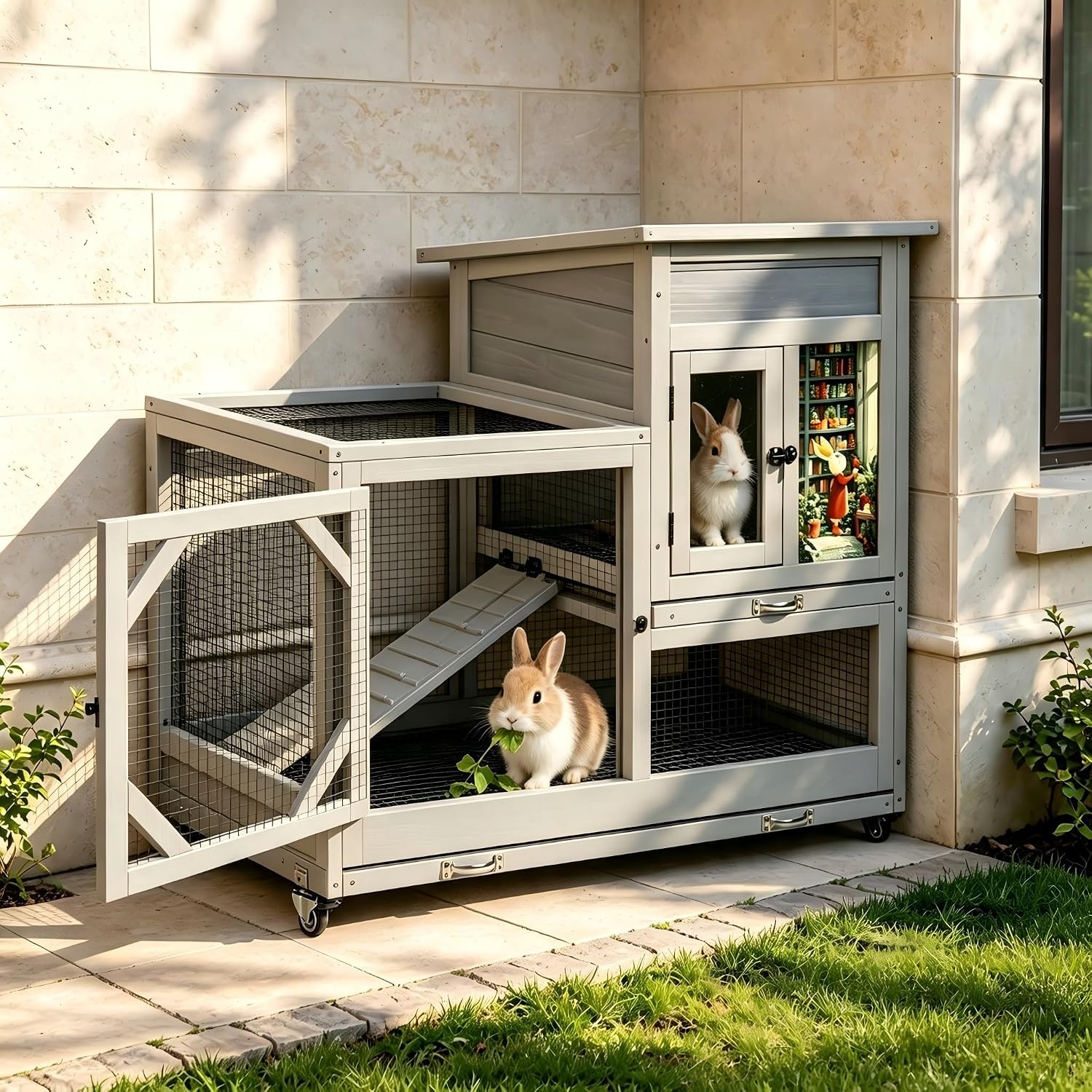
This is the hutch I would hand to someone who has never kept a rabbit and does not want to buy twice. It covers the most situations of the four: indoors as a base, outside on a covered patio when the weather is decent, and back inside when it turns. Gray hides the marks that a pale wood hutch shows within a season, and it looks like furniture rather than a crate, which matters more than people admit when the hutch is going in a living room.
The feature that earns it the top spot is the no-spill design. If you have kept a rabbit indoors, you know the problem: a rabbit backed into a corner and a puddle that runs under the hutch and into the floor edge before you notice. A hutch built to keep waste inside the tray zone is worth more than a slightly wider hutch that lets it escape. That one detail decides whether the hutch stays where the family is or gets exiled to the garage.
Treat it as a single rabbit or bonded pair hutch. Before you buy, measure two things. First, the floor area left once a hideout and a litter tray are in place. A hideout is not optional, and a hideout size that eats a third of the floor has turned your hutch into a corridor. Second, the height. A rabbit that periscopes needs headroom, and a low roof turns a good stretch into a nose bump.
Where it falls short: an indoor and outdoor build is not the lightest thing to move, and a hutch that lives in two places gets moved. If yours will sit in one spot forever, that matters less. If you plan to shift it every weekend, plan for two people and a clear path.
Best Value: 2-Story Indoor Rabbit Hutch with Pull-Out Tray & Clear Guard Panel
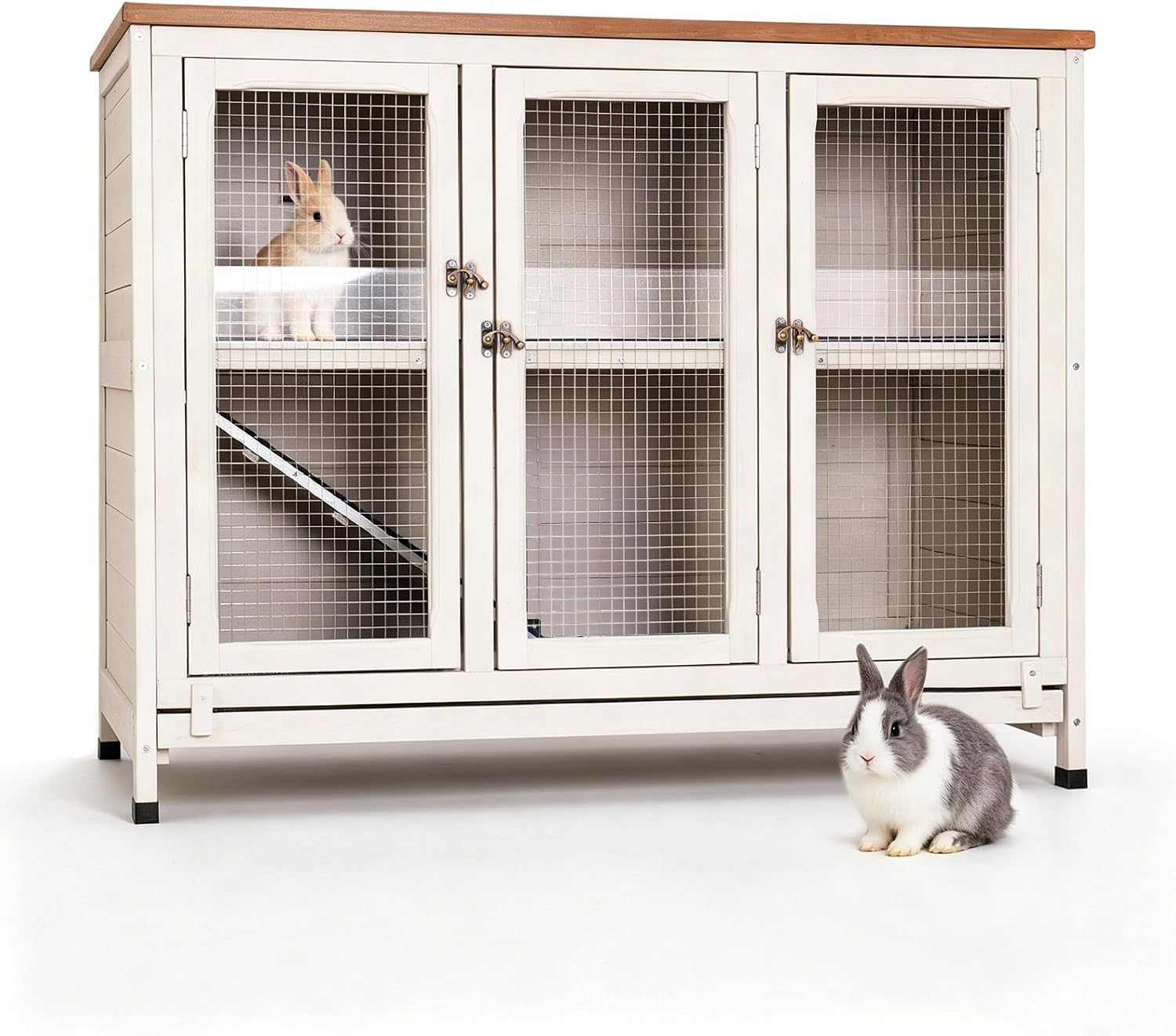
Two levels for less than the flagship, and for a lot of indoor owners this is the smarter buy. A second floor adds floor area without adding footprint, which is the whole game when your rabbit lives in a spare bedroom or a corner of the living room. If your real constraint is the width of the wall rather than the size of the rabbit, a two-story hutch solves a problem a wider single-story hutch cannot.
The pull-out tray is the second reason it lands here. Cleaning speed decides how often a hutch actually gets cleaned, and a tray that slides out turns a twenty-minute job into a two-minute one. The clear guard panel does a quieter job: it keeps bedding and loose hay from being kicked straight out the front. Anyone who has swept up bedding dust twice a day will notice that immediately.
What to watch. A second level only counts as floor area if the rabbit uses it. Check the ramp angle and the headroom under the upper floor. A steep ramp on a smooth surface is a slide, and a rabbit that slips once may never trust it again. Then check the upper level's floor area against the rabbit's stretched-out length, not its sitting length.
The trade-off against the COZIWOW is simple. If your rabbit sprays, or you need a hutch that can go outside, spend the difference on the no-spill design. If your rabbit is tidy, indoors, and your floor space is tight, the two-story hutch is the better use of the money, and I would put what you save toward a bigger hideout and a hay rack that keeps hay off the floor.
How I tested
Every hutch in this guide is judged against the same checklist, and none of it is complicated enough to need a lab.
Floor area first. I work out usable floor area the way a rabbit experiences it: base area minus the footprint of the litter tray, the hideout, and the food and water setup. A hutch advertised as roomy can lose a third of its floor to furniture, which is why the number on the listing is rarely the number that matters.
Height second. Standing height, not just length. A rabbit needs to periscope without hitting the roof, and the upper level of a two-story hutch needs headroom that a tape measure taken at the base will never show you.
Bar spacing and mesh third. Wide bar spacing is a head-stuck risk for small rabbits and a chew target for bored ones. Mesh panels also decide how much of the outside a rabbit can see, which cuts both ways in summer.
Cleaning access fourth. Tray, doors, and how many hands it takes to reach the back corner. A hutch you dread cleaning is a hutch that stays dirty, and a dirty hutch is where the odor and the bedding problems start.
Then the details that decide whether a hutch stays pleasant to live with: where the hay rack mounts, whether a bottle hangs without dripping into the bedding, and whether bedding dust stays in the tray or ends up across the room.
For sizing, I use the numbers welfare groups quote rather than the numbers printed on the box. The widely cited minimum for a pair of average rabbits is a hutch with a 6ft by 2ft footprint and 2ft of headroom, plus an attached run. Very few hutches sold as starter cages meet that. Knowing the target is what turns a hutch purchase into a decision instead of a guess.
Analysis and test results
Four hutches, four different answers to the same question.
The COZIWOW with the no-spill design is the only one here built to work in both places, and that flexibility is the reason it takes the top spot. It is also the one where the waste-control design changes the room you can put it in. That is not a size feature, but it decides how much of your home the hutch is allowed to occupy, which is the same conversation.
The two-story indoor hutch wins on floor area per square foot of room. It is the only one of the four where the cage size math gets easier rather than harder, because the second level is floor the base does not have to provide. The catch is the ramp and the headroom, and those are the two things a photo will not tell you.
The brown wood house with wire mesh panels is the classic wooden hutch shape, and it is the one where the wooden hutch size question bites hardest. Wood is a fixed frame. You cannot nudge a wooden frame an inch wider next spring, and you cannot move a heavy one on your own. It rewards measuring twice, and the wire mesh panels mean part of the usable floor area is decided by what the rabbit can see through rather than what it can stand on.
The plastic waterproof enclosure answers the outdoor problem directly: waterproof walls, a floor you can hose out, and no wood to swell. The trade-offs are ventilation and summer heat. A sealed plastic box in July is a different risk than a wooden hutch in July, and shade matters more than an extra foot of floor when the temperature climbs.
What all four have in common is the thing that actually fails. Not the frame and not the roof: the floor area left after the furniture goes in. Measure that number, not the one in the listing.
Measuring your rabbit before you buy
Stretch your rabbit out on the floor and measure nose to tail. Most guidance puts the hutch floor at least three times that length, and that is a floor measurement, not a diagonal. Then stand the rabbit up and measure the top of its head, and add a hand's width of clearance for a periscope.
Hideout size comes next. A hideout should be big enough for the rabbit to lie flat inside and turn around, and small enough that it still reads as a den rather than a second room. If you add a play tunnel, the tunnel diameter has to clear the rabbit's shoulders without scraping, because a tunnel a rabbit cannot sprint through is a tunnel it will ignore.
Finally, plan for water and hay. Bottle capacity and hay rack placement decide how often you refill, and a hay rack that hangs over the litter tray keeps the mess in one place.
Indoor and outdoor hutches: what changes the size math
An outdoor hutch has to do everything an indoor hutch does plus weather, so the size question changes shape. A slightly smaller hutch with a solid, sheltered sleeping area beats a bigger open one that lets wind and rain reach every corner. In a wet climate, plastic walls and a raised floor matter more than extra length. In a hot one, airflow and shade matter more than an extra foot of floor, and a wooden hutch with mesh panels vents better than a closed box.
There is no single ideal wooden hutch size, because the answer changes with the rabbit, the climate, and how many hours a day the animal gets out. The correct wooden hutch size is the smallest one that still lets the rabbit stretch flat, stand tall, and turn around without touching a wall, with enough floor left over for a hideout, a litter tray, and a hay rack.
The wooden hutch size reference table
This is the table I would keep on your phone while you shop. It maps the four hutches to the situations they fit, and it tells you what to measure rather than what the listing claims.
| Hutch | Best for | What to measure before you buy | Watch for |
|---|---|---|---|
COZIWOW Rabbit Hutch with No-Spill Design, Gray | Indoors most of the year, with supervised outdoor time | Floor area left after the hideout and litter tray are in | Periscope height if the rabbit is a stretcher |
2-Story Indoor Rabbit Hutch with Pull-Out Tray & Clear Guard Panel | Apartments and small rooms where the footprint is fixed | Total floor area across both levels, not just the base | Ramp angle and headroom under the upper floor |
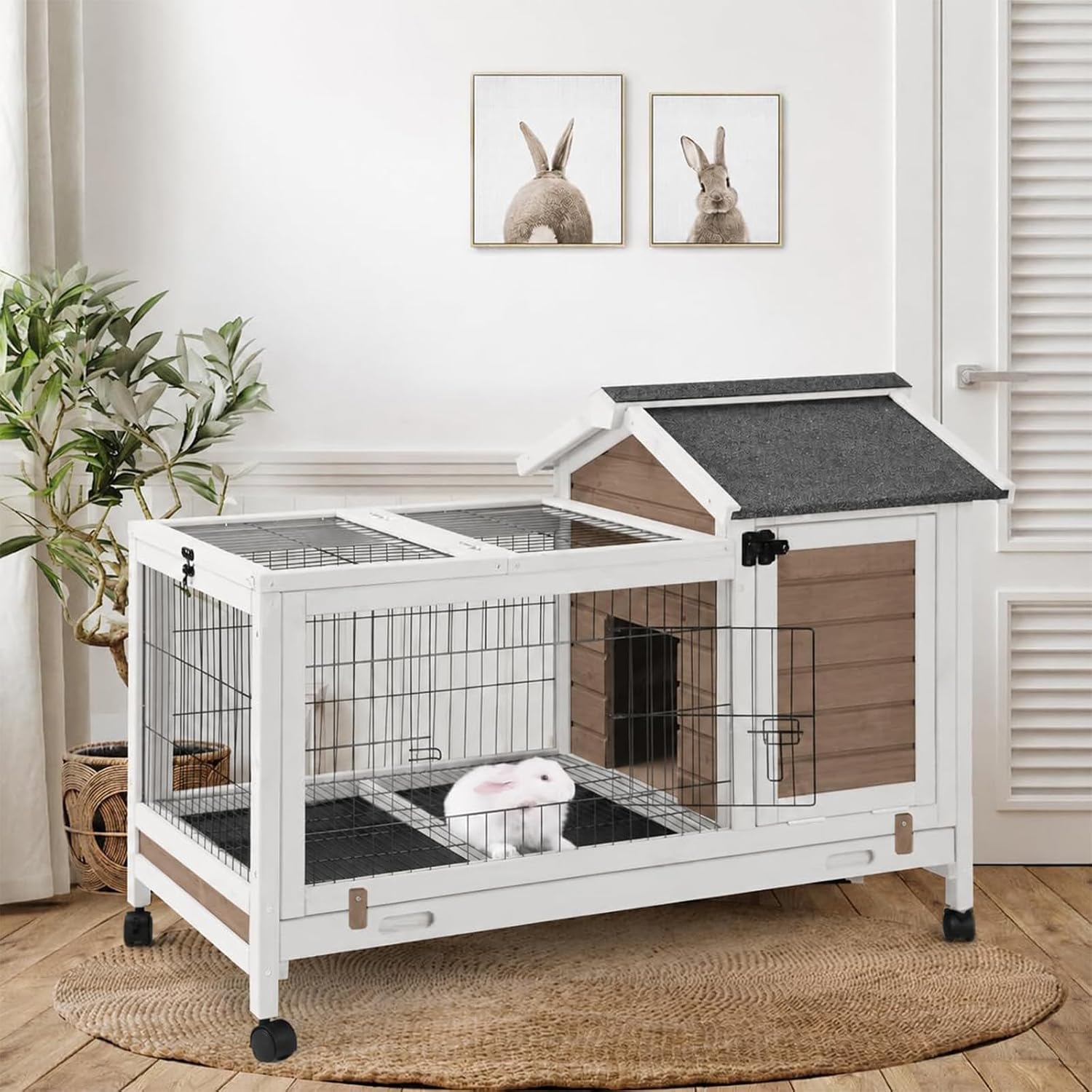 View on Amazon → Rabbit Hutch Indoor Bunny Cage Outdoor Wood House with Wire Mesh, Brown | An indoor base with supervised outdoor time | Bar spacing on the mesh panels and the solid floor area | Wood swelling where rain reaches the frame |
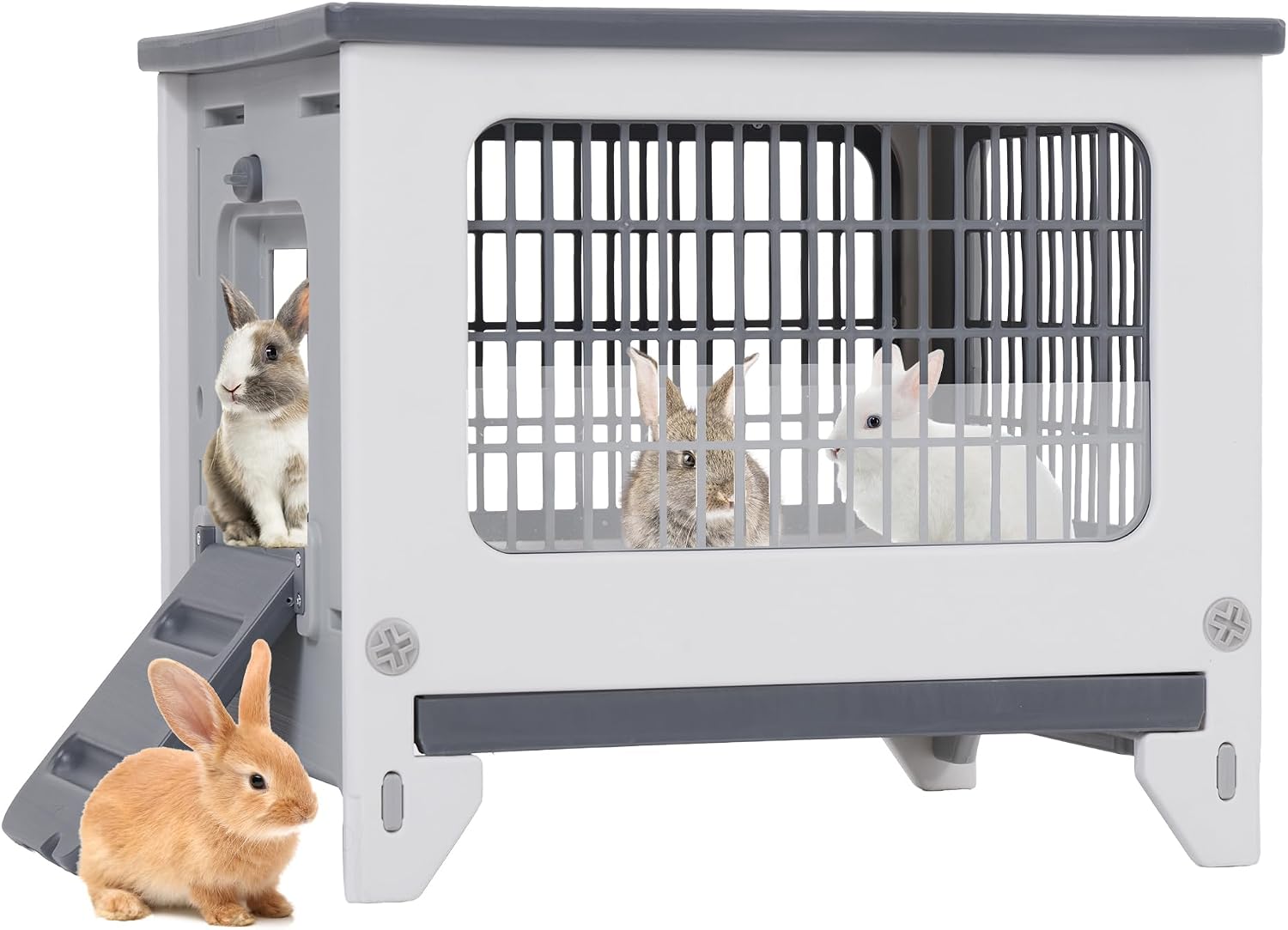 View on Amazon → Rabbit Hutch Outdoor Indoor Plastic Waterproof Bunny Cage Enclosure | Covered runs, patios, and wet climates | Ventilation openings and usable floor area | Condensation and summer heat inside a closed box |
The pattern in the table is the same one that shows up in every hutch decision: the enclosure that fits your space and your climate beats the one with the biggest number on the box. If you want a single starting point, a wooden hutch size guide is only useful when it tells you what to put a tape measure against, and that is the rabbit, the hideout, and the wall you intend to use.
Should you buy the COZIWOW Rabbit Hutch with No-Spill Design?
Yes, if your rabbit lives indoors and you want one hutch that can also handle a covered patio in summer. The no-spill design is the feature that keeps it in the living room instead of the garage, and the gray finish hides the marks that show up on pale wood within a season.
It is not the hutch for someone who wants to rearrange the furniture every weekend, because an indoor and outdoor build is heavier than it looks and wants two people to move. It is also not the cheapest way to house a rabbit in a spare room, where a two-story design gives you more floor area for the footprint.
Buy it if you want the one that covers the most situations and you would rather measure once. Skip it if your rabbit sprays nothing, your space is tight, and your hutch will never see the weather.
Should you buy the 2-Story Indoor Rabbit Hutch with Pull-Out Tray & Clear Guard Panel?
Yes, if the wall is your limit rather than the rabbit. Two levels add floor area without widening the footprint, the pull-out tray makes cleaning fast enough that you will actually do it, and the clear guard panel keeps bedding and hay where you put them.
Check two things first. Stand at the ramp and ask whether a rabbit would trust it, because a steep, slick ramp wastes the whole upper floor. Then look at the headroom under that upper floor, since a rabbit that cannot periscope on the ground level is a rabbit that lives on one story of a two-story hutch.
Skip it if your rabbit needs a hutch that can go outside, or if you want the waste containment of the COZIWOW. Otherwise this is the value pick of the four, and the money left over buys a hideout the rabbit will actually use.