Small tanks punish filter mistakes faster than large ones. Ten gallons of water has far less dilution capacity than fifty, so the aquarium filter for small tanks you choose carries most of the load between water changes, holding ammonia, nitrite, and suspended debris in check while the bacteria colony catches up. The decision rarely comes down to brand. It comes down to three numbers: tank volume, flow rate in gallons per hour, and how many filtration stages the media actually gives you. Think of this as an aquarium filter for small tanks explained through the numbers on the box instead of through marketing language. Once those numbers line up with the tank in front of you, the rest of the setup, including lighting, temperature control, and substrate grain, is much easier to plan without guessing.
Quick answer
The correct aquarium filter for small tanks is one rated for the tank's full volume rather than a smaller tank, moving enough water to turn that volume over several times every hour. For most 10 to 20 gallon setups, a pump rated near eight to ten times the tank volume per hour is a common starting point, and fish load, substrate, and decorations all change the real number. Media matters as much as flow, because a filter you can rinse and refill in stages lets you keep the bacteria alive while you remove debris. Two of the listings below are starter kits with the filter pump included; the other two are lights for the same tank sizes, since lighting is the second powered decision in a small setup.
Four useful options
| Model | Best fit | What stands out |
|---|---|---|
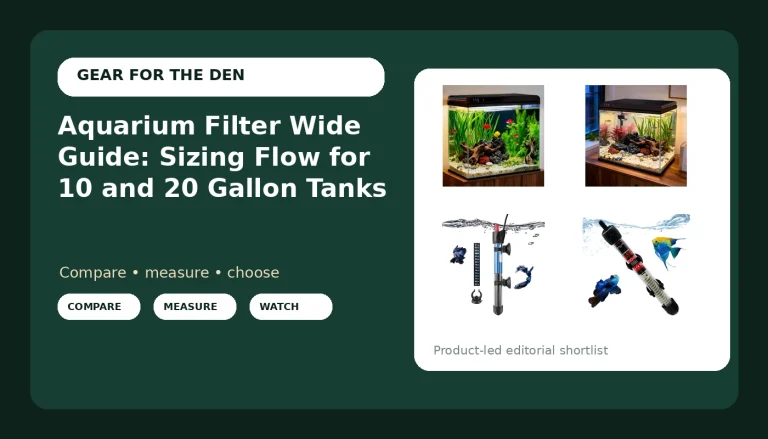
| Coospider 10 Gallon Glass Fish Tank, Aquarium Starter Kit, Simple Self-Cleaning Aquarium with 3-Color LED Lights, Quiet Filter Pump, Temperature Monitoring for Fish, Shrimp, Kids Gift Ideas | A first 10 gallon tank where the filter comes in the box | Starter kit with 3-color LED lighting, a filter pump, temperature monitoring, and a self-cleaning design |
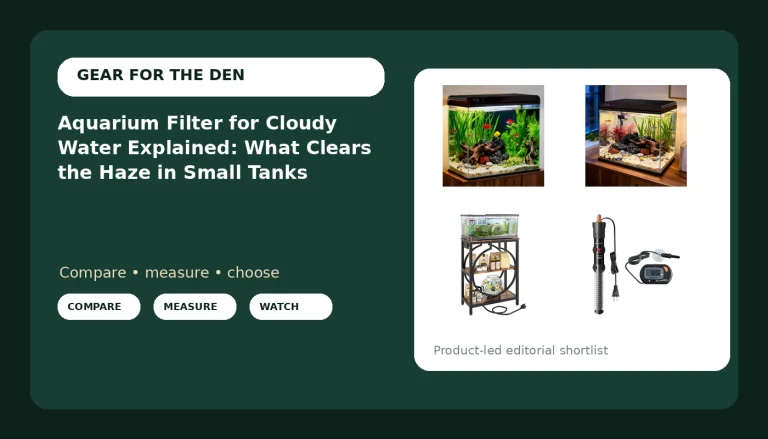
| Coospider 20 Gallon Glass Fish Tank, Aquarium Starter Kit, Simple Self-Cleaning Aquarium with 3-Color LED Lights, with Quiet Filter Pump, with Temperature Monitoring for Fish, Shrimp, Kids Gift Ideas | A 20 gallon tank on the same small-tank footprint | The same starter-kit formula at double the volume, with the filter pump and temperature monitoring included |
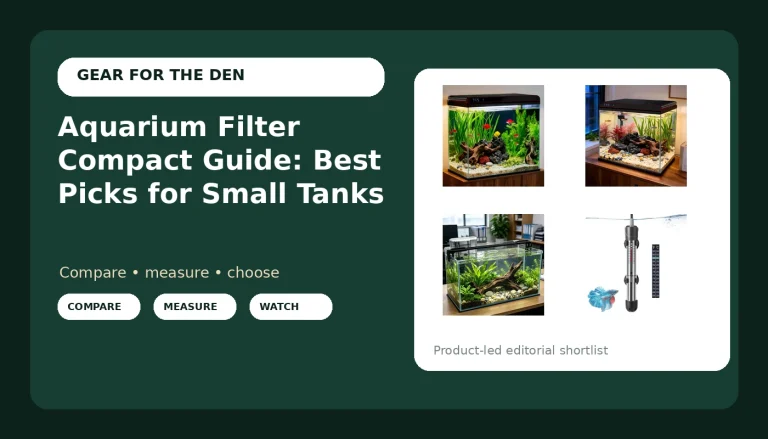
| NEOAQLUX 24/7 LED Aquarium Light for 12-18 Inch Plant & Fish Tank, 12-Color & Gradient & Full Spectrum with Auto On/Off, Sunrise-Daylight-Moonlight, Extendable Brackets for Freshwater IP68 | Lighting a 12 to 18 inch tank | 12-color, gradient, and full spectrum output with auto on/off and extendable brackets |
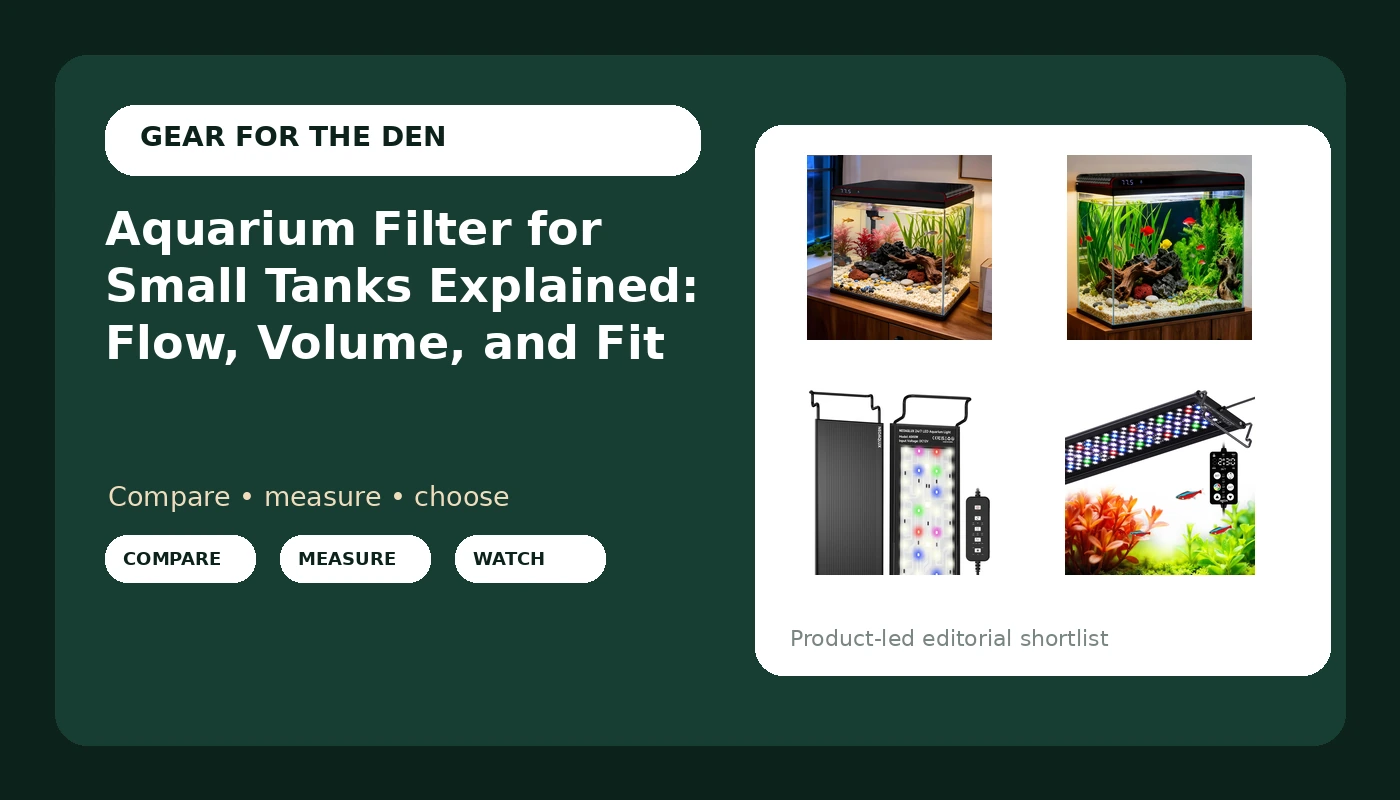
| SEAOURA Aquarium LED Light with 24/7 Timer for 24-30in Fish Tank | Lighting a 24 to 30 inch tank | 24/7 timer control sized for 24 to 30 inch fish tanks |
Filter included, 10 gallon: Coospider 10 Gallon Glass Fish Tank, Aquarium Starter Kit, Simple Self-Cleaning Aquarium with 3-Color LED Lights, Quiet Filter Pump, Temperature Monitoring for Fish, Shrimp, Kids Gift Ideas
For a small tank, buying the filter inside a kit removes most of the sizing guesswork, because the pump ships matched to the volume it was built for. The trade-off is flexibility. A bundled pump gives you fewer choices about flow rate and filtration stages, so if you plan a heavy bioload, or you want to run a specific chemical stage such as carbon, the kit pump may not be the right starting point. Quiet and powerful are also not the same thing, and the pump's gallons per hour rating is the number to confirm before you commit, whatever the listing calls it.
Filter included, 20 gallon: Coospider 20 Gallon Glass Fish Tank, Aquarium Starter Kit, Simple Self-Cleaning Aquarium with 3-Color LED Lights, with Quiet Filter Pump, with Temperature Monitoring for Fish, Shrimp, Kids Gift Ideas
Volume is the first number to get right, because it sets everything downstream. A 20 gallon tank needs a filter moving roughly twice the water of a 10 gallon tank to reach the same turnover, so the pump in this kit is doing more work than the one in the smaller version. That is also the argument for buying the size you actually want rather than starting small and upgrading later: the filter, the light, and the heater's thermostat range all scale with the tank, and replacing them piece by piece usually costs more than buying the larger kit once.
Lighting for a 12 to 18 inch tank: NEOAQLUX 24/7 LED Aquarium Light for 12-18 Inch Plant & Fish Tank, 12-Color & Gradient & Full Spectrum with Auto On/Off, Sunrise-Daylight-Moonlight, Extendable Brackets for Freshwater IP68
Lighting will not rescue a filter that is too small for the tank, but it does shape how much algae the tank grows and how well plants use the waste the filter leaves behind. A fixture with a real timer removes one daily chore and keeps the photoperiod consistent, which matters more in a small tank than a large one because there is less water to buffer a bloom. Spectrum and kelvin rating matter most if you keep plants; for a fish-only small tank, a steady schedule does more for you than a particular color mix. Measure the tank first, because a light built for a 12 to 18 inch tank will not cover a 30 inch one.
Lighting for a 24 to 30 inch tank: SEAOURA Aquarium LED Light with 24/7 Timer for 24-30in Fish Tank
Longer tanks spread light across more surface area, so fixture length matters more than raw wattage, and a light that fits the tank is worth more than a brighter one that overhangs. If you already own the 20 gallon kit above, its built-in 3-color lighting may be enough, and a separate timer light becomes a choice about spectrum and schedule rather than a necessity. If you are building a tank from parts, the light and the filter are separate decisions: pick the filter by tank volume and flow rate, then pick the light by tank length.
Prices and availability may change. Product images, names, and retailer links are matched to verified listings. No current price, rating, stock status, or measured result is stated here without current evidence.
How to size an aquarium filter for small tanks
There is no single ideal aquarium filter for small tanks, because the answer changes with volume, stocking, and how much maintenance you want to do. Sizing starts with volume, not with the marketing on the box. A 10 gallon tank holds closer to 8 or 9 gallons of actual water once you account for substrate grain, decorations, and the gap at the top, so treat the printed volume as a ceiling rather than a working number.
The standard shortcut is turnover: divide the filter's gallons per hour rating by the tank volume and aim for several full passes every hour. A pump rated at 100 gallons per hour on a 10 gallon tank reaches ten turnovers on paper, but head height, clogged media, and a sponge prefilter all cut into that, which is why most keepers size up rather than down.
Then think in filtration stages. Mechanical media traps debris, biological media hosts the bacteria that process ammonia and nitrite, and chemical media such as carbon removes odors, color, and some dissolved compounds. Small tanks have little room, so many hang-on-back filters give you one cartridge doing two jobs at once. If you want to rinse mechanical media without disturbing the bacteria, look for a filter with separate compartments, or add a sponge filter driven by an air pump as a second biological stage.
Two smaller numbers are worth checking. Wattage on a small internal pump is usually low, but a pump that runs warm adds heat to a tank with very little water to absorb it, which can nudge the temperature above the thermostat range you set on the heater. Physical size matters too: a filter rated for a 20 gallon tank can be too deep for a 10 gallon tank sitting against a wall, so check clearance as well as flow rate.
Matching the filter to the rest of the small tank
A filter is one part of a system, and the parts interact. A tank with strong flow and a heavy bioload still fails if the light runs twelve hours a day and feeds an algae bloom, and a tank with perfect filtration still swings in temperature if the heater is undersized for the room. Decide the filter first, then match lighting and heating to it, then stock the tank slowly enough that the bacteria colony keeps pace with the waste.
- Measure the tank and calculate the working water volume rather than trusting the printed label.
- Decide the stocking level before you buy hardware, because a shrimp-only tank and a tank of livebearers put very different loads on the same filter.
- Pick a filter whose gallons per hour rating gives you several turnovers an hour, then confirm it physically fits the tank's footprint.
- Check which filtration stages the media supports, and choose a design you can clean without throwing the bacteria away.
- Choose lighting by tank length, set a consistent photoperiod, and confirm the heater's thermostat range holds the temperature steady.
Practical checks before you buy
- Compare the pump's gallons per hour rating with the tank volume, not with the size printed on the tank's box.
- Look at how the media is sold, because a filter with cheap, widely available cartridges is easier to live with than one with proprietary parts.
- Rinse biological media in tank water during water changes rather than under the tap, so the bacteria that make the filtration stage work stay alive.
- Set the light on a timer for a consistent photoperiod and keep the tank out of direct sun, since a small tank blooms faster than a large one.
- Match substrate grain to the fish you plan to keep, and check that the filter intake cannot swallow it.
Which option should you choose?
Choose the Coospider 10 Gallon Glass Fish Tank, Aquarium Starter Kit, Simple Self-Cleaning Aquarium with 3-Color LED Lights, Quiet Filter Pump, Temperature Monitoring for Fish, Shrimp, Kids Gift Ideas when you want a first small tank with the filter pump, lighting, and temperature monitoring already in the box and 10 gallons is the right footprint for the space. Choose the Coospider 20 Gallon Glass Fish Tank, Aquarium Starter Kit, Simple Self-Cleaning Aquarium with 3-Color LED Lights, with Quiet Filter Pump, with Temperature Monitoring for Fish, Shrimp, Kids Gift Ideas when the same kit approach appeals but you want double the water and the extra stocking room that comes with it. Choose the NEOAQLUX 24/7 LED Aquarium Light for 12-18 Inch Plant & Fish Tank, 12-Color & Gradient & Full Spectrum with Auto On/Off, Sunrise-Daylight-Moonlight, Extendable Brackets for Freshwater IP68 when you are lighting a 12 to 18 inch tank and want a programmable schedule with spectrum control. Choose the SEAOURA Aquarium LED Light with 24/7 Timer for 24-30in Fish Tank when the tank runs 24 to 30 inches and you need a timed fixture for that length.
None of these listings states a gallons per hour figure or a measured flow result, so treat the kit pumps as matched to their own tank size and verify the flow rate yourself before adding a heavy bioload. If your tank falls outside 10 to 20 gallons, or your setup needs a filtration stage the kit media does not offer, buy the filter separately and use these listings only for the tank and the lighting.
The bottom line
The right aquarium filter for small tanks is the one that matches three numbers: the working tank volume, a flow rate that turns that volume over several times an hour, and a media setup with a filtration stage you can clean without losing your bacteria. Everything else, from wattage to kelvin rating, follows those three. Buy the tank size you actually want, confirm the pump's rating before you trust it, and choose lighting by length rather than by brightness.