Cloudy water is the most common complaint in a new freshwater tank and one of the most misdiagnosed. The haze is rarely proof that you bought the wrong box. It is usually proof that the water is carrying more suspended particles, or more free-floating bacteria, than the system can move through its media in a reasonable amount of time. That is why an aquarium filter for cloudy water is really a question about flow rate, filtration stage coverage, and tank volume working together rather than a question about one product label. A ten gallon starter kit and a twenty gallon kit can use the same pump design and still behave differently, because the same particle load is more dilute in more water. Before you replace anything, it helps to know what the cloud is made of, how many gallons per hour your pump actually moves, and whether the media you are running can trap the particles you can see.
Quick answer
Match the media and the flow to the cause, then let the tank settle. A white, milky haze in a new tank is usually a bacterial bloom that fades as the biological filtration stage matures. A grey or tan haze is usually suspended debris that fine mechanical media can catch. A green tint is algae, which responds to light and nutrient control more than to a different pump. In every case the practical target is a filter that turns the tank volume over several times per hour, holds enough surface area for bacteria, and can accept a fine mechanical pad. There is no single ideal aquarium filter for cloudy water, because the haze has more than one cause, and the correct aquarium filter for cloudy water is the one whose flow, media volume, and maintenance schedule fit the tank in front of you.
4 useful options
| Model | Best fit | What stands out |
|---|---|---|
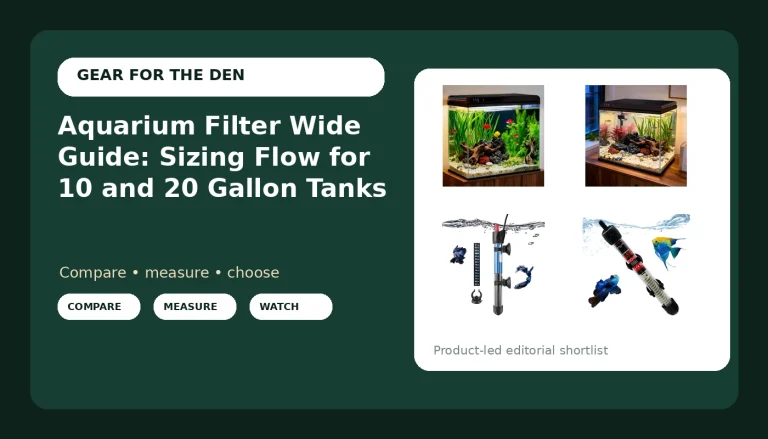
| Coospider 20 Gallon Glass Fish Tank | Setups where more water volume and an integrated pump matter | 20 gallon glass starter kit with 3-color LED lighting, a quiet filter pump, and temperature monitoring |
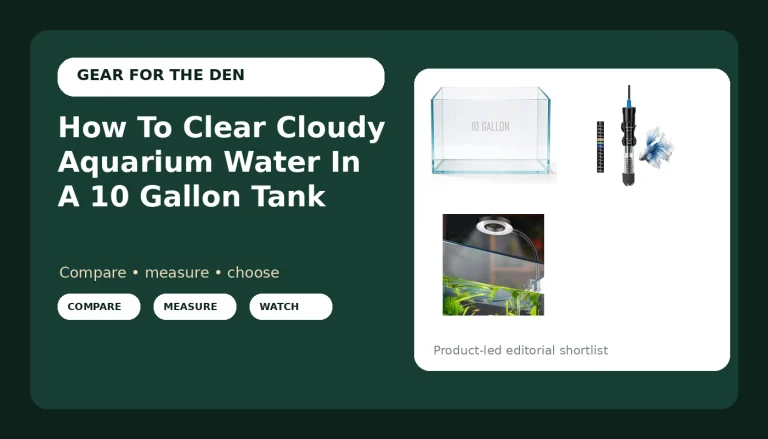
| Coospider 10 Gallon Glass Fish Tank | Desks, shelves, and first tanks | 10 gallon glass starter kit in the same format, with 3-color LED lighting and a quiet filter pump |
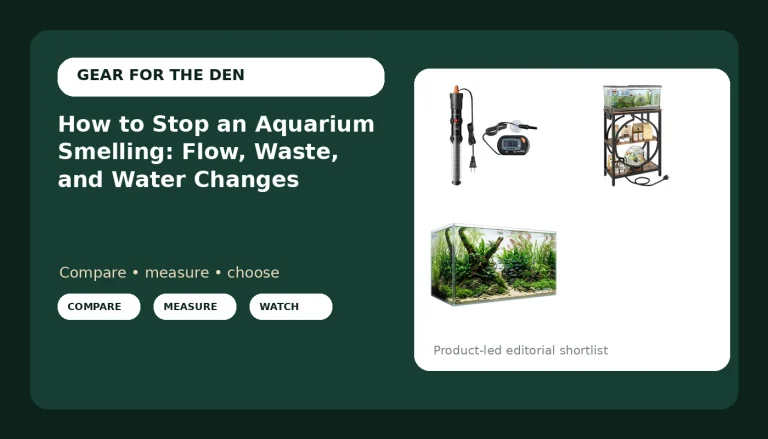
| HavenlyYouth 10 Gallon Aquarium Stand | Holding a 10 gallon tank with power and storage in one spot | Three tier heavy duty metal stand with a built-in power outlet and storage, listed at 21.3 by 11.8 by 29 inches |
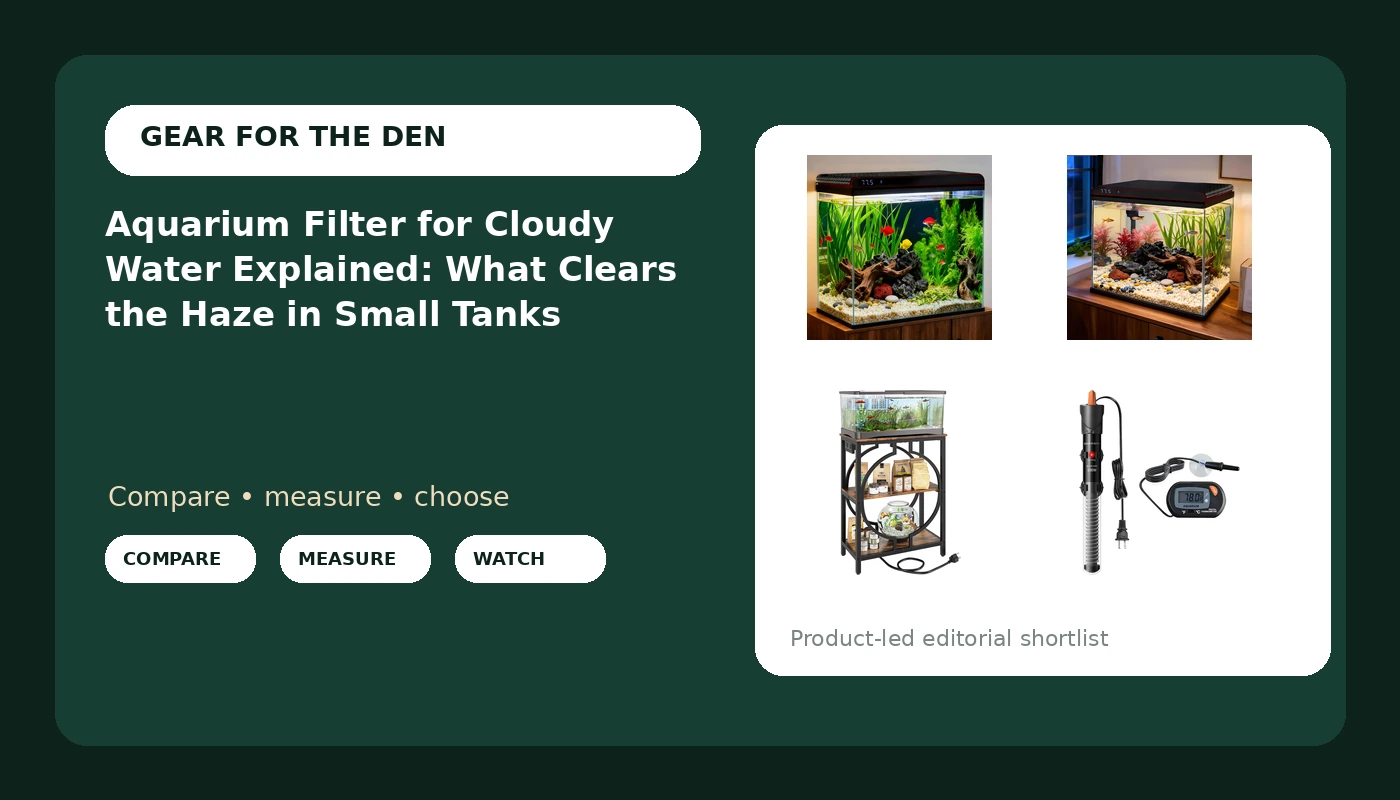
| HiTauing Aquarium Heater | Keeping temperature steady while a tank settles | Adjustable knob heater offered in 25W, 50W, 100W, 200W, and 300W with a digital thermometer |
Featured all-in-one: Coospider 20 Gallon Glass Fish Tank
The argument for starting with more water is arithmetic rather than marketing. In a 20 gallon tank the same amount of suspended debris is spread through roughly twice the volume of a 10 gallon tank, so a haze has more room to dilute and more time to be pulled into media. An integrated pump also removes one variable from a cloudy water problem, because a built-in unit leaves less guesswork about whether the pump and the tank were designed for each other. The trade-off is footprint: a glass tank this size needs a stand and a spot that can carry it. Treat the self-cleaning wording as the manufacturer's description of the design rather than a promise, and plan on regular partial water changes either way.
Compact all-in-one: Coospider 10 Gallon Glass Fish Tank
A 10 gallon tank is where most cloudy water questions start, and also where the margin for error is smallest. Because the tank volume is small, the same feeding mistake or the same bit of overstocking pushes waste concentration up faster, and a bacterial bloom can look dramatic in a small glass box. The counterweight is turnover. If a kit pump moves the water several times per hour in gallons per hour, the media sees the same particles repeatedly and clears them sooner. If it does not, the fix is usually more mechanical media surface or more frequent small water changes rather than a bigger tank. The compact format is the appeal here: it fits on one surface and keeps the whole setup in view.
Stand and power: HavenlyYouth 10 Gallon Aquarium Stand
Support rarely gets credit in a filtration discussion, but it changes how often you actually maintain the tank. A filled 10 gallon aquarium is heavy, and a base that is not level puts stress on the glass and on the pump. The three tier frame here also carries a built-in power outlet and storage, which puts the pump, the light, and the heater on one power source in one place instead of trailing cords across a desk. That convenience matters more than it sounds, because the routine that clears cloudy water, which is small water changes and media rinses, is the routine you are most likely to keep up with when the equipment is easy to reach. The stand does not filter anything, and it is not a substitute for the media inside the tank.
Temperature control: HiTauing Aquarium Heater
Temperature is a separate variable from filtration, and it is easy to overlook while you are staring at haze. Most freshwater fish, and the bacteria living in your biological media, do best in a stable range, and a heater with an adjustable knob and a digital thermometer gives you a way to see what the water is doing instead of guessing. Wattage should be matched to tank volume and to how much colder the room gets at night, since an undersized heater runs constantly and an oversized one cycles hard. The listed options run from 25W to 300W, which spans small tanks through larger ones. A steady thermostat range supports the bacterial colony that eventually clears a new-tank bloom.
Prices and availability may change. Product images, names, and retailer links are matched to verified listings. No current price, rating, stock status, or measured result is stated here without current evidence.
What an aquarium filter for cloudy water is actually doing
Filtration is usually described in stages, and each stage handles a different particle size. Mechanical filtration is the part that catches what you can see. A coarse sponge or foam block stops leaves and food fragments, and a finer pad behind it catches the smaller particles that make water look milky. If the fine pad is missing, those particles pass through the pump and go straight back into the tank, which is why a pump that is running perfectly can still leave a tank hazy. Biological filtration is the part you cannot see. Bacteria colonize every wet surface, and porous media simply gives them more of it. That colony processes ammonia and nitrite, and it also eventually outcompetes the free-floating bacteria that cause a new-tank bloom. Chemical filtration, usually carbon, removes dissolved compounds and odors. It does not remove suspended particles, so it is a supporting tool rather than the answer to a haze.
The three common hazes are worth separating before you buy anything. A white or milky cloud in a tank that has been running a few days is almost always a bacterial bloom, and it usually fades on its own as the biological filtration stage matures. A grey, tan, or brownish cloud that appears after you disturb the substrate is suspended debris, and it responds to fine mechanical media and to not overfeeding. A green cloud is a different problem entirely, because it is algae living in the water column. Green water responds to shorter lighting periods and lower nutrient levels, and the kelvin rating of your light matters less than how long it stays on.
Choosing an aquarium filter for cloudy water therefore starts with the cloud, not the catalog. Once you know whether you are looking at bacteria, debris, or algae, the media list writes itself.
Matching flow rate, tank volume, and wattage
A pump's real number is its flow rate in gallons per hour, and a tank's real number is its volume in gallons. Turnover is the ratio between them. A common starting point for a small freshwater tank is enough flow to move the full tank volume several times per hour, and that target is easier to hit in a 10 gallon tank than most people expect, because the numbers are small. Manufacturer flow ratings are usually taken without media, without a clogged pad, and without lift, so treat them as a ceiling rather than a promise. When a pump is rated near the turnover you need, adding a dense fine pad can drop the actual flow below it.
Wattage follows a similar logic on the heating side. An adjustable heater needs to be sized to the tank volume and to the difference between the room and the target temperature, and the thermostat range tells you whether the unit can hold the setting you want. On a small tank a modest wattage is usually enough, and a heater that is far too large will short-cycle.
The five steps below are the order that keeps you from buying a second pump you did not need.
- Identify the haze first: milky white, grey debris, or green algae. Each one points to a different fix.
- Estimate turnover by multiplying your tank volume by the number of times per hour you want the water cycled, then compare that figure with the pump's rated gallons per hour.
- Build the media in order: coarse mechanical, then fine mechanical, then biological, with chemical media optional and temporary.
- Size heater wattage to the tank volume and the room, and confirm the thermostat range covers your target temperature.
- Change a modest amount of water on a schedule, rinse mechanical media in removed tank water, and keep feeding consistent.
Practical guidance for a tank that stays hazy
- Run the pump continuously. Switching filtration off for long stretches lets particles settle and then re-suspend the moment anything disturbs them.
- Add fine mechanical media before you add a stronger pump. A pad or a polishing sponge costs far less than a new unit and often solves the visible haze on its own.
- Mind the substrate grain when you clean. Fine gravel and sand release dust when they are disturbed, so vacuum gently and avoid deep stirring in a tank that is still settling.
- Watch the photoperiod. A long lighting window feeds green water, and shortening it is more useful than swapping the light.
- Change small amounts of water often rather than one large change, especially in a 10 gallon tank, where parameters move quickly.
Which option should you choose?
Choose the Coospider 20 Gallon Glass Fish Tank when you want more water volume and an integrated pump in a single purchase, and you have a stand and a space that can carry it. Choose the Coospider 10 Gallon Glass Fish Tank when the room, the desk, or the budget points to a compact setup and you are willing to keep up with small, frequent water changes. Choose the HavenlyYouth 10 Gallon Aquarium Stand when you need a level base with power and storage for a 10 gallon tank, and you want the pump, light, and heater within easy reach. Choose the HiTauing Aquarium Heater when temperature stability is the missing piece and you need an adjustable unit with a thermometer to confirm the setting.
None of these listings state a measured flow rate or a tested particle-clearance result, so treat kit descriptions as manufacturer specifications rather than verified performance. Turnover, media choice, and maintenance habits are what actually decide how fast a haze clears.
The bottom line
The takeaway from this aquarium filter for cloudy water explained is that the filter is one part of a system, not a cure. Identify whether the cloud is bacteria, debris, or algae, then match the filtration stage coverage and the flow rate to the tank volume you actually have. On a small tank that usually means fine mechanical media, a pump moving enough gallons per hour to cycle the water several times over, and a maintenance routine you can repeat. Heat, lighting, and the surface the tank sits on all shape the result too, which is why the kit, the stand, and the heater belong in the same conversation. Get the flow and the media right, keep the schedule boring and regular, and the water tends to follow.