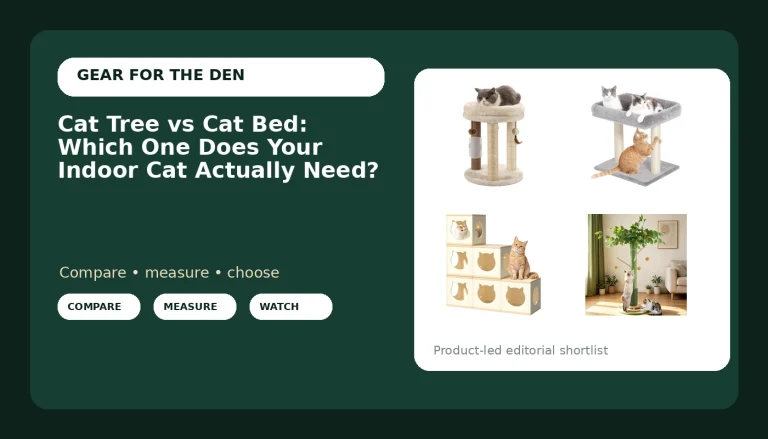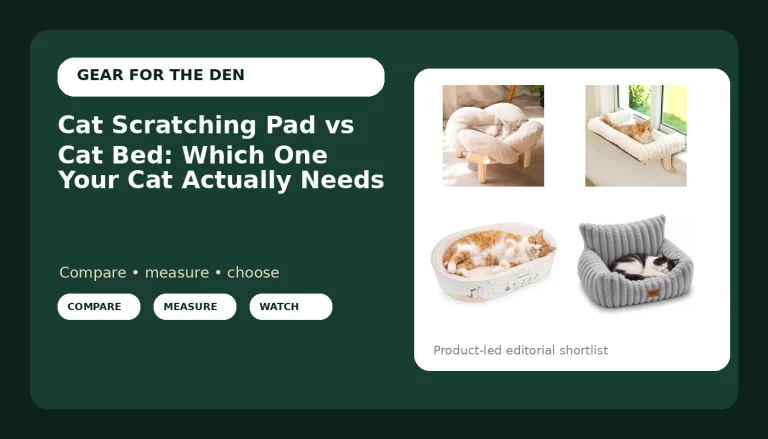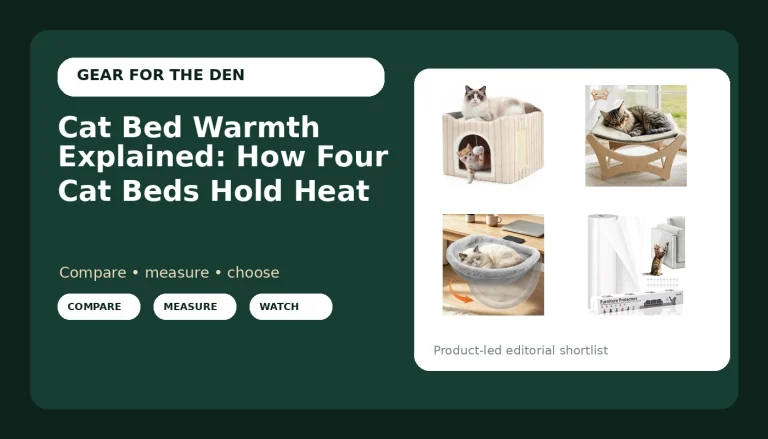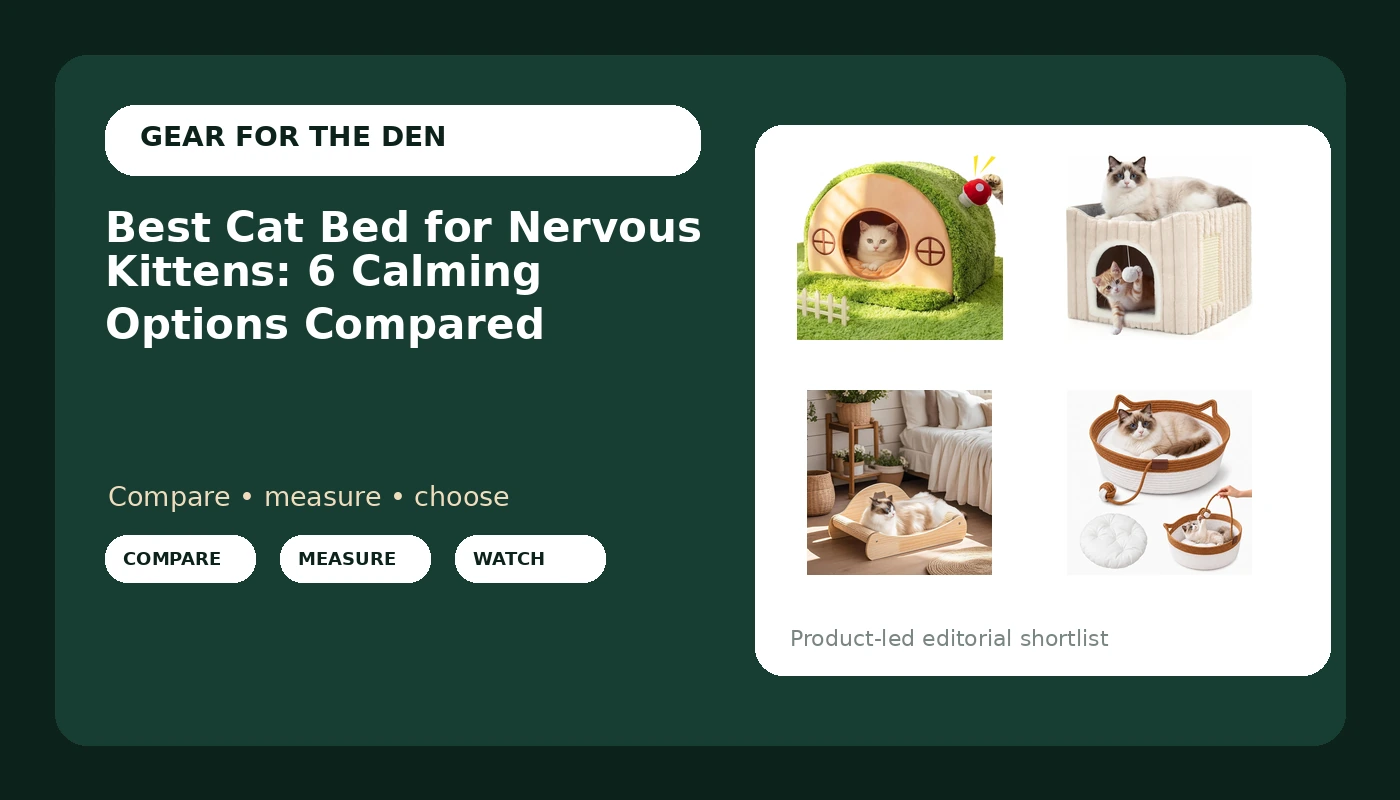
A nervous kitten does not need a bigger bed so much as a quieter one. When a young cat spends its first weeks flinching at the doorbell, hiding behind the sofa, and bolting whenever a hand reaches toward it, the furniture around it starts to matter more than most owners expect. The best cat bed for nervous kittens is usually the one that offers a low, enclosed, predictable place to retreat to, not the largest or the softest option on the shelf.
This guide covers six cat beds and bed hybrids that suit shy and easily startled cats: enclosed cave styles, low wooden loungers, rope and sisal scratcher beds, and a windowsill perch for cats that would rather climb than hide. Each product is here because its shape, entry style, or surface answers a specific problem a nervous cat has. None of them is a cure for anxiety. What a well-chosen cat bed for nervous kittens can do is give a scared animal one spot in the house that always smells familiar, always sits in the same place, and never surprises it.
Quick answer
The Mellownido Cat House for Indoor Cats – Tree Hole Cat Bed Cave Hideaway is the strongest fit for a nervous kitten because its enclosed tree-hole cave shape gives the cat a covered, low-entry hiding spot that cuts off sightlines from a busy room. Choose the Avont 3-in-1 Cat Cave Bed for Indoor Cats with Scratch Pad instead when you want that same cave comfort with an integrated scratch pad, so the cat can work its claws without stepping out of its safe zone.
Cat bed for nervous kittens features worth comparing
Nervous cats tend to sort themselves into two groups, and that split decides almost everything about which bed works. Hiders want walls, a roof, and a small opening. Watchers want height and a clear view of the room. A bed that suits one group can be actively avoided by the other, which is why the six products below are spread across enclosed caves, open loungers, and a windowsill perch rather than all being the same shape.
The second thing to compare is how much structure you are adding to the room. A wooden windowsill perch is fixed in one place and depends on a window that fits its shelf depth and perch width. A cave bed sits on the floor and can be moved when a cat's favorite corner changes. Scratcher beds sit somewhere in between: they take up floor space, but they combine a resting surface with a claw-care surface, which matters in a home that does not want a separate scratcher in every room.
Materials matter for a different reason. Wood frames and wooden platforms tend to be easier to wipe down and less likely to hold odor, while rope, sisal, and cushioned fabric surfaces need more attention and are more likely to be the part that wears first. For a nervous cat, smell is part of the deal. A bed that traps old odors or that smells strongly of cleaner is a bed the cat may refuse, so the cleaning routine is a buying decision, not an afterthought.
Finally, look at the numbers that come with the listing: platform height, weight limit, anchor type, and overall footprint. A raised bed for a kitten is only useful if the platform height is low enough for a small cat to reach comfortably and the weight limit still holds as the kitten grows. A perch is only safe if its anchor type matches the wall or window you plan to use.
Top pick
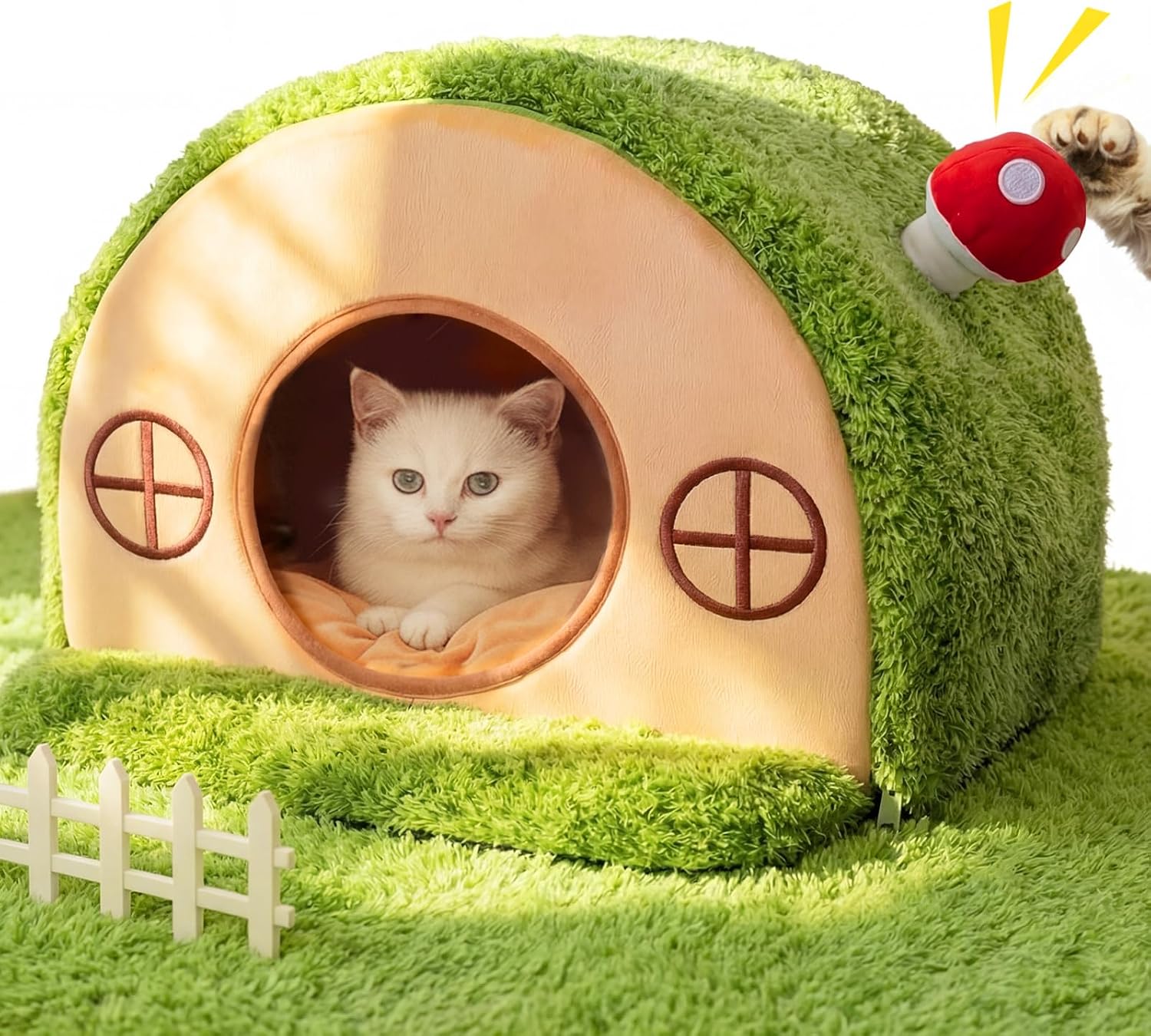
Mellownido Cat House for Indoor Cats – Tree Hole Cat Bed Cave Hideaway
An enclosed cave-style house with a tree-hole entry, sized for indoor cats that want a covered place to watch the room from. The solid shell gives a nervous kitten a spot with walls on more than one side, which is the kind of cover shy cats look for first.
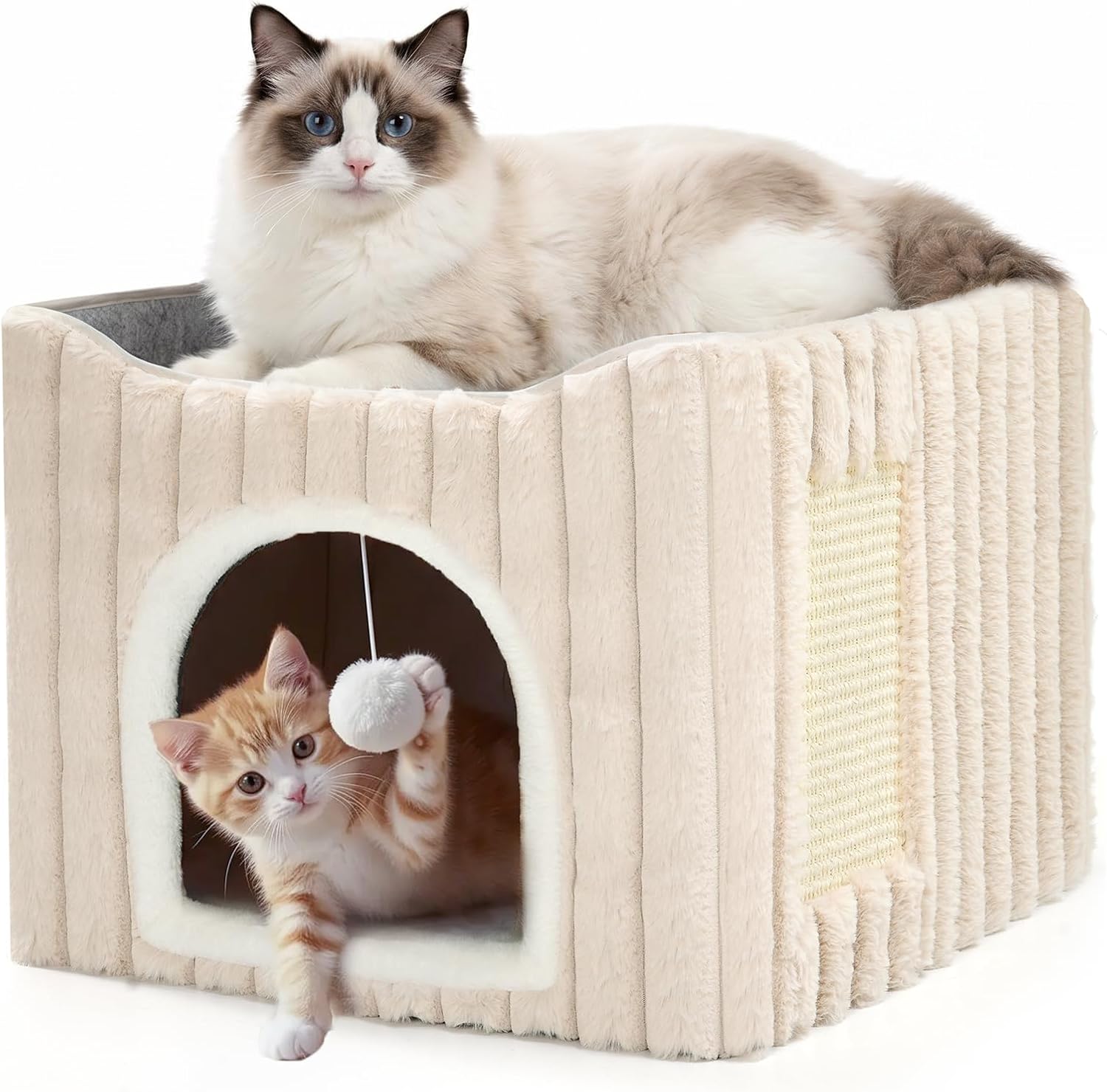
Avont 3-in-1 Cat Cave Bed for Indoor Cats with Scratch Pad
A 3-in-1 design that pairs a cave bed with a scratch pad, so a shy cat can retreat and scratch in the same spot. Useful in a small room where you would rather not place a separate scratcher next to the bed.
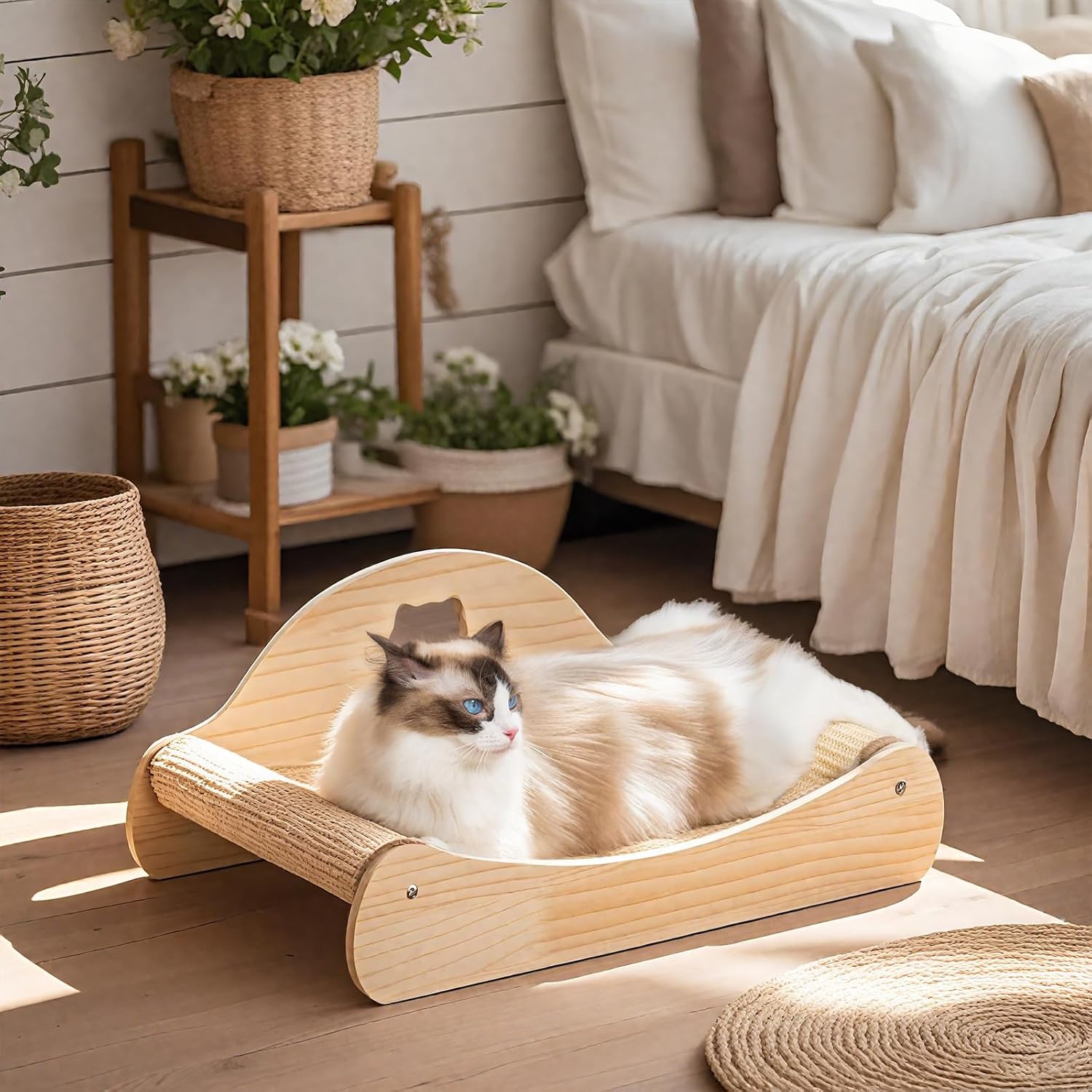
Borozo 23" Large Sisal Cat Scratcher Lounge Bed for Indoor Cats
A 23 inch sisal scratcher lounge that gives cats a low, open surface to stretch and scratch on. Better for a cat that settles when it can see the whole room than for one that wants walls around it.
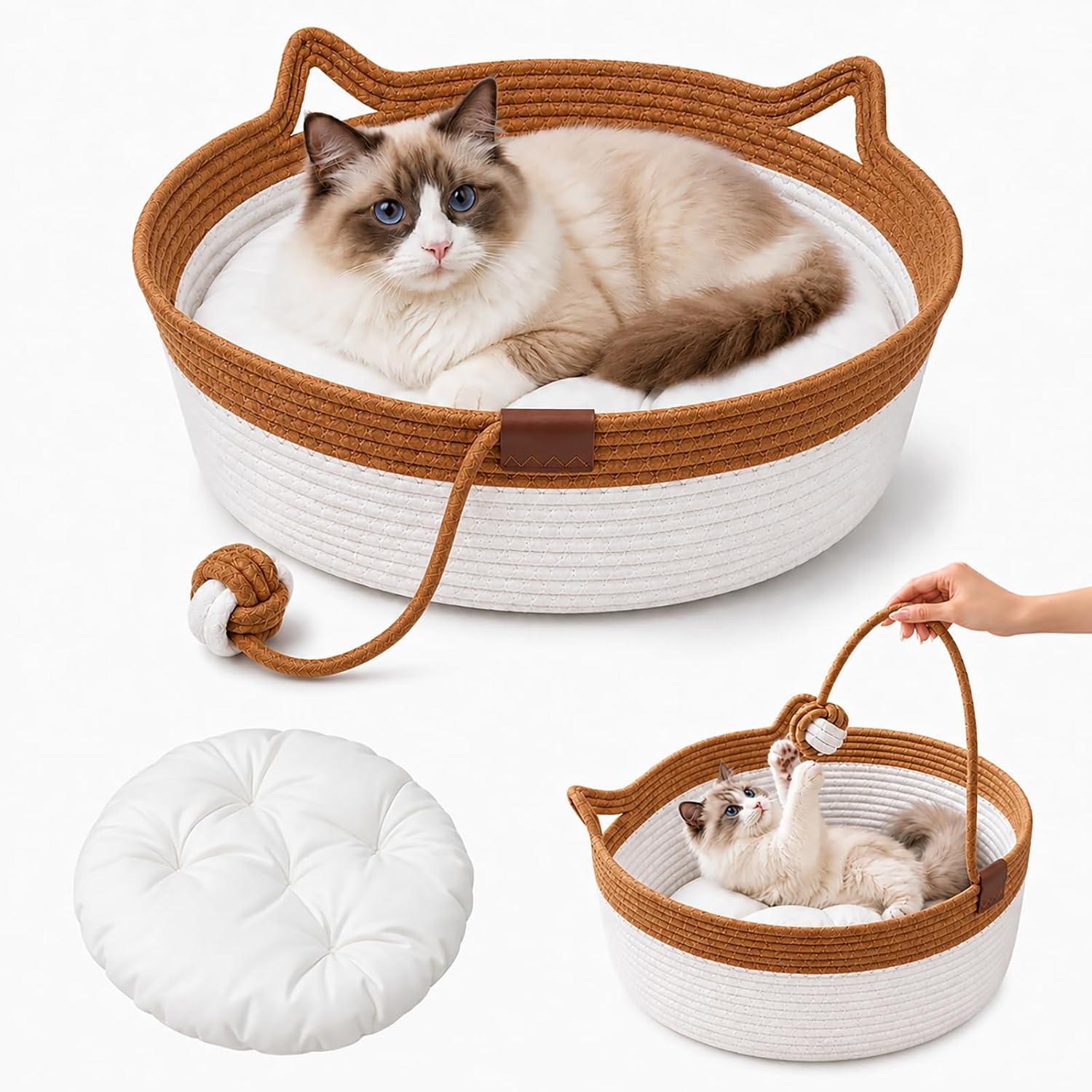
HUGJOYP Indoor Cotton Rope Cat Bed Scratcher with Cushion, Brown, L
A cotton rope scratcher bed with a cushion, listed in brown and size L. The rope texture adds a different scratching surface to a room, and the cushion gives the bed a defined resting spot.
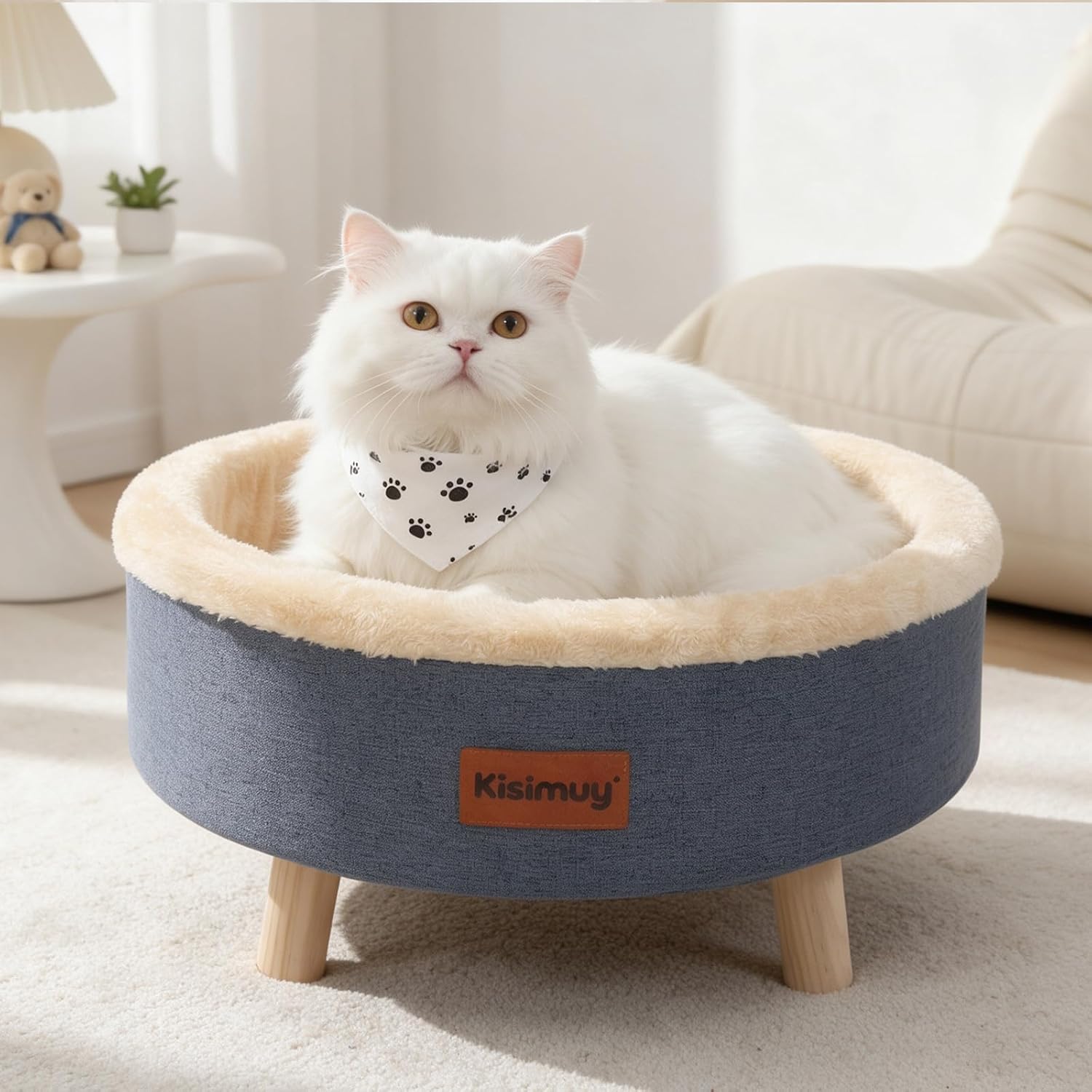
KISIMUY Raised Cat Bed Wooden for Kittens, Cute Cat Couch with Cushion
A raised wooden bed for kittens, styled as a small couch with a cushion. The low platform keeps the resting surface off a cold floor while leaving the cat visible, which suits kittens that dislike enclosed spaces.
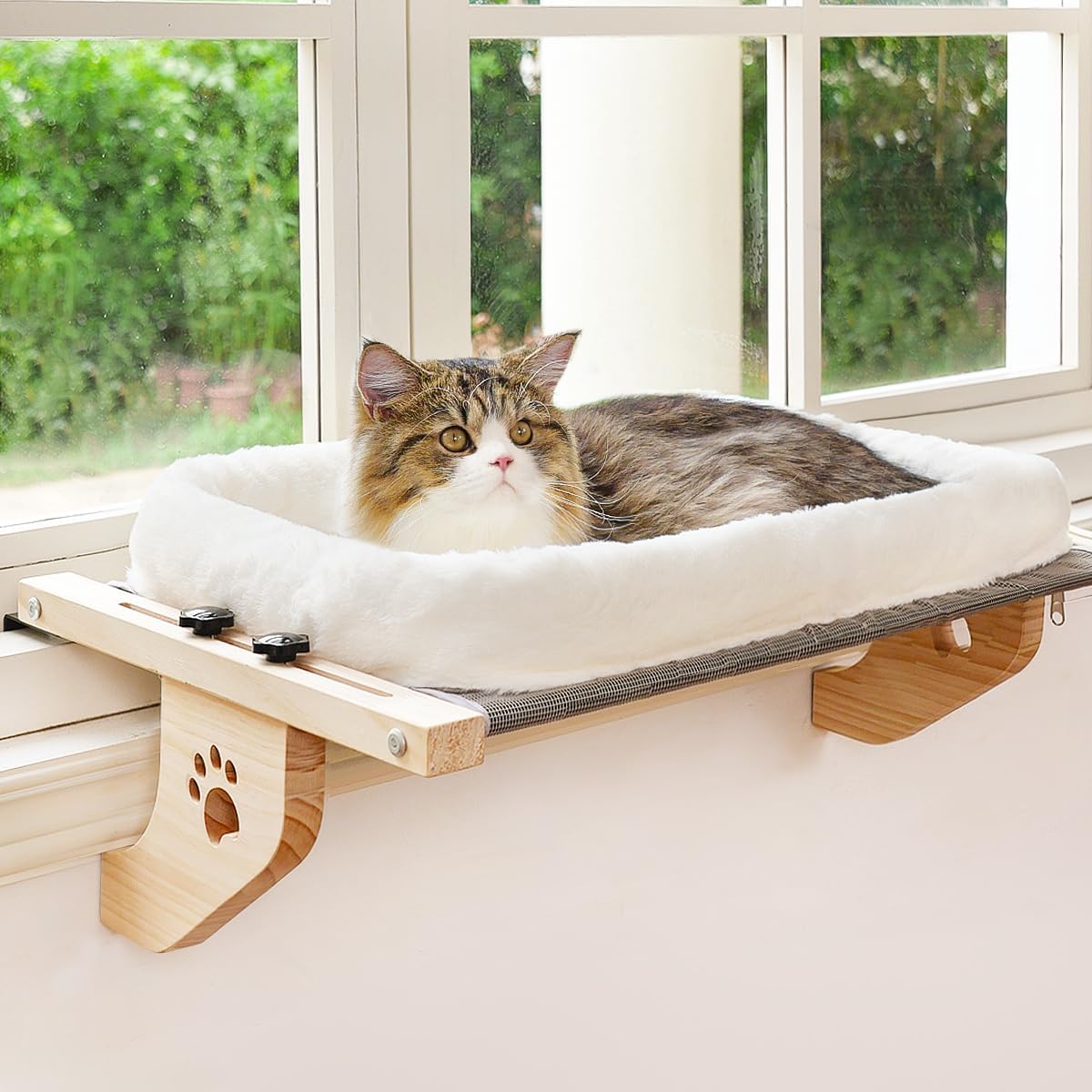
AMOSIJOY Wooden Cat Windowsill Perch with Zipper Cushion Bed, 24.4in
A wooden windowsill perch, 24.4 inches, with a zipper cushion bed. Best for a nervous cat that calms down when it is up high and out of foot traffic rather than tucked into a cave.
How these products were compared
This guide compares enclosure and entry style, structure and stability, resting surface and scratchability, footprint and placement, and cushion access for cleaning. Product names, images, and retailer links are matched to the same verified listing so that every card points to the product shown, and no product appears twice under two names.
Two things are deliberately left out. First, nothing here is presented as hands-on testing. The comparisons come from the product information supplied with each listing: the shape, the materials, the dimensions that appear in the product name, and the type of bed each one is. Second, no current prices are printed, because prices on this kind of gear move often. Use the retailer link on any card to confirm the current price and availability before you commit.
The practical effect is that the differences below are structural rather than ranked by preference. An enclosed cave is not better than an open lounge in the abstract; it is better for a cat that hides. A perch is not better than a floor bed; it is better for a cat that climbs. Read the comparison with your own cat's habits in mind, and the choice usually narrows to two products quickly.
How to choose the right cat bed
Start with the behavior you actually see, not the behavior you want. A kitten that squeezes under furniture, sleeps behind the couch, or freezes when people walk past is telling you it wants cover. For that cat, the ideal cat bed for nervous kittens has a roof, a small entry, and a position against a wall or in a corner rather than in the middle of a hallway. The Mellownido cave and the Avont 3-in-1 both fit that brief, and the scratch pad on the Avont means the cat does not have to leave cover to scratch.
A kitten that instead spends its evenings on top of the bookcase, the fridge, or the highest shelf it can reach wants elevation. That cat will often ignore a floor bed entirely. A raised wooden bed or a windowsill perch suits it better, and the key measurements are platform height for access and perch width or shelf depth for comfort. If the perch sits in a window, check how it attaches and whether the anchor type works with your window frame or wall before ordering.
Then think about the room. A single-cat household with one quiet corner can use an enclosed cave without competition. In a multi-cat home, an enclosed bed with one small entry can become a trap if another cat camps outside it, so a second exit or an open lounger is often the safer choice. Placement matters as much as the product: put the bed where the cat already retreats, keep it away from the litter box and the food bowl, and leave it in one spot long enough for the cat to treat it as furniture. If you are still sorting out the rest of the room, our guide to cat litter box placement for shy cats covers the same principle of giving a nervous cat a predictable layout.
Size is the last filter. A kitten grows fast, and a bed bought for a four-month-old can be outgrown within a year. Large sizes and wider loungers cost little more in floor space and usually last longer. If the bed is for a kitten that will end up a full-size adult, favor the wider option now rather than replacing the bed later.
Mellownido Cat House for Indoor Cats – Tree Hole Cat Bed Cave Hideaway
The Mellownido is a cave-style cat house built around a tree-hole entry, which is the shape most nervous cats gravitate toward first. The cat steps into a covered interior rather than lying on an open surface, so it can rest with its back to the wall and its face toward the opening. That single detail is what makes it the top pick for a nervous kitten: the cat controls how much of the room it can see, and the room sees very little of the cat.
Because it sits on the floor, it can be moved as the cat's habits change, which is useful in the first months when a kitten's preferred napping spot shifts from one corner to another. It also does not depend on a wall anchor or on a window that fits a specific shelf depth, so it works in apartments where drilling is not an option.
The trade-off is access. A single tree-hole entry means a nervous cat gets cover but only one way out, and a covered bed is harder to inspect and clean than an open cushion. It also adds no scratching surface, so a cat that scratches will still need a separate scratcher or pad elsewhere in the room. If you want cover and claw care in one footprint, the Avont below is the closer match.
Alternatives to consider
The Avont 3-in-1 Cat Cave Bed for Indoor Cats with Scratch Pad is better suited to a small room or a home that wants one piece of furniture doing two jobs, since the cave and the scratch pad share a footprint. The Borozo 23" Large Sisal Cat Scratcher Lounge Bed for Indoor Cats is a stronger fit when your cat is a watcher rather than a hider, because the sisal lounge gives it a low, open surface to stretch and scratch on with a full view of the room.
The HUGJOYP Indoor Cotton Rope Cat Bed Scratcher with Cushion, Brown, L covers a different texture: a cotton rope scratching surface with a cushion, in a large size, for cats that ignore sisal. The KISIMUY Raised Cat Bed Wooden for Kittens, Cute Cat Couch with Cushion covers the low-elevation case, a wooden couch-style bed that lifts a kitten off a cold floor without enclosing it. The AMOSIJOY Wooden Cat Windowsill Perch with Zipper Cushion Bed, 24.4in covers the height case for cats that settle best on a window ledge.
Day-to-day use and maintenance
Where you put the bed decides how much use it gets. In the first week, place it in the spot your kitten already chooses, even if that spot is not where you wanted a bed, and let the cat claim it before you move it. Keep the bed out of the path between the door, the food bowl, and the litter box, since a nervous cat avoids anything it has to cross open floor to reach.
Cleaning is the routine that keeps the bed usable. Cushions and covers that unzip are easier to wash, and the zipper cushion on the windowsill perch is the clearest example of that in this group. Wooden frames and wooden platforms usually need only a wipe, while rope, sisal, and fabric surfaces need vacuuming and, over time, replacement of the worn part. Wash with a mild, unscented product and let the bed air out completely before putting it back, because a nervous cat is more likely to reject a bed that smells of detergent than one that smells faintly of itself.
Two smaller habits help. Keep the carrier out and open near the bed so the cat does not associate it only with vet trips, and check the carrier size against your cat as it grows. And re-check the weight limit and anchor type on any raised or windowsill bed once a kitten becomes a full-size cat, since a bed that was stable for a small cat may not stay that way.
Buying checklist
- Measure the floor space or windowsill you plan to use, including the shelf depth and perch width if the bed goes up high.
- Choose the bed shape from your cat's behavior: covered cave for a hider, open lounger or perch for a watcher.
- Confirm platform height, weight limit, and anchor type on any raised or wall-mounted bed before ordering.
- Check that the exact model includes the feature you want, such as a scratch pad, a zipper cushion, or a specific size.
- Read the cleaning and maintenance instructions, and confirm the retailer's current price, availability, and return terms.
Final recommendation
Choose the Mellownido Cat House for Indoor Cats – Tree Hole Cat Bed Cave Hideaway when your kitten hides under furniture, avoids open rooms, or needs a covered spot it can retreat to on its own terms. Choose the Avont 3-in-1 Cat Cave Bed for Indoor Cats with Scratch Pad when you want that same enclosed comfort with a scratching surface built in, or the AMOSIJOY Wooden Cat Windowsill Perch with Zipper Cushion Bed, 24.4in when your cat calms down with height rather than cover.
If you are unsure, watch where the cat already sleeps for a week before buying. The correct cat bed for nervous kittens is the one that matches the spot your cat chose for itself, not the one that looks best in a photo.