If your cat sleeps in a cardboard box and shreds the arm of your sofa, the cat scratching pad vs cat bed question stops being academic. One product exists to give a cat somewhere to sleep, and the other exists to give it somewhere legal to destroy. Buyers who treat the two as interchangeable tend to end up with a shredded couch and a bed nobody uses.
The short answer: for most indoor cats these are two separate jobs, and the four products below each solve a different half of the problem. If your cat already sleeps on your bed and your furniture is taking damage, the scratching surface matters more. If your cat sleeps on cold floors, hard windowsills, or the middle of the hallway, the bed matters more. The table is the fast version. Everything after it explains how to tell which side of that line you are on.
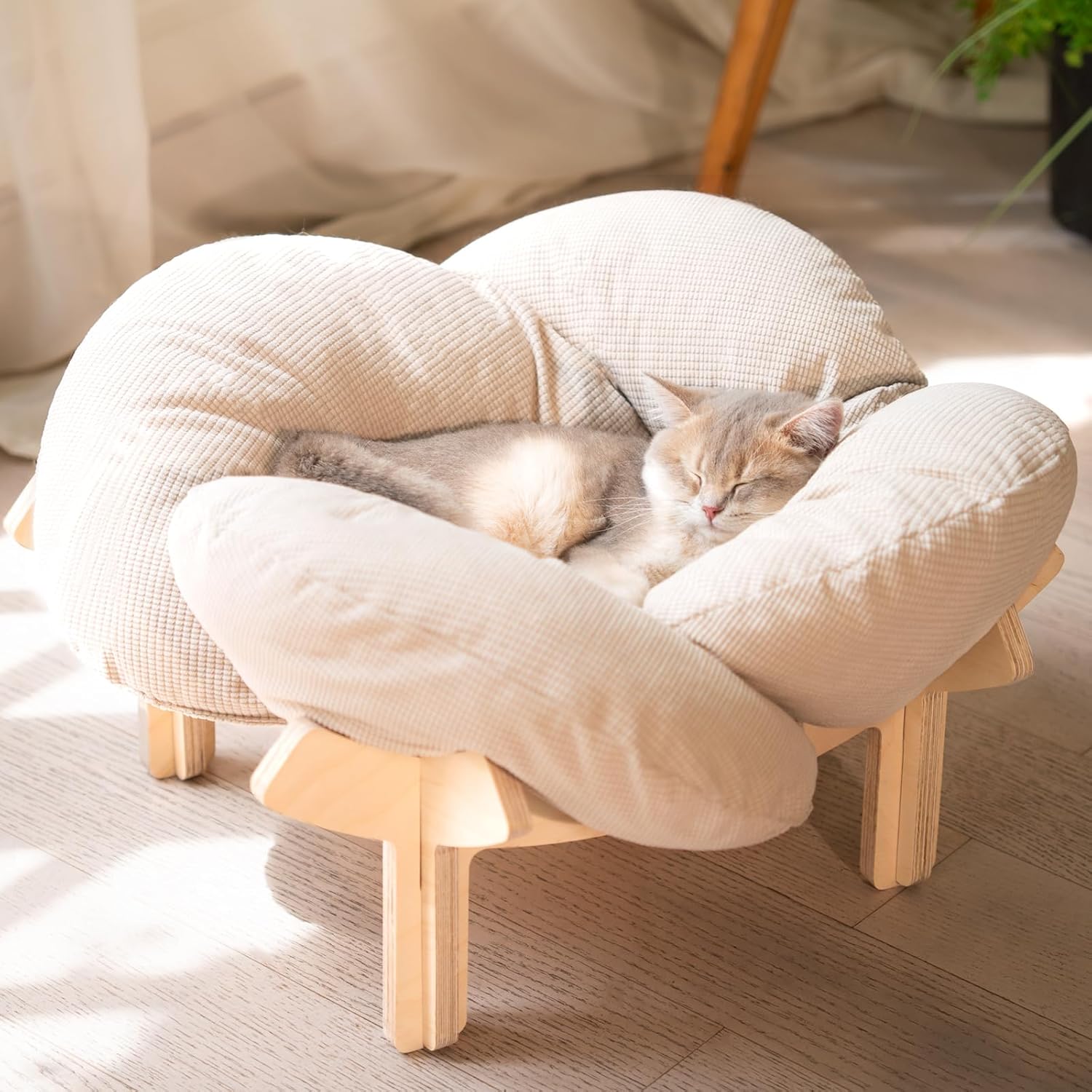
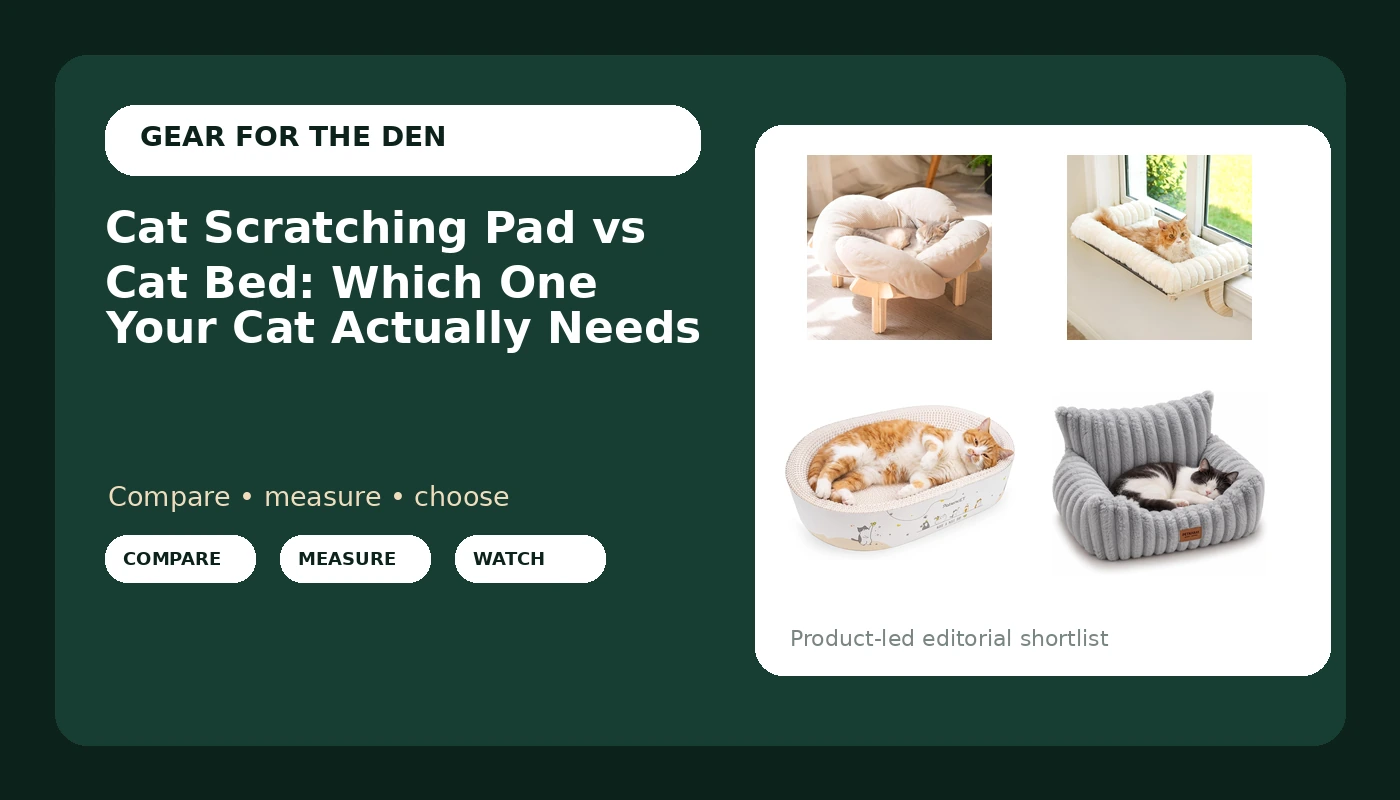
CHEERHOME PETS Elevated Cat Bed for Indoor Cats Couch Sofa Flower
Lifts the sleeping surface off cold floors and gives a cat a view, in a shape that reads as furniture
Platform height is a poor fit for a senior cat, and a wobbly base kills the whole point
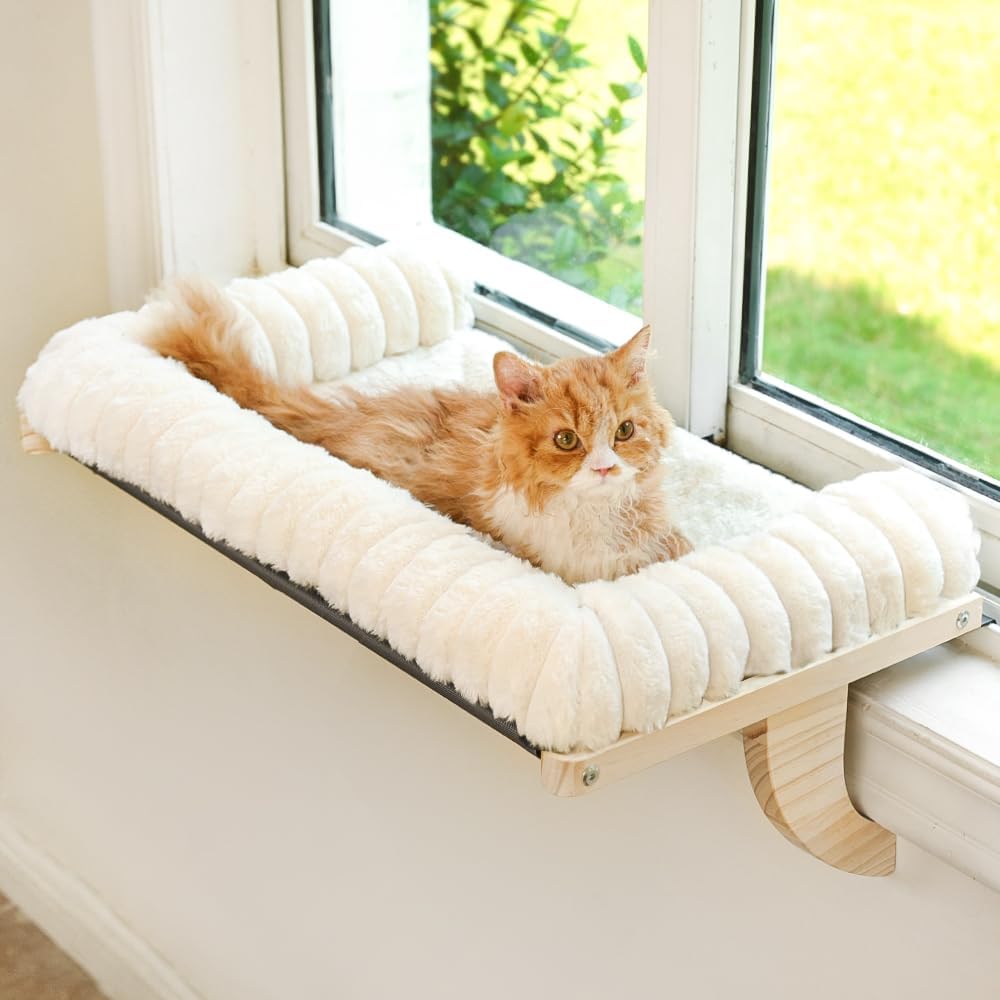
valigogo Cloud-Soft Cat Window Sill Perch, Zipper Design Cushion Pet Bed, L
Uses vertical space above the floor, and the zipper design means the cushion cover comes off for washing
Depends entirely on your shelf depth and a secure anchor type, and the perch width is still finite
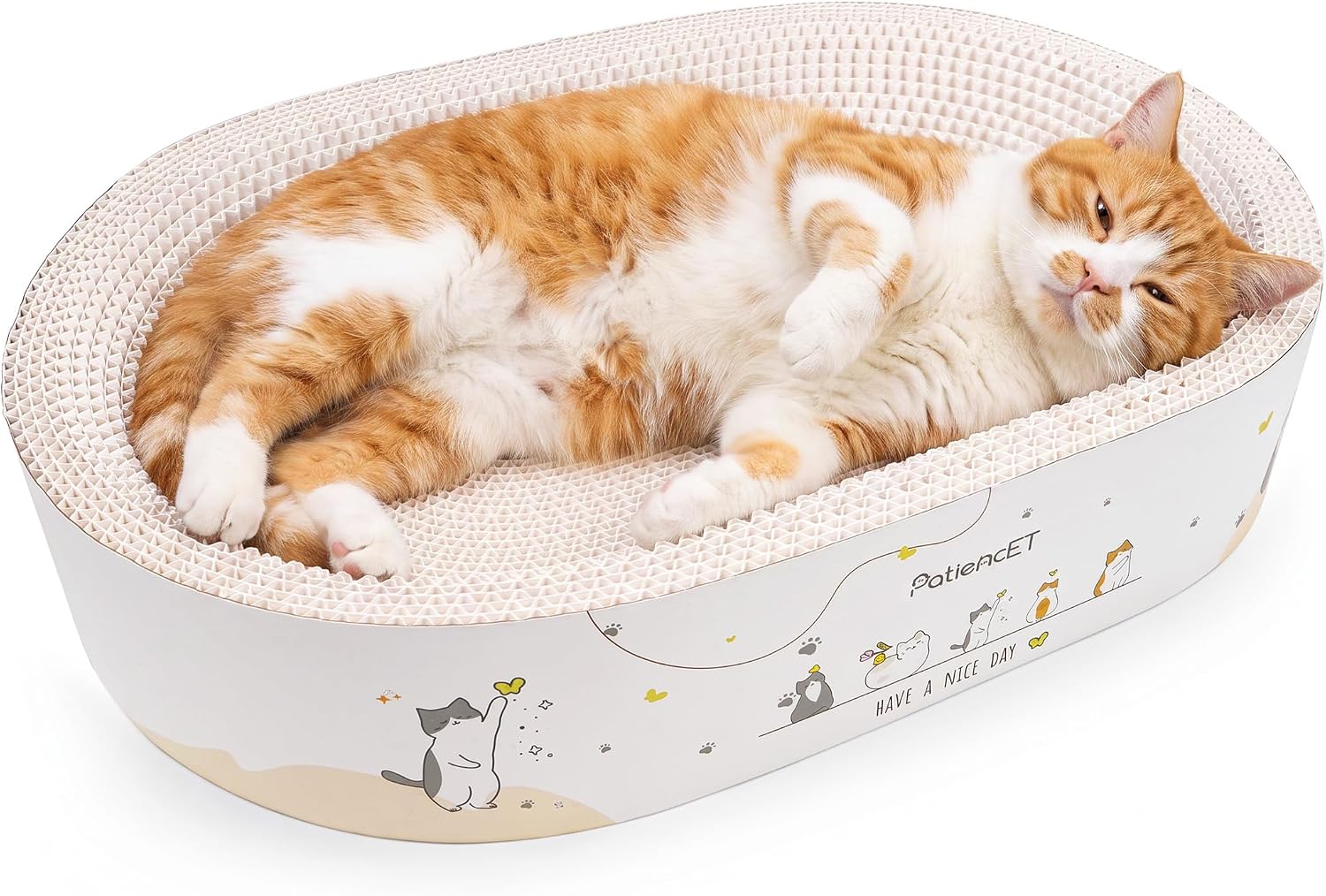
PatiencET Oval Cat Scratcher Bed, White Corrugated Paper Cat Lounge
One object handles scratching and lounging, and corrugated paper gives cats the texture they dig into
Corrugated paper is a consumable that sheds and compresses under heavy use
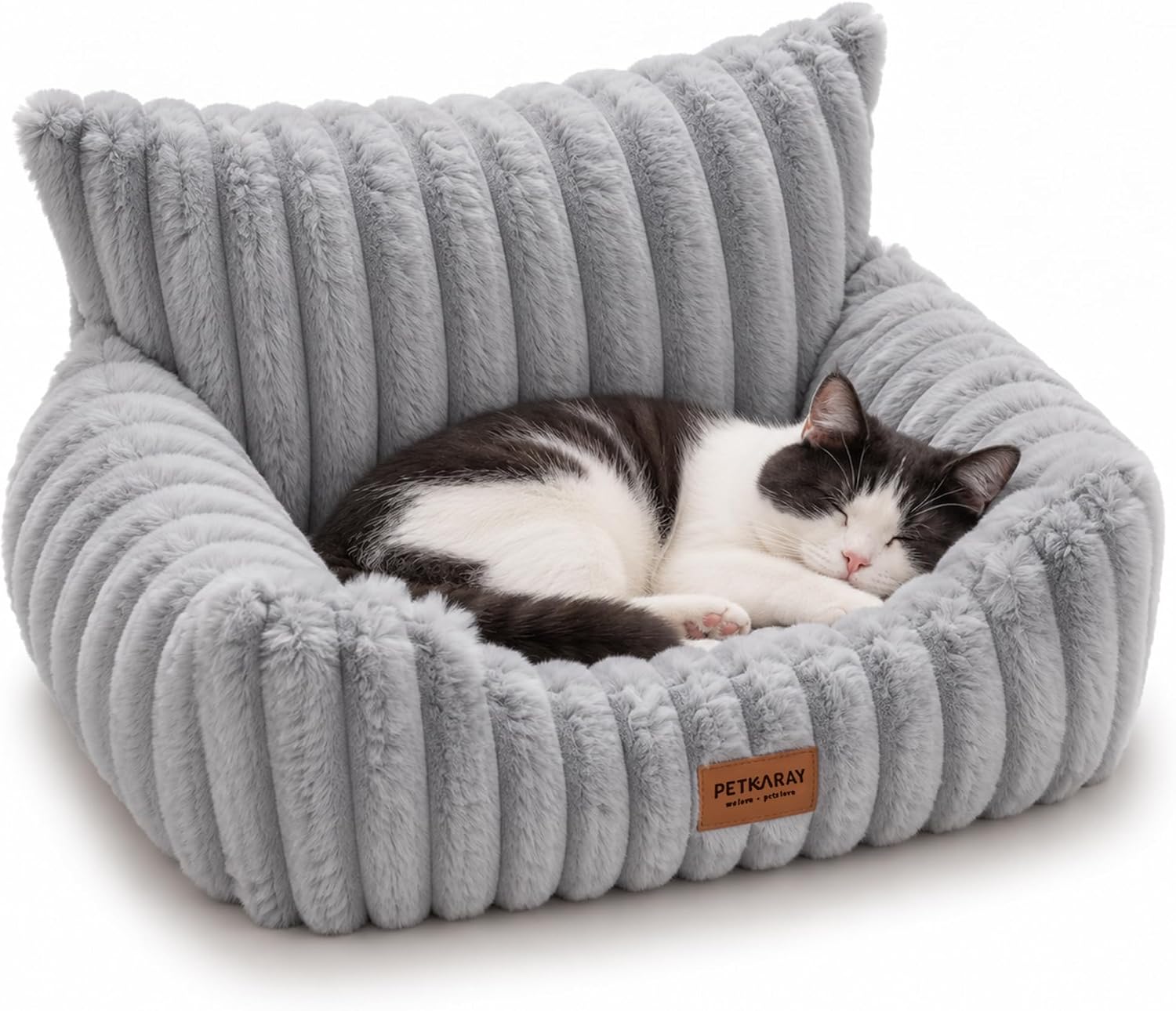
PETKARAY Cat Couch Bed, 24'' Soft Sofa for Indoor Cats, Machine Washable
Machine washable and low to the ground, which makes it the easiest fit for older cats
No scratching surface at all, so it does nothing for claw maintenance
Prices and availability may change.
Why the cat scratching pad vs cat bed question has two answers
The difference between cat scratching pad and cat bed comes down to what the product is expected to survive. A scratching surface is a wear item. Your cat is supposed to destroy it, and a good one lasts months rather than years. A bed is a durable item. It has to hold a sleeping cat's weight night after night without flattening, and it has to be cleanable, because it will collect hair, dander, and whatever your cat tracked out of the litter box.
Cats scratch for reasons that have nothing to do with sleep. Scratching sheds the dead outer sheath of the claw, stretches the shoulders and back, and leaves both a visual and a scent mark. A cat working over the side of your sofa is not being spiteful. It found a surface with the right resistance at the right height, and nobody offered it a better one. That is why a scratching pad left flat on the floor gets ignored so often: the cat wanted to stretch upward, and a flat pad does not let it.
Sleeping is a different set of needs. Cats sleep 12 to 16 hours a day, and they choose spots based on temperature, height, and how exposed they feel. A bed in the middle of a busy room will lose to a bed in a corner with a wall behind it almost every time. Placement matters as much as the product, which is why the same bed gets rave reviews from one household and a shrug from the next.
What actually separates these four picks
The four products in this comparison are not four versions of the same object. Two are sleeping surfaces designed to lift a cat off the floor, one is a low soft bed for cats that want to stay on the floor, and one is a scratcher built in the shape of a lounge. Neither side of the cat scratching pad vs cat bed divide substitutes for the other, so the useful question is not which is better but which problem you are actually solving.
Five specs do most of the work when you compare them. Platform height sets how far a cat has to jump and how much stability the base needs. Shelf depth decides whether a window perch fits your window at all. Perch width decides whether your cat can sprawl or has to curl. The weight limit is the number that matters most in a multi-cat home. Anchor type decides whether the whole thing stays attached when a cat launches onto it.
Two more terms come up constantly in reviews. Post diameter is the measure that determines whether a scratching surface feels stable under a stretching cat, and hammock fabric describes the sling-style sleeping surface used by perch and elevated designs. Both are worth understanding before you spend money, because both are invisible in a product photo.
Marketing copy tends to sell shape and color. Cats care about texture, height, and temperature. When a listing tells you a bed is cozy, that is not a spec. When it tells you a platform height or a weight limit, that is.
Elevated cat beds: platform height and anchor type
The CHEERHOME PETS Elevated Cat Bed for Indoor Cats Couch Sofa Flower is the option for a cat that already sleeps on top of bookshelves and dressers. The flower shape reads as furniture rather than pet gear, which matters if the bed is going in a living room, and the raised sleeping surface keeps a cat off cold floors and away from foot traffic.
Platform height is the spec to think about, and higher is not automatically better. A cat wants a view but also a quick exit, and a platform that wobbles when a cat lands on it gets abandoned within a week. Look for a wide base or a stable anchor point, and match the platform height to your cat's jumping confidence rather than to a number on a listing.
Placement does the rest. Put it near a window or against a wall and it becomes a lookout. Put it in the open and it becomes a piece of furniture your cat inspects once.
The trade-off is access. An elevated bed is a poor fit for an arthritic senior cat or a heavy cat that has stopped jumping. Visit on Amazon
Window perches: shelf depth, perch width, and weight limit
The valigogo Cloud-Soft Cat Window Sill Perch, Zipper Design Cushion Pet Bed, L solves a problem no floor bed can: it puts the cat at window height, which is where many indoor cats most want to be. The zipper design is the detail that separates it from cheaper perches, because the cushion cover can be removed and washed instead of spot cleaned forever.
Measure before you buy. Shelf depth decides whether the perch fits your window at all, and a perch that hangs too far forward will sag or, worse, let go. Perch width decides whether your cat can sprawl or has to curl into a ball. The weight limit is the number to respect in a multi-cat home, where two cats will inevitably test a mount rated for one. Anchor type matters just as much: suction mounts need clean glass and hold best in mild weather, while clamp or bracket mounts trade flexibility for security.
Season is part of this. Suction hardware that grips perfectly in spring can fail in a cold snap, and a perch that drops once may never get used again. If your winters are harsh, check the mounting method before the cushion.
The cloud-soft hammock fabric is comfortable, but a sling surface with too much give can feel unstable to a nervous cat. Visit on Amazon
Couch-style cat beds: washability and floor space
The PETKARAY Cat Couch Bed, 24'' Soft Sofa for Indoor Cats, Machine Washable is the simplest of the four, and simplicity is the point. It sits low, so a kitten or an older cat can walk in rather than jump in, and the machine washable cover is the feature that keeps it usable past the first month of shedding season.
The 24 inch footprint is small enough for a corner but large enough for one average cat to stretch out. It is not a bed for two cats, and it is not a bed for a Maine Coon. Check the fill as well as the cover: a bed that flattens in three months had thin batting, not a bad cover.
The real trade-off is that a soft couch bed does nothing for claw maintenance, so if scratching is your actual problem, this purchase does not solve it. Visit on Amazon
Scratcher beds: corrugated paper and post diameter
The PatiencET Oval Cat Scratcher Bed, White Corrugated Paper Cat Lounge is the hybrid, and hybrids are usually a compromise. Here the compromise works, because corrugated paper gives cats exactly the resistance they dig into, and the oval shape gives them somewhere to sleep afterward, which is how most cats actually use a scratcher.
Corrugated paper is a consumable. It sheds, it compresses where the cat digs hardest, and it needs replacing eventually. That is not a defect, it is the deal. If you would rather buy once, a sisal post is more durable, but check the post diameter: a post that is too narrow lets a cat's front paws overlap while it stretches, and the whole thing feels unstable. White paper also shows every bit of debris, which is either a clean look or a constant reminder, depending on your tolerance. Visit on Amazon
The trade-offs nobody lists
The first trade-off is lifespan. A scratching surface is meant to be destroyed, so judging it by how long it lasts is judging it by the wrong metric. A bed should hold its shape for years, and if it flattens in a season, the fill was the problem.
The second is placement. A bed in the middle of a hallway is a bed no cat uses. Cats prefer a wall at their back and a view of the room, which is why window perches and elevated beds win with confident cats and why a low couch bed in a quiet corner wins with shy ones.
The third is mounting risk. Almost every bad story about a window perch starts with an anchor type that was wrong for the surface, not with a bad cushion. If you rent, check what you are allowed to attach to the wall before you buy a wall-mounted design.
The fourth is size creep. A soft bed that fits inside a carrier or a crate is worth more than it looks, because it means the cat sleeps on a familiar surface during a vet trip. Carrier size and bed size are worth checking together if you travel with your cat.
The fifth is the multi-cat problem. In a household with three cats, one bed and one scratcher will be contested. The usual rule is one sleeping spot per cat plus one, and at least one scratching surface per cat, placed in different rooms so no single cat can guard both.
Matching the product to the cat
For a senior cat or a cat that has stopped jumping, the PETKARAY couch bed is the sensible pick: low entry, washable, no climbing required.
For a cat that already claims the top of the refrigerator, the CHEERHOME PETS elevated bed gives that habit a designated piece of furniture instead of your bookshelf.
For a cat that spends the day watching birds, the valigogo window perch buys more enrichment per dollar than any toy, provided your shelf depth and the mount's weight limit actually work in your home.
For a cat that has declared war on your sofa, the PatiencET Oval Cat Scratcher Bed is the one that addresses the behavior directly, and it doubles as a sleeping spot, which is why it is often the first purchase people make when they are working out whether they need a cat scratching pad or cat bed.
Do you need a cat scratching pad or cat bed first?
Most people searching for cat bed vs cat scratching pad are really asking which purchase to make first, and the answer depends on what is already broken. If your furniture is being destroyed, the scratcher comes first, and it needs to go next to the thing being scratched, not in another room. If your cat is sleeping on hard floors, on top of your router, or on your chest all night, the bed comes first, and it should go where the cat already naps.
If nothing is broken yet, buy the scratcher. Claw damage is expensive and permanent, while a cat that lacks a bed will simply keep sleeping on your duvet. That asymmetry decides the order of purchase.
The bottom line
The cat scratching pad vs cat bed comparison is not really a competition, because the two products do not compete. One protects your furniture, the other protects your cat's joints and your sleep. Most indoor cats end up with both, and the households that get this right buy the scratching surface before the damage starts and place the bed where the cat already naps.
If you only have room and budget for one, match it to the problem in front of you rather than to the nicest product photo. A scratcher that gets used beats a bed that gets ignored, and a bed in the right corner beats both.