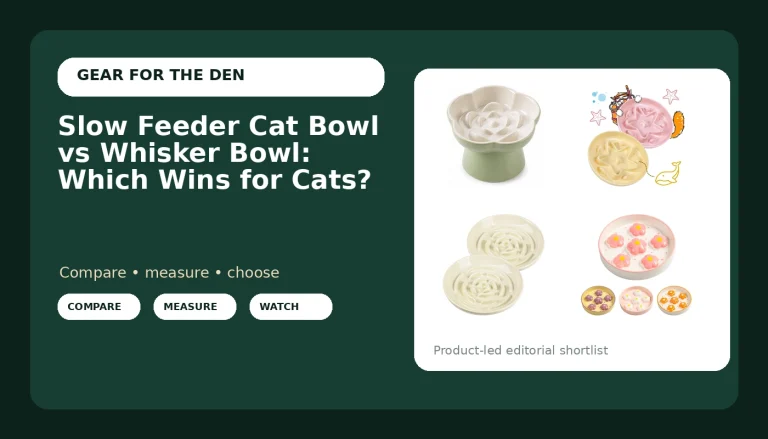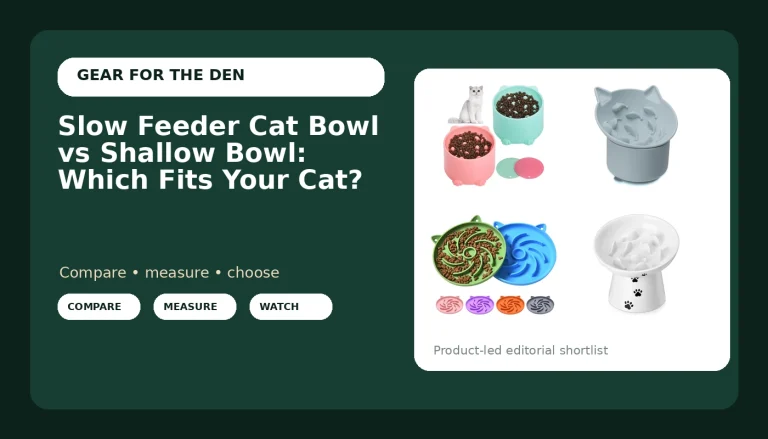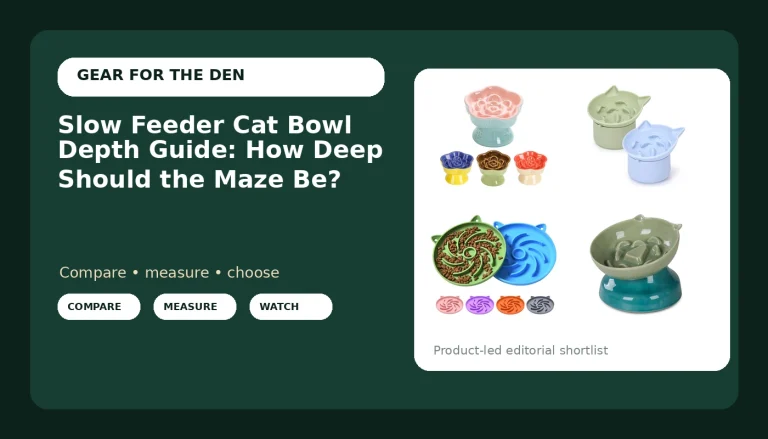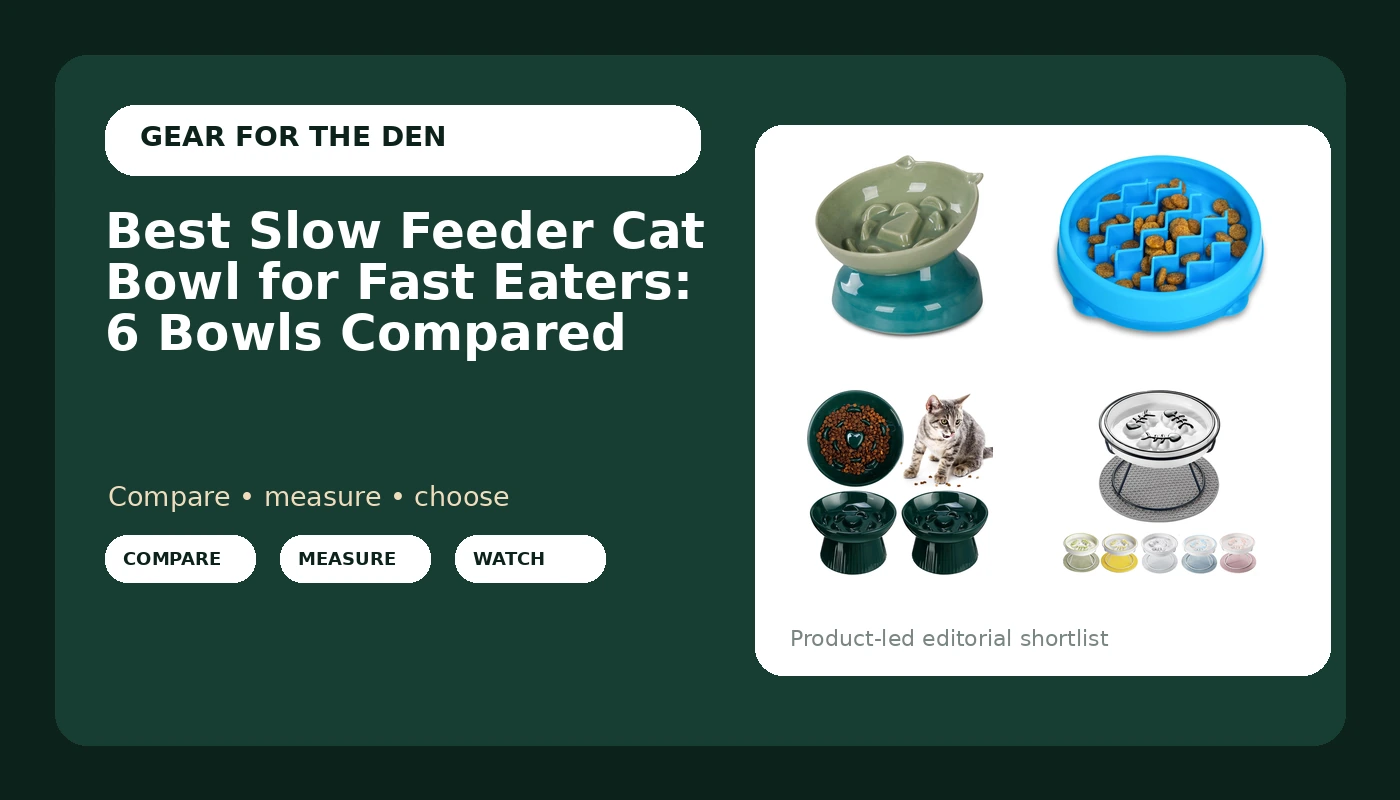
If your cat clears a bowl in under a minute and then brings the meal right back up, the problem is usually pace rather than appetite. A slow feeder cat bowl for fast eaters puts ridges, a maze, or a tilted surface between your cat and the food, so a few ounces of kibble take minutes instead of seconds. That extra time helps digestion, and it makes it easier to see how much your cat is actually eating at each meal.
This guide looks at six bowls that take different routes to the same result: a small plastic maze, several ceramic dishes in different widths and depths, elevated sets for two cats, and a tilted design with a non-slip base. The aim is to help you pick the best slow feeder cat bowl for fast eaters for your own cat and your own kitchen, without paying for features that will not change how your cat eats.
Quick answer
The KittyDine Ceramic Slow Feeder Cat Bowl, 15-Degree Tilted Non-Slip is the strongest fit for most fast eaters because the 15-degree tilt and non-slip base pair a gentle elevation angle with a heavy ceramic body that resists sliding on hard floors. Choose the Catstages Kitty Slow Feeder Bowl for Cats & Kittens, 3/4 Cup, Blue, 5" instead when you want the smallest, simplest option for a kitten or for a first try at maze feeding.
What to compare in a slow feeder cat bowl for fast eaters
Four things separate these bowls in daily use: how wide the food surface is, how tall the bowl sits, what it is made of, and how much food it holds. Bowl width decides how much room a cat has to work food out of the ridges, and a wider opening also leaves more whisker clearance, which matters for cats that refuse to eat from a narrow dish. Elevation angle decides how far a cat has to reach, and a tilted dish can be easier on the neck than a flat one on the floor. Material decides whether the bowl stays put and how it feels under a paw, and portion size decides whether one scoop fits or you are refilling twice.
The six bowls below cover those trade-offs at different sizes, from a 3/4-cup plastic maze to a 2-cup ceramic dish. None of them is complicated, but the wrong one will either be too small for your cat's meals or too fussy to clean every day.
Top pick
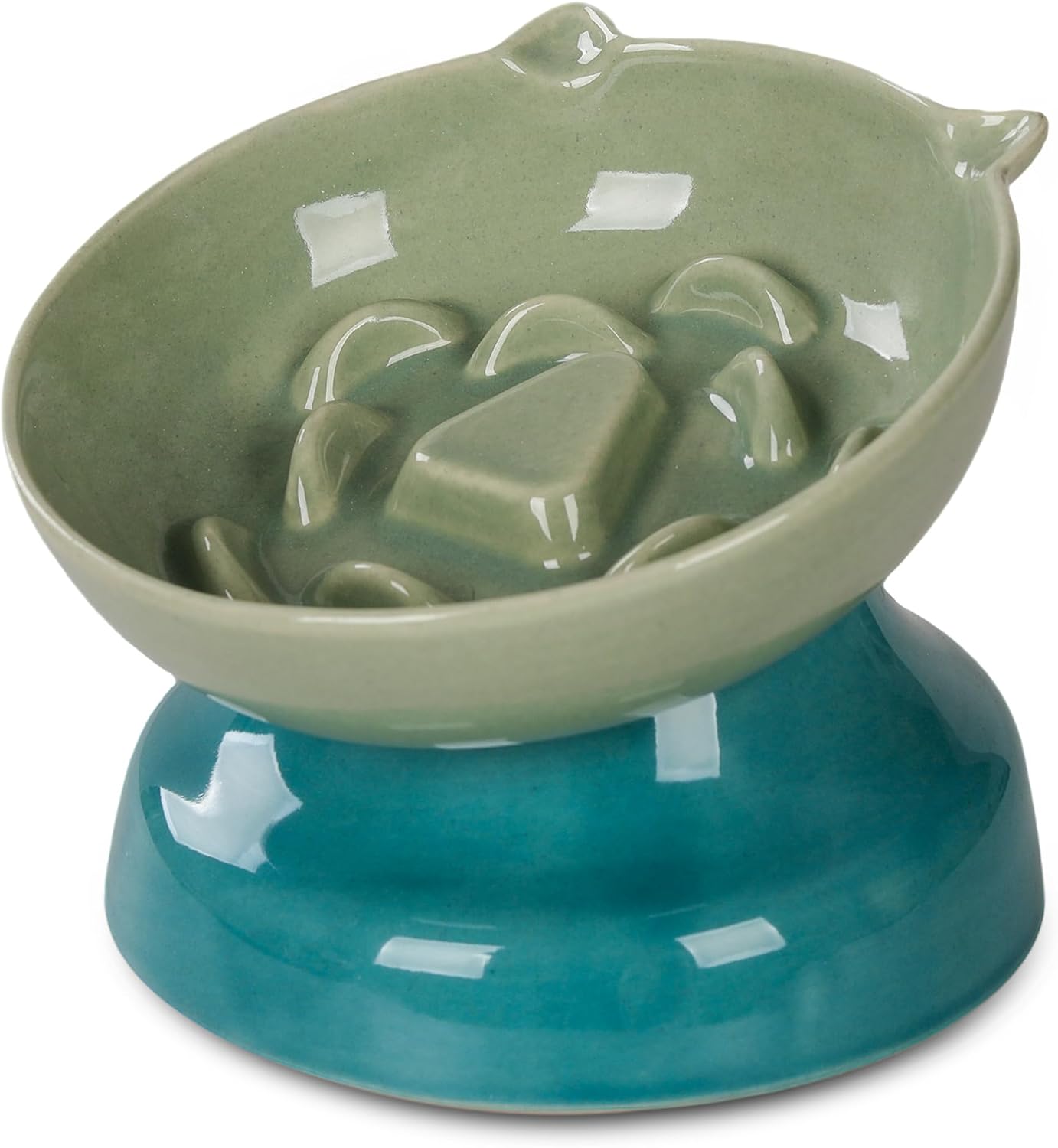
KittyDine Ceramic Slow Feeder Cat Bowl, 15-Degree Tilted Non-Slip
A tilted ceramic dish set at a 15-degree angle with a non-slip base, made for cats that eat too quickly.
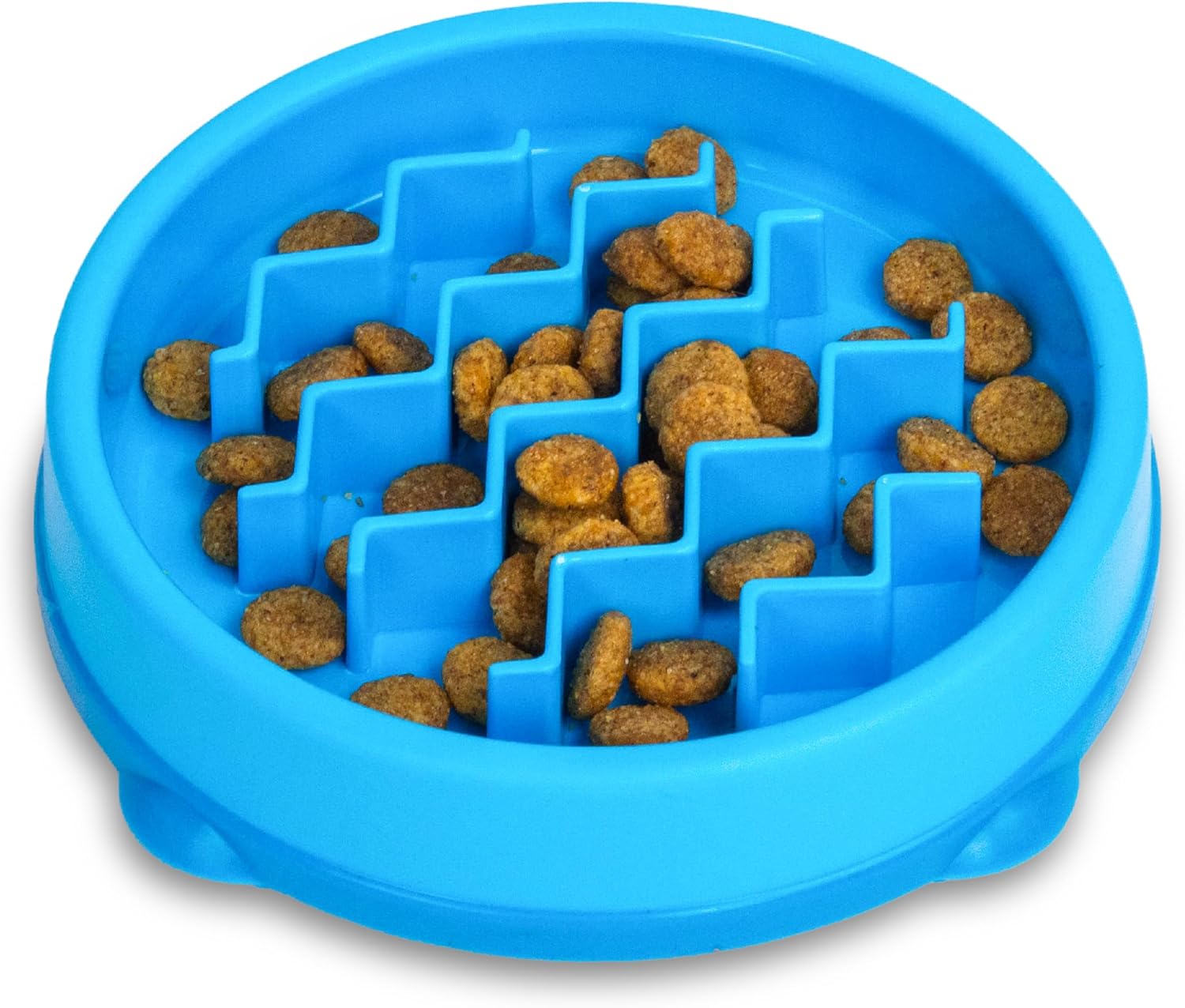
Catstages Kitty Slow Feeder Bowl for Cats & Kittens, 3/4 Cup, Blue, 5"
A 5-inch plastic maze bowl with a 3/4-cup capacity, sized for cats and kittens; the smallest and lightest bowl in this guide.
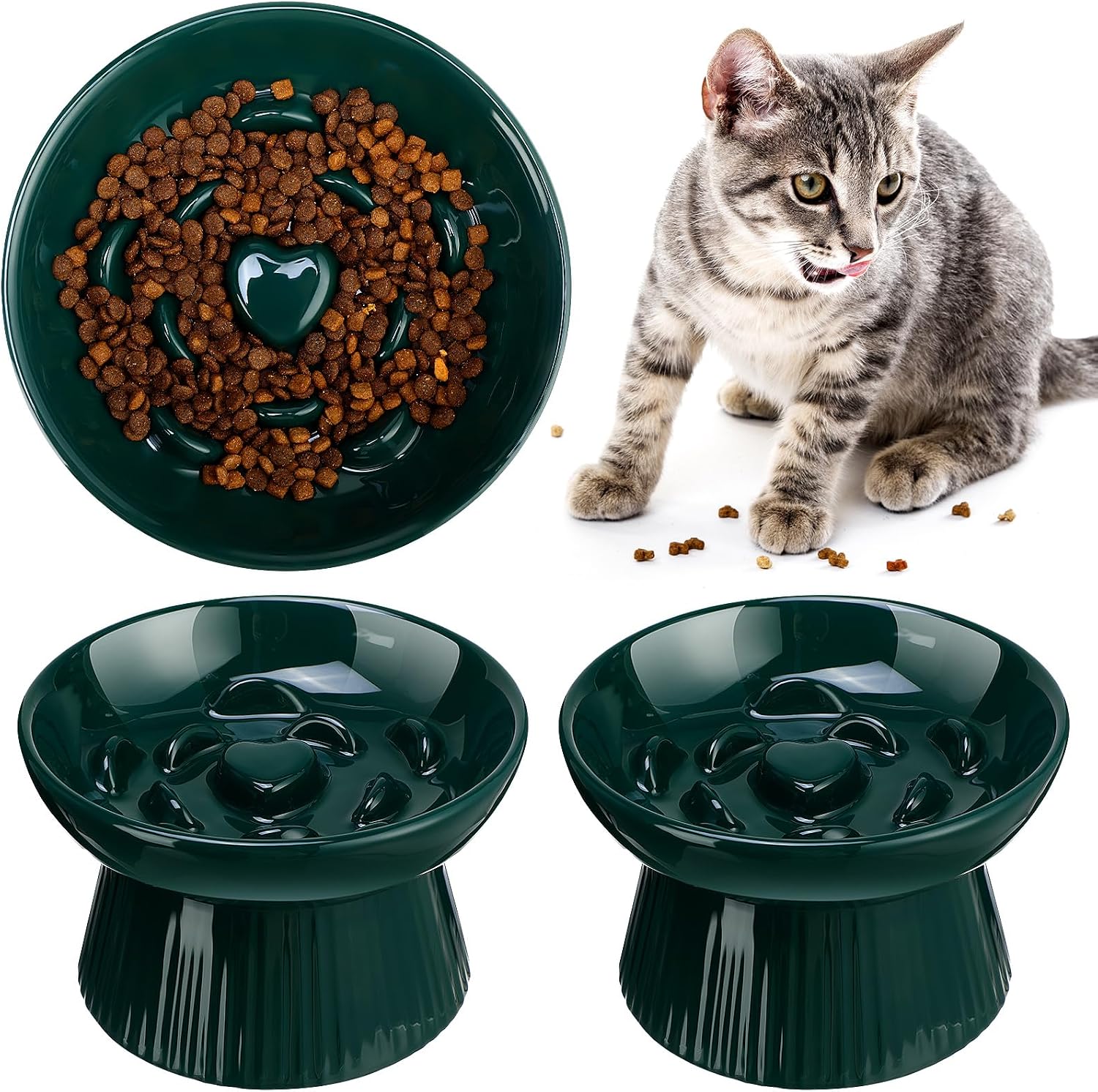
Tioncy 2 Pcs Ceramic Elevated Slow Feeder Cat Bowl, Dark Green
A two-piece dark green ceramic set of elevated slow feeder bowls, for feeding two cats at the same time.
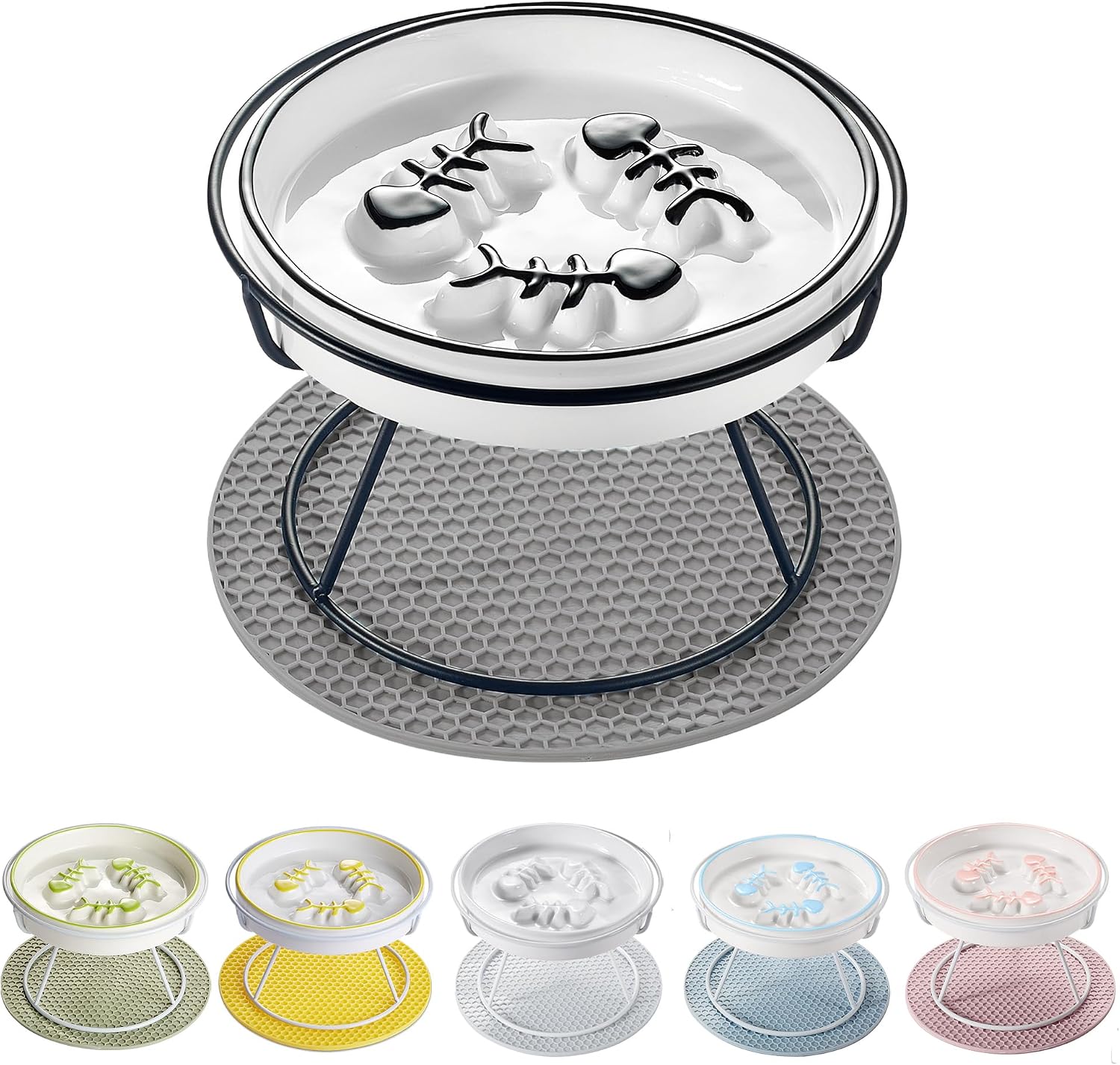
Ceramic Elevated Slow Feeder Cat Bowl, Anti Vomit, Removable Dish, Black
An elevated ceramic bowl with a removable dish; the maker describes it as anti-vomit.
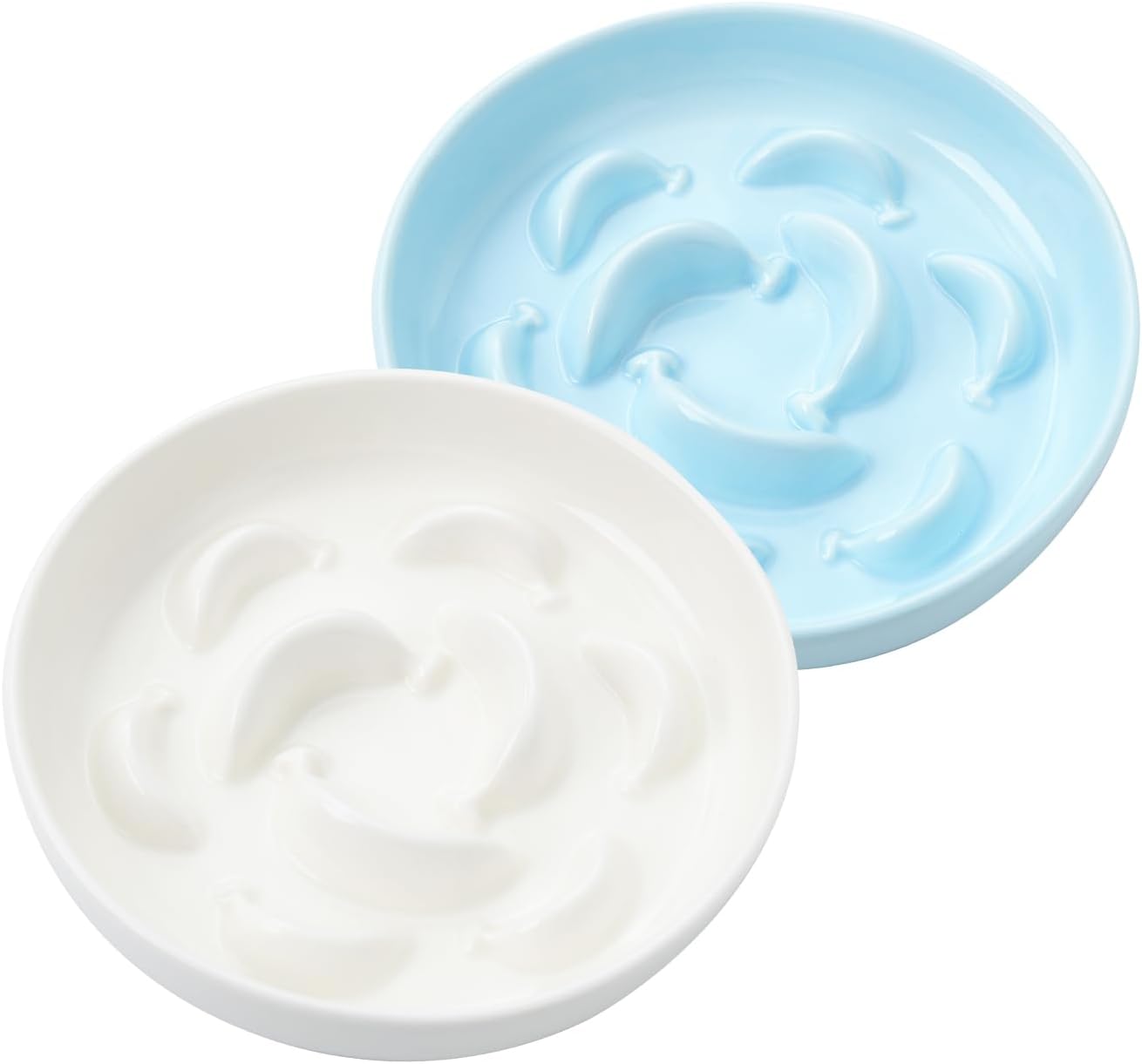
2 Pcs Ceramic Cat Slow Feeder Bowl Set, 6.3" Wide, Slow Eating 5X
A pair of wide ceramic slow feeder bowls, 6.3 inches across, described by the maker as slowing eating by up to 5X.
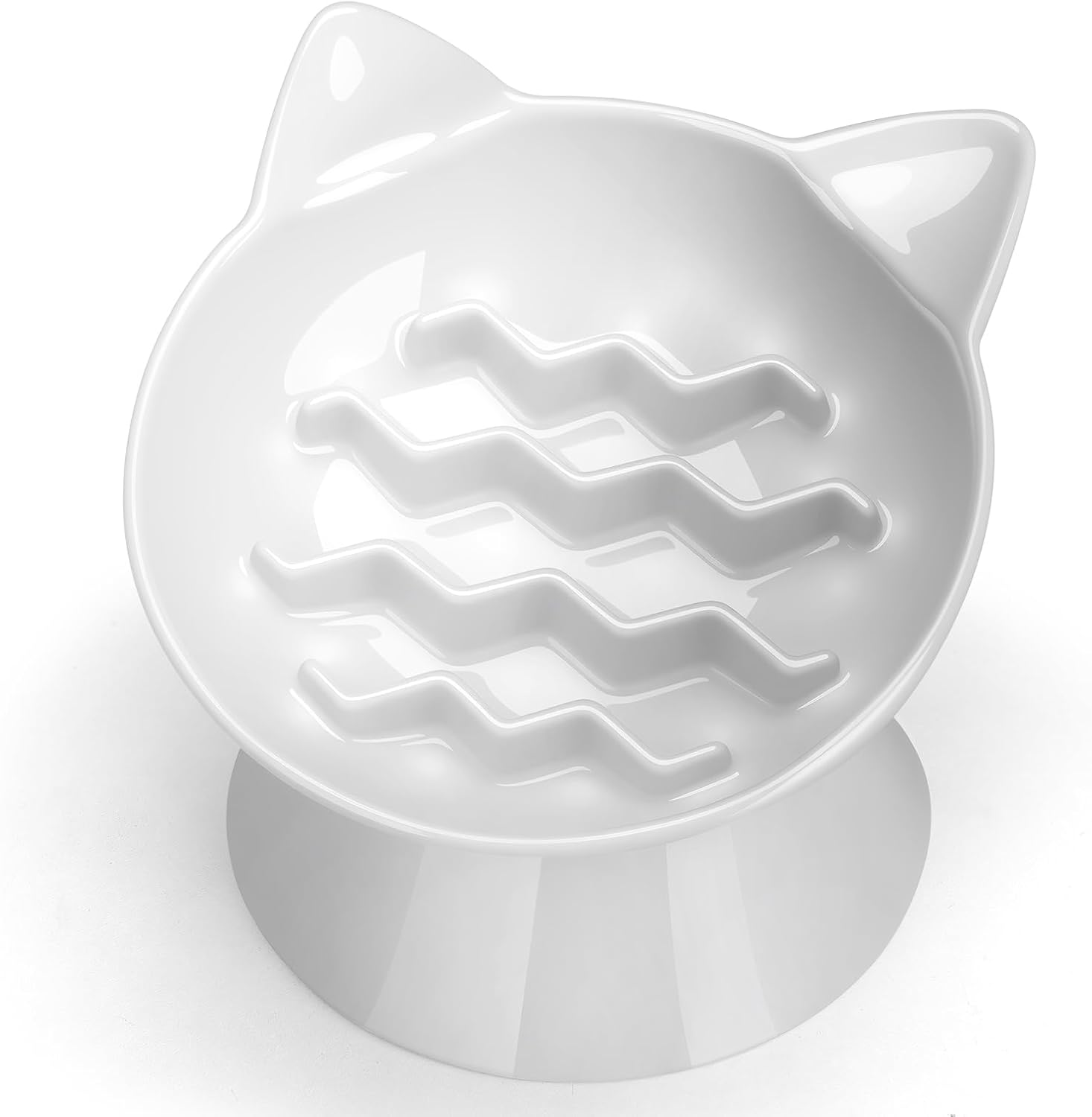
Ceramic Slow Feeder Cat Bowl, 2 Cups Tilted Elevated Honeycomb Food Dish
A 2-cup ceramic dish with a tilted, elevated honeycomb food surface and the largest stated capacity here.
How these products were compared
This guide compares bowl width and interior depth, elevation angle and tilt, material and weight, capacity and portion size, and how simple each dish is to clean. Product names, images, and retailer links are matched by product code so that every card points to the product shown.
Nothing here is presented as a hands-on test, and the descriptions stay with what the makers state about each bowl: dimensions, capacity, material, and shape. No current prices appear in this article because they move, so each card links to the retailer, where you can confirm the price, availability, and return terms before you buy.
How to choose the right slow feeder cat bowl
Start with the size of a normal meal. A 3/4-cup bowl suits a kitten, a small cat, or a cat that eats several small meals a day. A 2-cup dish suits a larger cat or a household that scoops once in the morning and once at night. If your cat's portion sits well below the bowl's capacity, the food spreads thin and the ridges do less work. If the portion overfills the bowl, your cat will simply eat over the top of the maze.
Then look at bowl width and whisker clearance. Wide, shallow dishes with a 6.3-inch opening give a cat room to turn its head and work food out without its whiskers brushing the sides. Narrow, deep bowls can be a problem for cats that are particular about contact, even when the maze inside is well designed.
Elevation angle is the next decision. A flat bowl on the floor is the simplest choice and the easiest to store. A tilted bowl, such as the 15-degree KittyDine, raises the food toward the cat so it does not have to crouch as far, and an elevated stand does the same thing more dramatically. Senior cats, cats with joint stiffness, and cats that regurgitate soon after eating are the ones most likely to benefit, but a healthy young cat will eat from either shape.
Material comes down to weight and care. Ceramic is heavier, so it stays in place while a cat pushes food around, and it does not hold odors the way some plastics can. Plastic is lighter and easier to move between rooms, and the Catstages bowl is the lightest option here. Two-piece sets solve a different problem: two cats that eat at the same time, or one cat that needs a clean bowl while the other is being washed.
There is no single ideal slow feeder cat bowl for fast eaters, because the right answer depends on your cat's size, your feeding schedule, and how much floor space you want to give up. If you feed several cats, it is worth reading about multi-cat feeding setups before you buy a single dish, since two bowls are often simpler than one bowl plus a divider.
A note on terms you may see while shopping: water capacity, pump noise, and filter type belong to cat fountain comparisons rather than to bowls, and microchip range belongs to automatic feeders. None of those specs apply to the six dishes here. What matters for a slow feeder is the shape of the food surface, the size of the portion it holds, and whether the bowl stays where you put it.
KittyDine Ceramic Slow Feeder Cat Bowl, 15-Degree Tilted Non-Slip
The KittyDine is a ceramic slow feeder with a 15-degree tilt and a non-slip base. The tilt sets the food surface at an angle rather than flat, which raises the near edge of the bowl toward the cat, and the ceramic body gives it enough weight to resist sliding when a cat pushes at the ridges. Because it is a single bowl rather than a set, it is the simplest choice for a one-cat household that wants a stable, tilted dish in ceramic instead of plastic.
The trade-off is flexibility. A single ceramic bowl means one cat eats at a time, so a two-cat household on the same schedule would need two of them. Ceramic is also heavier to lift and rinse than plastic, and a tilted dish takes up a slightly different footprint than a flat one, so it is worth checking that it fits your usual feeding spot. If your cat has always eaten from a flat bowl without trouble, the tilt is a preference rather than a requirement.
Alternatives to consider
The Catstages Kitty Slow Feeder Bowl for Cats & Kittens, 3/4 Cup, Blue, 5" is better suited to kittens and small portions, with a 5-inch plastic body and a 3/4-cup capacity that keeps a small meal inside the maze. The Tioncy 2 Pcs Ceramic Elevated Slow Feeder Cat Bowl, Dark Green is a stronger fit when two cats eat at once or when you want matching elevated ceramic dishes in one purchase.
The Ceramic Elevated Slow Feeder Cat Bowl, Anti Vomit, Removable Dish, Black, the 2 Pcs Ceramic Cat Slow Feeder Bowl Set, 6.3" Wide, Slow Eating 5X, and the Ceramic Slow Feeder Cat Bowl, 2 Cups Tilted Elevated Honeycomb Food Dish cover the remaining cases. The black elevated bowl has a removable dish, which makes it easier to lift out and rinse without moving the whole stand. The wide 6.3-inch pair is the roomiest option for whisker clearance and for cats that spread food as they eat, and the maker describes it as slowing eating by up to five times. The honeycomb dish is the only bowl here stated at a 2-cup capacity, tilted and elevated, for a cat with a large daily portion or a household that prefers one deep dish over two shallow ones.
Day-to-day use and maintenance
Slow feeder bowls collect food in the ridges, so a quick rinse after each meal and a wash every day or two keeps them from getting sticky. Check the maker's care instructions for each model before putting it in a dishwasher, since ceramic glazes and plastic inserts differ. A removable dish, like the one in the elevated black bowl, comes apart for cleaning, which is worth the extra step if you feed wet food or a mix.
Watch how your cat responds during the first week. A good slow feeder stretches a meal from under a minute to a few minutes without frustration. If your cat gives up, walks away, or starts pawing food onto the floor, the maze is too tight or the bowl is too deep, and a wider, shallower dish is the better match. If your cat is on a measured diet, scoop the portion rather than filling to the rim, because a slow feeder can hide how much food is actually in the bowl.
Keep an eye on the bowl itself as well. Ceramic can chip at the rim, and a chipped edge is worth replacing rather than smoothing over. Plastic bowls can develop scratches that hold onto residue, so replace them when the surface stops coming clean.
A slow feeder is a feeding tool, not a treatment. If your cat vomits repeatedly, loses weight, or seems uncomfortable around meals, the pace of eating may not be the whole story, and a veterinarian is the right next step.
Buying checklist
- Measure the space where the bowl will sit, including any elevated stand.
- Choose a portion size based on a normal meal rather than the largest meal your cat has ever eaten.
- Confirm that the exact model includes the features you want, such as a removable dish, a tilt, or a two-bowl set.
- Check bowl width and the depth of the ridges against your cat's face and whisker clearance.
- Read the cleaning and maintenance instructions before the first use.
- Verify the current retailer price, availability, and return terms through the link in the card.
Final recommendation
Choose the KittyDine Ceramic Slow Feeder Cat Bowl, 15-Degree Tilted Non-Slip when you have one cat, you want a stable ceramic dish, and a gentle tilt sounds better than a flat bowl on the floor. Choose the Catstages Kitty Slow Feeder Bowl for Cats & Kittens, 3/4 Cup, Blue, 5" when you are feeding a kitten, portioning small meals, or want to test whether maze feeding works before spending more.
For two cats, the Tioncy set or the wide 6.3-inch pair covers both bowls in one purchase, and the 2-cup honeycomb dish is the pick for a cat with a large daily portion. Whichever you choose, the point is the same: the correct slow feeder cat bowl for fast eaters is the one that fits your cat's normal meal, sits still while the cat works at it, and is easy enough to clean that you will keep using it.