Ask a room of cat owners why their cat throws up twenty minutes after dinner and you will hear about hairballs, sensitive stomachs, and the wrong flavor of pate. The usual culprit is simpler: the food went down too fast. The slow feeder cat bowl vs shallow bowl question is really a question about eating speed and face shape, and picking the wrong side of it is why one cat inhales a meal in ninety seconds while another refuses to touch a new dish for a week.
For most cats, a slow feeder is the better default. It stretches a meal from under a minute to several minutes, which gives the stomach time to register fullness and cuts down on the air a gulping cat swallows. A shallow bowl wins in three situations: flat-faced cats who cannot reach into a maze, cats with sensitive whiskers who stop eating when their face touches the sides, and any cat that is underweight or recovering from dental work and simply needs calories.
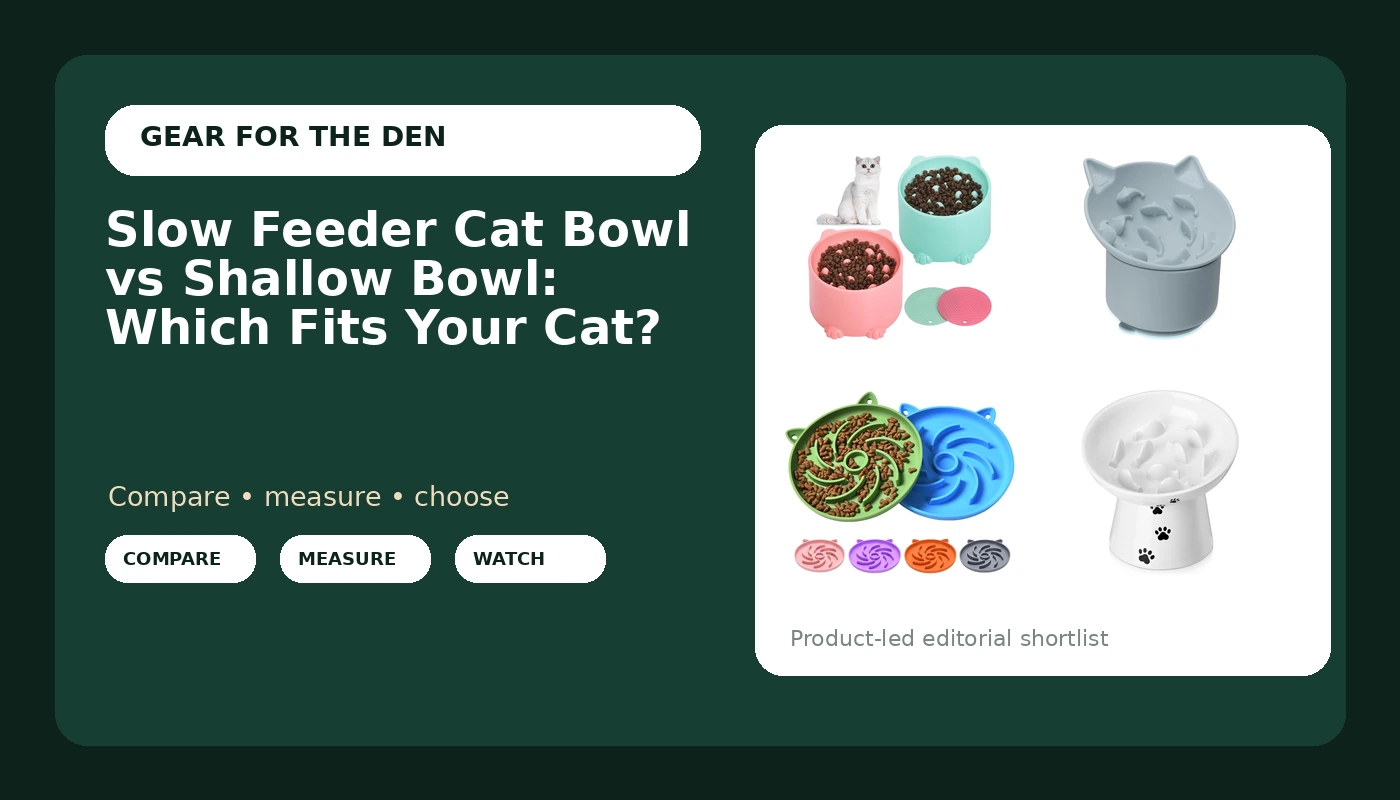
Below are the four slow feeders this comparison covers, from a six-inch ceramic dish to a two-pack of silicone puzzles. None of them is a universal answer, and the table is honest about where each one struggles.
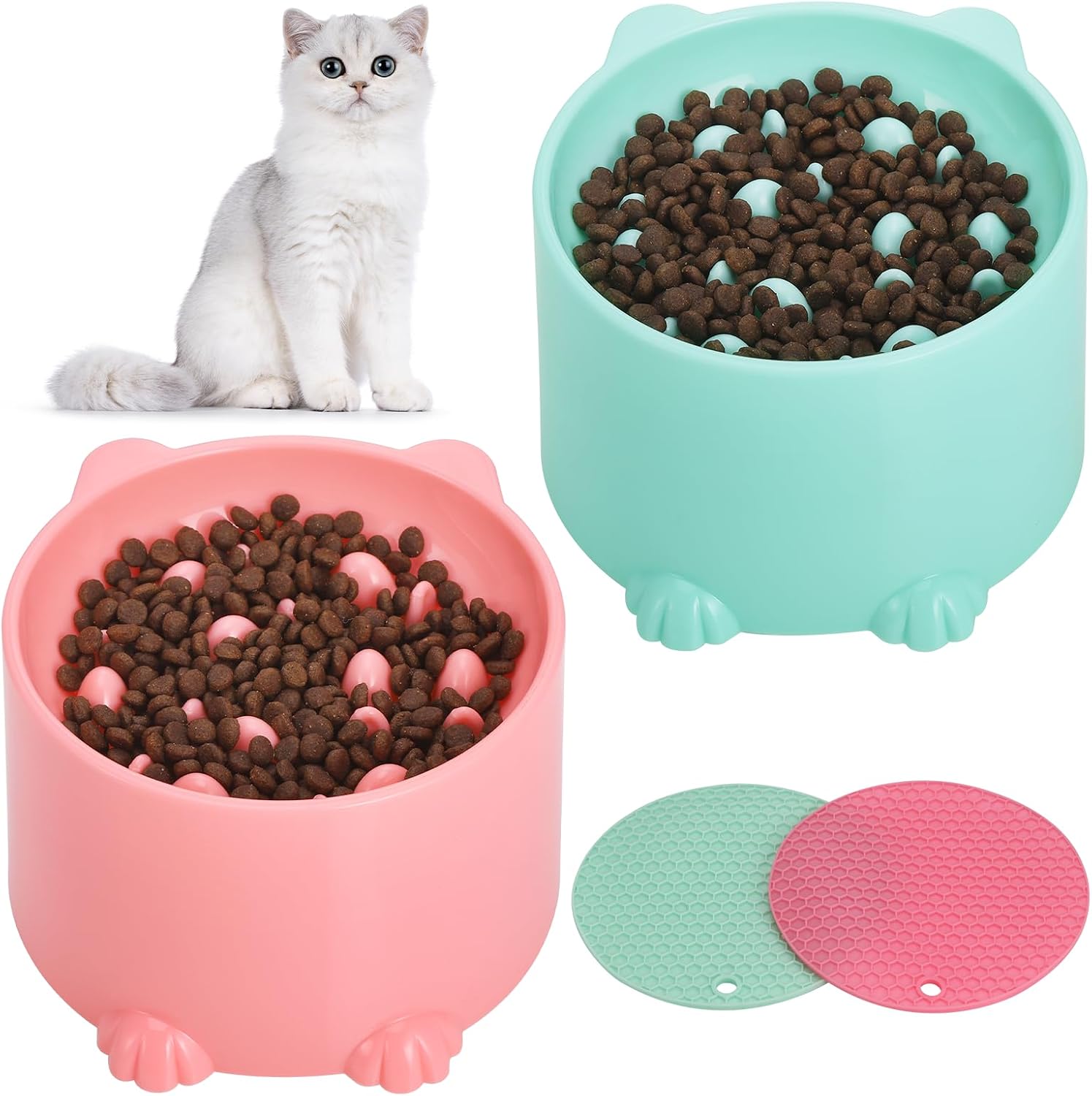
TranRantic 2 Pcs Raised Slow Feeder Cat Bowl
Two raised dishes plus an anti-skid mat, so it arrives as a full feeding station
Plastic scratches and holds onto odors, and light bowls slide without the mat
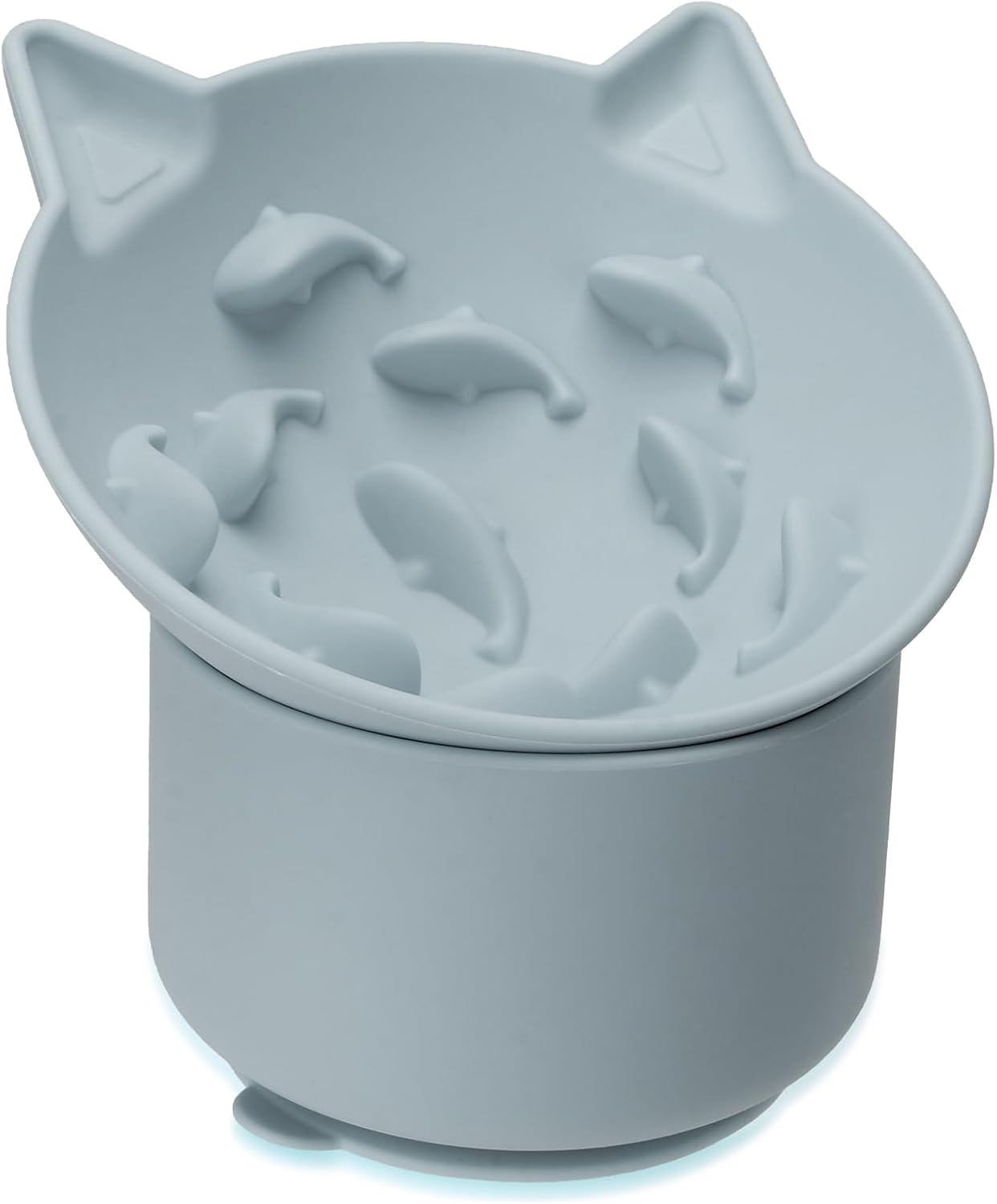
Bikabpet Silicone Cat Slow Feeder
Adjustable tilt angle and a suction cup, so you can tune elevation without buying a stand
Suction only holds on a smooth, clean surface, and silicone flexes under a determined cat
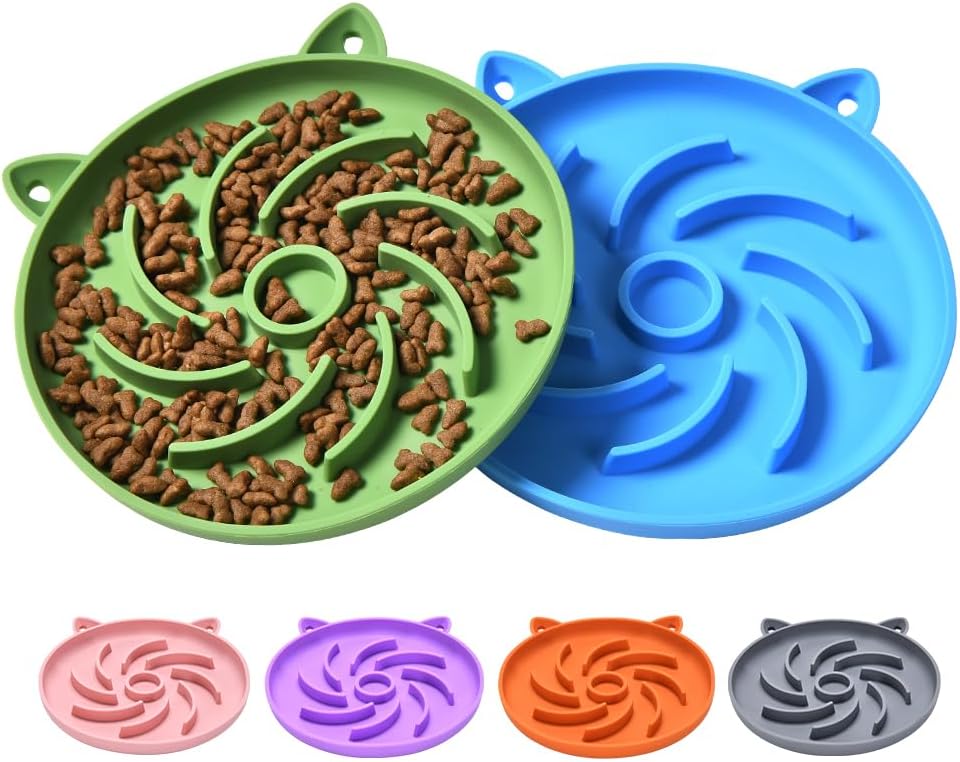
2Pcs Silicone Slow Feeder Cat Bowl
Two easy-clean silicone puzzles, one can wash while the other is in use
No stand, no tilt, no mat, so it depends entirely on your floor and your cat
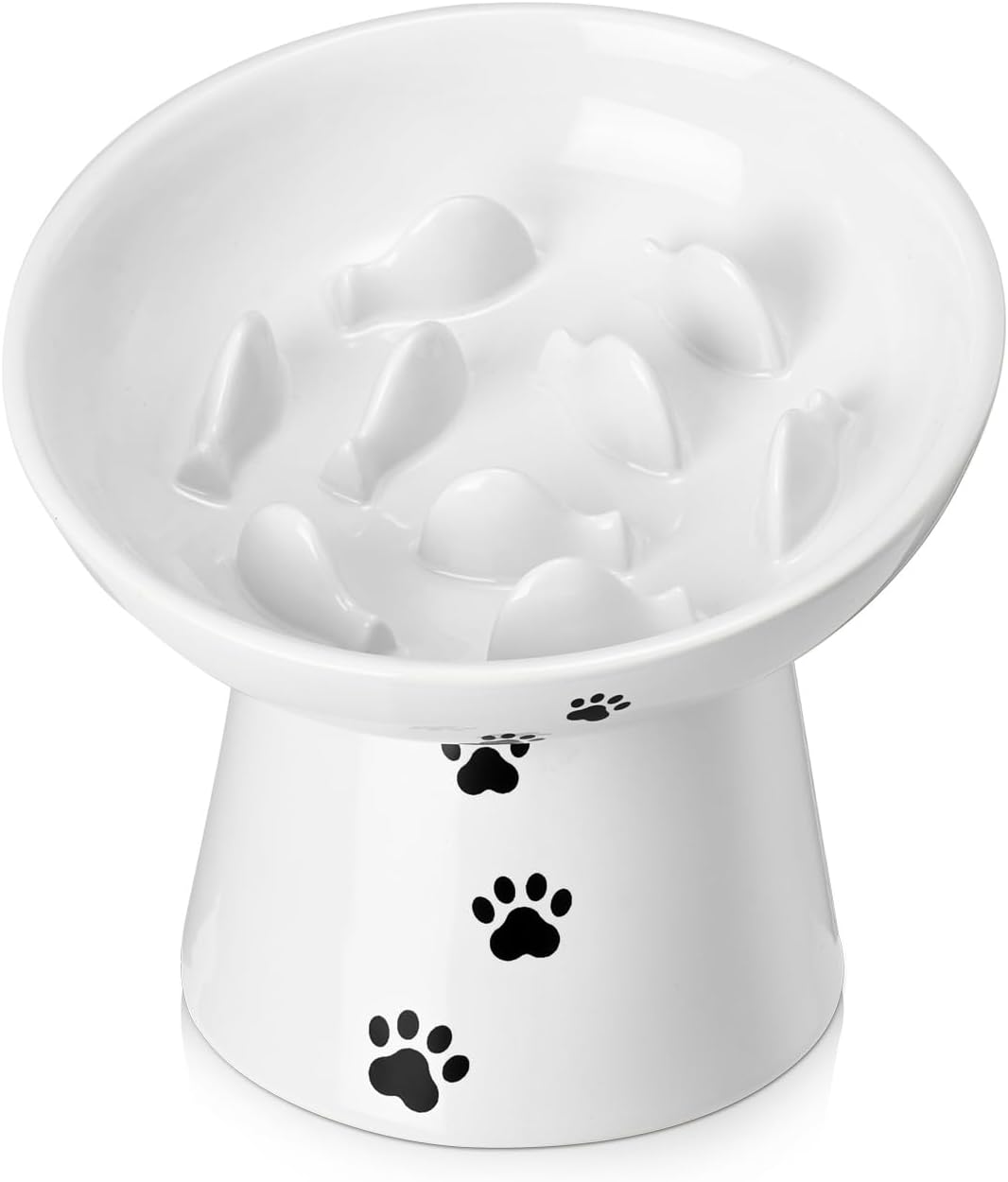
Y YHY Slow Feeder Cat Bowl
Six inches of elevated ceramic that stays exactly where you put it
Heaviest to clean and handle, and it chips if it is dropped
Prices and availability may change.
How I evaluate these bowls
Bowls look like the simplest purchase in the cat aisle, and they are among the most returned. When I line up candidates, five things decide whether a dish stays on the floor.
The first is bowl width at the rim. A dish wide enough for the cat to eat without pressing its face against the sides gets used; a narrow one gets nudged around the kitchen. The second is whisker clearance, which is the same measurement seen from the cat's side. Whiskers are loaded with nerve endings, and a cat whose whiskers drag on ceramic while it eats is a cat that eats less.
The third is material and weight. A heavy ceramic dish stays put. A light silicone dish slides unless something holds it, which is why suction cups and anti-skid mats show up on so many listings.
The fourth is the maze itself. Ridges that are too shallow do nothing; ridges that are too deep frustrate a cat into walking away. The sweet spot is a pattern a cat can work with a tongue or a paw without having to solve it.
The fifth is cleaning. Any dish with grooves collects wet food in the corners, and a slow feeder that takes four minutes to scrub ends up at the back of a cabinet.
Portion size matters too. A slow feeder sized for a full meal is the wrong dish for a two-tablespoon snack, and a shallow dish sized for a snack is the wrong dish for a cat that gulps a full portion. Elevation angle sits on top of all of this, because a raised dish changes the angle of the swallow, which is why anti-vomiting designs so often pair a maze with a stand.
Slow feeder cat bowl vs shallow bowl: what the maze actually changes
The practical difference between slow feeder cat bowl and shallow bowl designs comes down to how much work sits between your cat and the food. A shallow dish offers no work at all. The food is a flat layer, the tongue sweeps it up, and a motivated cat is finished in under a minute.
A slow feeder adds geometry. Ridges, valleys, and puzzle patterns force the cat to reach around obstacles, turning one mouthful into a dozen smaller ones. For a cat that regurgitates undigested kibble shortly after eating, that change alone often settles the problem, because the stomach is not hit with a full load at once. It also changes how much air gets swallowed, and air is what makes a cat uncomfortable, gassy, and occasionally sick.
What a slow feeder does not do is make a cat eat. This is where the shallow bowl vs slow feeder cat bowl argument gets real: a cat that is underweight, stressed, or in pain does not need a puzzle, it needs calories. If your cat has lost weight, is recovering from surgery, or is new to the house, a slow feeder can turn a small appetite into no appetite.
The same logic applies to flat-faced breeds. A cat with a short muzzle cannot easily reach into a deep maze, and the bowl that slows a normal cat down will simply block this one from eating at all.
The practical test is your own cat's behavior at the dish. A cat that finishes in ninety seconds and then vomits is a slow feeder candidate. A cat that takes ten minutes, eats half, and walks away is a shallow bowl candidate. The slow feeder cat bowl vs shallow bowl decision is that simple at the household level, even when the product listings make it look complicated.
Shallow bowls: the case for a wide, flat dish
A shallow bowl is not a lazy choice. For plenty of cats it is the correct one.
Whisker clearance is the main reason. Some cats are genuinely uncomfortable when the sides of a dish press against their whiskers while they eat, and the behavior looks like pickiness: the cat approaches, takes a bite, backs off, and eventually stops showing up. Owners read it as the cat disliking the food, when the food is fine and the bowl is the problem.
Flat-faced cats are the second group. A short muzzle and a wide face do not fit into a deep, ridged dish, and no amount of coaxing fixes anatomy.
The third group is cats who need to eat now. A senior cat with a dulled sense of smell, a cat on medication that kills appetite, or a cat coming off a dental procedure all do better with food spread wide and flat, where it is easy to reach and easy to smell.
There is also the water question. Many cats will not drink from a deep, narrow bowl, because the whiskers touch the rim. If your cat barely drinks, a fountain's water capacity and filter type matter more than the bowl it replaced, and pump noise decides whether anyone uses the thing at all. That is a separate decision from the slow feeder cat bowl or shallow bowl question, but it comes up in the same aisle.
The trade-off is obvious: a shallow dish does nothing to slow a fast eater. If your cat inhales food and then throws it up, a flat dish will not fix that. It solves a different problem.
Ceramic, silicone, and plastic: the material decision
Material decides how the bowl behaves when a cat pushes it, and how long the bowl lasts.
Ceramic is the heavy option. The Y YHY Slow Feeder Cat Bowl is a six-inch ceramic dish, elevated and designed with anti-vomiting in mind for both dry and wet food. Weight is the point: it stays put on a hard floor, it does not flex when a cat works at the maze, and it does not hold onto odors the way softer materials can. The cost is fragility. Ceramic chips if it is dropped, and a chipped rim is a cut waiting to happen. Check current Amazon price if you want the dish that never moves.
Silicone is the flexible option, and it shows up here in two different forms. The Bikabpet Silicone Cat Slow Feeder uses a tilt design with an adjustable angle and a suction cup, in gray. The adjustable angle is the interesting part, because it lets you change the elevation angle without buying a stand, and the suction cup addresses the sliding problem that plagues light dishes. The catch is that suction cups need a smooth, clean surface; on a textured floor or over a mat, the hold is only as good as the seal. Check current Amazon price if you want to experiment with tilt.
The 2Pcs Silicone Slow Feeder Cat Bowl two-pack takes the opposite approach: blue and green, no stand, no tilt, just two lightweight puzzle dishes that are easy to clean and easy to swap between meals. Two bowls means one can be in the sink while the other is in use, and silicone tolerates that better than most materials. The downside is that a light silicone dish gets pushed across the floor, and a determined chewer can leave teeth marks in it. Check current Amazon price if you feed two cats or want a spare.
Plastic sits in the middle on price and near the bottom on durability. The TranRantic 2 Pcs Raised Slow Feeder Cat Bowl pairs two raised plastic dishes, green and pink, with an anti-skid mat. Plastic is light, inexpensive, and easy to find in a color that suits your kitchen. It also scratches, and scratches hold bacteria, which is the usual explanation for the chin acne some cats get from plastic dishes. If you go plastic, wash it often. Check current Amazon price if you want the two-bowl setup.
Whisker clearance and elevation angle are non-negotiable
Two specs decide more outcomes than the maze pattern does.
Whisker clearance is the distance between the food and the sides of the dish. Every cat has a personal threshold, and you will know you crossed it when the cat starts eating with its head turned sideways or scooping food onto the floor. Wide and shallow solves it. Deep and narrow creates it, and no maze pattern is worth a cat that stops eating.
Elevation angle is the second. A raised dish tilts the head up slightly, which changes the path food takes on the way down. That is why anti-vomiting claims cluster around elevated designs rather than flat ones, and why the TranRantic pair ships with a stand while the Bikabpet feeder offers an adjustable tilt. For a senior cat with arthritis in the neck or shoulders, elevation is not a luxury. Reaching the floor hurts, and a cat that hurts eats less.
Bowl width interacts with both. A dish that is too wide for a small cat means food spread thin and a long reach; a dish too narrow means whiskers against the wall. Six inches, which is what the ceramic dish measures at the rim, is a sensible middle for most adult cats.
Stability is the third practical spec, even though it never appears on a listing. A bowl that slides gets chased, and a bowl that gets chased gets flipped. That is what the anti-skid mat on the TranRantic set and the suction cup on the Bikabpet feeder are for, and it is why heavy ceramic often wins on a hard floor despite being harder to clean.
What the specs say
Line the four up and the pattern is clear.
The Y YHY ceramic bowl is for the cat that pushes dishes around. Six inches of ceramic, elevated, white, and aimed squarely at the anti-vomiting crowd. It handles dry and wet food, and its weight means you are not chasing it across the floor. It is also the one to skip if you want something you can pack for travel, or if you have a cat that chews.
The Bikabpet silicone feeder is the adjustable one. Tilt design, adjustable angle, suction cup, gray, suitable for dry and wet food. If your cat already eats from a raised position, or if you want to test an elevation angle without buying furniture, this is the flexible pick. The suction cup is doing real work here, so give it a smooth surface.
The silicone two-pack is the value pick and the travel pick. Two bowls, blue and green, easy to clean, suitable for all dry and wet foods. No stand, no tilt, no mat, which means it depends on your floor and your cat's patience. For a two-cat household, or for anyone who wants a spare in the cabinet, the pair is hard to argue with.
The TranRantic pair is the setup pick. Two raised plastic bowls, green and pink, plus an anti-skid mat, designed for dry and wet food. If you have a senior cat, or a cat that has always eaten off the floor and needs a lift, this arrives as a complete station rather than a single dish.
Where all four land in the same place: none of them is a shallow bowl. Every one of these is a slow feeder, which means every one of them adds work between your cat and dinner. If your cat needs speed rather than resistance, none of these is the answer, and a wide flat saucer is.
Should you buy a shallow bowl as a second dish?
Usually, yes. The two bowl types solve different problems, and most households run into both at some point.
A shallow dish is the right place for water in many homes, and it is the right dish for a cat that is off its food. A slow feeder is the right dish for the cat that eats too fast on a normal day. Owning both costs less than a single vet visit for a recurring vomiting issue, and it lets you test the slow feeder cat bowl vs shallow bowl question on your own cat instead of guessing.
The way to run that test: feed the normal portion in the slow feeder for a week and note how long the meal takes and whether the vomiting stops. If the cat eats less or skips meals, switch to a shallow dish and see whether appetite returns. If appetite is fine but the vomiting continues, the bowl was not the problem, and it is worth talking to a vet.
A few notes for the transition. Introduce a new dish with a familiar food, not a new food, so you are testing one variable. Put it in the same spot. Give it three or four days before you judge it, because cats are suspicious of change and a slow feeder that gets ignored on day one is often fine by day four.
If you have more than one cat, feed them separately when a slow feeder is involved. A slow eater at a puzzle bowl next to a fast eater at a flat dish is a recipe for the fast cat finishing its own meal and then helping with the other one.
What I'm watching next
The category is moving in two directions at once. One is deeper mazes in softer materials, which is where the silicone feeders keep improving: more tilt, more adjustable angles, better suction. The other is the automatic side, where microchip range decides whether a feeder opens for the right cat or for the raccoon on the porch, and where portion size is set by an app rather than by a scoop.
What I am most curious about is the hybrid: a slow feeder with a genuinely wide rim, so it slows a fast eater without punishing a cat with sensitive whiskers. Right now you pick one. The best current compromise is a raised ceramic dish for meals and a wide flat saucer for water, with a shallow bowl on standby for the weeks when your cat needs calories more than it needs a puzzle.
If your cat is a gulper, start with the maze. If your cat is a grazer, start flat. And if you are not sure which cat you have, watch one meal with a stopwatch. Ninety seconds tells you almost everything.