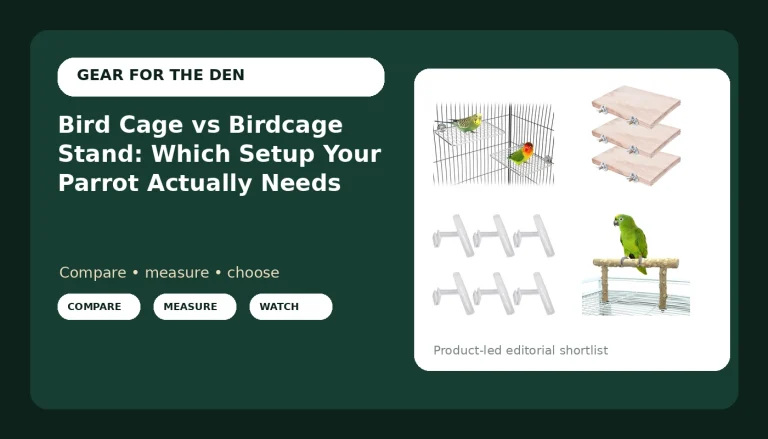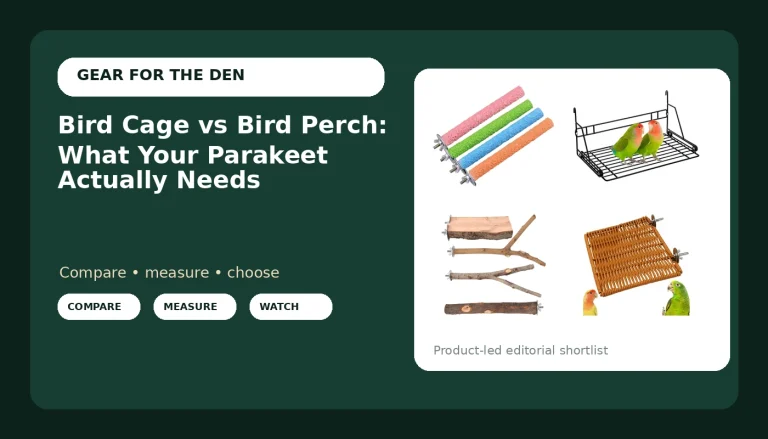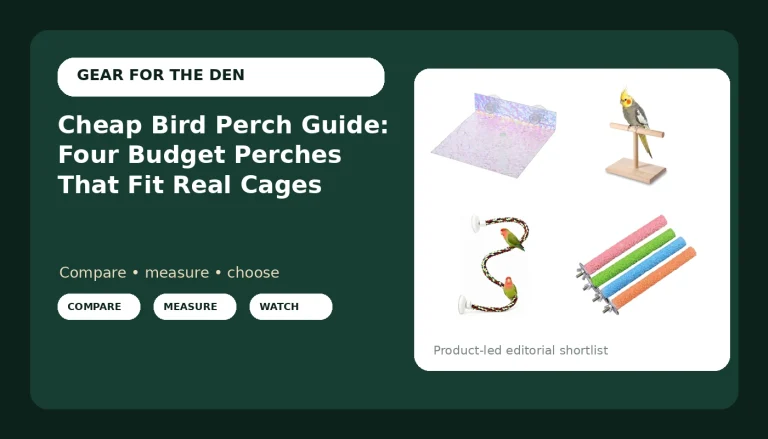
If you have spent an evening scrolling cage accessories, you have probably hit the same fork in the road: hardware that goes inside the cage, or hardware that holds the bird outside it. Search results blur the two together, which is why bird perch vs birdcage stand keeps coming up in parrot forums and in my inbox. They are not the same purchase, and treating them as interchangeable is how people end up with a suction cup perch stuck to a wall their bird refuses to sit near.
For most small parrots, start with a pair of bolt-on platform perches for the cage interior, then add a natural wood branch for foot variety and a portable playstand for out-of-cage time. That is the short answer. The long answer is about where the perch attaches, what your bird's feet need, and how much cleaning you are honestly willing to do every week.
Part of the confusion is that both products borrow the same vocabulary. A perch is a resting surface. A stand is a place to put the whole bird. When someone asks about a birdcage stand vs bird perch, they are usually asking whether they need a freestanding play area or another piece of cage furniture, and the honest answer is that most bird owners eventually buy both, just not in the order they expected.
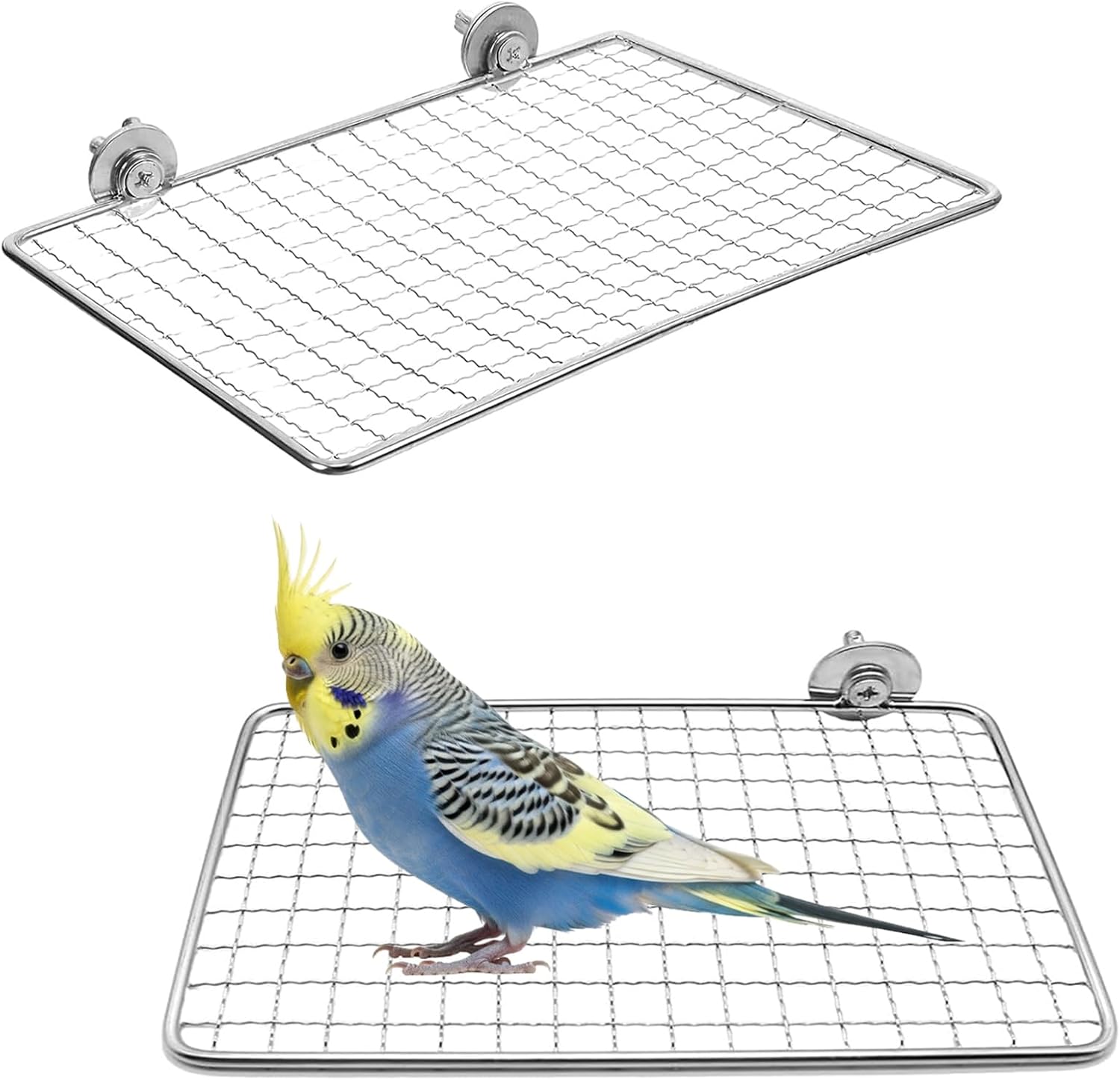
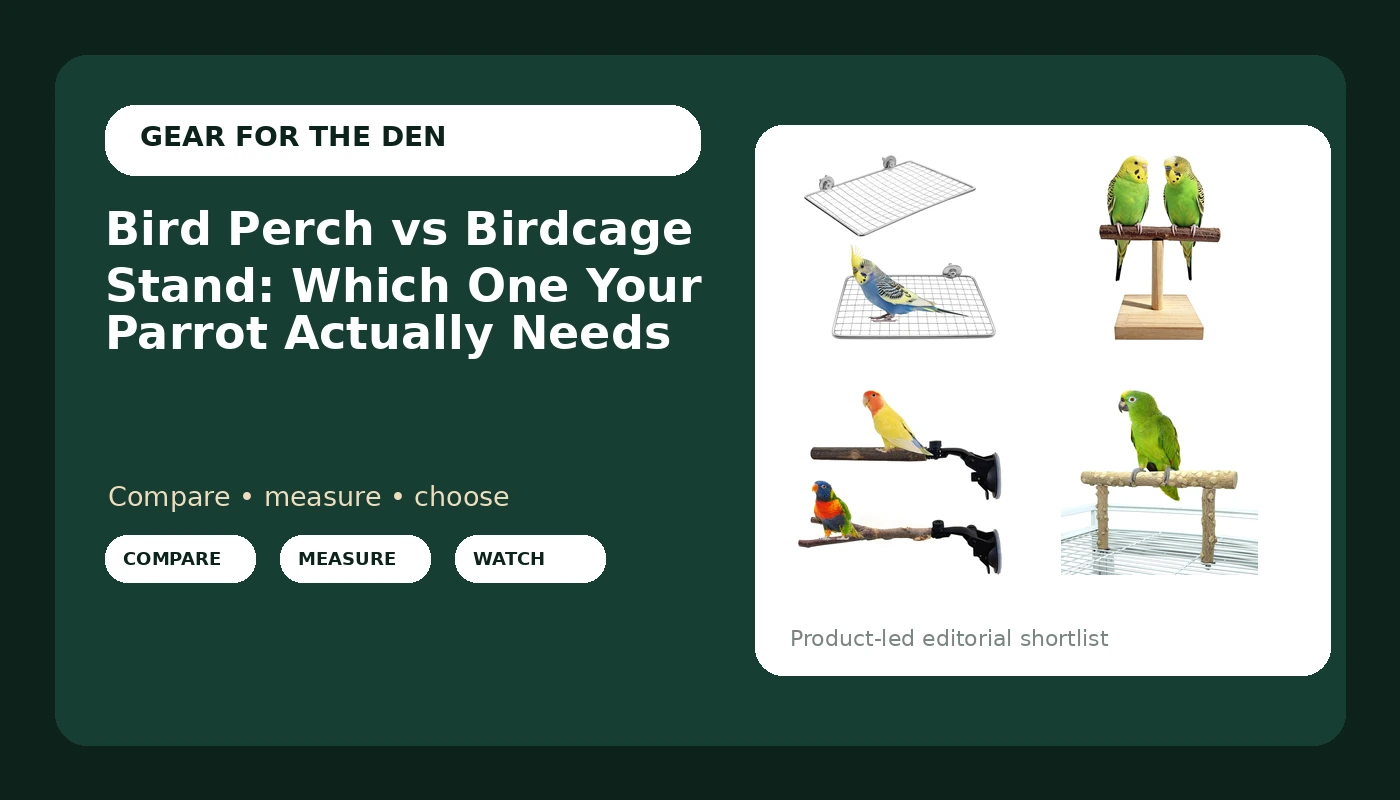
2 Pack Stainless Steel Bird Perch Platform for Cage, 6.3 x 4 in Wire Mesh Resting Stand
Two platforms, flat mesh surface, wipes clean, sized for conures, cockatiels, and lovebirds
Metal only, no natural wood, too small for large parrots
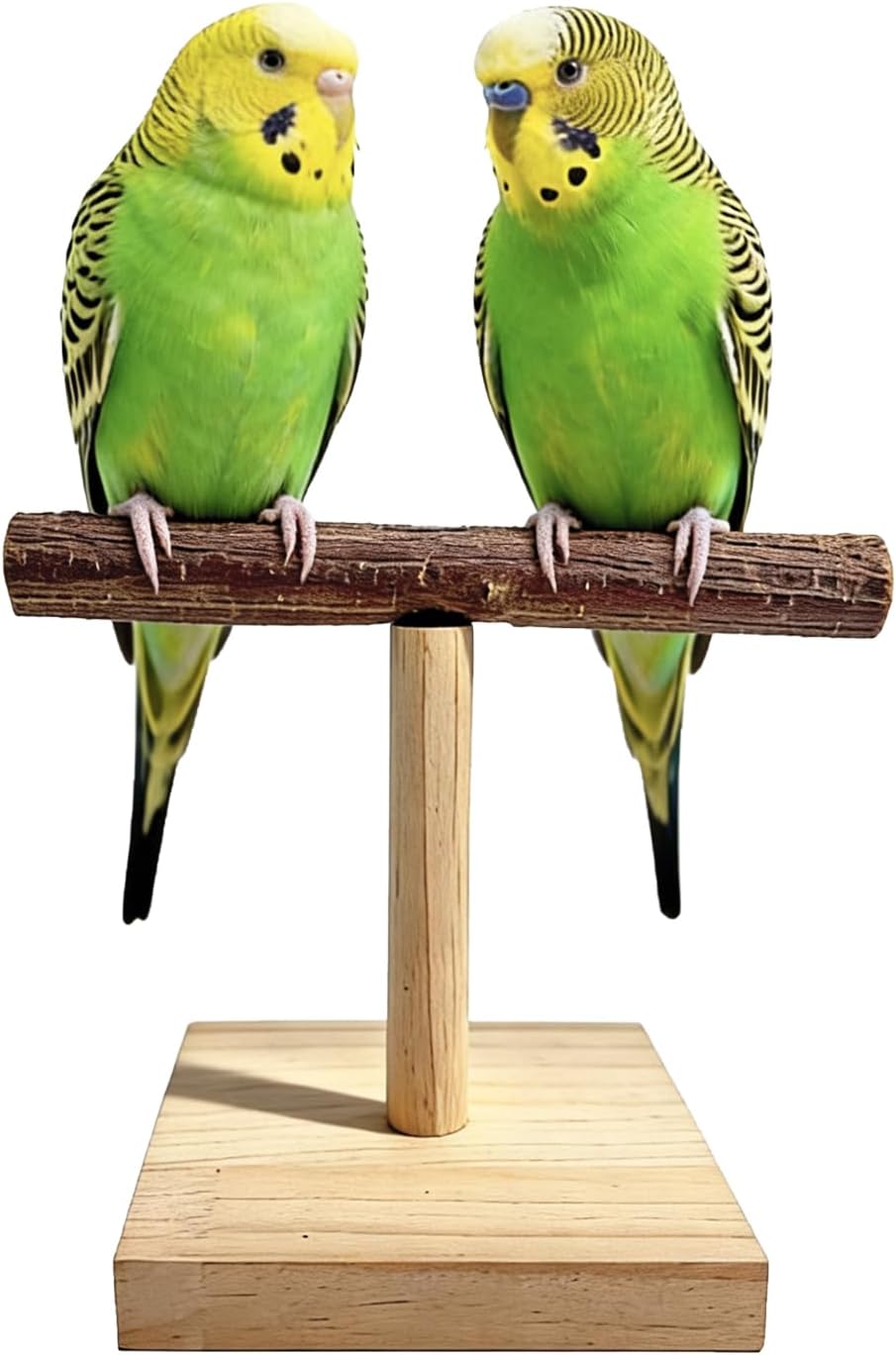
Bird Perch Stand Portable Training Parrot Playstand Parrot Cage Toy Gym Accessories for Cockatiels, Parakeet, Macaws, Finch, Small Medium Parrots
Gives the bird a station outside the cage, easy to move room to room, useful for step-up work
No permanent mount, needs supervision, does not replace in-cage perches
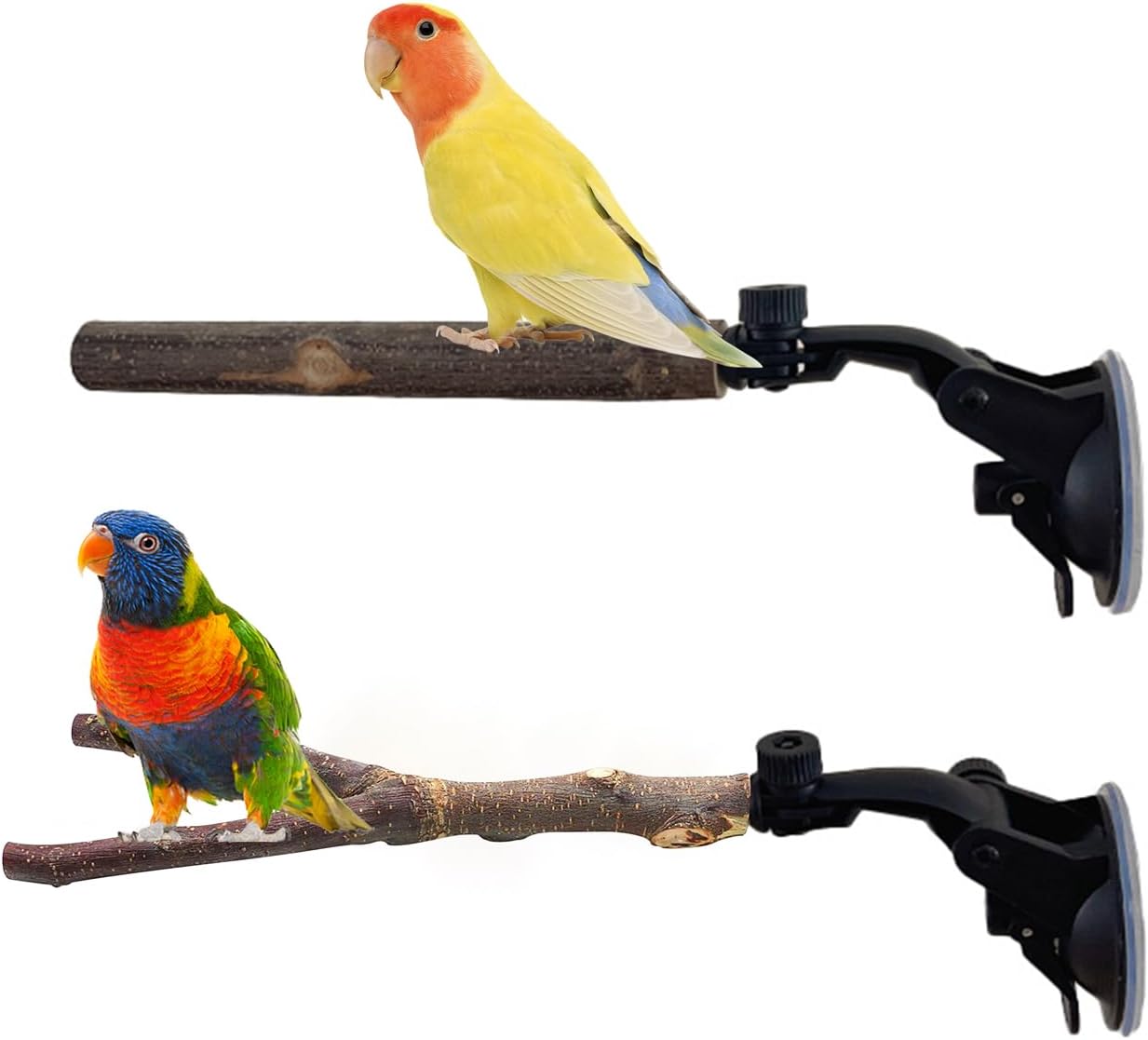
2 PCS Parrot Perch Stand, Natural Wood Bird Perch with Suction Cup Parrots Cage Shower and Window Wall Bath Standing Rack for Bird, Cockatoo, Macaw, Parakeet
Natural wood grip, two per pack, instant window and shower setup
Suction depends on smooth clean surfaces and weakens in humid air
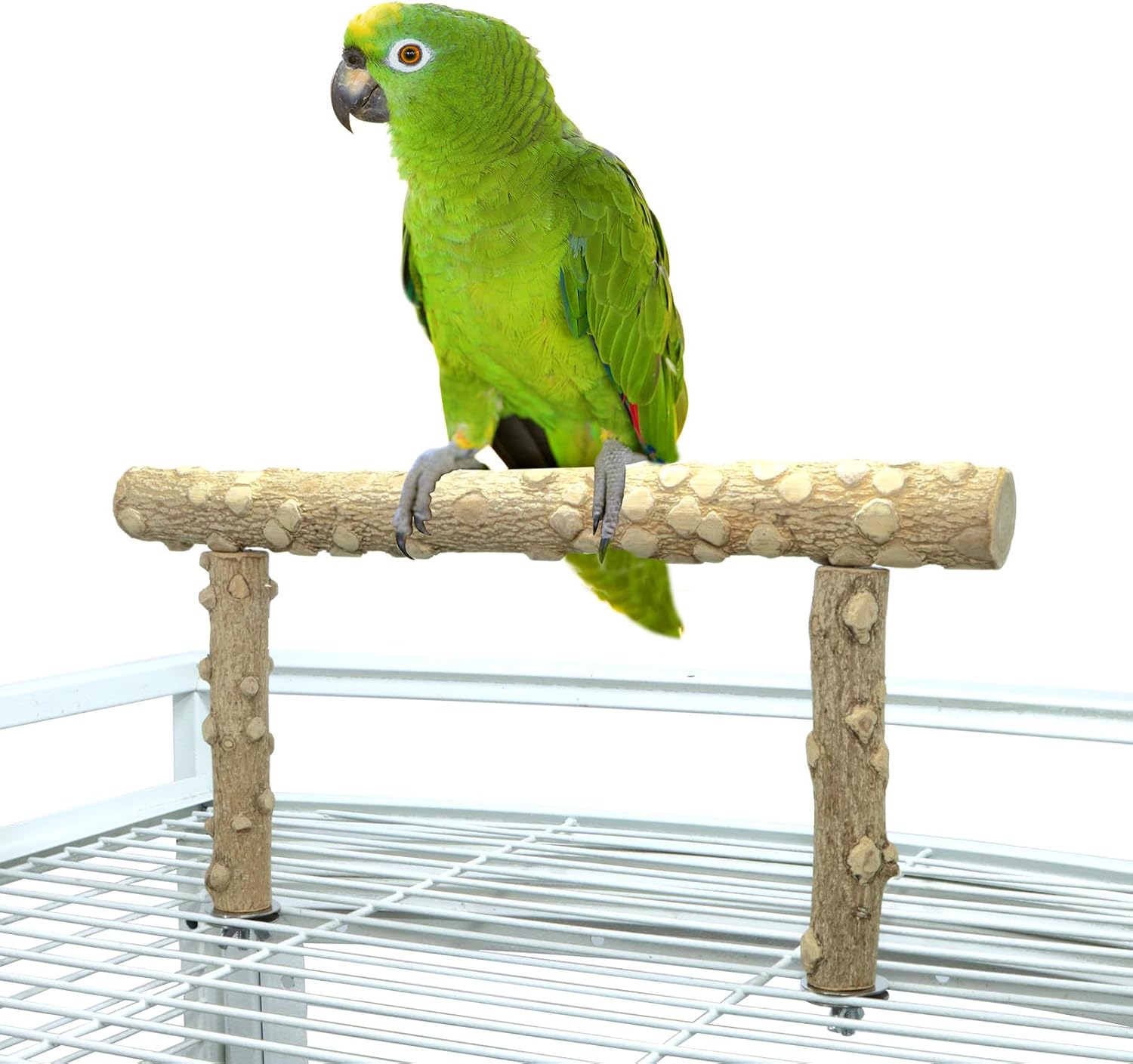
Bird Perch Stand,Natural Wood Cage Gym Toy Branch for Small Large Parrot
Branch shape varies the grip, suits larger beaks, doubles as a chew outlet
Single perch, wears down over time, harder to sanitize than steel
Prices and availability may change.
Bird perch vs birdcage stand: the difference that changes what you buy
Perches are cage furniture. They bolt to the bars or hook over them, they sit at a fixed cage height, and they become part of the bird's daily routine whether you are in the room or not. A stand is room furniture. It lives outside the cage, it moves when you move it, and it only matters during supervised out-of-cage time. The difference between bird perch and birdcage stand shows up first in your bird's schedule: a perch is where the bird sleeps, eats, and shreds, while a stand is where the bird hangs out while you work. That distinction decides the size, the mounting hardware, and how much you should spend.
There is also the question of who benefits. A perch improves every hour the bird spends in the cage, which for most parrots is most of the day. A stand only pays off if you already have an out-of-cage routine, because a playstand in an empty room is a piece of furniture. If your bird is out for twenty minutes a day, the perch wins on value. If your bird is out for two hours and you are tired of cleaning droppings off a keyboard, the stand starts to earn its place.
The stainless steel mesh platform pair for cage interiors
The 2 Pack Stainless Steel Bird Perch Platform is the most practical cage-interior pick in this group. You get two platforms, each 6.3 by 4 inches, with a wire mesh resting surface and stainless steel construction, sized for conures, cockatiels, lovebirds, and other small parrots. Two matters more than it sounds, because you can put one high for sleeping and one lower near a food cup, then rotate them out for cleaning without leaving the cage bare.
Why it wins: the flat mesh surface wipes down instead of absorbing droppings the way raw wood does, and it gives a bird a place to sit flat rather than grip a round dowel all day. The mesh also drains, so a wet bird dries off without sitting in a puddle. Why it loses: there is no natural wood texture, no perch diameter to vary along the length, and the size ceiling rules out the bigger parrots. If you keep a macaw, this is not your perch, and no amount of clever mounting will fix that.
The other thing to know is that a platform is a resting spot, not a full substitute for a branch. Birds that only ever stand on flat surfaces lose the foot exercise that comes from gripping something uneven. Pair the platform with one wood perch and you cover both jobs.
The suction cup wood pair for windows, showers, and walls
The 2 PCS Parrot Perch Stand with suction cups takes the opposite approach. These are natural wood perches that press onto glass, tile, or a smooth wall, which makes them useful for shower time, window time, and anywhere your bird wants to be near you while you do something else. Two perches in the pack means you can keep one in the bathroom and one on a window and stop carrying hardware between rooms.
Why it wins: instant variety with no cage modification, plus a natural wood surface the bird can grip and chew. For a bird that screams when you leave the room, a shower perch in the bathroom is a genuinely useful piece of gear, because the bird gets the humidity and the company at the same time.
Why it loses: suction is a promise that depends on a clean, smooth, non-porous surface. Textured tile, painted drywall, and dusty glass all fail it. Warm, humid shower air makes the grip less reliable over time, so treat shower use as supervised use and never leave a bird alone on a suction mount. If your bird chews the mount, retire the perch.
The portable playstand for training and out-of-cage time
The Bird Perch Stand Portable Training Parrot Playstand is the pick if your bird spends a couple of hours a day out of the cage and you want a destination rather than a shoulder. It is listed for cockatiels, parakeets, macaws, finches, and other small to medium parrots, and the whole point of it is portability: move it to the kitchen while you cook, the office while you work, the living room in the evening.
Why it wins: a training station makes step-up and recall work easier, because the bird has one consistent place to land that is not your hand and not your monitor. It also keeps droppings off the couch, which matters more than most people admit before they own a bird. Why it loses: it does not replace in-cage perches, it needs a stable flat surface to sit on, and it does nothing for the bird while you are at work.
Carrier size matters here too, since a playstand that cannot fold or travel stays home. If you were hoping one purchase would cover the cage, the training table, and vet trips, this is not it.
The natural wood branch for larger parrots
The Bird Perch Stand Natural Wood Cage Gym Toy Branch is the one that scales up, listed for both small and large parrots. A natural branch has an advantage manufactured dowels cannot match: the diameter changes along its length, so the bird's feet grip differently as it walks. That is closer to what a tree offers, and it is the reason branch perches are worth the extra cleaning work.
Why it wins: foot variety, a chew outlet, and a shape that suits a bigger beak far better than a thin dowel. A bird that destroys wood for fun gets real value out of it. Why it loses: it is a single perch, the wood wears down and eventually needs replacing, and it is harder to sanitize than stainless steel because water soaks into the grain.
If you keep a large parrot, budget for replacement. Branch perches are consumables in a way that metal platforms are not.
Bar spacing, cage height, and perch diameter: the fit questions
Three numbers decide whether any of these work in your setup. Bar spacing tells you what can mount: a platform with a bolt and wing nut needs enough gap to pass the hardware, and a hanging perch needs the bars close enough that the hook does not slide. Cage height tells you where a perch can sit without crowding the bird's head or the cage top, and it also decides whether a high sleeping perch is even possible. Perch diameter tells you whether the bird's foot can wrap roughly two thirds of the way around the surface, which is the difference between a grip and a wobble.
If you are unsure, measure the bird rather than the cage. A conure and a macaw need very different diameters, and a perch that is too thin is a foot problem waiting to happen. A swing mount is a separate question: some birds love a perch that moves under them and some refuse to touch one, and you will not know which bird you have until you try. A perch that swings is also harder to sleep on, so keep the moving hardware away from the sleeping spot.
Cleaning, tray liners, and food cups: the maintenance trade-off
Where a perch sits decides how much cleaning it creates. Put it directly above a food cup and you will be scrubbing that cup constantly. Put it over a tray liner and cleanup becomes a five second job. Food cup size matters too, because a perch that encourages the bird to sit and eat all day is a perch that will be dirty all day, and a bird that guards the cup from the perch will make your life harder.
Stainless mesh rinses and dries fast. Natural wood needs scrubbing and a real drying period, because damp wood is where bacteria settle in. Suction cup perches need the glass cleaned and the mount re-pressed before each use, a small chore people forget until a perch is on the floor and the bird is on the curtain rod.
Foraging difficulty, swing mounts, and carrier size
Perches are also enrichment hardware. Hang a foraging cup or a shreddable toy near a perch and the bird has a reason to use it. Raise the foraging difficulty by moving the toy just out of easy reach, and the perch becomes a work station instead of a resting spot. That is the argument for buying two perches rather than one: you can turn one into a puzzle station and leave the other as a place to sleep.
Carrier size is the last piece of the puzzle. If your bird travels, a perch that fits the carrier is worth more than a perch that fits the living room, and a small platform or a short wood perch usually packs better than a full playstand. Match the travel perch to the carrier's interior dimensions before you buy, or you will be trimming hardware the night before a vet visit.
How to choose when you are still torn
If you can only buy one thing this month, buy the cage perch. Birds spend most of their lives in the cage, and a resting platform or a natural branch improves every hour of it. A stand only pays off once you already have a solid out-of-cage routine and a room that can handle it.
If your bird is small and spends a lot of time on your shoulder, the mesh platform pair plus a suction cup wood perch covers both the cage and the window. If your bird is large, skip the platform and put the money into a branch perch with real diameter. If you are training a young bird, the portable playstand earns its place faster than anything else here, because it gives you one consistent station for step-up work. The bird perch vs birdcage stand question gets easier once you know which of those three birds you actually have.
What to buy first
Start with the platform pair for the cage interior, add the natural wood branch if your bird's beak is bigger than a cockatiel's, and treat the suction cup perches and the portable playstand as second purchases that depend on how your bird uses the room. Whichever way you go, check the mount against your actual bar spacing, measure the perch diameter against your bird's feet, and give the bird a week to adjust before you decide the perch was a mistake.
That is the real answer to bird perch or birdcage stand: it is not one or the other, it is which comes first for the bird you actually have.