A bird swing guide for corners is really a mounting guide. Every cage has two corners that nothing quite fits into, and both of them are places a small bird will happily sit if you give it something stable under its feet. The catch is that a corner is also where the swing mount fights the cage bars, the door, and the tray liner, and where a perch that looks level in a product photo starts to spin the moment a budgie lands on it.
I have kept budgies and a cockatiel in a one-bedroom apartment for years, which means every inch of cage height is an argument I have already lost once. This is the bird swing guide for corners I wish I had found before I bought my first suction perch: four products, what each one is actually for, and the details that decide whether a perch works in a corner before it ever arrives.
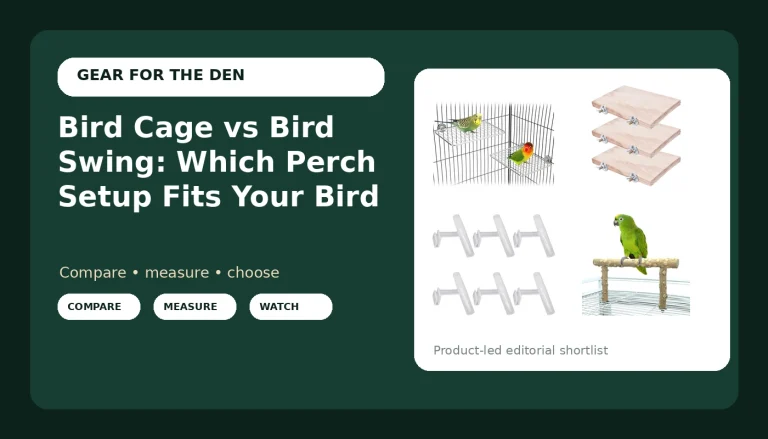
Best Overall: Allazone 4PCS Bird Perch Natural Grape Stick Bird Standing Stick Grapevine
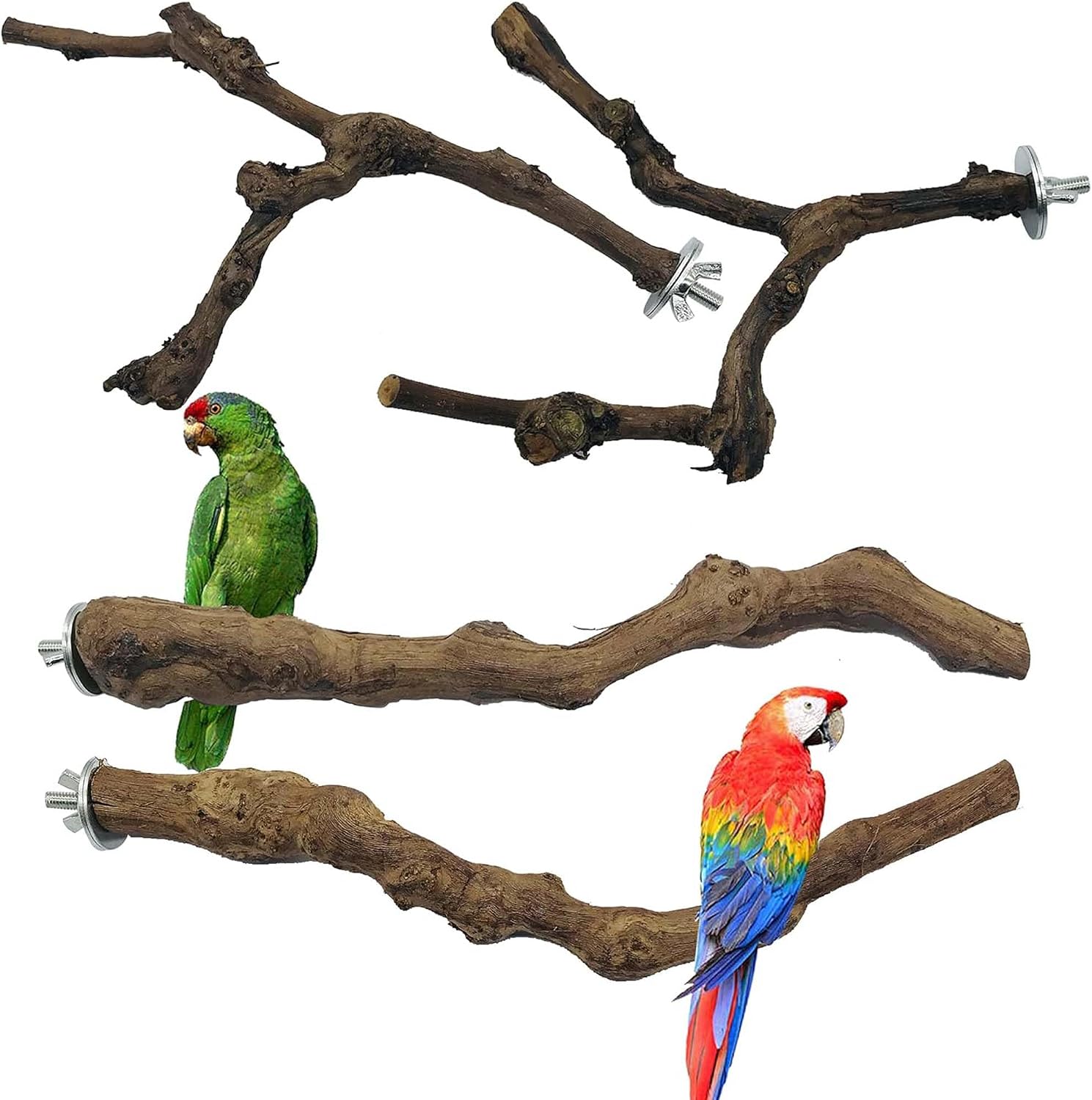
A bundle of natural grape wood is the closest thing to a universal corner perch, and it is the first thing I reach for when a cage has an empty corner and a bored bird. Four pieces means four chances to find a length that spans the corner diagonally instead of fighting it. The wood is branch, not dowel, so the perch diameter changes along each stick, and that variation is the point: feet that wrap the same width all day never work the grip muscles that keep a bird steady.
Grape vine is also soft enough that a determined budgie will strip the bark and chew the ends down, which turns a perch into a toy. There is no suction cup to give up at 2 a.m. and no clamp to rust, and that matters more than any feature list once a perch has been in a cage for a year.
The trade-offs are honest ones. Natural wood is irregular, so you cannot order a specific diameter, and one of the four pieces will be the awkward one that fits nowhere. Mounting is on you: these are sticks, so you wedge them between bars, wire them to two sides of the corner, or rest them across a brace. Check your bar spacing first, because wide bars swallow a thin branch whole.
Where it earns Best Overall is as a corner run. Wedge one piece diagonally across the back corner, low enough that the bird can hop down to the food cups and high enough that it clears the tray liner when you slide it out. Use the second piece as a step between the corner and the door, and save the other two for the boring side of the cage.
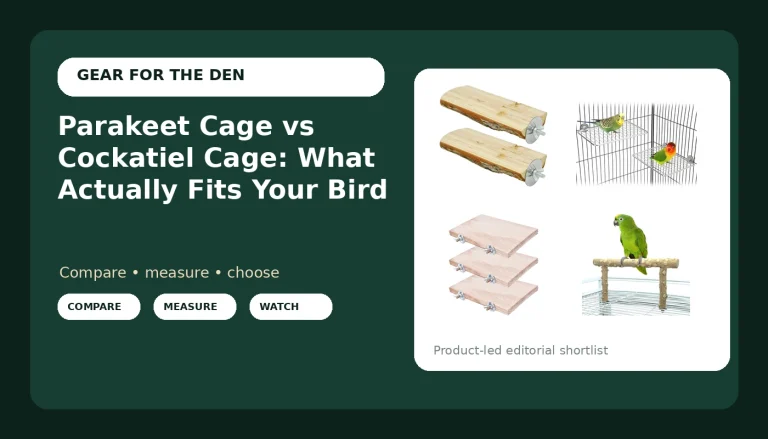
Best Value: Window Perch for Birds Suction Cup Bird Perch of Car Travel for Cockatiel
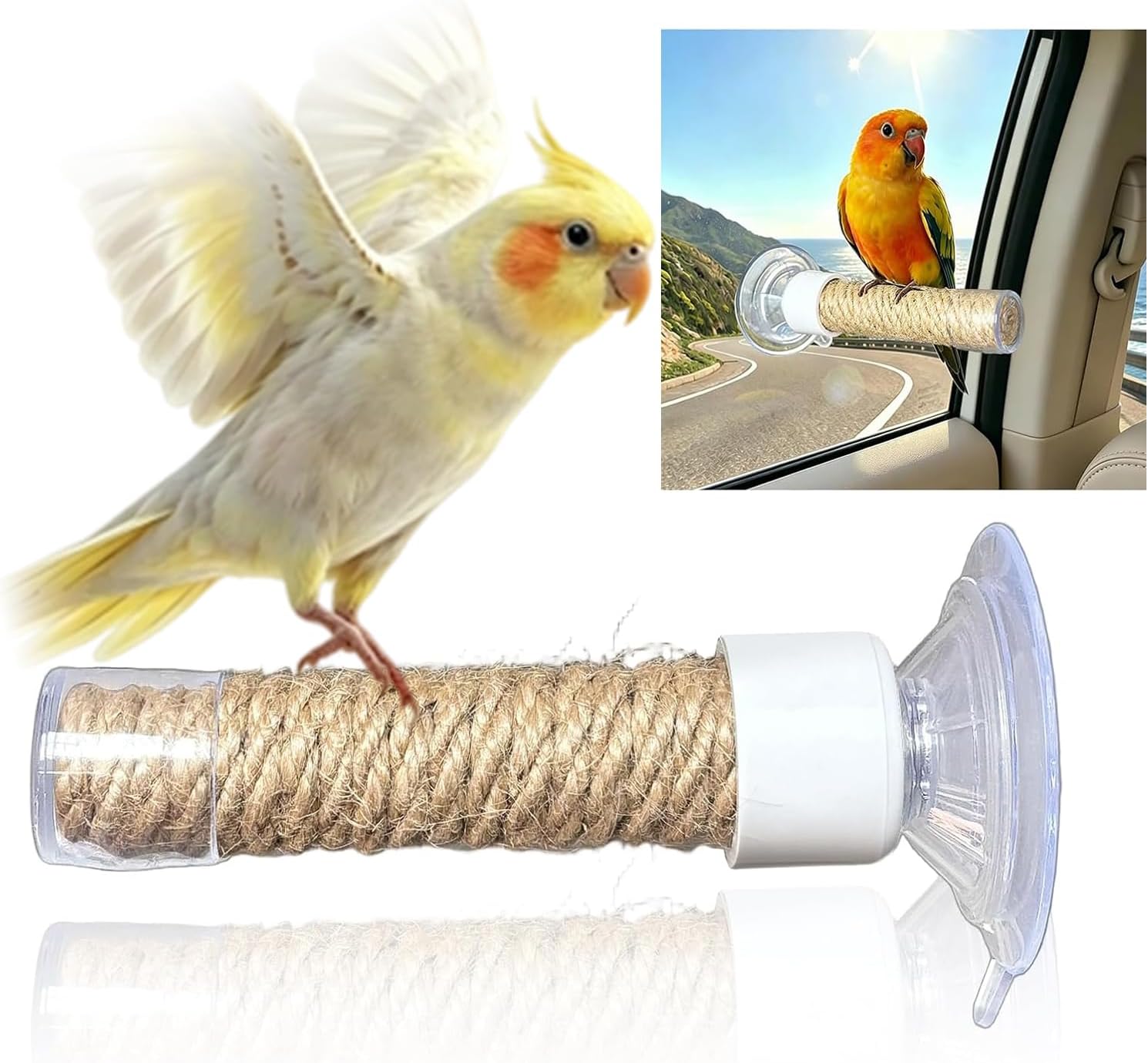
Suction cups are the cheapest way to find out whether your bird actually wants a corner perch. Glass is the one surface a suction mount never argues with, which means a window, a mirror, or a glass side panel becomes usable bird space in about ten seconds. If your cage sits near a window, this turns dead glass into the lookout spot where a cockatiel will spend most of its day.
The limits are real. Suction needs smooth, clean, non-porous surfaces, so powder-coated cage bars are out. Glass in direct sun gets hot enough to be uncomfortable, and a cup that has been licked clean by a curious beak needs to be re-pressed and checked before you walk away. If you travel with a bird, measure your carrier size before you mount anything, because a perch that touches the carrier wall is a perch the bird will not use.
For a corner that has no bars at all, which is most of an apartment, this is the low-risk buy. Press it on, give the bird a week, and if it never lands there you have lost very little and learned something useful about where your bird wants to sit.
How I tested
I do not have a lab. I have cages, a cockatiel with opinions, and a habit of watching where a bird actually stands instead of where I hoped it would stand. Every corner perch gets the same checklist.
The first question is the swing mount. Does it hold when a bird lands hard, and is it still in the same place after a week? A perch that drifts an inch a day ends up sitting in the food cups, and a perch that drops once gets ignored forever.
Second is perch diameter. Feet should wrap most of the way around the wood with the toes overlapping slightly. Too thin and the bird grips with locked toes; too thick and it perches like a duck on a fence post, which is the posture that leads to foot trouble. Natural branch wood passes this test better than any dowel, because the diameter changes as the bird walks.
Third is clearance. Bar spacing decides what you can wedge and where, and a corner perch also has to leave room for the door to open, the food cup size you use, and the tray liner you pull out every week. If it blocks the tray liner, it is in the wrong place, no matter how good it looks.
Fourth is cage height. The highest stable perch is the sleep perch, and in a small cage the corner is usually the highest real estate there is. A corner perch placed at the top gets used every night. The same perch at shoulder height becomes a toy.
The ideal bird swing guide for corners would hand you the perch diameter, the bar spacing, and the exact height in one line. Mine hands you the checklist, because your cage is not mine.
Analysis and test results
Most of what people search for as a bird swing guide for corner spaces is really a question about mounts, and mounts are where corners get interesting. There are three kinds: suction, which only works on glass; wedge, which relies on bar spacing and friction; and wire or strap, which works anywhere but takes two hands and a little patience.
A bird swing guide for angled corners has to solve a different shape. Corner cages and playpens rarely meet at a clean 90 degrees, and a 45-degree panel holds a wedge perch at an angle a straight bar never will, so you end up anchoring to two different planes or crossing the corner diagonally with a natural branch.
Height placement is the part people skip. The corner is usually the top of the cage, which makes it the sleep spot by default. Put a swing there and the bird will sleep on it. Put it lower and you have bought an expensive toy.
Material matters more than brand. Dowel is uniform, easy to wipe, and slippery. Natural branch wood gives grip and variation, and the bird will chew it, which means you replace it eventually. If a perch cannot be wiped down, you will avoid cleaning it, and that is how a cage starts to smell.
Foraging is the tiebreaker. A plain perch is furniture. A perch you can hang a chew toy or a foraging cup near becomes a job, and a bird with a job is quieter and calmer. The paper chew platforms in the table below exist for exactly that reason, and they raise foraging difficulty without any training at all.
Finally, expect the first placement to be wrong. I have never once put a corner perch somewhere it stayed. Move it after a week, once you know which side of the cage your bird defends.
Reference table: bird swing guide for corners
This is the table I use when someone asks which corner perch to buy. It assumes a small to medium bird: budgie, cockatiel, lovebird, or a small conure.
| Product | Mount | Best for | Watch out for |
|---|---|---|---|
Allazone 4PCS Bird Perch Natural Grape Stick | Wedge or wire | Diagonal corner runs, varied grip | Diameter varies, one piece will not fit |
Window Perch for Birds Suction Cup | Suction cup | Windows, mirrors, glass panels, travel | Nothing to stick to on powder-coated bars |
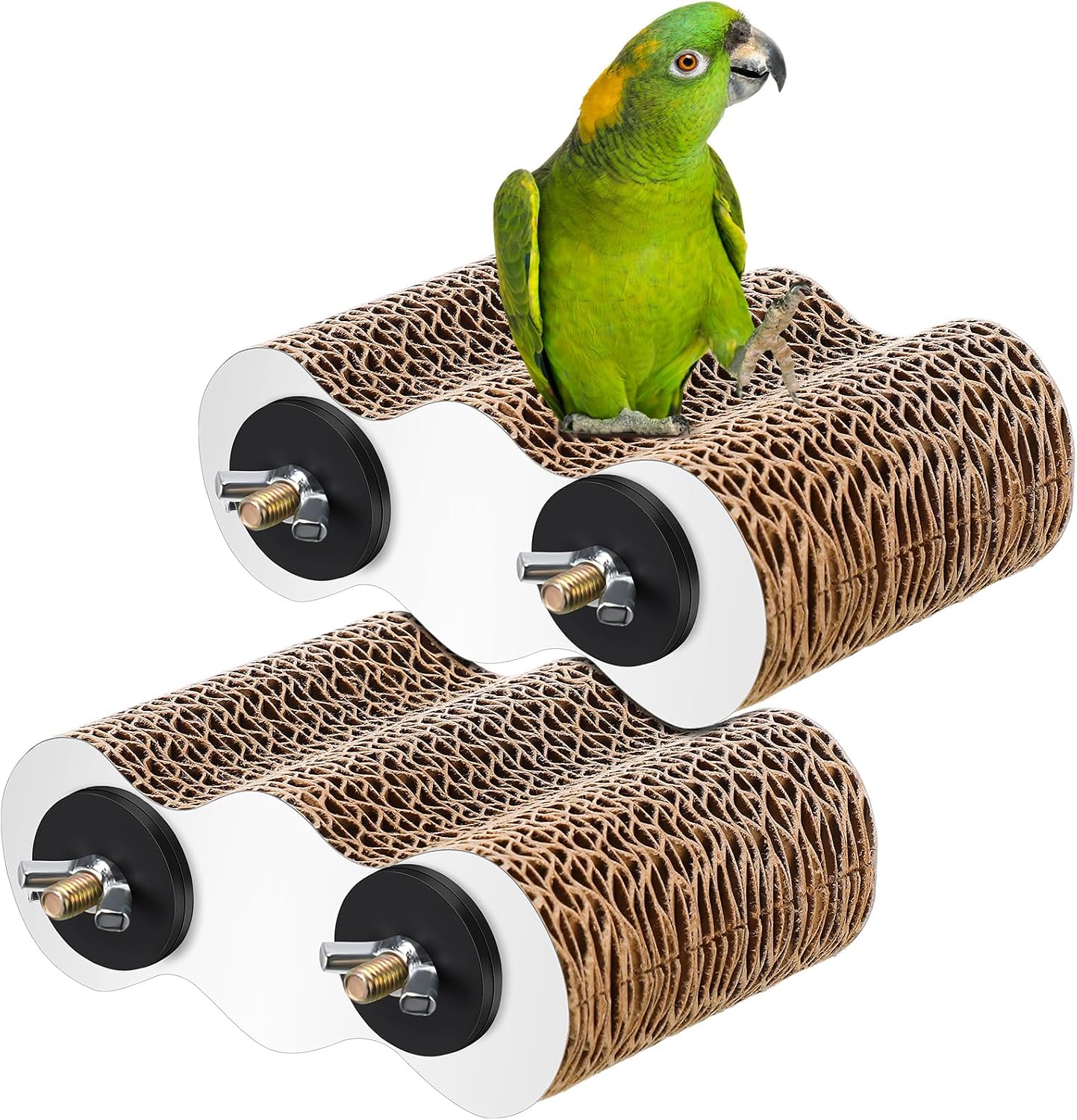 Croblissful 2 Pcs Bird Perch Platforms | Platform, sits flat | Corner shelf for food and chewing | Paper shreds land in the tray liner |
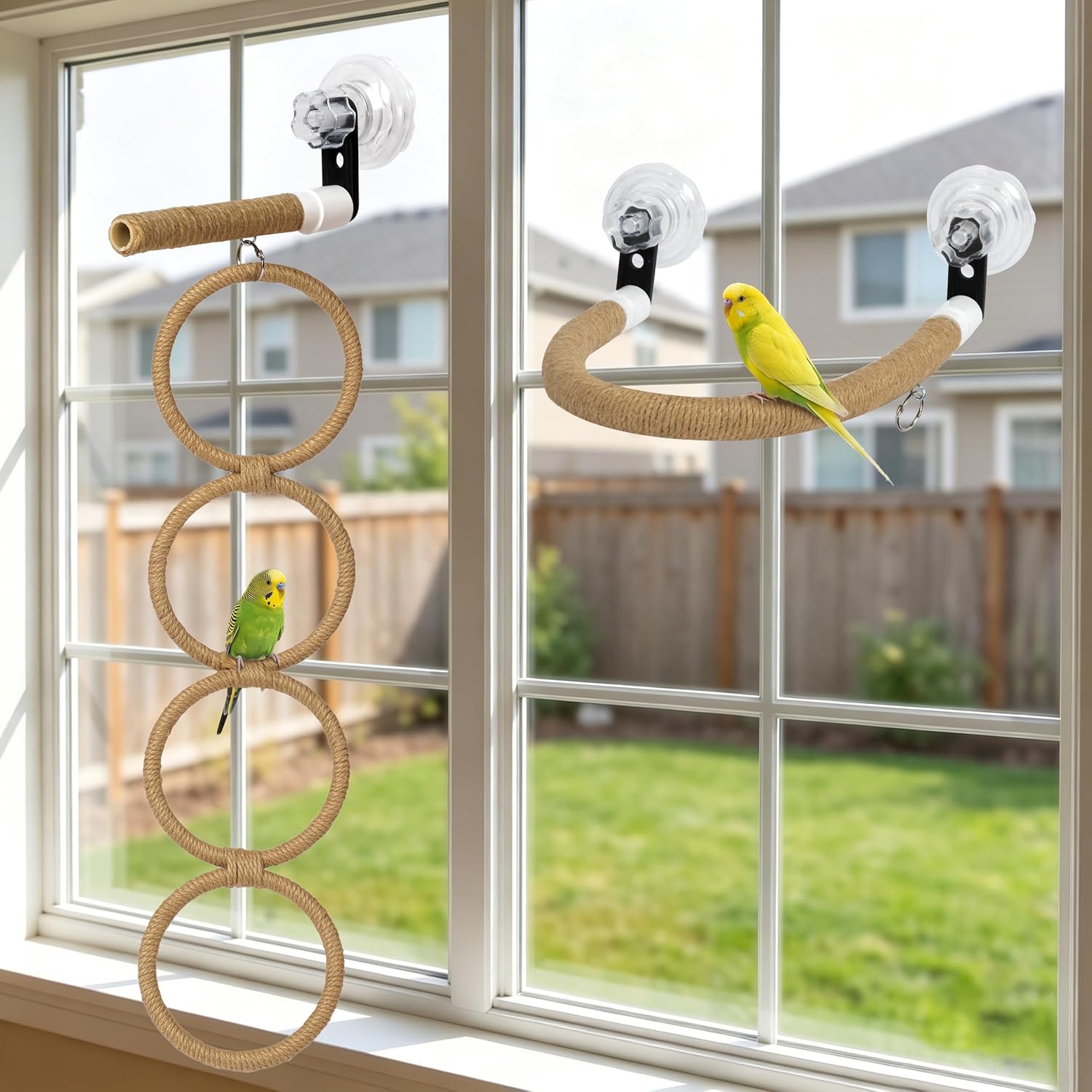 JelaDynore Natural Perch Bird Stand Pole with Suction Cup | Suction cup pole | Vertical corner space, travel | Single pole shape, one grip width |
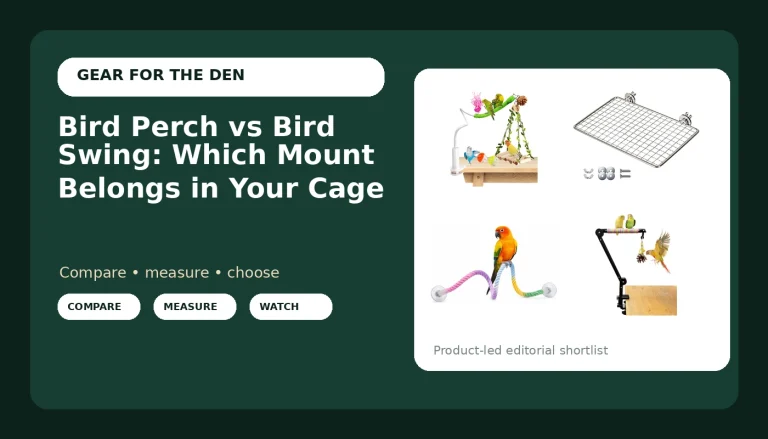
Croblissful 2 Pcs Bird Perch Platforms, Parrot Paper Chew Toy, Small
A platform is the answer when your bird eats standing up or refuses to step onto a thin branch. Flat surfaces give a bird somewhere to sit and shred rather than somewhere to balance, which makes them the better pick for a young bird, a clipped bird, or an older one with grip trouble.
The paper chew toy is the part that earns its place. Shredding paper is one of the cheapest forms of enrichment there is, and a platform puts the toy where the bird already wants to be, in the corner. Pair it with a foraging cup and the corner becomes the busiest part of the cage.
The cost is mess. Paper goes everywhere, and most of it ends up in the tray liner, which you will be changing more often. Platforms also take up room in a way a branch does not, so measure before you commit if your cage is small.
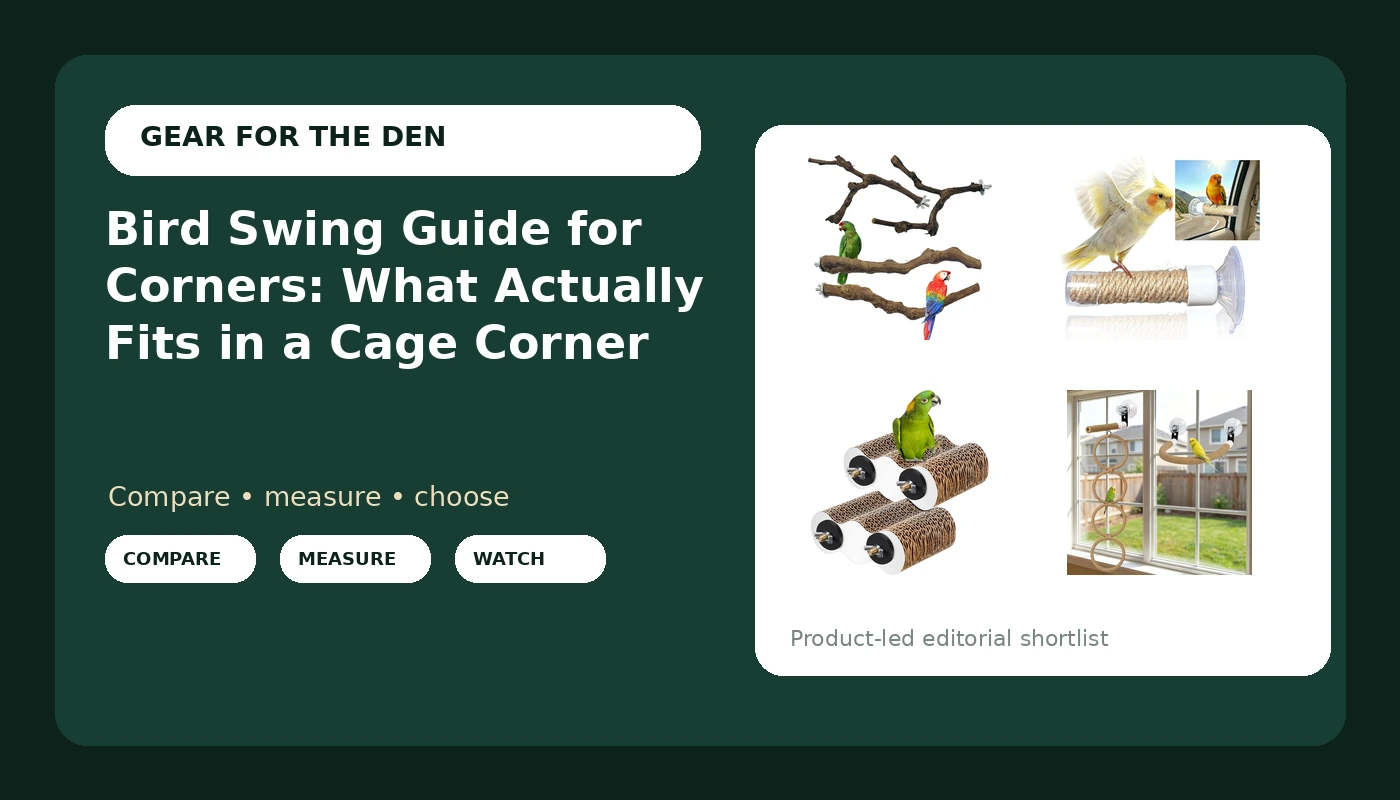
JelaDynore Natural Perch Bird Stand Pole with Suction Cup for Parrot Budgie
A pole is for the corner you cannot fill horizontally. When the door, the food cups, and the tray all want the same six inches, going vertical is the only move left, and a suction-mounted pole lets you put a perch above the traffic instead of through it.
It travels well too. A suction mount is the one perch type you can move from cage to window to car without tools, which makes it the easiest thing to pack. Check your carrier size before you mount it, because a pole that touches the carrier roof is a pole your bird will avoid for the whole trip.
The limitation is the shape. A pole is one grip width top to bottom, so it does not give the foot variation a natural branch does, and suction still needs glass or another smooth surface. If your cage is all bars, this is a window perch, not a cage perch.
Should you buy the Allazone 4PCS Bird Perch Natural Grape Stick Bird Standing Stick Grapevine?
Yes, if you have a corner and a bird that chews. Four natural pieces give you four chances to span the dead space diagonally, the diameter changes as the bird walks, and there is no suction cup waiting to fail. It is the perch I would buy first for a budgie or a cockatiel in a standard cage.
Be ready to work for it. You will mount these yourself, one piece will be too short or too thick for anything, and natural wood needs replacing once it has been chewed to splinters. None of that bothers me, because a perch a bird destroys is a perch a bird used.
Should you buy the Window Perch for Birds Suction Cup Bird Perch of Car Travel for Cockatiel?
Yes, if you have glass and a bird that stares out of it. It is the lowest-commitment corner perch on this list: press it on, watch for a week, and you will know whether your bird wants a corner at all. For travel, it is the simplest way to give a bird somewhere familiar to sit.
Skip it if your only mounting surface is powder-coated bars, and check it before you leave the room for the first few days. A suction cup is only as good as the surface under it, and a hot window is not a good surface.