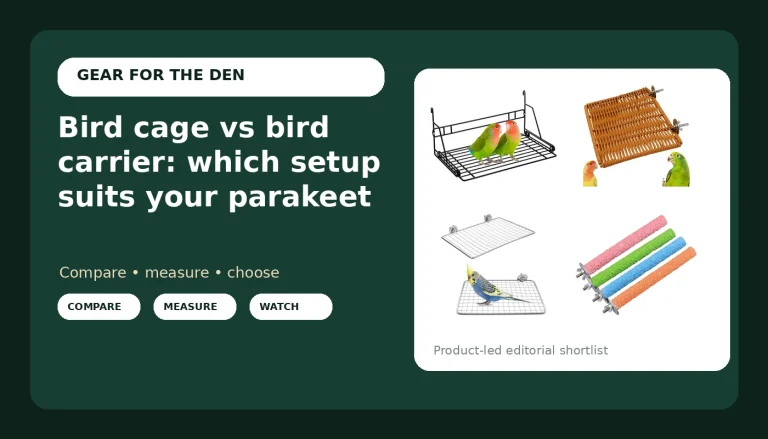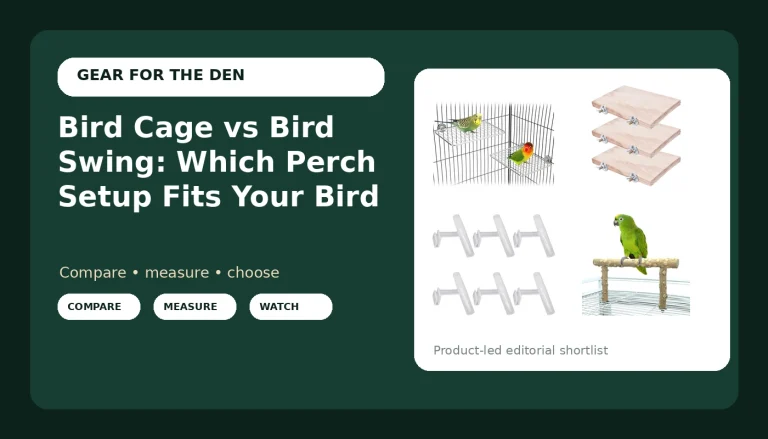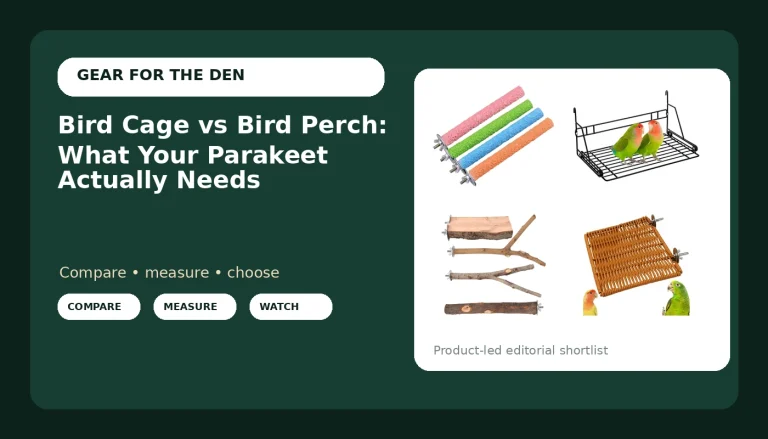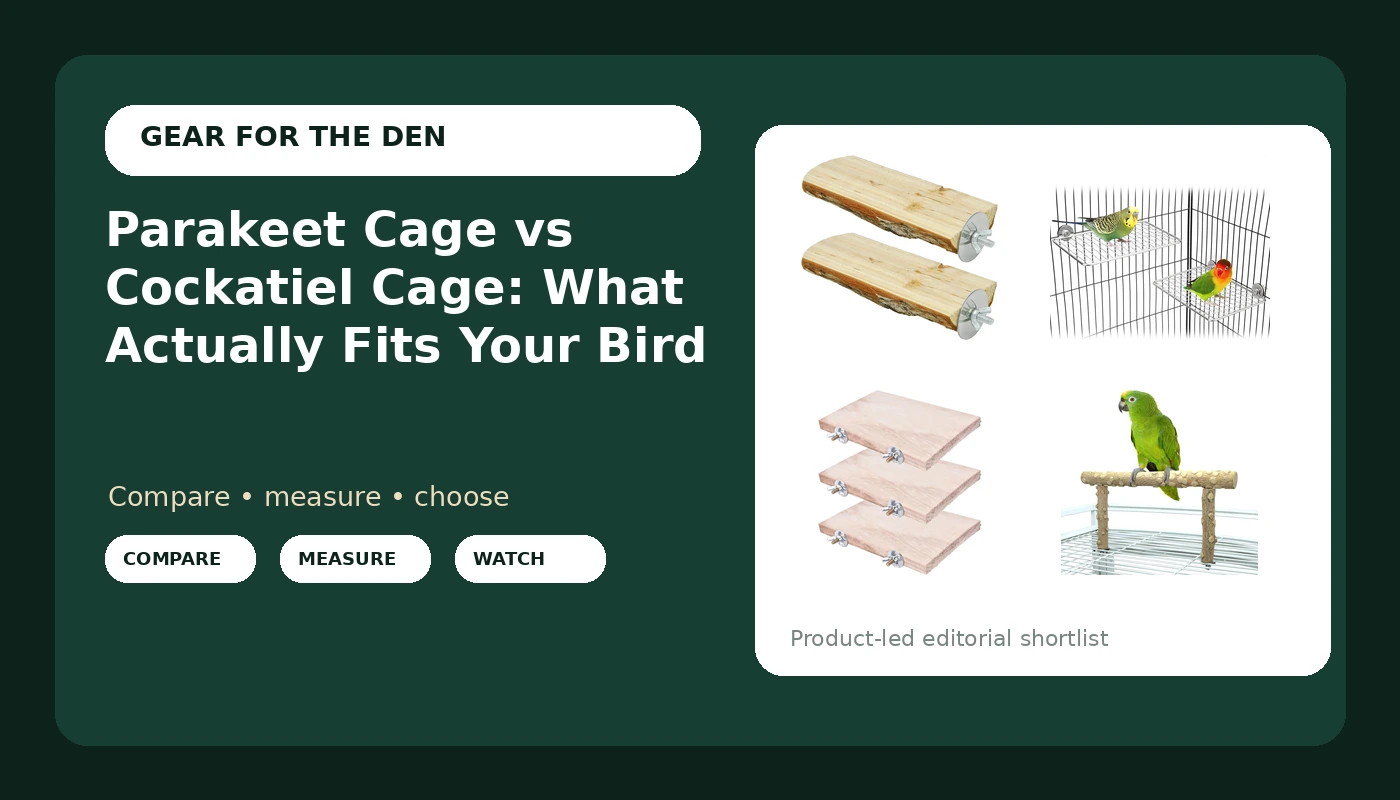
Most people ask me the parakeet cage vs cockatiel cage question after they have already bought the wrong cage, usually a tall narrow starter cage that a cockatiel cannot turn around in. The two birds sit close enough on a size chart that the cages look interchangeable on a product page, and far enough apart in wingspan, tail length, and foot size that the mismatch shows up as a restless bird within a week.
The best first cage for most people is a wide, low flight cage with half-inch bar spacing and a flat platform perch mounted high, because that layout gives a parakeet room to flit and still fits a cockatiel's body and tail. That is the short answer. The long answer runs through bar spacing measured in fractions of an inch, the perch diameter a cockatiel's foot actually wants, and why a flat stainless platform beats a dowel for both species. The four products below are the perch and platform options I would put inside either cage, and the table says which bird each one suits.
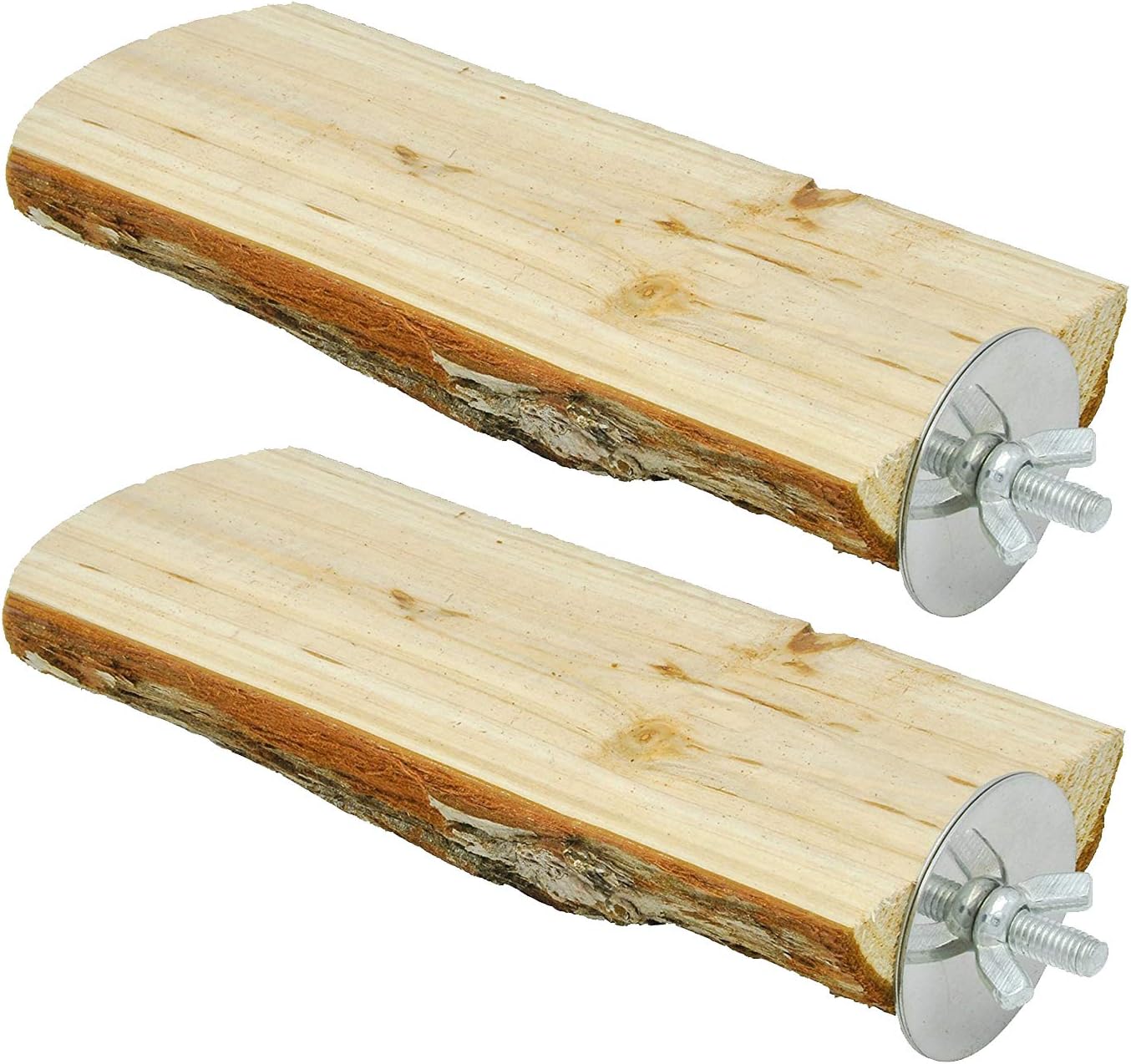
Niteangel Parrot Cage Perch, Wooden Platform for Birds (2 Packs)
Flat wooden platform lets a cockatiel stand without gripping a dowel, and the two-pack puts one high and one low in the same cage
Wood holds droppings and needs scraping, and a flat board adds no grip variation for a parakeet's feet
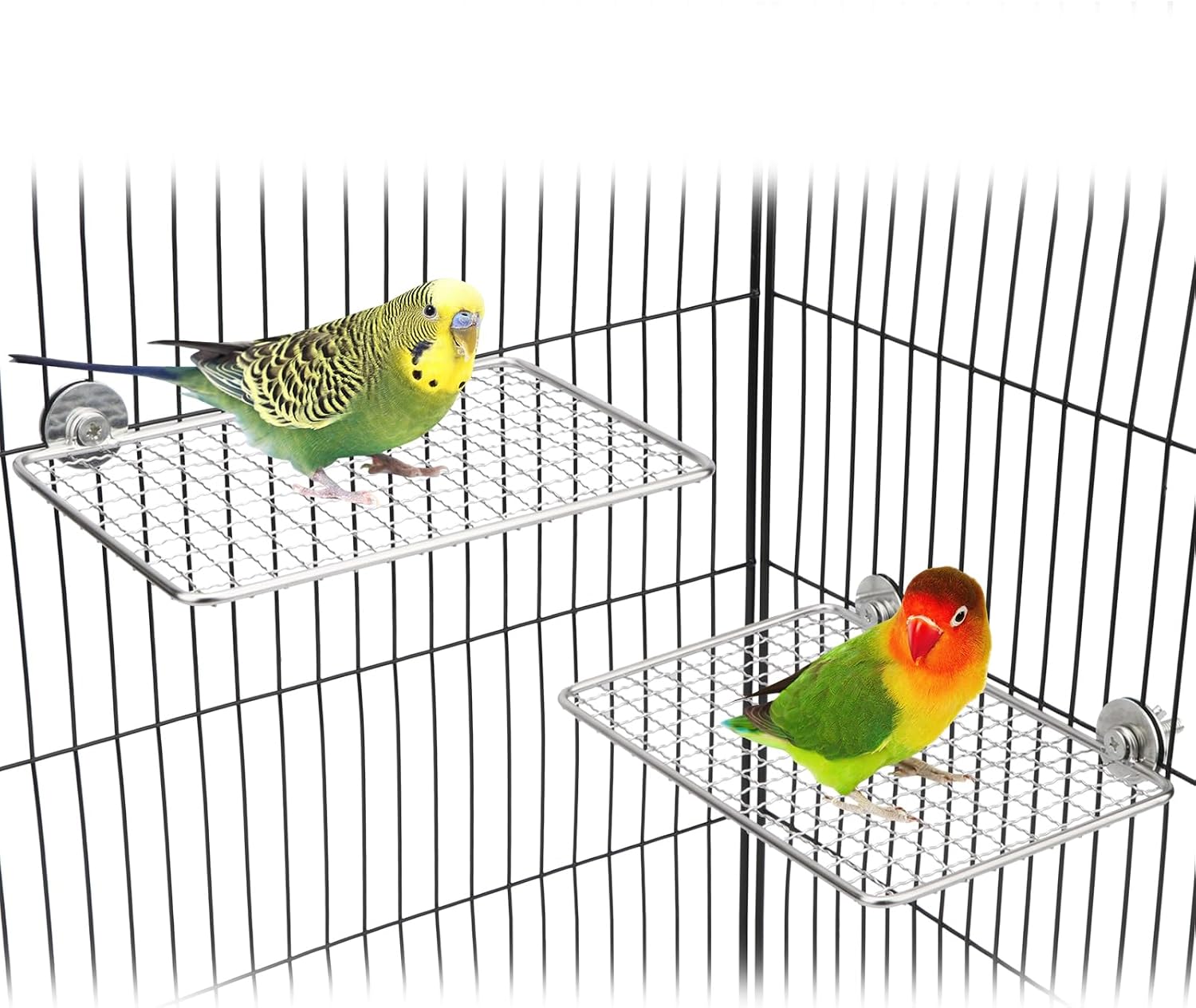
Hypeety Open-Grid Bird Perches for Cage Stainless Steel Flat Bird Platform
Open grid lets droppings fall through instead of crusting, and the flat surface doubles as a scatter-feeding spot
Metal is a resting surface, not a grip, so a bird that lives only on this gets no foot exercise
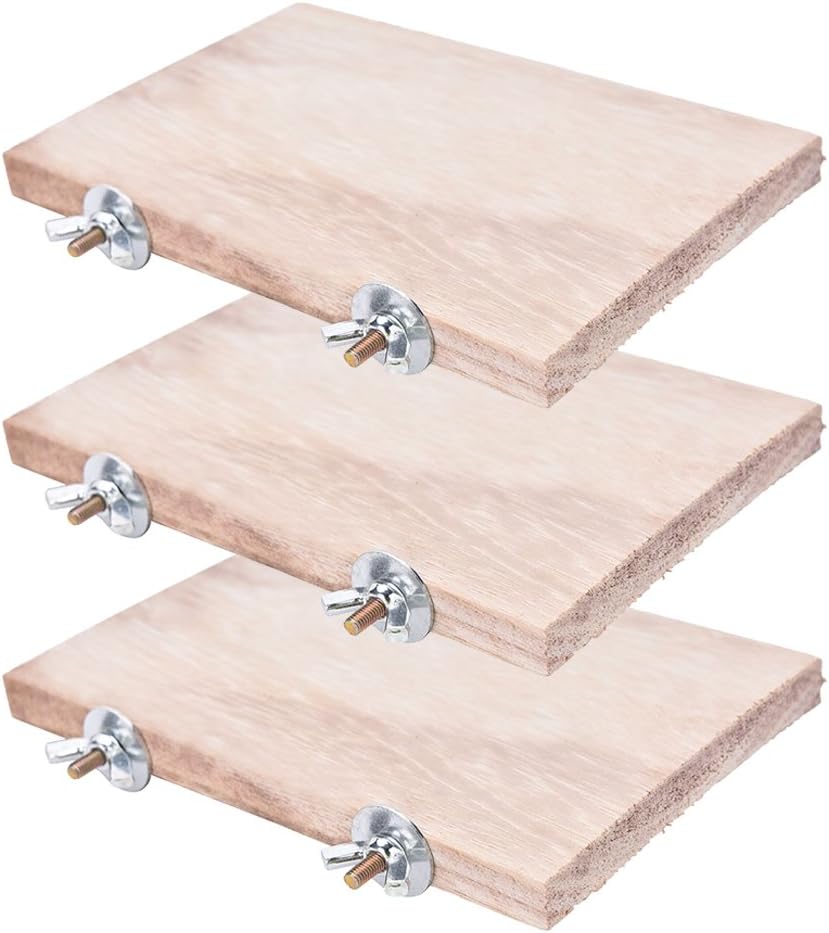
CoscosX 3Pcs Pet Parrot Bird Cage Perches Square Wooden Stand Platform Budgie Toys Bird Tree Perches for Parakeets
Three square stands in one order, the cheapest way to give a parakeet several levels to hop between
Uniform square pieces suit small budgie feet better than a cockatiel's, and three of them crowd a small cage
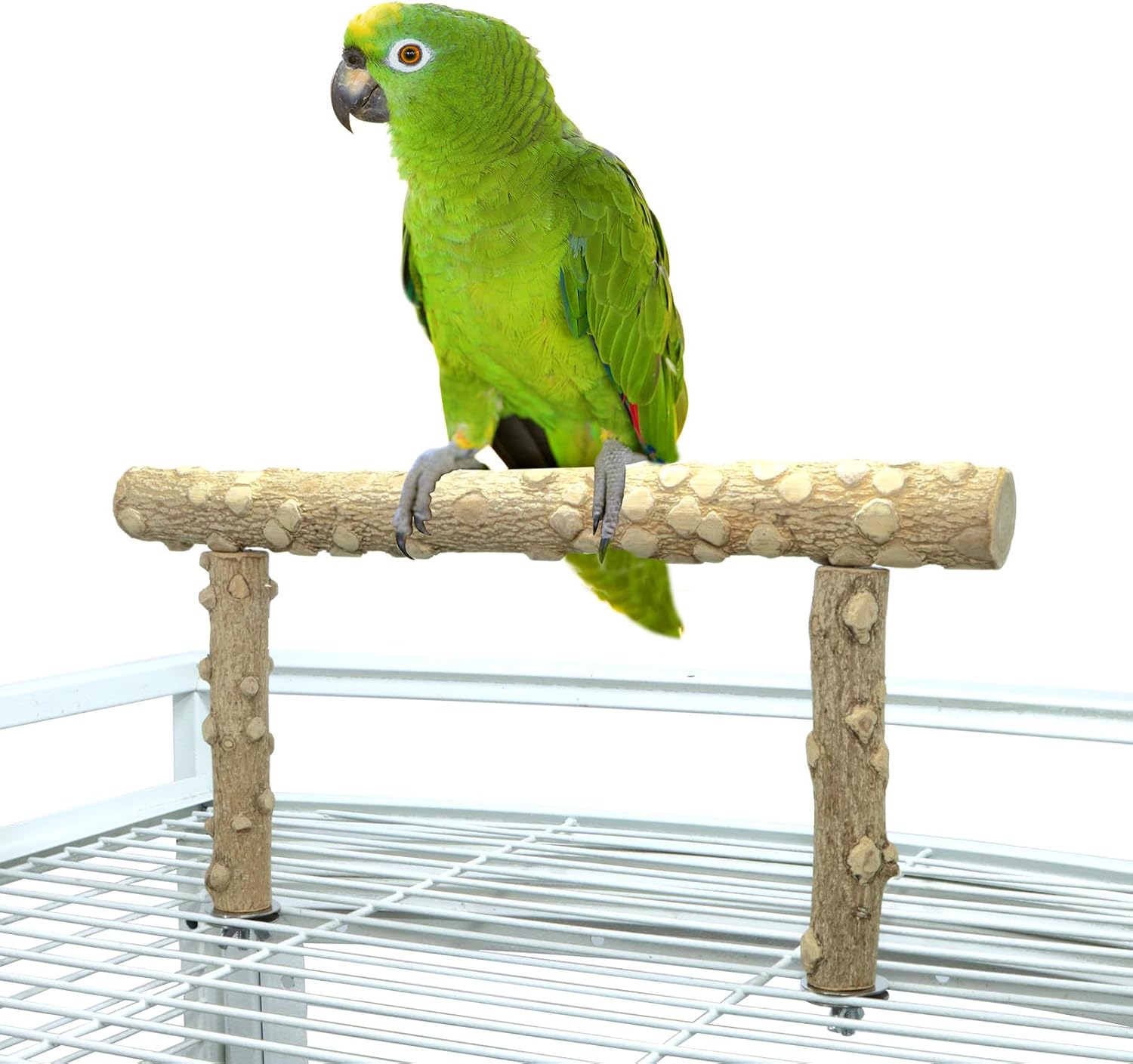
Bird Perch Stand,Natural Wood Cage Gym Toy Branch for Small Large Parrot
A natural branch shape offers a range of perch diameters in one piece, which is what feet want across both species
Irregular wood is harder to scrub, and the thickness varies enough that one bird may get a branch bigger than its grip likes
Prices and availability may change.
How I evaluate cage furniture for parakeets and cockatiels
Every perch and platform I put in a cage gets checked against the same list: the bar spacing it has to sit between or clamp onto, the cage height it is mounted at, the perch diameter or platform width it offers a foot, the food cup size a bird can reach from it, and how easy the surface is to clean underneath. Those checks take about ten minutes per item, and they catch nearly every piece of furniture that photographs well and fails in a real cage.
Bar spacing is the first filter. Half an inch is the common recommendation for both species, because it is narrow enough that a parakeet cannot squeeze through and wide enough that a cockatiel does not pinch toes on the way past. If a cage lists spacing wider than three quarters of an inch, it is a cockatiel cage that will not safely hold a budgie, and you should plan the household around that rather than hope.
Cage height matters less than most buyers think, and width matters more. A parakeet will use vertical space happily, hopping up and down the bars all day. A cockatiel is a horizontal flyer with a long tail, and a narrow tall cage gives it a climbing frame instead of a flight path. When I look at a cage for a cockatiel, the first number I check is the width across the front, not the total height.
The last item on the list is boring and decisive: the tray liner. If the tray does not slide out without lifting the cage or dismantling a perch, the cage will be cleaned less often than it should be, and no perch on this page fixes that.
What the parakeet cage vs cockatiel cage difference means for bar spacing and height
Strip the branding off a product page and the difference between parakeet cage and cockatiel cage dimensions comes down to two numbers: width and bar spacing. Everything else, the color, the seed guard, the little plastic toys in the box, is packaging.
A parakeet cage can be modest. The bird is small, it climbs, and it will happily use a cage that is taller than it is wide as long as the bar spacing is tight. A cockatiel cage needs to be wider, with more interior clearance under the perches so the tail does not drag through the tray liner every time the bird turns around. That single clearance issue is why so many people end up replacing a starter cage six months after bringing home a cockatiel.
I flip the cockatiel cage vs parakeet cage question around for taller birds. Instead of asking whether the cage is tall enough, I ask whether the bird can get from one end to the other without climbing. If the answer is no, the cage is the wrong shape, no matter what the listing says.
The furniture inside changes the usable space more than the shell does. A single platform mounted high can turn a cramped upper half into the part of the cage the bird actually lives in, and that is where the four products above earn their place.
Perch diameter and foot health
Perch diameter is the quietest problem in bird keeping. A dowel gives every foot the same grip every day, which means the same pressure on the same spot of the same foot, and that is how birds end up with sore feet and eventually a vet bill. A natural branch of uneven thickness spreads that pressure around.
For a parakeet, a thin branch and a narrow square stand are both fine, because the bird's grip is small and light. A cockatiel needs something thicker under it, and it needs variety more than it needs a specific measurement. Visit on Amazon for the natural wood branch perch, the one piece in this group that offers a range of diameters in a single item, so the bird picks where its feet land instead of gripping the same dowel forever.
The Niteangel platform does the opposite job. Visit on Amazon for the two-pack wooden platform, which is what I would mount near the top of a cockatiel cage so the bird has one flat, stable place to stand that is not a grip at all. Flat surfaces matter for older birds and for any bird that has already had a foot injury, and they also give you a spot to set a food cup the bird can reach without hanging upside down.
Wood has a cost, though: it holds droppings. Scrape it rather than soaking it, and expect the surface to discolor over time.
Flat platforms, foraging difficulty, and enrichment
Foraging difficulty is a dial, not a virtue. A bird that has to work for every seed stays busy. A bird that has to hang off a dowel to reach its food cup just eats less. A flat platform is how you lower the difficulty when you need to and raise it when the bird is bored.
The open-grid stainless platform in this group is the cleanest version of that idea. Visit on Amazon for the Hypeety open-grid bird perch, which lets droppings fall through instead of crusting on a wooden surface and gives you a flat, wipeable spot to scatter a few seeds on. Scattering is the trick: food on a flat surface is easy to see and easy to reach, and it still takes longer to collect than food sitting in a bowl.
The CoscosX three-piece set goes the other way, and it is aimed squarely at budgies. Visit on Amazon for the square wooden stands, which give a parakeet three levels to hop between in a cage that would otherwise be one dowel and a food cup. Three small square platforms crowd a cockatiel cage, and the uniform sizing does not give a bigger foot the variation it wants, so this is the parakeet-only pick of the group.
That is the real split. Parakeets want many small footholds at different heights. Cockatiels want fewer, wider, flatter surfaces with clearance underneath for the tail.
The non-negotiable: tray liner, swing mount, and carrier size
Three things in a cage setup are not negotiable, and none of them is the cage itself.
The tray liner has to come out without lifting the cage. If it does not, cleaning happens on a schedule set by how annoying it is rather than by how dirty the cage is, and a cage that gets cleaned less often is a cage where platforms grow a crust you have to chisel.
The swing mount has to be positioned so the swing does not sweep over the platform you just installed. A swing that passes through the space where a bird stands is worse than no swing, because the bird gets knocked off the one stable surface in the cage.
Carrier size is the third. Most cages do not work as carriers, and a cockatiel in a travel carrier is a different piece of gear from a parakeet in one. Whether you are outfitting a parakeet cage or cockatiel cage, budget for a separate carrier and check that its perch or floor is stable enough for a bird that is already stressed.
What the specs tell you before you buy
Product pages bury the numbers that matter. Dimensions get listed as a single height figure, bar spacing goes unmentioned, and the door size, which decides whether you can reach the back corner, is often not listed at all.
So read for three things. First, bar spacing in the title or the bullet list, in inches, stated plainly. Second, a width measurement separate from the height, because a cage sold as "24 inch" is often 24 inches tall and 16 wide. Third, the tray type, pull-out or lift-off. A listing that answers all three is usually written by someone who keeps birds. A listing that answers only the first is a starter cage, and starter cages ship with dowels.
None of that is about brand. It is about whether the cage will still be the right cage in two years, when the bird is fully grown and the novelty has worn off for both of you.
Should you buy the perch before the cage?
No. Buy the cage first, then buy the furniture, because the furniture has to fit the shell. The exception is a flat platform. Starter cages almost always ship with two smooth dowels and a plastic food cup, so a platform perch is the one accessory worth ordering in the same week as the cage, before the bird comes home.
If you are setting up a cockatiel cage, order two platforms: one high for standing and eating, one low for a bird that is nervous about the top of the cage. If you are setting up a parakeet cage, the three-piece wooden set plus one natural branch covers more of the cage than any single item here, and it costs less than the cage it goes in.
What I am looking at next
Two things are on my list. The first is whether a wide flight cage with half-inch spacing can be set up so a cockatiel and a parakeet share a room without sharing a cage. The birds are close enough in size that the same furniture suits both, which makes the cages the only real difference to plan around.
The second is the open-grid platform as a feeding station. A stainless grid that stays clean under a scattering of seed might replace the food cup entirely for a bird that throws half its bowl on the floor, and I want to see how the surface holds up to daily wiping before I recommend it that way. If it works, the parakeet cage vs cockatiel cage setup gets simpler for both species, because the same platform solves the same problem in either shell.