A dog that slides across the back seat on every turn is not just annoying. That scrabbling is a dog bracing against a surface it cannot grip, and it ends with a paw in the gap between the seats or a shoulder jammed against the door panel. If you want to stop a dog slipping in the car, the answer is not a bigger crate or a different vehicle. It is a harness, a short strap anchored to the headrest, and a seat surface the dog can actually hold.
I have driven with dogs who treated the back seat like a skateboard, and I have watched a small dog wedge himself into the footwell on a hard brake. Every one of those trips came down to the same three things: grip under the paws, the geometry of the strap, and something for the dog to do besides scramble.
The fix takes about ten minutes and no tools. The products below are the ones I would hand a friend, and the steps at the end are the order I do them in.
Why you should trust me
I write about pet gear for a living, and car travel is the category where the gap between the listing photo and the real back seat is widest. Every headrest restraint looks like a strap with a clip on the end. They are not the same thing. I have fitted these loops in sedans, SUVs, and one very cramped hatchback, and the lesson is always identical: the strap is the easy part, the seat under the dog is the hard part.
I will not quote crash test numbers I cannot verify, and I will not pretend a simple loop is a crash-tested harness. What I can tell you is which of these products earns its place, where each one falls short, and how to set it up so your dog stays planted instead of surfing the bench.
How I picked and how I tested
Three products made the cut, and I judged them on four things: how the strap anchors, how much adjustment range it gives you, what the clip attaches to, and whether the design survives a dog leaning hard into a turn.
I did not run anything through a crash sled, and I am not going to imply otherwise. The test that matters for this problem is fit, and I ran it the way you would. Loop over the headrest posts, clip onto a harness, then watch what happens when the dog sits, lies down, and leans into a corner. A restraint that lets the dog reach the front seat is a fail. A restraint that keeps the dog from lying down is also a fail, because a tired dog that cannot settle starts fighting the strap, and a dog fighting the strap is a dog that slips.
If you are planning longer trips, my guide to keeping a dog comfortable on long drives covers the stops and the water breaks. This article is about the sliding.
Gear that helps stop a dog slipping in the car
Two restraints and one distraction. The restraints do the holding. The distraction is what keeps the dog from fighting the restraint on mile three.
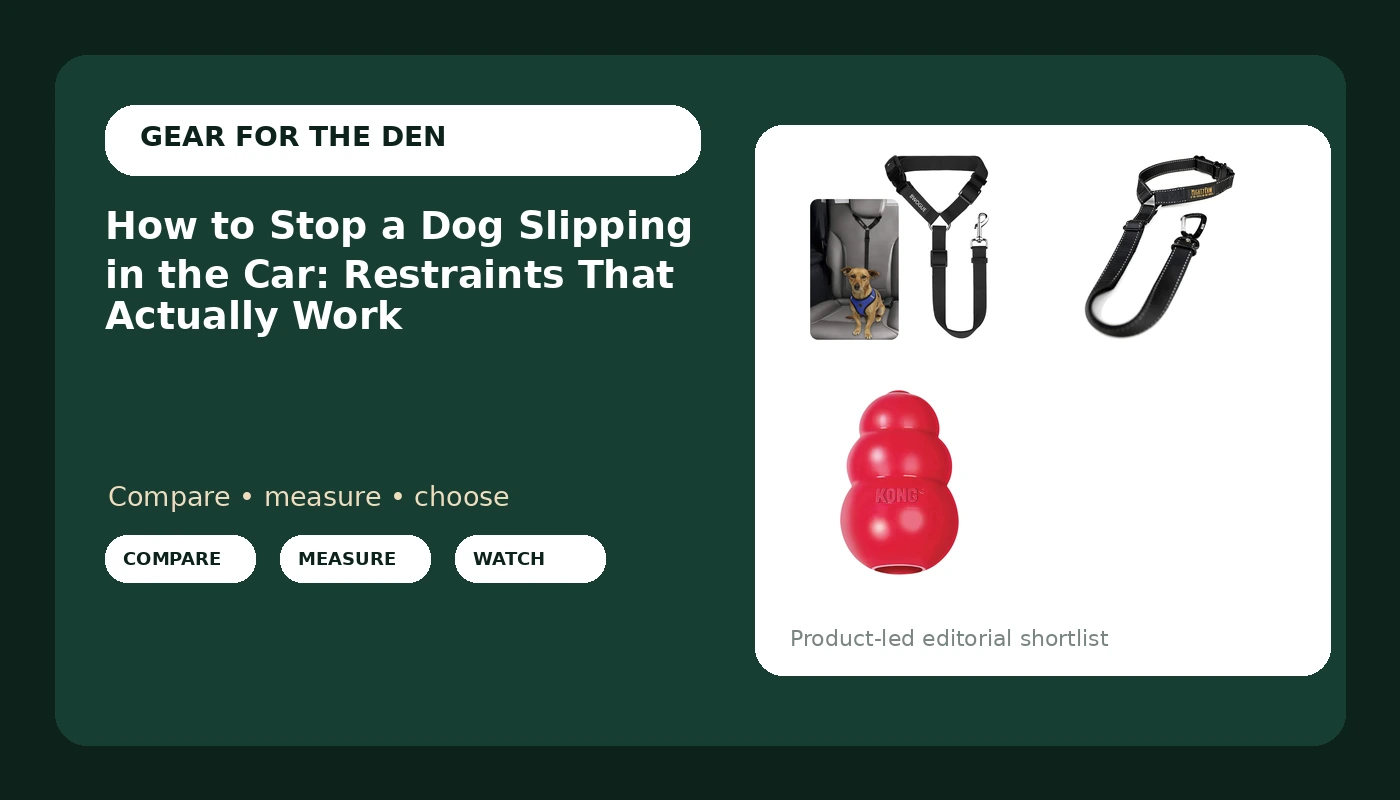
Budget pick: BWOGUE Dog Seat Belt for Car, Headrest Restraint Safety Lead, Dogs Cats
Budget pick
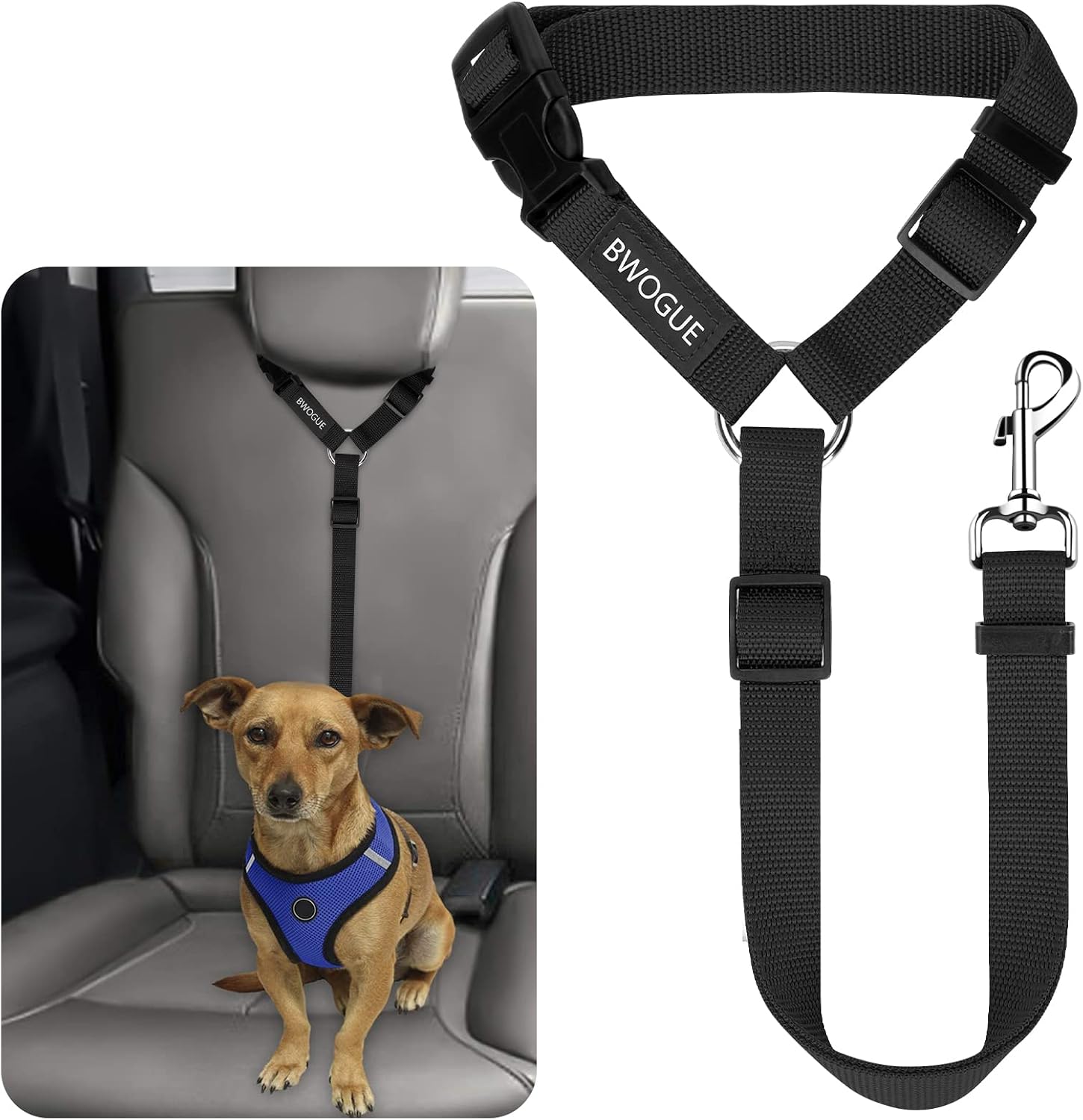
BWOGUE Dog Seat Belt for Car, Headrest Restraint Safety Lead, Dogs Cats
This is the simplest version of the idea: a strap that loops over the headrest posts and a clip that snaps onto the dog's harness. Nothing to install, nothing to thread through a seat buckle, and nothing to rattle loose in the seat cushion. That simplicity is the whole appeal for a small dog, or for a cat riding in a carrier beside the dog.
The trade-off is the one every budget loop makes. The hardware is light, so treat it as a tether rather than a crash structure. It keeps your dog from sliding across the seat and from climbing into your lap, which is the job. It does not replace a crash-tested harness, and I would not ask it to hold a large dog through a highway emergency.
Flaws but not dealbreakers: Light hardware and a short adjustment range. If your headrest posts sit far apart, or your dog is at the top of the size range, measure before you order.
Best for small and medium dogs, cats in a carrier, and anyone who wants a spare strap to leave in the glovebox.
Our pick: Mighty Paw Dog Seat Belt for Car Headrest, for Small, Medium & Large Dogs
Our pick
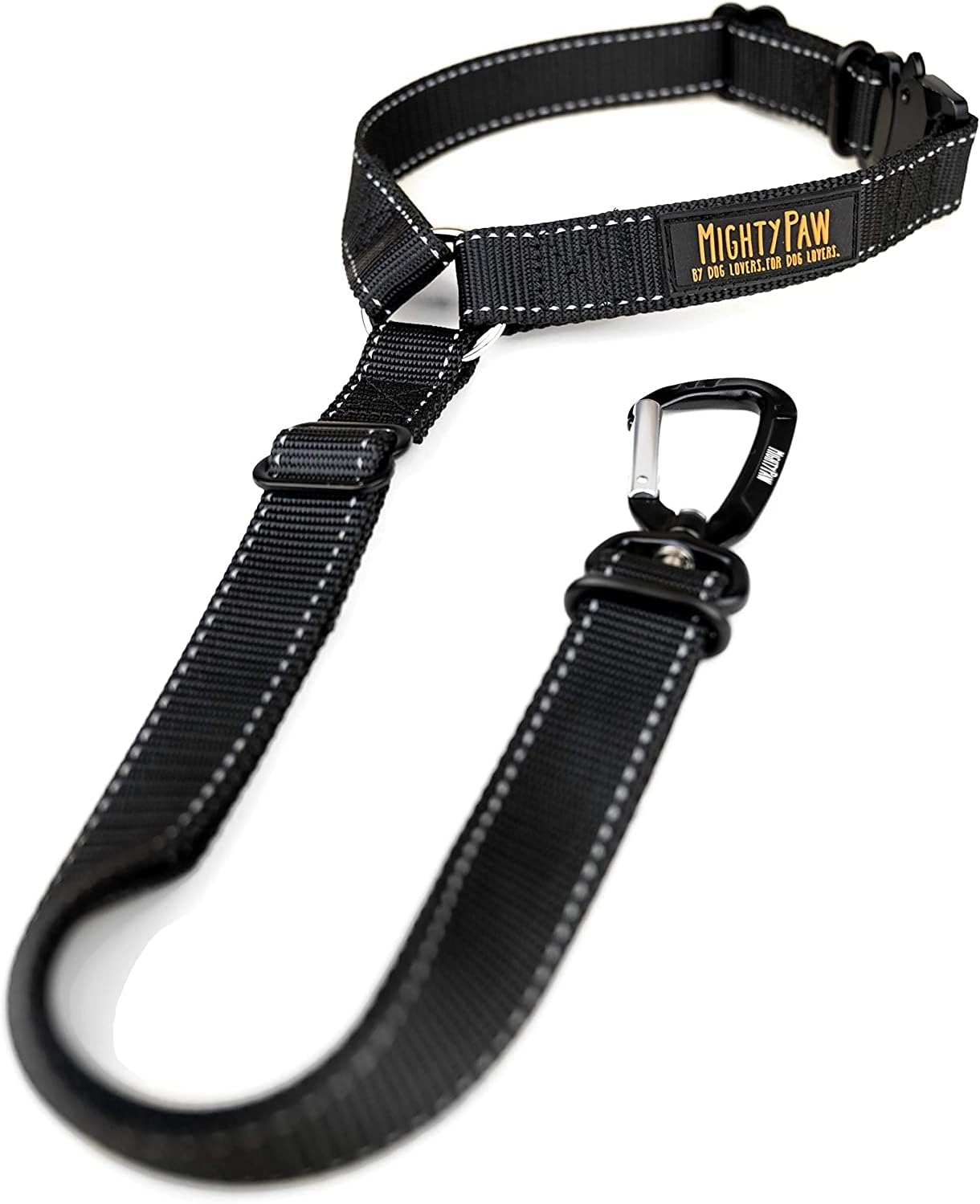
Mighty Paw Dog Seat Belt for Car Headrest, for Small, Medium & Large Dogs
The Mighty Paw is the one I reach for first. It is built for the full size range, which matters more than people expect, because a strap that is right for a beagle is not right for a lab. The headrest loop sits flat against the seat back instead of bunching, and the length gives you room to set the dog up so they can sit and lie down without being able to stand and turn.
Check current Amazon price, and check the weight limit in the listing against your dog. A strap rated for a small dog and used on a big one is where these things fail, and it fails quietly until the day it does not.
Flaws but not dealbreakers: It is still a tether, not a crash-tested harness. No headrest loop is. If you want the maximum protection money can buy, you are shopping in a different category and reading a different article.
Best for medium and large dogs, and for anyone who wants one strap that will still fit when the puppy grows.
The distraction that keeps the strap on
A restrained dog with nothing to do will chew the strap, brace against it, and slip sideways anyway. A stuffed toy is not a safety device, but it is the difference between a dog that settles and a dog that fights the belt for four hours.
Also worth packing: KONG Classic Stuffable Dog Toy, Natural Rubber Chew, for Large Dogs
Also worth packing
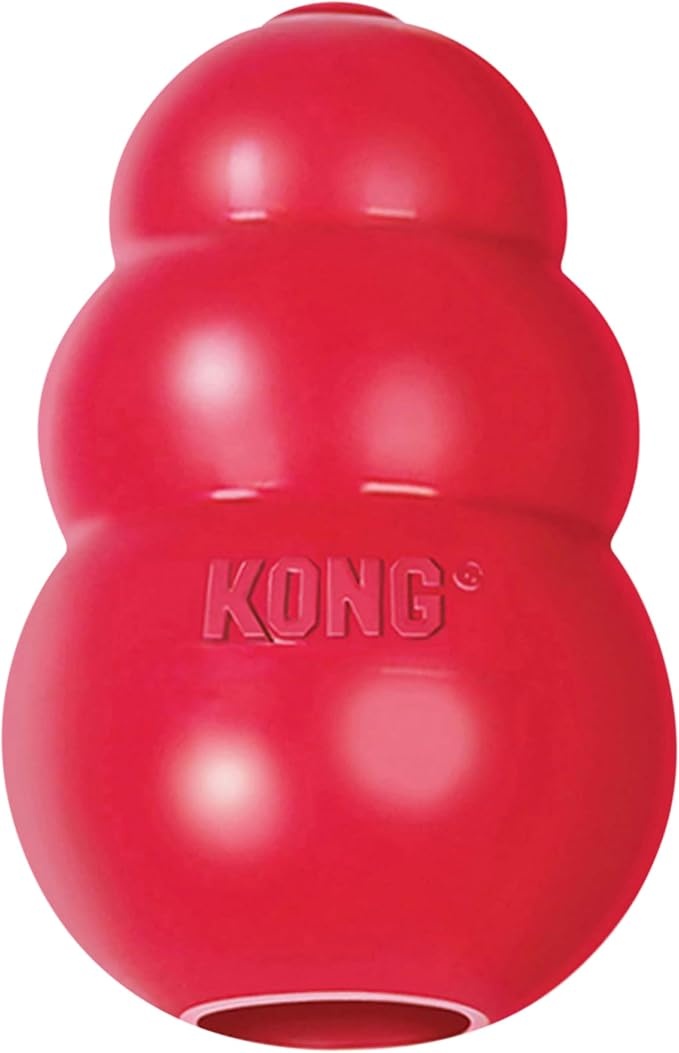
KONG Classic Stuffable Dog Toy, Natural Rubber Chew, for Large Dogs
The KONG is the car toy I recommend because it is quiet, it does not roll under the brake pedal, and it gives a dog a reason to lie down. Stuff it, freeze it the night before a long drive, and hand it over once the strap is clipped. A dog working on a frozen KONG is not standing up and pacing, and a dog that stays down is a dog that is not slipping.
Check current Amazon price. Size it to your dog, because a toy that is too small is a choking risk, not a distraction.
Flaws but not dealbreakers: It is a chew toy, not a restraint. It buys you a calm hour, not a safety system, and it is messy, so keep a towel in the car.
The actual fitting workflow
Here is how to stop a dog slipping in the car, in the order that works. Do it in the driveway before you leave.
Step one: Harness, not collar. Never clip a seat belt strap to a collar. A dog that lunges to the end of a collar tether is taking that force on the throat. Fit a harness that sits snug across the chest, then clip the strap to the harness ring.
Step two: Anchor the loop to the headrest. Take the back headrest off if you can, or lift it, and thread the loop over both posts so it sits behind the headrest. Pull it tight so it cannot slide sideways along the posts. If the loop can shift, the strap shifts with it, and the dog ends up angled toward one door.
Step three: Set the length. Clip the strap to the harness and let the dog move. They should be able to sit, lie down, and turn around, and they should not be able to reach the front seats, the window switches, or the door handle. This is the step where the fastest way to stop a dog slipping in the car gets decided, because a strap that is too long lets the dog stand up and lose their footing on every turn.
Step four: Fix the surface under the paws. Leather and vinyl are the reason your dog slips in the first place. A fitted seat cover with a non-slip backing, or a hammock that anchors over the headrest posts and the front seat backs, gives the dog something to grip. Tighten every hammock anchor point, because a hammock that sags into the footwell is worse than a bare seat. For a small dog, a booster raises the dog so the strap sits at chest height instead of pulling down on the shoulders, and booster height is worth checking against the dog's standing height before you buy.
Step five: Close the gap between the seats. The space between the front seats and the back bench is where legs go through and where a scrambling dog gets stuck. Push the front seats back, or fill the gap, so the dog has a flat floor to stand on instead of a hole to fall into.
Step six: Sort the air. A hot dog is a restless dog, and a restless dog is a slipping dog. Crack the rear windows or run the vents to the back, and never leave a dog in a parked car on a warm day. Ventilation matters more than people think on a long summer drive, because no strap can stop a dog slipping in the car if the dog is panting and thrashing to get comfortable.
Step seven: Do a ten minute test drive. Loop around the block with someone in the back if you can, and watch the strap. Check whether the dog can reach the front seat, whether the strap is twisting, and whether the loop has moved on the headrest. Adjust, then drive again. This is how to prevent a dog slipping in the car without guessing, because you find the problem on a quiet street instead of on the interstate.
Step eight: Build the routine for longer trips. Recheck the loop and the clip every time you stop. Water in a collapsible bowl at the break, a frozen KONG for the next stretch, and a walk before you get back in. If your trip ends at an airport, the same logic applies inside a carrier: match the carrier dimensions to the airline's cabin size, respect the weight limit with the dog inside, and pick a carrier with mesh ventilation on at least two sides. And if you want to prevent a dog slipping in the car on a drive that lasts all day, plan your stops every two to three hours so the dog gets out, moves, and resets.
The competition and why it lost
Plenty of gear solves a version of this problem, and most of it is not what this article is about.
A crash-tested harness paired with a loop-through seat belt is the gold standard. If you drive long distances on fast roads, that is the setup to research. It costs more, it takes longer to put on, and it is a different purchase for a different day.
A crate or a wire barrier is the other common answer. A crate is the safest option for some dogs, and it is what I would use in a wagon or an SUV with a flat cargo floor. In a sedan with a bench seat it takes the whole back seat and leaves no room for a passenger, which is why it does not fit this guide.
A seat divider stops the dog from climbing into the front, and that is all it does. The dog still slides on the leather behind it. Same story with a cargo barrier, which is about containment, not grip.
A booster seat is a good answer for a small dog and a bad answer for a lab. A backpack frame carrier is a great way to hike with a small dog and a terrible way to travel in a car, because the dog is strapped to your body rather than to the vehicle.
The two straps above and the KONG are the small, cheap, immediate fix. That is the job this article is doing.
What this all costs
Check current Amazon price on both restraints and on the KONG, and you will find this is one of the cheapest fixes in pet gear. The Mighty Paw and the BWOGUE sit in the same band, so the decision is not really about money. It is about which strap fits your headrest posts and your dog.
The rest of the setup is free or nearly free. A seat cover you already own, a front seat pushed back, a cracked window, and a towel on the bench.
The cost that is not on the receipt is the one you avoid. A dog that slips and scrambles is a dog that can tweak a knee, catch a paw in the seat gap, or land in your lap while you are merging. Ten minutes in the driveway is the cheapest part of the whole thing.
Do it once, leave the strap clipped to the harness in the car, and the back seat stops being a skateboard.