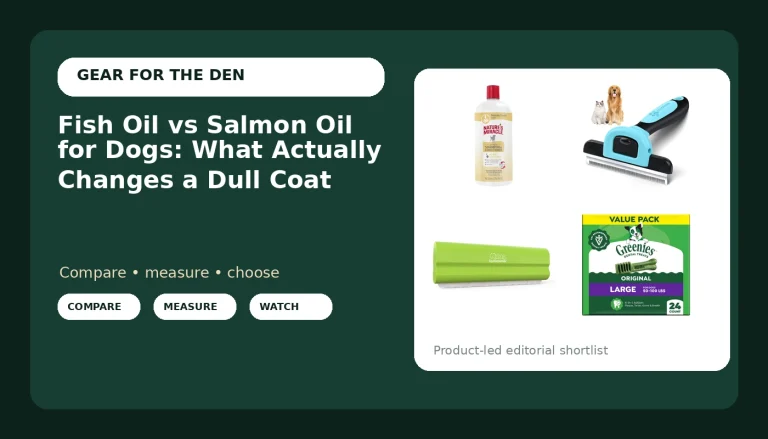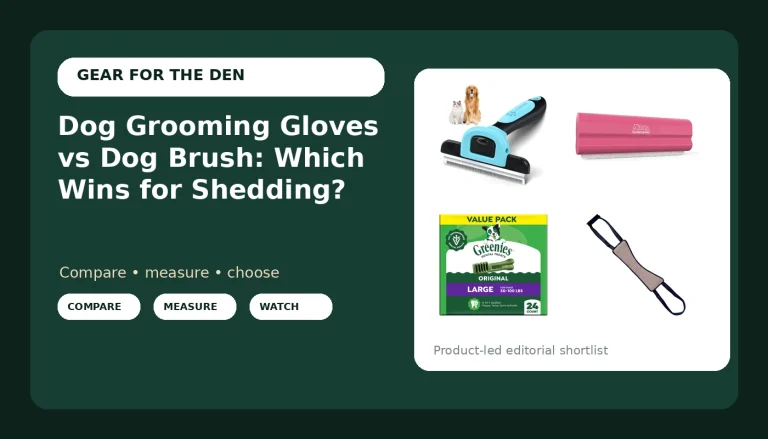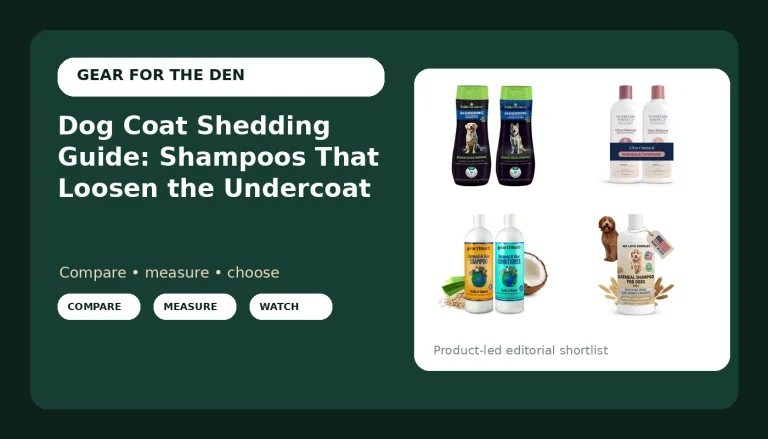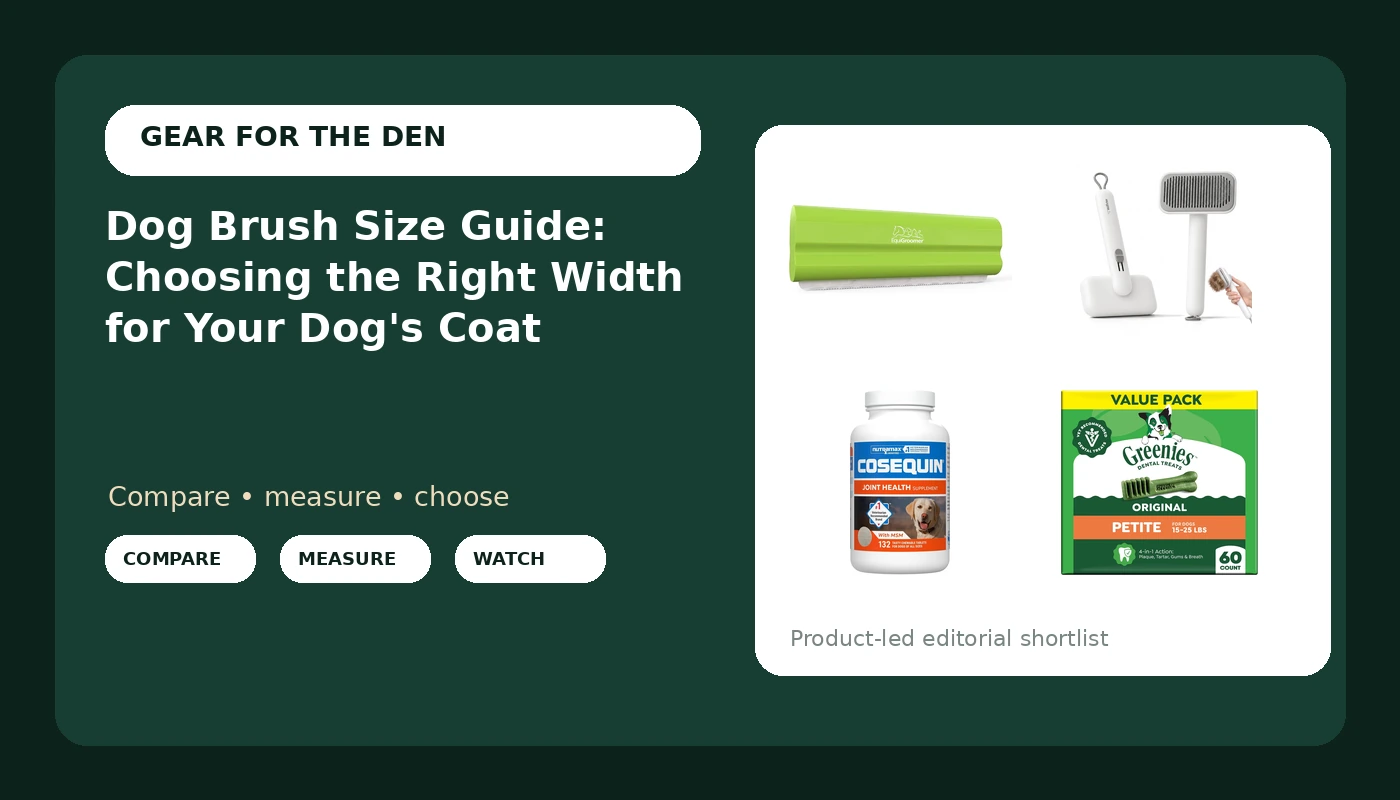
A dog brush size guide is not really about inches. It is about matching the working surface of the tool to the coat it has to move through, and getting that wrong is why so many brushes end up forgotten in a drawer beside a chewed leash. A two-inch slicker head on a seventy-pound husky means twenty passes per square foot and a dog that has decided grooming is a wrestling match. A five-inch undercoat blade on a six-pound Yorkie is worse, because the tool is nearly as wide as the dog's flank and every stroke lands on skin.
I keep two brushes in this guide for a reason. One is a blade-style tool built to pull dead undercoat out of a double coat, and the other is a self-cleaning slicker that handles the everyday job on medium and short coats. Everything below is about choosing between them, and about the grooming routine that keeps a coat healthy between sessions.
Best Overall: EquiGroomer 5-Inch Undercoat Deshedding Brush for Dogs & Cats, Lime
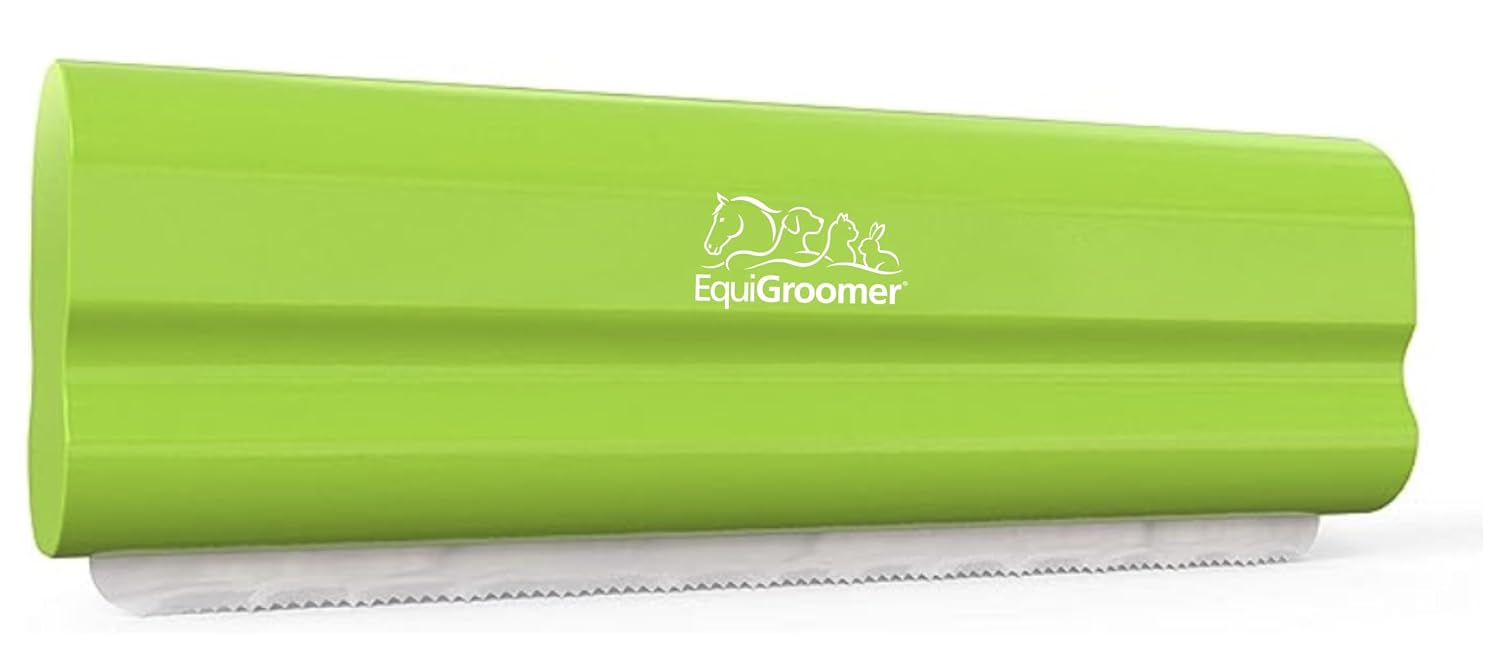
The EquiGroomer is the tool I reach for when a double coat is in full blowout and the slicker is only skimming the surface. The blade edge sits flat against the coat and lifts the dead undercoat out in soft, grey clouds instead of dragging it across the skin, and the five-inch width means you are not making fifty short strokes to cover one flank. It is sized for medium and large dogs, and the listing also pitches it at cats, which is fair: the same light-pressure technique works on a long-haired cat that hates a slicker.
The trick with a blade-style tool is pressure. Let the edge do the work and move in slow, overlapping lines down the back, along the ribs, and over the hindquarters. If you find yourself pressing to get hair up, the coat is either matted or damp, and neither is a blade job. Work on a dry coat, and stop when the tool starts coming up empty.
It is not the brush for a curly single coat, and it is not the brush for a toy breed. It is also not a detangler. If the coat has already packed into mats, this tool will slide over them rather than through them, and a mat is a job for a comb and patience, not a wider head.
Best Value: Wolfster Dog Brush for Shedding, Self Cleaning Slicker Brush, White
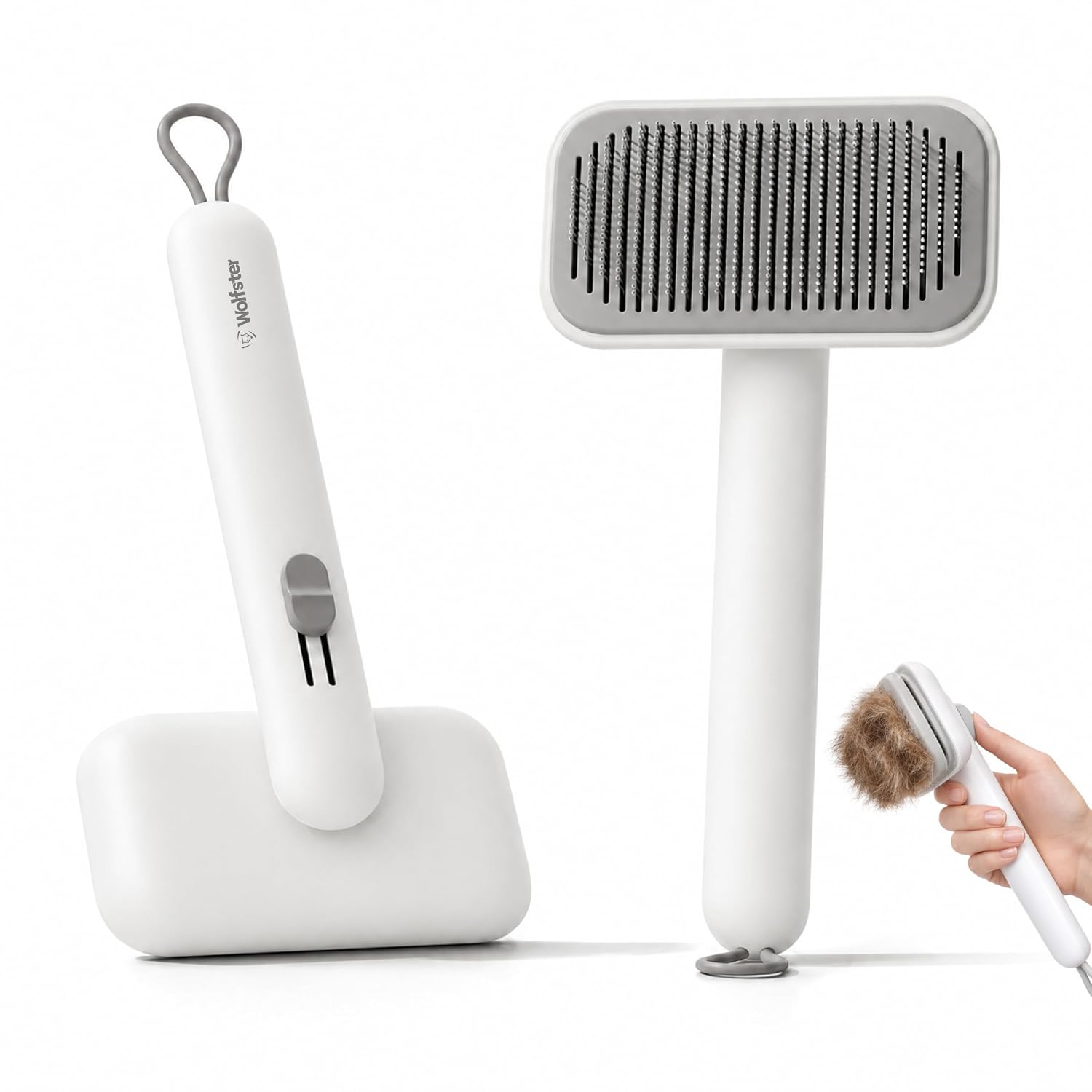
If you only buy one brush and your dog is a short or medium coat, this is the one. The pin head gets down to the loose hair without scratching, and the self-cleaning mechanism retracts the pins so the collected fur drops off in one piece. That sounds like a small thing until you have spent ten minutes picking hair out of a slicker with your fingers while the dog walks away.
The self-cleaning click is the feature that keeps this brush in rotation. A brush that clears in two seconds gets used weekly. A brush that needs a comb run through its pins after every pass gets used twice and then lives in a cupboard.
Pin depth is the thing to watch here. A slicker works when the pins reach the undercoat, and on a thin-skinned or older dog you want a light hand and short sessions rather than deep pressure. Two or three minutes, a break, then another pass if the coat still has loose hair coming up. This is also the better choice for a puppy's first grooming sessions, because the pin head is forgiving and the dog learns that the brush is not a threat.
How I tested
Every brush here gets judged on the same four points, because a brush that fails any one of them is a brush you will quietly stop using.
Reach is first. Does the head actually get to the undercoat, or does it skate across the top layer of guard hair? One slow pass tells you most of what you need to know. If the tool comes away nearly empty on a dog that is actively shedding, the head is not reaching the layer that matters, no matter what the packaging claims.
Pressure is second. A well-matched brush works with a light hand. If you have to lean into the stroke to get hair up, the problem is the tool, not your technique, and pressing harder on a pin brush is how you end up with brush burn along the spine.
Coverage is third, and this is where dog brush size stops being a marketing line and turns into arithmetic. A wider working surface means fewer strokes per session, which matters on a big dog and matters more on a dog that tolerates about four minutes of handling. The same width that saves you time on a shepherd is a liability on a small breed, because you cannot work the tool around legs, tail, and face without catching skin.
Cleanup is fourth. Self-cleaning slickers win this one outright. A brush you can empty with one click gets used more often than a brush that needs to be picked clean, and frequency beats intensity with shedding every time.
The last check is the dog. A brush that the dog leans into is the right brush. A brush that makes the dog stiffen, tuck its tail, or try to leave is the wrong size, the wrong style, or being used too hard.
Analysis and test results
The pattern that holds across every coat type is that width and style are separate decisions, and most buyers only think about one of them. Style decides whether the tool reaches the undercoat. Width decides how much coat you can cover before the dog loses patience.
A blade-style deshedding tool covers the most ground per stroke, and on a dense double coat that is a real advantage. The five-inch working edge on the EquiGroomer suits dogs roughly from the twenty-five pound range upward, where a full flank is wider than the tool. Go much smaller than that and the blade spends half its time over the belly and legs, which are areas you should be going through lightly anyway.
A slicker is the more universal shape. The Wolfster's pin head suits short, medium, and most long single coats, and the self-cleaning function is the reason it earns a spot even in homes that already own a blade. Slickers are also the better choice for the legs, the chest, and the tail, where a wide blade is clumsy.
Coat type matters more than weight in the end. A forty-pound dog with a short single coat needs a slicker and nothing else. A twenty-pound dog with a dense double coat needs both a slicker for the surface and a blade for the undercoat underneath. The correct dog brush size for the first dog is smaller than the ideal dog brush size for the second, even though the second dog weighs less.
What I would avoid is buying width as a shortcut. A very wide head on a small or thin-skinned dog does not cover more coat, it covers the same patch of skin repeatedly. If you are unsure, buy the slicker first and add a blade later once you know how much undercoat your dog is actually carrying.
Dog brush size chart by coat type and dog weight
This is the chart I would want taped inside a grooming cupboard. Widths are working surfaces, not handle lengths, and every row assumes a dry coat and a light hand. Start at the smaller end of the range for a puppy, a senior, or a dog with thin skin.
| Dog and coat type | Brush style | Working width | Notes |
|---|---|---|---|
| Toy breeds under 15 lb, short coat | Soft slicker or rubber curry | 2 to 3 inches | Light pressure, short sessions |
| Toy breeds under 15 lb, double coat | Small slicker plus fine undercoat rake | 2 to 3 inches | Skip wide blades entirely |
| 15 to 40 lb, short single coat | Slicker | 3 to 4 inches | Once a week is enough |
| 15 to 40 lb, double coat | Slicker plus deshedding blade | 4 to 5 inches | Two passes, then stop |
| 40 to 80 lb, double coat | Full-size slicker | 4 to 5 inches | Wolfster Dog Brush for Shedding, Self Cleaning Slicker Brush, White |
| Over 80 lb, dense double coat | Wide undercoat blade | 5 inches and up | EquiGroomer 5-Inch Undercoat Deshedding Brush for Dogs & Cats, Lime |
| Any size, long or curly single coat | Long-pin slicker or metal comb | 3 to 4 inches | Line brush, never yank |
| Coat support, not a brush | Chewable joint supplement | n/a | 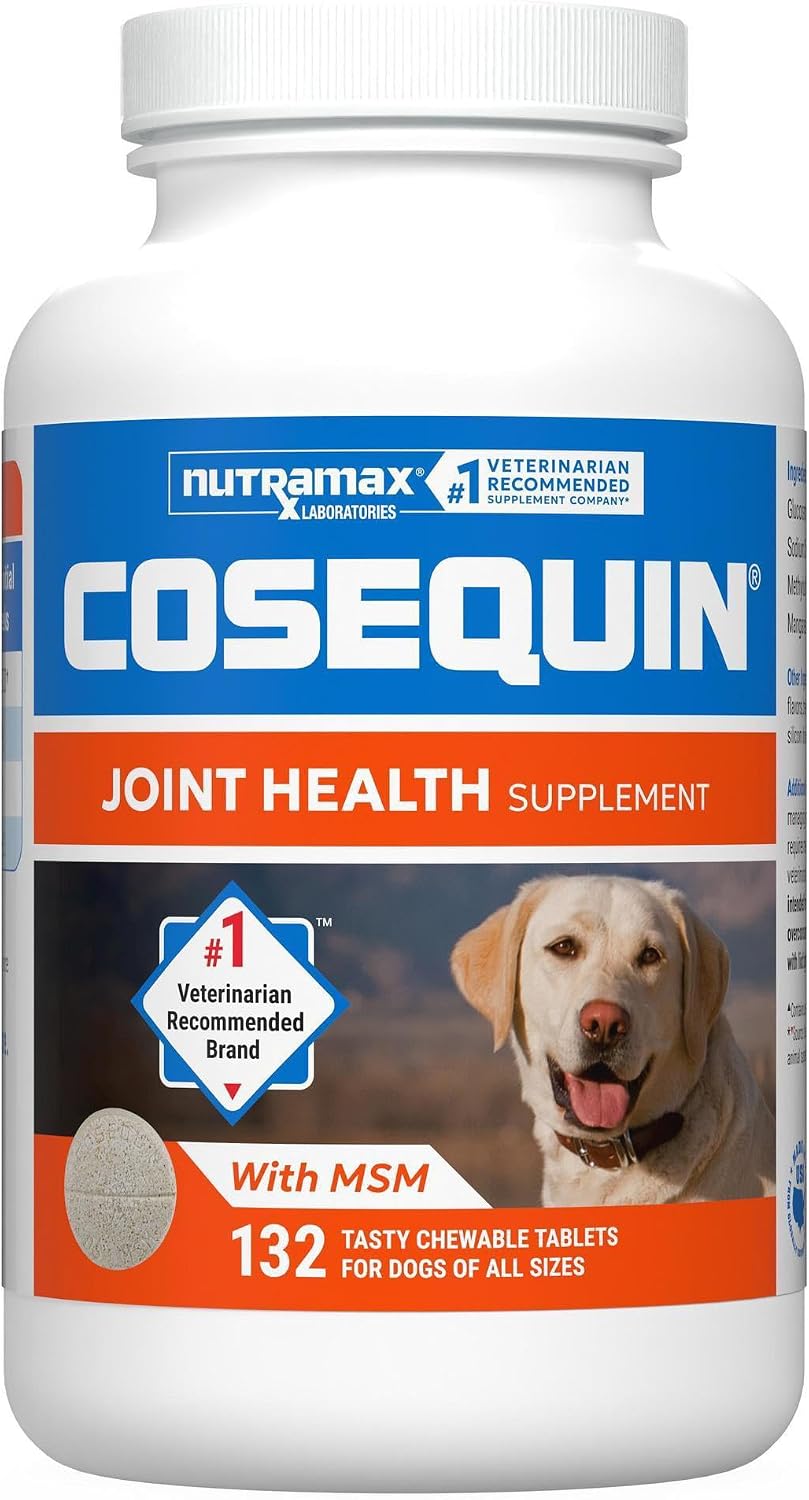 View on Amazon → Nutramax Cosequin Joint Supplement for Dogs, Chewable Tablets, 132ct |
| Coat support, not a brush | Dental chew | n/a | 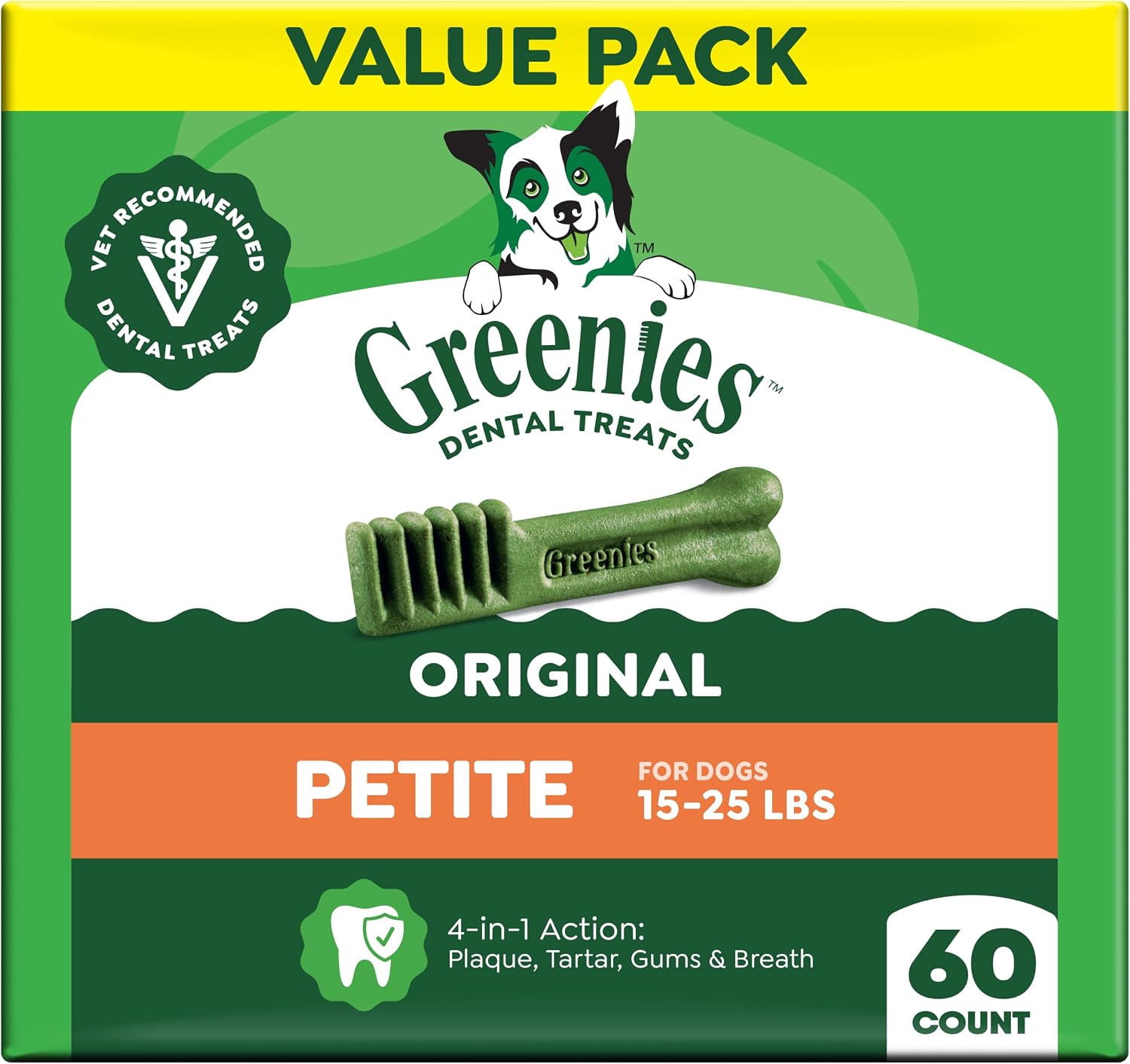 View on Amazon → Greenies Petite Natural Dental Dog Treats, Original Flavor, 60 Count |
Slicker, rake, or blade: what the width actually changes
A slicker is a finishing and surface tool. The pins lift loose hair off the top layer and smooth the coat, and the width determines how many strokes you need per side. A rake is a deeper tool with fewer, sturdier teeth, and it is the one to reach for on a thick undercoat that a slicker keeps missing. A blade sits flattest of all and pulls the most undercoat per pass, which is why it is the right answer on a big double coat and the wrong answer on a small thin-skinned dog.
The mistake is treating these as upgrades of each other. They are not. A blade does not replace a slicker, and a slicker does not replace a comb. Most double-coated dogs are best served by a slicker for weekly maintenance and a blade for the two blowouts a year when the coat lets go all at once.
Coat support that is not a brush
No brush fixes a dull, brittle, or flaky coat, because the brush only removes what the body has already pushed out. Diet and dental care are the other half of the job, and this is where a joint supplement and a dental chew end up in a grooming guide.
A chewable joint supplement is worth reading the ingredient list for, not the front of the tub. Look for a named source of omega 3 fatty acids, check whether the label states EPA DHA amounts rather than a vague fish oil blend, and prefer a limited ingredient formula if your dog has a sensitive stomach. The Nutramax Cosequin tablets are the established name in this space, and the 132-count size lasts long enough that bottle size becomes part of the value calculation.
Dental chews look like an odd fit here until you remember that a dog with sore teeth does not chew, and a dog that does not chew misses out on the mechanical wear that keeps teeth clean. The Greenies Petite size is built for smaller mouths, the texture is soft enough to be lick safe for most dogs, and the original flavor is the one most dogs will actually take. If your dog has a history of gulping treats whole, size the chew up rather than down.
Bathing is the third lever, and it is a labeling minefield. Oatmeal concentration on the front of a bottle is often marketing rather than a dose, so look at where oatmeal sits on the ingredient list before you decide. The same goes for supplements: bottle size and flashy claims are easy to print, and the ingredient panel is where the real information lives.
Should you buy the EquiGroomer 5-Inch Undercoat Deshedding Brush?
Yes, if you have a double-coated dog in the medium to large range and you are tired of short strokes that never seem to reach the undercoat. The five-inch edge covers more coat per pass, the blade style lifts dead hair instead of raking it, and the light-pressure technique is easy to learn. It also works on cats, which makes it a two-species tool in a multi-pet house.
It is the wrong buy for a toy breed, a curly single coat, or a coat that is already matted. In those cases the width is a liability and the blade does not do the job a comb or a slicker would. Buy it as your seasonal blowout tool, not as your only brush.
Should you buy the Wolfster Dog Brush for Shedding, Self Cleaning Slicker Brush?
Yes, and it is the safer first purchase of the two. The pin head suits short and medium coats, the self-cleaning mechanism means you will actually use it, and it is gentle enough for a puppy's first sessions and for an older dog with thinner skin. If you are not sure what your dog's coat will do at eighteen months, start here.
The only reason to skip it is if your dog carries a dense double coat that needs undercoat pulled out rather than surface hair lifted. In that case, buy the slicker for weekly upkeep and add the wider blade for the two weeks a year when the coat decides to redecorate your house.