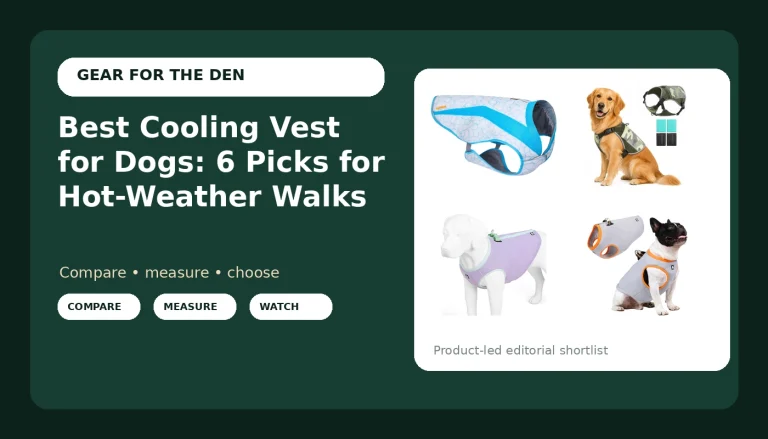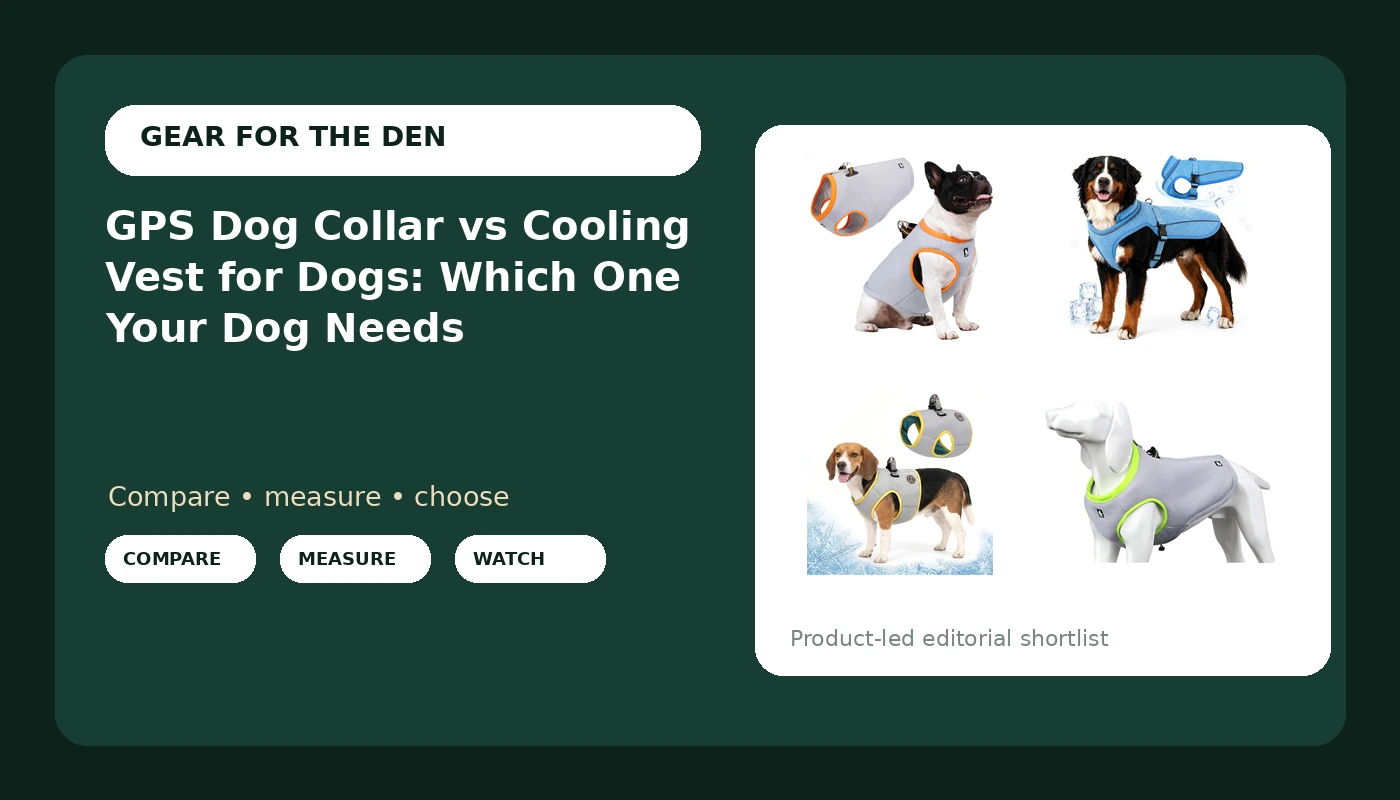
The gps dog collar vs cooling vest for dogs question comes up every summer, usually from someone whose dog has started lagging two blocks into an afternoon walk. It sounds like a comparison between two similar pieces of gear. It is not. A GPS collar answers a location question: where is my dog, and how do I get them back. A cooling vest answers a heat question: how do I keep a dog's core temperature down while we are still outside. The overlap between the two is small, and once you see where it sits, the buying decision gets much simpler.
For most dogs in most summers, the cooling vest is the one to buy first. Heat is the risk you can see coming, and it is the one you can actually do something about with water, shade, and a wet layer of fabric. A GPS collar becomes the priority the moment your dog is off leash, in unfenced country, or a known flight risk, because then the question stops being comfort and starts being recovery.
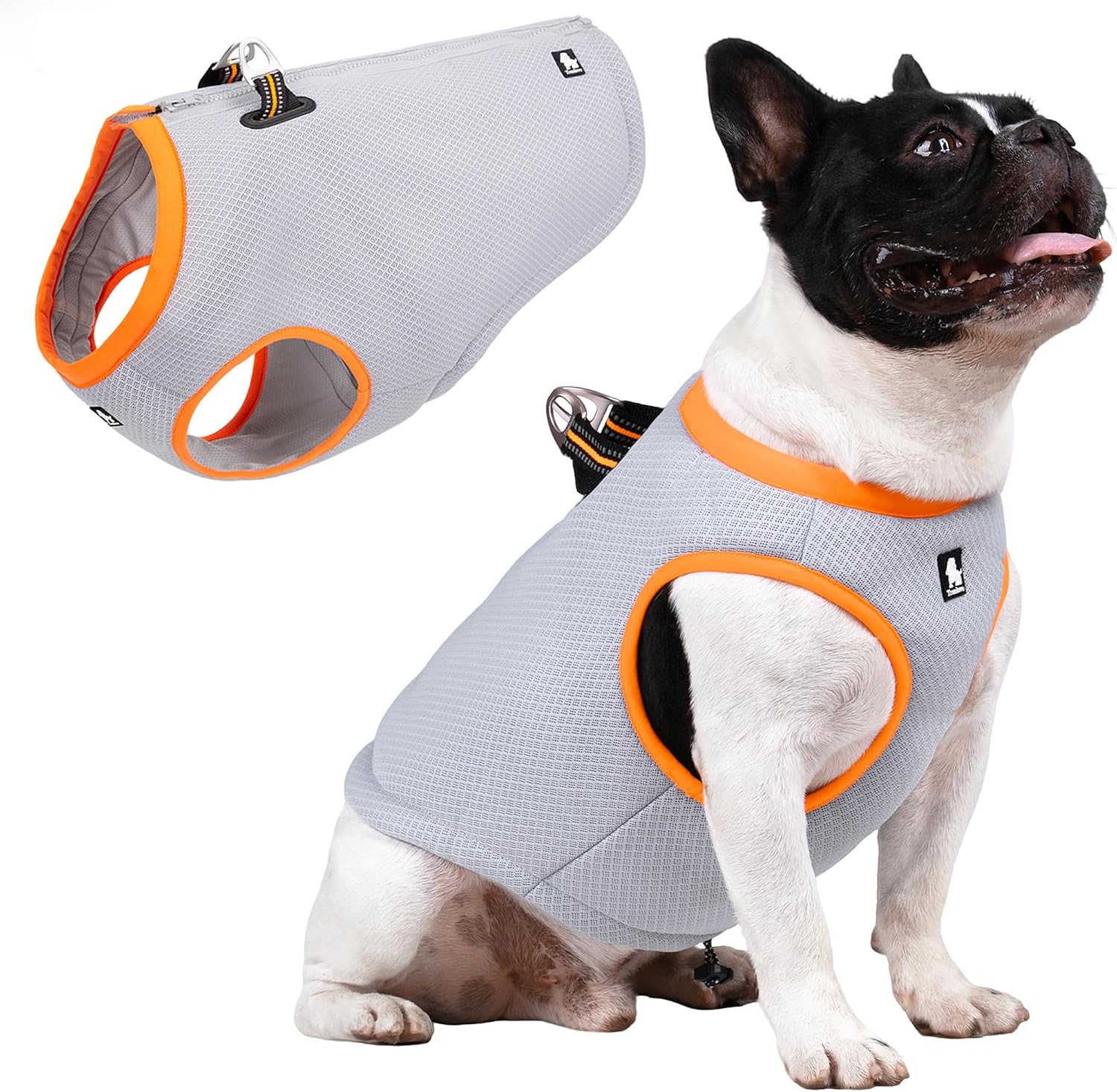
JUXZH Dog Cooling Vest, Evaporative Cooling Jacket Orange, Medium
High-visibility orange shell and an evaporative jacket cut that suits a lot of everyday dogs
Described as a jacket, not a harness, so confirm how you will attach a leash
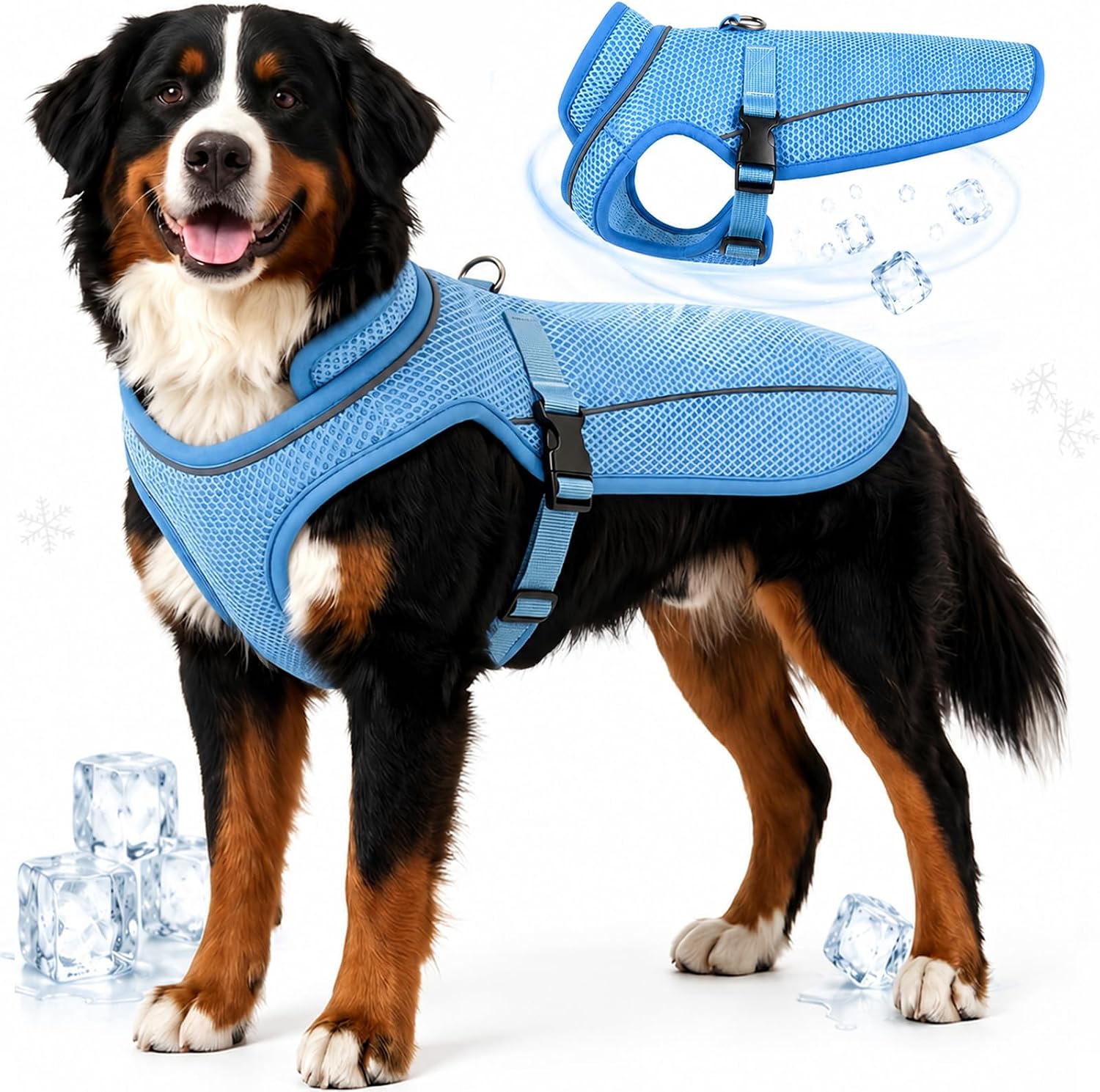
Dog Cooling Vest, Evaporative Cooling Vest for Dog with UV Protection
Simplest design here and the only one leading with UV protection
No brand name and thin sizing detail, so measure carefully before ordering
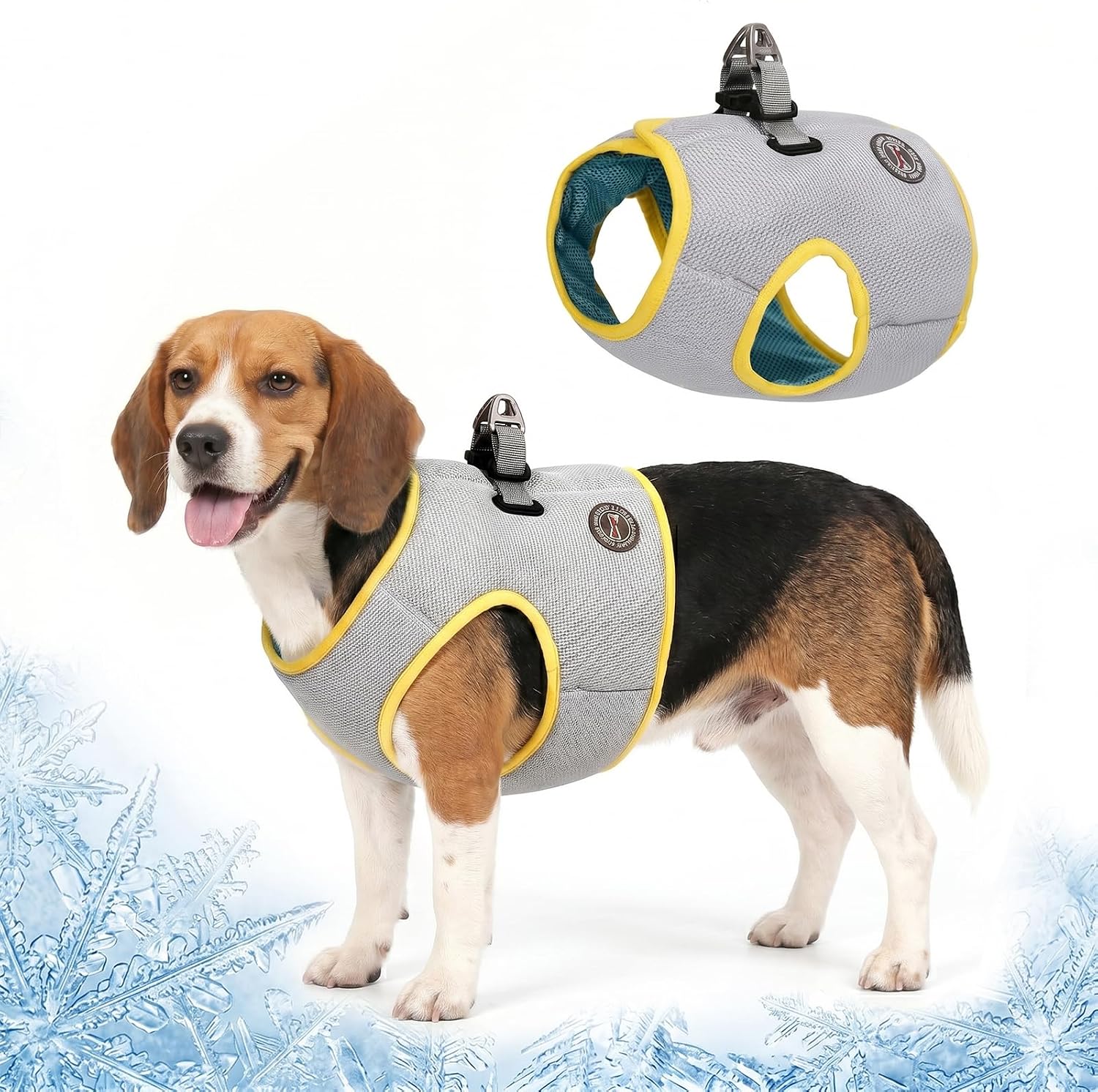
Huafly Dog Cooling Vest with Instant Chill-Heat Reflective Mesh Evaporative Dog Cooling Shirt, Adjustable Quick Release Cooling Harness for Dogs for Summer Walking, Hiking & Hot Weather (Medium)
Reflective mesh for low-light walks plus an adjustable quick release harness
Long name buries the sizing, and this listing shows a single size
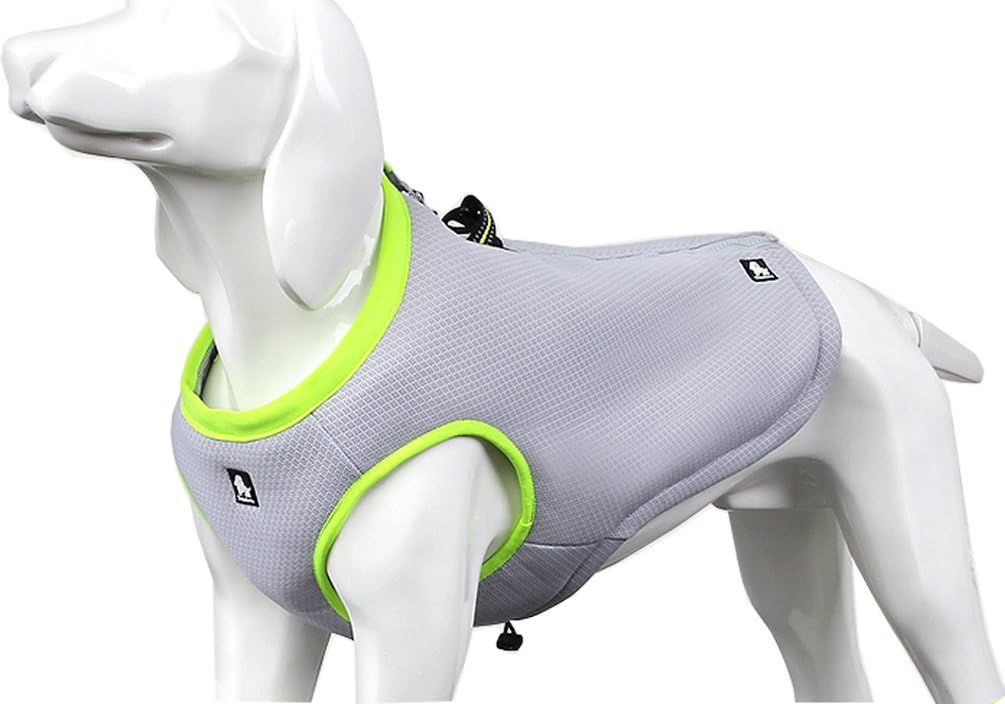
SGODA Dog Cooling Vest Harness Cooler Jacket Grey Green Large
Harness cut in a neutral grey-green, and a large size that fits bigger dogs
Priced at the top of this group, so it rewards a dog that wears it often
Prices and availability may change.
The gps dog collar vs cooling vest for dogs question, answered
The difference between gps dog collar and cooling vest for dogs is a difference in job, not in quality. One is a piece of electronics that reports a position. The other is a piece of fabric that manages heat. That single sentence resolves most of the argument, because you cannot compare a tracking device to a cooling garment any more than you can compare a flashlight to a water bottle. What you can compare is the failure mode. A GPS collar fails when the battery dies or the gps range runs out before the dog does. A cooling vest fails when the cooling fabric dries out, when the fit is wrong, or when the humidity is so high that evaporation slows to nothing.
If you are shopping for one of these and wondering whether the other is the real answer, ask what went wrong on your last bad walk. If the answer is "she would not come back," you want the collar. If the answer is "he was panting and dragging by the halfway point," you want the vest. Most people who ask this question already know which of those two sentences describes their dog.
What a GPS collar actually solves
A GPS collar is a recovery tool. It earns its place in three situations: a dog with a strong prey drive and unreliable recall, a dog that lives on acreage without a fence, and a dog that bolts during thunderstorms or fireworks. In each case the collar is not training and it is not containment. It is the thing that tells you which direction to run.
Two specs decide whether a given collar is worth wearing. The first is gps range, meaning how far the dog can get before the app loses the signal. A collar that only updates once your dog wanders back into range is a collar that will let you down on the one afternoon you need it. The second is battery life, because a tracker that spends the week on a charger is a tracker that is sitting on a counter when the gate gets left open.
Whatever you buy, the routine matters as much as the hardware. Charge it on a fixed day. Walk the perimeter of your yard with it so you learn what a normal reading looks like. Check it before you leave for somewhere new, and check that the fit has not loosened since the last walk. A loose collar slides, and a sliding collar loses contact with the satellites it depends on.
There is one more thing a GPS collar does not do. It does not lower your dog's body temperature by a single degree. That is the entire reason the other half of this comparison exists.
What a cooling vest actually solves
A cooling vest is a heat management tool. Most of the ones in this category, including all four above, work by evaporation. You soak the cooling fabric, wring it out, and put it on the dog. As air moves across the wet layer, water evaporates and pulls heat away from the chest and back. That is the whole mechanism, and it is why a vest works best on a breezy walk and works least on a still, humid afternoon.
Using one correctly matters more than which one you buy. Soak it thoroughly rather than misting the surface, wring it until it stops dripping, and put it on before the walk rather than halfway through. On a long outing, plan a re-wetting stop, which usually means carrying a bottle or choosing a route with water on it. A vest that has dried out is just a warm layer of fabric, and a warm layer of fabric on a hot dog is worse than nothing.
What a vest does not do is replace shade, water, and timing. It buys you margin. It lets a dog that runs hot finish a walk that would otherwise end early, and it takes the edge off a hot pavement route. It does not turn a 95 degree afternoon into a safe one, and it does not fix a flat-faced breed's breathing. Use it as one layer of a plan, not the plan.
The practical trade-off is that a vest is a consumable. It dries out. It picks up mud, hair, and pond smell. That is a real cost, and it is the main reason people who buy one for a single heat wave end up leaving it in a closet by August.
Fit, straps, and the hardware that decides everything
The most common reason a cooling vest ends up unused is fit. A vest that is too loose slides sideways and rubs behind the front legs. One that is too tight restricts the chest strap and turns a cooling aid into a breathing problem. Measure the girth around the widest part of the ribcage, write the number down, then check it against the manufacturer's size chart rather than against your dog's breed. A retriever and a shepherd of the same weight can wear different sizes.
If the vest doubles as a harness, look at how it attaches. A front clip is the useful one for dogs that pull, because it turns forward motion into a gentle sideways correction instead of a choke point. A back clip is fine for a dog that walks politely on a loose leash. Either way, leash length matters more in summer than in any other season, because a long line lets your dog wander onto hot asphalt while you are still standing on grass.
That is also where a traction sole and boot sizing come into the picture. If pavement is hot enough to hurt your palm after five seconds, it is hot enough to burn paw pads, and boots or a route change beat a cooling vest for that specific problem. No vest protects the feet.
The four cooling vests in this comparison
All four of these are evaporative vests. The differences come down to cut, color, hardware, and how much information the listing gives you before you order.
JUXZH Dog Cooling Vest, Evaporative Cooling Jacket Orange, Medium. The orange shell is the standout feature, and it is genuinely useful on a dog that walks near roads or during hunting season. The listing describes a jacket rather than a harness, so decide up front whether you will clip the leash to a collar or add a separate harness underneath. Visit on Amazon
Dog Cooling Vest, Evaporative Cooling Vest for Dog with UV Protection. This is the simplest entry in the group, and UV protection is the feature it leads with. There is no brand name on the listing and very little sizing detail, so treat it as the option for a buyer who wants a spare vest to keep in the car rather than a primary piece of gear. Visit on Amazon
Huafly Dog Cooling Vest with Instant Chill-Heat Reflective Mesh. This one has the most going on: reflective mesh for low-light walks, an adjustable quick release harness, and an evaporative chill layer, listed here in medium. The reflective mesh is the detail worth paying attention to if your summer walks happen after dinner. The long product name buries the sizing, so measure before you order. Visit on Amazon
SGODA Dog Cooling Vest Harness Cooler Jacket, Grey Green, Large. The harness cut and the neutral grey-green color are the appeal, and large is the size shown in this listing. It sits at the top of this group on price, which makes the most sense for a big dog that will wear it three or four times a week all season rather than a dog that needs occasional relief. Visit on Amazon
When you need both
The honest answer to whether you need a gps dog collar or cooling vest for dogs is that some households need both and most need only one. A working dog on unfenced land in July needs both, because the heat risk and the wandering risk are live at the same time. A dog that walks the same six blocks on a leash needs the vest, a water bottle, and a legible ID tag, and the collar money is better spent on a harness that fits properly.
The middle case is the trail dog. If you hike off leash in country with no cell signal, a GPS collar stops being a luxury and starts being insurance, and the vest is what makes the hike possible in the first place. That is the gps dog collar vs cooling vest for dogs calculation in one line: which risk is live on your route right now. Buy the vest first, because heat is the more immediate danger and the fix is cheaper, then save for the collar.
Trade-offs to accept before you buy
Frame the cooling vest for dogs vs gps dog collar choice as a choice between a consumable and a device. The vest needs water, re-wetting, washing, and eventual replacement. The collar needs charging, a working app, and in many cases a service plan. Neither is a one-time purchase that runs itself.
There are three trade-offs specific to vests. First, sizing is unforgiving, and a cheap vest in the wrong size is worse than no vest at all. Second, evaporative cooling is weakest exactly when you need it most, on still, humid days. Third, the budget end of this category varies widely in stitching and buckle quality, which is why the listing details matter more here than in most gear categories. If a listing does not tell you the size, the material, or how the leash attaches, that silence is information.
For GPS collars the trade-offs run the other way. You get precision and range, and you pay for it with a charging routine, a monthly cost in many cases, and the responsibility of actually opening the app. A collar that lives in a drawer is worse than no collar, because it creates confidence you have not earned.
What to buy first
If you came here trying to settle the gps dog collar vs cooling vest for dogs argument with a single purchase, buy the vest. It costs less, it addresses the risk that shows up on ordinary summer afternoons, and every one of the four options above does the same basic job. Pick by fit and color: orange if you want visibility, grey-green if you want something neutral, reflective mesh if your walks happen at dusk, and the plainest one if you just want a spare to keep in the trunk.
Then, when the budget allows and the situation calls for it, add the collar. The two do not compete. One tells you where your dog is, the other keeps your dog comfortable enough to stay with you, and a dog that is not overheating is a dog far less likely to bolt in the first place.