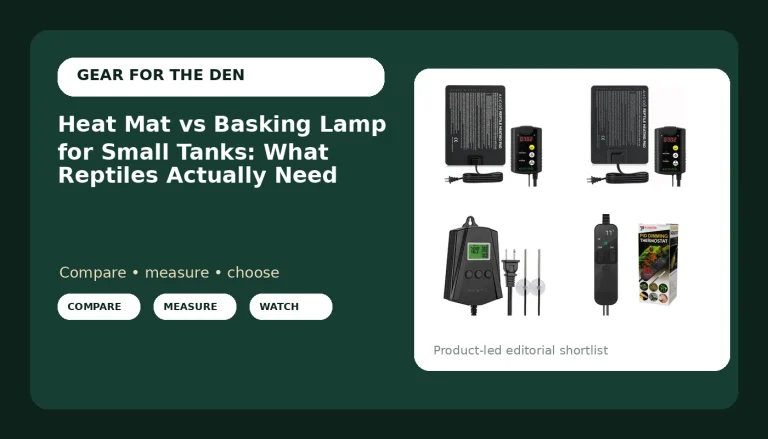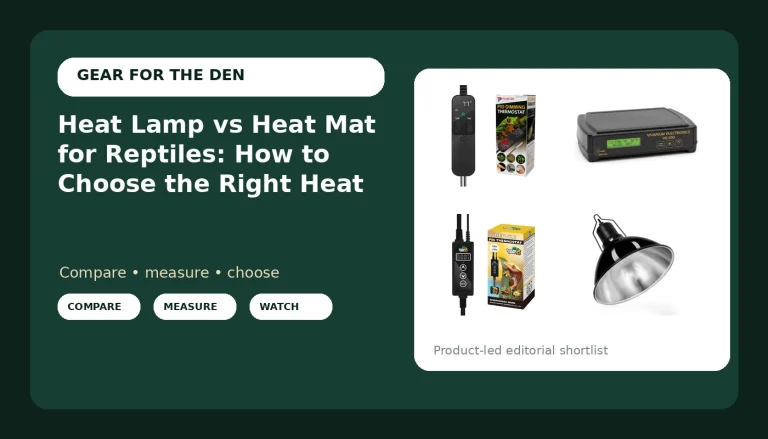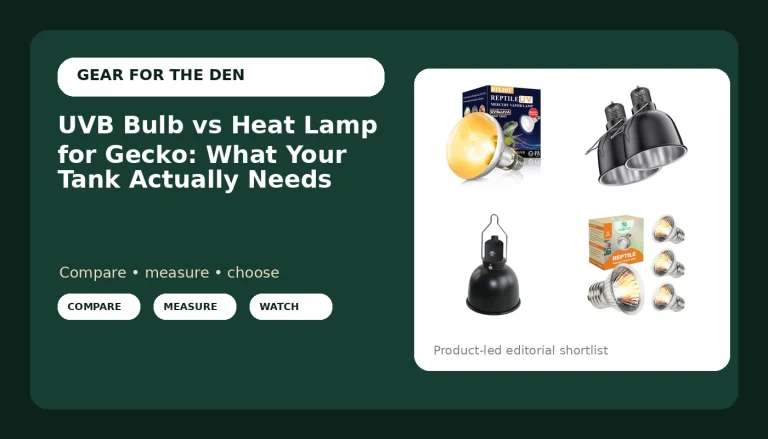
The heat mat vs heat lamp for small terrariums question lands in my inbox almost every week, usually from someone who has just set up a 10 or 20 gallon tank and cannot work out why the thermometer reads 88 degrees in the air while the animal never moves off the cool side. The answer is that a mat and a lamp do two different jobs, and a small enclosure makes the difference between those jobs far more obvious than a large one does. A heat mat warms the floor. A lamp warms the air and builds a basking spot. In a tank with very little air volume, those two jobs stop overlapping and start competing.
For most small terrariums, a low-wattage basking lamp on a dimming thermostat beats a heat mat, because it creates a real basking surface instead of only warming the glass floor. That is the short answer, and it comes with a caveat. If your species takes heat through its belly, or you are already fighting an enclosure that dries out too fast, a mat is the better tool. The four pieces below are what actually fits a small build, and each one solves a different part of the problem.
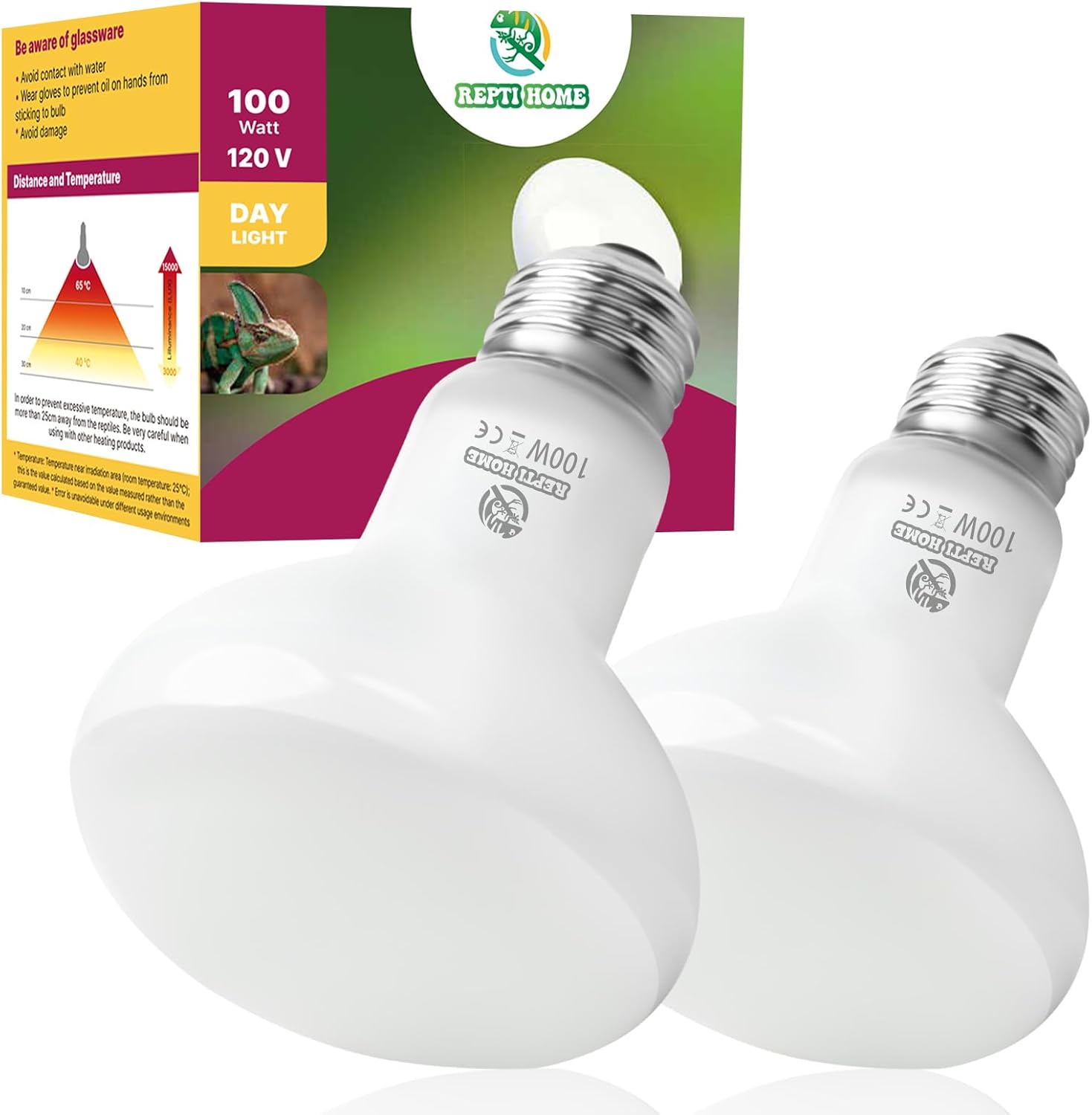
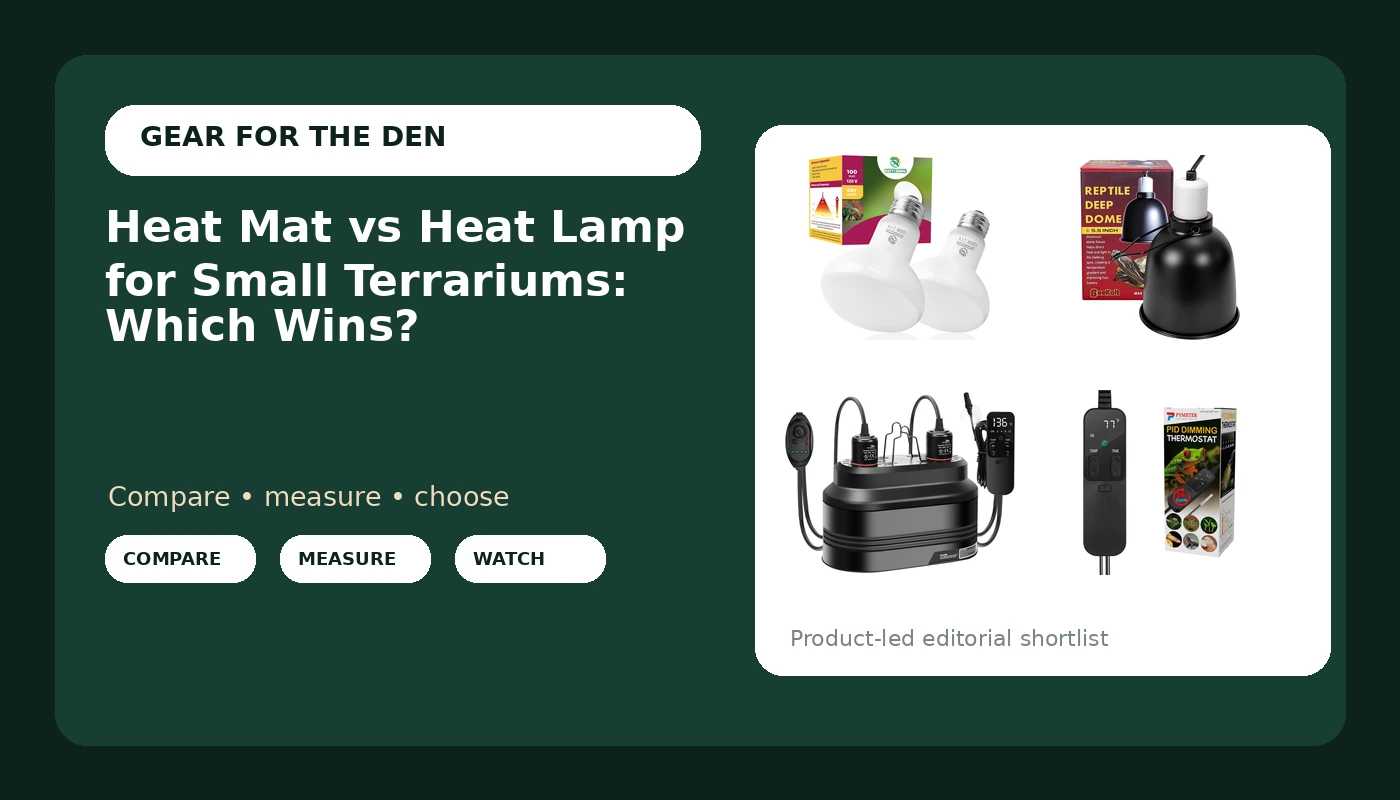
REPTI HOME Reptile Heat Lamp Bulbs, 2 Pack 100W
Two 100W simulated-sunlight basking bulbs in one box, so you have a spare when the first one fails
100W is a lot of heat for a 10 gallon tank, so dimming is mandatory from day one
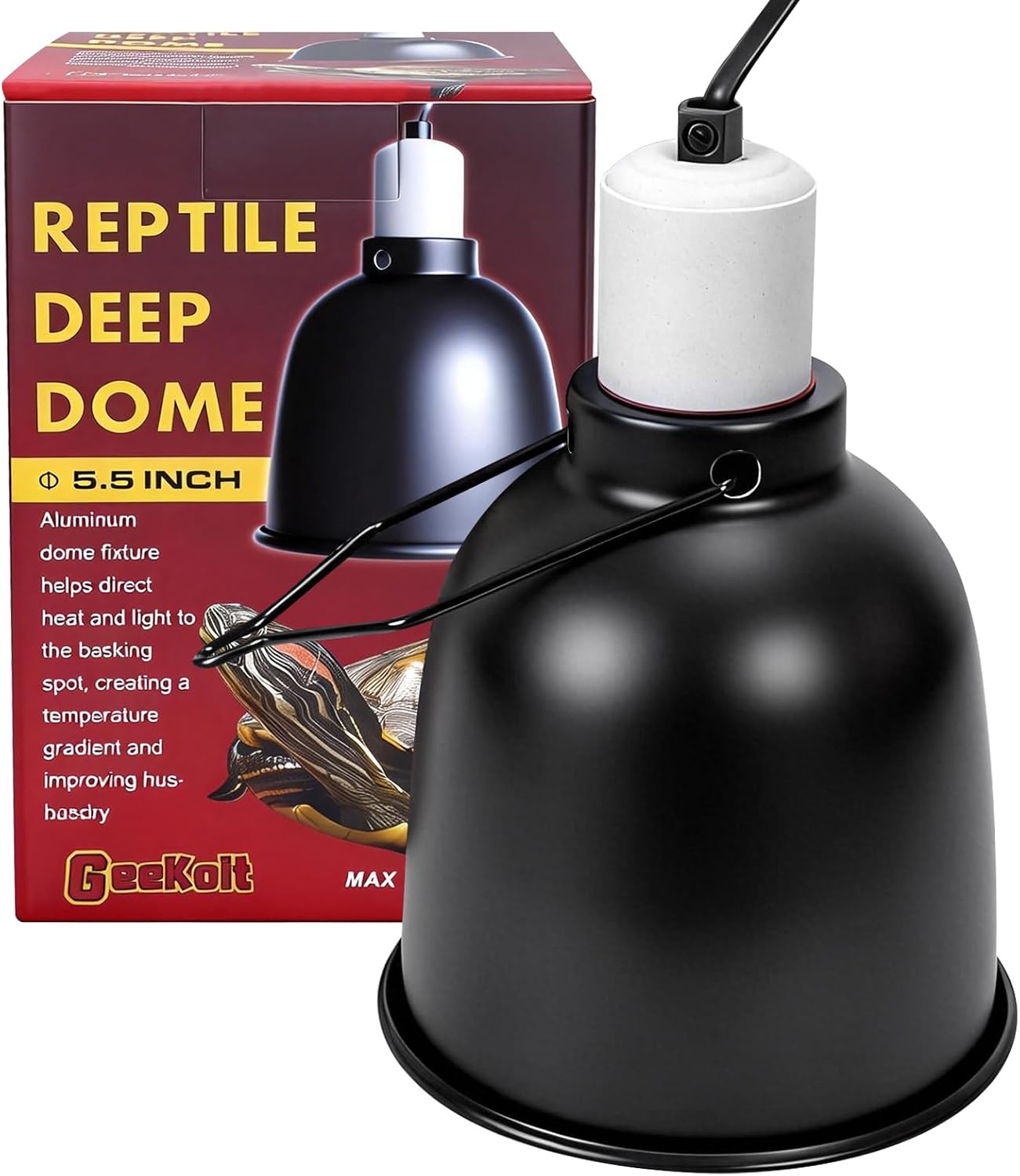
5.5 Inch Reptile Deep Dome Light Fixture
Ceramic socket, hanging hook, and a safety switch make it the fixture that suits a screen top
The 5.5 inch dome concentrates heat into a tight circle, so placement matters more than with a wider dome
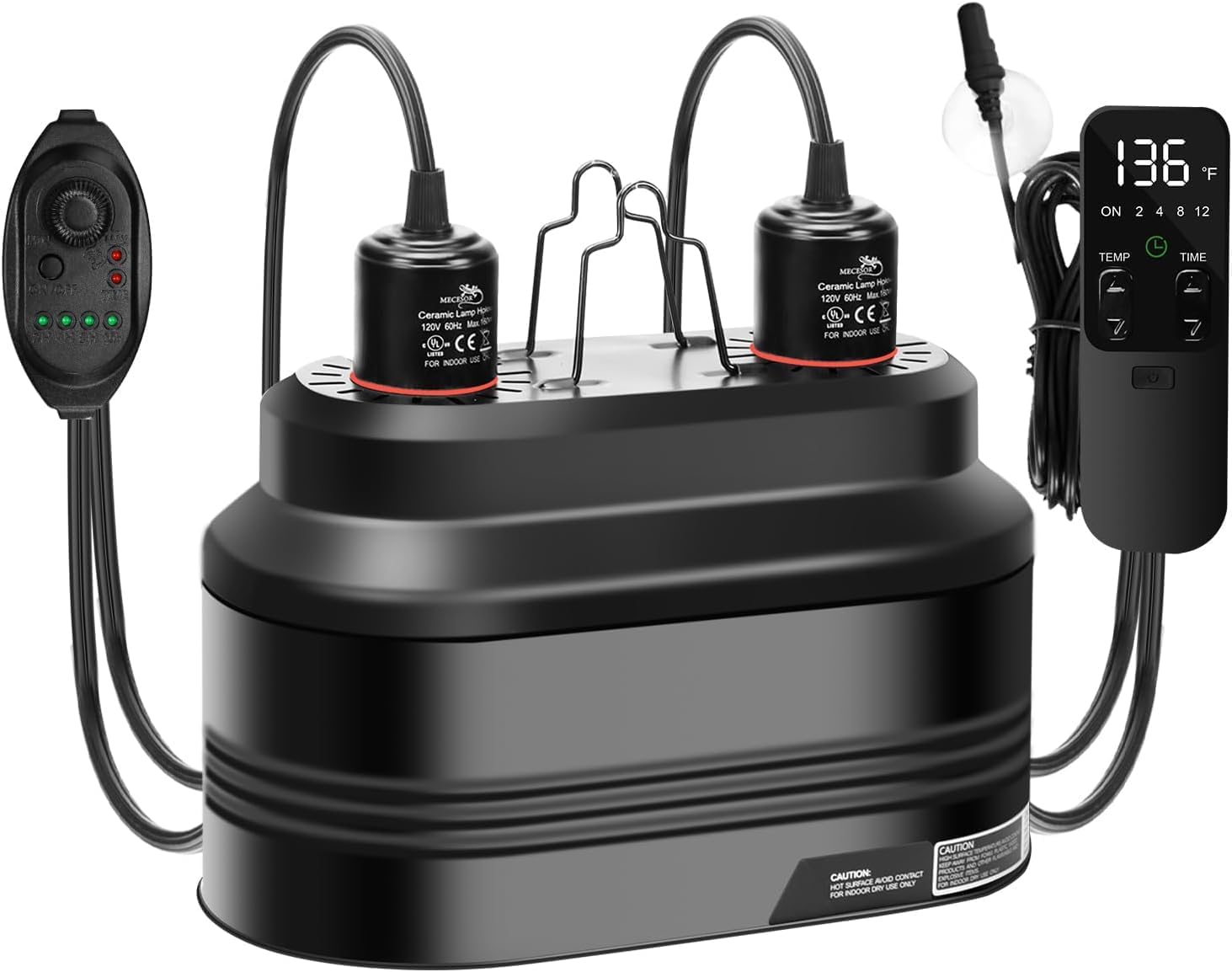
MECESOR Dual Reptile Light Fixture
Two independently controlled sockets with timer dimming, the most flexible lamp setup here
More fixture and more heat than a 10 gallon tank needs, so it suits a 20 to 40 gallon build
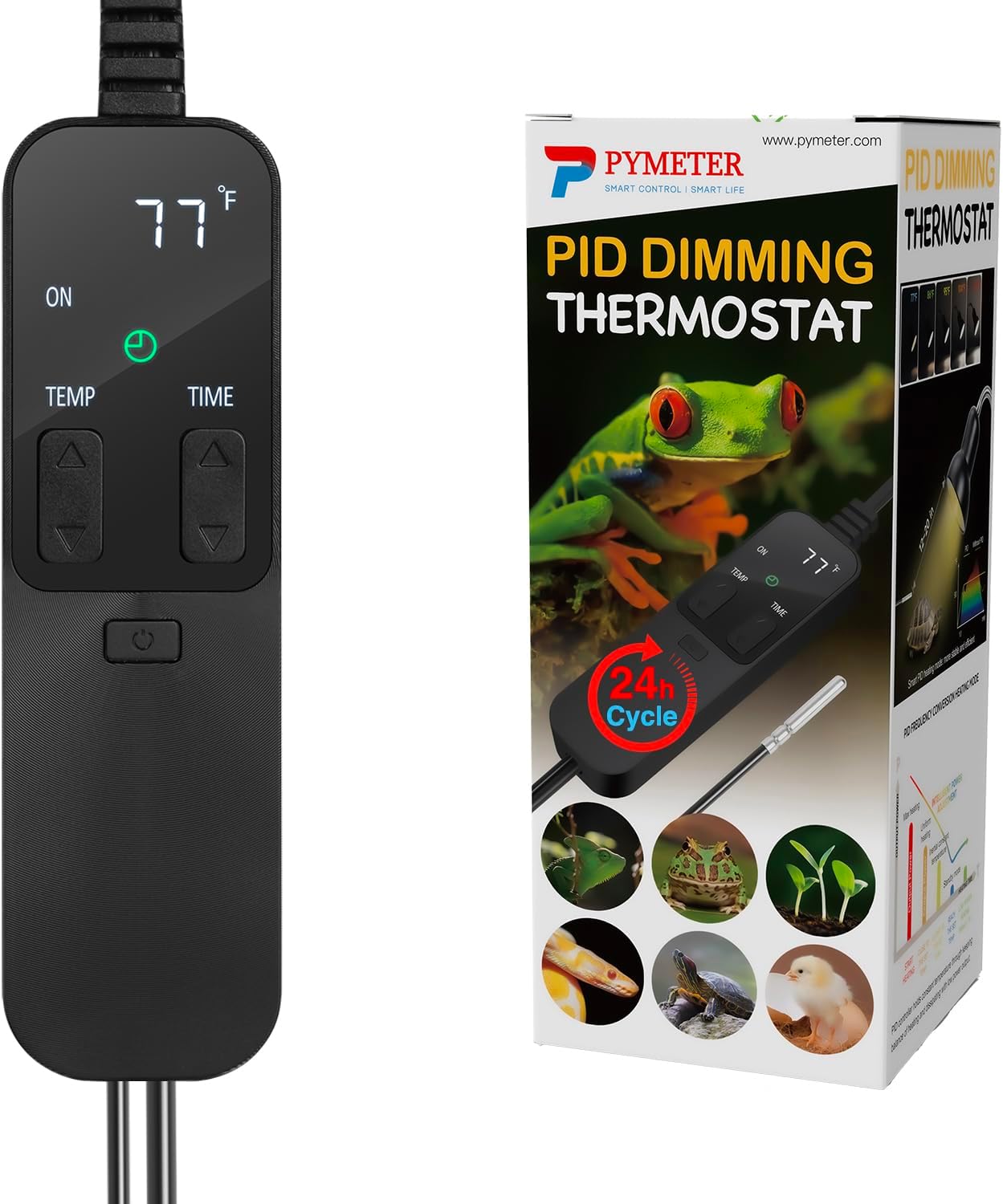
Pymeter PID Dimming Thermostat
PID dimming plus a 24 hour cycle timer, and it runs a lamp, a pad, or a mat
Nothing else on this list is safe without it, so it is the first purchase rather than the last
Prices and availability may change.
How heat mat vs heat lamp for small terrariums changes the setup
A heat mat is a flat element that sits under or against the enclosure and warms whatever touches it: the glass, then the substrate, then the animal. Heat rises only a little from a mat, so most of the energy stays in the floor and the air above it sits close to room temperature. That is exactly what you want for a species that thermoregulates through its belly, and it is why a mat is usually paired with a hide rather than a branch. The animal gets a warm patch to sit on and a cool end to retreat to, and the air in between barely changes at all.
A lamp works the other way. It radiates heat downward onto a rock, a tile, or a piece of cork bark, and the animal basks under it. Because a lamp also lights the enclosure, it gives you a day and night rhythm without extra equipment, and a simulated-sunlight or UVB bulb can carry part of the lighting load as well. The cost is that a lamp dries the air faster and can push a small tank past a safe basking temperature if the wattage is wrong. Both of those problems are solvable, but they are not optional problems.
The difference between heat mat and heat lamp for small terrariums is mostly a question of air volume. A 10 gallon enclosure holds so little air that a 100W bulb can drive the whole tank well past a comfortable basking temperature without a dimmer, while a mat at typical heat mat wattage rarely does anything that dramatic. Neither option is safe on its own, though. The thermostat is what makes either one work, and it is the piece most beginners buy last.
The four pieces in this comparison
None of these four products is a heat mat, and that is deliberate. In a small enclosure the lamp side is where the choices get complicated, because a lamp needs a fixture, a bulb, and a controller before it is safe to run. Three of these four pieces are that hardware. The fourth is the controller that can run a lamp or a mat, which makes it the piece that settles most heat mat or heat lamp for small terrariums arguments before they start.
REPTI HOME basking bulbs, 2 pack 100W
These are the simplest item here: two 100W basking bulbs that simulate natural sunlight and screw into a standard dome. Buying them in a two pack means you have a spare when the first one dies, which matters more than it sounds, because basking bulbs fail without warning and a tank that loses heat overnight in winter is a genuine problem rather than an inconvenience. The trade-off is the wattage. Two 100W bulbs is a lot of heat for a 10 gallon tank, and you will need dimming to run one at a useful level instead of a punishing one. Visit on Amazon. Check current Amazon price before you commit, because bulb pricing moves around more than fixture pricing does.
The 5.5 inch deep dome fixture
A deep dome does two things a shallow fixture cannot. It pushes the bulb further from the animal, which spreads the heat over a wider area, and it holds a ceramic socket that tolerates the heat a basking bulb throws off. This one is 5.5 inches across, has a hanging hook, and includes a safety switch, so you can suspend it above a screen top instead of balancing it on the lid. In a small tank, hanging the dome is often the only way to reach the right basking temperature without cooking the whole enclosure, because you can raise it an inch at a time until the surface reading lands where you want it. Visit on Amazon. Check current Amazon price.
MECESOR dual fixture with thermostat control
This is the piece for someone running two lamps: a double reflector dome with independent thermostat control and a timer dimming function, so the two sockets can behave differently from each other. You can run a basking bulb in one side and a lower-output or night bulb in the other, or stage them so the tank warms gradually in the morning instead of jumping straight to full output. For a small terrarium, a dual fixture is more heat than most 10 gallon builds need, so treat it as the right answer for a 20 to 40 gallon enclosure that is still small enough to sit on a shelf. The independent control is the part worth paying for. Visit on Amazon. Check current Amazon price.
Pymeter PID dimming thermostat
If you buy one thing from this list, buy this. A PID dimming thermostat with a 24 hour cycle timer does not simply switch heat on and off, it holds a target temperature by varying power to the lamp, which is the difference between a stable basking temperature and a tank that swings ten degrees every twenty minutes. It works with a heat lamp, a heating pad, or a seedling heat mat, so it is the one controller you can carry from setup to setup as your collection changes. Set the range, plug the lamp in, and let it do the work. Visit on Amazon. Check current Amazon price.
Tank size, substrate depth, and hide size
Most people searching heat lamp for small terrariums vs heat mat are really asking whether one fixture can do both jobs, and in a tank this small it usually cannot. Small enclosures punish guesswork, because every inch of vertical space changes the math. In a 10 gallon tank, the distance from the screen top to the substrate might be eight inches, which means a 100W bulb in a deep dome is either too close or too far depending on where the fixture hangs. Substrate depth changes that number again: two inches of coco coir puts the basking surface closer to the bulb than four inches of topsoil mix, and the difference shows up directly in the surface reading.
Hide size matters for the same reason. A hide that fills a third of the floor space blocks the warm patch a mat would create, so a mat under a large hide heats the hide and not the animal sitting in it. A lamp avoids that problem because it heats from above, but it also dries the hide's interior faster, which is where humidity range becomes part of the decision rather than a footnote.
Basking temperature and UVB output
This is where lamps pull ahead, and it is the main reason I lean toward a lamp in a small tank. A basking temperature is a surface reading, not an air reading, and only a lamp creates a surface that is meaningfully hotter than the surrounding air. Without that gradient, a reptile has no way to move in and out of the heat the way it would in the wild, and you end up with an animal that sits in one spot all day because neither end of the tank feels right.
UVB output is a separate question, and it is worth separating carefully. Many basking bulbs simulate sunlight but do not produce meaningful UVB, so if your species needs UVB you are buying a UVB bulb regardless of whether you heat with a mat or a lamp. That matters for this comparison, because a mat plus a UVB tube is a perfectly reasonable small-tank setup for a species that does not need a hot basking surface.
Humidity range and the case for a mat
Here is the honest argument for the other side. Lamps dry the air, and in a small enclosure with a screen top the drying happens quickly. If you keep a species that needs a high humidity range, a lamp can turn a daily misting routine into a twice-daily one, and a screen top makes it worse by letting the moisture straight out. A heat mat adds almost no drying, and in a shallow tank it can be the difference between holding humidity and fighting it every evening.
The compromise most keepers land on is both: a low-output lamp for the basking spot during the day, and a mat for background warmth, with a thermostat range set so each one stays inside its own limit. That is more gear than a 10 gallon tank needs, but it is a reasonable answer for a 20 gallon with a humidity-dependent species and a room that runs cold at night.
What the specs tell you before you buy
The heat mat vs heat lamp for small terrariums decision gets easier when you read the numbers instead of the marketing. Four specs do most of the work.
- Wattage. A 100W bulb in a 10 gallon tank is too much without dimming. Heat mat wattage is usually far lower, which is why mats are forgiving in small enclosures and lamps are not.
- Thermostat range. Check that the controller covers the basking temperature you need, not just room temperature. A dimming thermostat that only holds 68 to 95 degrees will not run a hot basking spot for a desert species.
- Socket type. A ceramic socket is the minimum for a basking bulb. A plastic socket running a 100W bulb in a small tank is a fire risk, not a shortcut.
- Fixture size. A 5.5 inch dome concentrates heat into a smaller circle than an 8.5 inch dome. In a small tank that tighter circle is usually what you want, because it leaves the rest of the enclosure cool.
Should you buy the thermostat first?
Yes, and this is the part of the article I would underline if I could. A thermostat is not optional equipment you add later. It is the thing that turns a 100W bulb from a hazard into a controlled heat source, and it is the only piece in this list that keeps working if you decide a mat is the better answer for your animal.
Buy the controller first, run it with whatever heat source you already have, and measure the basking surface with an infrared thermometer before you add a second lamp. If the tank holds temperature with one bulb and a dimmer, a dual fixture is money you do not need to spend yet. If it does not hold, the dual fixture gives you two independent channels to work with, and the timer function means you can warm the tank gradually instead of all at once.
The short version
A lamp gives you a basking spot, a light cycle, and more control in a small enclosure, and it costs you humidity. A mat gives you gentle background heat, holds humidity, and cannot create a basking surface on its own. The heat mat vs heat lamp for small terrariums choice is really about which of those two profiles matches your species, and either way the thermostat is the piece that makes the setup safe. Start there, measure the surface temperature, and add hardware only when the numbers tell you to.