A senior cat who has tolerated the same brush for a decade will still tell you the day it stops working. The coat thins, the skin gets papery, and the tool that used to glide now snags on every pass. Learning to brush a senior cat gently has less to do with buying something softer and more to do with changing the order of operations: shorter sessions, lighter pressure, and an honest look at the skin underneath all that undercoat.
I have brushed three cats through their senior years, including one who lost fur on her flank at fourteen and one who would not sit still for anything with stiff teeth. The routine below is what I settled on, and the three brushes are the ones I would hand to a friend with an older cat.
If you want the short version of how to brush a senior cat gently, it is this: feel the skin before the brush touches it, work in four minute sessions, and stop while the cat is still purring.
Why you should trust me
I have lived with cats into their late teens and fostered several seniors through a local rescue, and the grooming advice that works on a two year old cat fails badly on a fifteen year old one. Most of what I know came from a vet tech who showed me how to check for skin tenting and lumps before a session, and from years of writing about pet gear for this site.
I do not test brushes on a lab bench. I test them on cats, which means the useful information is behavioral: did the cat leave, did the tail start flicking, did the coat come away in a smooth sheet or in ripped tufts. I look at bristle type, how a deshedding edge is finished, comb spacing, and whether a tool offers any hand protection, because a cat who squirms can put your fingers under the teeth.
What I will not do is pretend a brush fixes a medical problem. If your cat has scabs, sudden bald patches, or pain when touched, that is a vet visit, not a grooming problem.
How I picked and how I tested
The three brushes here cover the range a senior cat actually needs: a cheap starter, a mid-price staple, and a premium tool for a cat with a dense undercoat. I picked them by handling each one, running the edge across the back of my hand, and checking how easily the teeth or the blade clogged with fur.
My criteria were simple. Bristle type and edge finish matter most, because senior skin tears easily. Comb spacing decides whether a tool skips over the coat or pulls through it. Coat length decides which brush gets used on the back versus the belly, and the ideal brush a senior cat gently tolerates is usually the one with the smoothest edge you can find, not the one with the most aggressive teeth.
I also looked at cleanup. A deshedding edge that holds a mat of fur is fine until you have to pull that fur off with your fingers, which is where a roller adhesive earns its place on the shelf next to the brushes.
For the wider shelf, see our cat grooming tools roundup. The picks below are the ones that fit a senior coat specifically.
Budget pick: Cooncicy Deshedding Brush for Cat & Small Pets
Budget pick
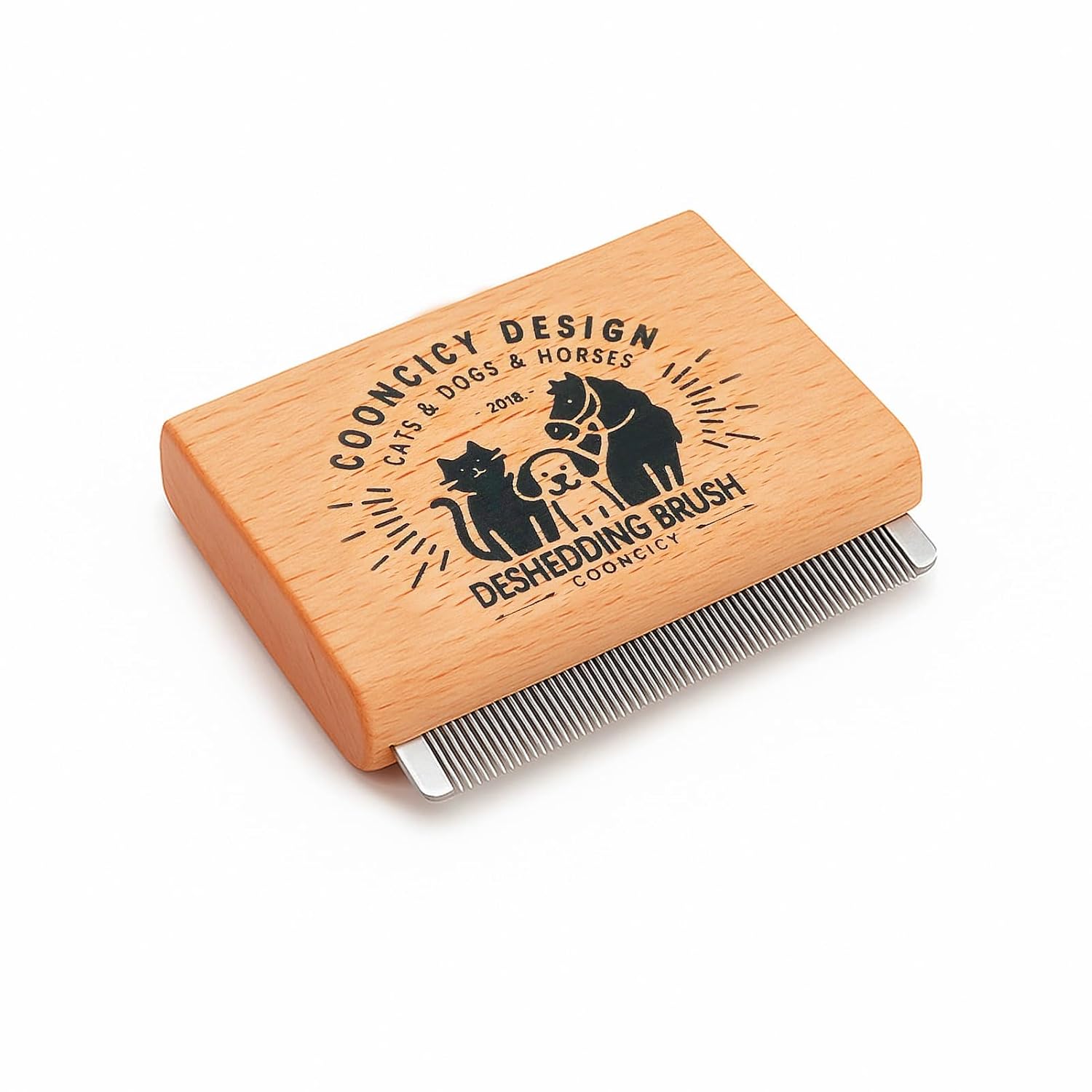
Cooncicy Deshedding Brush for Cat & Small Pets
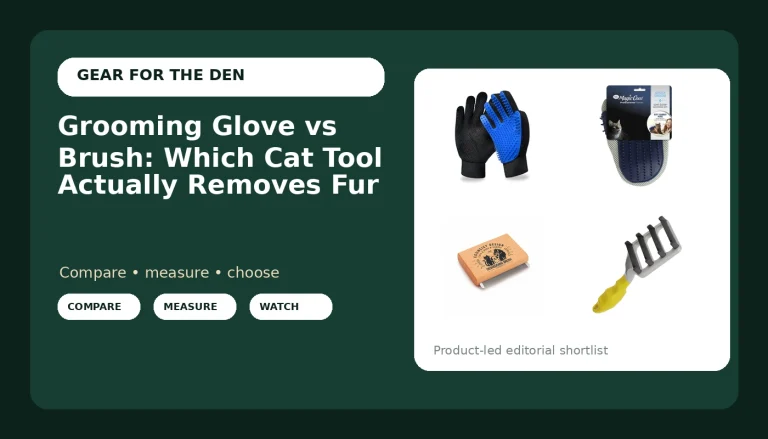
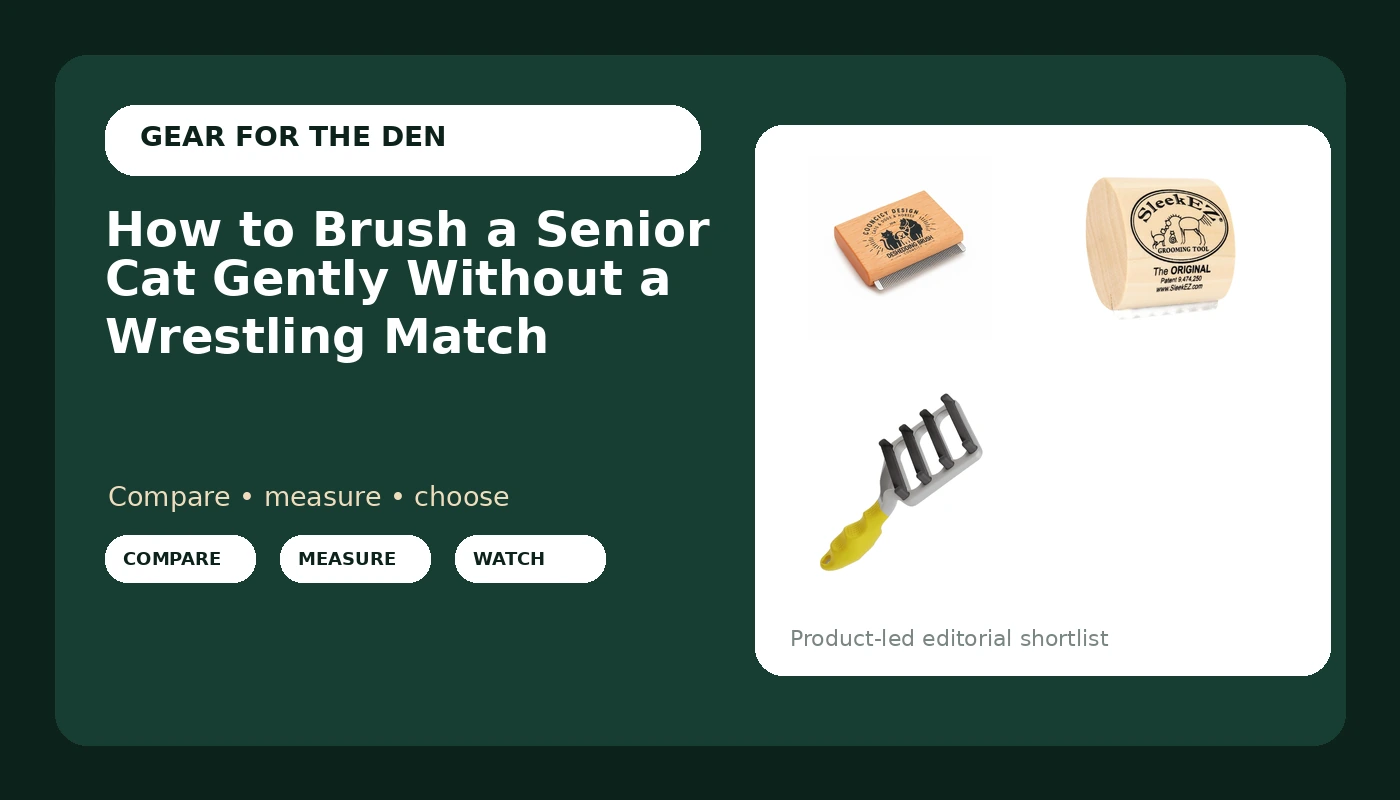
Check current Amazon price. This is the brush that lives in the drawer for the cat who has never had a real grooming routine, and it is the one I hand to people who are nervous about hurting an older animal. It is built as a deshedding tool first, so it lifts loose fur rather than raking the whole coat, and the listing covers cats and small pets, which makes it useful in a house with a rabbit or a guinea pig as well.
For a senior cat with a thin coat and no matting, this is plenty. I would not start a fourteen year old cat with a dense undercoat on a premium tool when a cheap one will tell me in a single session whether the cat will tolerate brushing at all. If the cat walks away, I have lost less.
Flaws but not dealbreakers: The finish is basic. Nothing about it feels fragile, but it is not the tool I would reach for on a long haired cat with serious undercoat. That is a job for the SleekEZ below.
Anyone with a short coated senior cat, or a household that grooms more than one species, should start here.
Our pick: SleekEZ Cat Brush for Shedding
Our pick
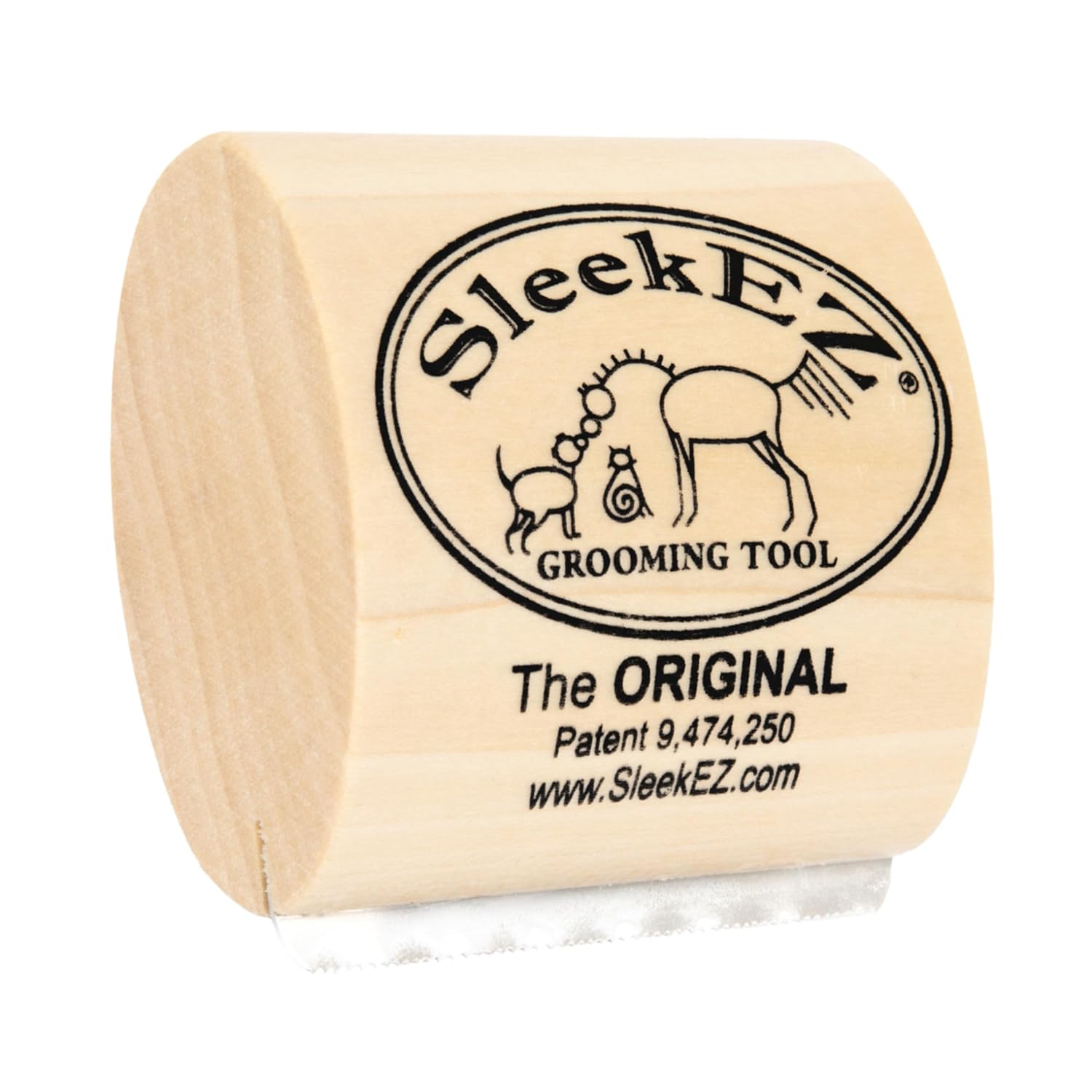
SleekEZ Cat Brush for Shedding
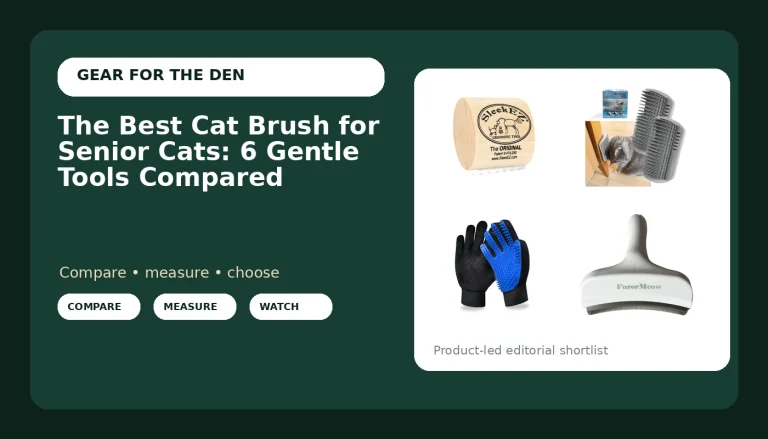
The full name on the listing runs long, and the part that matters for a senior cat is the end of it: this is a patented grooming tool for removing loose fur, undercoat and hair that works on short, medium and long coats, and it is made in the United States. One tool covers every coat length in the house, which means I am not swapping brushes mid-session while a fifteen year old cat decides whether to stay.
Check current Amazon price. The finished deshedding edge is the reason this is the pick, since an edge that is smooth will pull loose undercoat without scraping skin. This is the brush I reach for on the awkward spots: the shoulders, the base of the tail, and the back of the hind legs.
I use it in short strokes, two or three inches at a time, and I stop the moment the coat looks clean rather than going for one more pass.
Flaws but not dealbreakers: On a very long coated cat it can leave the topcoat looking slightly ruffled, so follow with a soft bristle brush or a damp hand.
Anyone with a medium or long coated senior cat, or a multi-cat house with mixed coat lengths, should make this the main tool.
Upgrade pick: FUR4 deShedding Cat Brush for Short Hair Cats
Upgrade pick
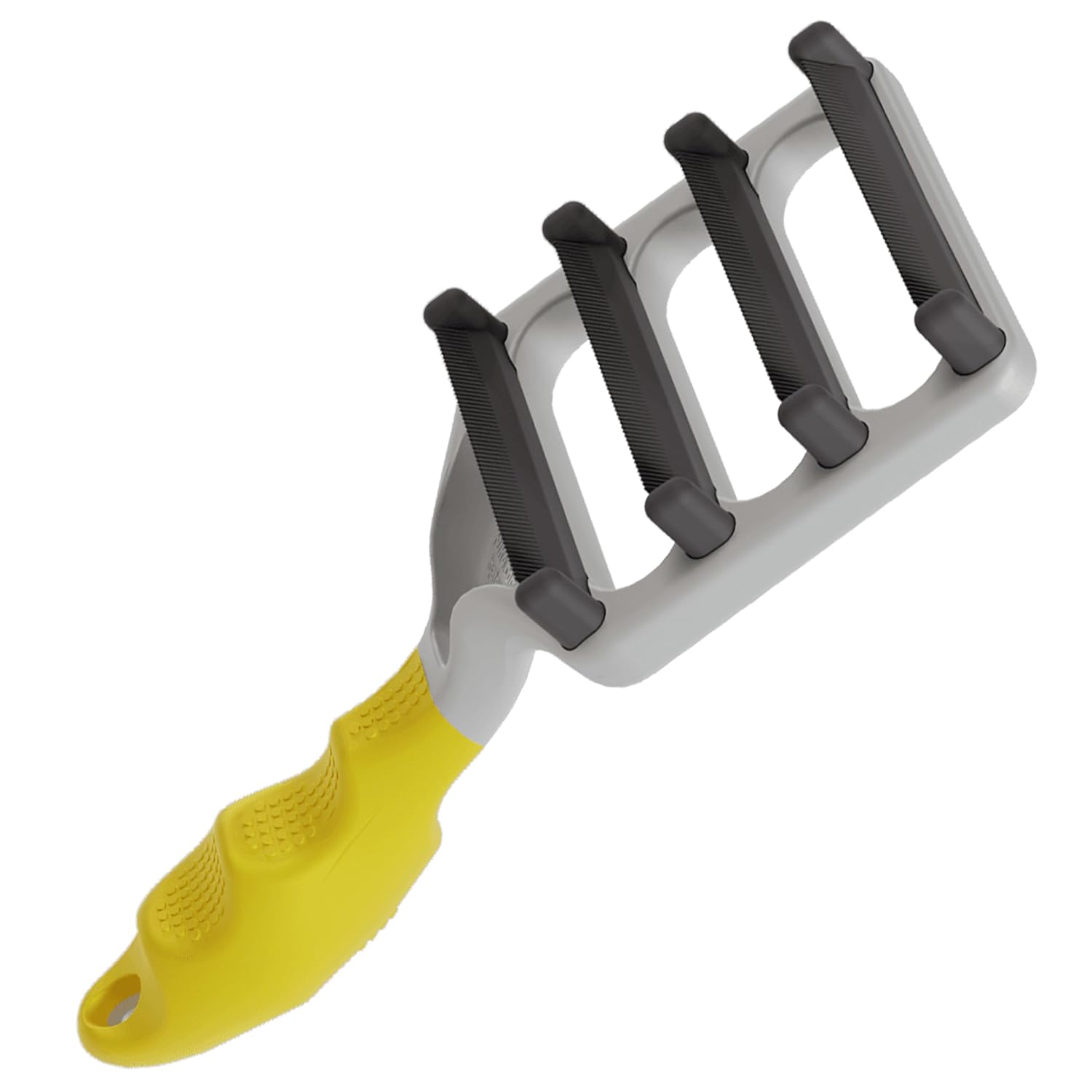
FUR4 deShedding Cat Brush for Short Hair Cats
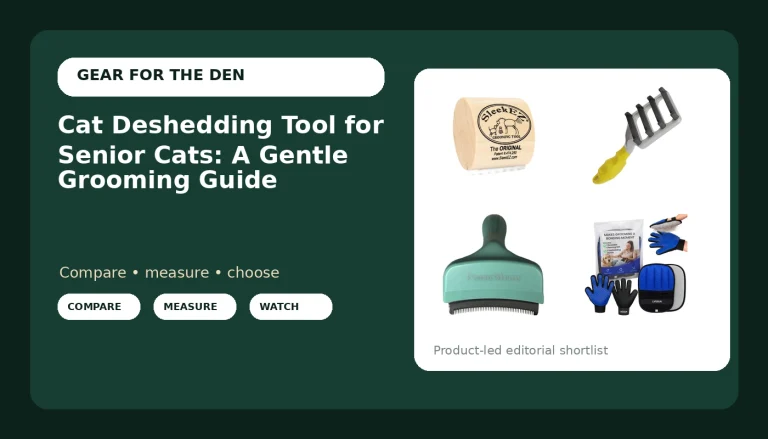
This is the FUR4 deShedding Cat Brush for Short Hair Cats, a pet hair brush with four carbon fiber edges that removes loose fur, and it is the most expensive of the three. It aims at a specific cat: a short coated senior with a dense undercoat that sheds year round.
Check current Amazon price. The four carbon fiber edges are the reason the tool stays light in the hand, which matters over a four minute session with a cat on your lap. Because it is built for short hair, a tool like this can carry closer comb spacing than a general purpose brush, and closer spacing is what grabs the fine undercoat a wider tool skips right over.
This is the brush I would buy for a cat who has been groomed for years and still sheds heavily, or for a short haired senior whose coat has gone dense rather than thin. If your cat's coat has thinned out, spend less and take the SleekEZ.
Flaws but not dealbreakers: It is not the tool for a long coated cat, and the price is hard to justify if you are only now trying brushing for the first time.
Anyone with a heavy shedding short haired senior who already accepts a grooming routine will get the most from it.
How to brush a senior cat gently: the eight step workflow
Getting the correct brush a senior cat gently accepts is half the job. The other half is sequence, and sequence is what most people get wrong. This routine works on a cat with arthritis, a cat with thin skin, and a cat who simply hates being held.
Step one: Pick the room and set the stage. Choose the quietest, warmest room in the house and close the door. Put a towel on your lap, lay the tools within reach, and keep treats in your pocket. Gather everything before the cat arrives, because standing up to fetch a brush is what ends most sessions early.
Step two: Hands before tools. Run your palms over the whole body, checking for lumps, scabs, bald patches and tender spots. Note anything new. This also warms the cat up to being touched. If you find an open wound or a hot spot, stop and call the vet.
Step three: Start where the cat likes being touched. Cheeks, chin, shoulders and the base of the ears come first, with short strokes in the direction of the coat. This builds the association before you ask for anything difficult. Do not start at the hindquarters, which is the most sensitive area on most older cats.
Step four: Match the tool to the coat length and the area. A deshedding edge for the back and flanks, a soft bristle brush for the face and legs, and a comb with wider spacing for the tail. Senior coats thin out in patches, so check comb spacing against the coat in front of you rather than following a chart.
Step five: Work in short strokes with the direction of the coat. Three strokes, pause, three strokes. Pressure should be light enough that the skin does not move under your hand. If the skin tents up, you are pressing too hard. Light pressure also keeps a deshedding edge from scraping a thin coat.
Step six: Belly, armpits and hind legs last, and lightest. Many older cats have less padding and more sensitivity here. Support the skin with the flat of your free hand, keep the tool almost parallel to the body, and take two strokes at most. If the skin is papery, skip the belly and wipe it with a damp cloth instead.
Step seven: Read the tail, the ears and the pupils. A tail that starts flicking, ears that rotate back, or a sudden stillness all mean stop. End the session while the cat is still comfortable and offer a treat. A four minute session that ends well beats a twelve minute session that ends with a bite.
Step eight: Clean the coat and the tool, then reset. Wipe loose fur off the cat with a damp hand or a roller adhesive, pull the fur out of the deshedding edge, and store the brush where the cat can smell it. Keep the order the same every time so the routine becomes predictable.
On frequency: once a week is enough for most senior cats, and twice a week during seasonal shedding. Short, frequent sessions beat long ones, and a cat with arthritis may do better with three minutes every other day. Our senior cat care checklist covers the rest of the routine.
The competition and why it lost
Several tools that get recommended for cats did not make this list, and the reasons are worth knowing before you spend anything.
A metal toothed slicker brush is the standard recommendation for young cats, and it is the wrong tool for a senior. The teeth scratch thin skin, and the pull on a loose coat is more than an older cat wants to tolerate. A rubber curry mitt is gentler, and it is fine for a short coat, but it does not reach the undercoat at all, and glove fit is a real problem if your hands are large.
A boar bristle brush, the kind sold for human hair, adds shine and nothing else. It will not touch loose undercoat, and on a shedding senior it is a smoothing step at best. A fine tooth flea comb has one job, checking for flea dirt, and it is not a grooming tool.
Self-cleaning slickers with a push button look convenient, but the retracting teeth catch coat and skin on the way back in, and that is the last thing a nervous senior needs. Clipper and scissor kits belong in the conversation only if the coat is already matted, and mats on thin skin are a vet job, not a kitchen table job.
Sticky rollers and pet hair rollers are for the couch, not the cat. They pick up surface fur and teach a cat that grooming involves tape, which is not a habit you want.
None of this is a knock on those tools for the cats they suit. A young, healthy, short coated cat is a completely different grooming problem.
What this all costs
Three brushes, three price points, one job. The cheap deshedding brush is the least expensive of the three and the right first purchase if you are unsure whether your cat will cooperate. The SleekEZ sits in the middle and covers every coat length, which makes it the one most households should own. The FUR4 is the premium pick, and it earns that spot only if your cat is short coated, dense, and already used to being brushed.
Check current Amazon price on each before you decide, since these listings move around.
Set that against the alternative. A sedation grooming appointment at the vet for a matted senior coat costs several times the most expensive brush here, and it comes with anesthesia risk for an older cat. Spread across a few years of weekly sessions, any of the three works out to pennies per session, and the cheapest one is close to free per use.
The math is the easy part. The eight steps are what separate a cat who hides when the drawer opens from a cat who climbs into your lap for four minutes of quiet. Brush a senior cat gently, keep the sessions short, and the coat and the skin both hold up better than they would with any single tool used badly.
That is the job. Your cat has been doing this for years. Meet it where it is.