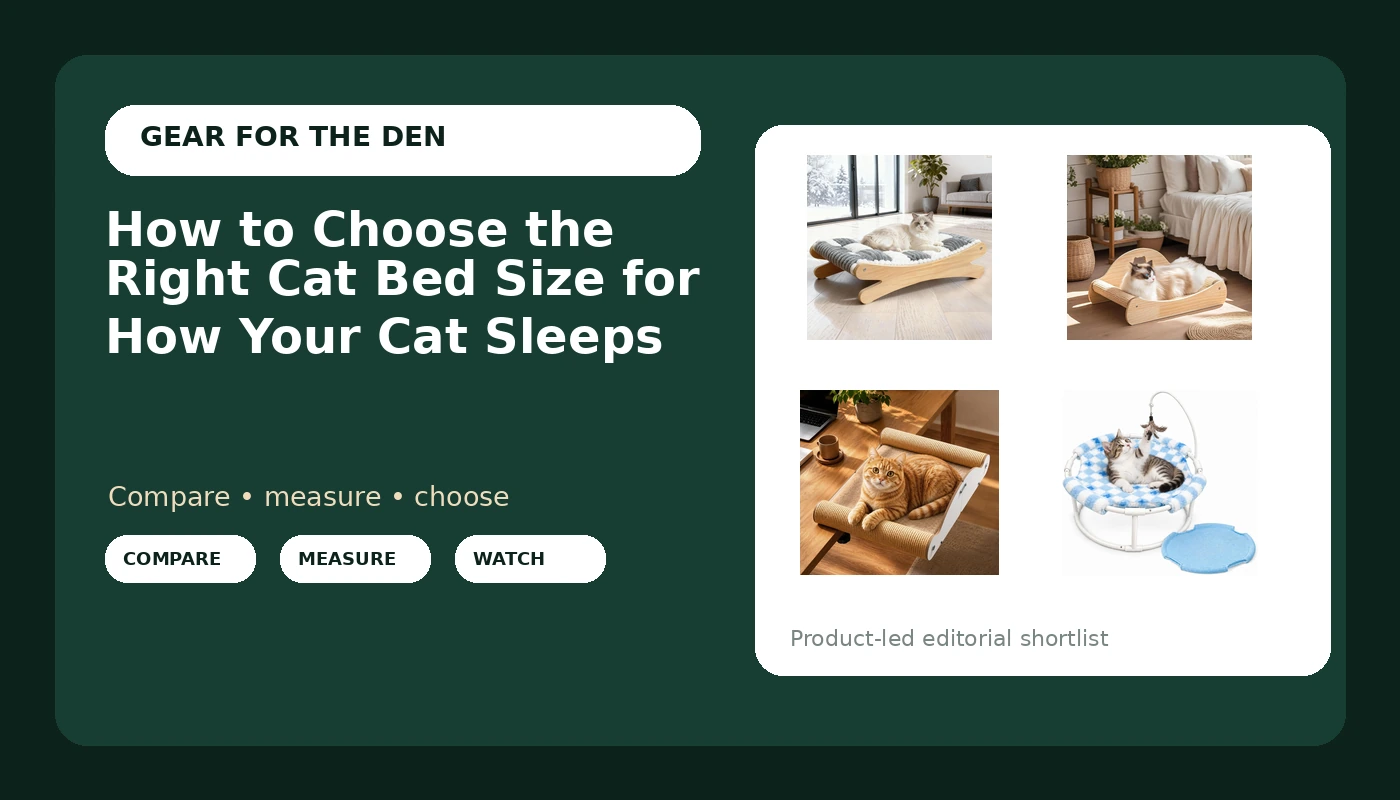
Most cats do not reject a bed because it is the wrong colour. They reject it because the cat bed size is wrong for the way they sleep. A bed that is too small forces a cat into a tighter curl than it would choose, and a bed that is far too large can feel exposed, especially for a cat that likes to press its back against a wall or the side of a box. Getting this right takes a couple of minutes with a tape measure, and it saves a lot of money on beds that end up holding laundry instead of a cat.
This explainer covers what the numbers on a cat bed listing actually mean, how raised and sling style beds differ, and how to match a bed to your cat's sleep posture and to the space you have. Four currently listed options are used as examples, each with a different footprint and mounting style, so you can see how the same measurement rules play out in very different products.
Quick answer
Measure your cat stretched out from the tip of the nose to the base of the tail, then add roughly a third of that length. That total is the sleeping surface length to look for. Width matters most on sling and hammock beds, where you want a couple of inches of slack beyond the shoulders so the fabric does not squeeze the cat. The short version of cat bed size explained is three numbers: surface length, surface width, and height off the floor.
Height off the floor, often listed as platform height, decides how easy the bed is to reach and how secure it feels once the cat is on it. If the bed clamps onto furniture or hangs from a frame, the stated weight limit and the anchor type matter as much as the dimensions, because a bed that is the right size but the wrong mount will not stay where you put it.
Four cat bed size options worth comparing
| Model | Best fit | What stands out |
|---|---|---|
| Chngeary Plush Elevated Cat Bed | Curled sleepers that like a raised, cosy surface | Solid wood frame with a soft furry cushion and several colour options |
| Borozo 23" Large Sisal Cat Scratcher Lounge Bed | Larger cats that scratch and then stretch out | A 23 inch sisal surface that doubles as a scratcher and a lounger |
| Cat Desk Bed, Double-Clamp Cat Bed with Cushion | Rooms with no floor space to spare | Double clamp mounting with a stated support rating of up to 50 lbs |
| Cat Hammock Bed with 2 Reversible Mats | Kittens and average cats that like a sling shape | 19 inch round frame, two reversible mats, and an included feather teaser |
The plush raised lounger: Chngeary Plush Elevated Cat Bed
A wood frame usually means a heavier piece that stays put when a cat jumps in and out, and the trade off is that it needs a fixed patch of floor and cannot be folded away. The number to check here is platform height: a low platform suits an older cat or a kitten, while a taller one suits a cat that already likes the top of a bookcase. Perch width matters too, because a raised bed with a narrow surface gives a cat less room to shift position during a long nap.
The large scratch and lounge option: Borozo 23" Large Sisal Cat Scratcher Lounge Bed
Sisal wears down over time, and the post diameter or wrap thickness is what decides how long a scratcher holds up under daily use, so it is worth checking how tightly the surface is wrapped. A piece this wide also takes up more floor than a hammock, so measure the spot before you order. It does not lift the cat off the floor, which means a cat that only ever sleeps up high may walk past it on the way to a windowsill.
The desk mounted space saver: Cat Desk Bed, Double-Clamp Cat Bed with Cushion
Clamped beds live or die on the anchor type and on the surface they grip. Measure the shelf depth or the desk lip before you buy, and check that the clamp jaws open wide enough to close on it. The weight limit covers the bed and the cat together, so treat it as a ceiling rather than a target, and remember that a clamped bed puts its load on your furniture rather than on the floor, which is exactly why it suits a small room.
The compact elevated hammock: Cat Hammock Bed with 2 Reversible Mats
Hammock fabric stretches, so the usable perch width is usually a little less than the frame suggests, and a cat that prefers a firm surface may want a flat bed instead. The 19 inch frame suits kittens and average sized cats, while a large cat will likely hang over the edges. Two mats mean one can be in the wash while the other is in use, which is a real advantage in a home with more than one cat.
Prices and availability may change. Product images, names, and retailer links are matched to verified listings. No current price, rating, stock status, or measured result is stated here without current evidence.
How to work out the correct cat bed size
Working out the correct cat bed size starts with your cat rather than the product photo. Measure from the nose to the base of the tail while the cat is lying stretched out, not curled, and write that number down. Then add about a third. A cat that sleeps in a tight ball will use a bed closer to its curled length, but a bed sized to the curled length leaves nothing to stretch into and nothing to grow into.
Sleep posture decides more than breed or weight does. Curlers want a bed with sides or a raised rim they can press against. Stretchers want length and a flat surface. Cats that drape want a sling or a raised edge they can hang a leg over. There is no single ideal cat bed size, because the same cat may sleep in two different shapes depending on the temperature of the room and how deep the nap is.
Height is the second half of the decision. A low platform height suits kittens, senior cats, and any cat with joint stiffness, while a higher platform suits a confident climber. Perch width should be at least the cat's shoulder width plus a couple of inches on a sling bed, and a little more on a flat bed if you want room for a second cat to join. If the bed sits on a desk or shelf, the anchor type and the stated weight limit become part of the sizing question, not an afterthought.
If you plan to use the same bed inside a carrier, check the carrier size before you buy, since a bed that fits the floor of a carrier is usually smaller than a bed the cat would choose at home. Kittens are the other exception. A bed that fits at four months may be tight at ten months, so size for the adult cat you expect rather than the kitten you have.
Matching bed dimensions to your room and your cat
Once you have the cat's numbers, match them to the room. The steps below keep the order straight so you do not end up with a correctly sized bed that has nowhere to go.
- Measure your cat stretched out from nose to tail base and add about a third for the sleeping surface length.
- Measure shoulder width and add two inches or more for sling and hammock beds, where the hammock fabric will sag under weight.
- Pick a platform height you can reach easily and your cat can reach comfortably, then decide whether the bed needs floor space or clamps to furniture.
- Check the weight limit and anchor type on any mounted bed, and measure the desk lip or shelf depth the clamps have to grip.
- Compare the assembled footprint against the space you actually have, including the clearance a cat needs to climb in from the side.
Buying checklist before you order
- Read the listed dimensions instead of judging size from the product photo, since photos are framed to make beds look larger than they are.
- On sisal pieces, look at the post diameter or wrap thickness, because a thin wrap wears through faster under daily scratching.
- Check whether the cover or mat is removable and washable, especially in a home with more than one cat.
- For mounted beds, confirm the clamp opening fits your desk, shelf, or table edge, and keep the stated weight limit in mind rather than loading it to the maximum.
- In a multi cat home, plan one bed per cat plus one extra so no cat is ever blocked from resting.
Which option should you choose?
Choose the Chngeary Plush Elevated Cat Bed when you have a fixed spot on the floor and want a raised, cosy surface with a wood frame behind it. Choose the Borozo 23" Large Sisal Cat Scratcher Lounge Bed when your cat is large, scratches furniture, and would benefit from one piece that handles both habits. Choose the Cat Desk Bed, Double-Clamp Cat Bed with Cushion when floor space is short and you are willing to mount a bed on a desk or shelf edge that can carry the load. Choose the Cat Hammock Bed with 2 Reversible Mats when you want a compact, elevated sling for a kitten or an average sized cat and you like having a spare mat.
The dimensions, materials, and stated weight limits above come from the product listings, and listings can change. None of these beds is claimed to be the best or the most durable, and no measured test result is reported here. Use the measurements you took and the numbers on the current listing to make the final call.
The bottom line
Cat beds fail in homes for two reasons: the surface is the wrong size for the cat's sleep posture, and the frame or mount does not suit the room. Measure your cat stretched out, add a third, then check platform height, perch width, and any weight limit before you order. Get those numbers right and the cat bed size you need becomes obvious, which means the bed you buy has a much better chance of being slept in every day instead of being folded away in a cupboard.