Fur in October is not a surprise, it is a season. A double coated dog blows its undercoat twice a year, and in the first week of a blow you can pull handfuls of dead hair off a dog that looked perfectly normal from across the room. Learning how to deshed a dog in shedding season is mostly about order of operations: read the coat type, loosen the undercoat, and repeat until the coat stops giving.
The tools matter, but they matter less than the sequence. I have watched owners buy a serious deshedding tool, run it over a dry matted coat for four minutes, and decide that the whole idea of a deshed a dog in shedding season routine is a scam. It is not. It is a bath, a dry, and two passes with the right edge, in that order.
This guide covers the three tools I would put in a shedding season kit and the eight step routine that uses them. It is written for the owner of a double coated dog in the middle of a blow, not for a show handler with a grooming table and a dryer the size of a shop vac.
Why you should trust me
I write the dog grooming coverage for Gear for the Den, which means I spend my time reading tool listings, coat descriptions, and owner reports instead of repeating the marketing copy on the box. I have lived with double coated dogs through enough shedding seasons to know that the fur on the floor is a schedule problem, not a hair problem, and that most deshedding tools fail because they are used on the wrong coat or at the wrong point in the routine.
I have not run a laboratory test on the three tools below, and I will not pretend otherwise. What I can tell you is what each one is built to do, which coat it suits, where it fits in the routine, and the places where the design asks more of you than the listing admits.
How I picked and how I tested
Picking a deshedding tool starts with the coat, not the brand. A tool that rakes through a thick undercoat will scratch skin on a short single coat, and a soft bristle brush that feels lovely on a poodle does nothing for a husky in March. There is no single ideal deshed a dog in shedding season tool, because the coat makes the decision for you.
I sorted the three tools here by the job each one does in the routine, then checked them against the details that decide whether a tool gets used twice a week or buried in a drawer: bristle type and edge design, blade guard coverage, grip handle shape, motor noise on anything powered, and the oatmeal concentration on anything that touches skin.
I also looked at what the listings do not say. A deshedding edge with no blade guard is a scraping tool, and scraping is how you get brush burn along a dog's back. A cordless clipper with a loud motor only works on a dog that has already been desensitized to it. Those are the details that decide whether shedding season goes smoothly or ends with a dog hiding under the bed.
If you are still choosing between tool types, my dog grooming tools for shedding season roundup covers the wider field before you commit.
The tools you need to deshed a dog in shedding season
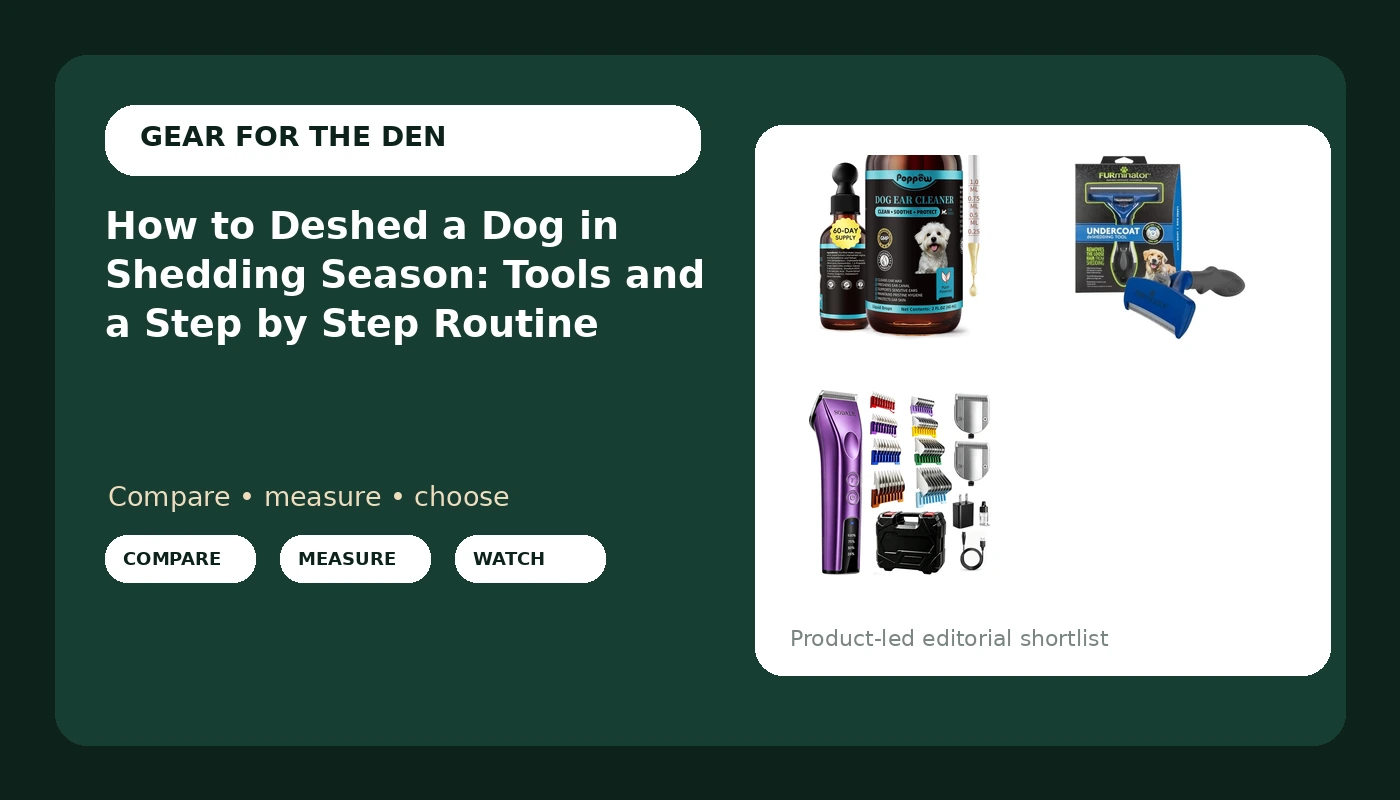
Three tools cover the whole routine: an undercoat edge for the bulk of the hair, a clipper for the places the edge cannot reach, and an ear cleaner for the finish. You do not need all three on day one, but if your dog is a double coated breed in full blow, the first one is not optional.
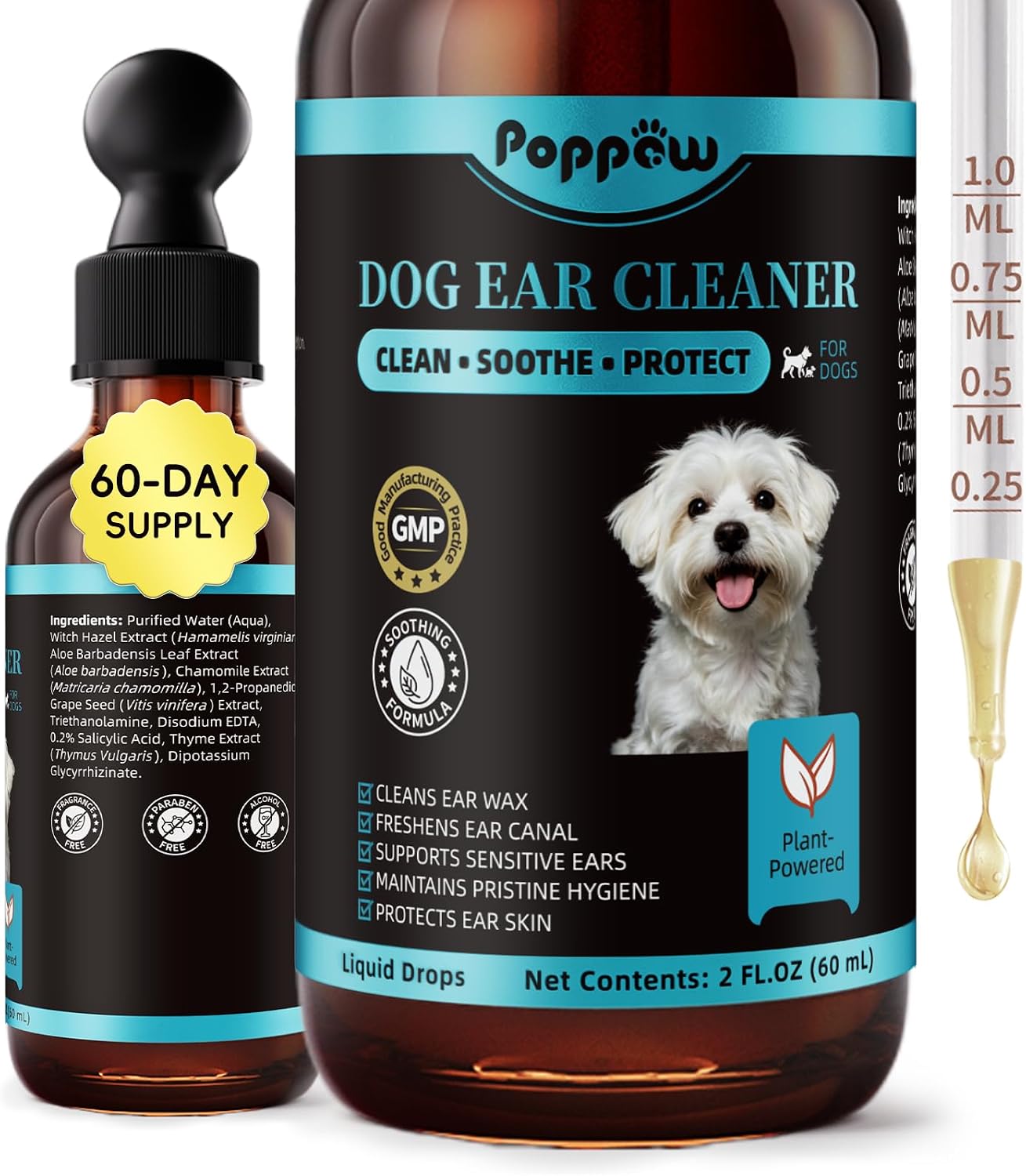
Budget pick: POPPAW Dog Ear Cleaner, Natural Ear Drops for Dogs, 60-Day Servings
Budget pick
POPPAW Dog Ear Cleaner, Natural Ear Drops for Dogs, 60-Day Servings
Ears are the part of a shedding season routine that everyone skips. A bath loosens everything, including the wax and the loose hair sitting in the ear canal, and a dog that shakes its head for two days after a bath is usually a dog with a wet ear. This bottle is a 60-day serving of natural drops, which puts it in the entry tier of grooming supplies. Check current Amazon price, and note that the bottle is small because the serving is a few drops per ear, not a flush.
Flaws but not dealbreakers: This is a maintenance product, not a treatment. If your dog's ears are red, hot, swollen, or smell, that is a vet visit, not a bottle of drops.
Anyone who bathes a dog at home during shedding season should keep a bottle in the grooming bin next to the towels.
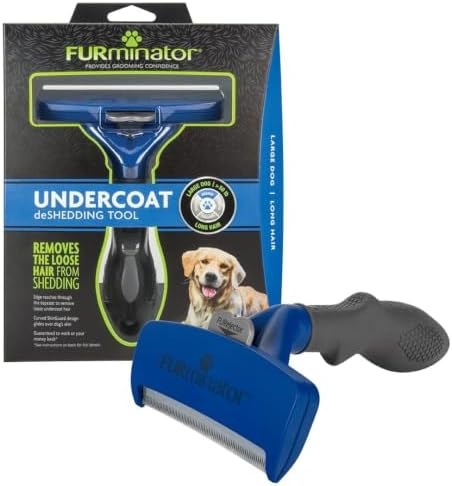
Our pick: FURminator Large Dog Undercoat deShedding Tool for Long Hair
Our pick
FURminator Large Dog Undercoat deShedding Tool for Long Hair
This is the tool the routine is built around. It is made for the coat that causes the most trouble in shedding season: a long, dense undercoat that traps dead hair against the skin. The edge is designed to reach under the topcoat and collect the loose stuff instead of slicing through the guard hairs, which is the difference between a tool that thins a coat and a tool that wrecks one. Check current Amazon price before the season starts, because this is the one item in the kit you do not want to be shopping for on the day the fur starts flying.
The blade guard is the part to understand. Held flat against the skin and pulled in long strokes, an undercoat edge scrapes. Used with short strokes, following the grain, with the guard sitting between the metal and the skin, it collects. That technique is what makes this the correct deshed a dog in shedding season tool for a long haired double coat, and it is also why some owners hate it: they used it like a brush.
Flaws but not dealbreakers: It is a once or twice a week tool during a blow, not a daily brush. It is also the wrong tool for a single coat, and the wrong tool for a coat with mats in it. Mats come out with a comb and blunt scissors, not a rake.
Anyone with a long haired double coated breed, from a golden retriever to a collie to a shepherd mix, will get the most out of this one.
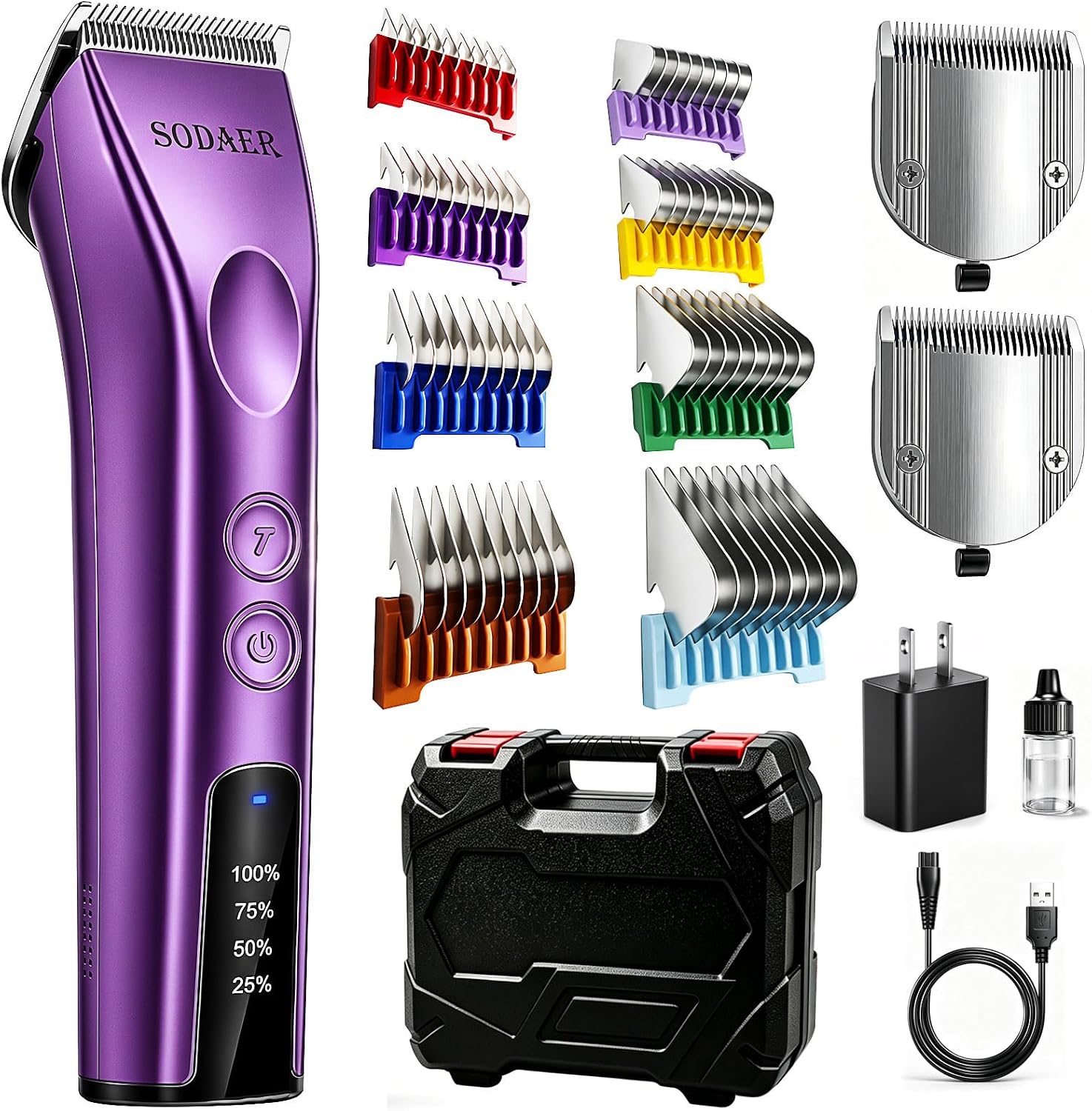
Upgrade pick: Sodaer Professional Dog Grooming Clippers, Cordless Pet Hair Clipper
Upgrade pick
Sodaer Professional Dog Grooming Clippers, Cordless Pet Hair Clipper
This is the tool for the parts of a shedding season that a deshedding edge cannot reach: paw pads, sanitary areas, and the long feathering behind the legs that collects everything a dog walks through. A cordless clipper with a proper blade guard system also lets you shorten a coat that has gotten away from you, which is sometimes the honest answer for an older dog whose coat has stopped shedding cleanly. Check current Amazon price, and keep the box, because a clipper that lives in a drawer without its guard will lose it by spring.
Two details decide whether a clipper actually gets used. The first is motor noise. A loud clipper startles a dog that has never been clipped, so the first session should be the clipper running across the room, then in your hand, then touching the dog with the blade off. The second is the grip handle. A slim handle that fits your hand lets you hold the clipper steady with the blade flat, which is what keeps you from catching skin in a fold.
Flaws but not dealbreakers: Cordless means battery, and battery means charging before a long session. Anyone grooming one dog at a time will never notice. Anyone clipping three dogs in an afternoon should keep a spare battery or a corded backup.
Anyone who wants to tidy paws and feathering between professional appointments, or who is slowly taking over the whole grooming routine, will get the most from this tier.
The actual deshedding routine
Now the part you came for. This order works on any double coated dog in a blow. If your dog has a single coat, skip steps three and six and brush with a rubber curry instead.
Step one: Read the coat type. Run your fingers down your dog's side and part the hair. A double coat has a soft, dense undercoat sitting under a longer topcoat. That undercoat is the thing blowing, and it is the only thing a deshedding tool should be pulling. If you can see skin easily and the hair is uniform length, you have a single coat, and a rake is the wrong tool for it.
Step two: Set the space. Do this outside if the weather allows, or in a bathroom with the door closed. Put down a towel you do not care about, because a tile floor plus loose undercoat plus a wet dog is a slip hazard. Have your tools within reach before the dog is on the towel, not after.
Step three: First dry pass. Work in sections, starting at the hindquarters and moving forward, since that is where a dog is least sensitive. Short strokes, following the grain, with the blade guard between the metal and the skin. Five minutes per zone, then move on. This pass removes the loose hair that a bath would otherwise mat into the coat.
Step four: The bath. Lukewarm water, and a shampoo with a real oatmeal concentration if your dog's skin is pink or itchy from the coat blowing. Work the lather down to the skin with your fingers rather than scrubbing the topcoat, and rinse for twice as long as feels necessary. Shampoo left in the undercoat is the main cause of a dog that itches for a week after a bath.
Step five: Dry with airflow, not heat. Airflow does the work here. A human hair dryer on high heat will cook skin and leave the undercoat damp at the base. Use the cool or low setting, keep the nozzle moving, and dry in the same sections you brushed. A dog that is dry at the skin will release far more hair on the second pass.
Step six: Second pass on a dry coat. This is the pass that produces the clouds of fur. Same short strokes, same sections, and stop when the tool comes up nearly empty. If you are pulling hair for twenty minutes straight in one spot, you are either overworking one zone or the coat has mats that need a comb first.
Step seven: Tidy the edges with the clipper. Paw pads, sanitary areas, and the feathering behind the legs. Keep the blade flat, use the grip handle to stay steady, and let the clipper do the work instead of pushing it. If your dog flinches at motor noise, run a five minute desensitizing session with the clipper off, then on, then touching, on a different day than the bath.
Step eight: Ears, then a schedule. A few drops of ear cleaner in each canal, massage the base, and let your dog shake. Then mark the calendar: during a blow, this routine runs weekly. Once the coat settles, once a month is enough to keep the house from filling up again.
If your dog is matted, skittish about the clipper, or has skin that is already broken, this is a groomer or vet conversation, not a home project. For everyone else, the routine is repeatable, and the second time takes half as long as the first.
The competition and why it lost
An undercoat rake is the closest competitor to the deshedding edge, and it costs less. It did not take the top spot because the teeth have no blade guard behind them, so a determined owner can scratch skin in a single pass. It is a fine second tool for a thick coat, but it is not the one I would hand a first timer.
A slicker brush is the tool most owners already own, and it is genuinely useful for the topcoat and for a bristle type that lifts surface hair. It just does not reach the undercoat, so in this routine it is a finishing tool and not the main event.
A rubber curry comb is the right answer for a short single coat in shedding season and the wrong answer for a long double coat, where it polishes the top layer and leaves the dead undercoat exactly where it was.
Deshedding shampoos and conditioners do help, but the oatmeal concentration and the rinse matter more than the label on the bottle. A cheap oatmeal shampoo rinsed properly beats an expensive one left in the coat.
A high velocity dryer is the professional answer to airflow, and if you already own one, use it. For one dog in one bathroom, it is a large spend and a large object to store, which is why the routine above is written around a home dryer on the cool setting.
What this all costs
The three tools sit in three tiers, and the tiers match how often you will reach for each one. The ear cleaner is the entry tier and lasts through a whole shedding season. The deshedding edge is the middle tier and is the one that does the actual work. The clipper is the top tier, and it is worth buying only if you plan to keep grooming at home rather than booking an appointment. Check current Amazon price on each of the three, since the number moves with the season, and buy before the blow starts rather than in the middle of it.
The honest comparison is not tool versus tool. It is tool versus a professional deshedding appointment, which costs more than the entry tier and often more than the edge itself, and which you will need to book again in six months when the coat blows the second time. Two skipped appointments usually cover the whole kit.
The math is the easy part. The part that decides whether your house stays livable in October is the order: read the coat type, loosen the undercoat, wash, dry with airflow, and take the second pass seriously. Do it once, keep the tools in one bin, and the next shedding season is a chore instead of an emergency.
That's the job. Your dog was built to do this. Let it.