Most people treat how to keep a bird cage clean as a question about scrubbing harder. It is not. It is a question about geometry and materials. A cage with a deep tray liner, one food cup wedged into a corner, and three dowel perches that soak up droppings will eat an hour of your Saturday. The same cage, fitted with perches and platforms you can wipe in ten seconds, takes six minutes a day and almost never needs a full teardown.
I have kept parakeets, a cockatiel, and one extremely loud conure in a small apartment, and I have cleaned cages at a rescue that boarded forty birds at a time. The rescue cages were the worst offenders: bare wire, swing mounts bolted at eye level, and perch diameter chosen by whatever dowel was cheapest that year. Those cages took two hours each, every week.
The fix is not a bigger cage, a stronger cleaner, or more paper towels. It is cage furniture that comes apart, dries fast, and does not absorb what lands on it. This guide covers the perch choices that shorten the job, and the eight-step routine that does the rest.
Why you should trust me
I have been the person friends text when their budgie looks off, and I have run the Saturday cleaning rotation at a small parrot rescue for three years. That means I have scraped dried droppings off every surface a cage can offer: powder-coated wire, natural wood, rope, stainless steel, and the inside of a food cup that nobody emptied before it turned into cement.
I keep a notebook of what held up. A perch that came clean after one wipe got logged. A perch that stained, frayed, or started to smell got logged too, and most of those got thrown out. The three items below survived a year of rescue-level abuse, and the routine at the end is the same one I used on those forty-bird weekends.
I am not going to tell you a clean cage is a matter of willpower. It is a matter of setup. Get the setup right and the job takes minutes.
How I picked and how I tested
This is not a guide to buying a bird. It is a guide to the two or three pieces of hardware that decide whether cleaning takes six minutes or sixty, plus the order you do the work in.
I compared perch and platform styles for small parrots across four cages: one budgie cage, one cockatiel cage, one conure cage, and a quarantine cage that saw a rotating cast of rescues. Every perch got the same treatment. A week of normal use, then a wipe with a damp cloth, then a check for staining, splinters, loose hardware, and how long the surface stayed damp.
The things I measured were not glamorous. Perch diameter against the bird's foot, because a perch that is too thin puts the whole foot in contact with droppings. How easily the mount releases given the bar spacing of a standard cage. Whether the surface has a grain that traps hulls or a finish that sheds them. Where a platform sits relative to cage height, since a perch low in the cage collects far more than one at chest level. And how each piece behaves when wet, because a perch you cannot put back until tomorrow is a perch you will stop cleaning.
There is no lab for this. The test is a year of real birds, real seed hulls, and real Saturday mornings. Two rules came out of it. Flat surfaces beat round ones, because a cloth covers them in one pass. And stainless steel and sealed wood beat rope and raw dowel every single time.
Perches that make it easier to keep a bird cage clean
The perch is the part of the cage that touches the bird most, which means it collects the most. Swap the absorbent pieces for wipeable ones and the daily job shrinks before you change anything else.
Budget pick: 2 Pcs Multi-Color Random Bird Perch Stand Toy Wood Parrot Perch Stand Grinding Claw Sticks Sanded Surface Cage Toy for Parakeets Finches Parakeet Toys Birdcage Accessories
Budget pick
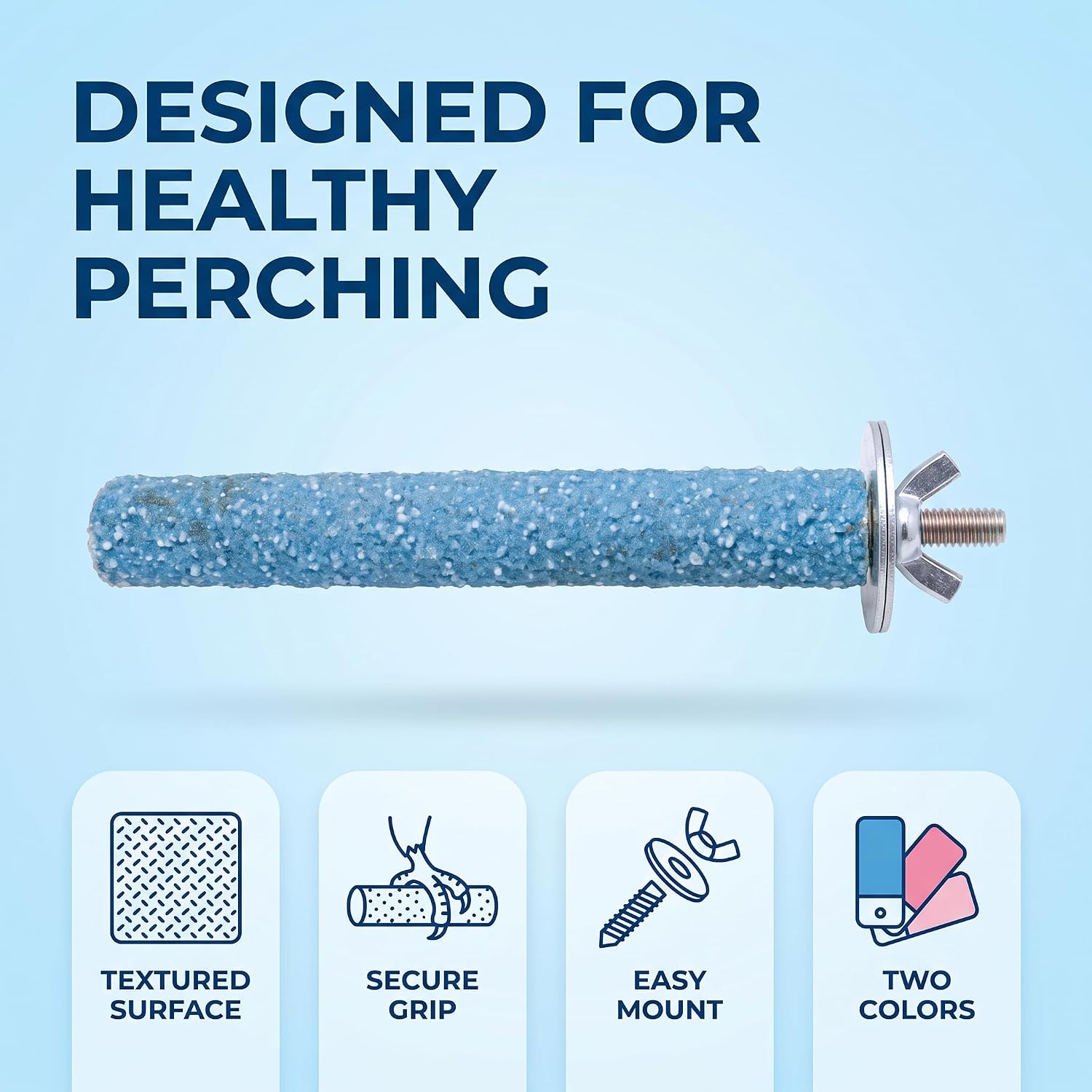
2 Pcs Multi-Color Random Bird Perch Stand Toy Wood Parrot Perch Stand Grinding Claw Sticks Sanded Surface Cage Toy for Parakeets Finches Parakeet Toys Birdcage Accessories
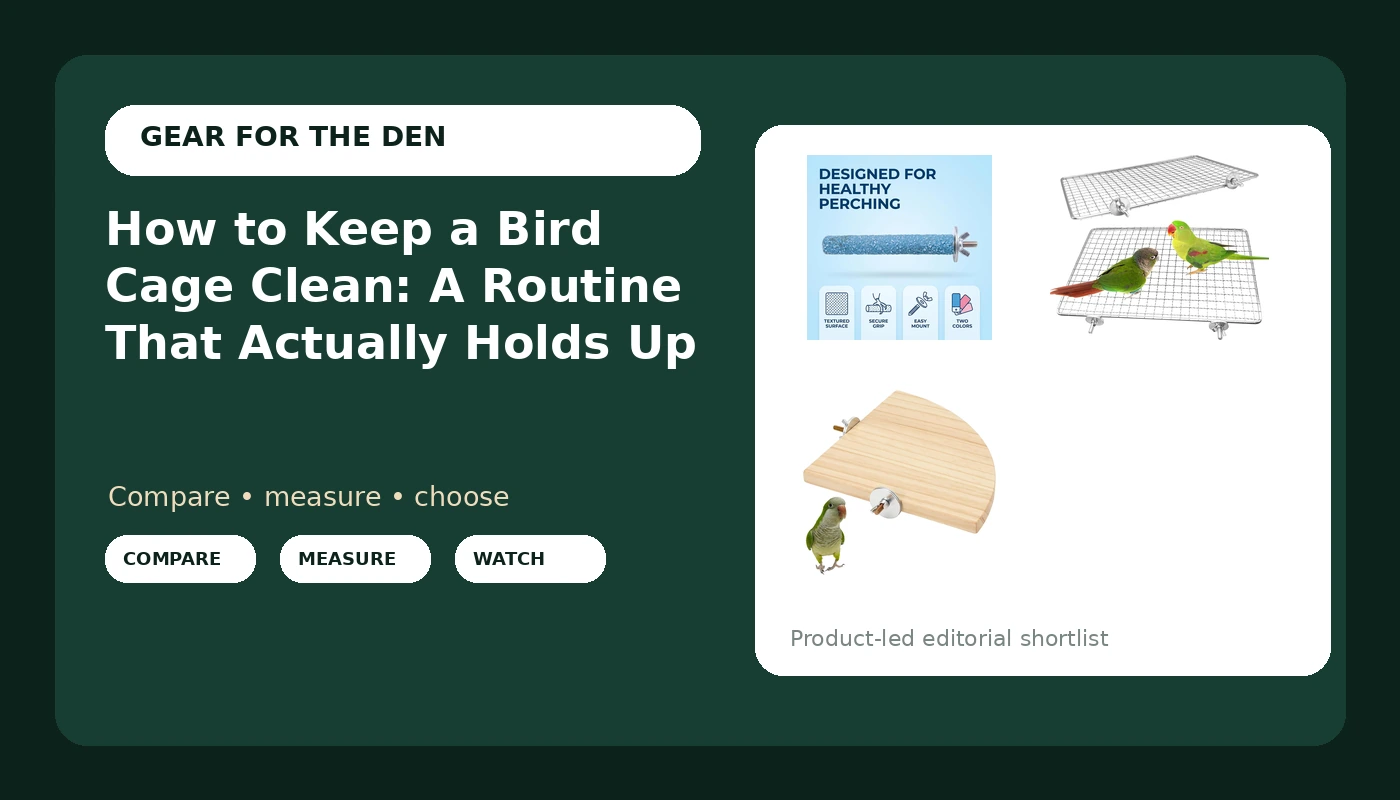
Two sanded wood perches that mount with a bolt and wing nut, so they come off the cage in seconds instead of minutes. That matters more than it sounds. The main reason people skip a midweek wipe is that removing the furniture is annoying, and anything with a screw mount gets skipped first. Check current Amazon price on the listing, since these move around.
The sanded surface is the other selling point. It gives the bird something to work its beak and claws on, so the perch does some of the upkeep itself, and it does not have the deep grooves of a raw branch where hulls and droppings settle. A damp cloth runs the length in two passes.
Flaws but not dealbreakers: The colors are random, so do not order these expecting a matching set. The wood is softer than a hardwood branch, and a determined macaw would chew through one. This is a parakeet, finch, and budgie perch, and the listing says so.
Anyone keeping small birds who wants a cheap perch they can pull out and rinse without hunting for a screwdriver should start here.
Our pick: BNOSDM 2 Pack Bird Perch Platform Stainless Steel Birds Perches Parrot Shelf Training Stand Small Animals Cage Accessories for Parakeets, Budgies, Conures, Cockatiels, Lovebirds (Extra-Large Size)
Our pick
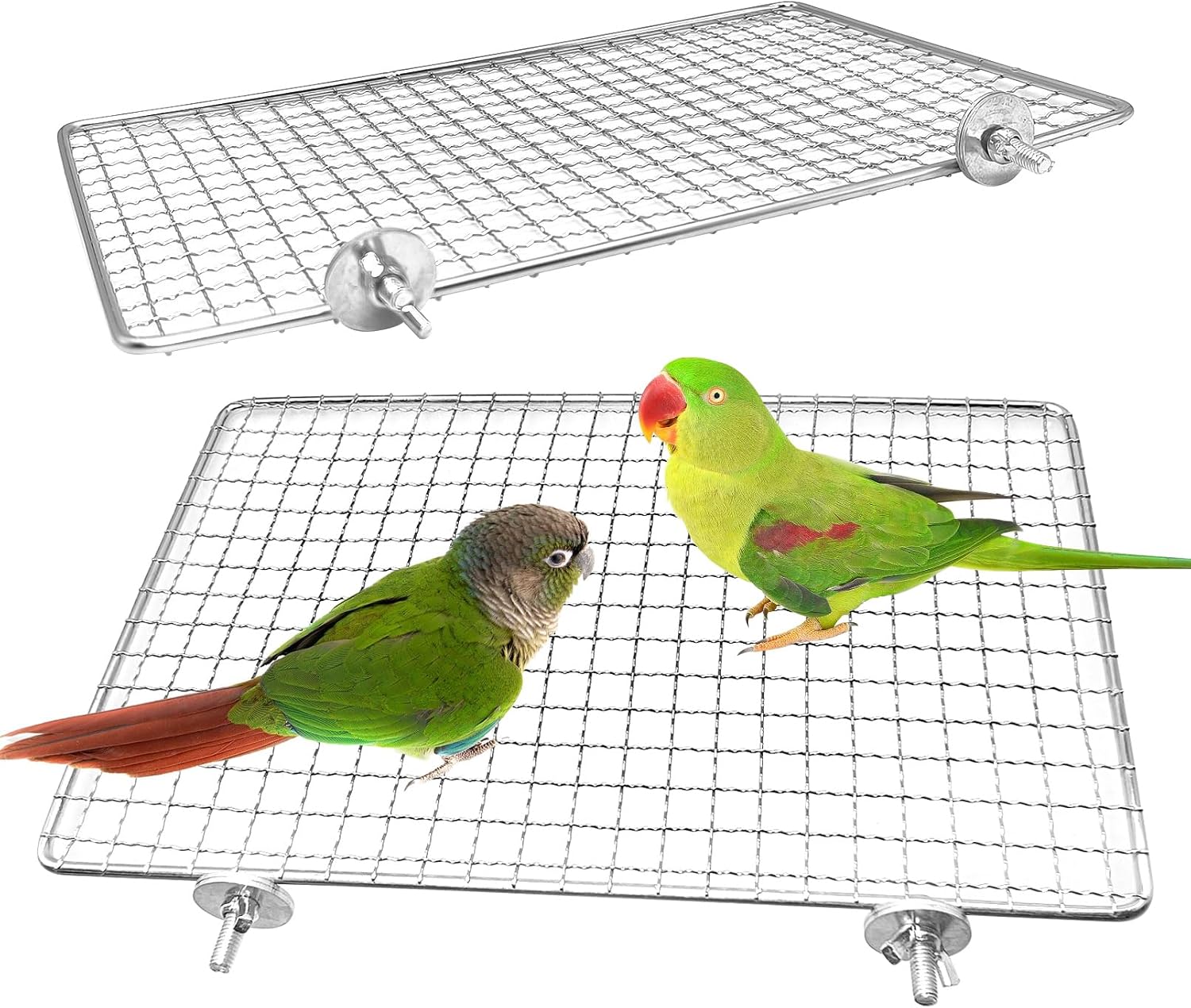
BNOSDM 2 Pack Bird Perch Platform Stainless Steel Birds Perches Parrot Shelf Training Stand Small Animals Cage Accessories for Parakeets, Budgies, Conures, Cockatiels, Lovebirds (Extra-Large Size)
This is the one I would buy again first. A stainless steel platform gives the bird a flat place to stand, and flat stainless is the easiest surface in a cage to clean. Droppings do not soak in, because there is nothing to soak into. One wipe and it is done. Check current Amazon price before you order, and note that this is the extra-large size, which suits a conure or a cockatiel better than a finch.
The larger footprint also solves a problem round perches create. On a platform the bird stands flat and its droppings fall past the edge instead of running down the perch and into the food cup below. Set it above the food cup size zone and you will notice the difference within a week.
Flaws but not dealbreakers: Stainless is cold in a way wood is not, so some birds take a few days to accept it. Put a favorite toy beside it. The wing nuts also need a recheck after the first week, because the mount can loosen as the bird shifts its weight.
Anyone with a medium parrot who is tired of scrubbing a textured perch should look here first.
Best for corners: 6.7 Inch Fan-Shaped Bird Perch Platform, Natural Wood Flat Bird Perches for Cage, Parrot Perch Corner Stand, Small Parrot Stand Animal Cage Accessories for Hamsters Gerbils
Best for corners
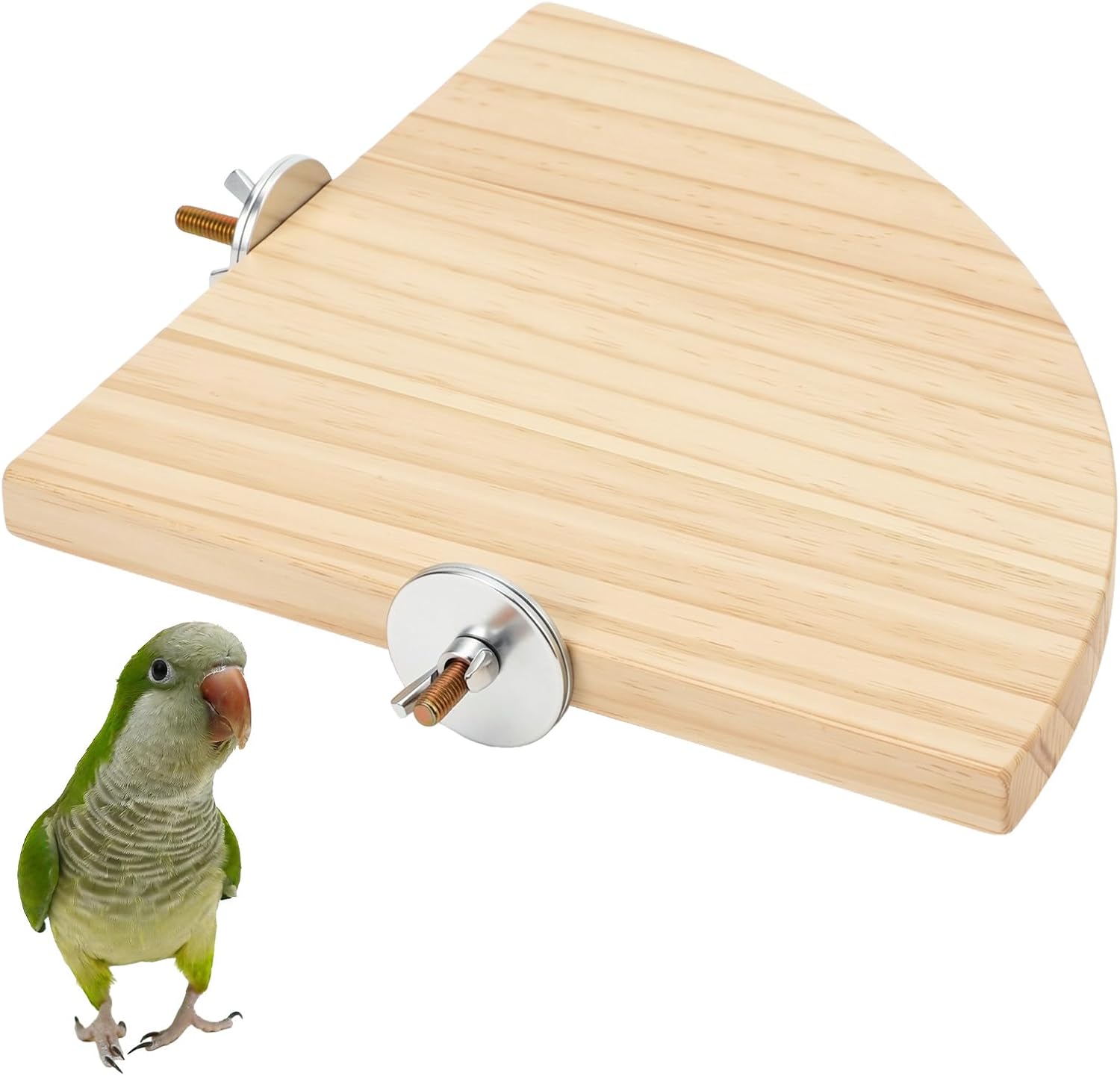
6.7 Inch Fan-Shaped Bird Perch Platform, Natural Wood Flat Bird Perches for Cage, Parrot Perch Corner Stand, Small Parrot Stand Animal Cage Accessories for Hamsters Gerbils
A fan-shaped wood platform that wedges into a cage corner, which is dead space in most setups. Corners collect the most debris because birds back into them, and they are also the hardest place to reach with a cloth. A flat wood platform there gives you a removable surface instead of a stretch of wire you scrub in place. Check current Amazon price on the listing.
Natural wood is not as easy to clean as stainless, but a flat sealed face is still far easier than a dowel. Wipe it, let it dry, put it back. The fan shape means the bird gets a full standing area without stealing flight room from the middle of the cage.
Flaws but not dealbreakers: Wood will stain over time, and no amount of wiping undoes a year of use. Expect to replace it eventually, and expect to check the mounting bolts more often than on a steel platform. Check that the corner angle matches your cage, too, because a fan platform on the wrong corner leaves a gap where hulls pile up.
Anyone with a small parrot in a standard rectangular cage who wants the corners to stop being a problem should try this.
The actual cleaning workflow
This works on any cage with a removable tray liner, and it takes six to ten minutes a day plus one longer session a week. If your cage has no slide-out tray, the daily version still works; you just reach instead of slide.
Step one: Prep the room. Put the bird somewhere safe and boring before you touch the cage. A bathroom with the door closed and the lid down works. If you are moving the bird, use a carrier size that lets it stand upright without its head touching the top, because a tight carrier makes the trip stressful and makes you rush the job. Lay out your supplies first: a damp cloth, a dry cloth, a small brush, and a spare tray liner. Getting up for supplies mid-job is how six minutes becomes twenty.
Step two: Pull the tray liner. Slide it out, roll it inward so nothing falls off, and bin it. This one step removes most of the mess, and it is also the step people put off. Do it first, not last.
Step three: Empty the food cup. Tip the seed into the bin, not back into the bag. Old hulls at the bottom of a cup are the source of most cage smell, and a food cup size that is too large means the bird digs through stale seed to reach fresh. Smaller cups you refill often beat big cups you top up.
Step four: Wipe the perches. This is where the two platforms earn their keep. A flat surface takes one pass. If you are still running dowel perches, this step is where your ten minutes goes, and it is the reason to switch. Work from the highest perch down, so anything you knock loose lands on a surface you have not cleaned yet.
Step five: Wipe the bars and corners. A damp cloth across the bar spacing you can reach, a small brush in the corners. If you run a fan platform in a corner, pull it out and wipe both faces. Do not spray cleaner into the cage; spray the cloth outside the cage and let it sit for a moment.
Step six: Check the swing mount and hanging toys. Swing mounts and toy clips loosen. A swing that drops onto a perch at night is a bird that stops sleeping, and a bird that stops sleeping makes more mess. Give every mount a twist with your fingers.
Step seven: Refresh foraging and enrichment. Rotate what is in the cage rather than adding more. Foraging difficulty should climb slowly, and a bird that has to work for its food spends less time parked in one spot making a mess under itself.
Step eight: New liner, fresh food, bird back. Slide in the new tray liner, refill the cup, and return the bird. Watch it for a minute. If it goes straight to the highest perch, the cage is fine. If it paces the floor, something is still out of place, usually a perch you moved.
Do that daily and the weekly session is just steps four through six with a deeper wipe. The ideal keep a bird cage clean routine is short enough that you will run it on a Tuesday night instead of dreading a heroic weekend overhaul. If you want to go deeper on liners and tray setups, I wrote a separate cage liner and tray guide.
One note on the weekly pass: the correct keep a bird cage clean schedule depends on how many birds you keep and how much of the day they spend inside. Two budgies in a large cage can go a week between deep cleans. A conure that lives in its cage cannot.
The competition and why it lost
Several things you will see in the bird aisle did not make the cut, and it is worth knowing why.
Rope perches are the classic. Birds love them, they are soft underfoot, and they are almost impossible to clean. Droppings work into the fibers, and once they are in there, no amount of scrubbing gets them out. Treat a rope perch as disposable and replace it when it discolors.
Raw dowel perches are the other default. They are cheap, they ship with most cages, and a uniform diameter is wrong for a bird's foot over the long run. They also absorb. A dowel under a food cup is a sponge.
Sandpaper perch covers are the popular shortcut. They can abrade a foot if the bird stands on one all day, and they trap debris at the wrapped edges. A sanded wood perch the bird can grip properly does the same job without the wrap.
Deep plastic cups with narrow openings are hard to dry, and water sitting in the bottom of a cup grows things. Wide, shallow cups dry faster.
Fabric cage covers and cloth liners look tidy in photos and behave badly in practice. Fabric holds odor, and odor is the thing you are actually fighting.
None of this is about brand loyalty. It is one rule: if a surface absorbs, it will eventually smell, and you will eventually throw it out.
What this all costs
The hardware is the cheap part. Two wood perches, a stainless platform set, and a corner platform together cost less than a bag of good seed, and each listing has its own price that moves, so check current Amazon price on each one before you order. None of it needs replacing monthly.
The real cost is time, and that is where the math gets interesting. An hour every Saturday is fifty-two hours a year. Six minutes a day is roughly thirty-six hours a year, and the daily version is what keeps the cage from ever getting bad enough to need the hour. That is the whole argument for spending a little on furniture you can wipe.
Then there is the cost of getting it wrong. A cage that smells is a cage where a bird's respiratory system works harder than it should, and that becomes a vet bill rather than a cleaning bill. A perch that stays damp is a perch that grows things. Both are downstream of the same choice: absorbent surfaces or wipeable ones.
So here is the honest version of how to keep a bird cage clean. Buy two or three pieces of furniture that come apart and dry fast. Put the flat ones where the bird spends its time and where the droppings fall. Then run the eight steps, daily, in the same order, until it stops feeling like a chore. The birds do not care how the cage looks. They care that it is dry, that it does not smell, and that nobody is banging around in there for an hour on Saturday.