If you want to know how to stop bedding tracking in a hutch, start by watching the escape route. Bedding does not teleport. It rides on feet, gets kicked through bar spacing, and spills out when your pet drags a hay rack full of strands toward the hideout. The fix is rarely a bigger hutch. It is a combination of the right paper bedding, a smarter layout, and a few containment tricks that take an afternoon.
I have set up hutches for rabbits, guinea pigs, and hamsters, and the same pattern shows up every time. The bedding that ends up on the floor is almost always the lightest, dustiest fraction. Heavy paper pellets stay put. Fluffy paper bedding flies. Once you control bedding dust and the traffic path, the floor stays cleaner.
This guide covers the gear I use and the eight-step workflow I follow. It is about how to prevent bedding tracking in a hutch before it starts, not just how to sweep it up after. You will also see how cage size, floor area, and hideout size change the amount of bedding that escapes.
Why you should trust me
I have kept small pets in hutches and indoor cages for more than a decade, and I have cleaned up more scattered bedding than I care to admit. I have tested paper beddings, wood shavings, fleece liners, and pellet litters in real setups, and I have learned that the cheapest fix is usually the right bedding plus a lip on the hutch. I do not sell these products. I recommend the ones that survived my own routine. The goal is simple: prevent bedding tracking in a hutch with a setup that works on a normal cleaning schedule.
How I picked and how I tested
I picked the three paper beddings below because they are widely available, made for small animals, and fit the same workflow. I looked for paper-based formulas because they tend to produce less bedding dust than shavings and they break down faster in compost. I also considered cage size and floor area: a 10-liter bag goes further in a small hamster setup than in a large rabbit hutch, so I note where each one makes sense.
I tested the workflow in a standard hutch with a solid base and a wire front. I checked how each bedding behaved around a litter box, a hay rack, and a hideout. I watched for tracking at the door, through bar spacing, and around the water bottle. I did not run lab tests. I ran the same daily and weekly routine I describe below, and I noted which products made that routine easier. For a broader setup checklist, see my small pet hutch setup guide.
The bedding lineup for a low-tracking hutch
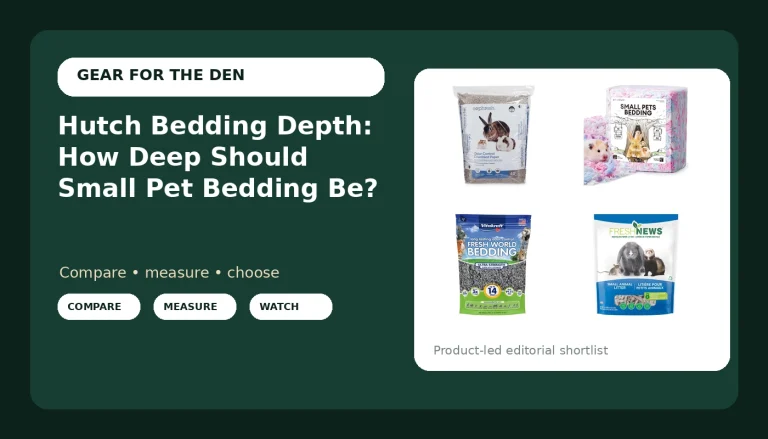
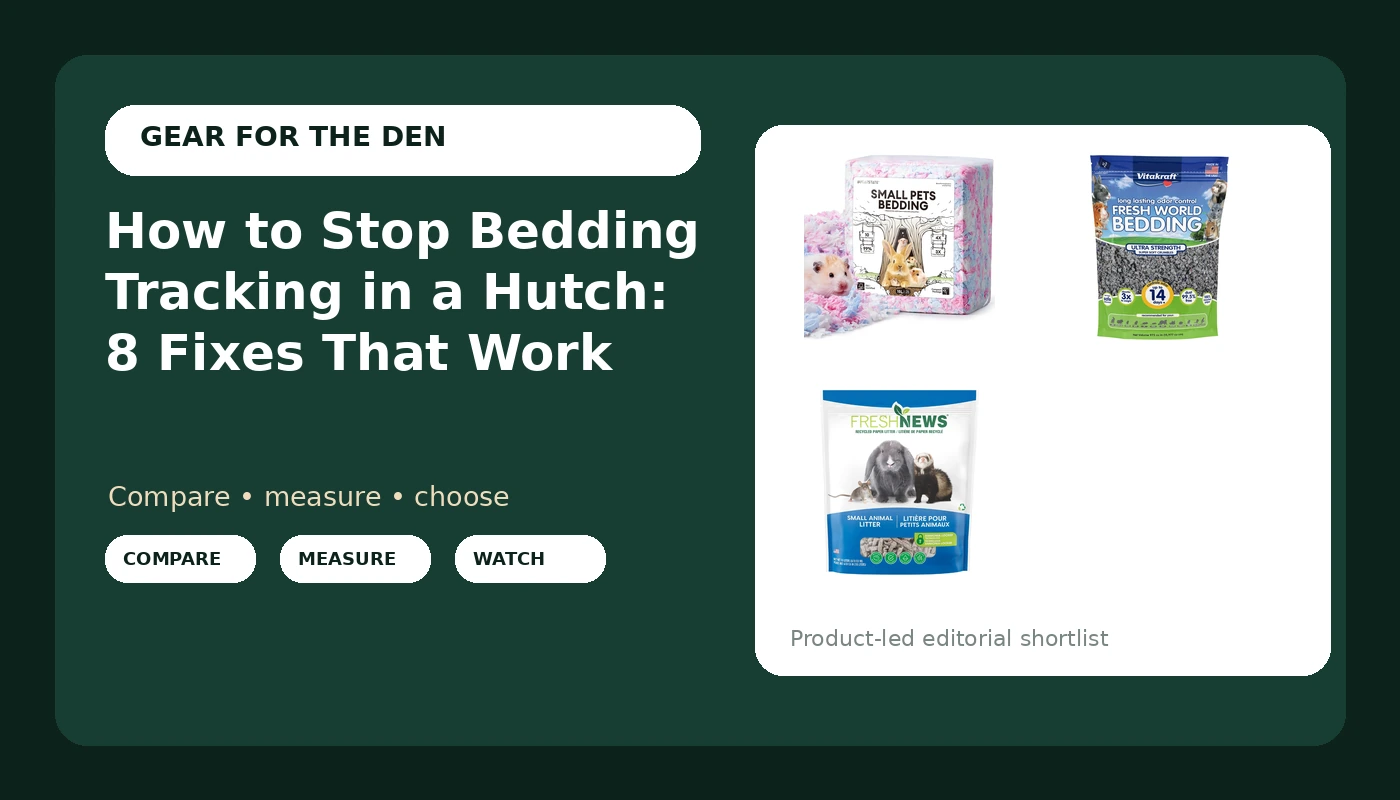
The three products below cover the two jobs you have: a soft bedding for the hideout and a heavier litter for the potty corner. You do not need all three at once. Pick the one that matches your pet and your hutch.
Budget pick: Hamster Bedding 15L, Truly 99% Dust-Free Small Animal Paper Bedding Odor Control, Cozy Hamster Litter for Rabbit Rat Syrian Dwarf Hamsters Gerbils (Cotton Candy)
Budget pick
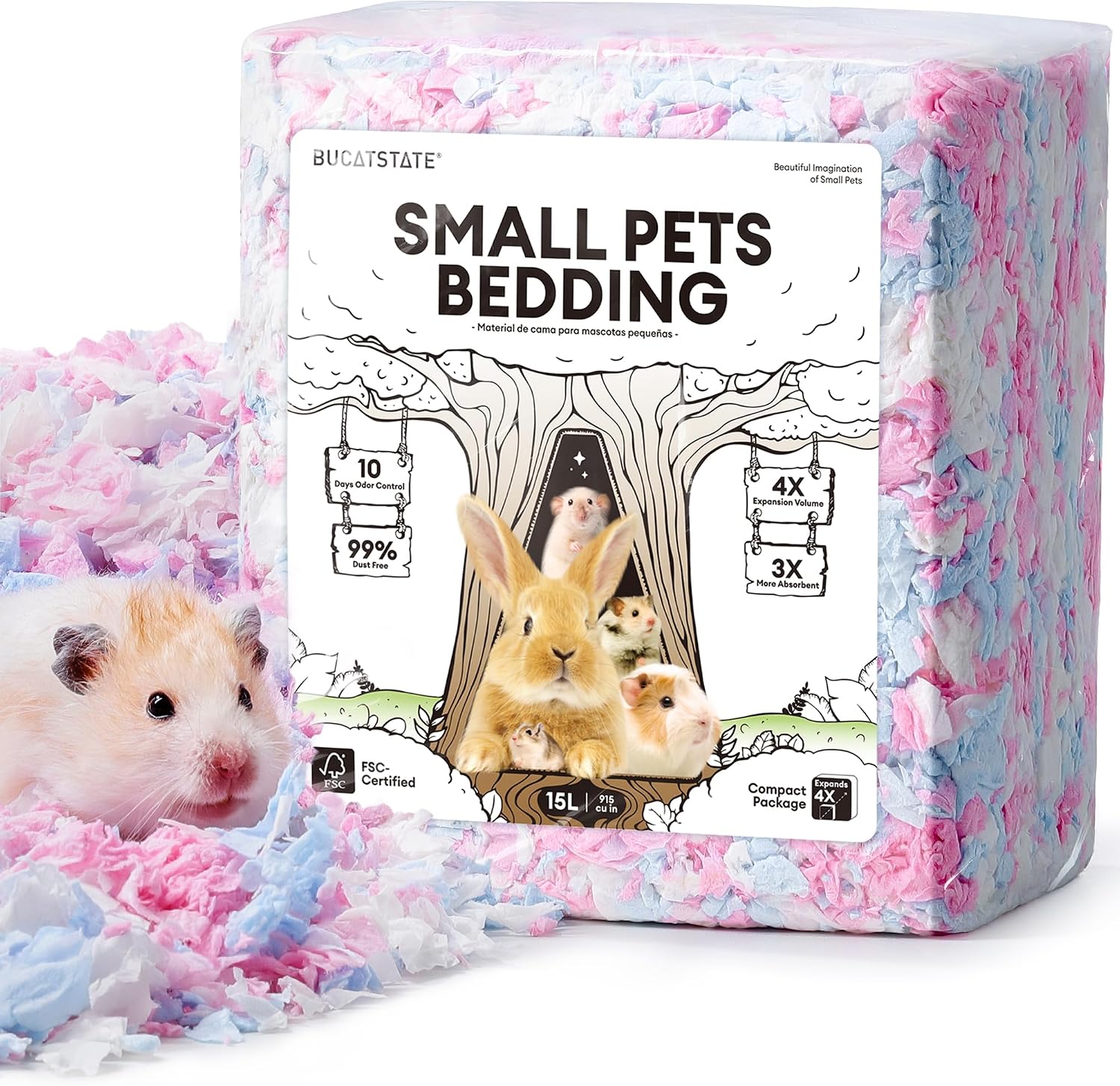
Hamster Bedding 15L, Truly 99% Dust-Free Small Animal Paper Bedding Odor Control, Cozy Hamster Litter for Rabbit Rat Syrian Dwarf Hamsters Gerbils (Cotton Candy)
This is the budget pick because it is a 15-liter bag of paper bedding that claims 99% dust-free. In a hutch, dust matters. Fine dust is the fraction that floats, sticks to fur, and ends up on the floor as a gray film. A paper bedding that is low on dust is easier to keep contained because you are not spreading a cloud every time you spot clean. The Cotton Candy scent is mild, and the paper pieces are soft enough for a hamster, rat, or gerbil. Use it in a litter box or as a full bedding layer. Check current Amazon price. For a small cage, one bag lasts a while. For a large rabbit hutch, you will need more than one. If you keep a hamster in a cage with a wire top, the dust-free claim is the selling point. You can also use a thin layer in the hideout and a thicker layer in the litter pan.
Our pick: Vitakraft Fresh World Small Animal Bedding – Ultra Strength – Pet Bedding for Litter Boxes and Cages (16 L),Gray, 975 cu in
Our pick
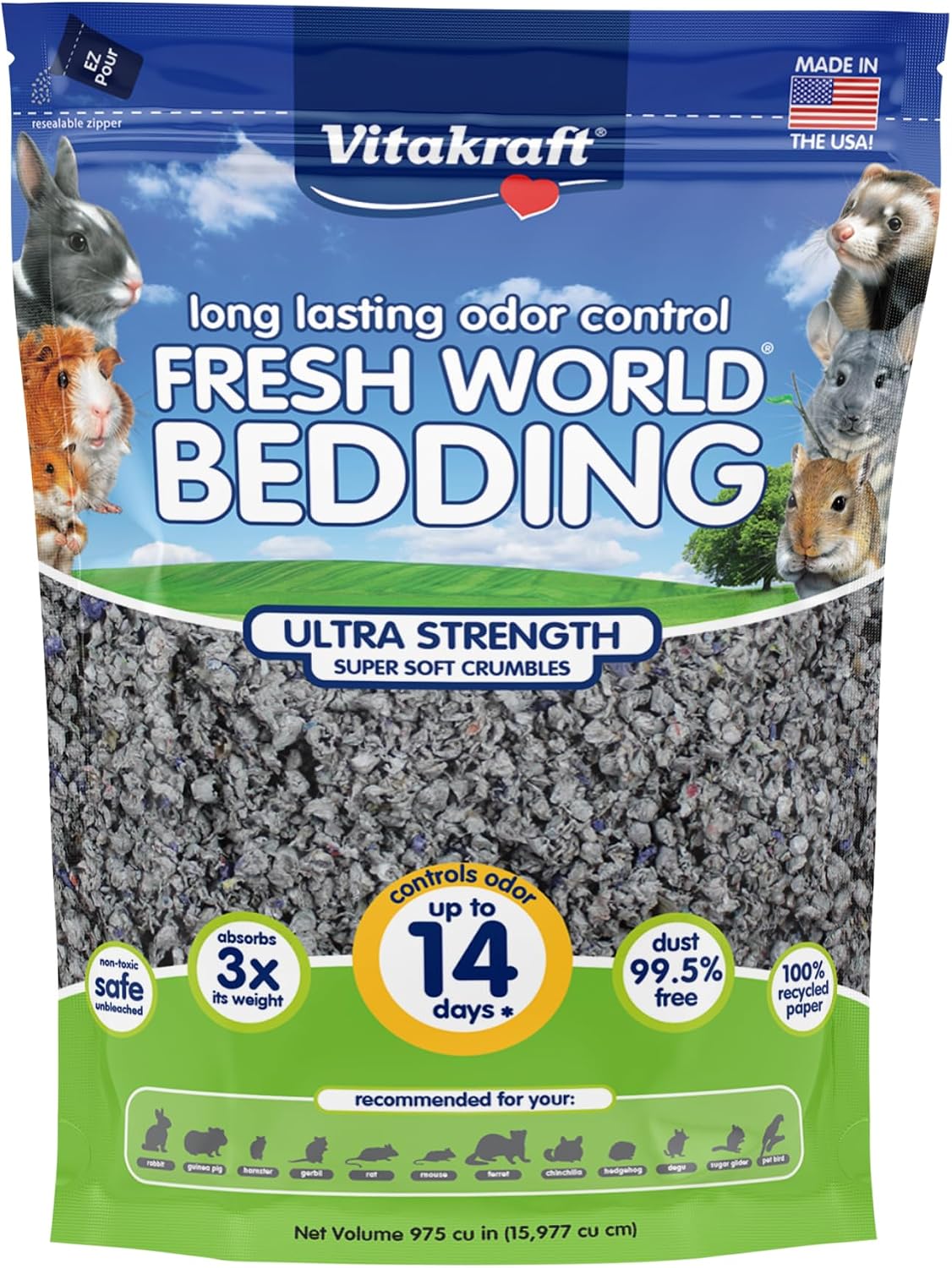
Vitakraft Fresh World Small Animal Bedding – Ultra Strength – Pet Bedding for Litter Boxes and Cages (16 L),Gray, 975 cu in
The Vitakraft is the middle of the lineup and the one I would buy for a litter box plus a bedding layer. The 16-liter bag is larger than the Fresh News bag, and the ultra-strength paper is designed for litter boxes and cages. That matters for tracking because a litter box with a deep layer of paper pellets gives your pet a place to dig and urinate without kicking loose bedding everywhere. The gray color hides stains better than white bedding, so you are less tempted to over-clean. Check current Amazon price. It works in a standard hutch, a guinea pig cage, or a rabbit litter pan. If you have a large floor area, buy two. For a guinea pig, the 16-liter bag is a good size for a cage with a 2×4 grid base. The paper pieces are short enough that they do not wrap around feet.
Upgrade pick: Fresh News Recycled Paper Small Animal Litter Bedding, 10 Liters
Upgrade pick
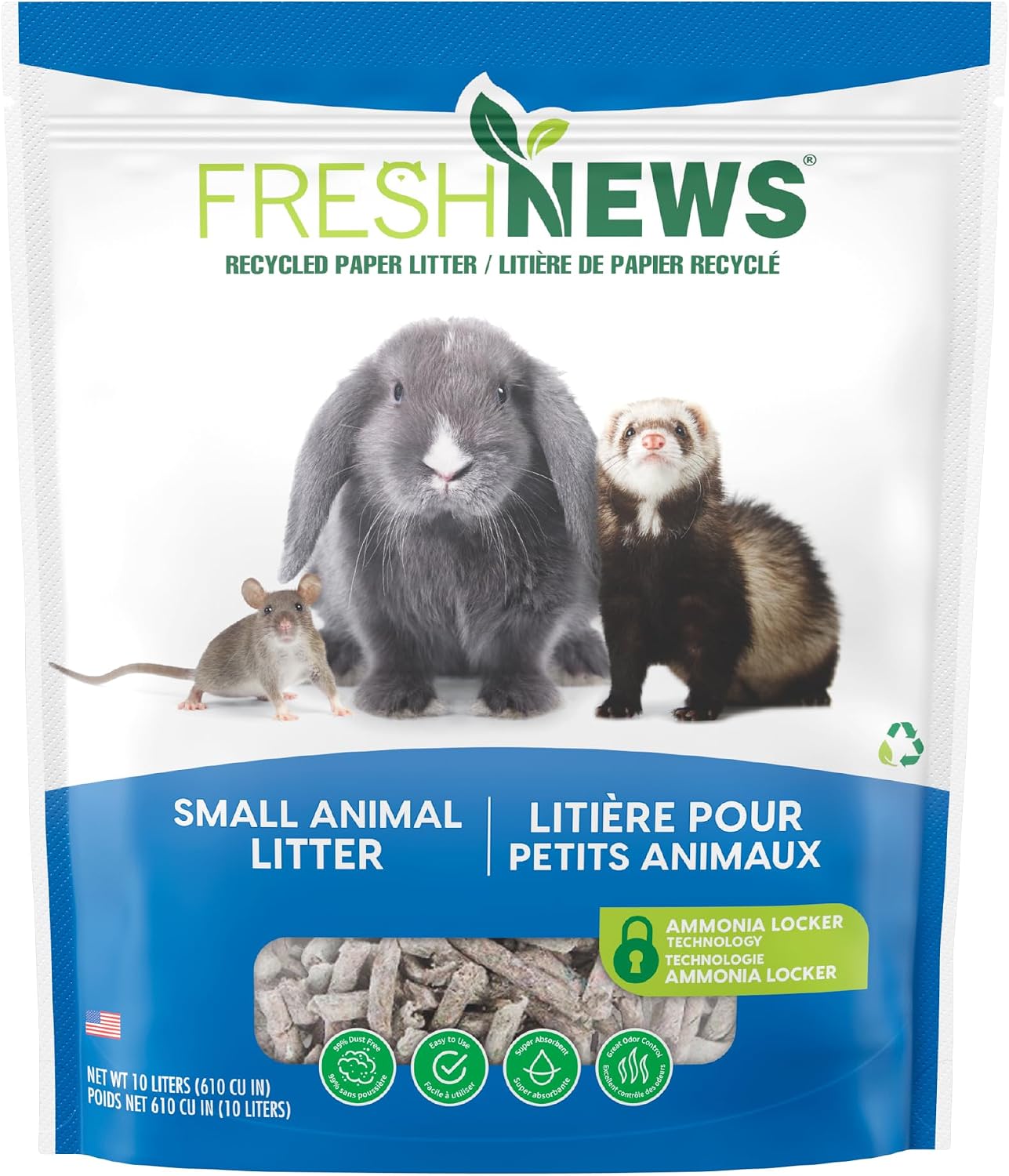
Fresh News Recycled Paper Small Animal Litter Bedding, 10 Liters
Fresh News is the upgrade pick for one reason: it is recycled paper litter bedding that behaves more like a pellet than a fluffy strand. That means less airborne bedding dust and less tracking. The 10-liter bag is smaller, so it is best for a litter box or a small cage, not a whole hutch floor. Use it in the potty corner and keep a softer paper bedding in the hideout. The recycled paper breaks down in compost, which is a bonus if you garden. Check current Amazon price. If you have a multi-level hutch, this is the bedding I would put in the litter pan and at the bottom of the ramp. The recycled paper is a good match for a rabbit litter box because it stays put when your rabbit digs. It is not as soft as the hamster bedding, so I would not use it as the only bedding in a sleeping area.
How to stop bedding tracking in a hutch: the eight-step workflow
Now the part you came for. This works on a standard hutch with a solid base and a wire front. If your hutch has a wire floor, fix that first.
Step one: Map the escape routes. Before you buy anything, spend ten minutes watching your pet. Where does the bedding leave the hutch? Is it kicked through bar spacing, dragged out the door, or stuck to feet after a trip to the hay rack? Check the gap under the door, the corners, and the path from the hideout to the water bottle. A cheap plastic mat under the hutch catches what falls and makes cleanup faster. If bedding is escaping through the front bars, the problem is bar spacing, not the bedding itself.
Step two: Choose the right bedding type. Paper bedding is the best starting point for most small pets because it is soft, absorbent, and lower in bedding dust than wood shavings. Avoid long, fluffy strands that catch on feet and drag. A shorter paper crumble or pellet holds its shape and stays in the hutch. For a hamster, a soft paper bedding in the hideout and a pellet litter in the potty corner works well. For a rabbit, a paper pellet litter in a deep pan keeps the rest of the floor area cleaner. The goal is to stop bedding tracking in a hutch by making the bedding heavier and less likely to fly.
Step three: Control bedding dust. Pour new bedding into a large bin and shake it before you add it to the hutch. That releases the fine dust outside, not inside. Do this on a porch or over a trash bag. If you use a dust-free paper bedding, you will see less dust in the bin, but every paper product has some. A layer of dust on the floor is not just messy. It can irritate your pet's eyes and nose. Keep a small hand vacuum or a soft brush near the hutch for quick touch-ups. Good ventilation helps too. If the hutch is in a shed with no airflow, dust hangs in the air and settles on everything. Open a window or add a small fan on low, pointed away from the hutch.
Step four: Set up a litter box and potty corner. Most small pets will pick a corner. Put a shallow litter pan there and fill it with paper litter. For a rabbit, a corner litter pan with a low lip is enough. For a guinea pig, a small cat litter pan works. The litter box concentrates the messiest bedding in one place. It also gives you a place to put the hay rack. When the hay rack sits over the litter box, dropped hay and bedding stay in the pan instead of spreading across the floor. This single change can prevent bedding tracking in a hutch more than any other upgrade.
Step five: Position the hay rack and food zone. A hay rack should be mounted at a height your pet can reach without pulling hay out onto the floor. If the rack is too low, your pet will drag strands across the hutch. If it is too high, they will pull harder and scatter more. Put the rack over the litter box or a tray. Keep the food bowl in a separate corner so your pet is not walking through bedding to eat. Check bottle capacity too. A water bottle that runs out every day means more door openings and more chances for bedding to escape. A larger bottle reduces traffic.
Step six: Right-size the hideout. Hideout size matters more than most people think. A hideout that is too large gives your pet room to kick bedding out the door. A hideout that is too small gets ignored. Choose a hideout that your pet can turn around in but not a mansion. For a rabbit, a hideout with a low entry and a solid floor keeps bedding inside. For a hamster, a small ceramic or wood hideout works. If you use tunnels, match the tunnel diameter to your pet. A tunnel that is too wide lets bedding spill out; too narrow and your pet drags bedding through it.
Step seven: Modify the hutch for containment. You do not need a new hutch to stop bedding tracking. Add a clear plastic lip or a piece of acrylic along the inside of the door. A deeper base pan helps too. If your hutch has wire floors, cover them with a solid tray or a mat. Wire floors let bedding fall straight through and they are hard on feet. Check the bar spacing around the bottom of the hutch. If the bars are wide enough for bedding to pass, attach a sheet of hardware cloth or a solid panel. A simple guard at the door can catch the bedding your pet kicks out when they hop in and out. A strip of clear plastic from the hardware store is cheap and easy to cut. Attach it with small screws or zip ties. Leave a gap at the top so air still moves.
Step eight: Build a daily and weekly routine. Once the setup is right, the routine keeps it that way. Every day, sweep or vacuum the floor around the hutch and spot clean the litter box. Every week, remove the soiled bedding, wipe the base, and add a fresh layer. Do not dump a whole new bag every week. Top off the bedding and replace only what is wet or dirty. That keeps dust down and saves money. A small hand broom and a dustpan live next to my hutch. The two minutes it takes to sweep after feeding is the difference between a clean floor and a floor covered in bedding.
The competition and why it lost
Wood shavings are cheap and easy to find, but they produce more bedding dust and they scatter more than paper. Pine and cedar shavings can also be risky for small pets because of aromatic oils. They did not make the list. Fleece liners are reusable and produce almost no tracking, but they need daily spot cleaning and a washing machine. They work for some guinea pig setups, but they are a different system. Corn cob bedding is heavy and low-tracking, but it can mold if it gets wet and it is not comfortable for every pet. Paper pellets are excellent in a litter box, but they are not cozy for a sleeping area. The three products above cover the two jobs you actually have: a soft bedding for the hideout and a heavier litter for the potty corner. That is why the others lost. Paper bedding also breaks down faster than shavings in compost, which matters if you garden. Shavings can take years. That is another reason the paper options won.
What this all costs
Bedding is a consumable, so the cost is not the bag. It is the bag per month. A 10-liter bag of paper litter, a 16-liter bag of ultra-strength bedding, and a 15-liter bag of dust-free paper bedding all sit in the same broad price band. The exact number changes with sales, so use the links above. The real savings come from using less bedding. A litter box with paper pellets uses less than a full hutch floor covered in fluffy bedding. A hay rack over the litter box keeps hay out of the bedding. A lip on the door keeps bedding in the hutch. Those three changes cut the amount you sweep up and the amount you replace. Over a year, the difference is a few bags. If you use a litter box and a hay rack, you might use one bag every three to four weeks for a single rabbit. A hamster might use one bag every two to three months. The math depends on cage size and how often you spot clean. The bigger win is the time you get back. You will spend less time sweeping and more time watching your pet. That is the point.