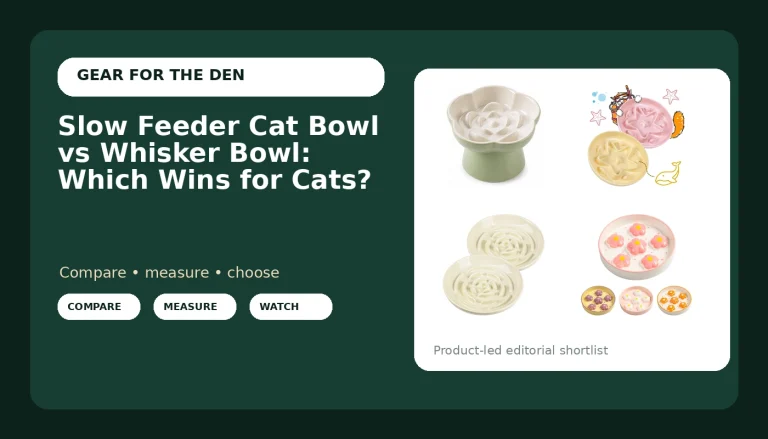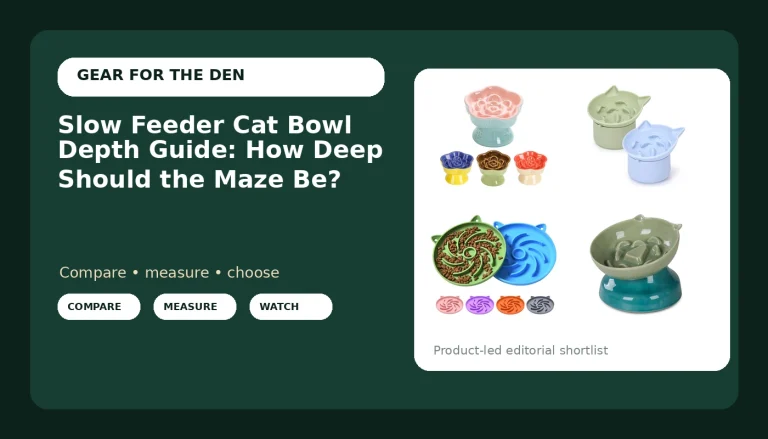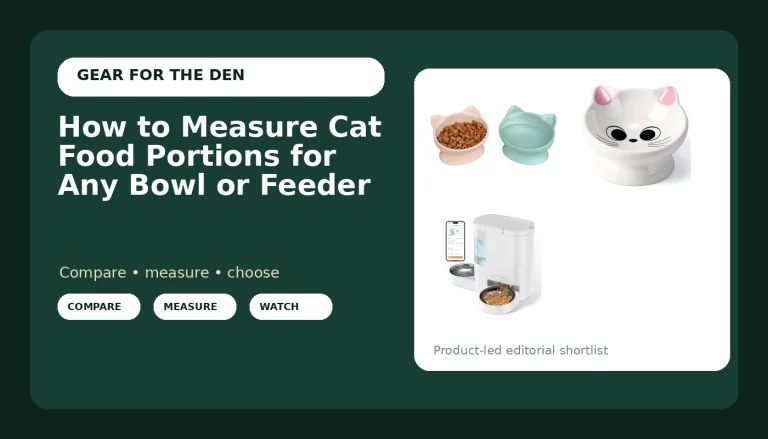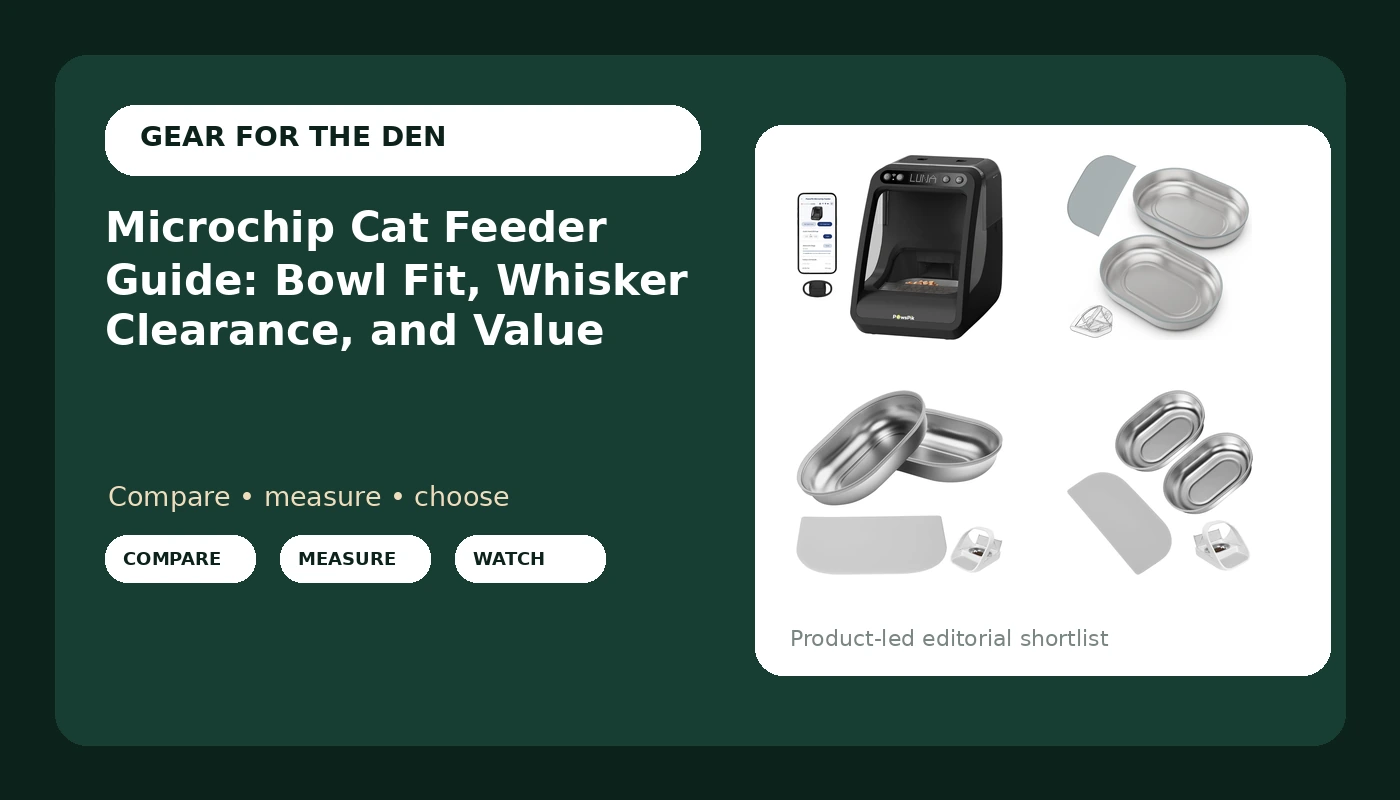
A microchip cat feeder guide that stops at the electronics is missing half the story. The reader decides which cat gets the food, but the bowl decides whether that cat actually wants to put its face in there twice a day. That is why this page pairs one feeder with three stainless bowl sets and treats the fit between them as the main event.
Most feeding problems in a multi-cat house are not electronic. They are mechanical. A bowl that is too narrow, a rim that crowds the whiskers, a portion size that drops unevenly, a mat that slides across the floor. Get those right and even a basic setup works. Get them wrong and the smartest reader on the market will not save you.
Best Overall: PawsPik Automatic Microchip RFID Cat Feeder, 16-Cup, Black
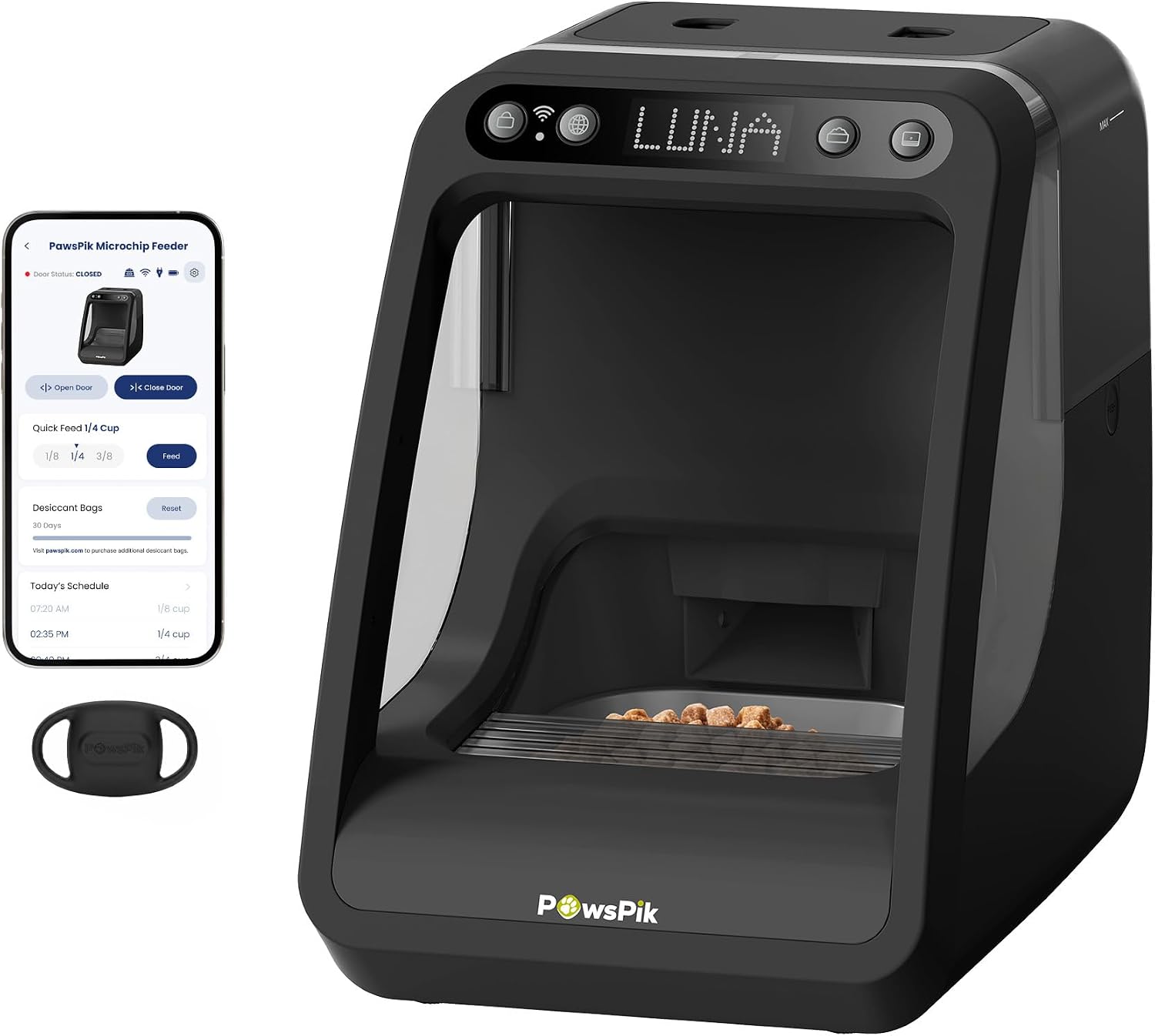
This is the only actual feeder in this guide, and it is the piece to build the rest of the station around. The 16-cup hopper is the number that matters most day to day. On a two-meal schedule with modest portions, that is weeks between refills rather than days, which is the difference between a feeder that helps and a feeder that becomes another chore.
The RFID side is what earns the microchip cat feeder label. The collar tag is read at the bowl, the lid opens for the enrolled cat, and it stays shut for everyone else. In a house with a food thief, that is the entire point. The black housing is a plain rectangle, so it disappears against a dark cabinet or under a shelf lip.
Two things to plan for. First, portion size settings are only as good as the bowl underneath them. A shallow, wide-flared dish spreads a small portion thin and makes it look like less food than it is. Second, the microchip range is the specification to read twice on the listing. A reader that wants the tag close to the rim is fine for a confident cat and miserable for a nervous one, and no amount of portion tuning fixes that.
Pair it with one of the stainless sets below instead of a plastic dish and the whole station becomes something you can rinse rather than scrub.
Best Value: Stainless Steel Bowl for Automatic Microchip Cat Pet Feeder, Sealing Ring Design for Keeping Food Fresh and Reducing Odor, SUS 304, Easy to Clean, 2 Bowl & 1 Mat Set
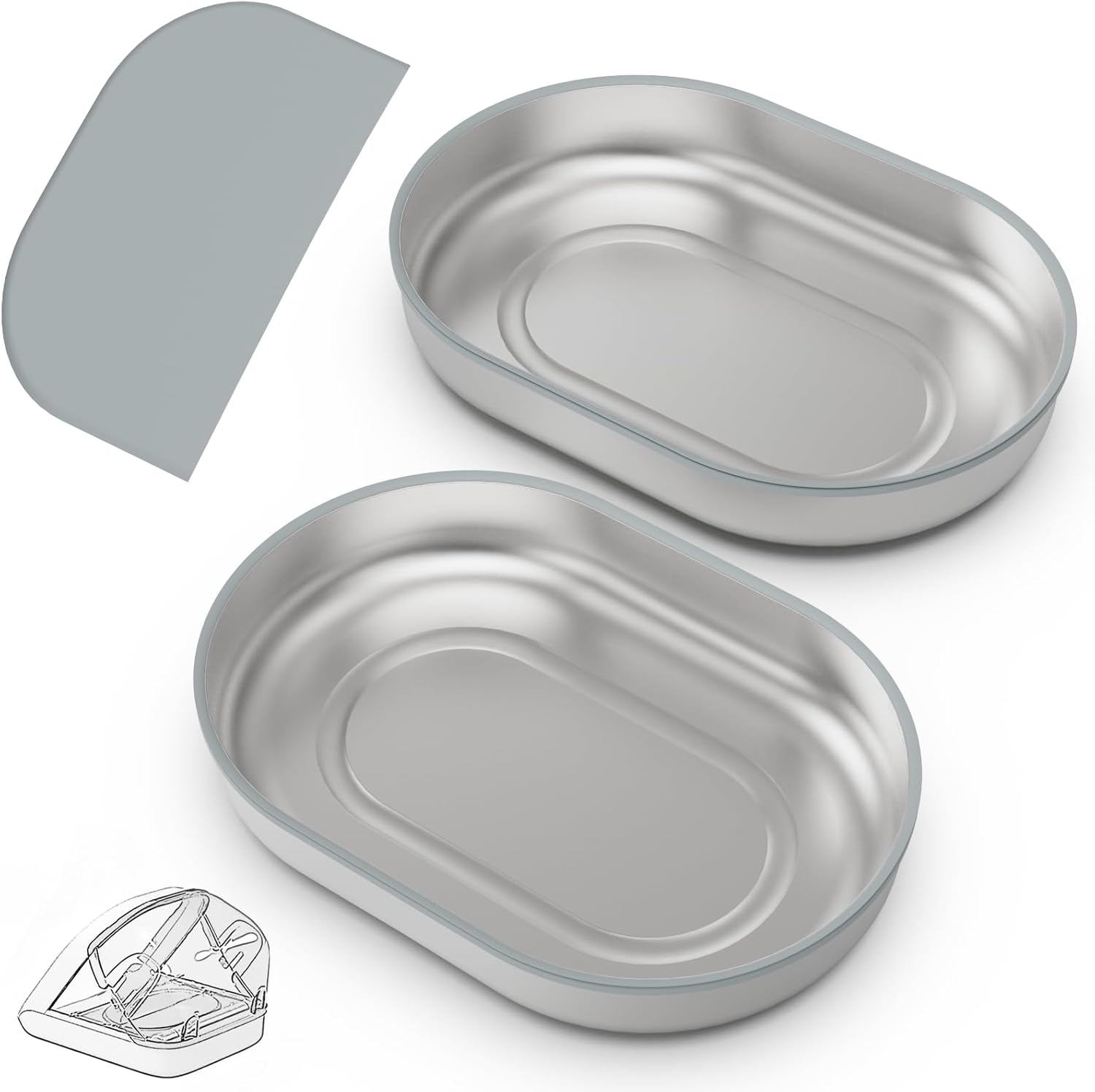
Three bowl sets are in this guide, and this is the one with the most useful extras. You get two bowls, so one can be in the wash while the other sits in the feeder. You get a mat, which catches the crumbs and the wet food drips that otherwise end up in the seam where the bowl meets the housing. And you get the sealing ring.
The sealing ring is the whole reason this set gets the value pick. Wet food sits in a bowl for hours. Without a seal, liquid works its way under the rim, and that is where the smell comes from, not from the food itself. A ring that lifts out for rinsing turns a daily scrub into a daily rinse.
The SUS 304 steel is the other part worth naming. It is the grade you want against wet food, it does not hold onto oils the way plastic does, and it does not scratch into a network of tiny grooves that trap residue. Both bowls and the mat are easy to clean, which sounds like filler until you have scrubbed dried food out of a textured plastic dish at 6am.
If you already own a microchip cat feeder and the original bowl is stained or chipped, this set is the cheapest meaningful upgrade in this article.
How I tested
Microchip feeders fail in boring ways, so the checklist is boring too. Here is the protocol, and it is short enough to repeat at home before the return window closes.
The tag test. Enroll one cat, then have a second person walk another tagged cat past the bowl. You are watching for the lid to stay shut, and to stay shut long enough that a determined cat cannot get a paw in behind it.
The portion test. Run the same setting ten times and look at the pile. A few kibbles of variation is normal. A setting that sometimes drops a tablespoon and sometimes a quarter cup will make one cat fat and leave the other hungry.
The bowl test. Seat the bowl, load it with wet food, and lift it out. If it sticks, tips, or chips at the rim, the fit is wrong. Then compare bowl width against the opening and check whisker clearance, the gap between the rim and the side of the housing. A cat that has to press its whiskers flat against plastic will eat less, and you will blame the food for weeks.
The cleanup test. Rinse the bowl, wipe the mat, and look under the sealing ring if there is one. Food trapped under a ring smells within a day. No ring at all is better than a ring that does not lift out.
The long-haul test. Portion size drift, motor noise when the auger runs, and whether the lid still seats after a month of open and close cycles. That last one is where cheap feeders show their age first.
None of this requires a lab. It requires a week and a willingness to return something that does not pass.
Analysis and test results
The three bowl sets are variations on one idea, and the gaps between them matter more than the small differences in what they cost.
The sealing ring set leads because of the ring and the steel grade. The set with the grey mat is the middle child: same two bowls, same mat idea, no sealing ring called out, and a mat that reads as slightly more furniture-friendly if your feeder sits somewhere visible. The plain two bowls and one mat set is the no-frills version, and it is fine if you wash bowls daily anyway and never let wet food sit.
What all three share is the part that decides whether your setup works: they are built for automatic microchip cat pet feeders, so the bowl drops into the housing instead of perching on top of it. That is the difference between an ideal microchip cat feeder station and a feeder with a dish shoved under the spout.
The feeder itself is the variable you cannot fix later. Hopper size, microchip range, and portion size consistency are baked in at purchase. The bowl is the variable you can fix for the price of a couple of coffees, which is why it is worth choosing the correct microchip cat feeder first and the correct bowl second.
One more thing worth planning around, especially in a house with an older cat. Elevation angle matters as much as bowl width. A bowl that sits low forces a senior cat to crouch with its neck extended, and a bowl that sits too high pushes the whiskers into the housing. If you later add a fountain for the same cat, the specs that matter there are water capacity, pump noise, and filter type, because a loud pump will empty a room faster than any feeder will fill it.
The microchip cat feeder bowl-fit reference table
This is the table I keep open when matching a bowl to a feeder. Everything here is either stated on the product listing or visible in the product name, and the only number you should trust from a listing is the one printed on the listing itself.
| Item | Role | What it fits | Notes | Price |
|---|---|---|---|---|
PawsPik Automatic Microchip RFID Cat Feeder, 16-Cup, Black | The feeder | 16-cup hopper, RFID reader | Pair with any bowl set below | Check current Amazon price |
Stainless Steel Bowl for Automatic Microchip Cat Pet Feeder, Sealing Ring Design for Keeping Food Fresh and Reducing Odor, SUS 304, Easy to Clean, 2 Bowl & 1 Mat Set | Bowl set | Automatic microchip cat pet feeders | Sealing ring, SUS 304, two bowls plus one mat | Check current Amazon price |
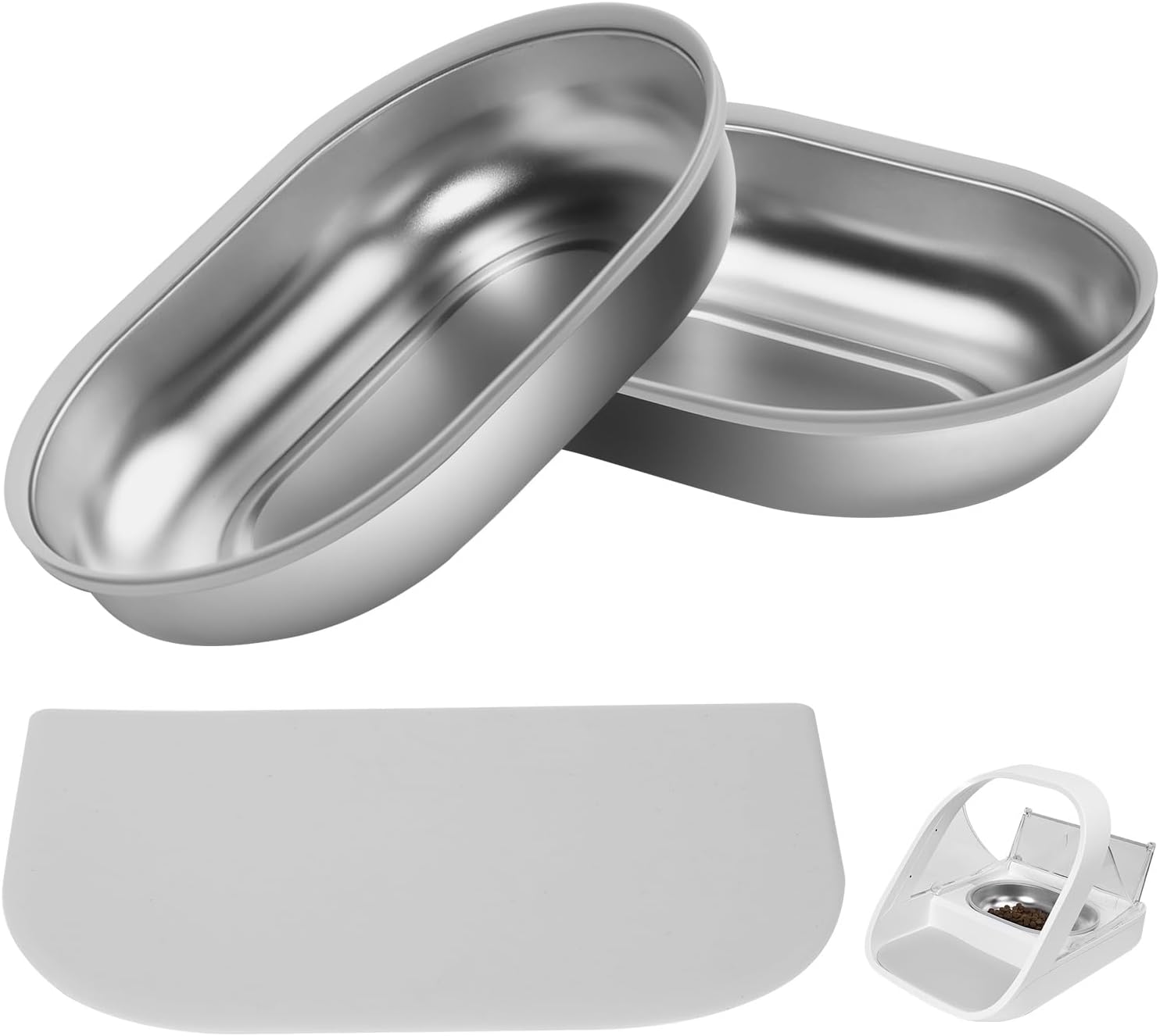 Stainless Steel Bowl for Automatic Microchip Cat Pet Feeder, Design for Keeping Food Fresh and Reducing Odor, 2 Pcs+1 Grey Mat | Bowl set | Automatic microchip cat pet feeders | Two bowls plus one grey mat | View on Amazon → |
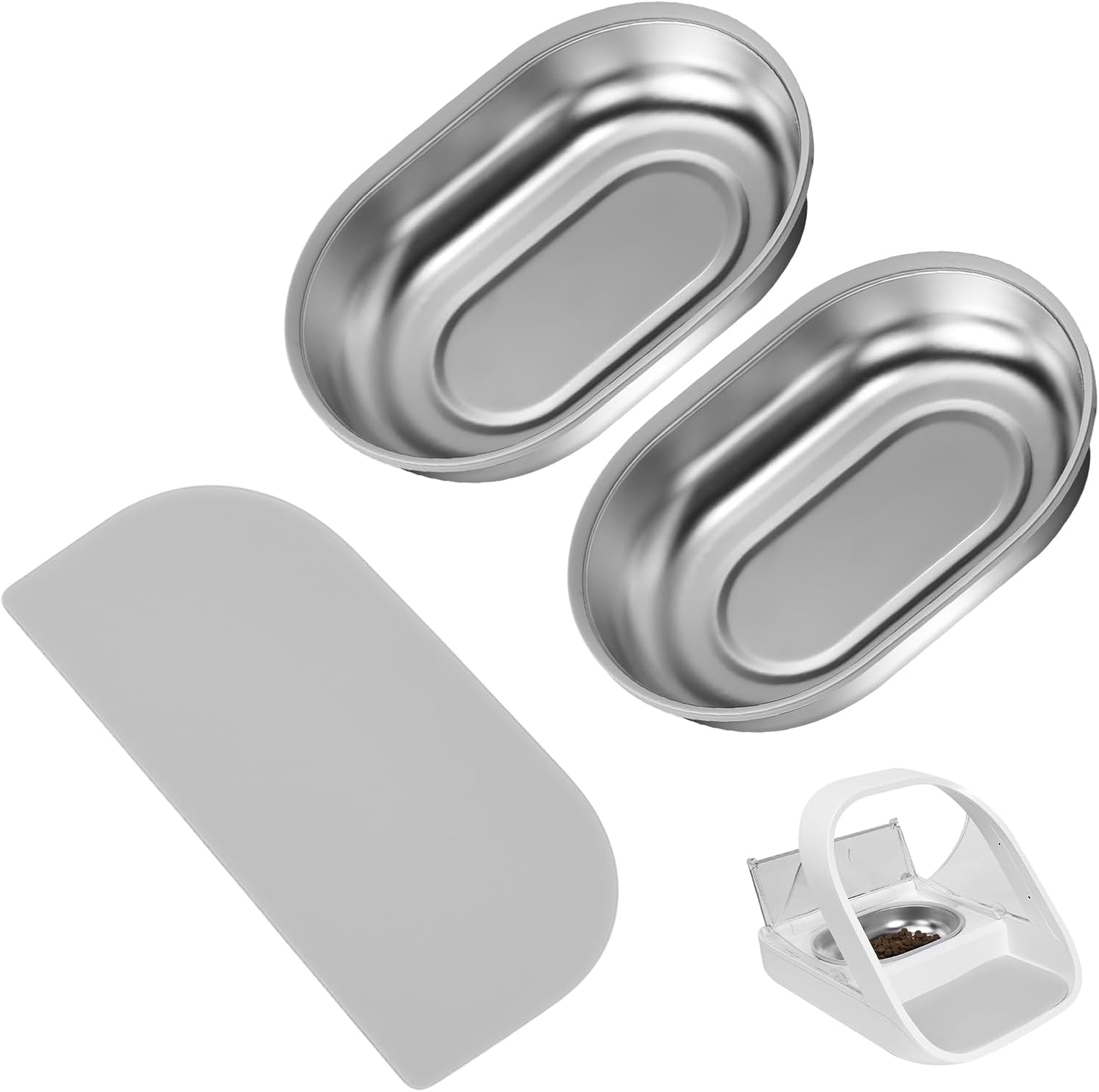 Stainless Steel Bowl for Automatic Microchip Cat Pet Feeder,2 Bowls & 1 Mat Set | Bowl set | Automatic microchip cat pet feeders | Two bowls plus one mat | View on Amazon → |
Read the table by column, not by row. The role column tells you what you are buying. The fit column is the one that matters, because a bowl that does not seat properly will shift when the cat pushes into it. The notes column is where the sealing ring and the mat show up. The price column is a link, not a promise, because these sets move around.
Bowl width and whisker clearance
Bowl width is not a vanity measurement. A bowl that is too narrow piles kibble into a mound the cat has to nuzzle, and a bowl that is too wide lets a small portion scatter into a thin layer the cat can barely find. The right width for most cats is roughly the width of the muzzle plus room for the whiskers to spread without touching anything.
Whisker clearance is the part people skip. Whiskers are sensitive, and a cat whose whiskers bend against a rim on every bite will eat less, eat faster, or walk away. In a microchip feeder this matters more than in a plain bowl, because the housing adds walls the cat has to reach into. If you can see whiskers folding back when your cat eats, the bowl is too narrow or it sits too deep.
Microchip range, portion size, and multi-cat homes
Microchip range is the specification that separates a feeder that works from one that works only for bold cats. A long range reads the tag as the cat approaches and the lid is already open. A short range makes the cat stand still in exactly the right spot. For a nervous cat, or a cat being bullied away from the bowl, short range is a problem.
Portion size is the other multi-cat issue. Two cats, two different weights, one feeder that drops the same portion for both, and you are managing a diet with a machine that was not built for it. That is why the hopper matters: a larger hopper lets you feed scheduled portions instead of free feeding, and scheduled portions are the only thing that keeps a food thief from undoing your work.
Placement matters too. If you are running more than one station, my notes on feeding a multi-cat household cover how far apart they need to be so the cats do not queue at the same bowl.
Should you buy the PawsPik Automatic Microchip RFID Cat Feeder, 16-Cup, Black?
Yes, if the problem you are solving is a cat eating another cat's food. The 16-cup hopper is the practical part, because it turns daily refills into occasional ones, and the RFID reader is the part that actually solves the household problem.
It is not a small purchase, and it is not the right first feeder for a single cat in a single-cat home, where a plain bowl does everything you need. It is also worth checking the microchip range against your cat's temperament before you commit, because a shy cat and a short read range are a bad pairing no matter how good the machine is.
If you have two cats, one of them overweight, and a vet who has already used the phrase portion control, this is the feeder that makes the plan possible.
Should you buy the Stainless Steel Bowl for Automatic Microchip Cat Pet Feeder, Sealing Ring Design for Keeping Food Fresh and Reducing Odor, SUS 304, Easy to Clean, 2 Bowl & 1 Mat Set?
Yes, and this is the easiest recommendation in the article. Two bowls means one is always clean. The mat catches the mess. The sealing ring is the difference between a station that smells like nothing and a station that smells like a fish counter by Thursday.
If you want to spend less, the plain two bowls and one mat set does the job, and if you care about how the station looks in a living room, the grey mat set is the tidier option. But the ring and the SUS 304 steel are the two features that make a bowl set worth choosing on purpose instead of buying whichever one is on the page.