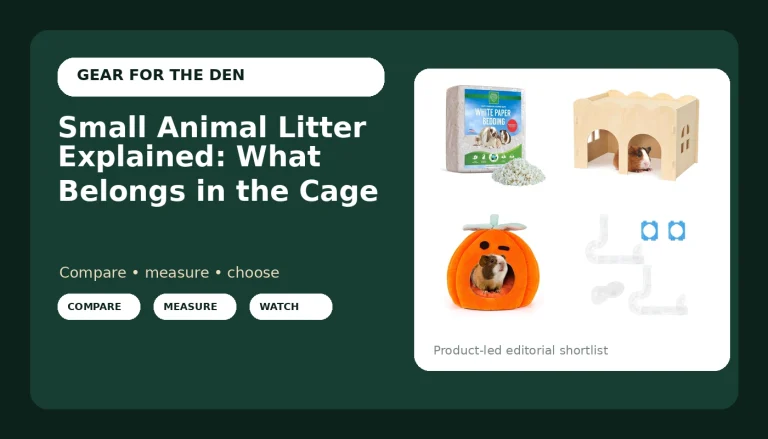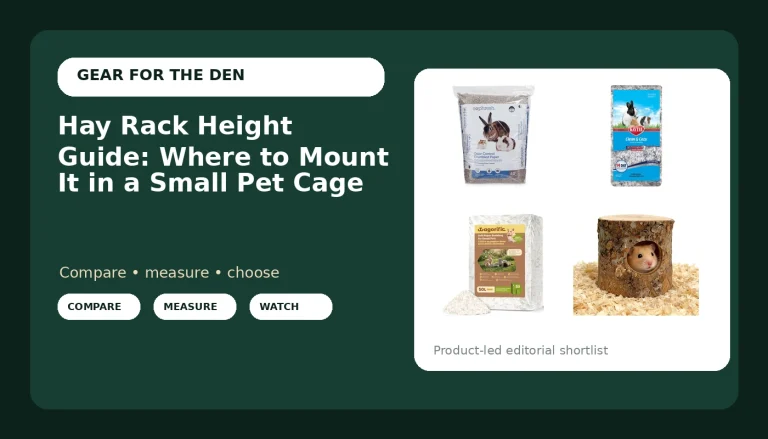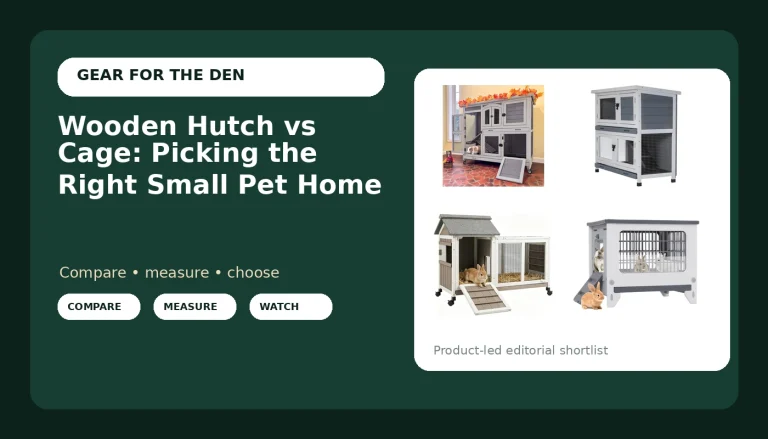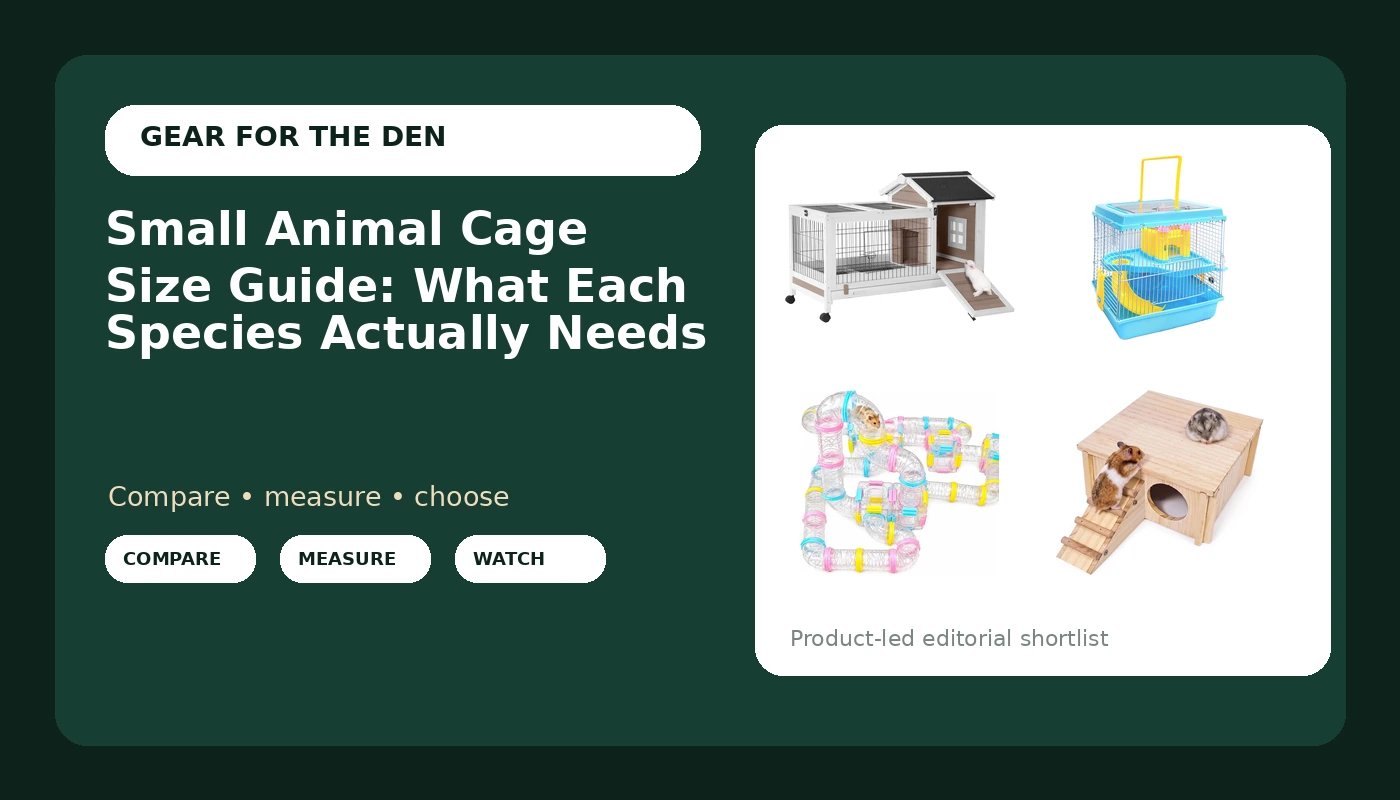
I get more questions about the small animal cage size than about any other piece of gear in this hobby, and the answer is almost never the number printed on the box. Manufacturers count ramps, balconies, and the footprint of a wheel when they list dimensions, which is how a habitat that sounds enormous ends up with less continuous floor area than a plastic storage bin. A hamster, a gerbil, or a pair of mice needs a straight run, a digging corner, and somewhere to stash food, and none of that happens on a third-tier platform.
So this is a buying guide, not a rulebook. I am going to show you how to read a cage listing in the right order: floor area first, bar spacing second, then the accessories that either add usable space or quietly eat it. Four products do most of that work in the setups I look at, and I will be straight with you about which one is a full-time habitat and which one is a carrier with a job to do on cleaning day. If you are still deciding between species, the bedding dust question matters as much as the cage.
Best Overall: Aivituvin Rabbit Hutch Indoor Bunny Cage Outdoor Bunny House with Wire Floor Leakproof Plastic Tray, Brown
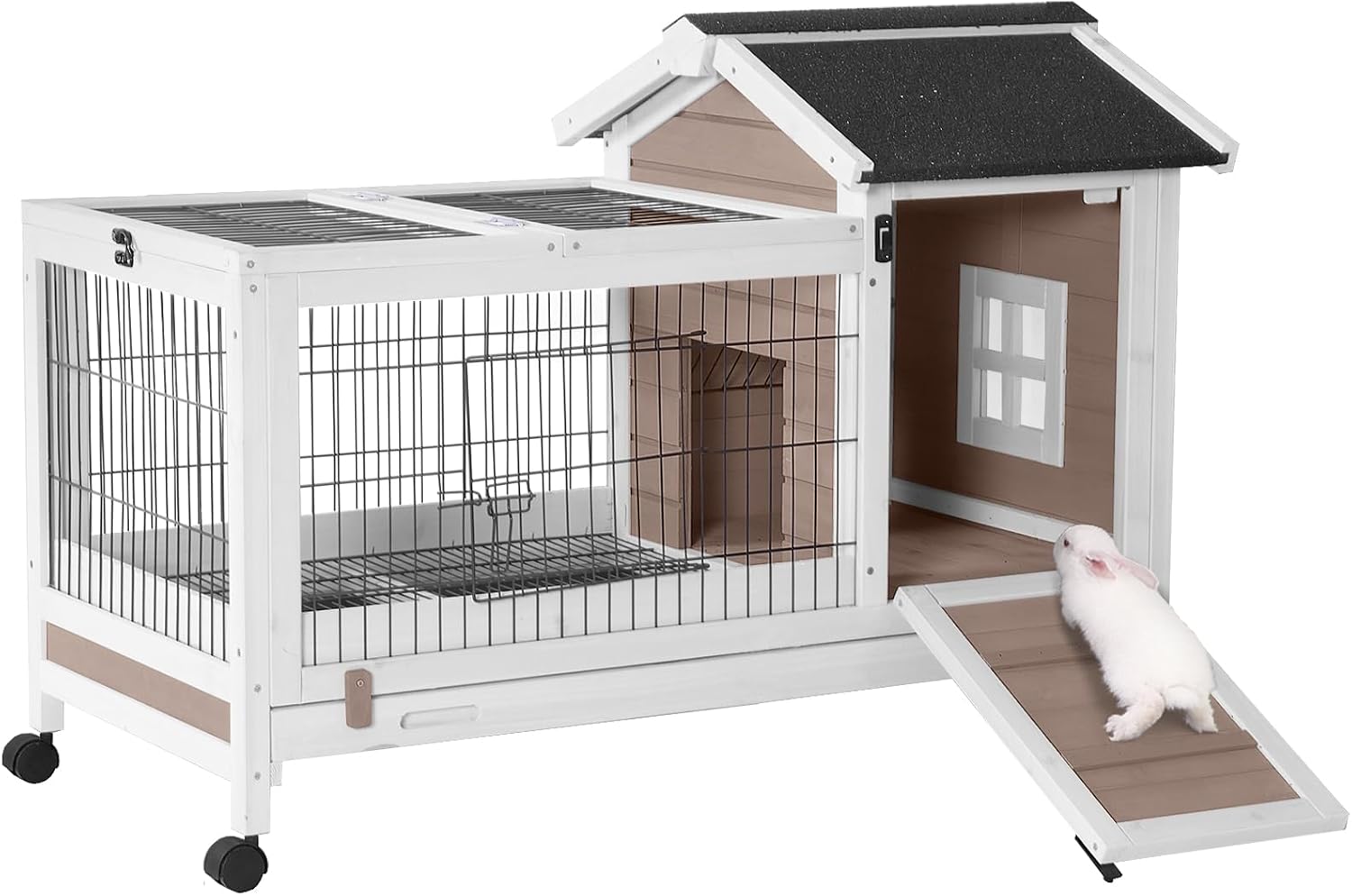
Floor area is the one thing you cannot fix with accessories, and this hutch is the only product here built as a primary habitat rather than a supplement to one. If you keep a rabbit or a pair of guinea pigs, the size conversation starts and ends with a structure the animal can hop a full body length in, plus a run or supervised time outside it. Everything else in this guide is a way to make a smaller space work harder.
The leakproof plastic tray is the feature I care about most. It slides out, it does not soak bedding through, and it turns a full clean into a five-minute job instead of a twenty-minute one. That matters more than it sounds, because the most common reason a small pet setup smells is a cage that is too annoying to clean often enough.
The wire floor is the trade-off. Wire hoses down fast and keeps a rabbit off wet bedding, but feet do not do well on it long term. Cover part of the floor with a solid resting mat or a plywood square so there is always a dry, flat place to sit, and leave the wire over the tray for the bathroom corner. If you would rather not think about that at all, this is the wrong hutch for you.
It is also heavy, and once it is assembled you are not moving it across the yard by yourself. The brown finish shows hay dust and fur within a week. But it works in a spare room, a shed, or a covered porch, and if it lives outdoors, shade and a predator-proof latch matter more than anything the listing promises.
Best Value: Tfwadmx 2-Tier Portable Dwarf Small Hamster Carrier Travel Cage, Blue
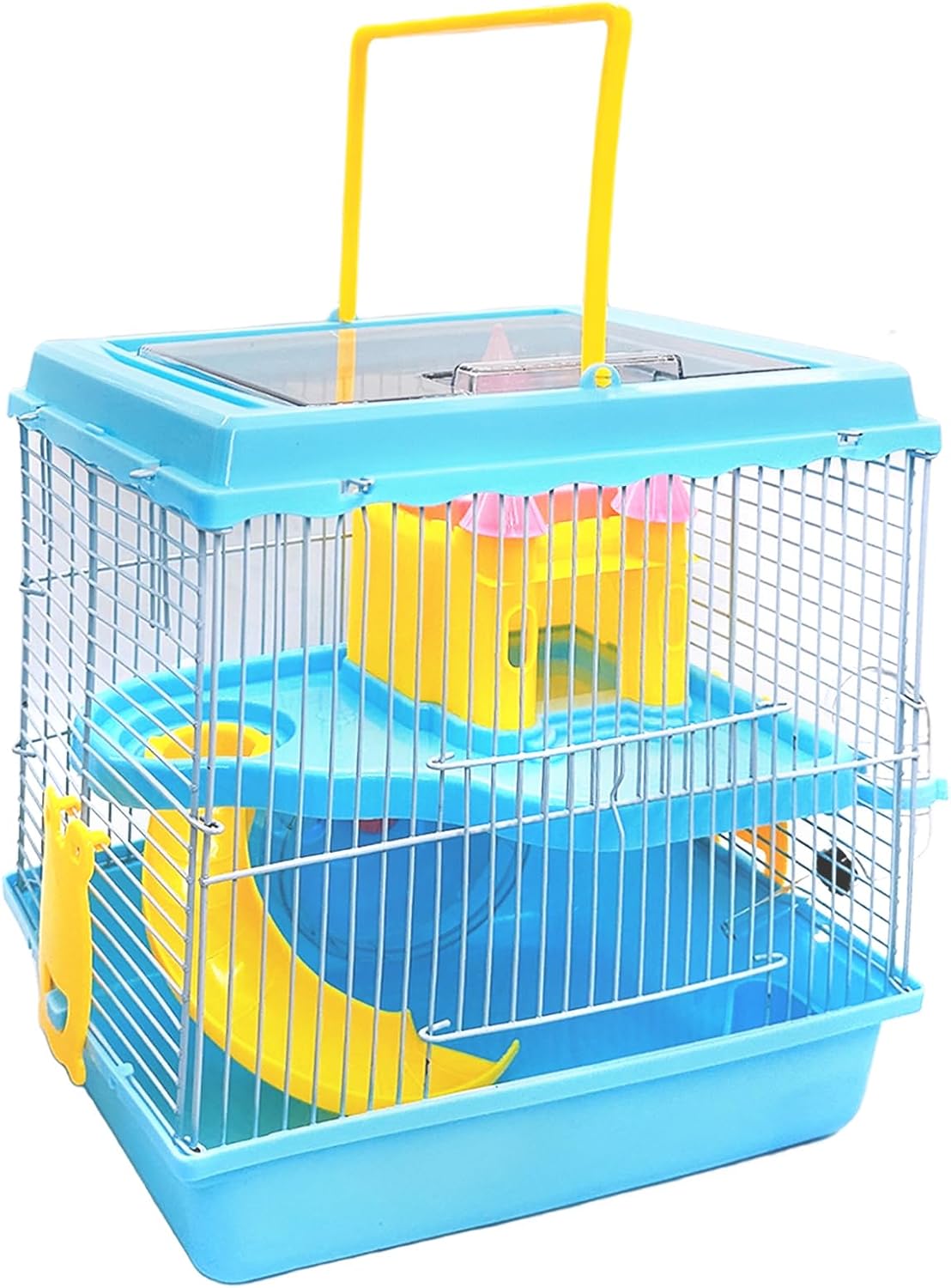
Calling a carrier the best value needs a caveat, so here it is: this is not a habitat, and I would not keep any hamster in it as one. What it is, is the inexpensive answer to a problem every small pet owner hits eventually. You need somewhere safe to put the animal while you tear down and rebuild the main cage, you need a box that survives a car ride to the vet, and you need it light enough to carry one-handed. This does all three.
The two tiers are the reason it works as a holding cage rather than a shoebox. A dwarf hamster can retreat to the upper level while you wipe the lower one, and the blue plastic cleans up with a paper towel. There is room for a small hide and a shallow dish, and the whole thing is light enough that a kid can carry it with both hands.
The limits are real. The floor area is tiny, so it is a short-term cage only, and a Syrian hamster will be cramped the moment it stretches out. Ventilation comes from the top, which means you should not stack anything on it or drape a towel over it in the car. And a dwarf hamster left in a carrier for a week will chew the corners, so use it for hours, not days.
Pair it with the tunnel set below and a plastic playpen, and cleaning day stops being a two-person job. That is a good trade for a box that lives in a closet the rest of the time.
How I tested
The checklist I run every cage and accessory through starts with floor area, and floor area means the continuous rectangle an animal can actually use, not the number in the listing. Stacked levels, ramps, and the space a wheel occupies do not count, because a hamster runs in a line and a rabbit hops in a line.
Bar spacing comes second, because it is species-specific. Bars wide enough for a rabbit will let a mouse or a dwarf hamster walk straight out. Bars narrow enough to hold a hamster will make a rabbit feel boxed in and rub the fur off its nose. Match the bar spacing to the animal, not to the cage.
Then I look at what goes inside and whether it uses space or wastes it. Hideout size matters: too big is a drafty room the animal ignores, too small and it stops using it at all. Bottle capacity decides how often you refill, which decides how often you actually check the water. A hay rack keeps hay off the floor and out of the bedding, and that is the difference between a rabbit cage that smells and one that does not. Bedding dust is the quiet one, because a small cage with dusty bedding gets soiled fast and stays soiled.
Finally, tunnel diameter. A tunnel that is too narrow is a trap, and one that is too wide is a corridor the animal never uses. The 2-inch tunnels in the set below suit dwarf hamsters, mice, and gerbils and are too small for anything larger.
An ideal small animal cage size is not a single number. It is the smallest footprint in which the animal can run, dig, hide, and turn around without rearranging itself.
Analysis and test results
Lined up against each other, the four products split cleanly. The hutch is the only one with enough floor area to be a home. The carrier is a temporary box. The tunnel set and the hideout are multipliers: they do not change the cage size, they change how much of it the animal actually uses.
That is the part people miss. There is no single correct small animal cage size that applies to every species, because the number depends on how the animal moves. A gerbil wants depth to dig. A mouse wants clutter to climb. A rabbit wants a long, low run. A hamster wants uninterrupted floor and a wheel that is not parked in the middle of it. The same small footprint is generous for a pair of mice and cramped for one guinea pig.
Levels fool people too. A two-tier cage with a big ramp can look larger than a single-level cage while offering less usable floor, because the ramp eats the ground floor and the upper level is usually too shallow to run on. When you compare listings, count the continuous floor, not the total.
The tunnel set is the cheapest way to add usable space without adding footprint, because you can route it around the outside of the cage, along a baseboard, or across a table. The hideout adds a destination, and a destination is what makes a hamster use the far corner of a cage instead of the corner nearest the water bottle.
The carrier is the exception that proves the rule. It is small on purpose. Judged as a habitat it fails; judged as the tool that lets you maintain a properly sized habitat, it earns its place. Same for the hutch: judged as a rabbit cage it is fine, judged as a mouse cage it is a cathedral with a security problem.
Treat this small animal cage size guide as a way to compare listings rather than a set of dimensions to memorize. If you only fix one thing after reading it, fix the floor area. Bar spacing, hideout size, and bottle capacity are all adjustable. Floor area is the one you buy.
Small animal cage size reference table
Every product in this guide, what it contributes, and who it suits. Prices move constantly, so check the listing before you decide.
| Product | Type | What it contributes | Best for |
|---|---|---|---|
Aivituvin Rabbit Hutch Visit on Amazon | Primary habitat | Continuous floor area plus a leakproof pull-out tray | Rabbits, guinea pigs |
Tfwadmx 2-Tier Portable Carrier Visit on Amazon | Travel and holding cage | A safe place during cleanouts and vet trips | Dwarf hamsters |
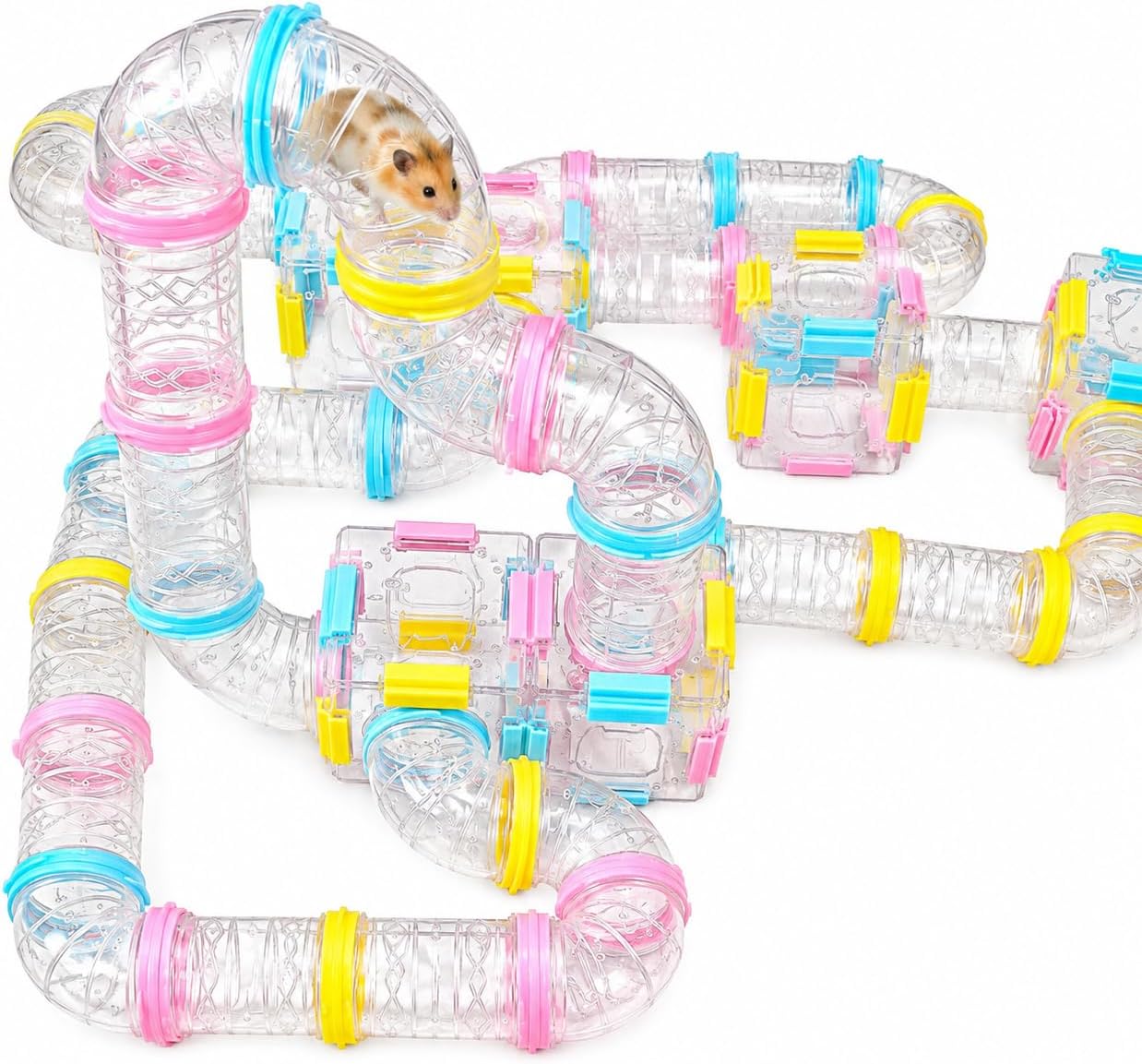 94 Pcs DIY Hamster Tunnel Tube Set View on Amazon → | Space multiplier | Routes exercise outside the cage footprint | Dwarf hamsters, mice, gerbils |
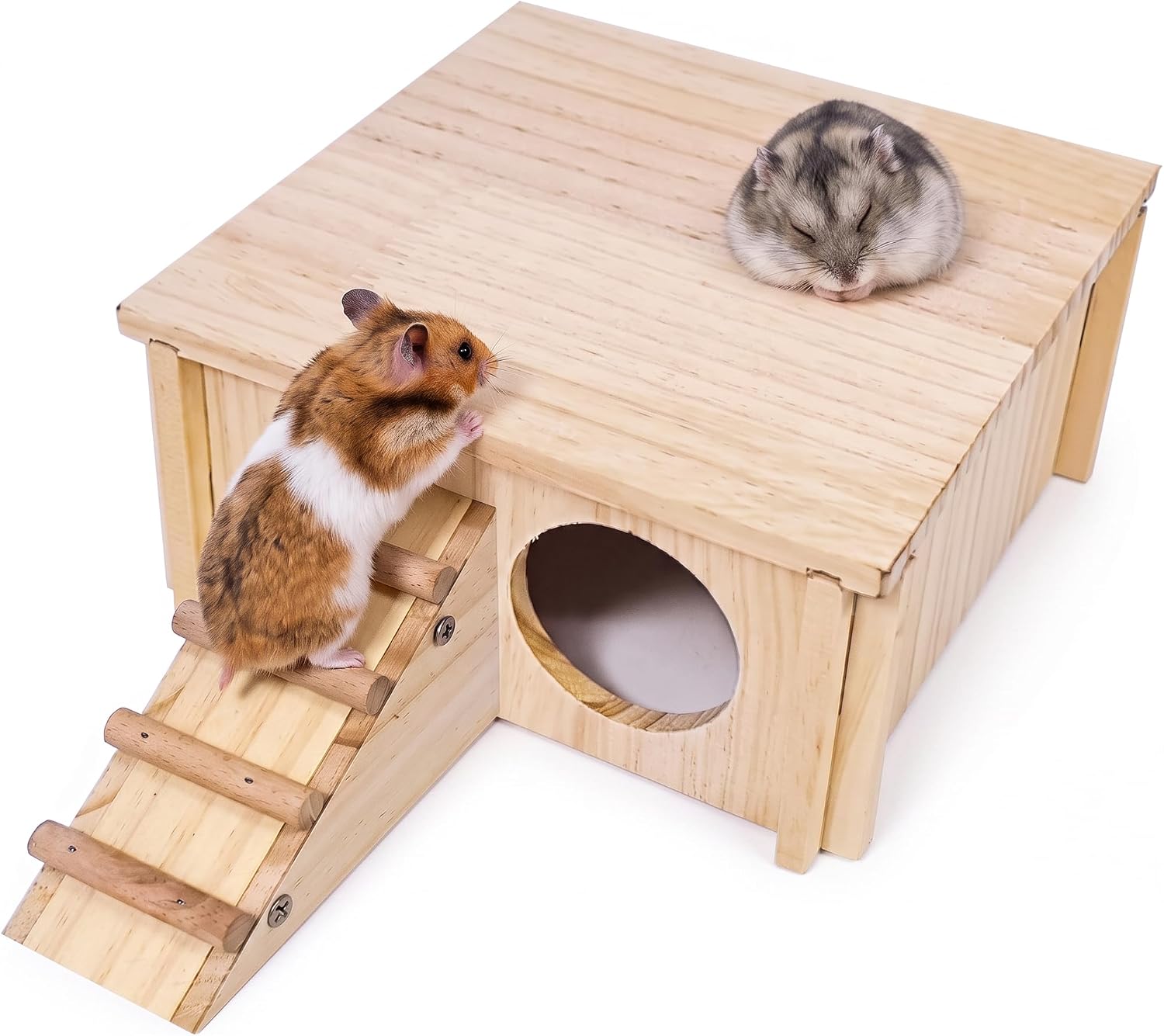 Multi-Chamber Wooden Hamster House Hideout Maze View on Amazon → | Hideout and decor | Adds a destination and a dark retreat | Hamsters, mice |
Tunnel diameter and usable floor area
The 94 Pcs DIY Hamster Tunnel Tube Set is the accessory that lets you grow a cage without growing its footprint. It is a 2-inch diameter kit, clear so you can watch without opening anything, and it is meant to be rebuilt into whatever shape fits your room. Route it along a baseboard, up over a shelf, or around the back of a table and the animal gets a second runway that costs you no floor area at all.
Tunnel diameter is the spec that decides whether it works. Two inches suits dwarf hamsters, mice, and gerbils; a Syrian hamster will get stuck or simply refuse to enter, and a guinea pig or rabbit is out of the question. Clear tubing hazes and scratches over time, and urine in a closed tube concentrates, so plan on a warm water flush once a week rather than a wipe-down.
Hideout size and bedding depth
The Multi-Chamber Wooden Hamster House Hideout Maze is a hideout, and hideout size is where most first cages go wrong. A single oversized hut is a cold, open room a hamster never settles in. Several chambers of different sizes let the animal pick a snug sleeping pocket and a cooler chamber for stashing food, which is closer to how it would burrow in the wild.
Wood wicks moisture, so check the inside for damp when you change bedding, and give the cage enough depth of bedding that the animal can bank it up and block an entrance. That is the test of a hideout: if the animal can seal itself in, the size is right. One warning, and it applies to every accessory here. A hideout that fills the cage leaves no running room, which is the opposite of what you were trying to buy.
Should you buy the Aivituvin Rabbit Hutch Indoor Bunny Cage Outdoor Bunny House with Wire Floor Leakproof Plastic Tray, Brown?
Yes, if you keep rabbits or guinea pigs and you are willing to put a solid resting mat over part of the wire floor. It is the one product here that answers the floor area question instead of working around it, and the pull-out tray means you will actually clean it on schedule rather than when the room starts to smell.
No, if you want a cage you can move on a whim, or if the animal in question is a mouse, a hamster, or a gerbil. The bar spacing that suits a rabbit is an open door for anything small, and the hutch is heavy enough that it stays where you build it. For a rabbit, though, this is the pick that stops the cage size argument before it starts.
Should you buy the Tfwadmx 2-Tier Portable Dwarf Small Hamster Carrier Travel Cage, Blue?
Yes, as a carrier. Every small pet owner eventually needs a box for cleaning day, a vet trip, or a move to a second room, and this one does that job with two tiers so the animal has somewhere to retreat while you work on the other level. It wipes clean, it carries easily, and it stores in a closet.
No, as a habitat. The floor area is far too small to count as an ideal small animal cage size, and a Syrian hamster will be cramped immediately. Buy it as the tool that makes a properly sized cage easier to maintain, not as the cage itself, and you will get years of use out of a very small purchase.