Reptile lighting is the one corner of the pet gear world where two products that look nearly identical on a product page behave nothing alike in a glass box. I have kept bearded dragons, a painted turtle, and more than one rescue corn snake in a stack of enclosures in my den, and I have spent real money on bulbs that promised a full spectrum and delivered a warm orange glow. The short answer to uvb bulb vs uvb tube for reptiles is that a bulb wins in small and medium enclosures where you want heat and UVB out of a single fixture, while a linear tube wins in long enclosures where you need a wide, even band of UVB across the whole basking zone. Everything below is the reasoning behind that, plus four bulbs I would actually put in a socket.
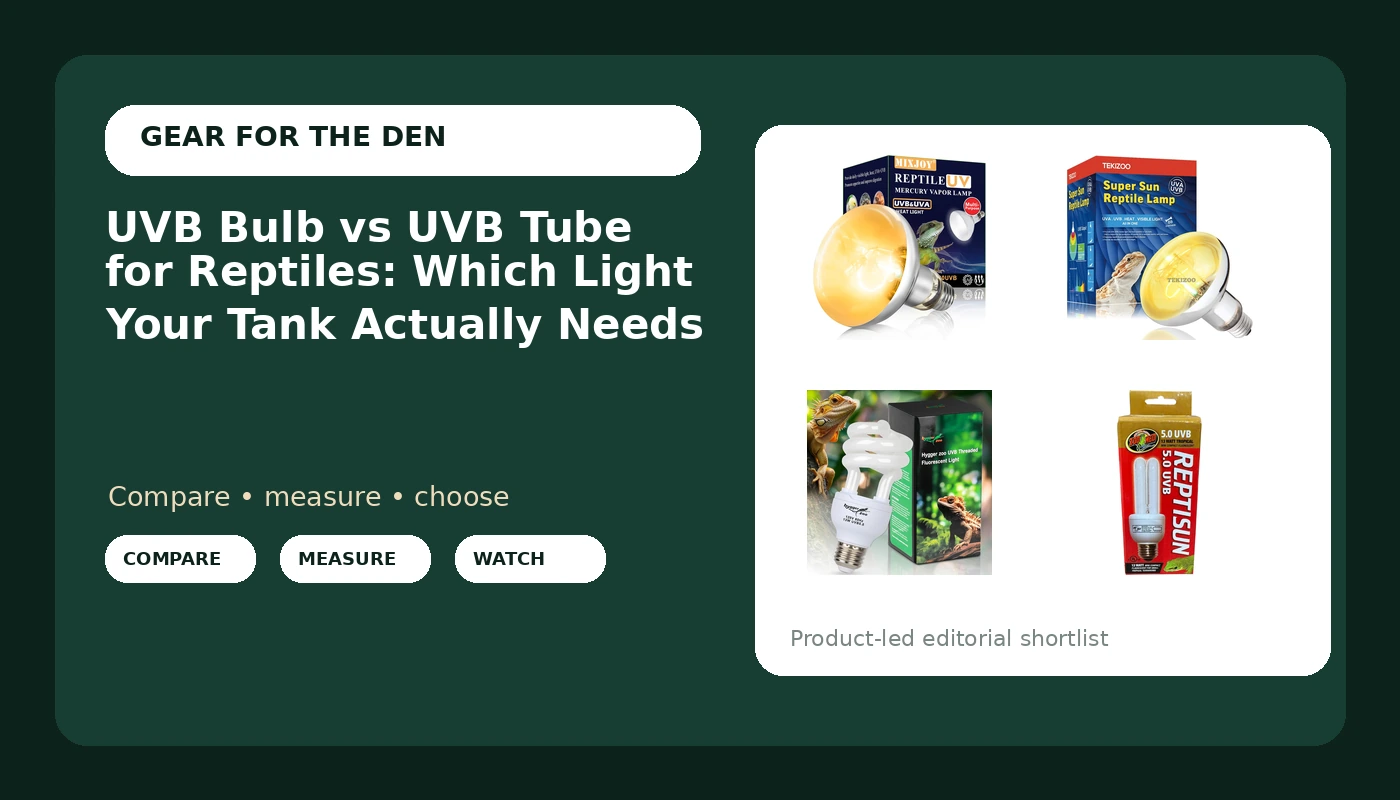
The bulb I would start with in a single 40-gallon breeder or smaller is the MIXJOY 100W full spectrum lamp, because it throws usable heat and UVB from one socket and costs less than a tube fixture plus a controller. A tube is still the better tool once the enclosure gets long, and the sections below explain when that switch happens.
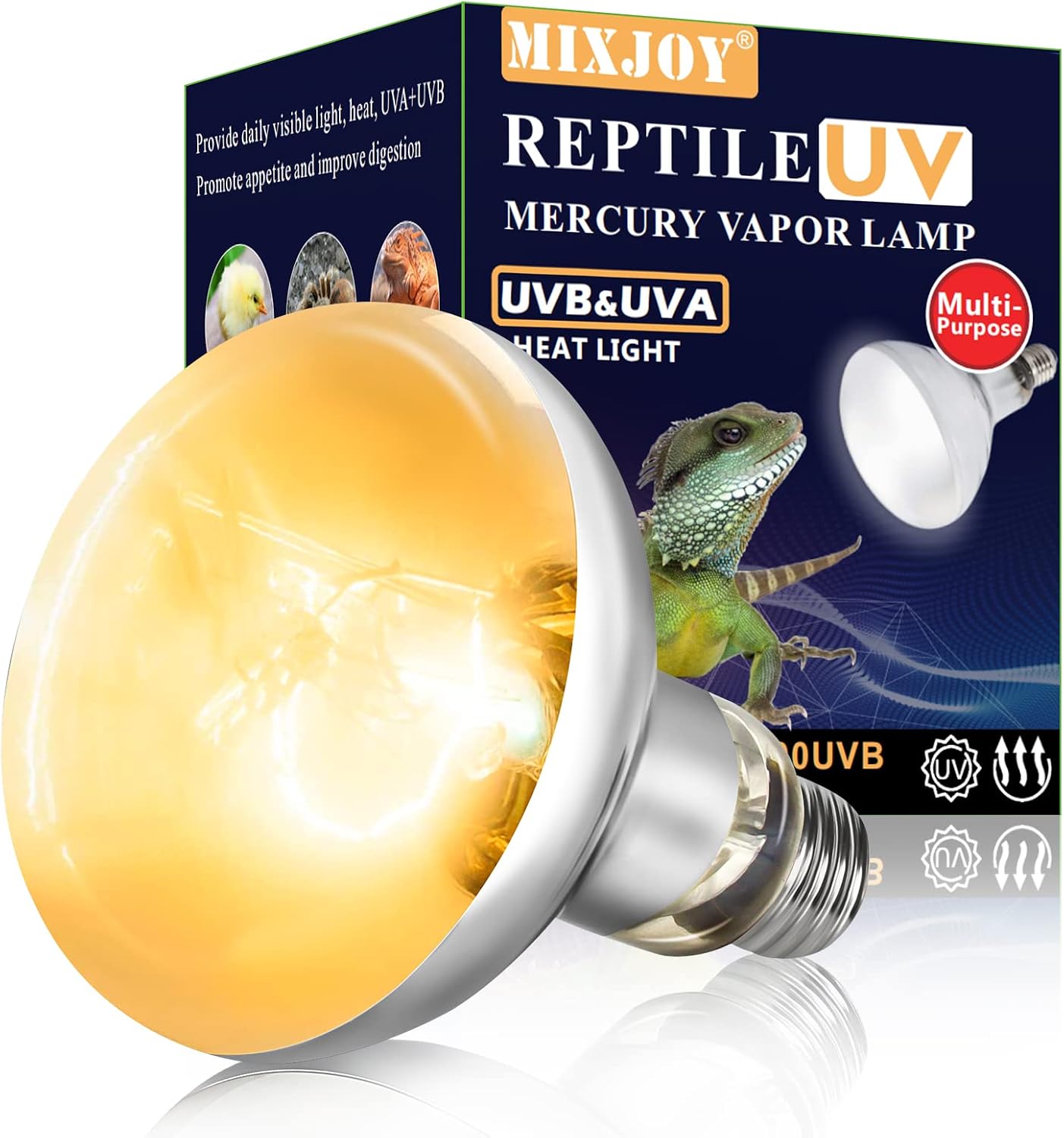
MIXJOY 100W Reptile Heat Lamp Bulb Full Spectrum UVA UVB Sun Light for Reptile and Amphibian Use
Heat and UVB from one socket, enough power for a cool room
100W runs too hot for small tanks without a dimming thermostat
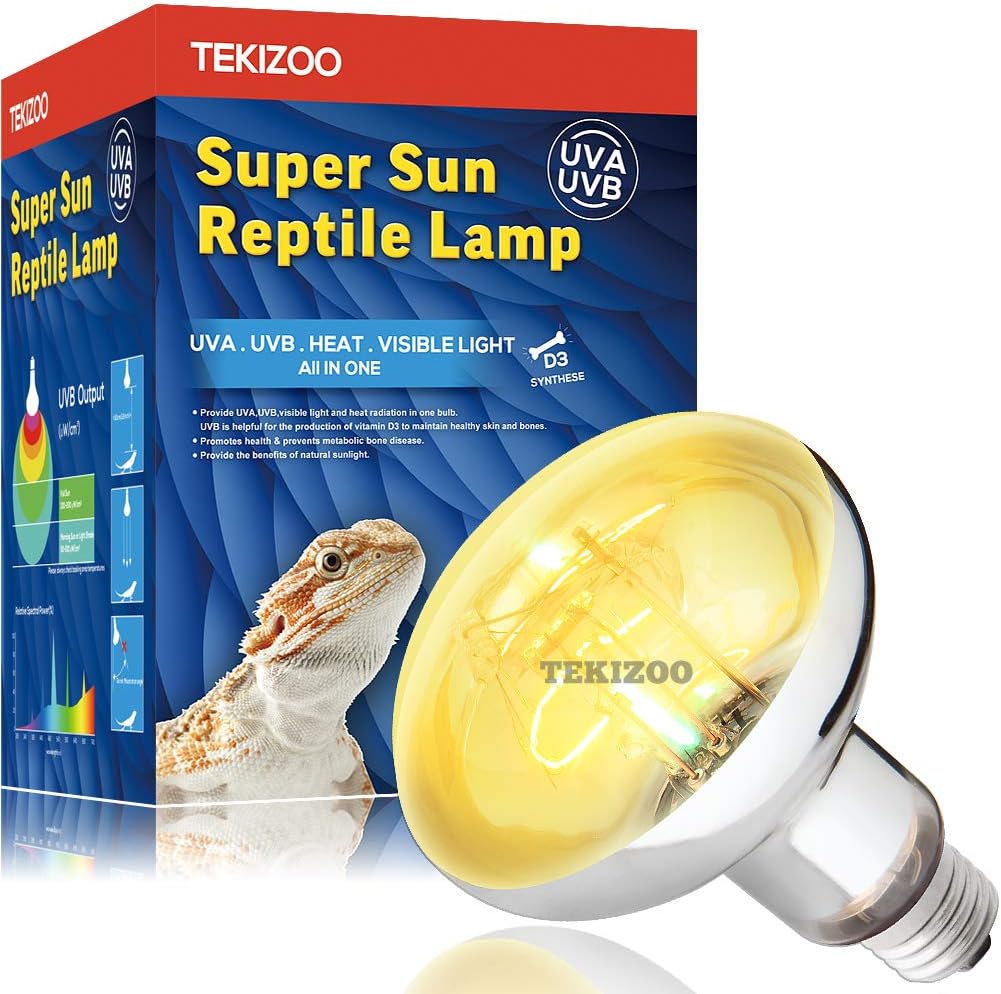
TEKIZOO UVA UVB Sun Lamp High Intensity Self-Ballasted Heat Basking Lamp/Light/Bulb for Reptile and Amphibian (125W)
Self-ballasted, high intensity, one fixture covers a big basking platform
Needs a ceramic socket and a large enclosure to be safe
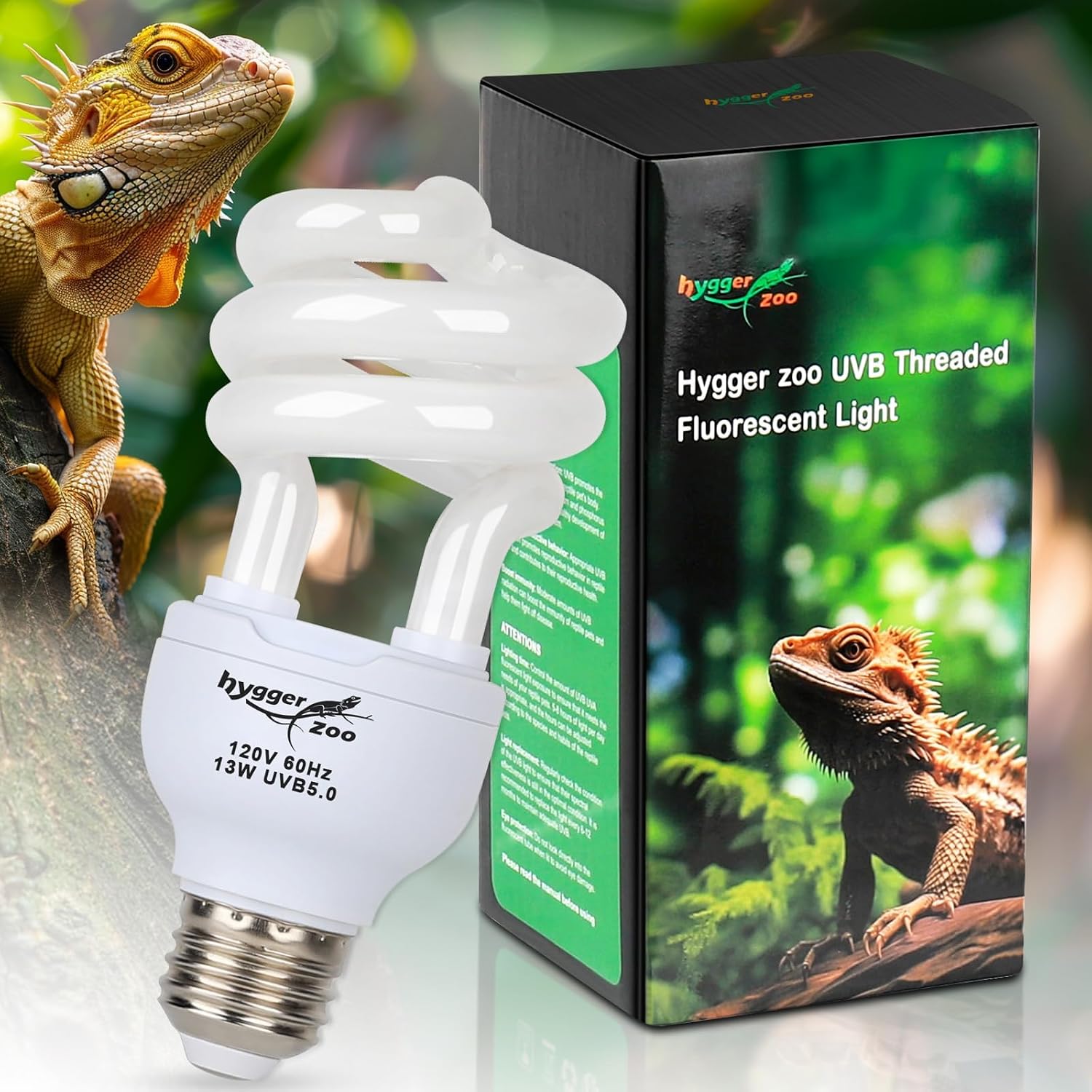
Hygger zoo UVB Bulb 5.0 UVA UVB Reptile Light Bulb, 13W UVB Light for Reptiles UVB Lamp for Turtle Frog Snake Chameleon Ball Python Iguana Tank
Low wattage UVB that pairs cleanly with separate heat
Adds no meaningful warmth, moderate UVB output only
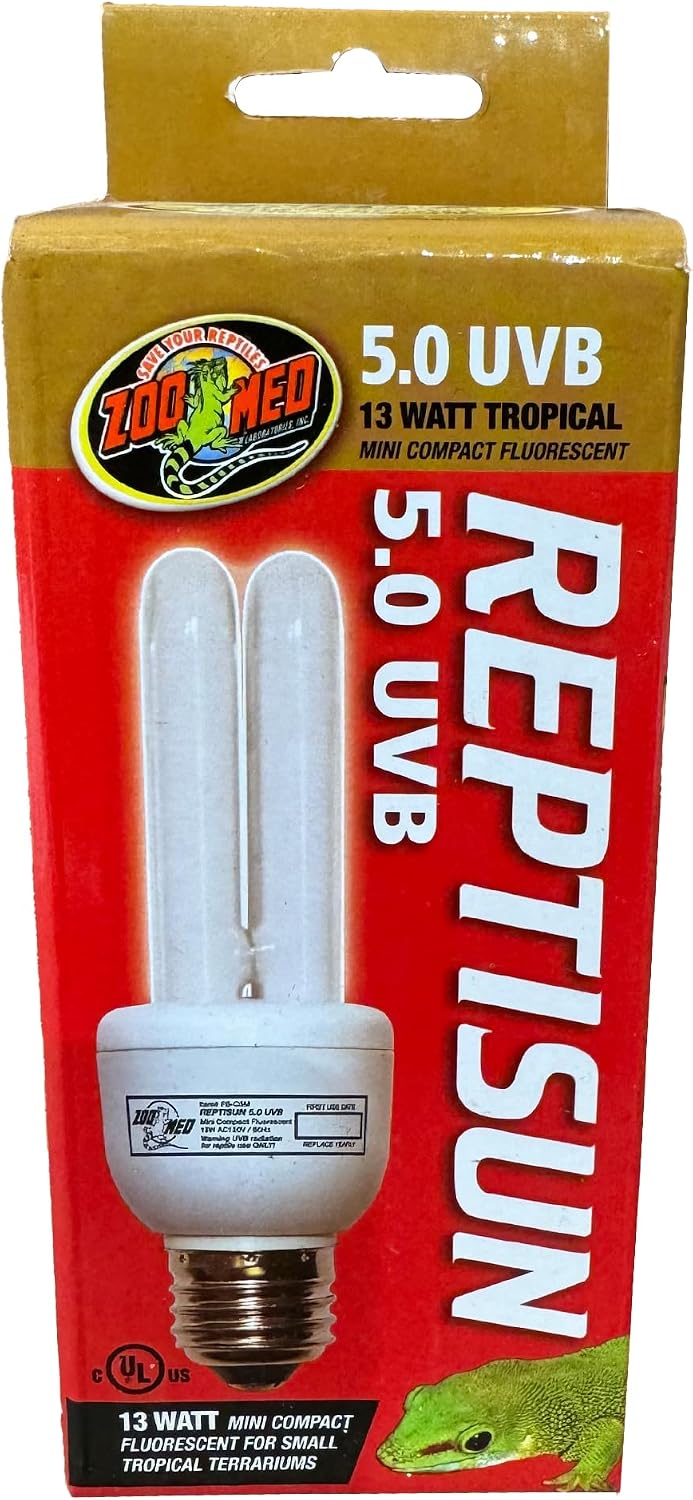
Reptisun 5.0 Uvb Mini Compact Fluorescent (Pack of 2)
Two-pack keeps you on a replacement schedule, fits small domes
Compact bulbs fade faster than tubes do
Prices and availability may change.
The uvb bulb vs uvb tube for reptiles question, answered
Framed as uvb bulb vs uvb tube for reptiles, this is really a coverage problem wearing a shopping decision as a disguise. A bulb is a point source. It pushes a cone of UVB and heat into one spot, and that spot is exactly where your animal parks itself to digest a meal. A tube is a line source. It spreads a thinner, longer band of UVB down the length of the enclosure, so a lizard can move from the warm end to the cool end without ever leaving the light.
That difference in geometry is the entire argument. Search uvb tube for reptiles vs uvb bulb and you get a wall of confident advice, most of it written as if one form factor is simply better than the other. It is not that clean. The right answer depends on the length of the enclosure, how far the animal sits from the light, and whether you need the fixture to double as a heat source.
The difference between uvb bulb and uvb tube for reptiles comes down to three things. First, beam shape: a bulb concentrates, a tube spreads. Second, heat: most screw-in bulbs produce meaningful warmth, while most linear tubes produce almost none. Third, cost and complexity: a bulb needs a socket and a dome, while a tube needs a fixture with the right ballast or driver plus a reflector hood to aim the light down instead of sideways.
There is also a maintenance difference that product listings never mention. Linear tubes hold their UVB output longer than compact bulbs do, and compact bulbs fade faster because they run hotter inside a smaller envelope. If you replace on a schedule every six months, that matters less. If you wait until a bulb burns out, it matters a great deal, and your animal spends the last stretch of that bulb's life under a light that looks fine and does almost nothing.
Compact and self-ballasted bulbs: what they do well
The four bulbs here are all point sources, which makes them the practical choice for anyone running a single enclosure in a spare room. They screw in, they start instantly, and they do not require a hood the length of the tank.
The MIXJOY 100W Reptile Heat Lamp Bulb Full Spectrum UVA UVB Sun Light for Reptile and Amphibian Use is the closest thing to a do-everything bulb in this group. It produces heat and light together, and at 100W it can hold a basking temperature in a glass tank in a room that runs cool. That is why it leads this list for a single setup. The catch is the same as its strength: 100W is a lot of heat in a small box. In anything under roughly 40 gallons you want a dimming thermostat rather than a simple on/off unit, or you will cook the animal on a warm afternoon. Check current Amazon price
The TEKIZOO UVA UVB Sun Lamp High Intensity Self-Ballasted Heat Basking Lamp is the more aggressive version of the same idea. It is self-ballasted, so you do not need a separate ballast box, but the bulb is heavy and it wants a ceramic socket and a fixture rated for the wattage. At 125W this is a lamp for a large enclosure or a genuinely cold room. Drop it into a 20-gallon tank and you have built a small oven. For a big bearded dragon setup or a raised basking platform, it is the kind of lamp that lets you stop juggling two fixtures at once. Check current Amazon price
The Hygger zoo UVB Bulb 5.0 sits at the low-wattage end of the range. At 13W it is not trying to heat anything. It is a UVB source you pair with a separate basking bulb or a heat mat, and it suits the keeper who already has the heat side solved and only needs the light side covered. The 5.0 label describes the UVB output band, which fits species that want moderate UVB rather than a desert-level blast. Turtles, frogs, and smaller snakes are the obvious candidates. Just do not expect it to move a thermometer. Check current Amazon price
The Reptisun 5.0 Uvb Mini Compact Fluorescent comes as a pack of two, which is the detail that matters most here. Compact fluorescents lose UVB output over months of use, so a spare in the drawer means you replace on schedule instead of delaying because you forgot to order. The 5.0 rating is a moderate UVB band, and the mini format fits small dome fixtures and screen-top tanks where a full-length tube hood will not go. Treat it as half of a two-fixture setup, not a solo act. Check current Amazon price
Where a linear tube pulls ahead
None of the four bulbs above is a tube, and that is not an accident. Tubes dominate serious reptile rooms because of coverage, not because they are magically stronger. A 24-inch T5HO tube in a reflector hood spreads UVB across most of the enclosure floor, so a tortoise or a monitor can bask, walk to the water dish, and walk back without ever stepping out of usable light.
Tubes also lose output more slowly, which makes the six-month replacement schedule easier to trust. They run cooler, so they add less heat to a tank that already has a basking bulb, and they are easier to mount outside a screen top where the mesh would otherwise block a meaningful share of the UVB.
The trade-offs are real. A tube fixture costs more than a dome and a bulb, it takes up shelf space above the tank, and it does nothing for your basking temperature. Most keepers running a tube also run a separate heat lamp or a heat mat on a thermostat, which means two plugs, two controllers, and two things to replace on different schedules.
Deciding whether you want uvb bulb or uvb tube for reptiles usually comes down to enclosure length. Under about three feet, a bulb covers the basking zone fine. Past four feet, a single bulb leaves half the tank in dim light, and that is when the tube earns its price.
How to read a UVB label without getting fooled
The percentage on the box, 5.0 or 10.0, describes the UVB band the lamp produces, not how much of it reaches your animal. Distance and reflector quality decide that. A 10.0 bulb at 18 inches through a screen top can deliver less usable UVB than a 5.0 bulb at 10 inches with a good reflector behind it.
That is why "full spectrum" is a marketing phrase and not a measurement. Full spectrum tells you the light includes visible color across a range. It says nothing about uvb output at the distance your reptile actually sits. Two lamps with identical labels can differ substantially once you factor in fixture geometry.
Also expect a burn-in period. Most fluorescent UVB sources put out their strongest output in the first days of use and settle into a stable range after that. If you are replacing a bulb, do it on a calendar, not on a hunch, and write the install date on the base with a marker. That single habit is worth more than any spec sheet.
Matching the fixture to the rest of the setup
Lighting does not exist in isolation, and the rest of the enclosure changes what you should buy.
Tank size sets the ceiling. A 100W or 125W lamp in a 20-gallon tank is a hazard, and a 13W UVB bulb in a six-foot enclosure is decoration. Match the wattage to the volume, then use a thermostat to trim the output rather than buying a smaller bulb you will outgrow.
Basking temperature decides whether you need a heat-producing bulb at all. If your basking spot already hits target with a heat mat, the Hygger or the Reptisun handles the UVB side alone. If you are starting from nothing, one of the higher-wattage lamps gets you both from a single socket.
The thermostat range matters more than the wattage printed on the box. A dimming thermostat that can hold a basking spot within a couple of degrees is the difference between a lamp that works and a lamp that swings. On/off units are fine for heat mats and wrong for high-wattage basking lamps.
Then there is everything under the light. Humidity range, substrate depth, and hide size all shift how much heat the enclosure retains and how far the animal can retreat from the beam. A deep substrate layer holds moisture and cools the surface above it, which is why a lamp that runs perfectly in a bare tank can run hot over six inches of coco coir. A properly sized hide on the cool end gives the animal somewhere to escape the light entirely, and a heat mat wattage that seems modest on paper is often plenty once the hide traps that warmth.
Do you need a UVB meter before you buy?
A UVB meter costs more than every bulb in this article combined, so no, most keepers do not need one on day one. What most keepers need is a schedule and a spare bulb.
If you keep multiple enclosures, breed, or keep a species with demanding UVB requirements, a meter changes how you work. You stop guessing whether a lamp has faded and start replacing it when the reading drops. For everyone else, the two-pack of compact fluorescents and a marker on the base gets you most of the benefit for a fraction of the cost.
The honest test is simpler. Watch the animal. A reptile that stops basking, spends all day in the hide, or starts closing its eyes under the lamp is telling you something about the setup that no label will.
What I'm watching next
The next thing on my bench is a side-by-side of a compact bulb against a short linear tube in identical 40-gallon breeders, measured at the same distance with the same reflector, to see exactly where the coverage advantage turns into a real difference for a basking animal. I am also watching the price of reflector hoods, because the hood is the part that decides whether a tube is worth the switch in the first place.
If you are setting up your first enclosure, buy the bulb, buy a dimming thermostat, and put the money you saved toward a proper hide and a good substrate. The light is one variable. The whole setup is what keeps the animal healthy.