Anyone setting up a cage for a budgie, a conure, or a cockatiel runs into the same question sooner or later, and it usually arrives badly framed. The bird perch vs bird swing argument sounds like a choice between two versions of one object, but the two pieces of furniture do different jobs, mount differently, and fail in different ways. One is infrastructure: the surface a bird stands on, sleeps on, and grinds its beak against. The other is enrichment: something that moves under the bird and asks it to balance. Getting that distinction straight is the difference between a cage that works and a cage that is merely full of things.
The confusion comes from the fact that both are, technically, perches. A swing is a perch on a pivot, which is why the two get sold in the same aisle and compared as though one could replace the other. In practice a bird needs a stable surface more than it needs a moving one, and the order you add them matters more than which one looks better in a listing photo.
The short answer for most single-bird setups is to buy a stable perch first and add a swing once the cage has the height and the bar spacing to hang one safely. A bird that cannot rest comfortably will not use a swing anyway, and a swing hung too low in a short cage becomes an obstacle rather than a toy.
| Product | Price | Why it won | Why it lost |
|---|---|---|---|
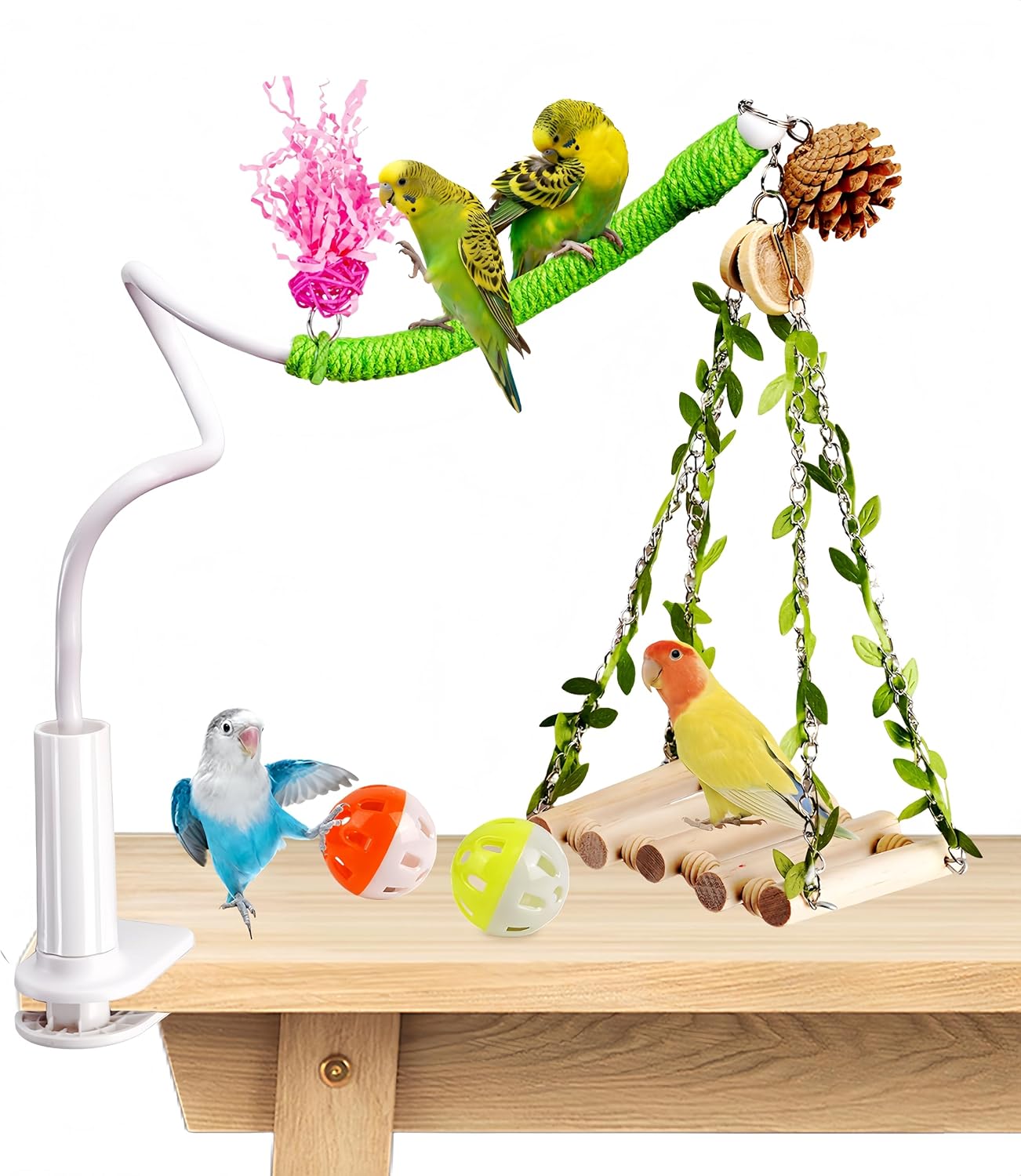 ZooVibe Bird Perch with Swing, Movable Desktop Stand with Clamp | Check current Amazon price | Perch and swing on one clamped base, so training and enrichment come from a single purchase | Lives on a desk or table, so it does nothing for the hours a bird spends inside the cage |
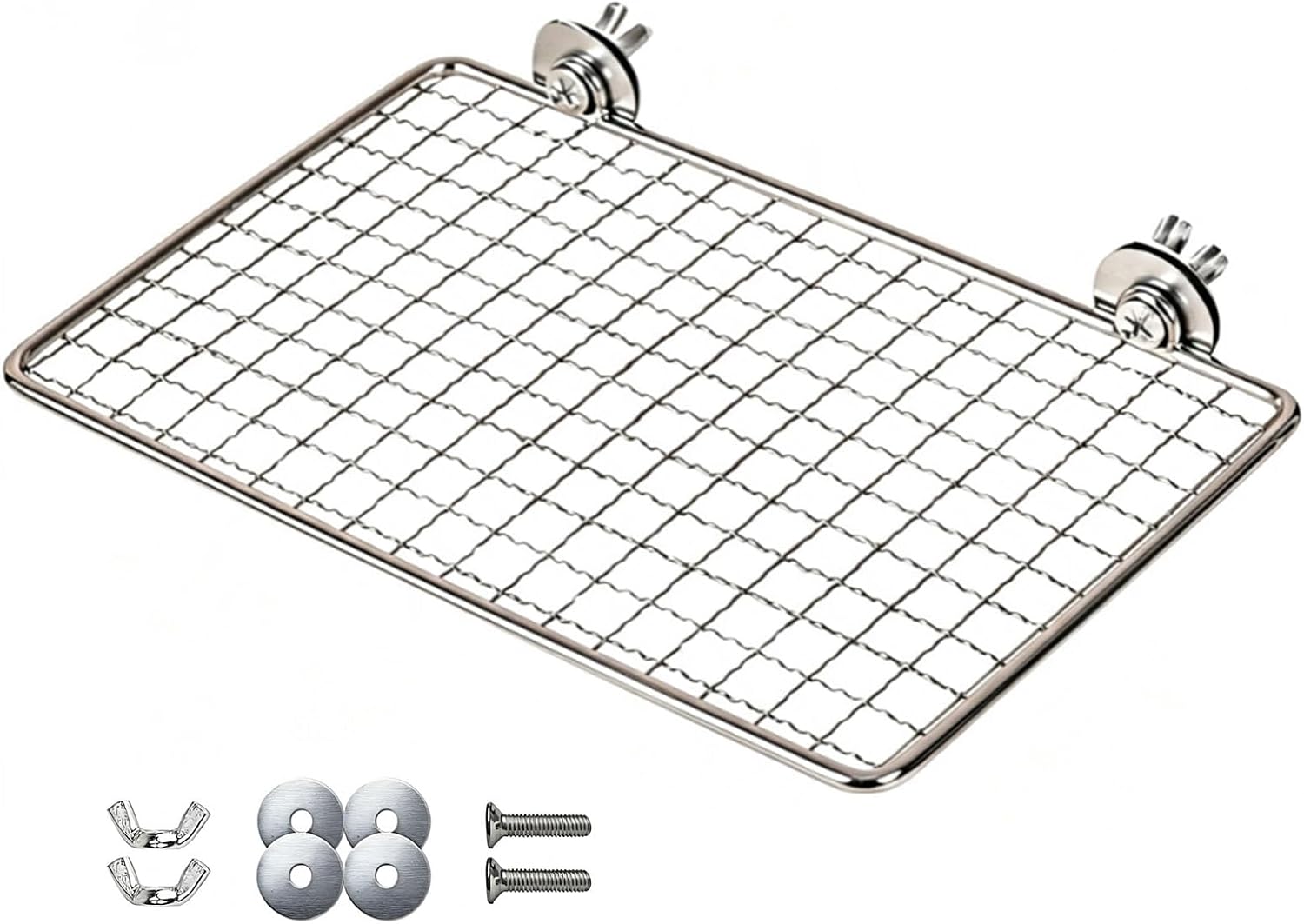 Pissente Stainless Steel Bird Platform Perch, Open Grid | Check current Amazon price | Stainless steel and an open grid wipe clean, and waste falls through instead of collecting | No motion at all, and a flat grid gives small toes less to wrap around than a round dowel |
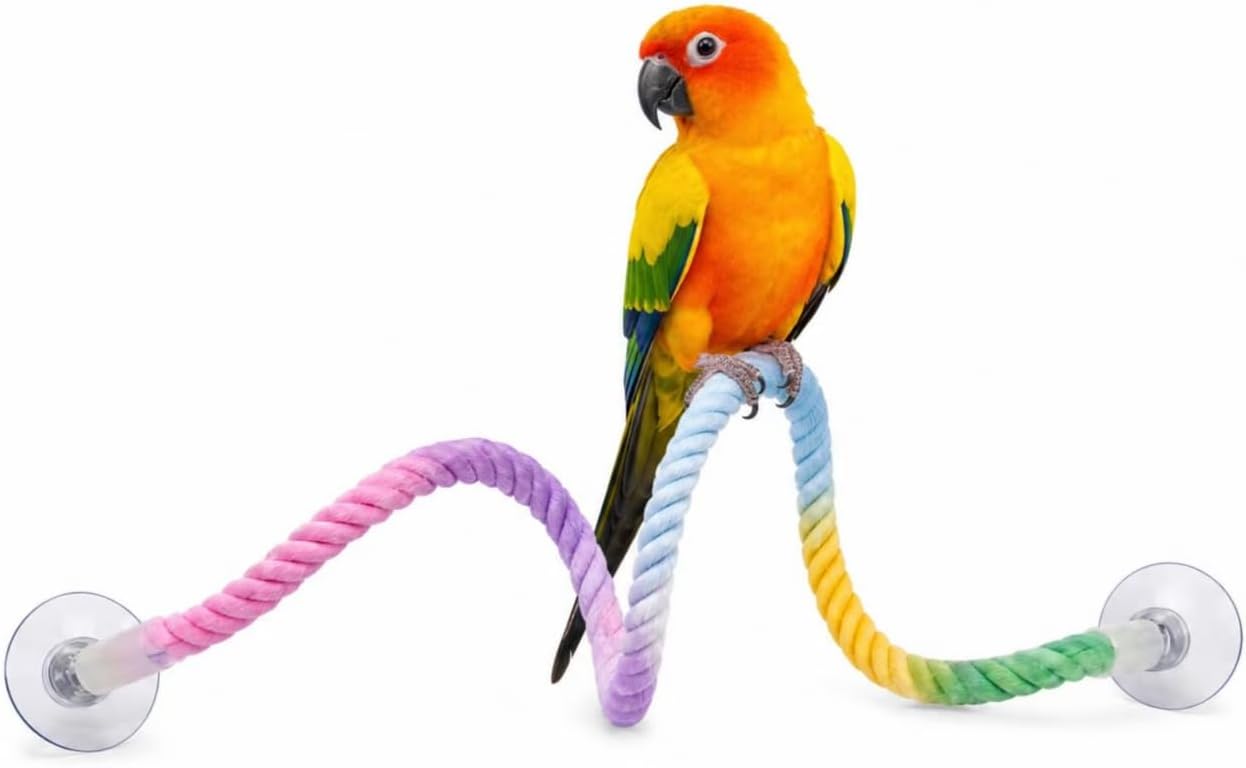 Xorabuddy Window Bird Perch Parrot Climing Rope with Suction Cups, 80cm | Check current Amazon price | 80cm of rope gives a long climbing run plus a bright window position | Suction cups only hold on smooth, clean glass, and a hard landing can pull them loose |
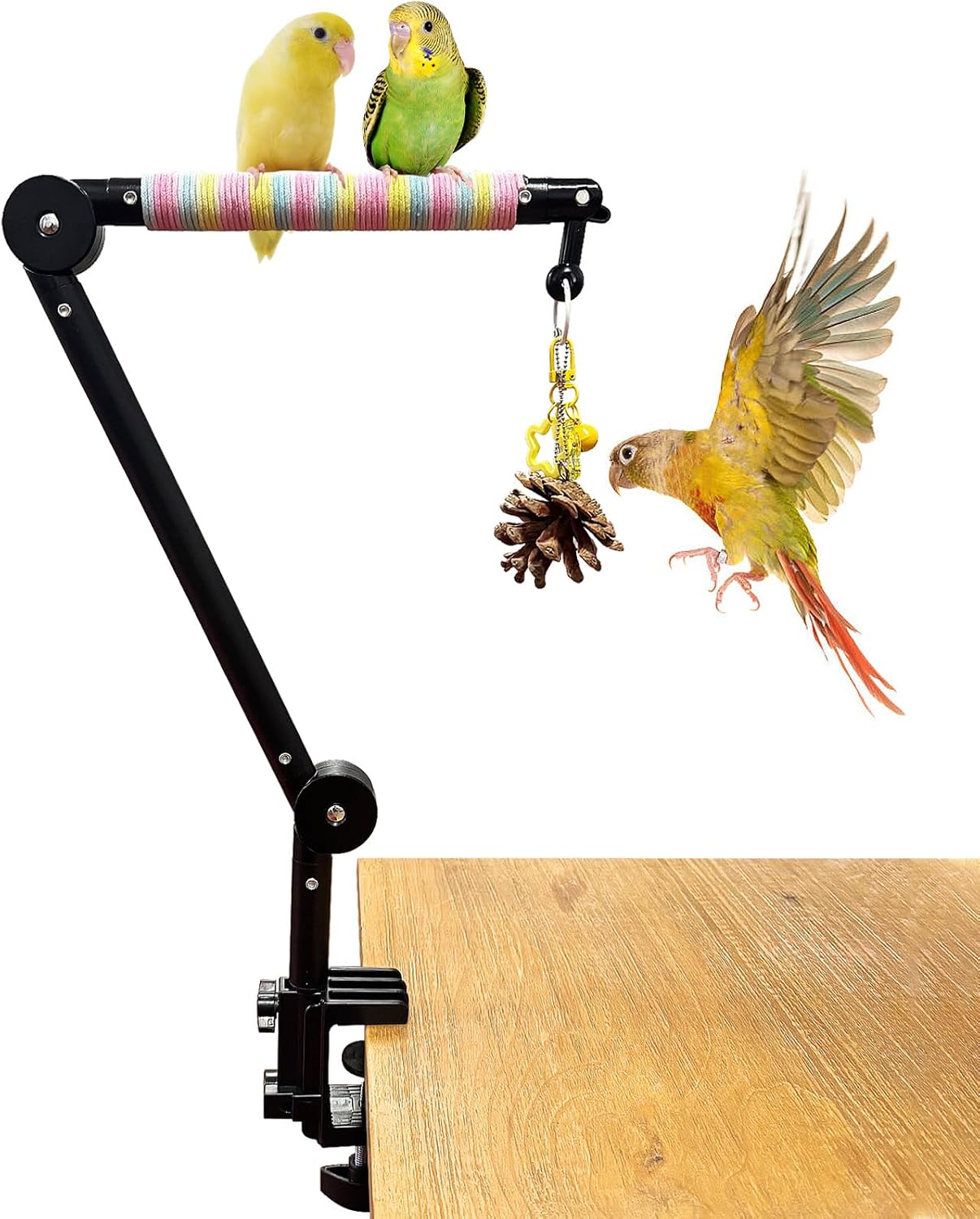 Kathson Adjustable Desktop Bird Perch Movable Parrot Training Stand | Check current Amazon price | Adjustable height suits a growing juvenile or a bird you are still training | No swing included, and it needs a flat surface to stand on |
The real bird perch vs bird swing question
A perch is a standing surface. It can be a dowel, a natural branch, a rope, a platform, or a grid, and its job is to hold a bird's weight for long stretches without hurting its feet. A swing is a suspended perch with a pivot, and its job is to make standing slightly harder. That is the entire distinction, and everything practical follows from it.
The bird swing vs bird perch comparison gets much easier once you stop treating the two as substitutes. A swing without a perch leaves a bird balancing every waking minute, which is exhausting rather than enriching. A perch without a swing leaves a bird with a comfortable place to sit and nothing to do, and bored parrots chew bars, feathers, and anything else within reach.
The practical difference between bird perch and bird swing comes down to three things: how the feet load the surface, how much the surface moves, and how often you have to clean it.
What each one does in a cage
Perches carry the boring load of cage life. Sleeping, eating, preening, waiting, and the long hours a bird spends simply sitting somewhere. They also wear beaks and nails when the surface has texture, and they give you a predictable spot to pick a bird up from without chasing it around the bars.
Swings carry the active load. Balance practice, grip work, and the kind of occupied fidgeting that keeps a bird from inventing its own entertainment. Some birds nap on a swing once they trust the motion, and for those birds the swing quietly becomes the most used object in the cage. Others never accept a moving surface and treat it as an obstacle to climb around.
That split is why a cage with only one of the two always feels slightly wrong. Perches are where a bird recovers. Swings are where a bird spends energy. A setup needs both, but it needs them in that order, because energy spent on a bird that is not resting well just turns into irritability.
Desktop stands: ZooVibe and Kathson
Two of the four mounts here are desktop pieces, and they solve the out-of-cage problem rather than the in-cage one.
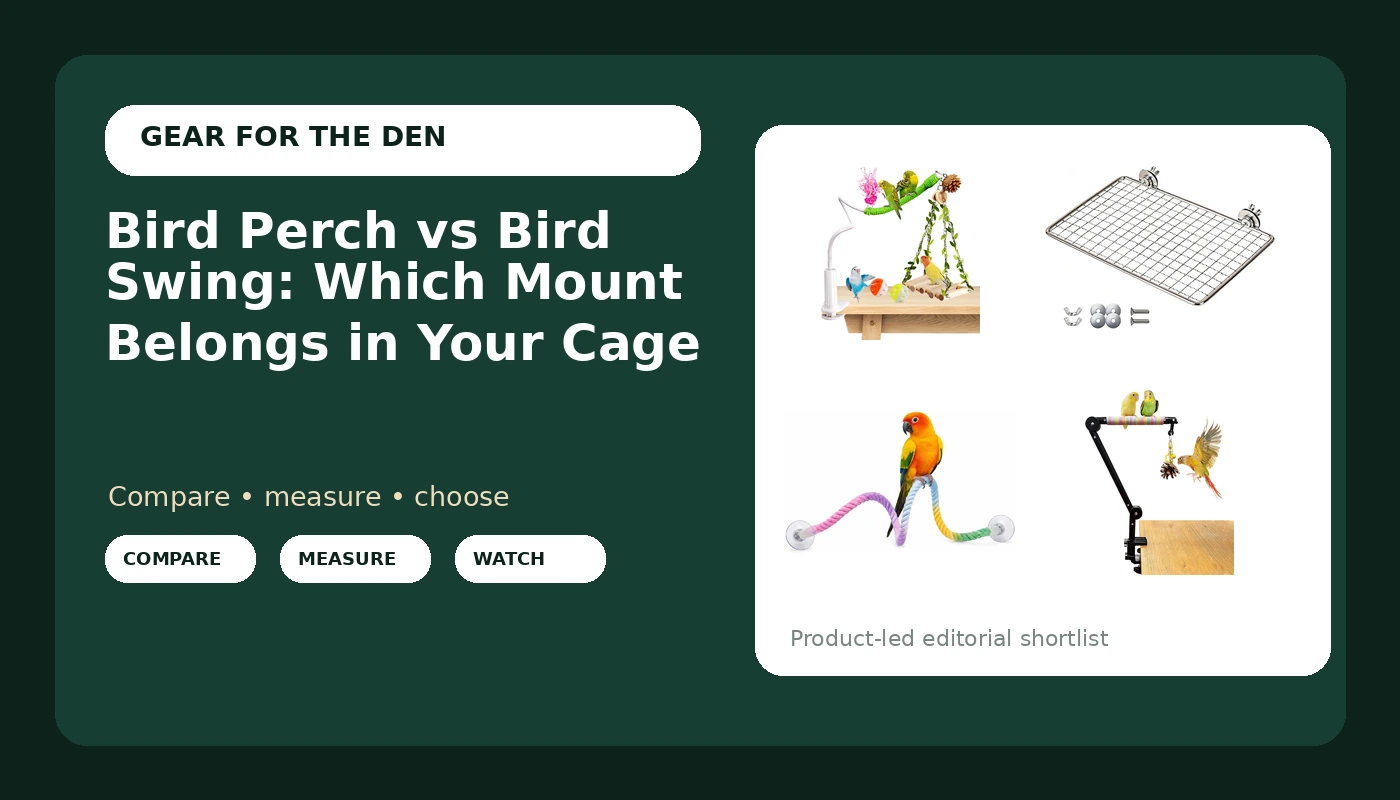
The ZooVibe Bird Perch with Swing, Movable Desktop Stand with Clamp is the only unit in this group that bundles both objects. You get a standing perch and a swing on one base that clamps to a table edge or a shelf lip, so a training session and a bit of enrichment come from a single purchase. Check current Amazon price. Its limitation is scope: a clamped stand lives outside the cage, so it does nothing for the eight or ten hours your bird spends inside one during a workday.
The Kathson Adjustable Desktop Bird Perch Movable Parrot Training Stand takes the opposite approach. It is a training stand first, with adjustment built into the design, which matters when you are working with a juvenile that is still growing or a rescue bird you have not sized up yet. Check current Amazon price. It does not include a swing, so treat it as a perch purchase and plan to buy motion separately if your bird turns out to want it.
Window mounts and rope perches: the Xorabuddy option
The Xorabuddy Window Bird Perch Parrot Climing Rope with Suction Cups, 80cm is the odd one out here, and for some households it is the most interesting. It is a rope perch rather than a rigid dowel, mounted to glass with suction cups, and the 80cm run gives a bird a long climbing line instead of a single standing spot. Check current Amazon price.
Rope is kind to feet because the fiber gives toes something to grip at several angles rather than one fixed diameter, and a window position adds light and a view, which most parrots find genuinely worth watching. The mount is the weak point. Suction cups are only as reliable as the glass they are pressed against, and a dusty, textured, or very cold window will let go. If you go this route, clean the glass first, press the cups firmly, and re-press them as part of your weekly routine.
Platforms and grids: the Pissente perch
The Pissente Stainless Steel Bird Platform Perch, Open Grid is a flat standing surface rather than a bar, and the stainless steel is the reason to look at it. It does not absorb droppings, it does not hold odor, and it wipes down in seconds. Check current Amazon price.
The open grid is a deliberate trade. Waste falls through instead of collecting under the bird, which keeps the platform itself cleaner and cuts down on scrubbing. The flip side is that a grid is not round, so a bird's toes wrap around an edge rather than closing on a diameter the way they would on a branch. For a larger bird with a broad foot that is usually fine. For a small bird, watch how it settles for the first few days before you make it the primary perch.
Bar spacing, perch diameter, and cage height
Three numbers decide whether any of these mounts will work in your cage, and none of them appear on the product page.
Bar spacing comes first. If the gaps are wide enough for a bird to push its head between the bars, they are also wide enough to make a clamp or a hanging mount sit awkwardly, and they are a safety problem regardless of what furniture you add. Measure the gap before you buy anything that has to grip two bars.
Perch diameter comes second. A bird's foot should wrap roughly two thirds of the way around the surface, with the toes overlapping slightly. Too thin and the bird grips hard all day, which is how foot sores start. Too thick and it cannot close its foot at all, so it perches on the flat of its foot instead, which is just as bad over time.
Cage height comes third, and it is the one people skip. A swing needs clearance in both directions and room to move without hitting the food cup, the water bottle, or the roof. In a short cage, a swing is a problem no matter how well it is built. In a tall cage, a swing hung in the upper third is often the most used object in the whole setup, because it puts the bird at the height it would choose anyway.
Mounting hardware: swing mount, clamp, and suction cup
The difference between bird perch and bird swing shows up most clearly in the hardware, and the hardware decides where each one can go.
A swing mount is typically a hook, a loop, or a quick link that hangs from the cage roof. Position is easy to change, but the whole load sits on the top of the cage, and the swing moves every time the bird does. A clamp mount grabs a flat edge, which is why the desktop stands here are stable and why they cannot go inside a barred cage. A suction cup mount needs smooth, clean, non-porous glass and regular re-pressing.
Travel changes the math. Carrier size limits what fits, and a small carrier has no roof height for a swing. A flat platform or a short rope perch is the realistic choice for a carrier, and the swing stays home where there is room for it.
Cleaning, tray liner, and food cup size
Everything in a cage eventually gets soiled, and the pieces that are hard to clean get cleaned less often.
A tray liner catches what falls, but it does not rescue a rope perch that has already been soiled. Rope needs scrubbing and thorough drying or it holds bacteria, which is the strongest argument for stainless steel in a cage with a messy bird. Grid and steel wipe down. Rope and wood do not.
Food cup size matters here indirectly. If a cup is mounted high and close to where you want a swing, the bird will use the cup as a step and ignore the swing entirely. Hang the swing in a corner away from the cup and the water bottle.
Foraging difficulty is the other variable worth tracking. A bird with nothing to do will chew the swing's rope or the perch's wood, and no mount survives that for long. Add foraging before you add more furniture.
Trade-offs: who each one suits
The ZooVibe is the pick for a desk, table, or training corner where you want one piece covering both a perch and a swing. It is the weakest choice for in-cage use, because a clamped base cannot hang from cage bars.
The Kathson is the pick for training and for a bird whose size is still changing, thanks to the adjustable build. It is the wrong pick if a swing was the point of the purchase.
The Xorabuddy is the pick for a bright window, a bird that climbs, and a household willing to keep the glass clean. It is the wrong pick for textured glass or a heavy bird that lands hard.
The Pissente is the pick for easy cleaning and a flat standing area, especially with a larger bird. It is the wrong pick for a bird that wants motion under its feet.
The honest recommendation
If you are deciding between a bird perch or bird swing and your cage currently has neither, buy the perch first. Rest is not optional and enrichment is. A bird that sleeps badly on a thin dowel will be irritable, footsore, and less willing to try anything new, including a swing.
Once the perch is sorted, add motion. The ZooVibe gives you both in one clamped base and is the obvious starting point if your bird spends most of its time out of the cage with you. If your bird lives in the cage all day, hang a swing in the upper third and keep a stable perch below it, so the bird has somewhere to land when it misjudges the motion.
The bird perch vs bird swing debate is really a sequencing question. Perch first, swing second, and check the bar spacing, the perch diameter, and the cage height before either one arrives.
What to look at next
Two things worth watching on this page. First, whether platform styles take over from round perches in larger cages, because the cleaning advantage is real and the foot question is not settled. Second, how suction cup mounts hold up through a full winter, when indoor glass runs cold and condensation works against the seal. Both are worth revisiting before you buy a second mount for the same cage.