Guinea pigs are prey animals that spend most of the day within a few feet of cover, so a hideout is not a decorative extra in the cage. It is where they retreat when the room gets loud, where they nap between hay meals, and often where they sit while pulling hay from a rack. The problem is that a hideout chosen on looks alone usually fails on one of three points: the entry is too narrow for a full grown pig, the interior is too shallow for the animal to turn around, or the material holds moisture and odor after a week of daily use. A guinea pig hideout explained in practical terms comes down to fit, airflow, and construction. This guide covers those three points, then compares four hideouts sold for guinea pigs and similar small pets.
Quick answer
The correct guinea pig hideout is one your adult pig can walk into, turn around in, and leave without backing into a corner. Look for an interior width comfortably longer than your pig's body, at least one wide opening or two smaller ones for cross ventilation, and a flat base that sits on the cage floor instead of sinking into loose bedding. In a cage with two pigs, plan on two hideouts plus open run space, so one animal cannot guard the only cover or block its cagemate from the hay rack.
Four useful options
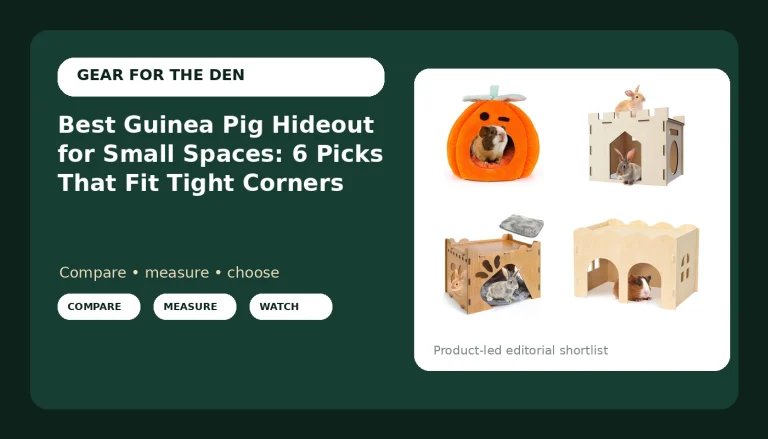
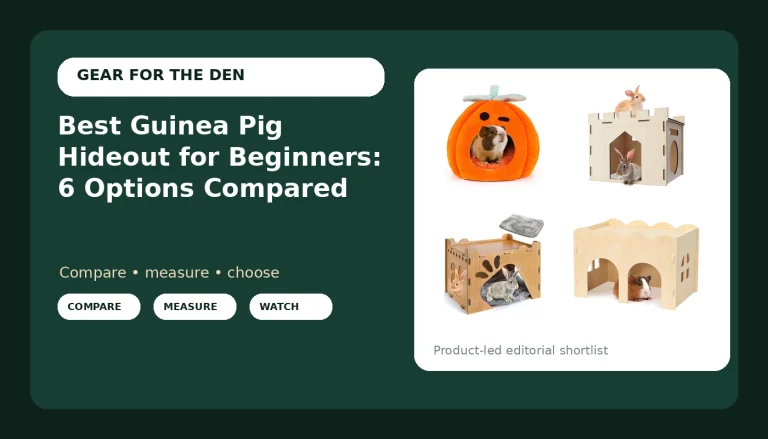
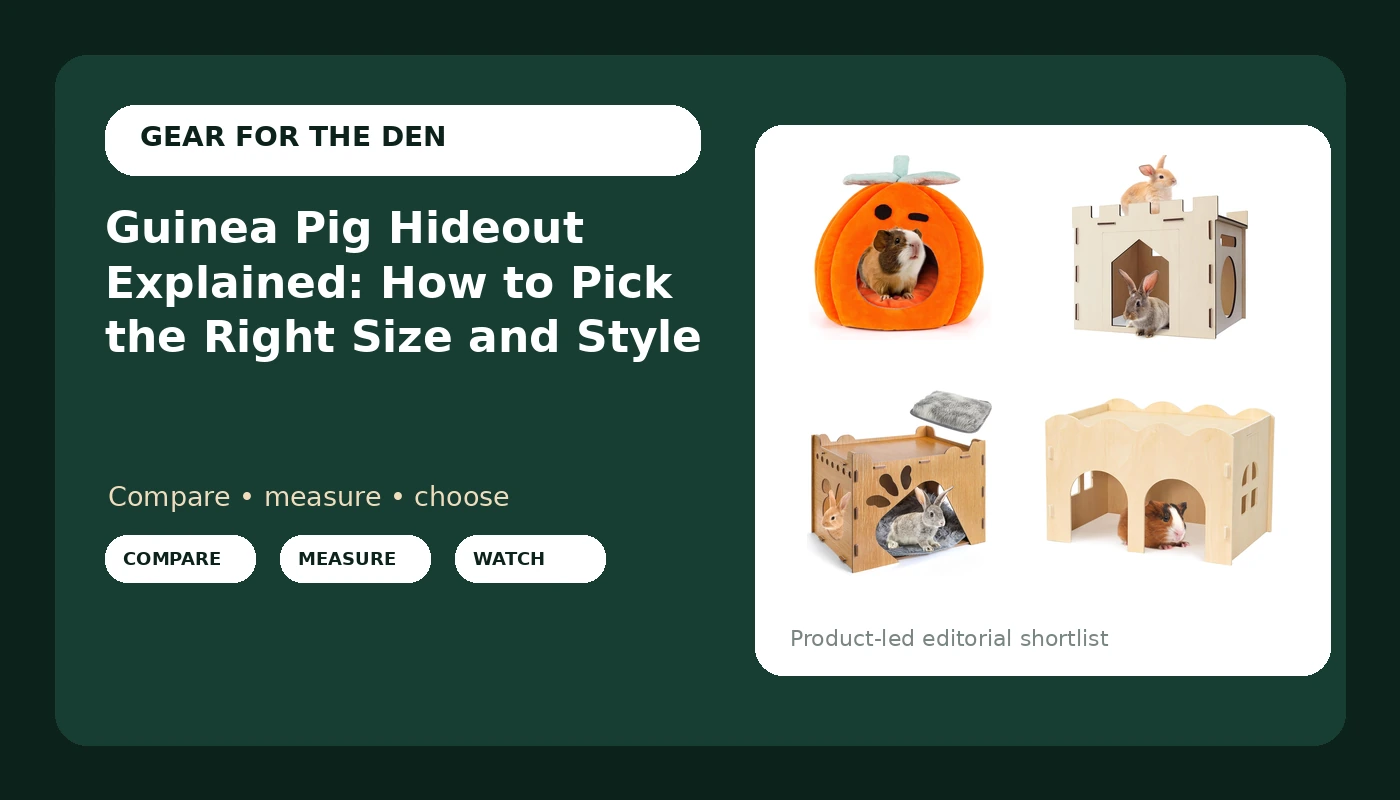
These four listings cover the main hideout styles sold for guinea pigs: a fleece bed, a multi level house, a wooden castle, and a plain wooden hut.
| Model | Best fit | What stands out |
|---|---|---|
| YUEPET Guinea Pig Bed, Warm Fleece Pumpkin Hideout | Pigs that sleep in a pile | Pumpkin shaped fleece bed with a soft shell |
| HIIMALEX Large Sturdy Bunny House with Spacious Balcony Hidey Detachable Playhouse for Rabbit Hideout Castle Tower Toys for Indoor Bunnies Guinea Pig Hamster Chinchilla Gerbil | Cages with room for a raised level | Balcony level plus a detachable playhouse section |
| Yesland Rabbit Hideout Castle, Large Wooden Bunny Houses and Hideouts with Pet Pad, Detachable Small Animal Play Hideaway Hut and Playhouse for Indoor Bunnies Guinea Pig Hamster Chinchilla Gerbi | A wooden look with a soft floor | Castle shape, included pet pad, detachable hut |
| Bifeaw Natural Wooden Chew-Proof Guinea Pig Hideout | Gnawers and simple setups | Natural wood, single piece build |
The soft fleece option: YUEPET Guinea Pig Bed, Warm Fleece Pumpkin Hideout
Fleece beds answer a specific problem: pigs that sleep in a heap rather than sitting inside a rigid box. The trade off is upkeep. Fleece holds warmth, which helps in a cool room, but it also traps hay chaff, bedding dust, and urine, so it needs a shake out and a wash far more often than a wooden or plastic hide. If the cage runs on loose paper bedding, a fleece bed will collect that bedding every time a pig walks in, and brushing it out becomes part of the weekly routine. It is also the least structural of the four options, so it will not double as a platform or a ramp landing. Used alongside a wooden hide, though, it gives a pair of pigs two different textures to choose from, which is one of the simplest forms of enrichment you can add to a cage.
The large multi level option: HIIMALEX Large Sturdy Bunny House with Spacious Balcony Hidey Detachable Playhouse for Rabbit Hideout Castle Tower Toys for Indoor Bunnies Guinea Pig Hamster Chinchilla Gerbil
Multi level houses add usable space without adding floor area, which matters in a cage that is already close to its minimum footprint. The trade off is stability and cleaning access. A balcony section gives a pig a raised vantage point, but a raised level also means the structure has to sit on level ground and not tip when a pig hops down. Detachable sections help, because you can separate the pieces to scrub them and reassemble a different layout when you rearrange the cage. In a stacked cage or one with a low lid, measure the assembled height before buying, and keep bar spacing in mind: a house that pushes a pig toward the cage wall can leave it sitting right next to bars it will test.
The wooden castle option: Yesland Rabbit Hideout Castle, Large Wooden Bunny Houses and Hideouts with Pet Pad, Detachable Small Animal Play Hideaway Hut and Playhouse for Indoor Bunnies Guinea Pig Hamster Chinchilla Gerbi
Wood hides look the part in a naturalistic setup and give a pig something to chew that is not plastic. The included pad is the practical detail here: a bare wooden floor is hard and cool, and a washable pad on top of it makes the hut usable as a sleeping spot rather than only a bolt hole. The trade off is that wood absorbs urine and takes longer to dry than fleece or plastic, so a wooden castle usually needs a wipe down and a full dry out rather than a quick rinse. A detachable hut also lets you break the castle into a single hide when you want more open floor area, and it makes the whole thing easier to store between cage changes. If your pigs tend to soak one corner, keep the pad in that corner and check the wood underneath it at every clean.
The simple chew friendly option: Bifeaw Natural Wooden Chew-Proof Guinea Pig Hideout
The simplest item of the four is a plain wooden hideout described as chew proof. That matters for pigs that gnaw edges, and it matters for owners who would rather keep a hide for years than watch a plastic one get chewed into sharp edges. A single piece wood hide has no assembly, no pad to wash, and no detachable parts to lose, which makes it a reasonable first hideout or a spare for a travel cage. The trade off is that it offers one shape and one entry, so it does less for enrichment than a castle or a balcony house, and a single entry hide can feel like a trap if it is the only cover in the cage. Pair it with a second hide and it becomes the bolt hole in a two part layout.
Prices and availability may change. Product images, names, and retailer links are matched to verified listings. No current price, rating, stock status, or measured result is stated here without current evidence.
What makes a guinea pig hideout work in a real cage
A hideout earns its place when it does three jobs at once: it gives cover, it stays dry, and it does not eat the space your pig needs to move.
Start with hideout size. The interior needs to be long enough for a pig to lie down fully stretched and wide enough for it to turn around without reversing out. A hide sized for a hamster is not a guinea pig hideout, even when the listing photo shows a guinea pig next to it. If you are buying before you have an adult pig in hand, measure from your outstretched fingertips to your wrist, treat that as the minimum interior length, and add a few inches of margin on top.
Floor area is the next constraint. Every hideout you add removes floor area that would otherwise be open run space, and guinea pigs need a clear path between the hay rack, the water bottle, and the sleeping area. In a cage near the minimum recommended cage size, two medium hides plus a tunnel serve a pair better than one oversized castle parked in the middle.
Ventilation is easy to overlook. A solid box with a single small door traps warm, humid air, and a pig that sits in that air all day is more likely to smell and to run into skin trouble. Two openings, or one wide arch, let air move through while still giving the pig a dark corner to retreat to.
Finally, match the material to your bedding. Fleece and wood both collect bedding dust and hay chaff, and a hide that is hard to clean is a hide that gets skipped at cleaning time. Sizing and material choices, not the shape printed on the box, decide whether a hideout actually gets used.
How to size a guinea pig hideout before you buy
Work through these five steps before the hideout goes in your cart.
- Measure your pig, not the listing photo. A relaxed adult guinea pig stretches to roughly the length of an adult forearm, so write that number down and treat it as your minimum interior length.
- Measure the cage floor area and subtract the feeding zone. Mark out the space taken by the hay rack, the water bottle, and the food bowl, because a hideout cannot sit on top of any of them.
- Check the hideout size against what is left. Leave a clear run at least one pig wide so an animal can travel from cover to food without being blocked by a cagemate.
- Count the openings and look at the shape. One wide entry or two smaller ones keeps air moving, while a narrow single door in a solid box is the layout most likely to trap a pig.
- Match the material to your cleaning routine. Fleece needs frequent washing, wood needs drying time, and both need bedding dust brushed out, so pick the one you will genuinely maintain.
Practical setup and safety checks
- Place the hideout against a wall rather than in the middle of the cage. Pigs settle faster with their back to a solid surface, and wall placement keeps the open floor area in one usable run.
- Keep the hay rack and the water bottle within sight of the hideout. A pig that has to cross the whole cage to eat eats less, and bottle capacity matters more than bottle position on days when you are away for hours.
- Watch bedding dust. A hide with a solid floor collects whatever the bedding throws off, and a pig sleeping in it breathes that dust all night, so shake out fleece pads and wipe wooden floors at every cage clean.
- Size the tunnel diameter if you add a tunnel. A tube a pig can enter but not turn around in becomes a trap the moment a cagemate blocks the far end.
- Read bar spacing and the cage footprint together. A hideout that pushes a pig against the cage wall leaves it next to the bars, and a determined pig will test bar spacing at every opportunity.
- Give each pig its own exit route. Two hideouts in a pair's cage means no animal is ever cornered with only one way out.
Which option should you choose?
Choose the YUEPET Guinea Pig Bed, Warm Fleece Pumpkin Hideout when your pigs sleep in a pile and you want a soft, warm cover that is easy to lift out and wash. Choose the HIIMALEX Large Sturdy Bunny House with Spacious Balcony Hidey Detachable Playhouse for Rabbit Hideout Castle Tower Toys for Indoor Bunnies Guinea Pig Hamster Chinchilla Gerbil when the cage has vertical room and you want a hide that doubles as a climbing and lookout structure. Choose the Yesland Rabbit Hideout Castle, Large Wooden Bunny Houses and Hideouts with Pet Pad, Detachable Small Animal Play Hideaway Hut and Playhouse for Indoor Bunnies Guinea Pig Hamster Chinchilla Gerbi when you want a wooden hide with a pad on the floor and the option to break the castle into smaller pieces. Choose the Bifeaw Natural Wooden Chew-Proof Guinea Pig Hideout when you need a simple single piece wooden hut for a chewer, a spare, or a travel cage.
Treat this guinea pig hideout explained comparison as a starting point rather than a final answer. None of these listings states an interior measurement in its title, so confirm the actual dimensions on the product page before ordering, and check the assembled height if your cage has a lid. A hideout that is too small is worse than no hideout at all, because a pig will still use it and will keep sitting in a space it cannot stretch out in. Sizing beats styling every time.
The bottom line
There is no single ideal guinea pig hideout, because the right pick depends on cage size, how many pigs share the cage, and how much cleaning you want to do each week. The reliable formula is the same for every setup: an interior your adult pig can turn around in, an opening or two that keep air moving, a base that stays dry, and enough leftover floor area that your pigs can still travel from the hay rack to the water bottle without a detour. If you are unsure, start with the simple wooden hut for cover and add a fleece bed for sleeping. That pairing covers both a bolt hole and a nap spot, and it leaves the middle of the cage open for running.