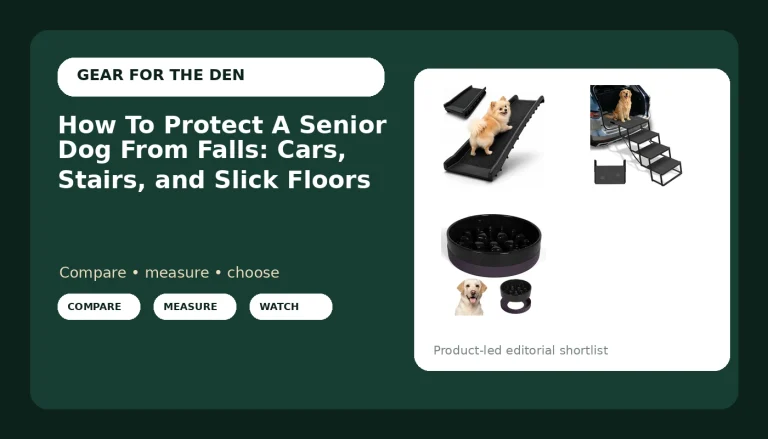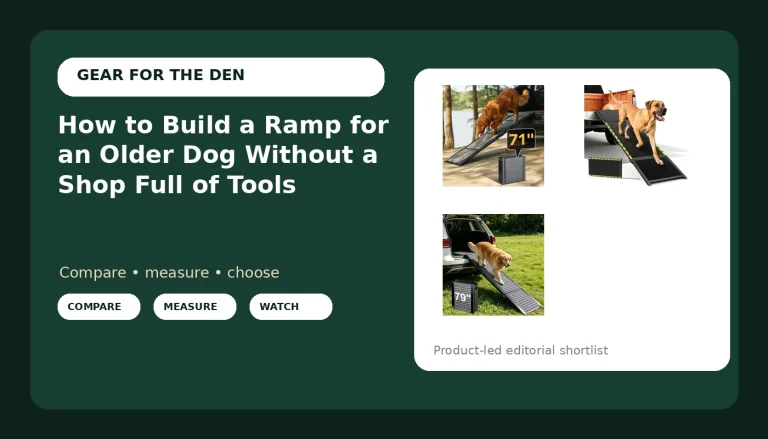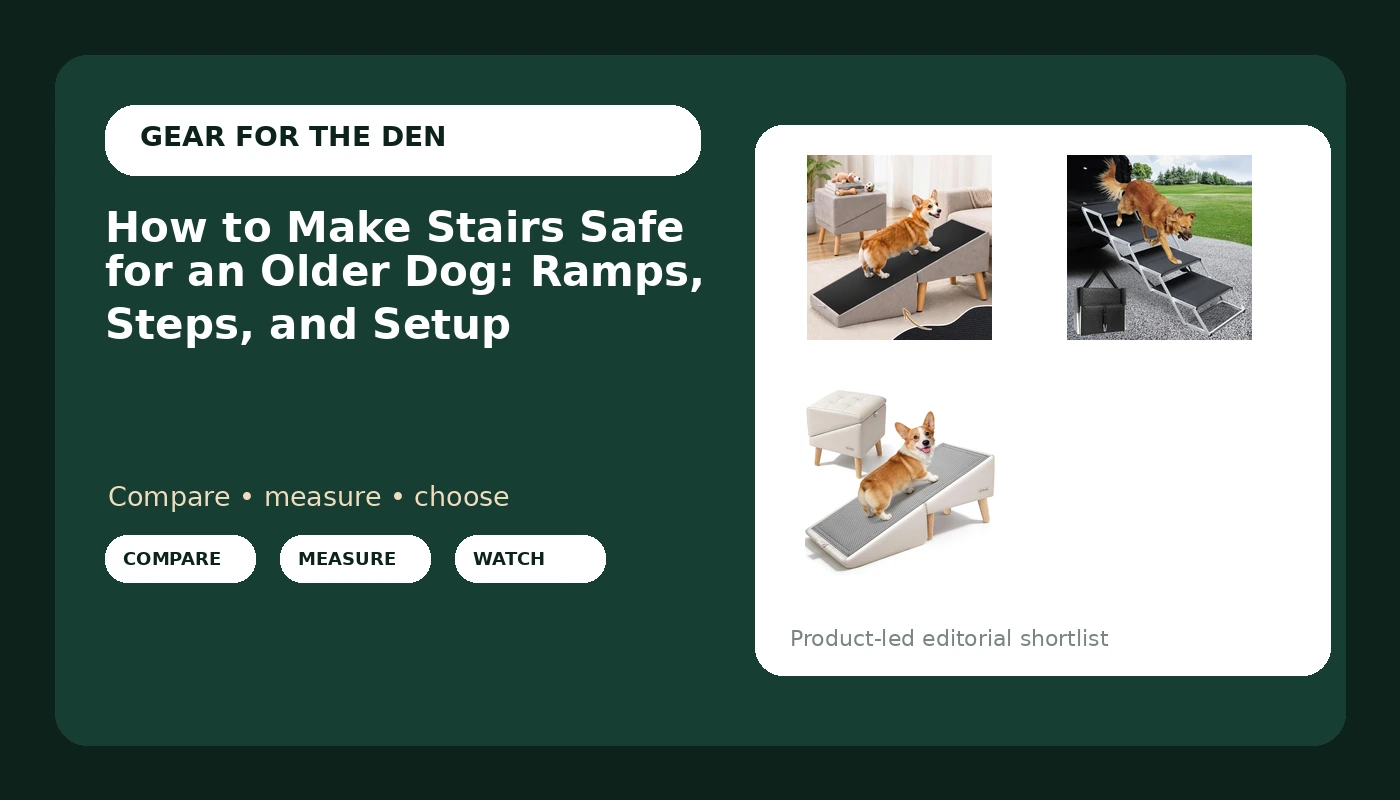
Somewhere around age eight, a dog that used to take the stairs three at a time starts stopping at the top and looking down like the floor moved. That pause is the whole story. Learning how to make stairs safe for an older dog is less about buying something impressive and more about breaking one big drop into two or three small ones, then giving the dog a surface that actually holds his feet.
The reasons are mechanical, not emotional. Joint mobility fades, hip support thins as the muscles around the pelvis lose mass, and the pads on the feet get slicker against hardwood, laminate, and tile. Put a senior dog in front of a full flight with a seven-inch rise and a hard nosing and you are asking for a controlled fall eight times a day. The climb up is work. The descent is the risk.
Most of the fix is free, and the rest is one purchase per piece of furniture. Below are the three products I would buy for a senior dog's couch, bed, and car, plus the eight steps that make them work.
Why you should trust me
I write the senior dog guides here, and the email I get is almost never about specs. It is about the slip: my dog went down the back steps last week and now he will not go near them. I have read more pet stair listings than is reasonable, and I read them the boring way. I look for the non slip backing, the listed weight capacity, the foam density if the steps are foam, the bed height a set is actually built to reach, the ramp angle on anything sold as a ramp, and how the thing folds when it is not in use. Those six things decide whether a product works for a sixty-pound shepherd with bad hips or only for a twelve-pound terrier.
How I picked and how I tested
Testing a set of pet stairs is not a lab procedure. It is a week of watching whether your dog takes it on day two and again on day five, and whether the unit slides sideways when he pushes off with his back legs. The three picks below were chosen on stated specs and geometry first, because geometry is all you have before the box arrives: the height you need to reach, the rise per step, the footprint on the floor, and the angle of the incline.
I also checked the parts of a listing that nobody photographs. A non slip backing that only covers the front edge will still skate on tile. A low foam density compresses under a heavy dog and turns the step into a wobbling surface, which is worse than a hard one because the dog cannot predict it. A ramp with too steep an angle stops being a ramp and becomes a slide. And a set that is three or four inches too short for your couch means the dog still has to jump the last part, which is exactly where the injury happens.
There is no single ideal make stairs safe for an older dog answer that fits every home, which is why I sorted the picks by the job instead of by size. None of these is a staircase replacement for a big dog. They are furniture-height helpers for the couch, the bed, and the car, which is where most senior dogs take their worst falls. For the full flight inside your house, the honest answer is usually a runner rug, a gate, and lifting the dog. If you want the wider category, I keep a longer list in dog ramps and stairs for the couch.
How to make stairs safe for an older dog: three pieces that do the work
The products below cover the three places a senior dog climbs most: the couch, the bed, and the car or SUV. Pick by the height you need to reach and the surface the unit has to sit on, not by the picture.
Budget pick: Ottoman Dog Ramp for Couch, 2-in-1 Foldable Dog Stairs for Small Dogs Gray
Budget pick
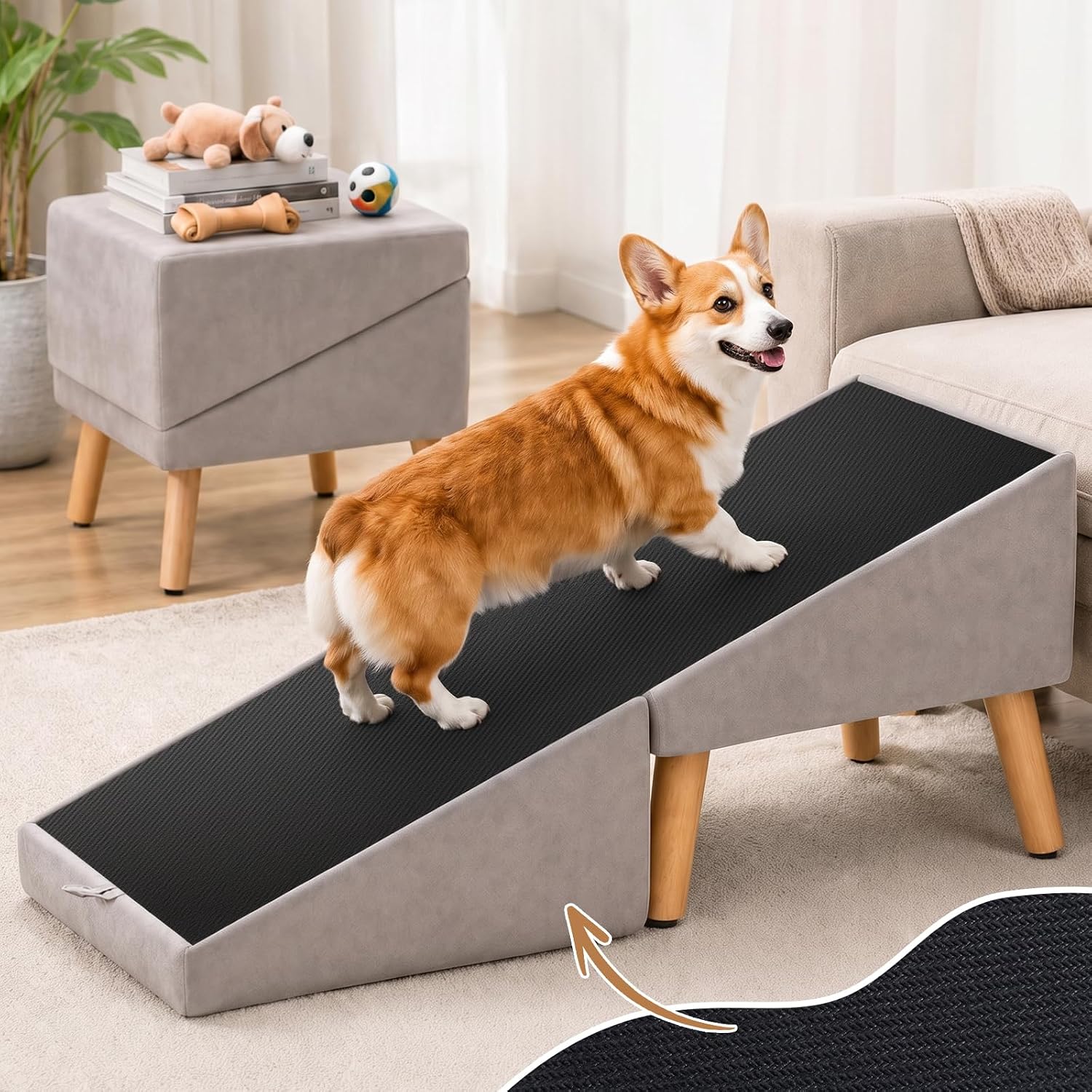
Ottoman Dog Ramp for Couch, 2-in-1 Foldable Dog Stairs for Small Dogs Gray
This is the one that lives in the living room without looking like pet equipment. It is a foldable two-in-one, so it can sit as a short set of steps or as a gentler incline, and the ottoman shape means it reads as furniture in a gray room rather than a plastic ramp you trip over at night. For a small senior dog who needs on and off the couch, that is the whole job handled for less than the cost of a decent dog bed. Check current Amazon price on the listing, because this style gets discounted often.
Two cautions before you order. It is sold for small dogs, so read the listed weight capacity against your dog's actual weight and leave a margin rather than matching it exactly. And confirm the non slip backing in the photos, because a foldable unit that slides on tile is worse than no unit at all.
Flaws but not dealbreakers: The ottoman footprint takes up floor space in front of the couch even when it is folded. If your living room is tight, measure the footprint first.
Runner-up: DGSL Folding Dog Stairs for Car, 16.9" Wide 4-Step Non-Slip Pet Steps
Runner-up
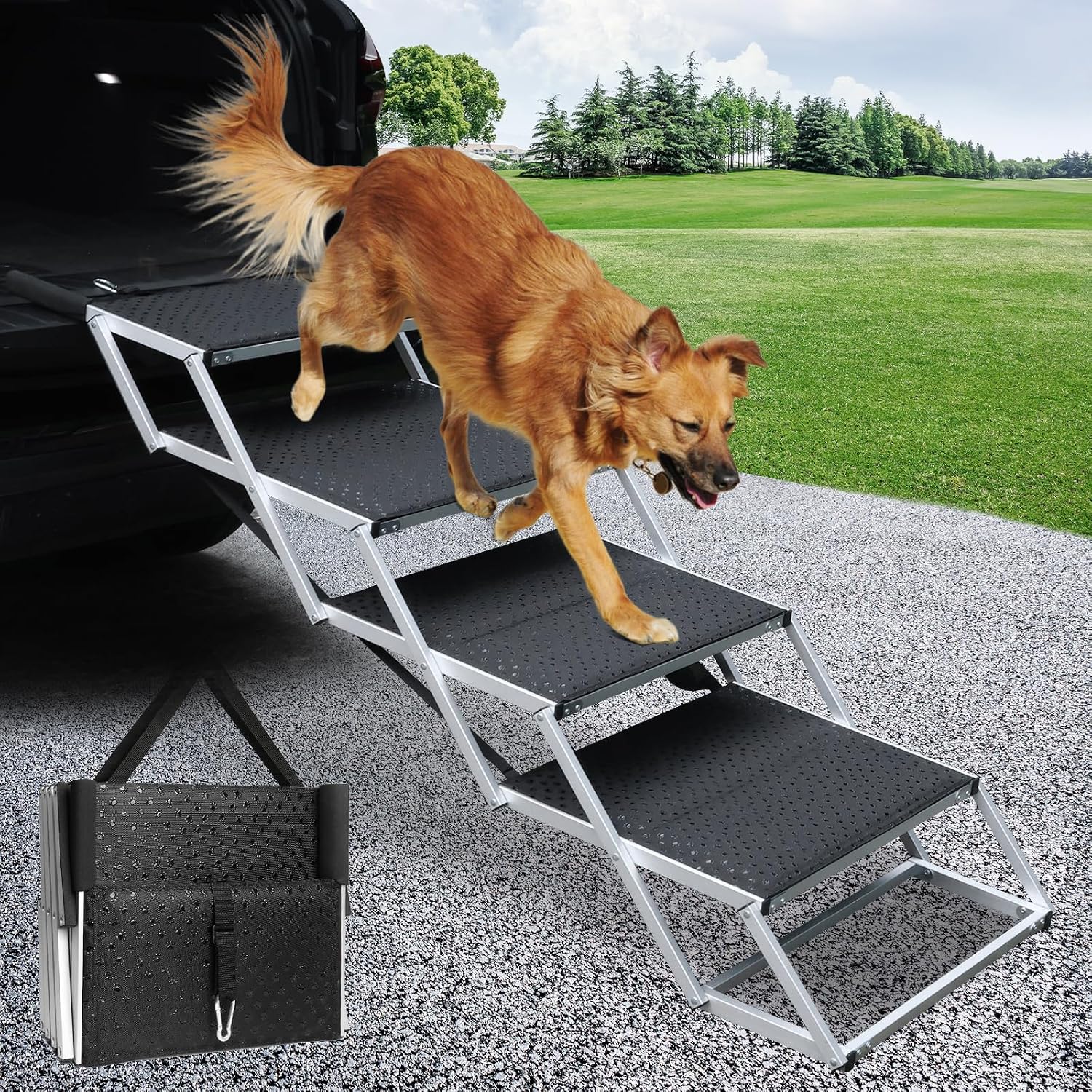
DGSL Folding Dog Stairs for Car, 16.9" Wide 4-Step Non-Slip Pet Steps
This is the car set, and the width is why it gets the nod over a narrow ramp. A wide step is a step a nervous dog will actually commit to, and a senior dog who hesitates halfway into a tailgate is a dog who is going to come off the side. Four steps also means each rise is shorter than a three-step set, which spreads the work across the shoulders and hips instead of asking for one big push at the top.
It folds, so it can live in the trunk, and the non slip surface is part of the design rather than a strip you add later. The climb in and out of the car is usually the highest single drop in a senior dog's day, which makes this the piece that ends the "he used to jump in" era. Check current Amazon price.
Flaws but not dealbreakers: It is a car piece, not a couch piece. Do not buy it as a two-for-one and expect it to sit flush against a sofa cushion.
Upgrade pick: Dog Stairs for Small Dogs 16" H – Upgraded Non-Slip Dog Ramp for Couch
Upgrade pick
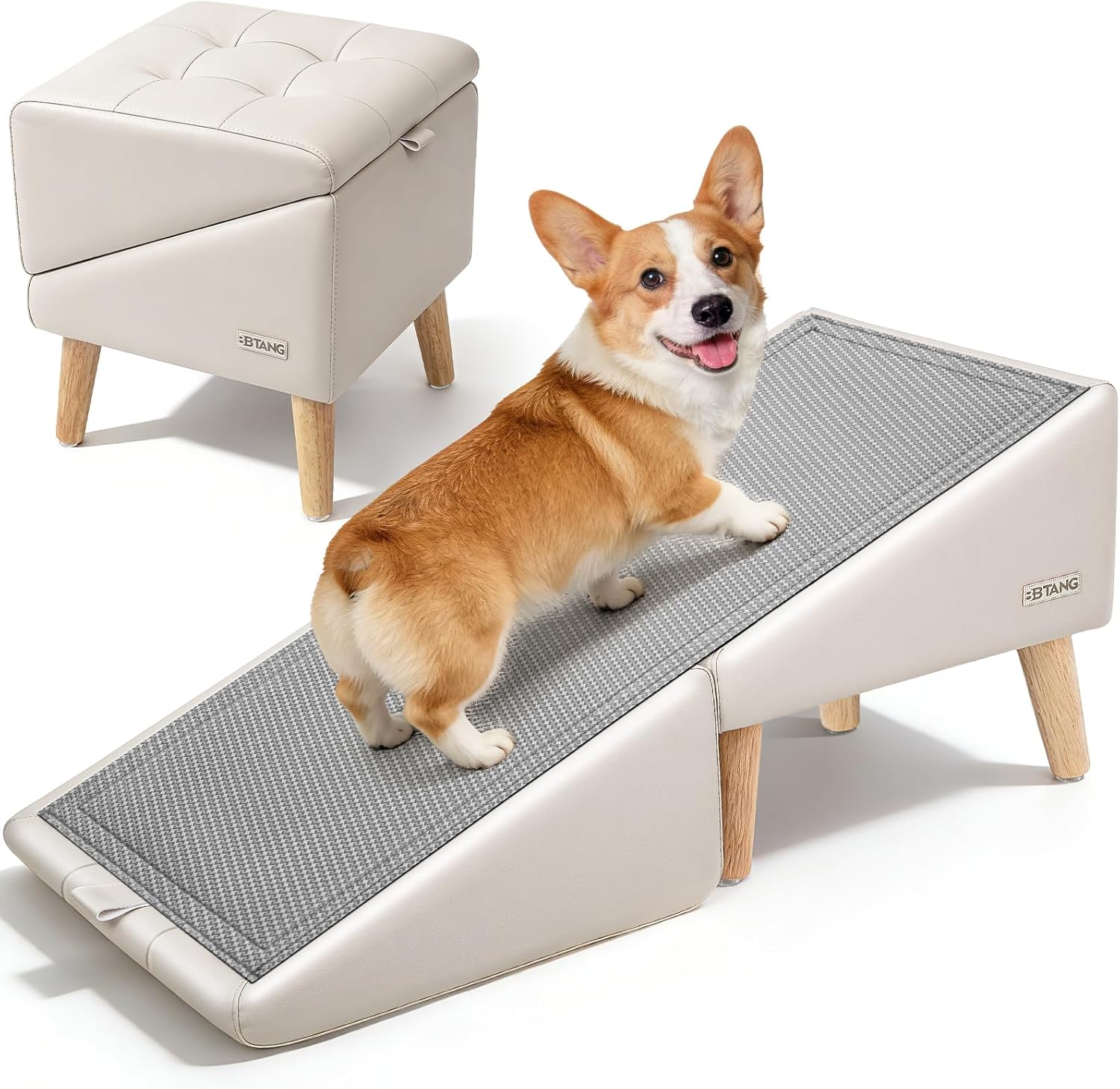
Dog Stairs for Small Dogs 16" H – Upgraded Non-Slip Dog Ramp for Couch
The sixteen-inch height is the number that matters here, and it is the number to measure against your own furniture before you order. If your couch seat is lower, the top step will sit proud of the cushion and create a lip. If it is higher, your dog still has to hop the last few inches, and that hop is the part you were trying to eliminate. Measure, then compare.
This is the highest-priced of the three, and it is the one aimed at the couch as the main climb of the day. The upgraded non slip surface is the selling point over the cheaper steps, because the bottom of a couch climb is where a dog gathers speed and the top is where he stops hard. Check current Amazon price on the listing.
Flaws but not dealbreakers: It is sized for small dogs. A large senior dog needs a different class of product, and the width and weight capacity here will not carry him.
The actual setup workflow
The product alone does not fix a senior dog's stairs. The setup does. Work through these in order, and do not skip the free ones just because they are free. Choosing the correct make stairs safe for an older dog approach starts with the drop you need to cover, not with the item in your cart.
Step one: Measure the drop. Floor to couch seat, floor to mattress, floor to tailgate. Write the numbers down. Every decision after this one comes out of that measurement, including whether you need steps or a ramp.
Step two: Choose the shallowest angle you can fit. A longer, gentler incline beats a short steep one even when the short one has more steps. Watch your dog's shoulders on the first attempt. If he leans back and stalls, the angle is too steep, not the dog.
Step three: Check the weight capacity and the foam density. Compare the listed capacity with your dog's weight and leave room to spare, because a senior dog lands heavier than he stands. If the steps are foam, denser is better: low-density foam compresses under a big dog and turns into the wobbly surface he will refuse.
Step four: Land it flush. Set the top of the unit against the cushion or the bumper with no gap and no lip. A two-inch ledge at the top is where a dog catches a toe and goes down. This is the step people rush, and it is the step that decides whether the dog uses the thing at all.
Step five: Kill the slide. Test the non slip backing on your actual floor with a hard shove from your foot. On tile or smooth hardwood you may need a thin rug underneath. This is where hip support really lives: the dog needs a surface that does not move when he pushes off with his back legs.
Step six: Light the route. A night light or a motion light at the top and bottom of the climb. Senior eyes need more light to judge depth, and depth judgment is what stops the fall in the first place.
Step seven: Trim the nails and check the pads. Long nails lift the pad off the surface and remove most of the grip, no matter how good the backing is. Keep nails short, keep pads clear, and look for dry, cracked pads before you blame the product.
Step eight: Pay the dog. Treat on the landing, every single time, for the first week. Two short sessions a day beats one long one. Never lure a senior dog down a ramp with food held in front of his nose, because he will follow the food and forget his feet.
Give it a week. If your dog still refuses after seven days, the angle or the height is wrong. It is almost never stubbornness.
The competition and why it lost
The molded plastic pet stairs sold at big-box stores are cheap, light, and steep. The steps are hard, the rise is tall, and the whole thing skates on tile, which is the opposite of what a senior dog needs. They are fine for a young dog learning to get on the bed and wrong for an old one.
A support harness with a handle is genuinely useful for a senior dog on real stairs, but it is a lifting tool, not a furniture tool, and it belongs in its own guide. The same goes for grip socks, paw wax, and toe grips: they help traction on flat floors and do nothing about a drop.
A solid wood bed ramp looks better than anything on this list and folds for nobody. If it never leaves the bedroom, that is a fair trade. If you need one unit for the couch and another for the car, buy two foldable pieces instead.
Carrying the dog is a real answer for a full flight of stairs, and it is what I do on the last two steps at night. It is not a plan for a seventy-pound dog, and your own lift capacity is the limit, not his willingness. A gate for the staircase plus a ramp for the couch covers both.
And the classic shortcut, a memory foam topper or an ottoman shoved against the couch? That is a step with no non slip backing and no landing. It is a fall waiting for a Tuesday.
What this all costs
The money here is small compared with the alternative, and the honest breakdown is short.
- The free half: measuring the drop, moving the rug, adding a night light, trimming nails, and paying the dog with treats. This is most of the result, and it costs nothing.
- One couch set: steps or a ramp, bought once. Check current Amazon price on each listing above, because these get discounted regularly and the spread between the three is small next to a single vet visit.
- A second set for the car: worth it if your dog rides with you. Two units is not a luxury when the alternative is lifting fifty pounds of sleeping dog out of a trunk.
- A gate for the real staircase: the cheapest safety item in the house, and the one that removes the daily risk entirely. Pair it with a runner rug and you have solved the flight without buying a ramp you cannot fit.
Whatever you pay, divide it by the number of mornings your dog uses it. A set of steps that gets used twice a day for three years is close to free by the second month. The twenty minutes of setup, not the receipt, is what separates a ramp your dog ignores from one he climbs without thinking. Measure the drop, land it flush, check the backing, and let him take it at his own pace. He is not being stubborn. He is being careful, and the setup is your job.