Feather plucking is not a bad habit your bird picked up out of spite. It is a symptom, and the list of things that cause it runs from a liver problem to a perch that hurts to stand on. Learning how to stop a bird plucking feathers means working that list in order: vet first, cage second, daily schedule third, and only then the sprays and gadgets people post about online.
The birds I have fostered rarely started plucking out of sadness. They started because something hurt, or because the cage was arranged so that preening was the only activity on the calendar. Preening is the one behavior a parrot can repeat until the feathers are gone. A bored parrot does not pace the room. It grooms.
The plan below is eight steps, and the order matters. The gear in the middle of it exists to do one job: give a bird a full day so it stops treating its own chest like a chew toy.
Why you should trust me
I have kept parrots since 2007, currently a green cheeked conure and an African grey, and I spent four years fostering for a companion bird rescue where plucked birds arrived almost weekly. I have sat in on more avian vet exams than I can count, and the same pattern repeats every time. The owner tries a spray, then a collar, then a new toy, and finally books the vet, and the vet finds the thing that was wrong all along.
My rules come from that pattern. I do not push supplements, bitter sprays, or collars as a first move. I push the exam, the cage audit, and the schedule, in that order. When a product makes the list here, it is because it solves a specific problem in that plan. The label does not matter. The question I get asked most often is how to stop a bird plucking feathers without spending a fortune, and the honest answer is that the cheap fixes come after the vet visit, not before it.
How I picked and how I tested
This article has two halves: the plan, and the gear that makes the plan easier to run. For the plan, I worked from avian vet guidance and from what I watched work with foster birds over four years, including birds that came in with bare chests and went home feathered again.
For the gear, I judged each item on six things: materials that are safe to chew, how the perch surface treats a bird's feet, whether the mounting hardware holds when a bird lands hard, how easy it is to clean, whether it fits the bar spacing of a typical cage for that bird's size, and how much of the bird's day it can absorb. Where a listing could not answer one of those, the item did not make the cut.
I also checked the details that matter for pluckers specifically. A perch that wobbles gets avoided, and a bird that avoids its perch spends more time on the cage floor or standing on one foot, and both of those lead to more picking. A perch diameter that is wrong for the feet causes pressure sores, and a bird with sore feet preens them raw. The three items below are the ones that passed, and they are also a decent answer to how to prevent a bird plucking feathers in a bird that has not started yet. If your cage itself is the problem, start with how to set up a parrot cage before you buy anything else.
The gear that keeps a plucker busy
None of these three fixes a plucker on its own. They exist to remove the two conditions that make plucking easy: sore feet stuck on one boring perch, and an empty afternoon with nothing to destroy.
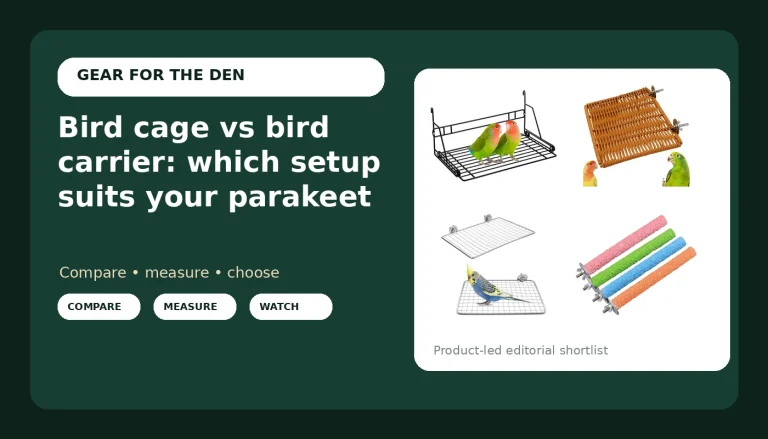
Budget pick: Bird Perch Stand, Bird Training Portable Tabletop Parrot Stand
Budget pick
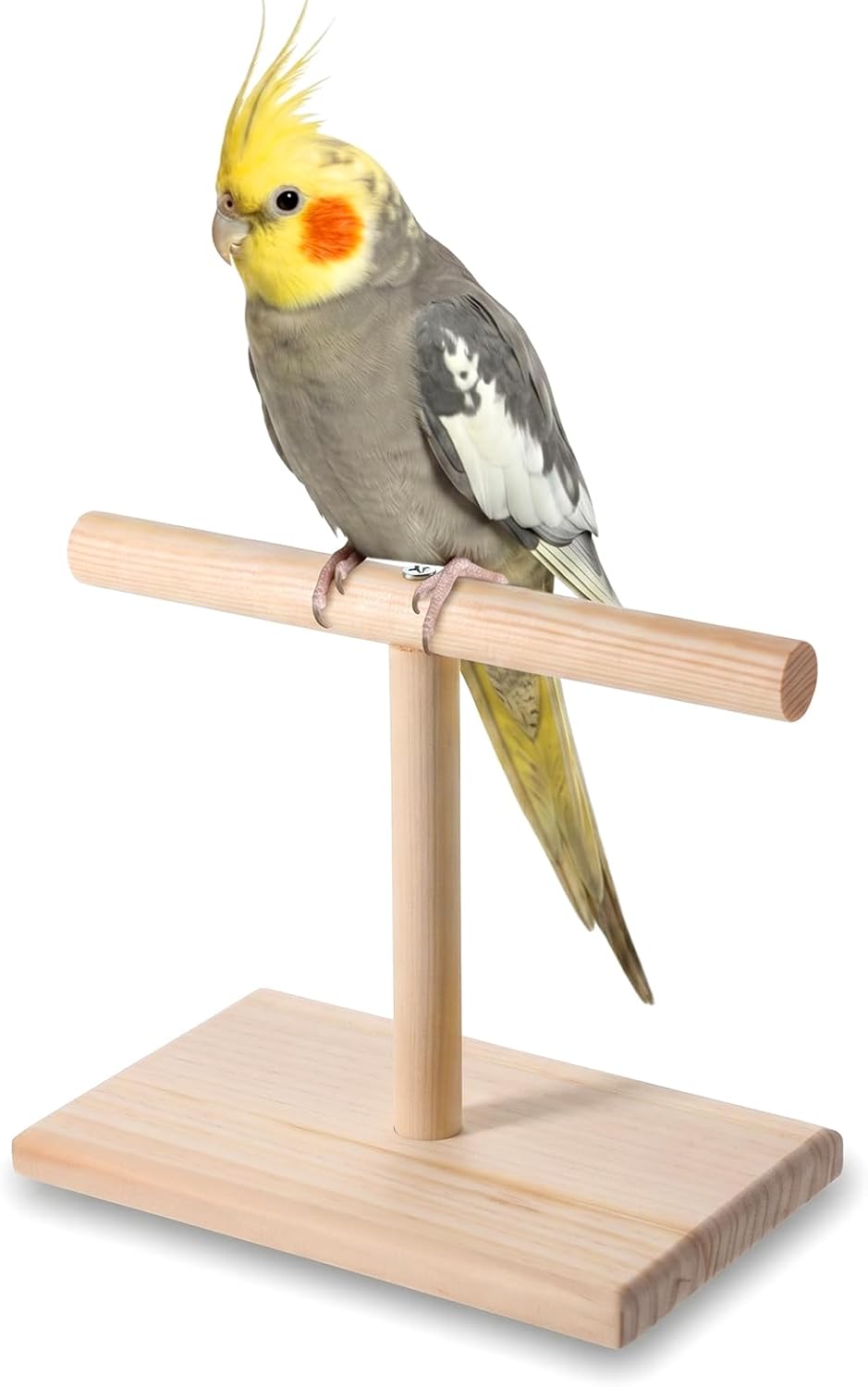
Bird Perch Stand, Bird Training Portable Tabletop Parrot Stand
The case for a tabletop stand is not party tricks. It is getting the bird out of the cage while you scrub, cook, or work, because a plucker often does its worst work in the hours when the cage is the only place it knows. A portable stand gives you a station in the living room so the bird can be out with you, and that single change reshapes most pluckers' days.
Set it up so the bird's head sits at or above your chest height. A bird parked at knee level feels watched by predators and stays jumpy, which is the opposite of what you want. Keep the stand out of the kitchen, for the nonstick pan reason.
Flaws but not dealbreakers: It is a light stand, so it suits small and medium birds, not a macaw. The perch surface needs a wipe down regularly. Check current Amazon price, and know that this is the smallest spend of the three and the one I would buy first.
Anyone with a conure, a cockatiel, or a small parrot who needs the bird out of the cage for an hour a day should start here.
Our pick: OOXYG Bird Rope Perch Stand with Strong Suction Cups for Window/Bath
Our pick
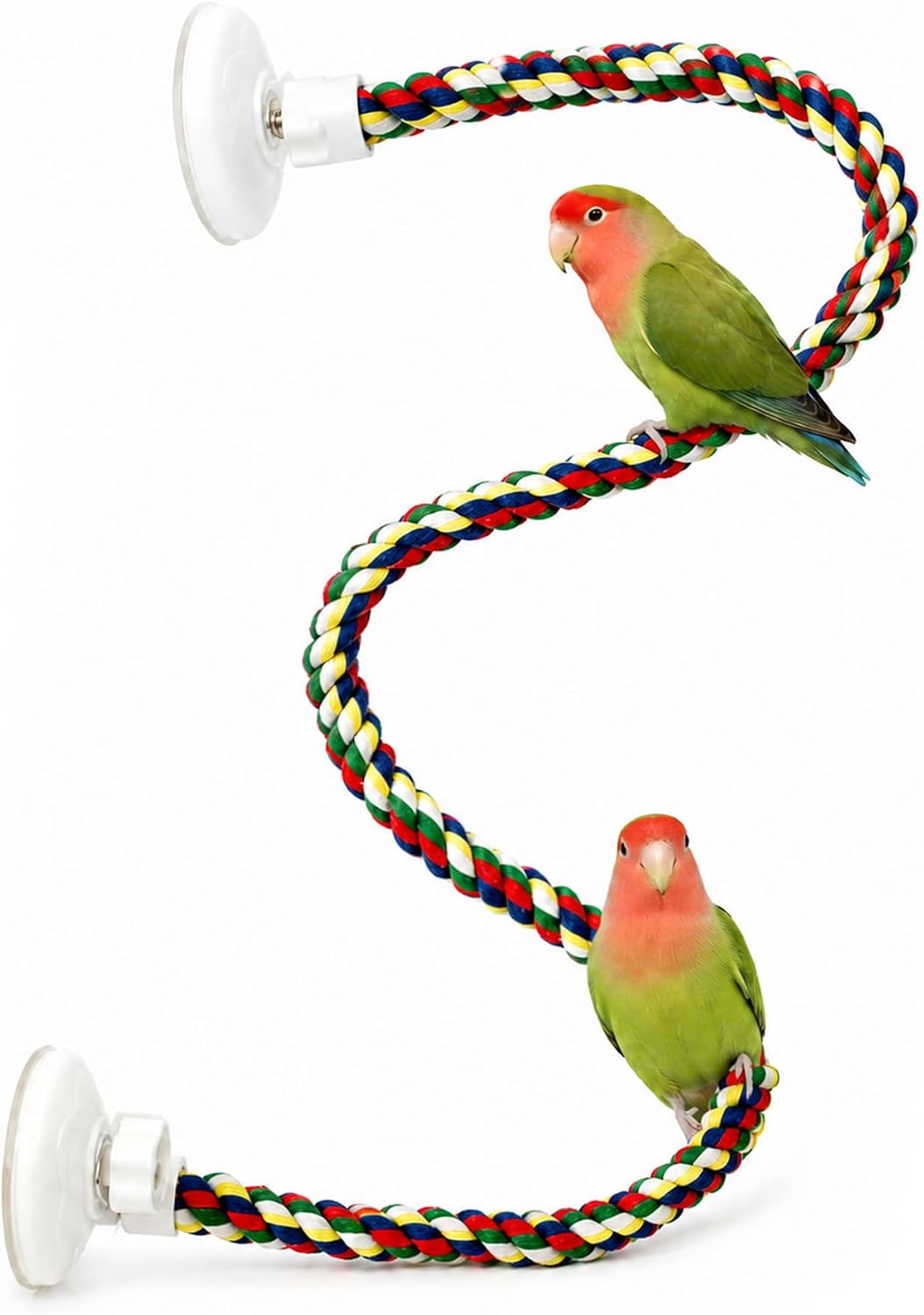
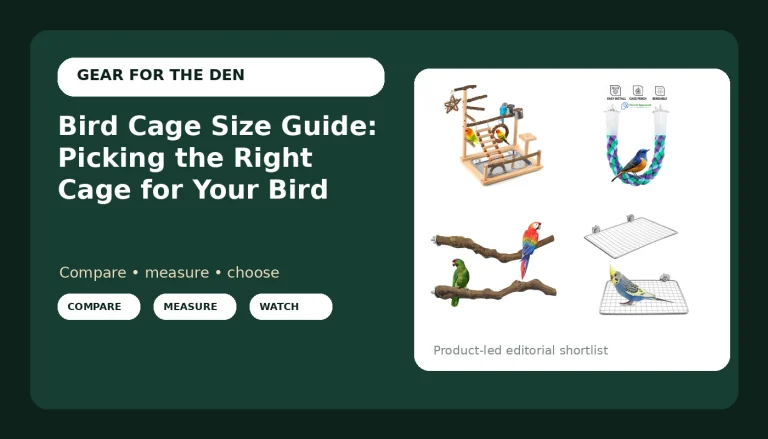
OOXYG Bird Rope Perch Stand with Strong Suction Cups for Window/Bath
A window perch solves a problem that toys cannot: the view. A parrot that has stared at the same wall for six years has a boring life, and boredom is fuel for plucking. A rope perch surface also offers a different grip from a wood dowel, so the feet work differently, which matters for a bird with tender foot pads.
The suction cups are the whole story here. They need clean, smooth glass with no texture and no dust, and they need a daily press to check that they are still holding. Temperature swings and direct sun can weaken them. Keep the perch out of drafts, and never leave a bird unattended on a suction mount.
Use it in the bathroom during shower time as a bath perch. The steam is good for dry skin and pin feathers, but keep the bird out of the direct spray.
Flaws but not dealbreakers: Suction cups fail eventually, so check them the way you check a smoke alarm. Inspect the rope for frayed threads that a toe could catch. Check current Amazon price before you order.
Anyone whose bird spends all day in one room and needs a change of scenery will get the most out of this.
Upgrade pick: Croblissful 2 Pcs Bird Perch Platforms, Parrot Paper Chew Toy, Small
Upgrade pick
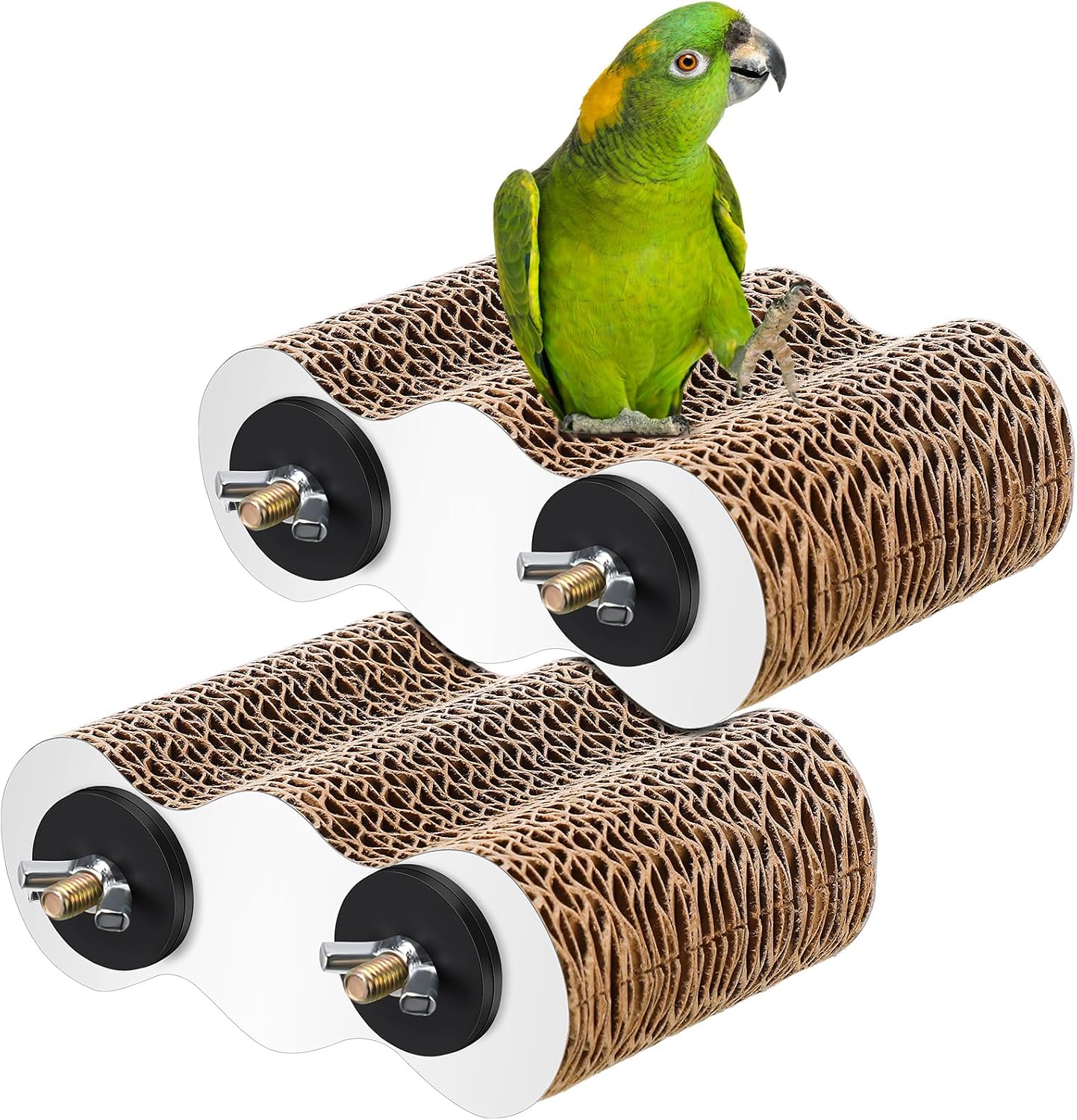
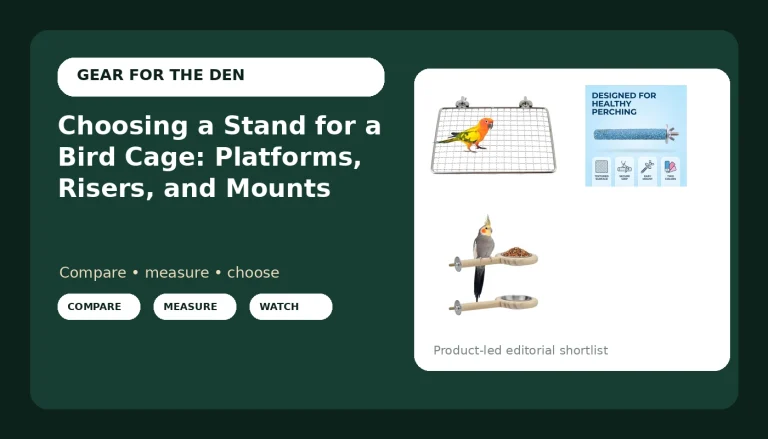
Croblissful 2 Pcs Bird Perch Platforms, Parrot Paper Chew Toy, Small
Two things in one box, and both of them matter for a plucker. The platform perch gives a bird a flat surface to rest on, which is a big deal for an older bird, a bird with arthritis, or any bird that spends all day balanced on one foot. Flat rest also lets a parrot lie down, which relaxed birds do and stressed birds do not.
The paper chew toy is the second half. Shredding is the substitute behavior for plucking. A bird that is busy destroying paper is not busy pulling feathers, and the paper gives you a low cost way to test whether your bird will take a shredding outlet at all.
Flaws but not dealbreakers: This is a small size set, so measure your bird before you assume it fits. The paper will be gone quickly in a determined beak, which is the point but also a repeating cost. Check current Amazon price.
Anyone with a small parrot that has never been offered a shredding outlet should buy this before anything fancier.
The eight-step plan to stop a bird plucking feathers
Run these in order. Skipping step one is the most common mistake, and it is the one that wastes the most money.
Step one: Rule out medical causes before you change anything else. Book an avian vet, not a general practice vet who mostly sees dogs and cats. Ask for a full exam, a blood panel, a skin and feather check, and a fecal. Plucking has a medical short list: skin mites, giardia, bacterial skin infections, liver disease, thyroid and reproductive hormone problems, allergies, and low grade pain from an old injury or a badly healed wing. Heavy metal exposure from old cage paint and cheap hardware belongs on that list too. Bring the bird in a carrier size that lets it stand upright with clearance over its head, because a bird that has to crouch for an hour is already stressed when the exam starts.
Step two: Audit the cage against the bird. Check bar spacing first. A gap the bird can push its head through is a hazard, and one narrow enough to catch a toe is worse. Cage height matters more than floor space for most parrots, so choose a cage that is taller than it is wide and put the highest perch up top, where a bird feels safe. Change the tray liner daily, since built up droppings push ammonia and dust into the air a bird breathes. Give two food cups instead of one, because a single small cup turns meals into a guarding contest and stress drives picking. Then look at where the cage sits: out of the kitchen, out of direct sun, out of the main walkway.
Step three: Rebuild the perch lineup. A bird's toes should wrap roughly two thirds of the way around its perch. Too thick and the grip slips, too thin and the pressure lands on one spot. Mix diameters and materials across the cage: natural branch wood, one rope perch, and at least one flat platform for a bird that wants to rest its feet. A swing mount high in the cage adds a moving perch, which builds foot strength, as long as the swing does not block the flight path or hang directly over a food cup. Sore feet are one of the most common reasons a bird starts picking at its own legs, and smooth dowels are the usual culprit.
Step four: Fix the diet. A seed only diet is the most common setup problem I see in plucked birds. Pellets should be the base, with chopped vegetables every day and small amounts of fruit and nuts used as training rewards rather than meals. Gaps in vitamin A, calcium, and amino acids show up as dry skin and brittle feathers, and dry itchy skin invites over grooming. Fat matters too, since an overweight parrot tends to have a fatty liver and worse skin. Fresh water, changed daily, and never leave fresh food in the cage long enough to spoil.
Step five: Raise the foraging difficulty. A bowl refilled at seven in the morning leaves eight hours of nothing to do. Start by wrapping part of the ration in plain paper, then move to a foraging wheel or a cup the bird has to open. Increase the foraging difficulty slowly so the bird keeps winning, and rotate the toys weekly so nothing becomes furniture. A parrot that spends an hour working for lunch is a parrot that is not grooming its chest. Foraging toys for parrots covers the options if you want to build a rotation.
Step six: Fix sleep and light. Parrots need ten to twelve hours of dark, quiet sleep, and most pet birds get seven or eight in a room with a television. Cover the cage, keep the room quiet, and keep the schedule identical every day. A sleep deprived parrot plucks, screams, and bites, and no amount of toys fixes that. Light matters at the other end of the day too. Indoor birds get no meaningful UVB, and a full spectrum lamp for a few hours each morning supports vitamin D and skin health. Skip the night light and skip the cage in the room where the lights stay on.
Step seven: Bathe, humidify, and clean the air. Offer a bath or a misting two or three times a week, and more often during a molt. Water softens the keratin sheaths on new feathers, which is where a lot of the itch starts. Dry winter air, scented candles, air fresheners, cigarette smoke, and fumes from nonstick cookware all irritate a bird's skin and respiratory system. Keep the room between about 40 and 60 percent humidity. A suction cup perch in the bathroom is a good spot for a supervised bath, since the steam helps, but keep the bird out of the direct spray and never leave it alone up there.
Step eight: Track it, then escalate in order. Photograph the bird once a week in the same light from the same angle. Write down where the damage is, what time of day the picking happens, and what happened right before it. If four to six weeks of the steps above changes nothing, book a consult with a behavior specialist or a vet behaviorist. A collar is a last resort that a vet prescribes alongside a plan for the bird's day, not instead of one. Never punish the bird, never yell, and never spray water as a correction. Also watch the cage mate, because a bullied bird plucks.
The competition and why it lost
Several things people buy first did not make this list. The fabric tent hut is one. It is a soft, dark, enclosed space that a hormonal parrot treats as a nest, and the fabric can be ingested. Sandpaper perch covers are another, since they abrade the foot pads, and a bird with sore feet picks at them.
Bitter anti-pluck sprays lose because they treat the surface and not the cause, and they add a smell that a bird with a sensitive respiratory system does not need. Mite sprays from the pet store lose for a different reason: mites are a diagnosis, not a guess, and the vet scrapes for it. Blind treating wastes weeks you could spend on the real cause.
Two other categories belong to other guides. A full spectrum lamp is a lighting question, and a travel carrier is a size question, so I left both to the pages that cover them properly. The seed based parrot mix in a grocery store bag is the one competitor that actively makes things worse. Fixing the perch lineup early is the cheapest way to prevent a bird plucking feathers before the habit sets in.
What this all costs
The three items here sit in the same low band, the kind of purchase you make without thinking about it twice, which is exactly why they are worth buying before anything expensive. Check current Amazon price on each listing, since these things move.
The real cost of this problem is not gear. It is the vet exam, and it is worth every bit of it, because it is the only step that can find the cause. Budget for the exam first, then the perch setup, then the shreddable toys, which are a repeating cost because a determined shredder will go through paper faster than you can order it.
The math on time matters more than the money. An hour of foraging, an hour out of the cage on a stand, a bath twice a week, and twelve hours of sleep add up to a day with no room in it for a bird to sit and pull at its own feathers. That schedule is the treatment. Everything else in this guide exists to stop a bird plucking feathers by making that schedule easy to keep.
That is the job. Your bird did not decide to be bald. Work the list in order, and give it something better to do.