Small animal litter is the layer everything else in a cage sits on, and it is usually the first thing a new owner gets wrong. The phrase covers two separate jobs: the loose bedding that lines the floor and absorbs waste, and the soft or wooden pieces a pet sleeps in, chews, and hides inside. Getting small animal litter right affects odor, how often you clean, and whether a guinea pig, hamster, or rabbit actually uses the space you built. It also affects the parts of the cage you cannot see, because bedding dust from the wrong material settles in a small animal's nose and lungs long before you notice a smell. This guide explains what each kind of small animal litter does, where the four products below fit, and how to match them to your pet's size and habits instead of to a photo on a listing page.
Quick answer
The core of small animal litter is an absorbent, low-dust layer spread across the whole floor area, and for most small pets that means paper bedding rather than shavings or fabric alone. On top of that layer, most cages need at least one hideout for sleeping and one tunnel for moving between spaces. Bedding choice matters more than brand: a paper bedding made for small pets usually produces less bedding dust than softwood shavings, and how deep you spread it depends on species and cage size. Match hideout size and tunnel diameter to the animal rather than to the cage, and expect soft fabric items to need replacing sooner than wooden ones. No product here is the safest or best for every animal, because chewing habits, coat type, and floor area decide that.
Four useful options
| Model | Best fit | What stands out |
|---|---|---|
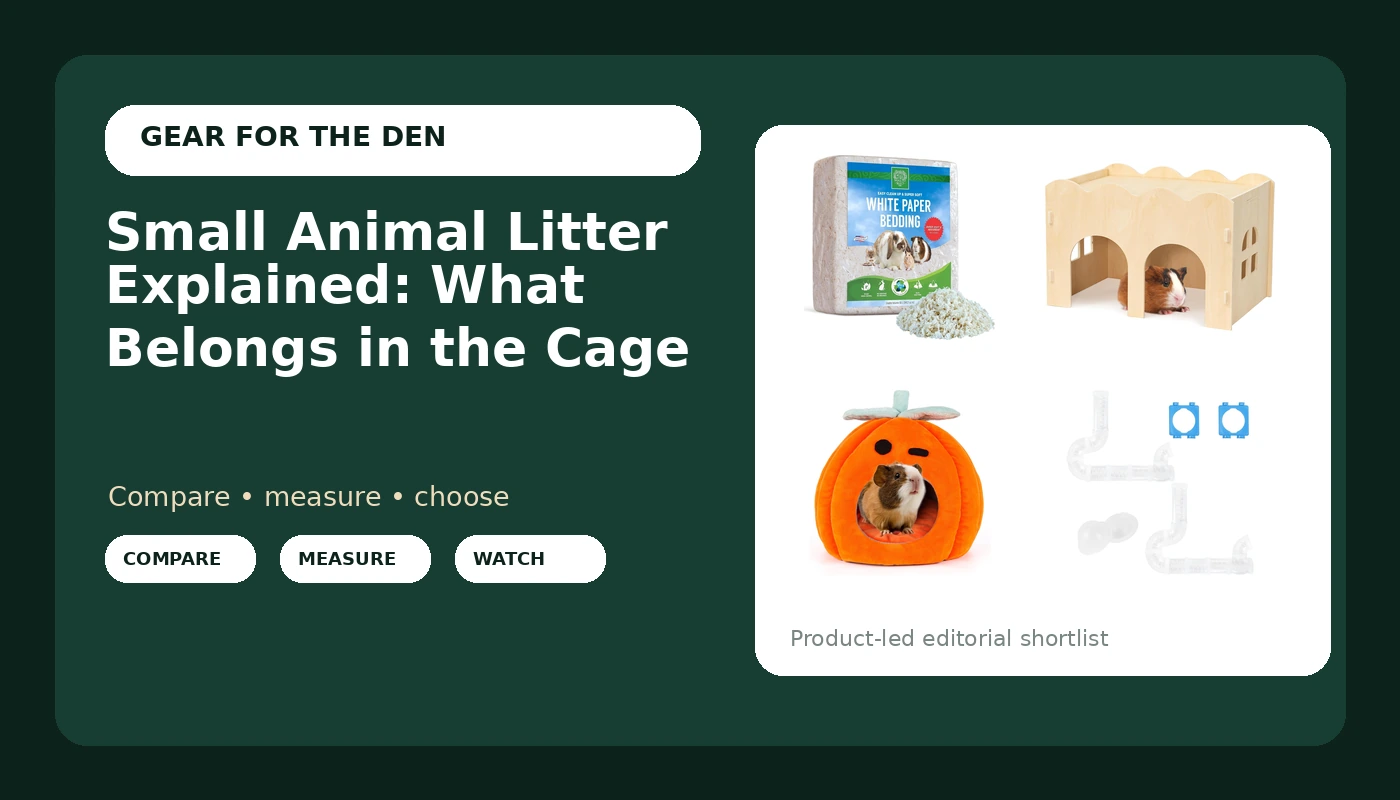
| Small Pet Select White Paper Bedding, Guinea Pig, Odor Control, 56 L | The floor layer in a guinea pig or rabbit cage | White paper bedding sold for odor control in a 56 L listing |
| Bifeaw Natural Wooden Chew-Proof Guinea Pig Hideout | Pets that chew soft furnishings | Natural wood hideout described as chew-proof in the listing name |
| YUEPET Guinea Pig Bed, Warm Fleece Pumpkin Hideout | A soft, washable resting spot | Fleece hideout shaped like a pumpkin |
| FHDUSRYO 2 Hamster Tubes Kits, DIY Hamster Tunnel Adventure External Pipe | Hamsters and other tunnelers | Two tube sections that can be arranged in different shapes |
The bedding layer: Small Pet Select White Paper Bedding, Guinea Pig, Odor Control, 56 L
Bedding is the part of a small animal litter system you will buy most often, so it is worth thinking in volume rather than in single bags. A 56 L paper bedding sits in the loose, unprinted paper category rather than the shaving category, which matters for two reasons: paper bedding is typically softer underfoot and it usually carries less bedding dust than cheap softwood shavings. Many keepers spread loose bedding a couple of inches deep across the floor area, deeper in the corner a pet has chosen as a toilet and thinner under a hay rack or water bottle. The trade-off is cost per cage change. Paper bedding generally costs more by volume than shavings, so a large cage will go through a bag of this size faster than a small one will.
The chewable hideout: Bifeaw Natural Wooden Chew-Proof Guinea Pig Hideout
A hideout is the piece a small pet retreats to, and the material decides how long it lasts. Natural wood gives an animal something to chew as well as somewhere to sleep, which is useful for rodents whose teeth grow continuously, but it also makes the hideout a consumable rather than permanent furniture. This listing calls the item chew-proof, and it is fairer to read that as resistance to destruction than as a guarantee: a determined chewer can still work at an edge, and any wooden item should be checked for splinters. Hideout size is the other half of the decision. Measure your pet while it is sitting rather than stretched out, and leave enough bedding around the base that the entrance does not fill in.
The soft resting bed: YUEPET Guinea Pig Bed, Warm Fleece Pumpkin Hideout
Soft beds are furniture for the litter layer, not a replacement for it. Fleece wicks moisture away from the surface, which keeps a resting guinea pig drier than loose bedding alone, but the fabric itself holds almost nothing, so it has to sit over an absorbent layer and be washed on a schedule. The pumpkin shape gives one animal a defined, enclosed resting spot, and the listing describes the material as warm fleece, so it suits a pet that sleeps in a huddle. Two practical notes: fleece picks up hay and hair, so shake it out before washing, and a fabric hideout in a cage with a strong chewer will not last as long as a wooden one.
The tunnel option: FHDUSRYO 2 Hamster Tubes Kits, DIY Hamster Tunnel Adventure External Pipe
Tunnels solve a problem bedding cannot. A hamster or a young guinea pig that crosses open floor area is exposed, and a pipe gives it a route from hideout to food without stepping into the open. This kit lists two tube sections sold as a DIY tunnel arrangement, so you decide the shape: a straight run along one wall, a corner, or a run outside the cage. Tunnel diameter is the number that matters most. A tube that is too narrow is a trap risk for a growing animal, and one that is too wide tends to be ignored. Push every joint fully home before the pet goes back in.
Prices and availability may change. Product images, names, and retailer links are matched to verified listings. No current price, rating, stock status, or measured result is stated here without current evidence.
Small animal litter explained: absorption, dust, and comfort
Small animal litter has to do two jobs at once, and the material that does one well often does the other badly. The first job is absorption: urine has to leave the surface quickly so the animal is not standing in wet bedding, and the ammonia that builds up in a closed room has to be captured rather than breathed. The second job is structure and comfort: the layer has to hold a shape a pet can burrow into, and it must not stick to long fur or pack into a nose.
Bedding dust is the variable most owners underestimate. Loose bedding made from paper or hardwood is often screened to remove the fine fraction, while cheap shavings and sawdust carry dust that settles on cage walls and in a small animal's airways. If you can see a cloud when you pour bedding from the bag, that is the fraction your pet is breathing.
Fabric is a different category rather than a better one. Fleece and similar textiles wick moisture away from the surface, but they hold very little of it, so they work only over an absorbent layer and only if you wash them often. A fleece hideout is furniture, not litter; the litter is what sits underneath it. For a closer look at how much floor area a small pet actually needs, see this guide to cage floor area for small pets.
Odor control is a function of the whole setup rather than of one product name. Ammonia builds fastest where urine concentrates, which is usually one corner. Managing that corner, keeping a hay rack over the litter instead of over bare floor, and cleaning the water bottle before it drips into the bedding will do more for smell than switching brands. Cage size sets the ceiling on all of it: a small cage with excellent bedding will still smell sooner than a large one with average bedding, and no bedding depth compensates for a floor area that is too small for the animal.
Choosing the correct small animal litter: a five-step method
Choosing the correct small animal litter is a sequence of decisions rather than a single purchase. Work through these five steps in order before you add anything to the cart.
- Measure the cage first. Note the floor area and the height of the walls. Bedding depth is easy to overestimate from a photo, and a bag that covers a small hutch will not cover a wide, low cage with the same floor area.
- Match the bedding to the species. Guinea pigs, rabbits, and rats do well on loose paper bedding. Hamsters often want a deeper, softer layer to burrow into. Birds and reptiles have their own substrate requirements and should not be moved onto small pet bedding because a bag was on sale.
- Check the dust before you commit. Pour a little bedding into a clear container outside, and watch for a cloud. If the bedding dust is heavy, the bag belongs in an outdoor hutch rather than in a bedroom cage.
- Size the hideouts and tunnels. Measure the animal while it is sitting, then compare that against the hideout size in the listing and the tunnel diameter of any tube you are considering. A hideout that is too small gets ignored, and a tunnel that is too narrow is a risk.
- Plan for movement and maintenance. Decide where the hay rack and water bottle go so they do not soak the bedding, and check whether bottle capacity or bedding volume limits how long you can leave the cage between changes.
Practical notes that keep a small pet cage working
- Spread bedding deeper in the corner the animal already uses as a toilet, and thinner under the hay rack and water bottle, where wet bedding sours fastest.
- Wash fabric hideouts on a schedule rather than by smell, because fleece that looks dry can still hold urine salts that irritate skin.
- Keep a spare hideout and a spare bag of bedding on hand so a cage change never waits on a delivery.
- Check bar spacing before you add a tube to the outside of a cage, since a pet that can squeeze between the bars will find the gap whether or not the tunnel fits.
- Replace wooden items when they soften or split, and treat a hideout described as chew-proof as a chew toy rather than as indestructible furniture.
Which option should you choose?
Choose the Small Pet Select White Paper Bedding, Guinea Pig, Odor Control, 56 L when you need the floor layer itself and want a paper bedding sold for odor control in a large listing size. Choose the Bifeaw Natural Wooden Chew-Proof Guinea Pig Hideout when your pet chews soft furnishings and you want something made from natural wood. Choose the YUEPET Guinea Pig Bed, Warm Fleece Pumpkin Hideout when you want a soft, washable resting spot for a guinea pig that sleeps in the open. Choose the FHDUSRYO 2 Hamster Tubes Kits, DIY Hamster Tunnel Adventure External Pipe when the animal is a tunneler and you want to arrange the pipe sections in different shapes.
Most cages end up using two of these at once: bedding underneath and one hideout or tunnel on top. There is no ideal small animal litter that suits every species, and no single purchase replaces the others. Bedding, a hideout, and something to run through cover three different needs, and a cage that skips one of them will usually show it in the animal's behavior before it shows it in the smell.
One limitation worth stating plainly: the details here come from the product listings and from general small pet care practice, not from testing in this house. Materials and listing details change, so confirm the current specifications on the product page before you order.
The bottom line
Small animal litter is a system rather than a bag. Start with an absorbent paper bedding spread across the full floor area, add one hideout sized to the animal, and add a tunnel if the species likes to move under cover. Check bedding dust before you commit to a brand, keep the hay rack and water bottle from soaking the bedding, and match hideout size and tunnel diameter to the pet rather than to the cage. Get those basics right and odor, cleaning time, and the animal's willingness to use the space tend to improve together. Compare sizes and current availability on the listings above, and let your cage dimensions decide what you order.