Choosing between a bird cage vs bird aviary is the first real decision most bird owners make, and it usually gets framed as a size question when it is really a question about hours. A cage is where your bird sleeps, eats, and stays safe when you are not home. An aviary is a flight space, indoors or outdoors, where your bird spends the part of the day it would otherwise spend on a play stand. They are not competitors. In most households the cage does the daily work and the aviary is the upgrade you add when you have the room, the budget, and the tolerance for a second cleaning routine. What decides whether either one actually functions is not the frame. It is the gear inside it: the perches, platforms, and feeding points that turn a box into a habitat.
For most indoor pet birds, a well-sized cage with two or three good platform perches beats a small aviary, because a cramped aviary hands you the maintenance of a flight space without the flight. The rest of this comparison walks through the difference between bird cage and bird aviary in practical terms, then covers four perch and platform accessories that work in both.
Search bird aviary vs bird cage and you get a lot of arguing about square footage. The real difference between bird cage and bird aviary is structural. A cage is a closed box with a door and a pull-out tray. An aviary is a wire structure your bird flies inside, and that changes bar spacing, cage height, and the way anything mounts to the walls. It also changes what a perch is for. In a cage a perch is a place to sit and a place to keep droppings out of the food cup. In an aviary a perch is a waypoint on a route.
Here are four perch and platform accessories that hold up in either setup. The bird cage vs bird aviary question rarely changes which of these you should buy; it changes how many you need and where they attach. Prices move constantly, so each listing links out instead of quoting a number.
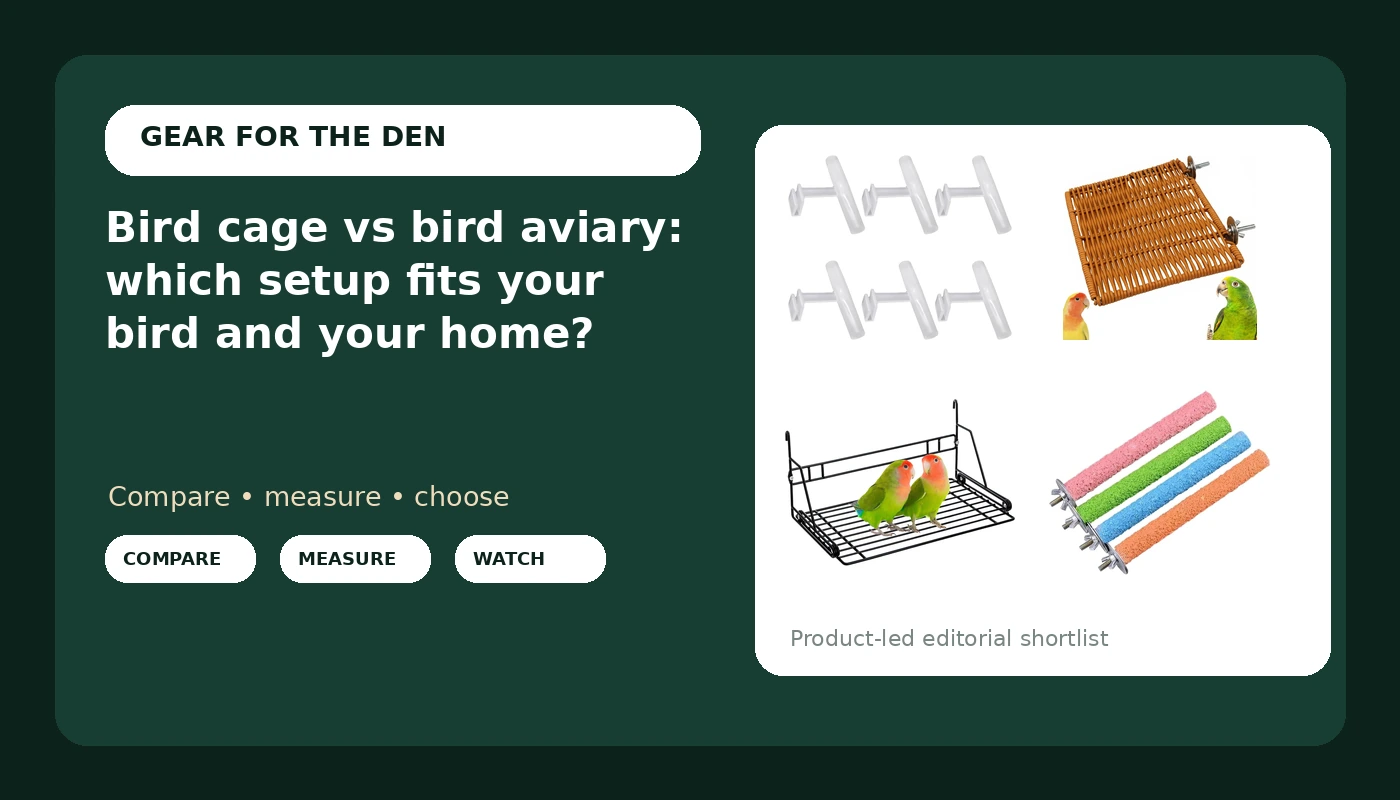
BOGEEL Bird Stand 6 Pieces Perches Clip to Window Feeders Training Tool Toy for Small Parrots Conures Cage Accessories
Six separate clip-on perches, so you can build a climbing route along a wire panel or window feeder instead of one fixed spot
Clip mounting needs wire, a feeder, or a window frame, so it will not work on a solid-sided cage
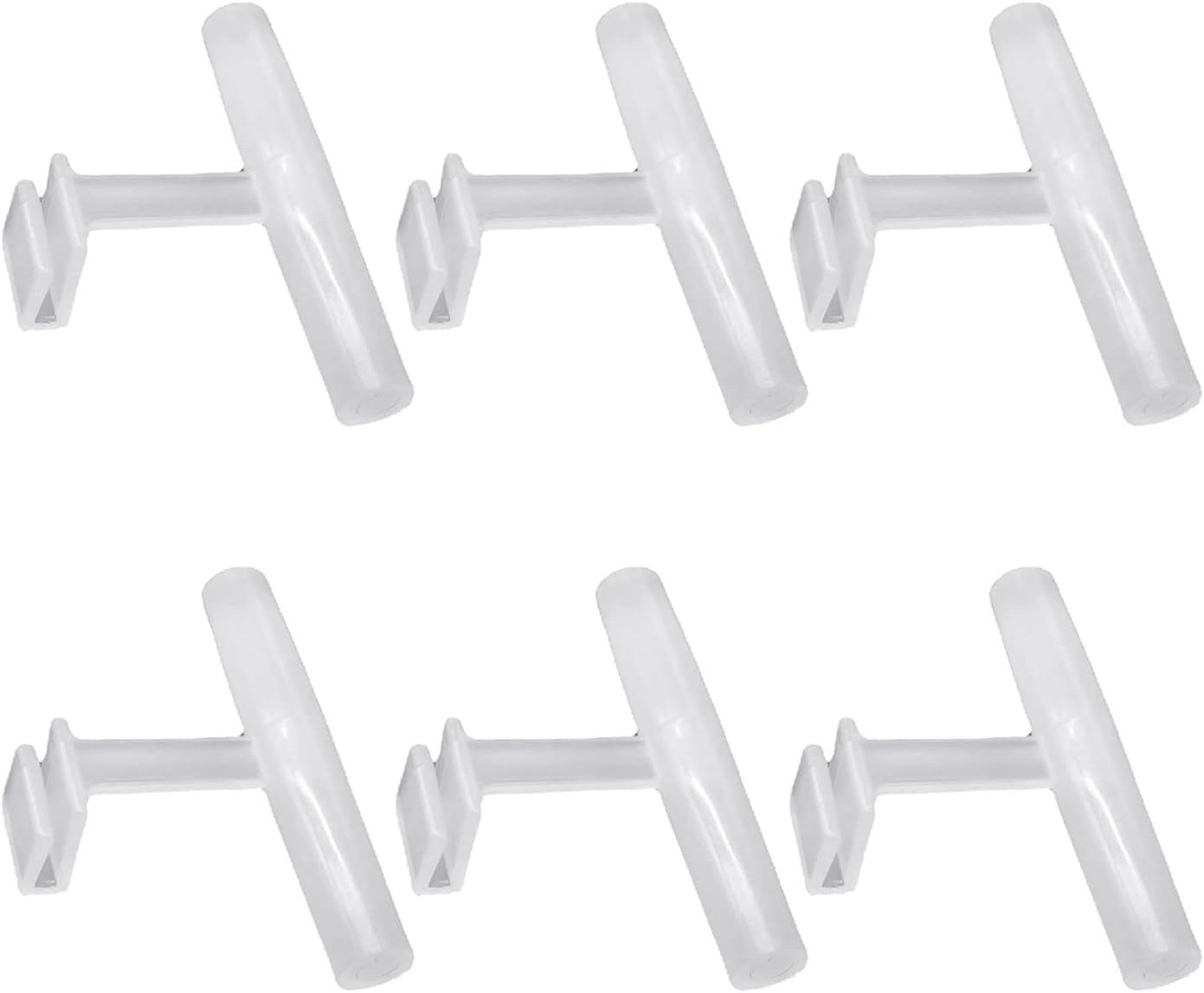
Bird Perch Platform Small Animals Perch Stand Rectangle Cage Accessory for Cockatiel Parrot (Brown)
A single flat platform in brown that reads as furniture and gives you one station beside the food cup
One piece is not a perch layout, so buy it as an add-on rather than the whole setup
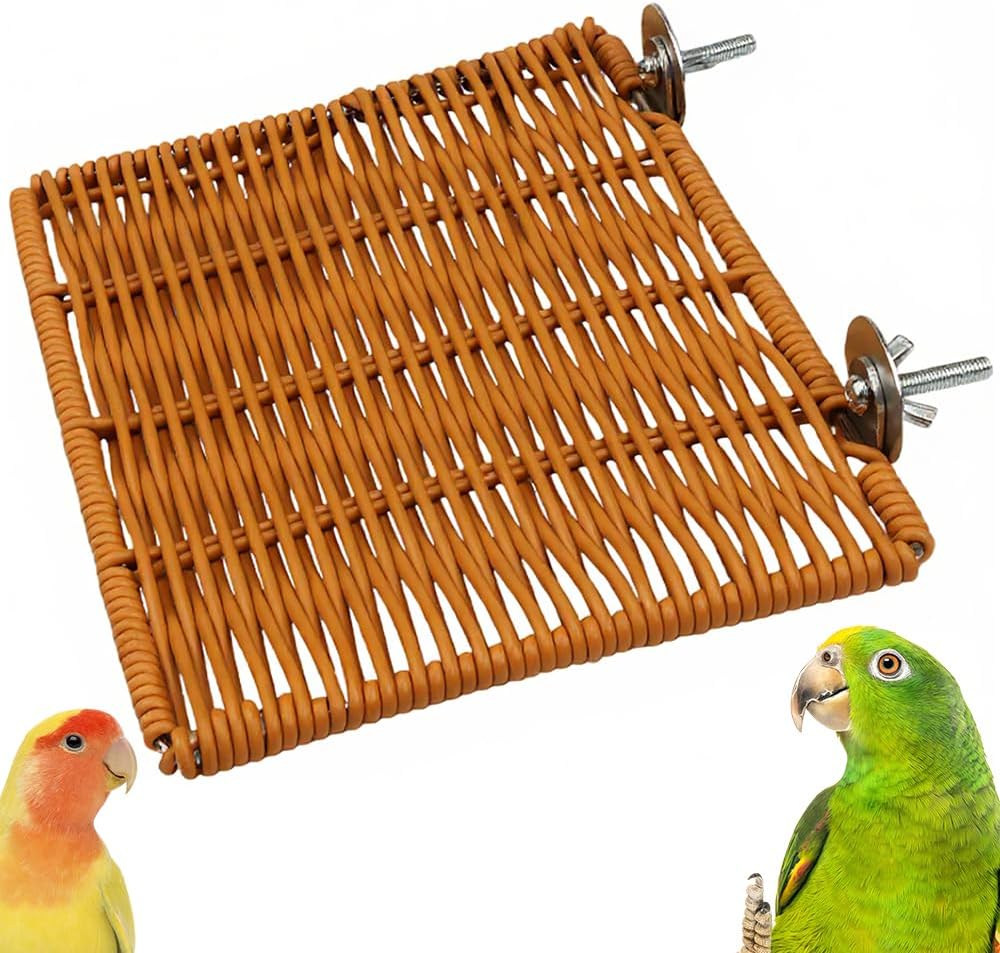
Okllen Bird Perch Stand, Bird Cage Platform Wire Patio Sundeck Playground for Parrots Cockatiels and Small Birds, 12" Lx8 W
Biggest surface here at 12 by 8 inches, and the wire floor lets droppings fall through instead of collecting
That footprint eats real space in a small cage, so it fits an aviary or a flight cage best

4PCS Wooden Bird Perch Stand Toys 7.9×0.8in for Parakeet Cage Accessories
Four natural wood perches at 0.8 inch diameter, the small-bird size, with spares for rotation
Fixed thin diameter and short length, so it is not the pick for a large parrot
Prices and availability may change.
Bird cage vs bird aviary: what actually changes
A cage is a closed box with a removable tray, a door, and feed doors. An aviary is a walk-in or flight structure, usually framed with wire panels and a solid roof, that your bird uses for hours at a time. That one structural difference shows up in four daily details.
Bar spacing is the first. A cage built for a budgie or a cockatiel uses tighter spacing than an aviary built for the same bird, because aviary panels are framed with heavier wire and wider gaps. If you move a small bird into an aviary, check the corners and the door frame, since those are where gaps are widest and where a bird is most likely to test them.
Cage height works differently in each. In a cage, height is mostly about tail clearance and giving the bird one high perch it can retreat to when it wants to be left alone. In an aviary, height is only useful if there is horizontal room to fly into it. A tall aviary with a narrow footprint gives you a bird that climbs the wire instead of flying, which is the worst of both setups.
Cleaning is the third difference. A cage has a tray liner you pull and replace, usually daily. An aviary floor is a solid surface you scrape and hose or a planted bed you turn over, and either way it costs more minutes per week. The perches matter here too, because a flat platform holds droppings in a film while a wire platform lets most of it fall through.
The fourth is enrichment. In a cage, space is tight enough that you place every object deliberately, and foraging difficulty stays low because you can see everything at a glance. In an aviary you can spread food across several stations and make the bird work for it, which is better for the bird and harder for you to monitor.
Both setups need the same thing at the end of the day: perches at more than one height, and food that is not directly under a perch. That single rule prevents more health and behavior problems than any upgrade you can buy.
Sizing rules that hold in a cage or an aviary
Whichever enclosure you end up with, three numbers decide whether the inside works.
Perch diameter should let your bird's foot wrap roughly two thirds of the way around the perch, with the toes not quite meeting. Too thin and the bird shifts its weight constantly; too thick and it cannot get a grip. The 0.8 inch wooden perches in the four-piece set below sit in the small-bird range, which is why they suit parakeets and budgies and not a large parrot.
Food cup size should match a day of food, not a week. An oversized cup invites your bird to sort and fling, and it hides a drop in intake, which is often the first sign that something is wrong. A cup small enough to be emptied daily tells you more about your bird than any larger one will.
Carrier size is the number people forget. A carrier is a transport box, not a second cage, and it should be small enough that the bird cannot be thrown around inside it on a car ride. Store it near the cage or aviary so that loading a bird for a vet visit is not an event you have to plan around.
Placement is the fourth variable, and it costs nothing. Put the highest perch at eye level or above so the bird can watch the room from safety, keep a lower perch near the food, and leave the middle of the enclosure open so there is somewhere to move. A cage with three perches at three heights behaves like a much larger cage, because the bird has a reason to travel instead of sitting still.
The four perch options, and where each one belongs
The BOGEEL Bird Stand six-piece set is the most flexible option here because it is six separate clip-on perches rather than one platform. That makes it a route-building kit: clip a few at different heights along a wire panel or a window feeder and your bird has a reason to move instead of parking on one dowel. On an aviary wall, space all six to create a climbing line. In a cage, use two or three and keep the rest for rotation. Visit on Amazon
The Okllen Bird Perch Stand is the biggest single surface in the group at 12 inches long by 8 inches wide, and the wire patio design is the reason to pick it. Droppings fall through to the tray below instead of baking onto a solid platform, and the surface is wide enough to work as a bathing spot, a sunning spot, or a second feeding station. In a small cage, that footprint is a real cost, which is why it earns its place fastest in an aviary or a large flight cage. Visit on Amazon
The 4PCS Wooden Bird Perch Stand set is the simple answer for a parakeet or budgie cage. Four natural wood perches at 7.9 inches long and 0.8 inches in diameter give you a fixed perch diameter that suits small feet, and having four means you can swap one out when it gets soiled rather than scrubbing the same dowel every week. Wood also dries faster than a plastic or wire platform after a wash. Visit on Amazon
The Bird Perch Platform Small Animals Perch Stand is the quiet one of the group: a single rectangular platform in brown that reads as cage furniture rather than equipment. It is the piece to buy when you already have a perch layout you like and you want one flat station, ideally beside the food cup so that the cup is not directly beneath a perch. As a standalone setup for a bird that has nothing else, one platform is thin, so plan to pair it. Visit on Amazon
Mounting: swing mount, clip mount, and wire panels
Where a perch attaches decides whether it stays where you put it. A swing mount hangs from the roof and moves with the bird, which is fine for a small bird on a light swing and a poor choice for a heavy platform that will pendulum into the bars. Clip mounts grab a wire panel, a feeder, or a window frame, which makes them the natural fit for an aviary wall and a bad fit for a solid-sided or acrylic cage. Platform perches generally sit flat on the floor or hook over a wire wall.
Before you buy anything, look at your enclosure and answer one question: what can this mount to? A perch that cannot attach to your setup is a perch that lives in a drawer. This is the single most common way people waste money on bird accessories, and it is the reason a six-piece clip set and a flat platform set are not interchangeable even when they cost about the same.
Cleaning and the weekly reset
Perches are the dirtiest objects in any enclosure, and their shape decides how much scrubbing you do. A flat platform collects a film of droppings and needs a wipe every few days. Natural wood dries quickly and takes a brush well. A wire platform drops most of the mess through to the tray liner below, which is why the Okllen sundeck is easier to live with than its surface area suggests.
Food cup size and position matter for the same reason. Never place a cup directly under a perch if you can avoid it, because a bird will not eat food it has soiled, and you will end up throwing away more than it eats. If your only perch position is above the cup, rotate the perch or move the cup. Once a week, pull everything out, wash the perches, replace the tray liner, and check the bars and clips for sharp edges or bends.
Should you buy a set or a single platform?
Buy a set if your bird has one perch and you have never changed it. A single dowel is the most common setup mistake in both cages and aviaries, because it gives the bird one height, one grip, and one view. Six clip-on perches or four wooden perches cost less than most single premium platforms and solve that problem in one purchase.
Buy a single platform if you already have a perch route and you want to add one station, such as a bathing spot, a sunning shelf, or a feeding platform away from the main cup. That is the case for the Okllen sundeck and for the brown rectangle platform. If you are choosing between a bird cage or bird aviary for one bird in an apartment, remember that the inside of the enclosure is what your bird actually experiences, and a tall cage with a good perch route delivers more usable behavior than a small aviary with one dowel in it.
What to add next
Once the perches are set, the upgrades that change behavior are not furniture. Foraging difficulty is the biggest one: move part of the diet into a puzzle feeder or scatter it across several perches so that eating takes minutes instead of seconds. That is the single cheapest enrichment change you can make in a cage or an aviary.
A carrier is the other. A bird that only rides in a carrier twice a year panics; a bird that eats in its carrier on a normal Tuesday walks into it when you need to go to the vet. Leave the carrier open near the enclosure with a perch inside and let it become furniture. If you want the step-by-step version, see how to carrier train a parrot.
The short version
For most indoor birds, the answer to bird cage vs bird aviary is a cage for daily life and an aviary as an addition, not a replacement. If you have room for only one, spend the budget on a taller cage and better perches rather than a small aviary, because flight space that is too small to fly in is just a harder-to-clean cage.
On the accessory side: the six-piece clip set gives you the most layout options, the Okllen sundeck gives you the biggest and easiest-to-clean surface, the four wooden perches are the straightforward small-bird answer, and the brown rectangle platform is the add-on you buy once the rest is in place. Check the current price on each listing before you commit, because these numbers move, and measure your enclosure's mounting points before anything ships.