A smelly aquarium is not a mystery and it is not a personality flaw. Every tank that stinks has a source: rotting food under the driftwood, a dead snail behind the filter intake, mechanical media packed so solid that water runs around it instead of through it. If you want to stop an aquarium smelling, you stop guessing and you work through the causes in order.
The short version of how to stop an aquarium smelling is waste in, waste out, plus enough flow and enough heat that the bacteria in your filter keep pace with the waste you feed them. A healthy freshwater tank smells like wet gravel and nothing else, and that is the target.
What follows is the order I work in when a tank turns, the three pieces of gear that make the routine easier to keep, and what it costs over the life of the tank.
Why you should trust me
I write the freshwater aquarium guides here, and I have siphoned enough gravel to know that most smell complaints are maintenance complaints wearing a costume. Nobody pays me to tell you that your tank needs a new filter. Half the time it needs a ten minute water change and a rinsed sponge.
I am not going to pretend I ran a lab on the gear below, either, because smell is the one problem in this hobby you can diagnose with your own nose, a liquid test kit, and a flashlight. What I can tell you is which parts of an odor problem are hardware problems and which are husbandry problems. Confusing those two is how people end up buying a bigger filter when they needed to feed less.
One more thing worth saying up front. Most of what you read about how to prevent an aquarium smelling is really about filtration, and filtration is only half of it. The other half is the waste that never makes it into the filter in the first place.
How I picked and how I tested
The three items below were picked on the specs that actually touch odor. Tank volume and how easy a tank is to siphon. Wattage and thermostat range on the heater. Whether a stand puts the tank at a height where gravity does the draining for you. I compared the published specs, checked dimensions against a standard 10 gallon footprint, and asked the boring questions. Does the cord reach where the outlet is? Is there somewhere to put a wet bucket?
The testing side of this is a routine you can run in ten minutes on your own tank. Sniff at the water surface, then sniff at the filter outflow. If the tank smells at the surface but not at the outflow, you have waste sitting in the tank. If it smells at the outflow, the filter is the source. Then run ammonia and nitrite, which should both read zero, and nitrate, which tells you how overdue a water change you are. Last, watch the surface for a full minute. If the water is not moving, no chemical media on the shelf will save you.
The gear around the tank
None of the gear below treats a smell. What it does is remove the excuses that keep you from doing the weekly work: a heater that holds its setting, a stand that puts the tank at a workable height, and a tank you can actually see into. If you came here for a filter recommendation, that is a different guide, and the filter you already own is usually fine once it is clean and moving water. These three pieces make the maintenance faster and more likely to happen, and the cheapest one is first.
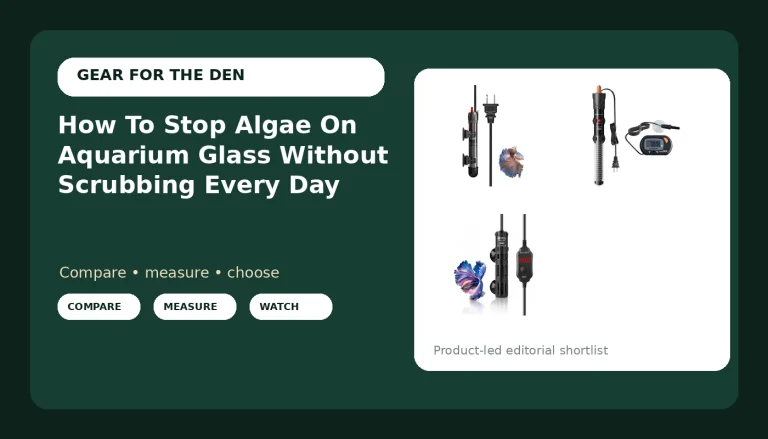
Budget pick: HiTauing Aquarium Heater 25W/50W/100W/200W/300W, Adjustable Knob Fish Tank Heater with Digital Thermometer, Submersible Betta/Turtle Tank Heater for Freshwater and Saltwater Tanks
Budget pick
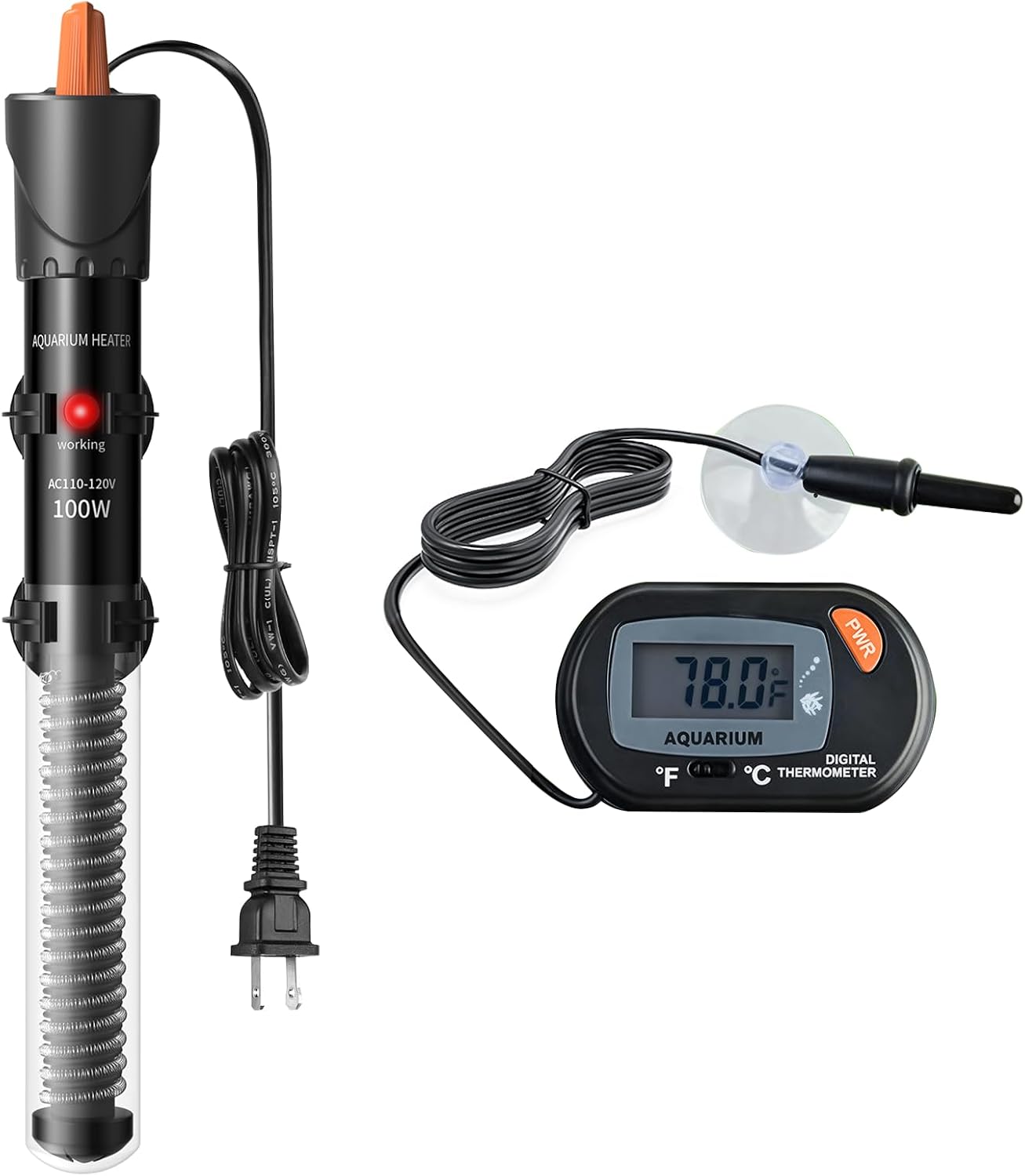
HiTauing Aquarium Heater 25W/50W/100W/200W/300W, Adjustable Knob Fish Tank Heater with Digital Thermometer, Submersible Betta/Turtle Tank Heater for Freshwater and Saltwater Tanks
The heater is where a surprising number of odor problems start, and it is the least expensive thing in this guide. A tank that swings in temperature stalls the bacteria in the filter, stalled bacteria mean ammonia, and ammonia has a smell. This one comes in a range of wattages from 25W up through 300W, with an adjustable knob and a digital thermometer in the box. It is submersible, which matters because a heater you can position near the filter outflow spreads its heat instead of cooking one corner of the glass.
Sizing is the whole trick. For most freshwater tanks, plan on three to five watts per gallon of tank volume, then adjust for how cold the room gets in winter. A 10 gallon tank in a warm apartment is a different job from a 10 gallon tank in a basement. Check current Amazon price before you pick a wattage, because moving up a size usually costs very little and gives the heater some headroom on the coldest nights.
Flaws but not dealbreakers: The dial is analog, so treat the mark as a starting point, let the tank run for a day, and cross check with the included thermometer before you trust it.
Anyone heating a betta, a small community tank, or a turtle setup in a room that stays above 65 degrees will be happy here.
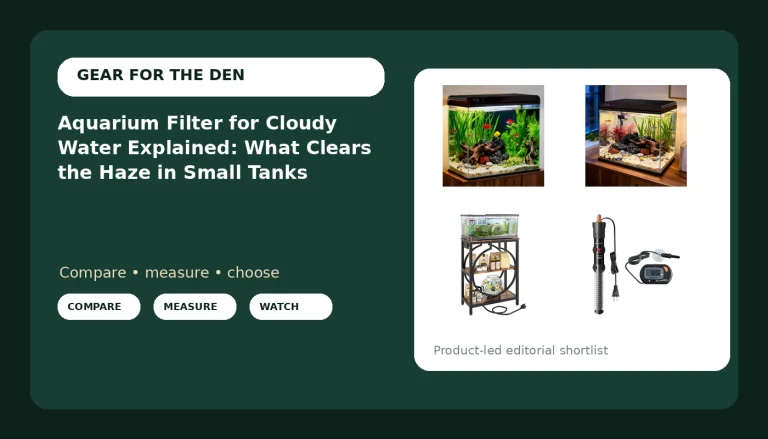
Our pick: HavenlyYouth 10 Gallon Aquarium Stand with Power Outlet, 3 Tier Heavy Duty Metal Fish Tank Stand with Storage, Fish Tank Table for Home Office, 21.3" x 11.8" x 29", Rustic Brown
Our pick
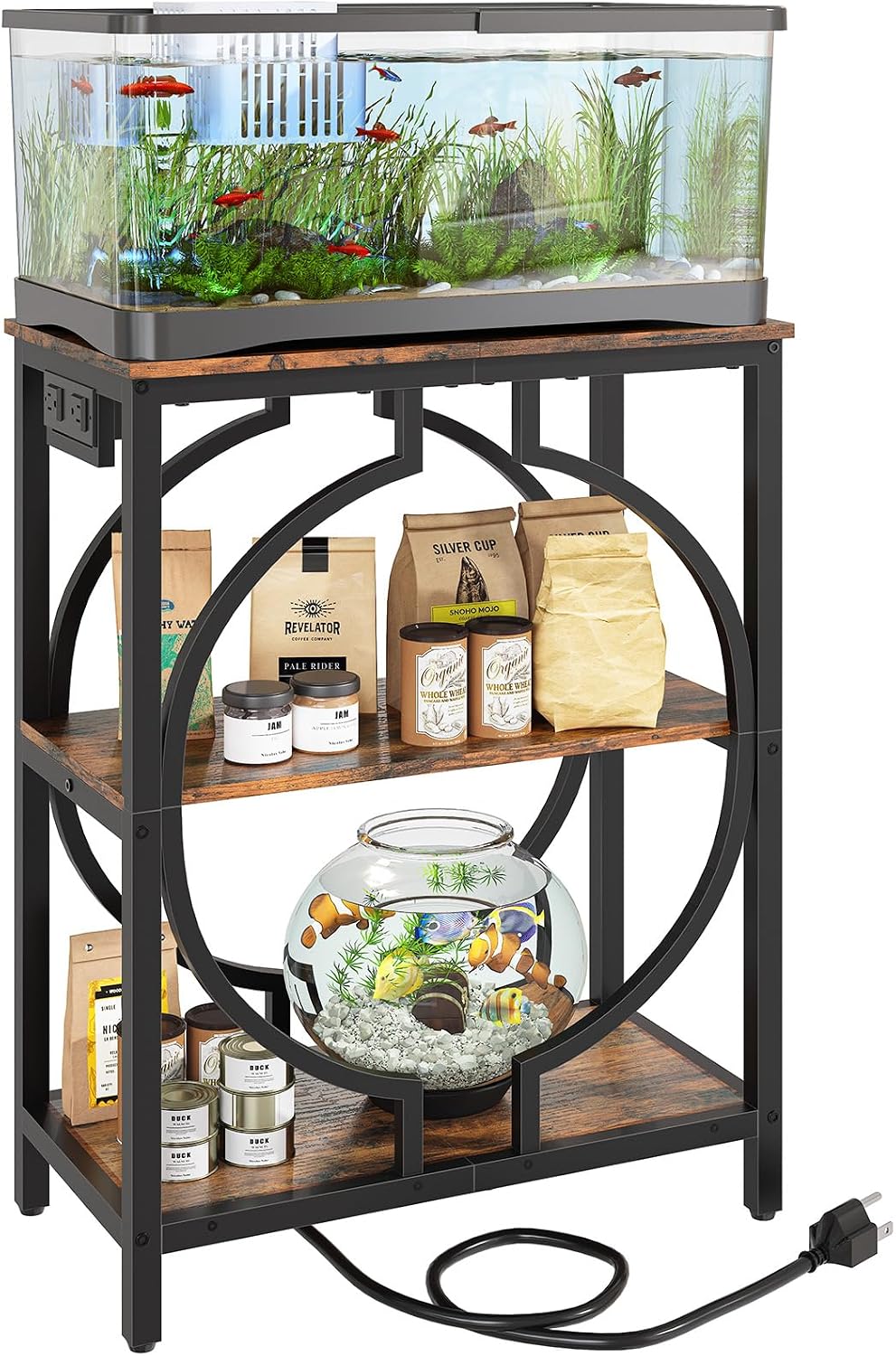
HavenlyYouth 10 Gallon Aquarium Stand with Power Outlet, 3 Tier Heavy Duty Metal Fish Tank Stand with Storage, Fish Tank Table for Home Office, 21.3" x 11.8" x 29", Rustic Brown
This is the part people skip, and then they wonder why water changes feel like a chore. A tank sitting on a dresser at knee height is a tank you drain with a bucket and a prayer. This stand puts a 10 gallon footprint at a real working height, listed at 21.3 inches wide, 11.8 inches deep, and 29 inches tall, which is tall enough that gravity does most of the draining and low enough that you can still reach the back glass with a siphon.
The power outlet built into the stand is the feature I would pay for on its own. A heater, a filter, and a light all want a socket, and a power strip dangling behind the tank is how cords end up in the water. The three tiers give you shelves for your bucket, your test kit, and your spare media, which is the difference between a maintenance routine and a scavenger hunt every Sunday. Check current Amazon price.
Flaws but not dealbreakers: It is a metal stand, so put a level on it before you fill the tank. A fraction of an inch of tilt is invisible when the stand is empty and obvious when it is full.
Anyone who has ever balanced a bucket on a chair to drain a tank will notice the difference immediately.
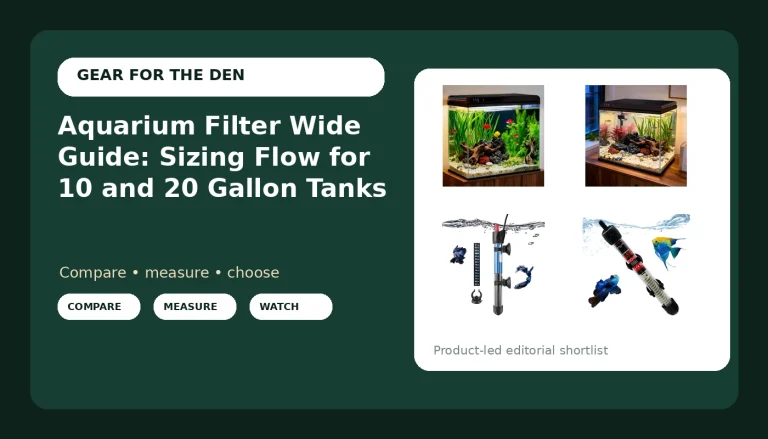
Upgrade pick: 10 Gallon Rectangular Fish Tank, Rimless Ultra Clear Nano Aquarium
Upgrade pick
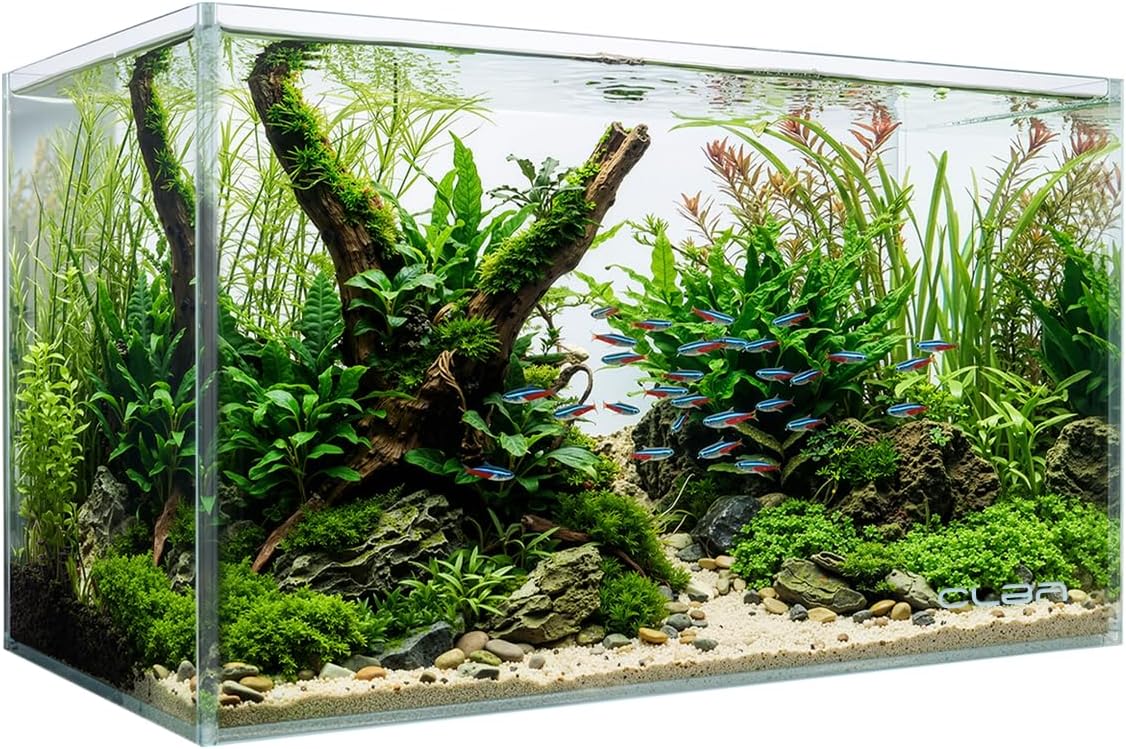
10 Gallon Rectangular Fish Tank, Rimless Ultra Clear Nano Aquarium
A rimless, ultra clear 10 gallon rectangle is not gear that fixes a smell. It is gear that lets you see the smell coming. Clear glass with no plastic rim means you can watch the substrate from the side, catch the food that lands behind the plants, and find the snail that died under the filter intake before it clouds the water.
The shape matters more than the glass. A rectangular 10 gallon gives you a flat front panel to siphon against, and that is where most uneaten food collects. Fixed dimensions also make the rest of the math easy, because tank volume, flow rate, and filtration all get planned around a number you already know instead of one you estimate from a bucket. Check current Amazon price.
Flaws but not dealbreakers: Rimless means no built in lid, so open water evaporates and anything that jumps is gone. Top off with treated water rather than tap straight from the faucet.
If you are setting up your first tank and want to see what you are doing while you learn the routine, this is the one to look at.
The eight steps that stop an aquarium smelling
Work top to bottom. Do not skip ahead to step eight and buy something, because the first seven steps are free.
Step one: Find the source before you change anything. Sniff at the water surface, then sniff at the filter outflow. Surface smell means waste is sitting in the tank. Outflow smell means the filter is the problem. Then look, with a flashlight: behind the heater, under the decor, and inside the filter intake, where a dead snail or a clump of rotting food can hide for a week.
Step two: Run the tests. Ammonia and nitrite should read zero in a cycled tank. If either is showing color, the smell is a bacterial problem and the fix is a water change plus a pause on feeding, not a new filter. Nitrate is your maintenance gauge: if it has climbed well past 20 ppm, the tank is telling you the water change is late. If you are not sure the tank ever cycled at all, read how to cycle a new aquarium before you chase the smell.
Step three: Change 25 to 30 percent of the water and vacuum the substrate. This is the step that fixes most tanks. Substrate grain decides how much work you have to do: coarse gravel lets food and waste settle between the grains, where it rots out of sight, while a fine sand bed keeps debris on top where you can see and siphon it. Push the vacuum into the gravel instead of waving it over the top, and go slowly enough that you are pulling dirty water, not just water.
Step four: Service the filter in the right order. Every filter has a filtration stage order: mechanical media first, then biological, then chemical. Rinse the mechanical sponge or floss in the water you just drained from the tank, never under the tap, and leave the biological media alone unless it is clogged solid. If you run carbon, it is a patch for smell rather than a cure, and it quits working after a few weeks. For a smaller tank, a sponge filter for a 10 gallon aquarium does the biological job with less to clean.
Step five: Fix the flow rate. You want the whole tank volume turning over at least four times an hour, so a 10 gallon tank needs roughly 40 gallons per hour of real movement once you account for media and head height. The number on the filter box is optimistic. Point the outflow at the surface so the water ripples, because gas exchange at the surface is what keeps a tank from going sour in the first place.
Step six: Dial in the heater. Match wattage to tank volume and room temperature, then set the thermostat range where you actually want it, usually 76 to 80 degrees for most tropical community fish, and confirm it with a separate thermometer. A heater that overshoots cooks the bacteria and the plants. A heater that undershoots stalls them. Both end with the same smell.
Step seven: Feed less and take out what is left. Overfeeding is invisible, which is why it is the most common cause of a tank that smells. Feed an amount the fish finish in about two minutes, twice a day at most, and net out anything still floating five minutes later. The fastest way to prevent an aquarium smelling is to stop feeding more than the fish can eat. Uneaten food does not disappear, it dissolves, and then it feeds the bacteria making the smell you are trying to get rid of.
Step eight: Add plants and use chemical media as a short term patch. Fast growing plants pull nitrate out of the water, and nitrate is the end of the waste chain, so a planted tank smells less. Keep them under a freshwater kelvin rating around 6,500K and they will out compete the algae. If you need the smell gone tonight, a fresh carbon pad or a pouch of chemical media in the filter will buy you a day or two. Then go back to step three, because the smell returns the moment the media exhausts.
The competition and why it lost
The canister filter lost because a 10 gallon tank does not need one, and a canister packed with rotting media smells worse than the sponge filter it replaced. More filtration is not more odor control if nobody opens it up and cleans it.
The UV sterilizer lost because it only treats what floats past the bulb. It will clear a green water bloom, and it will do nothing about the food rotting in your gravel, which is where most aquarium smell actually comes from.
The sponge filter and air pump combination lost on looks and won on almost everything else. It is cheap, it is nearly impossible to break, and it gives bacteria a home. It still does not remove waste, so if you never siphon, you still get the smell.
The odor neutralizing drops lost because they are perfume. They mask a smell for a few hours and do nothing about the ammonia that caused it. The same goes for the decorative carbon cartridge that came with your filter, once it has been sitting in the water for a month.
The bigger tank lost because dilution is not a fix. A neglected 40 gallon smells like a neglected 10 gallon, four times over. Fix the routine first, then size up if you still want to.
What this all costs
Three items, and you probably already own one of them. Check current Amazon price on each before you buy, because prices on aquarium gear move with the season and with whatever the listing is running that week.
The heater is the smallest line item and the one that earns its keep fastest, because temperature stability is what keeps the bacteria in your filter alive between water changes. The stand sits in the middle, and it is the one that decides whether you do the weekly work at all. The tank is the largest single purchase, and it is also the one you can put off longest if the tank you already have holds water and does not leak.
Here is how to think about the math. Take what you pay for a part and divide it by the number of days that part actually serves you. A part that lasts several seasons costs pennies a day. A filter cartridge you replace every month does not, and neither does the bottle of odor drops you buy every time the tank turns. The cheapest thing in this guide is the ten minutes you spend with a siphon on Sunday, and it is the only fix on this list that works every single time.
That is the whole job. Your tank does not have to smell like a pond, and it never did.