A nano tank is a small freshwater setup, typically 10 to 20 gallons or less, and it is where filtration decisions get the least forgiving. Small tank volume concentrates waste faster, temperature swings arrive sooner, and a filter that looks generous on the box can still leave you doing extra water changes every week. Choosing an aquarium filter for nano tanks is less about buying the biggest unit and more about matching flow, media space, and maintenance routine to the tank you actually keep.
Two of the four products below are complete small-tank kits with their own quiet filter pump. The other two are full-spectrum LED lights, and light belongs in this conversation because in a planted nano the plants are part of the nutrient cycle; a light on a fixed daily schedule makes that cycle more predictable. Everything here sticks to what the listings state and to general filtration principles, so you can judge fit instead of taking a marketing line at face value.
Quick answer
The short version of aquarium filter for nano tanks explained: size the pump so the tank turns over roughly four to six times per hour, give the media enough surface area to host bacteria, and choose a design you can open and rinse in under five minutes. If you want one box that covers the tank, the pump, the light, and temperature monitoring, the Coospider kits are the simplest route. If you already own a tank and only need better lighting for plants, the NICREW C10 and the AQQA unit are the two options here, and they differ mainly in how much control you get over the daily schedule. Nothing on this page is ranked as the quietest or the best, because the listings do not support that kind of claim.
4 useful options
| Model | Best fit | What stands out |
|---|---|---|
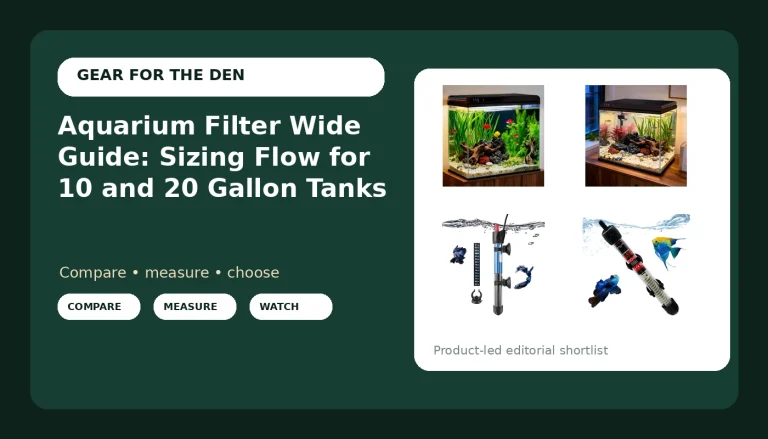
| Coospider 10 Gallon Glass Fish Tank, Aquarium Starter Kit | A first nano on a desk or counter | 10 gallon glass tank with a quiet filter pump, 3-color LED lighting, and temperature monitoring in one kit |
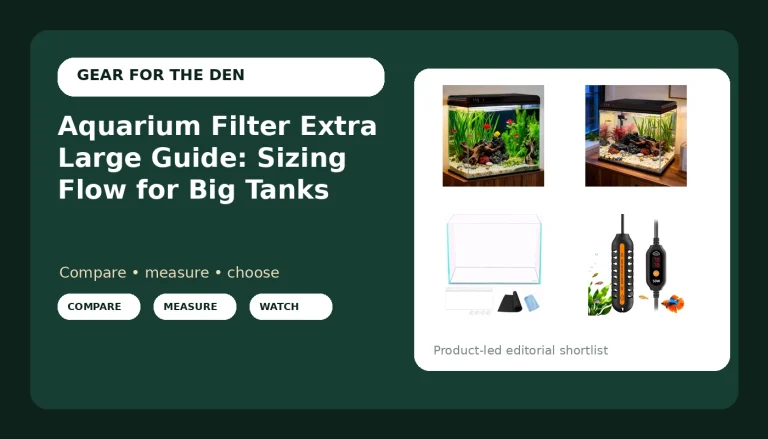
| Coospider 20 Gallon Glass Fish Tank, Aquarium Starter Kit | More room for fish, shrimp, and plants | The same kit format in a 20 gallon tank, so tank volume and stocking room both go up |
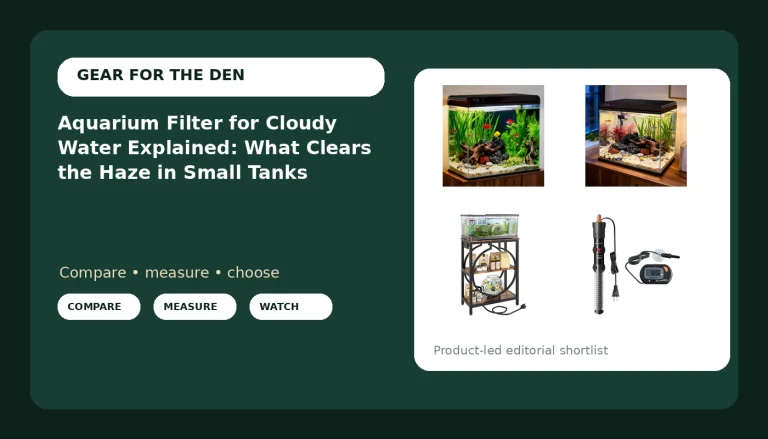
| NICREW C10 24/7 LED Aquarium Light, Fish Tank Light for Plants, 18-24 in | Upgrading light on an 18 to 24 in planted tank | 24/7 LED scheduling in a unit the listing positions for plants |
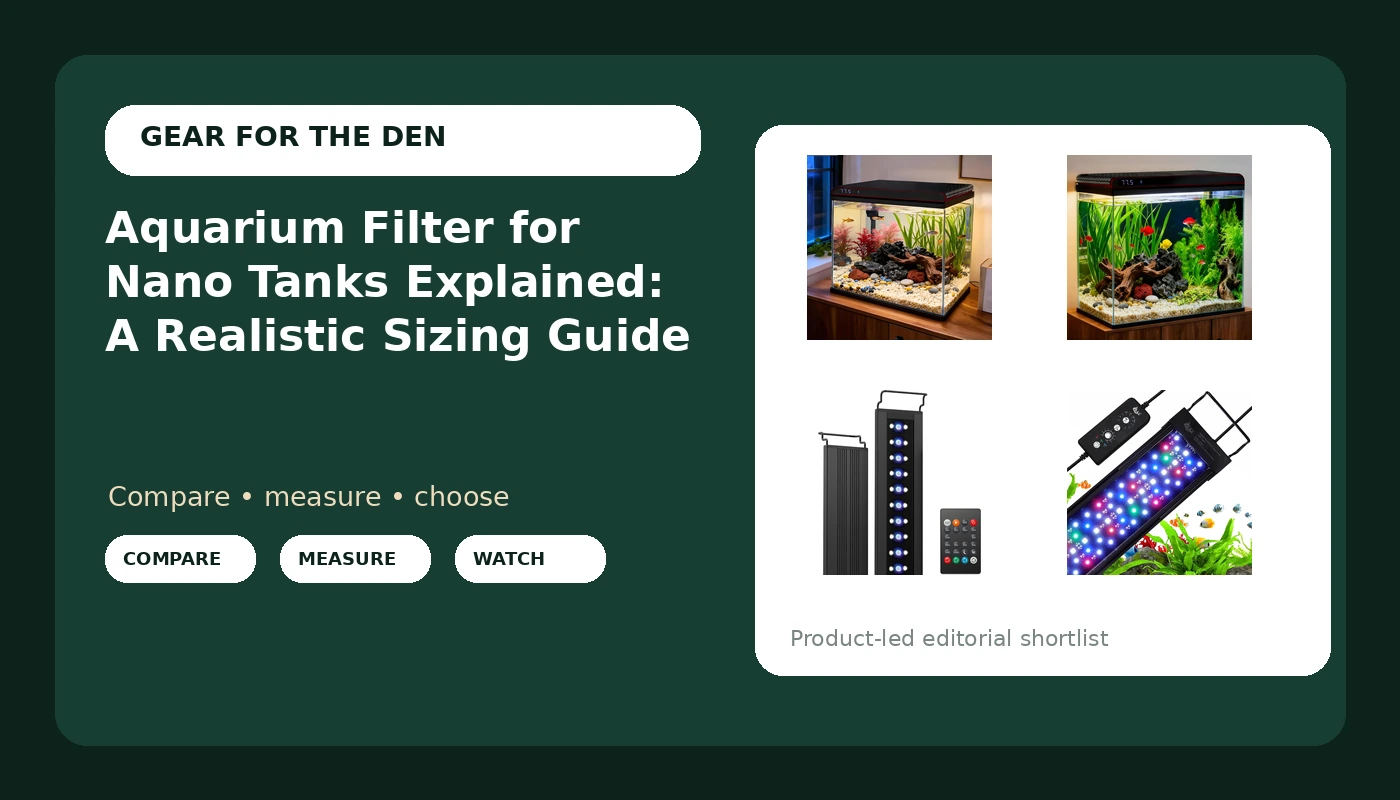
| AQQA LED Aquarium Light, 24/7 & DIY Mode Full Spectrum Fish Tank Light | Keepers who want to program their own schedule | 24/7 mode plus a DIY mode and full spectrum output |
The 10 gallon kit: Coospider 10 Gallon Glass Fish Tank, Aquarium Starter Kit
Where a kit like this earns its place is convenience. You do not have to match a pump to a tank volume or guess whether a lid will fit, and the integrated pump leaves the inside of the tank clear for plants and decor. The trade-off is flexibility. An integrated pump usually means a fixed flow rate and a fixed media chamber, so check the listing for the pump's rated gallons per hour and its wattage before you buy, and decide whether 10 gallons is the tank volume you want in two years rather than only today. If you plan a heavier bioload, or you want to run a sponge filter alongside it, a bare tank and separate components give you more room to work.
The 20 gallon kit: Coospider 20 Gallon Glass Fish Tank, Aquarium Starter Kit
The 20 gallon version makes its case in water volume. More water means waste compounds dilute further and temperature moves more slowly, which is the main reason larger tanks are more forgiving for beginners. It also opens up substrate grain choices, since you have enough floor area to lay a proper planted bed rather than a thin scattering. The trade-offs are the same as the smaller kit plus one more: the footprint needs a real stand rather than a corner of a desk, and the integrated pump still limits how much media you can run. A 20 gallon tank sits at the top of the nano range, so this is the point to ask whether you are buying a nano or a small standard tank.
Light for a planted nano: NICREW C10 24/7 LED Aquarium Light
Lighting is not filtration, but in a planted nano it changes how much work the filter has to do. Healthy plants take up nitrogen compounds that would otherwise feed algae, and a light that runs on a set schedule keeps that uptake steady. The listing name does not spell out a kelvin rating, so check the product page for color temperature and wattage if you care about how warm or crisp the tank looks and how much heat the fixture adds to a small tank volume. On a nano, a long photoperiod is one of the fastest routes to an algae problem, so start shorter than you think you need and extend it gradually.
Programmable lighting: AQQA LED Aquarium Light
More control is not automatically better. A programmable light lets you dial in a schedule that suits the plants you keep, but a nano tank volume leaves very little margin, so an over-lit small tank grows algae faster than a larger one would. Treat the DIY mode as something to tune slowly, one change at a time, and watch plant growth rather than how bright the tank looks in a photo. As with the NICREW unit, confirm wattage and any color temperature figures on the product page, since the listing name does not carry them.
Prices and availability may change. Product images, names, and retailer links are matched to verified listings. No current price, rating, stock status, or measured result is stated here without current evidence.
What the ideal aquarium filter for nano tanks has to do
Every filter, from a sponge driven by an air pump to a hang-on-back unit with cartridges, runs the same three filtration stages. Mechanical filtration traps floating debris so the water clears. Biological filtration gives nitrifying bacteria a surface to live on, and those bacteria convert ammonia into nitrite and then into nitrate. Chemical filtration, usually carbon or a resin, pulls out colors, odors, and some dissolved compounds, and it is optional in most freshwater setups.
The ideal aquarium filter for nano tanks does all three in a body small enough to hang on the back or sit inside the tank, and that is the real constraint. Media volume, not pump strength, is usually the limiting factor: a tiny chamber filled with a thin cartridge holds far less bacteria than a block of coarse sponge cut to the same footprint. When you compare units, look at how much media you can fit and how easily you can rinse it in removed tank water without destroying the bacteria colony. Flow matters too, but a pump that pushes water through a small chamber very fast can channel around the media instead of through it.
Matching flow rate and media to tank volume
Flow rate is usually quoted as gallons per hour, and the useful way to read it is as a multiple of tank volume. A gentle turnover for a planted nano is a few times the tank volume each hour, while tanks with more fish want more. Too much flow in a 10 gallon tank pushes small fish around and flattens plants, so an adjustable pump or a spray bar is worth having.
Two more numbers shape the rest of the setup. Wattage tells you how much heat a pump or a light adds, and in a small tank volume that heat shows up as a temperature climb you did not ask for, which is why a heater's thermostat range matters more in a nano than in a large tank. A light's kelvin rating tells you whether the tank will read warm or crisp, and it is one of the few specs that tells you anything about appearance before you plug the fixture in. Substrate grain sits at the bottom of the same list: coarse grain leaves gaps for flow and roots, fine grain packs tighter and suits carpeting plants.
- Measure the tank volume you are actually filling, not the marketing number on the box.
- Divide the pump's gallons per hour rating by that volume to get your turnover multiple.
- Check the media chamber: if you cannot fit coarse sponge plus biological media, plan on a second filter or a different unit.
- Confirm the heater's thermostat range covers the temperature you want, and account for wattage adding heat in summer.
- For planted tanks, decide substrate grain and light schedule together, since both drive plant growth and algae risk.
Practical guidance for a small tank
- Rinse filter media in removed tank water, never under the tap, so the bacteria colony survives.
- Shorten the light schedule before you reach for chemicals if algae appears, because a nano has little buffer.
- Keep the filter intake clear of substrate and plants so flow rate stays where you set it.
- Do smaller, more frequent water changes instead of one large change, since tank volume is small.
- Keep a spare sponge or cartridge on hand so cleaning day does not become a reason to skip maintenance.
Which option should you choose?
Choose the Coospider 10 Gallon Glass Fish Tank, Aquarium Starter Kit when you want a first nano with the pump, the light, and temperature monitoring handled in one purchase and you are happy with a compact footprint. Choose the Coospider 20 Gallon Glass Fish Tank, Aquarium Starter Kit when you want the same simplicity with more tank volume for fish and plants. Choose the NICREW C10 24/7 LED Aquarium Light when you already have a tank in the 18 to 24 in range and want a set daily light cycle for plants. Choose the AQQA LED Aquarium Light when you want to program your own schedule and tune the output yourself.
None of these listings states a measured flow rate, noise level, or light output, so verify the specifications you care about on the product page before you buy. If your tank falls outside the sizes these products cover, or you keep species with unusual flow needs, the correct aquarium filter for nano tanks may be a unit that is not listed here, and that is a normal outcome in a category this varied.
The bottom line
Filtration in a nano tank is a matching exercise rather than a horsepower contest. The pump has to move enough water to clear the tank without blowing fish around, the media chamber has to hold enough surface area for bacteria, and the whole thing has to be easy enough to clean that you actually clean it. The Coospider kits handle the tank, the pump, the light, and temperature monitoring in a single purchase, in 10 or 20 gallons, and the larger of the two gives you more margin for the same money and a bigger stand. The NICREW C10 and the AQQA light matter if you keep plants, because a predictable light cycle supports the plants that support your water quality. Check the specs that matter to you on each listing, check current Amazon price before you order, and pick the size that fits the space you have.