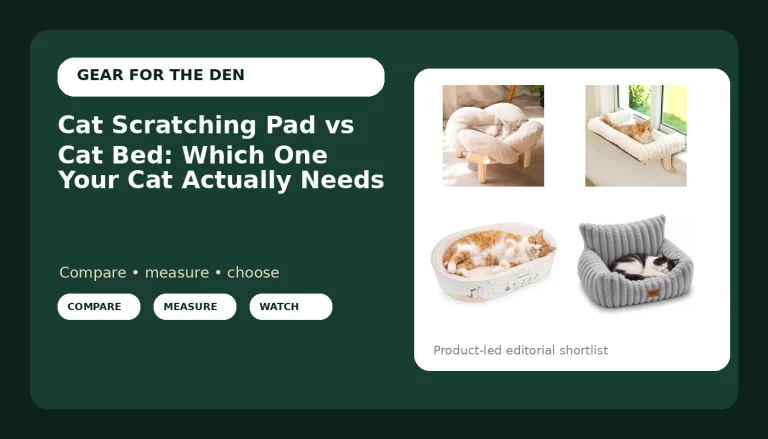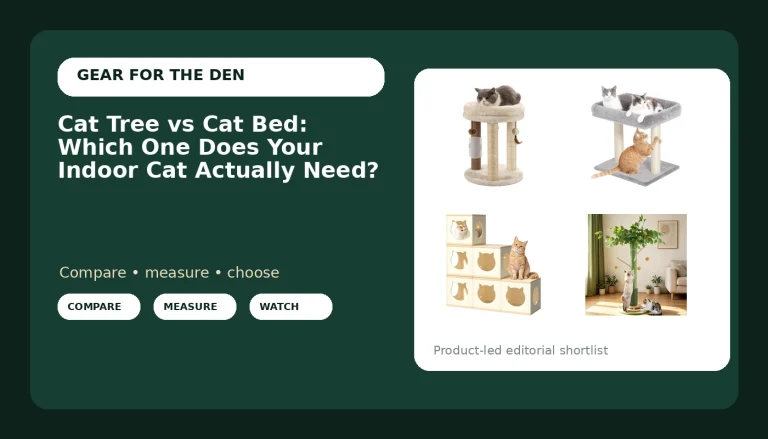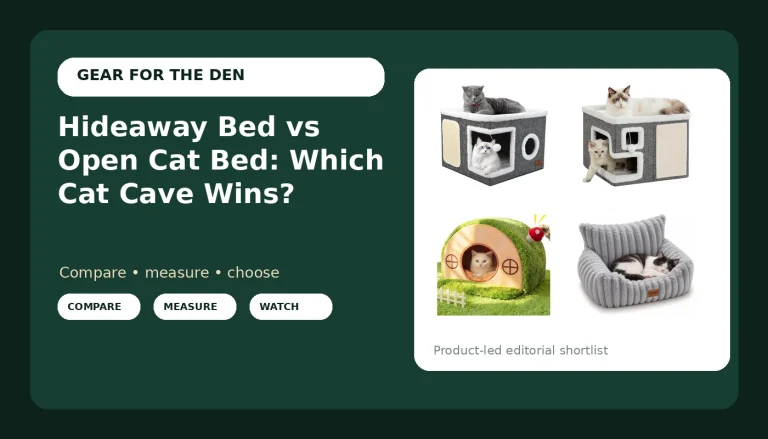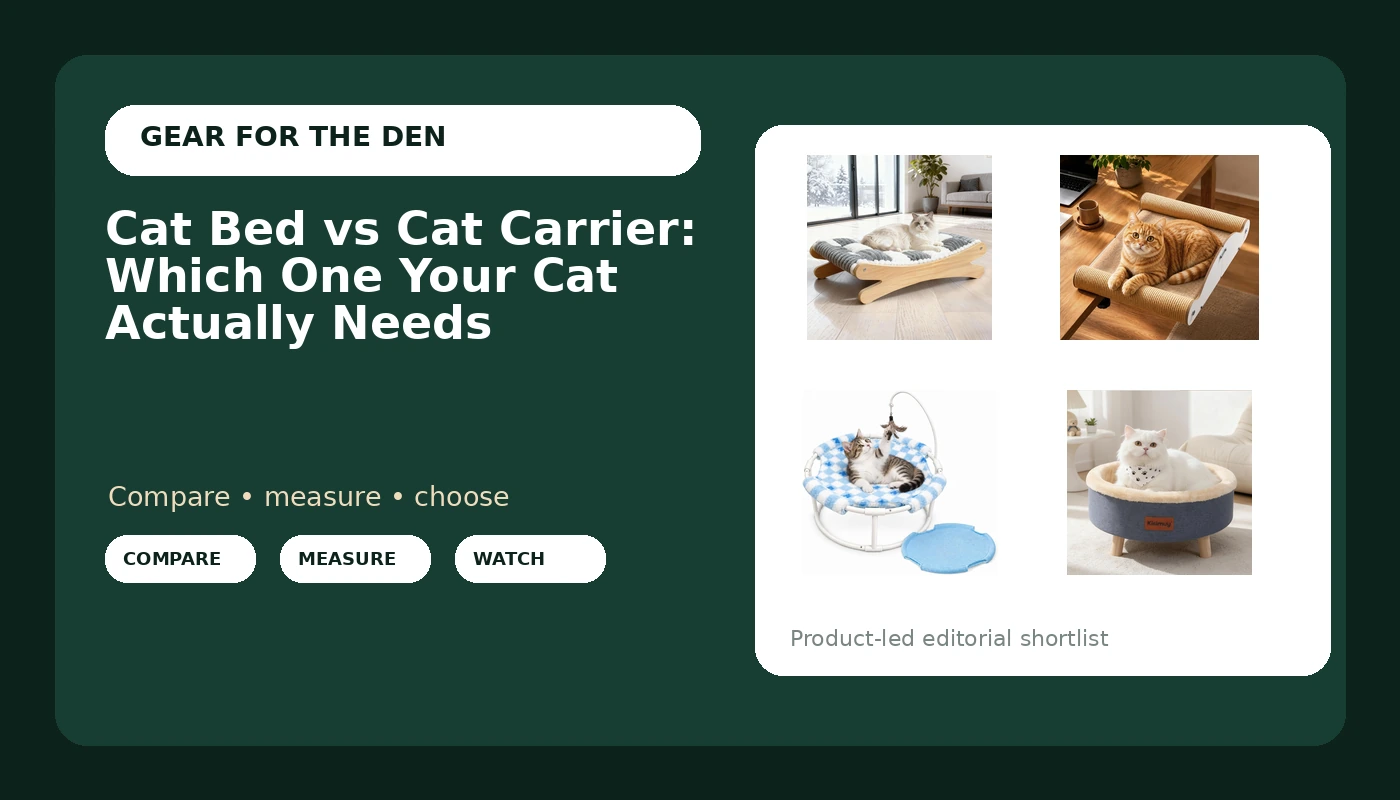
Most people who type cat bed vs cat carrier into a search bar are not confused about what the two objects look like. They are trying to work out which purchase fixes the problem in front of them: a cat that sleeps on the floor, on the windowsill, or across your keyboard at three in the morning, or a cat with a vet appointment on Tuesday and no safe way to get there. The two products answer different questions, and buying the wrong one costs money and floor space either way. If the honest answer is a bed, the four elevated beds below are the shortlist worth reading, and each one solves a slightly different problem in a slightly different room.
The best buy for most indoor cats here is the Chngeary plush elevated cat bed, because a solid wood frame and a soft furry cushion cover the everyday case without borrowing any of your desk. That is the short answer. The longer answer depends on whether your cat wants height, proximity to you, or a round perch it can curl into, and on whether you have a desk edge free for a clamp. A carrier is still the right purchase if your cat has no safe travel box, but a carrier is not a bed, and no cat has ever chosen to nap in one.
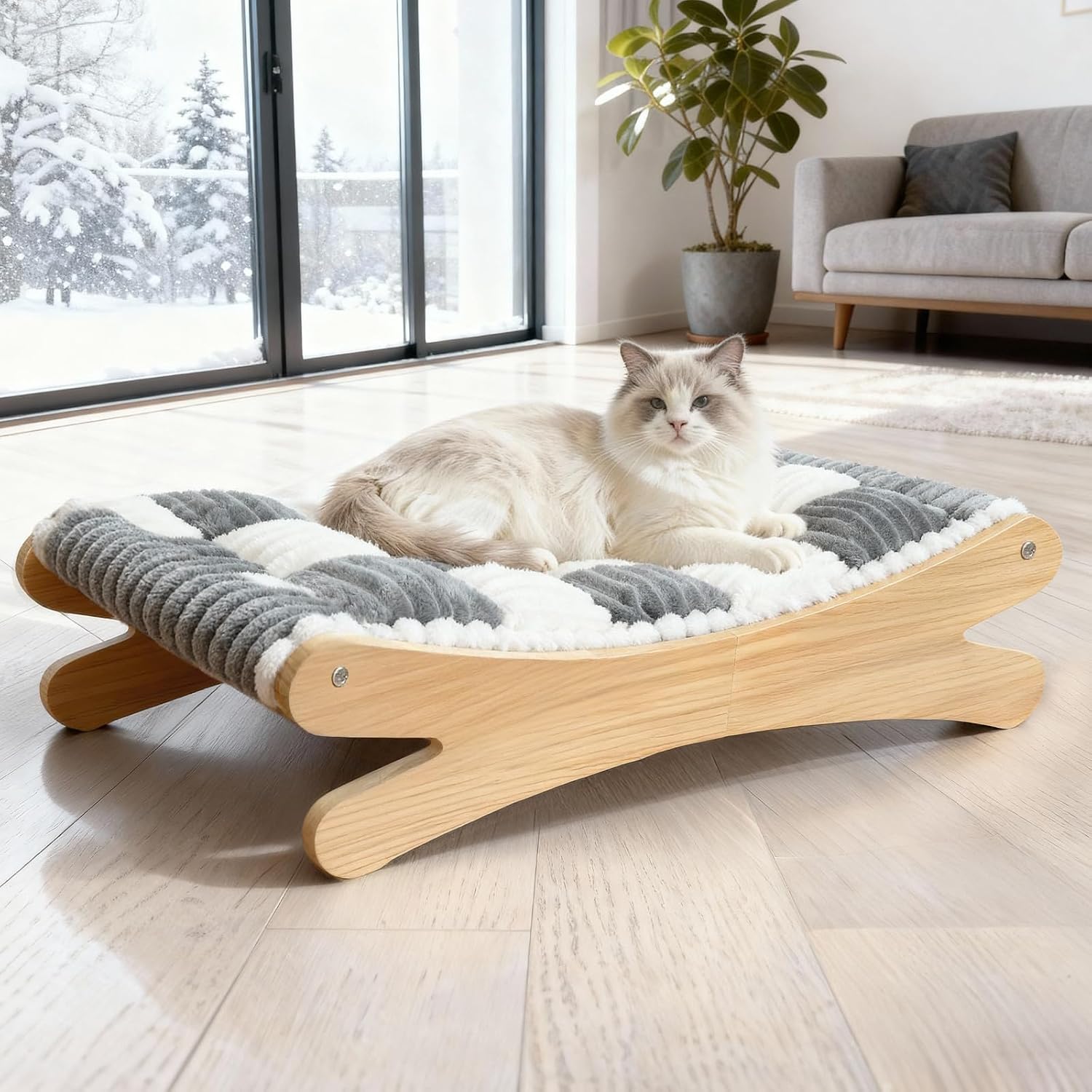
Chngeary Plush Elevated Cat Bed – Cozy Raised Cat Hammock with Solid Wood Frame, Soft Furry Cushion for Indoor Cats & Small Dogs, Multi-Color Options(Black White)
Solid wood frame and a soft furry cushion, and it reads as furniture in a living room
Floor space is gone, and the furry cushion needs brushing
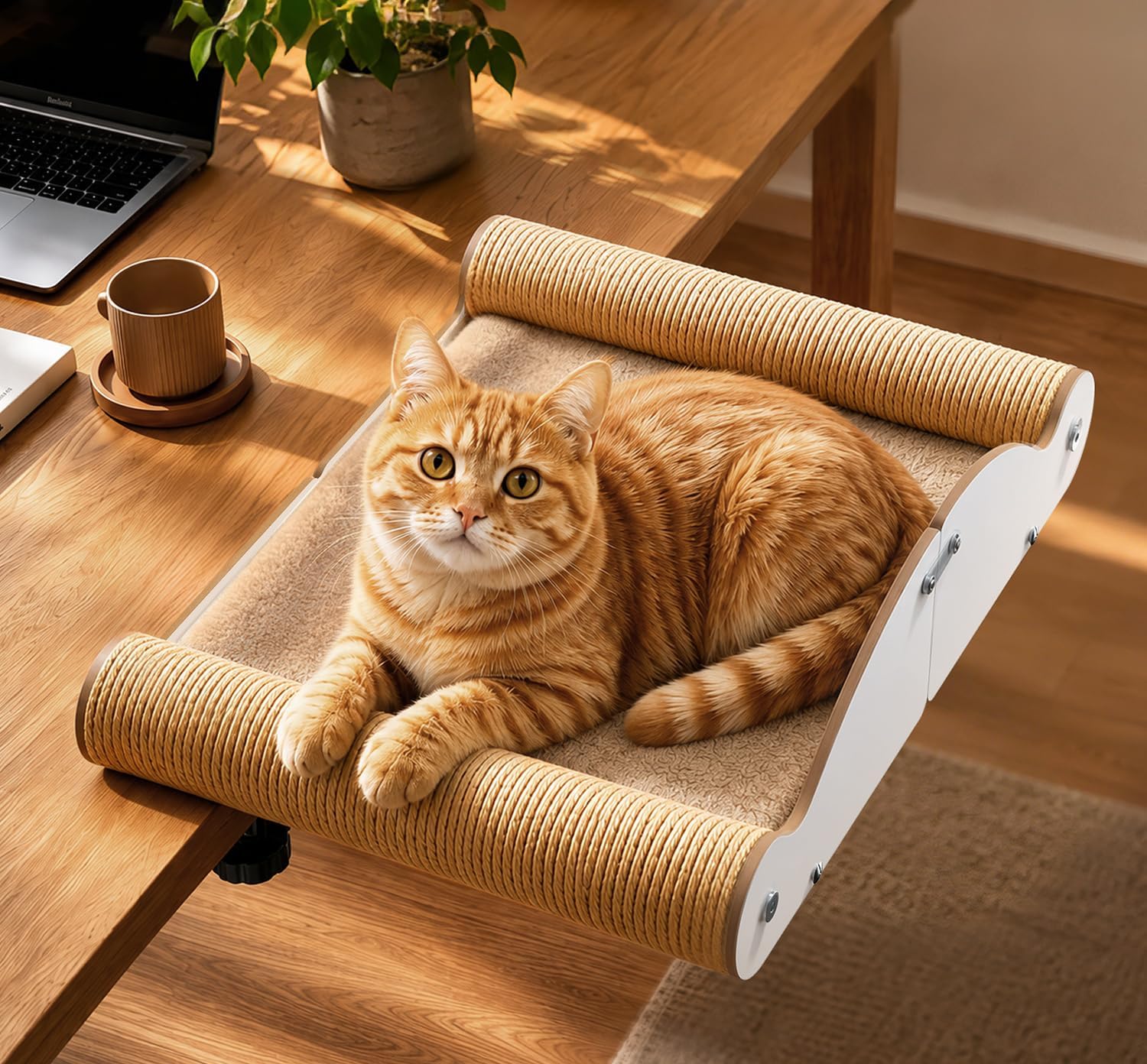
Cat Desk Bed, Double-Clamp Cat Bed with Cushion, Supports Up to 50LBS,Brown
Clamps to a desk so the cat is next to you, and it lists support up to 50 pounds
Needs a clampable edge and gives up your desk surface
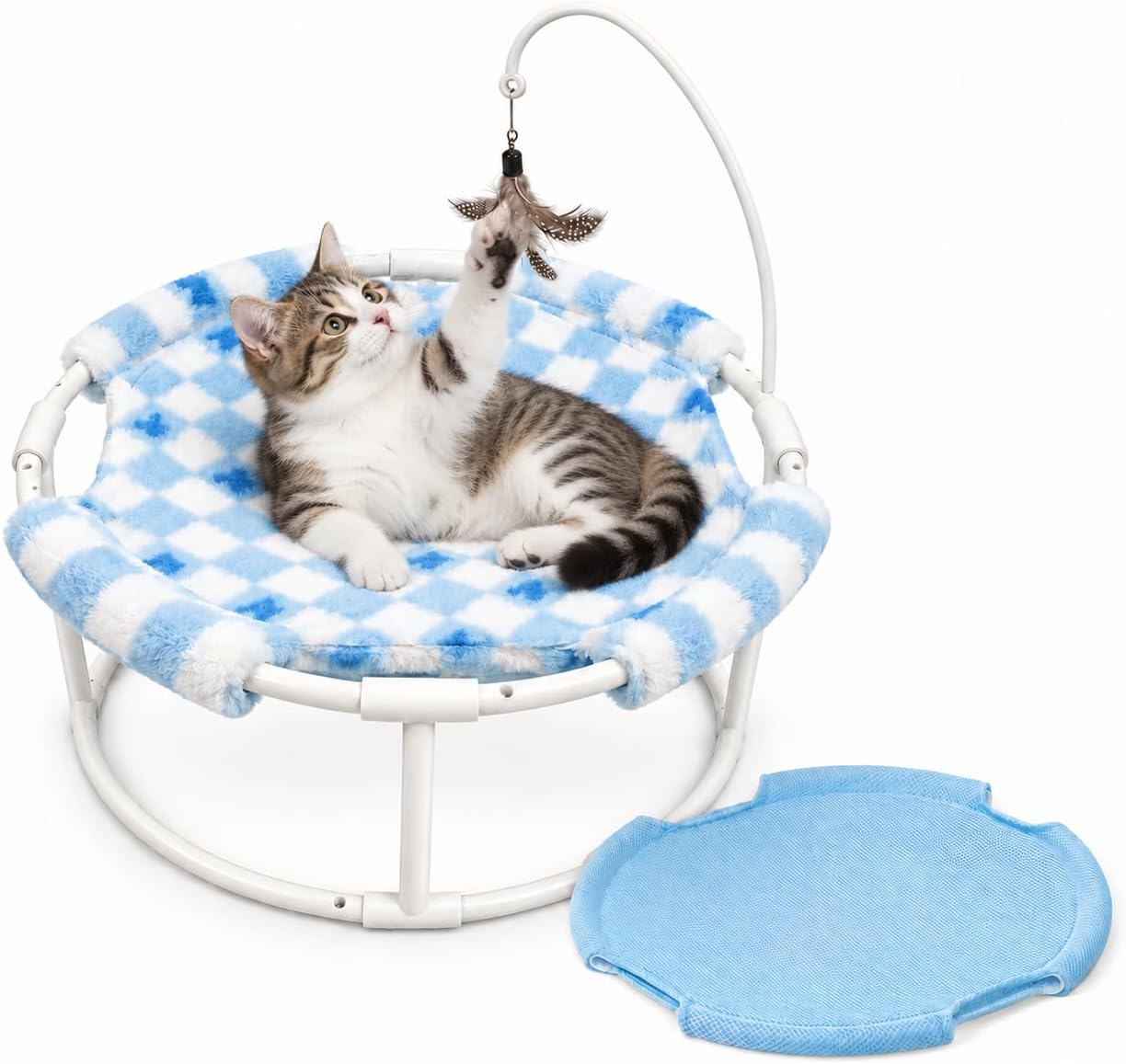
Cat Hammock Bed with 2 Reversible Mats, 19-Inch Elevated Cat Bed, Interactive Feather Teaser Toy, Stable Round Frame for Indoor Cats and Kittens
19-inch round frame, two reversible mats, plus an interactive feather teaser toy
The round sling perch is tight for a large cat that likes to stretch out
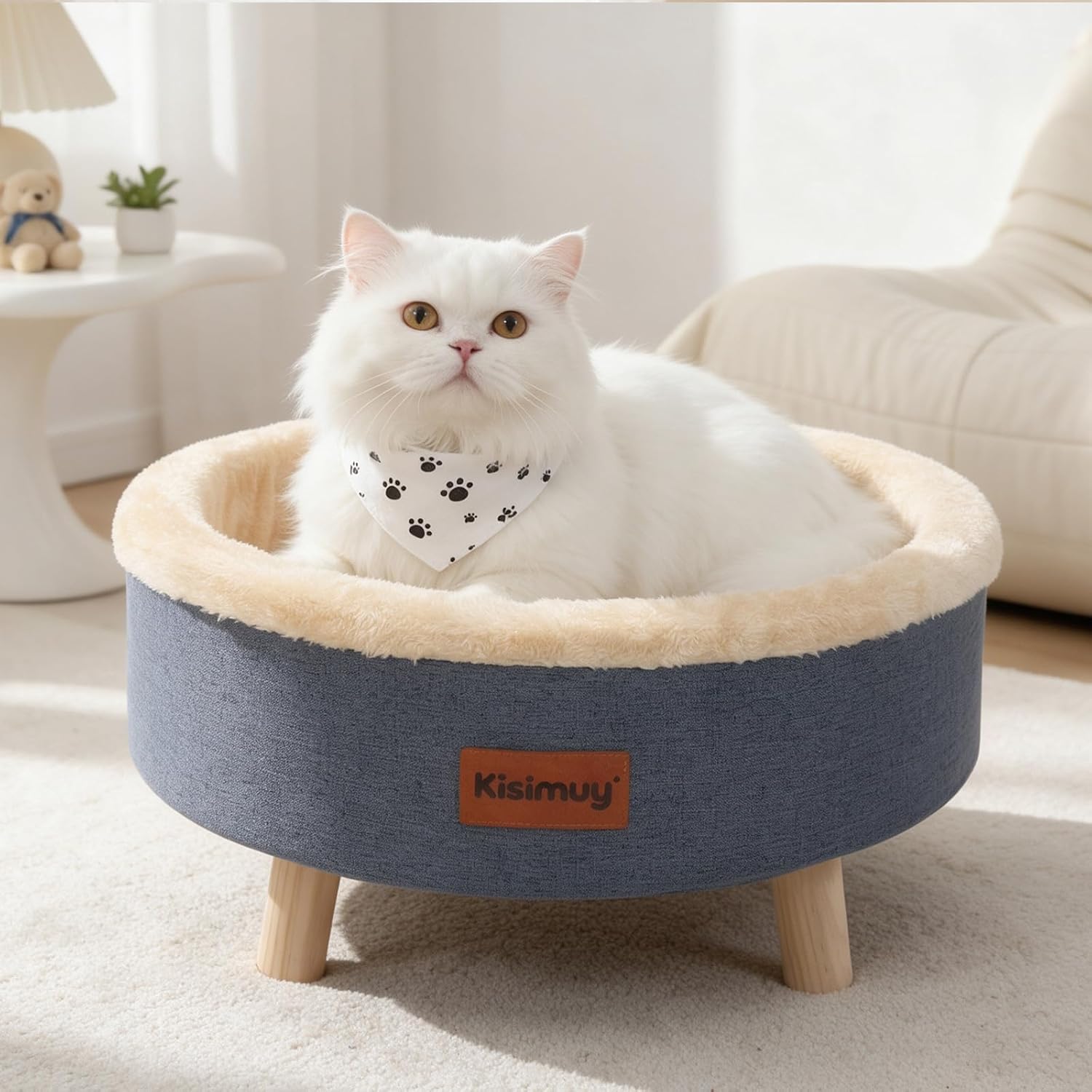
KISIMUY Raised Cat Bed Wooden for Kittens, Cute Cat Couch with Cushion
Small wooden couch profile that suits kittens and smaller cats
Too small for a big adult cat
Prices and availability may change.
How the cat bed vs cat carrier decision actually works
A cat bed is furniture. It lives in one spot, it is bought for comfort, and its job is to give a cat a warm, raised, defensible place to sleep. A cat carrier is transport. It is bought for safety, and its job is to get a cat through a car ride and a waiting room without either of you losing your composure. That is the cat bed vs cat carrier split in two sentences, and nearly every buying mistake comes from blurring it. Owners who buy a carrier because it looks like a little bed end up with a box the cat avoids. Owners who buy a bed and hope it will double as a travel crate end up carrying an armful of wobbly wood into a clinic.
The practical test is what happens if the cat refuses the item. If a bed is refused, you have lost a corner of a room and some money, and the cat goes back to sleeping on your laundry. If a carrier is refused, you have a real problem on the morning of the appointment, because carrier size and door design matter at exactly the moment you have no time to argue with a cat. Beds are comfort purchases that improve daily life. Carriers are safety equipment that gets used a few times a year. Treat them with the seriousness each one deserves.
That is why this comparison spends most of its length on beds and uses the carrier as a reference point. If you already own a carrier your cat fits in and enters without a wrestling match, you do not need a second one. What you may need is a bed that gets your cat off the floor, out of your chair, or off the kitchen counter, and that problem has four very different solutions in this group.
The four elevated beds, and who each one fits
All four are raised beds, which means the cat sleeps above the floor rather than in a doughnut on the carpet. They differ in how they are supported, how wide the sleeping surface is, and how much of your furniture they borrow. None of them is a carrier, and none of them is meant to be carried.
The Cat Desk Bed, Double-Clamp Cat Bed with Cushion is the odd one out, and the one that solves a problem the others cannot. It mounts with two clamps on a desk or table edge, and the listing rates it for cats up to 50 pounds, which is more cat than most people own. It is the pick for the cat that wants to be within arm's reach while you work, and it is also the pick for a household with no free floor space at all. The trade-offs are real: it needs an edge it can grip, the shelf depth limits how much cat can sprawl, and once it is clamped to your desk, it is on your desk. If your cat is a shoulder cat or a keyboard cat, that is the point.
The Cat Hammock Bed with 2 Reversible Mats is the flexible option. It is a 19-inch elevated bed on a stable round frame, and it ships with two reversible mats plus an interactive feather teaser toy. The round frame and sling-style perch suit a cat that curls, and the spare mat is genuinely useful, because hammock fabric collects hair and a second surface means you can wash one without taking the bed out of service. The trade-off is perch width: a big cat will hang over the edges of a round sling, and a cat that likes to stretch out flat will prefer a shelf.
The Chngeary Plush Elevated Cat Bed is the one that looks like furniture. The frame is solid wood, the cushion is a soft furry pad, and the black and white finish reads as a piece of a living room rather than a pet product. It is the safest recommendation in this group for a household where the bed is going to sit in plain sight. The thing to check before buying is the post diameter of the legs and the overall footprint, because a wooden frame earns its stability from the width of its base, and a narrow base on a hard floor is the classic recipe for a bed that slides.
The KISIMUY Raised Cat Bed Wooden for Kittens is the smallest and the most couch-like of the four. It is a wooden raised bed with a cushion, aimed at kittens and smaller cats, and the lower profile suits a cat that is not ready for a high perch. If you have a large adult cat, look at the wider options first. If you have a kitten, this is the gentler introduction to sleeping off the floor.
What actually matters: platform height, weight limit, and anchor type
Strip out the marketing and four specs decide whether a raised bed gets used: platform height, the weight limit, the anchor type, and how wide the perch is.
Platform height is the first thing to think about. A cat that has never used a raised bed will usually accept a low platform first and move up later. Starting with a high perch is how you end up with a bed that stays empty for a month while the cat sleeps in a cardboard box beside it.
The weight limit is the spec people skip. The desk bed lists support up to 50 pounds, which is generous for a single cat, but a clamp-mounted bed also depends on what it is clamped to. Two cats on one clamp is a different load than one cat, and the anchor type is doing the work.
Anchor type separates these four beds cleanly. The desk bed hangs from clamps. The hammock bed and the two wooden beds stand on legs. A frame bed with a wide base and a thick post diameter is far less likely to wobble when a cat lands on it than a thin-legged version, and wobble is what makes a cat abandon a bed after two attempts. If a bed moves when the cat jumps on, the cat learns not to jump on.
Perch width and shelf depth decide whether the bed fits the cat you have. A round hammock suits a curler. A flat shelf with real shelf depth suits a stretcher. Measure your cat from nose to tail base while it is asleep, add a couple of inches, and compare that number to the platform before you order. Then consider the sleeping surface itself: hammock fabric gives a sling effect that some cats love and others distrust on sight, while a plush cushion feels more like furniture and is easier to brush clean. The hammock bed here ships with two reversible mats, which is the practical answer to fabric that collects hair, and the desk bed and both wooden beds rely on a removable cushion you can wash.
Where a carrier still wins
The difference between cat bed and cat carrier is not size or price. It is who controls the location. A bed is a place the cat chooses to be. A carrier is a place the cat is put. That single difference explains why a cat that sleeps sixteen hours a day on a cushion will fight a carrier with everything it has, and it is the reason a carrier should be introduced weeks before you need it rather than on the morning of a vet visit.
Carrier size is the spec that decides how long that fight lasts. A carrier should be big enough for the cat to stand, turn around, and lie down, and no bigger than that. An oversized carrier sounds kind, but in a moving car it lets the cat slide on every turn, which is worse for the cat and worse for the driver. Buy the size that fits your cat, and leave the carrier out in the room with the door open so it becomes furniture rather than a trap.
The other case where a carrier wins outright is a move or an emergency. A bed is useless when you have to carry a cat down a stairwell, and a cat that has never been in a carrier is a cat you cannot move safely. That is the honest argument for owning one even if your cat never leaves the apartment.
The trade-offs, honestly
Search cat carrier vs cat bed and you will find plenty of pages that treat the two as competing options for the same budget. They are not competing. A bed earns its place every day. A carrier earns its place on the two days a year you need it. Judging them against each other on daily use is unfair to the carrier, and judging them on emergency readiness is unfair to the bed.
So if you are choosing between a cat bed or cat carrier for a single cat in a small apartment, buy the carrier first if you do not own one, then buy the bed. If you already own a carrier that fits, buy the bed. That order is boring and it is correct.
The trade-offs inside the bed group are the interesting ones. The desk bed buys proximity at the cost of your desk and a clampable edge. The hammock bed buys a round, low-commitment perch and a spare mat at the cost of a fabric surface that collects hair. The Chngeary buys the best-looking frame and the most furniture-like cushion at the cost of floor space. The KISIMUY buys a small, kitten-friendly couch at the cost of headroom for a large adult cat.
Nothing here is a mistake. Each of these four is a reasonable purchase for the right cat in the right room, and the wrong purchase for a cat with different habits. The cat decides, and the cat decides in about three days.
What I would buy, and what to check next
Ranked for the average indoor cat: the Chngeary first, the desk bed second if you work from home, the hammock bed third as the flexible option, and the KISIMUY for kittens and small cats. That ranking is about fit, not about which product is better in the abstract.
Before you order, measure three things: the floor or desk space you are willing to give up, the height your cat already chooses to sleep at, and the cat itself from nose to tail base. Those three numbers eliminate half the catalog before you read a single review, and they are the difference between a bed that gets used and a bed that becomes a laundry basket.
If you are setting up for more than one cat, work through the Multi-Cat Household Setup Guide before you add a second bed to a house that already has four sleeping spots, because the second bed is usually the one that gets ignored.
The last word goes to the carrier, because it is the part people postpone. If your cat does not have one, that purchase comes before any of the beds on this page. If it does, pick the bed that matches the room you actually have, set it at a height your cat can reach today, and let the cat take it from there.