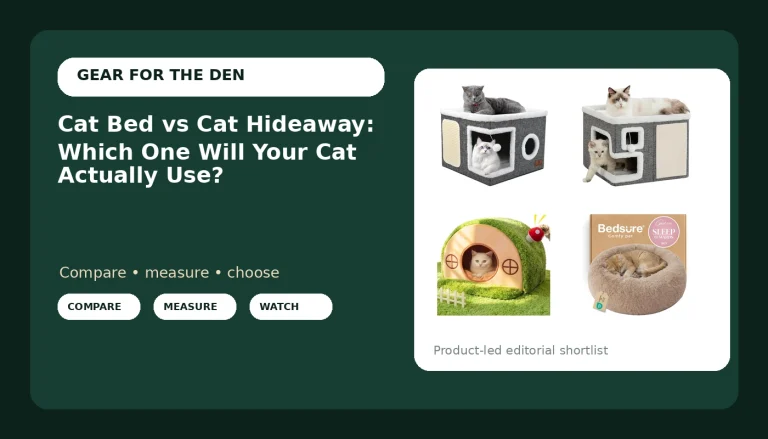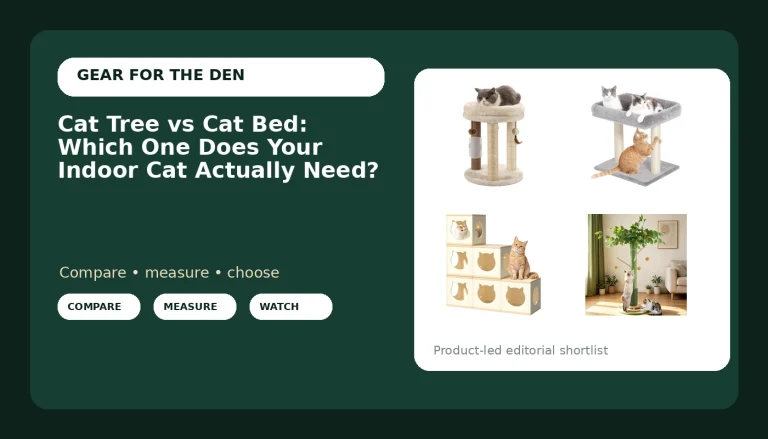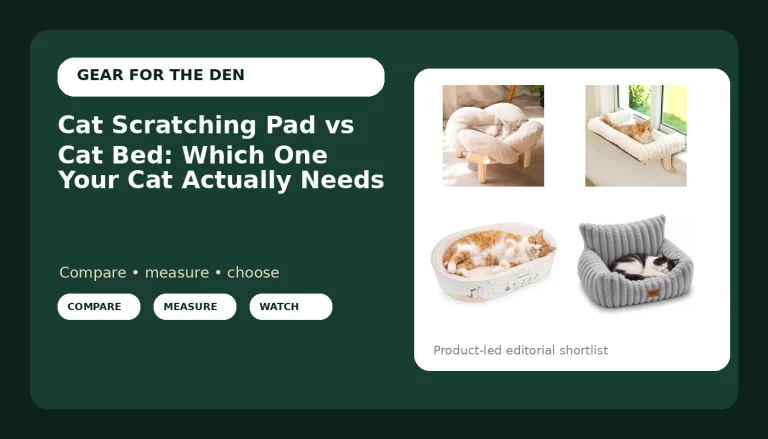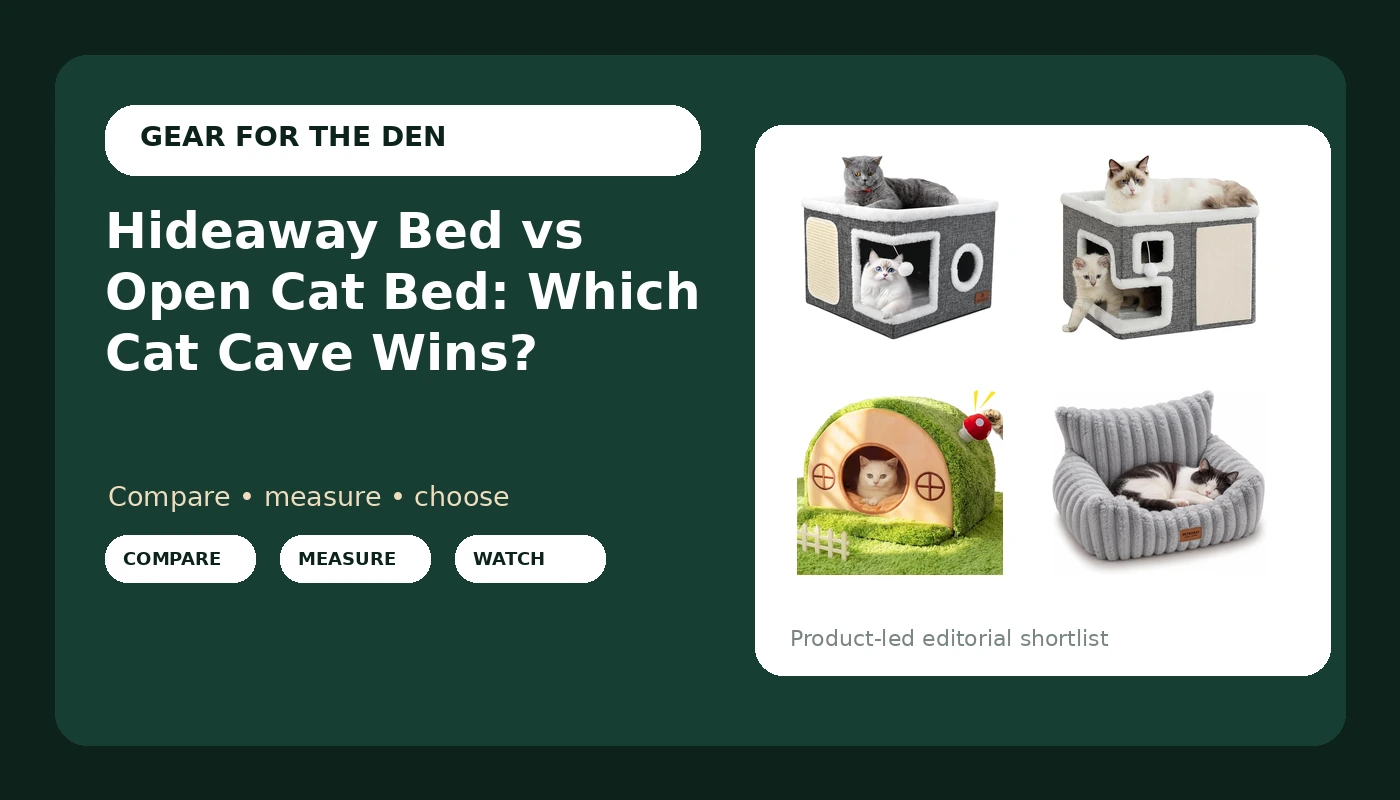
A hideaway bed vs open cat bed is the first real decision most cat owners face once the kitten phase ends and the sleeping spots start migrating around the house. One is a cave: walls, a roof, and a single small opening. The other is a flat or gently cupped surface with no lid at all. The names make them sound like two versions of the same object. They are not. The choice changes how warm your cat sleeps, whether a second cat can share the spot, how much floor the bed eats, and how often you are pulling hair off fabric. This comparison works through the hideaway bed vs open cat bed question with four specific pieces of gear: three covered caves and one open sofa-style bed, all sized for the same corner of a living room.
For most single-cat homes, the Crispedia covered cave is the safest first buy because it is the cleanest cave shape of the three at a mid price. The PETKARAY couch bed is the better second buy, and the only one of the four that will not trap heat in summer. That is the short answer. The long answer involves entry height, interior depth, washability, and what happens when two cats want the same spot at 2 a.m.
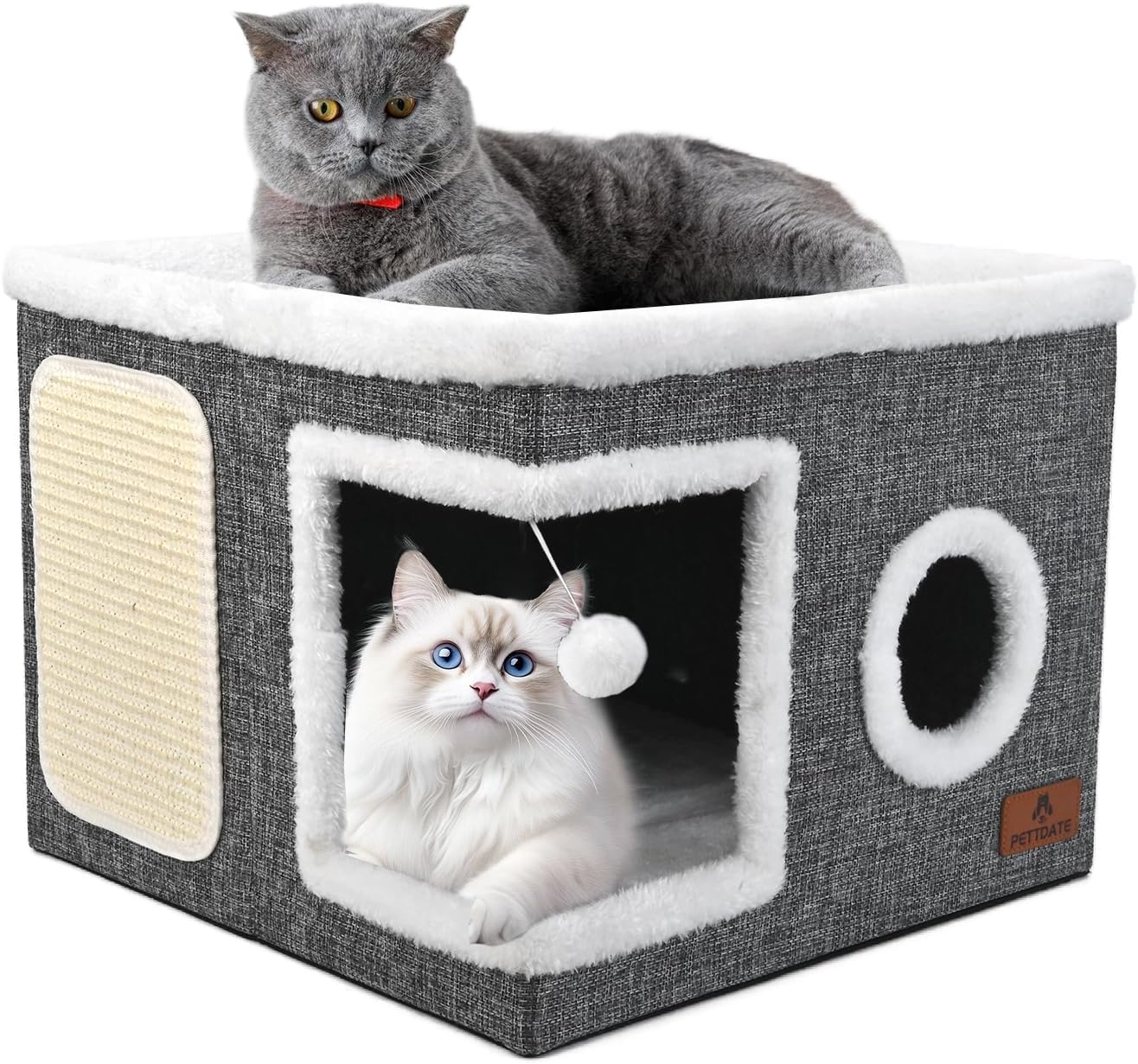
Large Cat Cave Bed, Foldable Cat Hideaway, Grey
Cheapest of the four, folds flat, reversible cushion, stated weight limit up to 30 lbs
Fold lines never sit quite flat, and grey plush shows every hair
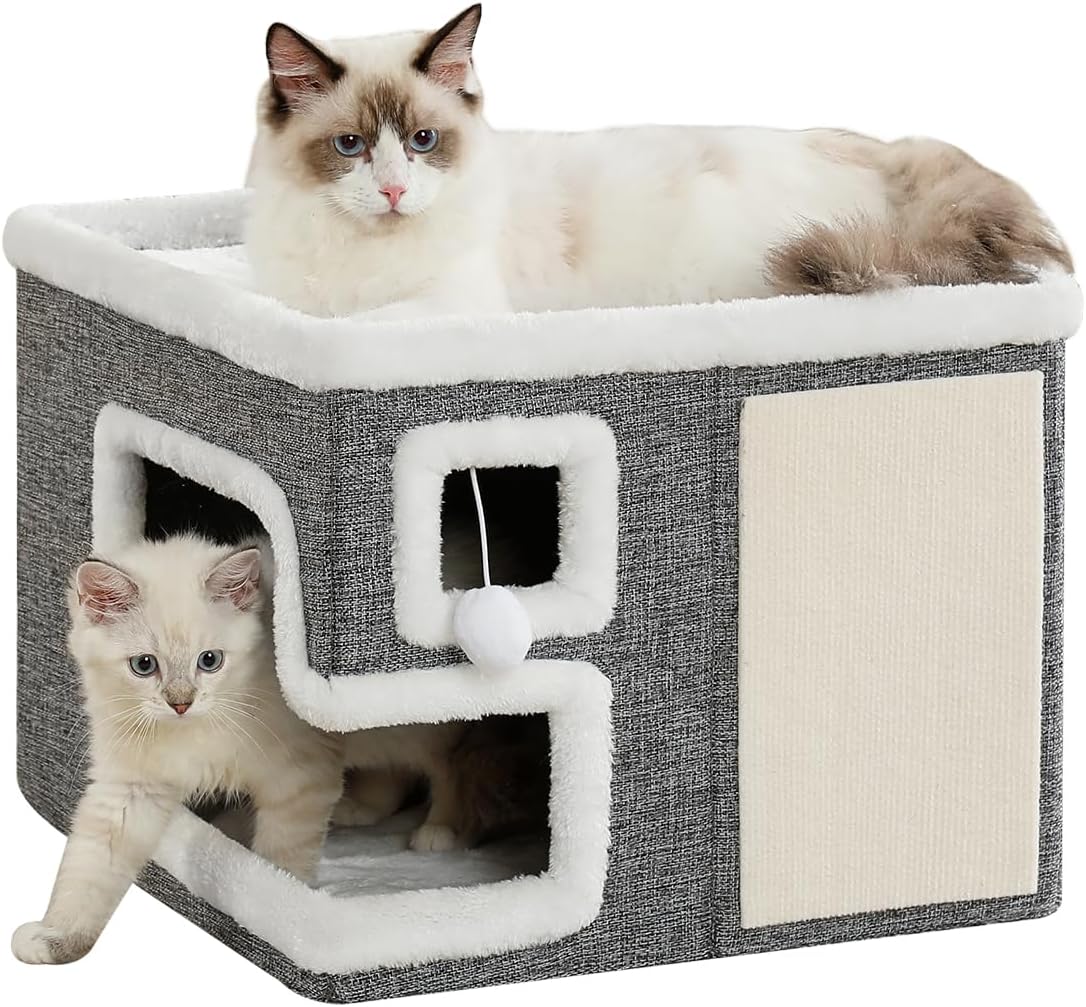
Crispedia Covered Cat Bed Cave
Cleanest cave shape of the three hideaways, scratch pad at the entry
No stated weight limit, so a big cat is a guess
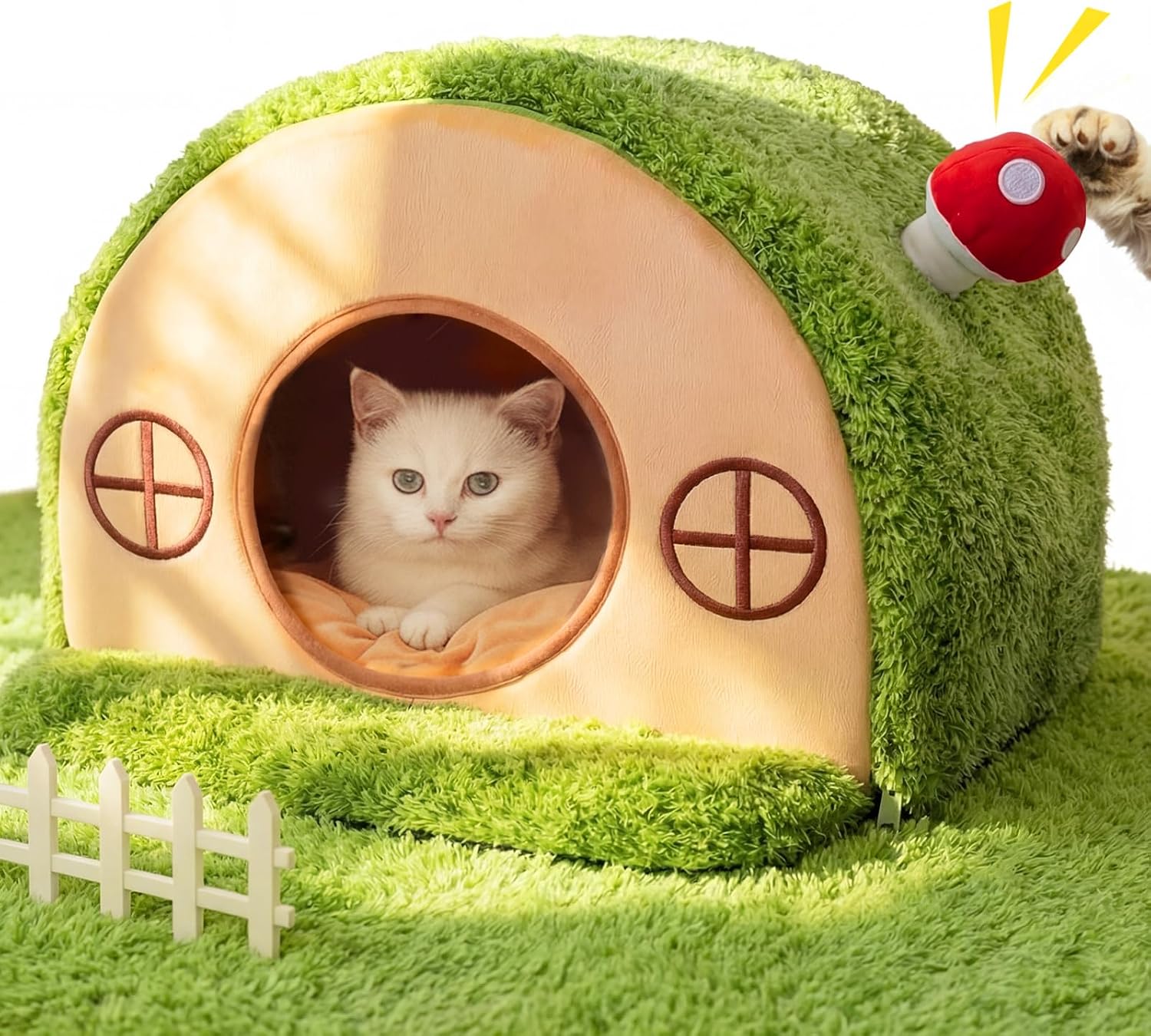
Mellownido Tree Hole Cat Bed Cave
Tree hole shape reads as furniture, small opening holds warmth
Most expensive hideaway here and the tightest interior
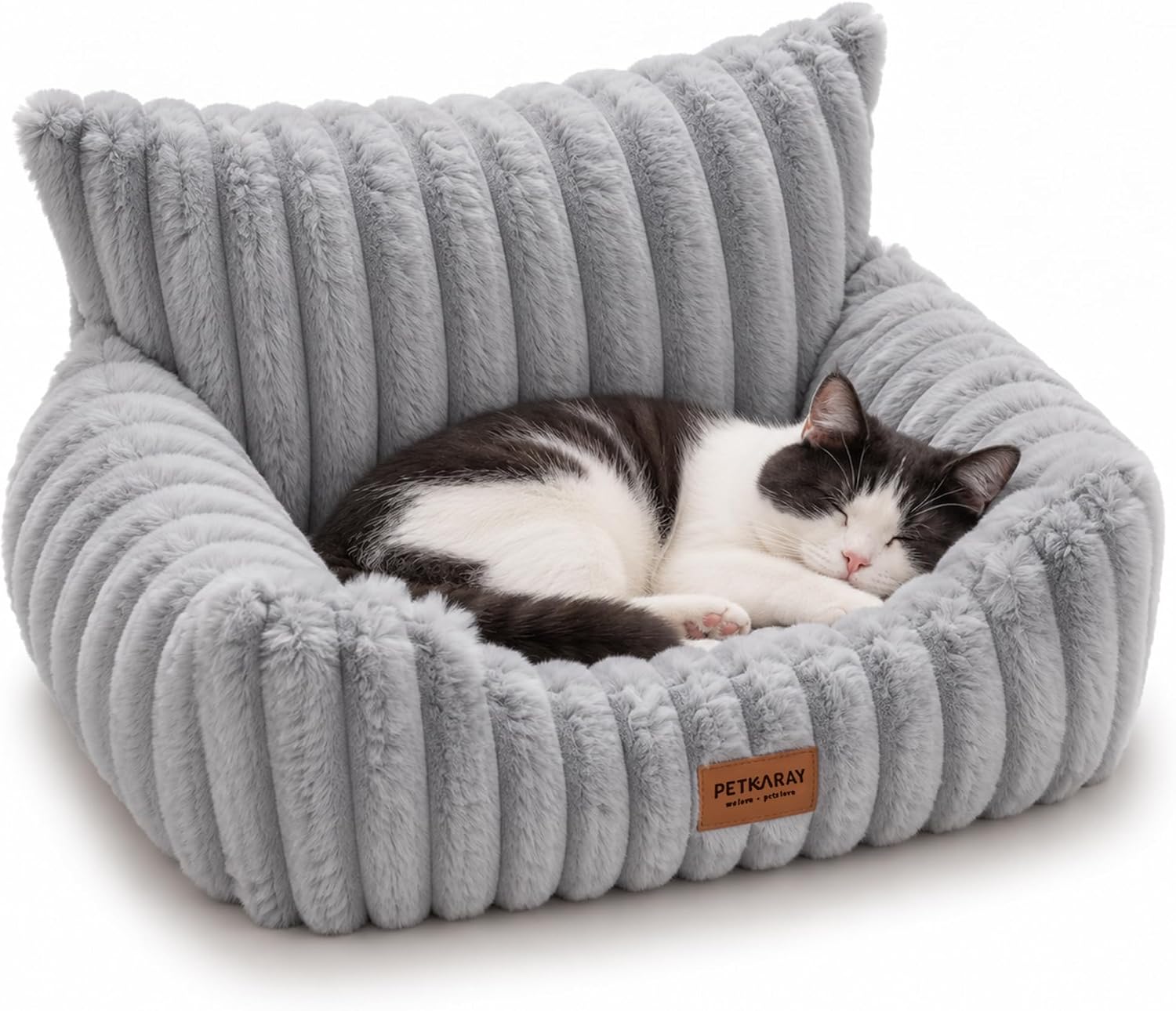
PETKARAY Cat Couch Bed, 24 Inch
Only machine washable pick, open 24 inch sofa shape, no trapped heat
No walls, no privacy, first bed to get contested
Prices and availability may change.
What a hideaway bed vs open cat bed decision comes down to
Enclosure is the whole difference. A hideaway wraps the cat on four sides with one opening. The Mellownido tree hole, the Crispedia cave, and the foldable grey cave all do this, and enclosure does three things at once: it traps body heat, it blocks sightlines from the rest of the room, and it leaves a single doorway your cat can watch while it sleeps. An open bed does the opposite on all three counts. The PETKARAY couch bed gives a cat a raised lip to lean against and nothing above it.
The useful question is not which one is better. It is which one matches the way your cat already sleeps. Cats that curl tight, tuck a nose under a paw, or claim the back of a closet are telling you they want walls. Cats that sleep stretched out, belly up, or draped over the arm of your sofa are telling you they want a flat surface with a view of the door. Watch for a week before buying. That week costs nothing, and it usually settles the hideaway bed vs open cat bed question on its own.
The three covered caves, and where they separate
All three hideaways here ship with a scratch pad at the entry, which is the most underrated feature in the category. A scratch pad at the mouth of a cave gives the cat a reason to walk over, and cats that scratch next to a bed tend to sleep in it.
The Mellownido Cat House for Indoor Cats – Tree Hole Cat Bed Cave Hideaway is the design piece of the group. The tree hole shape and the small opening make it look like furniture rather than pet gear, and that small opening is genuinely good at holding warmth. The trade-off is interior room. A large cat may not be able to turn around inside, and this is the most expensive of the three hideaways.
The Crispedia Cat Houses for Indoor Cats, Covered Cat Bed Cave with Scratch Pad sits in the middle. The shape is the cleanest of the three: a defined cave with a straight entry and a scratch pad built into the approach, no extra toys, no folding panels. If you want a first hideaway and you have no strong opinion beyond that, this is the one I would start with.
The Cat Beds for Indoor Cats, Large Cat Cave Bed with Scratch Pad and Fluffy Ball, Foldable Cat Hideaway, Cat House with Reversible Cushion for Multi Small Pet Up to 30LBS, Grey is the practical pick. It folds flat when you need the floor back, the cushion reverses, and it is the only one of the four with a stated weight limit, which the listing puts at up to 30 lbs. The cost of that folding design is the seams: fold lines never sit perfectly flat, and a cat that likes a taut surface will notice.
What the open bed gets right
The PETKARAY Cat Couch Bed, 24'' Soft Sofa for Indoor Cats, Machine Washable is the only open bed in this group and the only machine washable one. That second point matters more than the first. A cave is a fabric box that collects hair, dander, and dust on every interior wall, and a bed you can strip and wash is a different ownership experience from one you have to spot clean.
Open beds also suit the cats a cave fails. Older cats with stiff joints often stop stepping into an enclosed bed long before they stop sleeping. A 24 inch sofa shape with a low lip is easy to walk onto and easy to lie across. Hot sleepers, and cats in a warm apartment in July, get no benefit at all from trapped body heat.
The cost is everything the caves provide: privacy, warmth, and an exit to guard. If you have a nervous cat, a dog, or a toddler, an open bed in the middle of the room is the most exposed place in the house.
The difference between hideaway bed and open cat bed in a multi-cat house
The difference between hideaway bed and open cat bed shows up fastest when there is more than one cat. A single-entry cave is a one-cat object. A confident cat that parks in the doorway can block a shy cat out of the warmest spot in the room, and the shy cat has no second way in or out. That is not a reason to avoid caves. It is a reason to count them.
The working setup in a two-cat house is one cave per cat plus one open bed. The caves give each cat a defended sleeping spot. The open bed is neutral ground: no doorway to guard, no wall to be cornered against, so it is where cats end up when they are not sure about each other yet. If you are short on floor space, one cave and one open bed covers more situations than two caves.
Size, weight limit, and the numbers worth checking
Four numbers decide whether a bed works, and none of them is the one on the label.
Platform height, meaning how high the cat has to step to get in, matters most for older cats. A cave with a high entry lip is a wall to a cat with sore joints.
Shelf depth, meaning the usable floor inside the cave, decides whether a cat can stretch out. The Mellownido interior is the clearest example: a beautiful object with less usable floor than its outside suggests.
Weight limit is stated on exactly one product here, the foldable cave at up to 30 lbs. For the other three, treat the limit as unstated and judge the frame by feel rather than by the photo.
Perch width and the rim matter on an open bed. A 24 inch sofa with a firm lip gives a cat something to lean against, while a soft lip collapses under a heavy cat.
Two more are worth a look. Post diameter on the scratch pad decides whether the pad wobbles when a cat leans into it, and anchor type decides whether the bed slides across hardwood the first time your cat launches out of it. If you travel with the bed, measure its footprint against your carrier size before you assume it fits.
Cleaning, fabric, and the cost of hair
Fabric choice is where these four separate after a month. The grey foldable cave is the clearest example: a mid grey plush shows every white hair and every bit of litter dust, so it looks tired faster than a darker bed.
Hammock fabric and woven covers shake clean and dry quickly. Plush and faux fur hold hair down in the pile and need a rubber brush or a vacuum attachment. The PETKARAY couch bed is machine washable, which resets the clock every time. For the caves, check whether the cushion comes out and whether the shell can be wiped. The reversible cushion in the foldable cave is the friendliest of the three on that front.
One small note: the foldable cave ships with a fluffy ball toy. Check the stitching on any attached toy before you leave it in the bed, and cut it off if it looks loose.
Hideaway bed or open cat bed: choosing in ten minutes
Run this list before you decide between a hideaway bed or open cat bed. If your cat curls tight, sleeps under furniture, or startles at noise, choose a hideaway. If your cat sleeps belly up, follows you from room to room, or is over ten years old, choose an open bed. If your house has two cats, choose one of each. If you have a dog or a toddler, choose a hideaway with a small opening and put it against a wall. If your home is warm year round, an open bed will get more use than any cave.
For most people reading this, the Crispedia cave is the first purchase and the PETKARAY couch bed is the second. That combination covers a shy cat and a confident cat in the same room, and neither one takes up much floor.
Open cat bed vs hideaway bed: the case for owning both
An open cat bed vs hideaway bed argument usually ends the same way once you have both in the house: the cave wins in winter and the open bed wins in summer. Cats move with temperature and mood, and a single bed only ever serves one of those.
The floor space objection is real but smaller than it sounds. A cave footprint and a 24 inch sofa can share one corner if you layer them: cave against the wall, open bed in front of it, scratch pad facing out. The cat picks the layer it wants, and you stop moving furniture around.
What to watch next
The category is moving toward washable covers and reversible cushions, which is the right direction, because a cave is only as good as its third month of hair. I would like to see stated weight limits on more covered beds, since "large cat" means something different in every house, and I would like to see more caves with a low entry lip for older cats. Until then, match the bed to the cat you have, not the cat on the box.