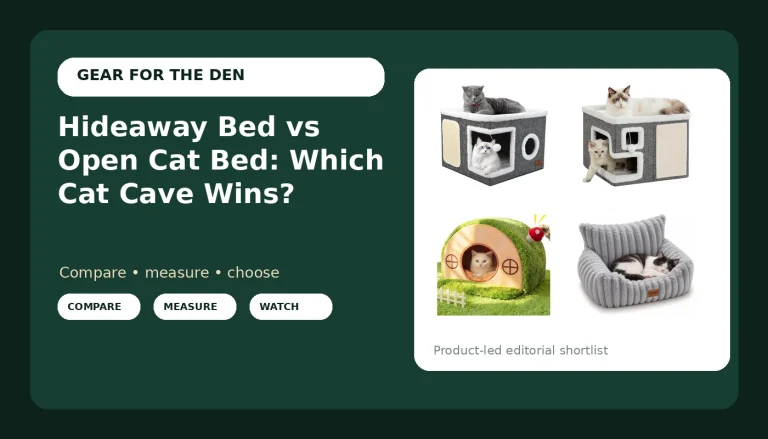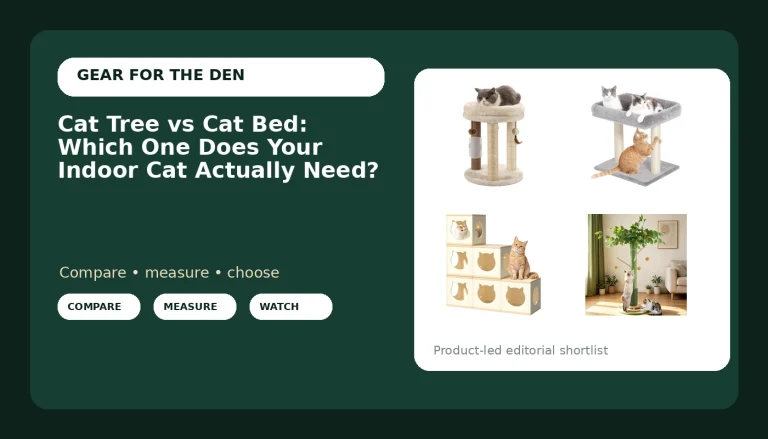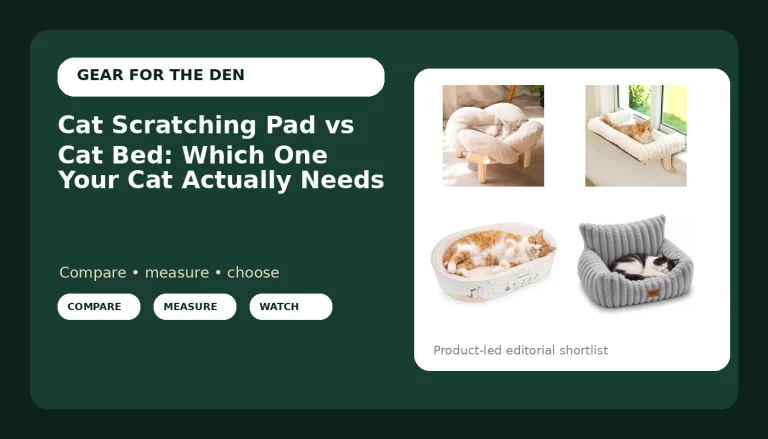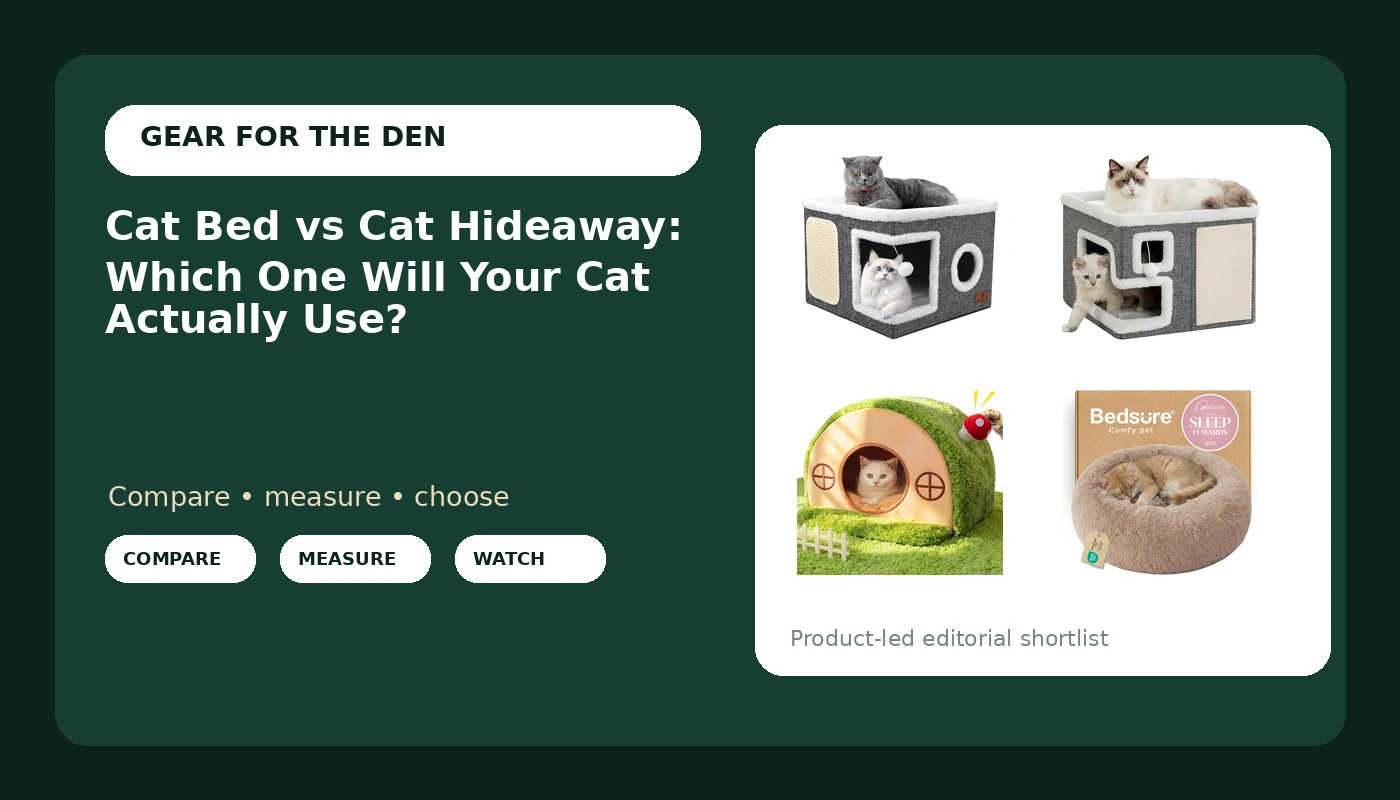
Choosing between a bed and a cave is one of the few cat gear decisions that genuinely changes how often the thing gets used. This cat bed vs cat hideaway comparison covers four options that sit in the same general band on Amazon, and the real differences come down to exposure, structure, and how much floor space the product quietly claims. A cat that sleeps sprawled in the middle of the living room is a different animal from the cat that spends every evening under the sofa.
I keep two rules for this category. Comfort beats novelty, because a bed that looks like a spaceship but never gets used is just furniture. And the material has to survive a wash cycle, because a cat bed that cannot be cleaned is a cat bed with a short working life.
The short answer: the large foldable cave with the scratch pad and reversible cushion is the strongest all-rounder here, because it works as both an open lounger and a covered hideaway, and it carries the highest stated weight limit of the four. The donut bed is the better buy for a cat that sleeps in the open and hates walls. The two smaller caves suit kittens, seniors, and any cat that already spends its day inside a box.
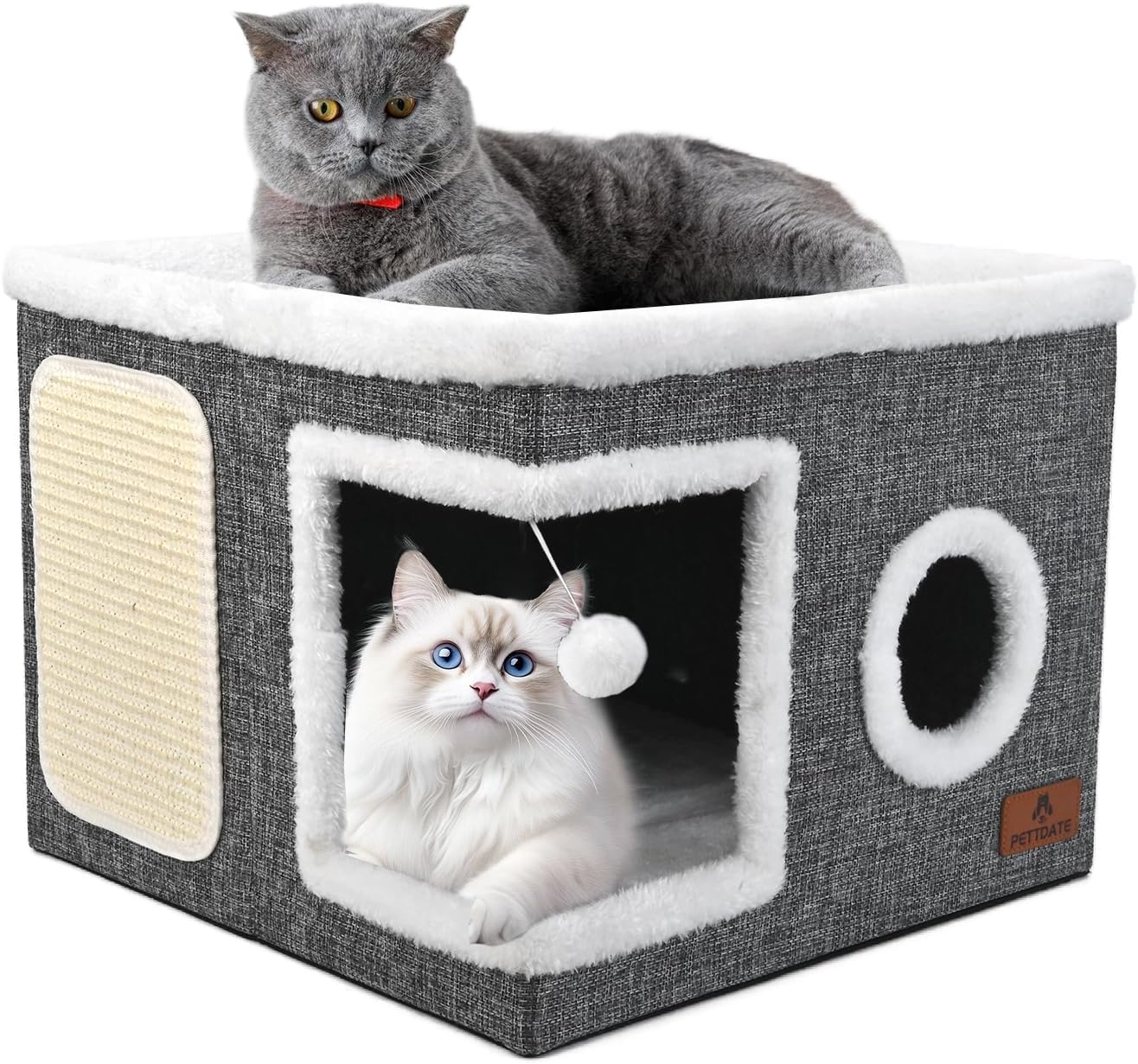
Cat Beds for Indoor Cats, Large Cat Cave Bed with Scratch Pad and Fluffy Ball, Foldable Cat Hideaway, Cat House with Reversible Cushion for Multi Small Pet Up to 30LBS, Grey
Highest stated weight limit of the group, reversible cushion, scratch pad gives it a second job, folds flat
Fabric shell needs spot cleaning and a folding frame is a rigidity compromise
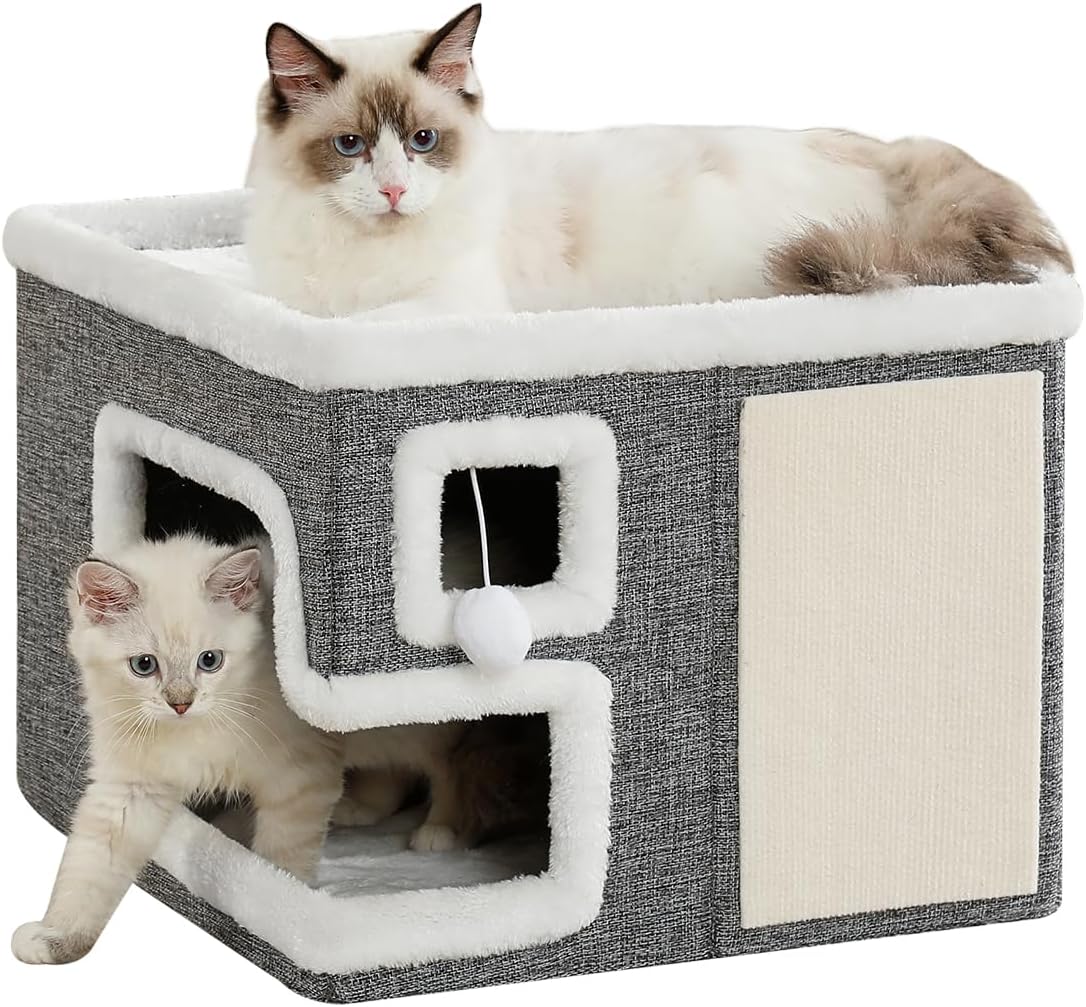
Crispedia Cat Houses for Indoor Cats, Covered Cat Bed Cave with Scratch Pad
Covered cave with an integrated scratch pad in a compact footprint
Fewest listed details, so interior dimensions need checking before you buy
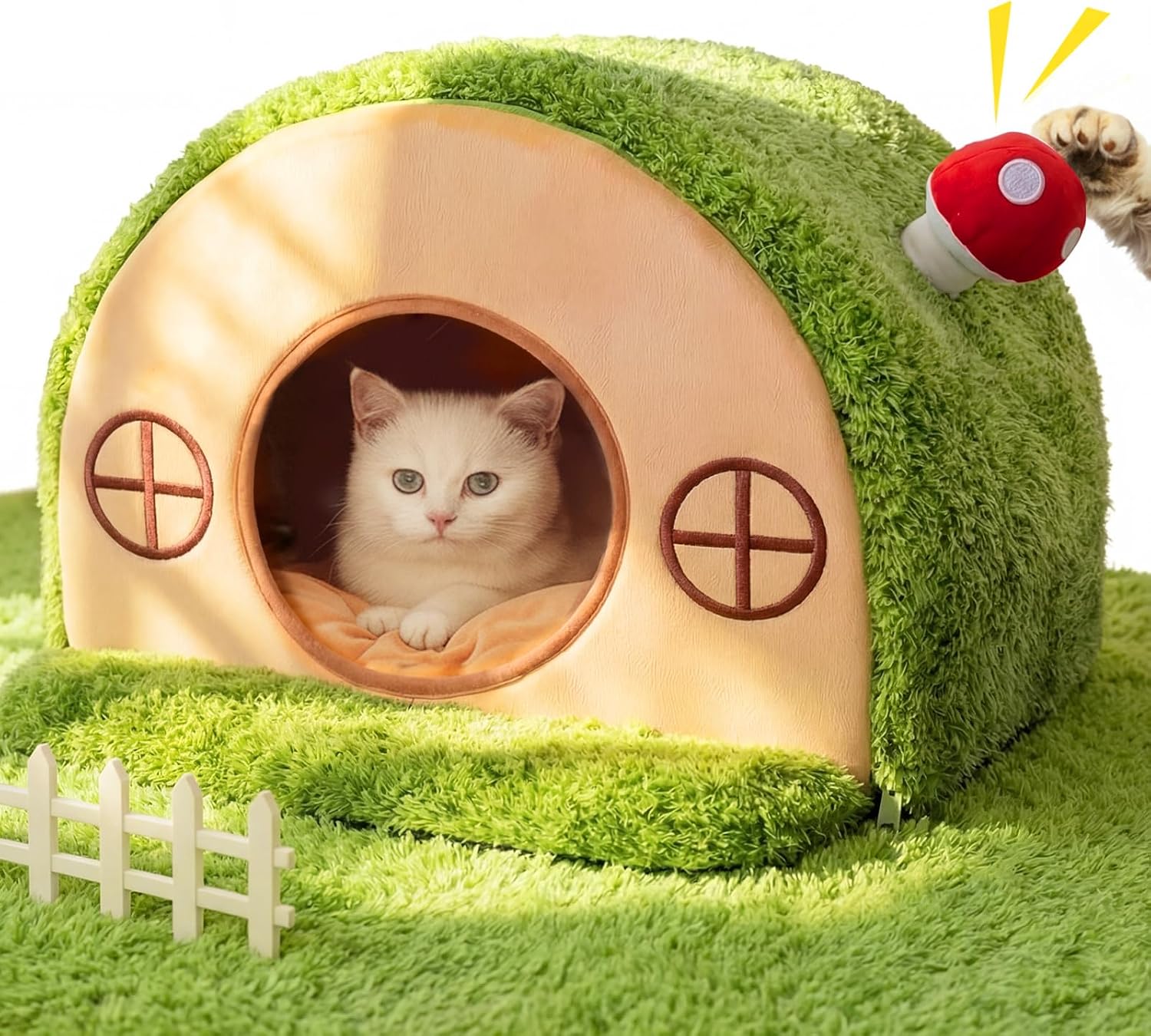
Mellownido Cat House for Indoor Cats – Tree Hole Cat Bed Cave Hideaway
Tree hole shape reads as furniture rather than pet gear, and it sits low
Single opening, and the largest footprint of the caves here
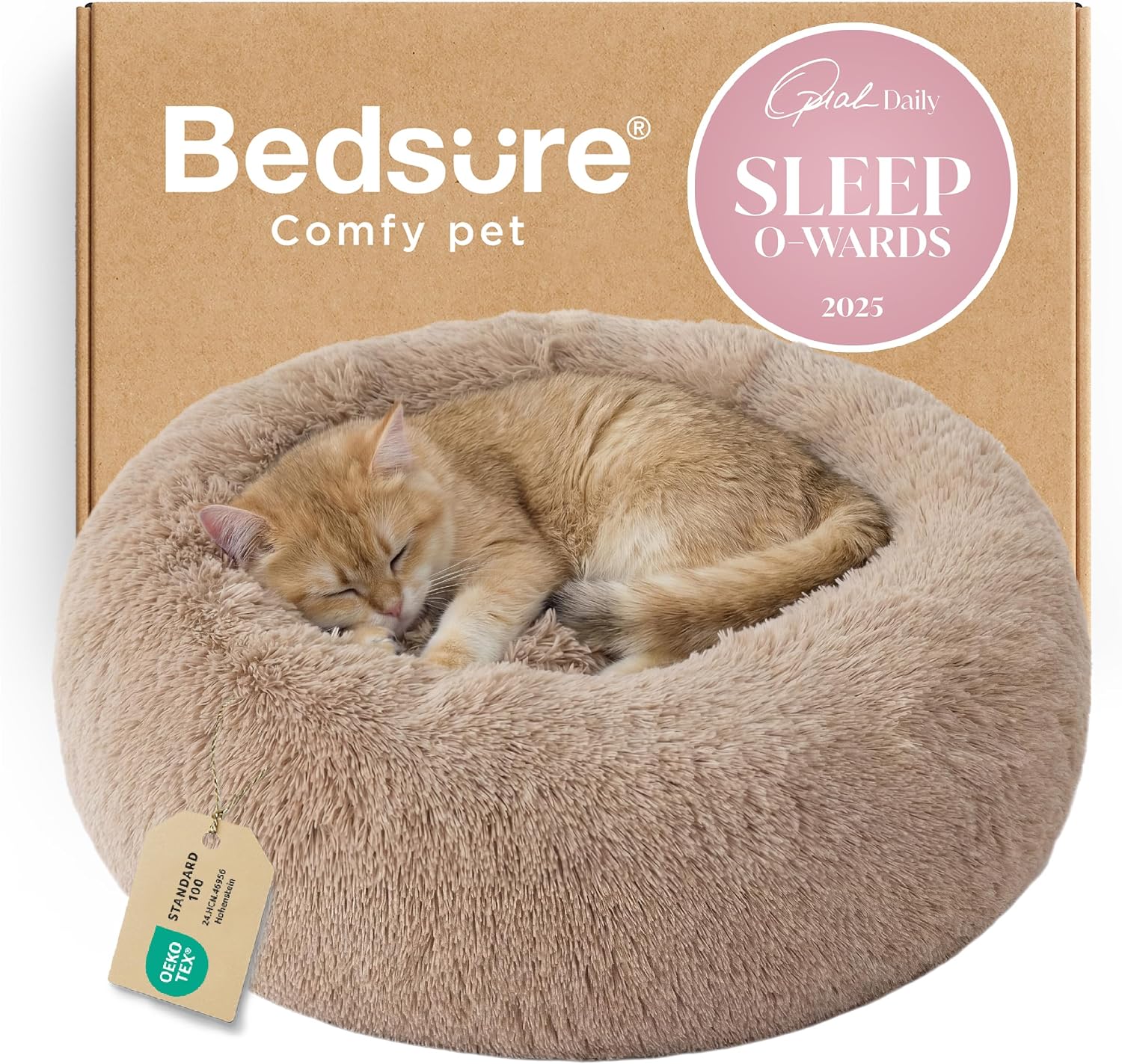
Bedsure Calming Cat Beds Donut Round Washable Kitten Bed,20 inches Camel
Simplest thing here to wash, low entry rim, round shape holds warmth
No cover at all, and 20 inches suits one average cat rather than a large one
Prices and availability may change.
How I compare these four
I look at five things, in this order. Structure first, because an open bed and a covered cave solve different problems and no amount of fabric quality fixes the wrong shape. Then footprint, since a hideaway occupies more floor than the sleeping area inside it. Then entry size, because a cave with a tight opening is a cave your cat stops using at around eight months old. Then cleaning, which means whether the cushion comes out and whether the shell can be washed or only spot cleaned. Finally, extras: a scratch pad, a reversible cushion, or a toy that gives the product a second job.
One thing worth separating out: the specs you would use to judge a cat tree are not the specs that matter here. Platform height, shelf depth, post diameter, perch width, and hammock fabric all describe climbing furniture. A hideaway is not a climbing structure, so those numbers do not transfer. What matters for a bed is interior dimensions, opening width, and whether the base slides on a hard floor, which is where anchor type or at least a grippy underside becomes relevant.
The real difference in a cat bed vs cat hideaway decision
A cat bed is a surface. A cat hideaway is an enclosure. That is the whole distinction, and everything else follows from it.
An open bed works with a cat's heat rather than against it. The donut shape in this group traps warmth around the body, and a cat that sleeps on its back with its belly in the air is telling you it already feels secure in the room. Open beds are easier to wash, easier to place, and easier for a senior cat with stiff joints to walk into, because there is no lip to step over and no wall to negotiate.
A hideaway does something an open bed cannot: it removes the cat from view. In a multi-cat home, that matters more than cushion depth. A covered cave gives a cat a way to break line of sight, which is how cats de-escalate tension without a fight. The trade-offs are real, though. Enclosed fabric runs warmer in summer, holds more hair, dries more slowly after washing, and takes up noticeably more floor space than the sleeping area inside it.
If you are trying to work out the difference between cat bed and cat hideaway for your own cat, watch where the cat sleeps now. Under furniture, behind a door, in a laundry basket with a lid: that cat wants a hideaway. On the back of the sofa, on a sunny windowsill, stretched across your legs: that cat wants a bed. And if you are comparing cat hideaway vs cat bed purely on what you have to spend, the two are closer than most people expect, which is why the decision should really be about behavior rather than budget.
Open beds: the donut style
The Bedsure calming donut bed is the straightforward pick of the group: round, 20 inches across, camel colored, and washable. Twenty inches is a one-cat bed for an average adult. A big Maine Coon will hang over the edge, and a bonded pair will argue over it.
What the donut does well is heat retention and low entry. The rim gives a cat something to lean against, and the shallow center means a senior cat does not have to climb in. It also washes like a normal piece of soft bedding, which is the single biggest argument in its favor.
What it does not do is provide cover. If your cat gets pestered by a dog or a toddler, a donut bed in the middle of the room is a trap rather than a refuge. That is the case where the cat bed or cat hideaway question answers itself: buy the cave.
Covered caves: the classic hideaway
The large grey cave bed is the most feature-dense option here. It is a foldable hideaway with a scratch pad and a fluffy ball, a reversible cushion, and a stated capacity of up to 30 pounds for a multi small pet household. Three of those details matter more than they look. The 30-pound figure is a structural claim rather than a comfort claim, and it is the highest stated limit in this group, which makes it the safest pick if you have a big cat or you want one product shared between a cat and a small dog. The reversible cushion gives you two surfaces for the price of one, and the foldable shell means you can flatten it for storage or travel.
The scratch pad is the clever part. A cave with a scratching surface near the entrance gets used by cats that would otherwise ignore a covered bed, because the product now has a job beyond sleeping. The fluffy ball is a bonus rather than a reason to buy.
The honest trade-off: fabric caves collect hair, and a folding structure is a compromise between rigidity and portability. Expect to spot clean the shell and wash the cushion.
The compact covered cave
The Crispedia covered cave bed is the smaller, simpler version of the same idea, with a scratch pad and a covered interior. Fewer features are listed, so the buying decision rests on dimensions: check the interior and the opening before you commit, because a covered bed that is too small for your cat is a covered bed your cat will ignore.
Where it makes sense is as a second sleeping spot. Two covered beds in different rooms do more for a multi-cat household than one large bed in a central spot, because they let cats separate without anyone losing access to a warm place to sleep. It is also a reasonable first hideaway for a kitten that will grow into a bigger bed later.
Tree hole style: the middle ground
The Mellownido tree hole cat bed is the design piece of the group. It reads as a hollow log rather than a pet product, sits low, and gives a cat a single rounded opening to curl up behind. It is the one here most likely to be bought for how it looks in a room.
That is not a knock. A bed that suits your living room gets placed in a good spot, and placement decides usage more than construction does. But the single-opening shape has a real drawback in a multi-cat home: one entrance means one exit, and a cat can be blocked in. In a single-cat house, or a house where the cats get along, the trade-off is fine. In a tense household, buy two caves rather than one.
What the specs do and do not tell you
A stated weight limit is a capacity claim, not a comfort claim. A 30-pound rating tells you the base will not collapse under a large cat. It does not tell you the interior is roomy for one. Similarly, 20 inches is a number you can check against how far your cat sprawls when it sleeps, and most owners overestimate that distance until they measure it.
Scratch pad listings rarely say what the pad is made of, and a cave entrance that doubles as a scratching surface is a different product from a cave with a loose cardboard insert. A reversible cushion tells you about maintenance rather than comfort, and a washable cover is worth more than any surface treatment. Words like calming and hideaway are marketing, not specifications. The two lines in a listing that actually matter are the interior dimensions and the wash instructions.
The cat bed vs cat hideaway decision rarely comes down to build quality at this level. All four of these are soft-sided products in the same general class, and none of them is going to outlast a wooden cat tree. They are consumables, and the right question is which shape your cat will use every day for the next two years.
Sizing, weight limits, and the specs that matter
Stated weight limit is the number most buyers skip and most regret skipping. A hideaway rated for a small cat will flatten under a large one, and a flattened cave stops being a cave. The grey foldable cave carries the highest stated limit here at 30 pounds. The donut bed and the two smaller caves are best treated as one-average-cat products, so measure your cat rather than guessing from the photos.
Footprint is the second spec. A covered bed occupies the space of its outer shell, not the space of the cushion inside, and a 20-inch round bed and a 20-inch cave do not feel the same in a small apartment.
Washability is the third. A removable cushion that goes in the machine is worth more than any stain-resistant coating. A shell that can only be spot cleaned will smell like cat within a season, no matter what the listing promises.
Two other things to think about while you are measuring. If the bed sits on tile or hardwood and slides when your cat jumps in, look for a grippy base or an anchor type that keeps it in place, because a sliding bed gets abandoned. And if your cat travels, remember that a hideaway is not a carrier. Carrier size is measured differently, and a soft cave that fits your living room will not fit under an airplane seat. Keep those two purchases separate.
Where a hideaway is the wrong answer
Three cases. First, a cat that already sleeps in the open and shows no interest in boxes. Second, a senior cat with arthritis, where a low, open, washable bed with a shallow rim is easier to enter and easier to keep clean. Third, a hot climate or an upstairs room that bakes in summer, because enclosed fabric holds heat.
There is also a fourth case that gets missed: a multi-cat home with a resource guarder. If one cat parks in the cave and swats at anyone who walks past, the cave is not a refuge, it is a chokepoint. Adding a second hideaway in a different room fixes that faster than any amount of training.
Multi-cat households and placement
The old rule for litter boxes works for beds too: one per cat, plus one, in separate locations with separate sight lines. Two caves in the same corner are one cave in practice, because the cat that gets there first controls the corner.
Placement matters more than the product. Put a hideaway where the cat can see a doorway and a window but does not sit directly in a traffic path. Put an open bed in a warm spot the cat already chooses. Do not wedge a hideaway under a cat tree where the lower platform's shelf depth and the perch width make it awkward to approach, because a covered bed jammed under climbing furniture gets used as a step, not a bed.
What I would buy
If you want one product for a household with a large cat or a cat plus a small dog, the large foldable cave with the scratch pad and reversible cushion is the pick, and its 30-pound stated limit is the reason.
If your cat sleeps in the open and you want the easiest thing to wash, the 20-inch donut bed is the better purchase.
If you have two cats, buy one large cave and one compact cave rather than one large cave alone. If you want the bed to look like furniture, the tree hole hideaway is worth considering, provided your cat is not being bullied out of it.
Whichever way you go on the cat bed vs cat hideaway question, buy for the cat you have rather than the cat in the listing photos. The best bed in this group is the one your cat actually sleeps in, and that is decided by shape, placement, and whether the thing can go in the wash.