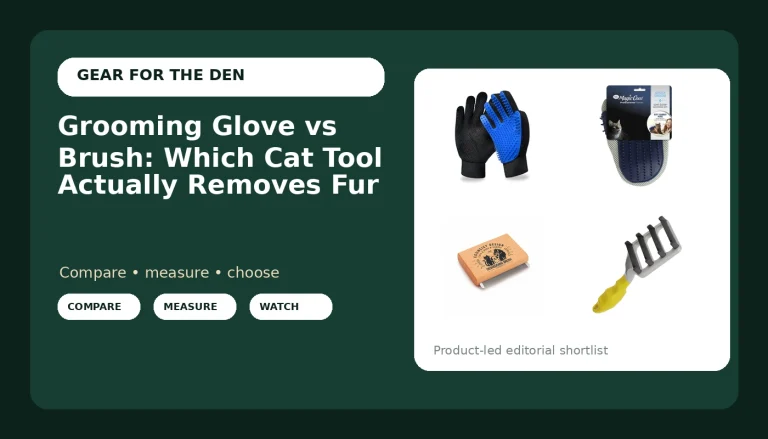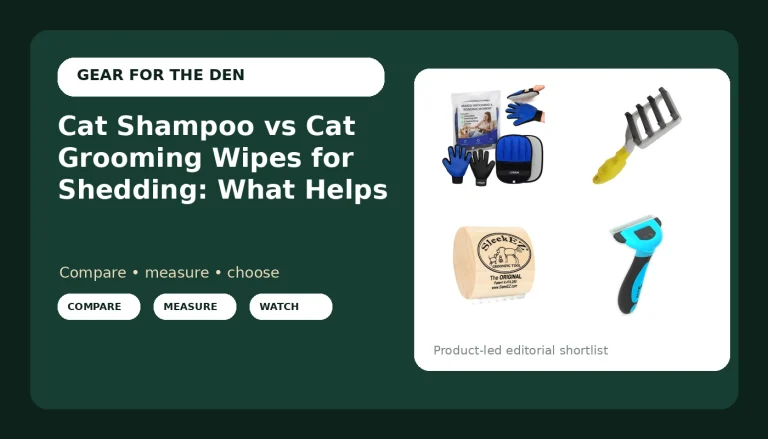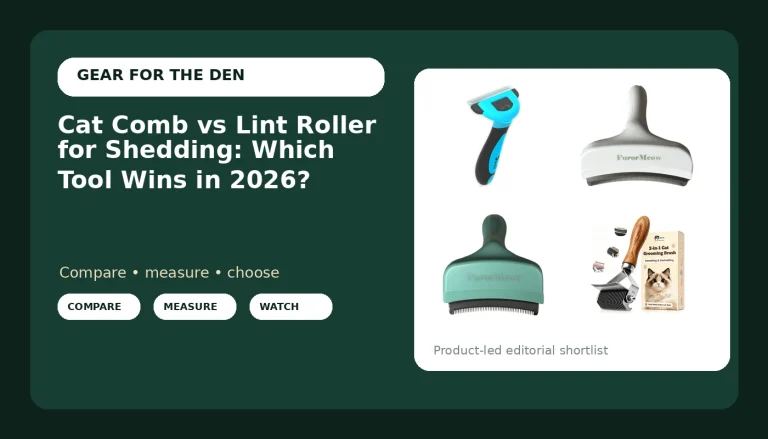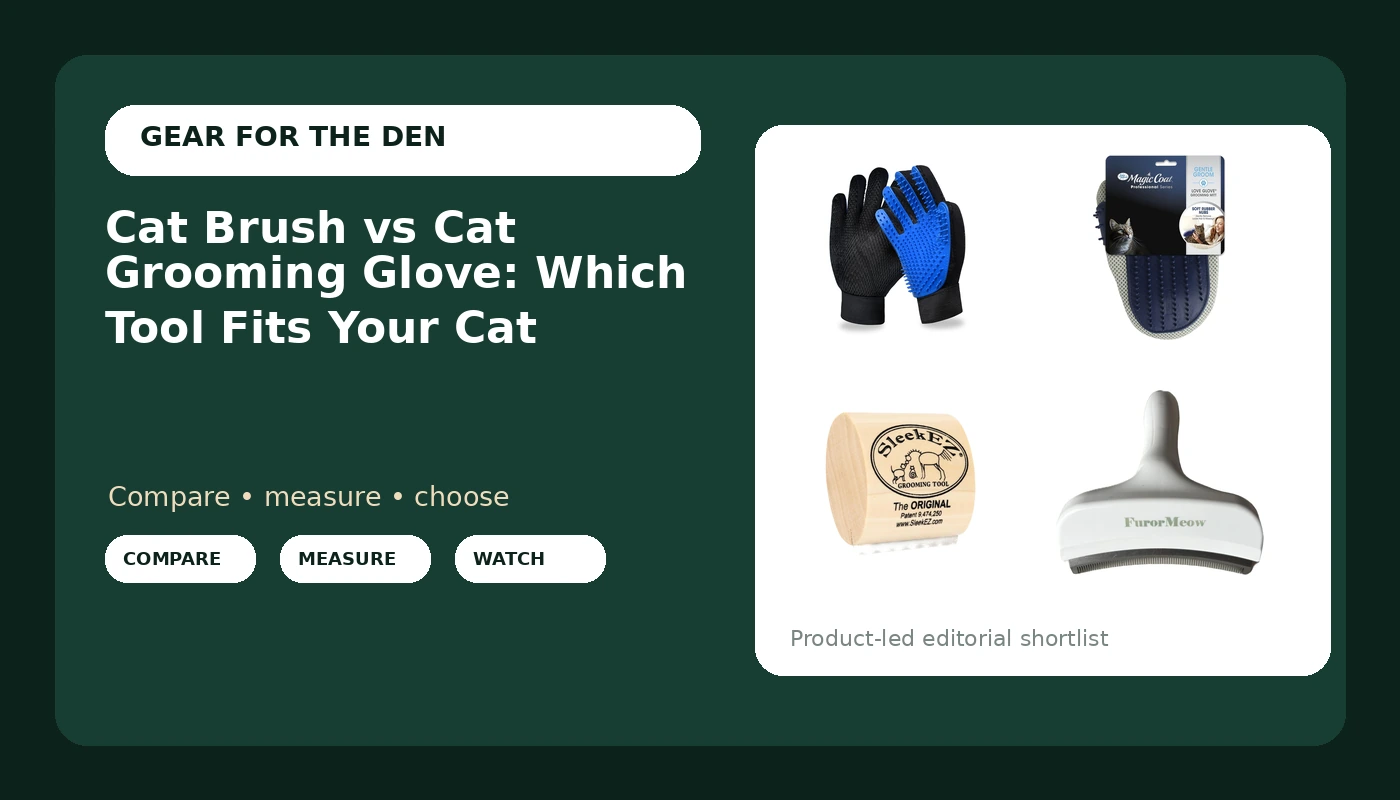
There is a point in every shedding season when the cat brush vs cat grooming glove question stops being theoretical. You are standing in the kitchen in dark trousers, holding a tool that is either matted with fur or being actively avoided by the animal it was bought for, and you start wondering whether you backed the wrong design. The two tools are not competing versions of the same product. One is a handle with teeth or a blade at the end. The other is a mitt you wear on your hand. That difference in shape changes how much hair comes off, how long a session lasts, and whether your cat walks away or disappears under the sofa.
This comparison puts four tools side by side: two rubber grooming gloves and two handled deshedding tools. Between them they cover the two main designs on the market, and they answer most of the questions people actually ask. Does a glove pull enough hair to matter? Does a blade hurt? Which one is easier to clean? What do you do with a cat that hates both? The answers depend less on branding than on coat length, tolerance for handling, and how much loose undercoat your cat is carrying into the session.
For most cats, a handled deshedding tool should be the first purchase, because it reaches the undercoat where loose hair collects, and a grooming glove is the better second purchase for cats that will not tolerate a handle near their flanks. That is the short version. The longer version involves bristle type, comb spacing, glove fit, and an honest look at what each design can and cannot do on a real cat.
Here is how the four tools compare on the things that decide the purchase.
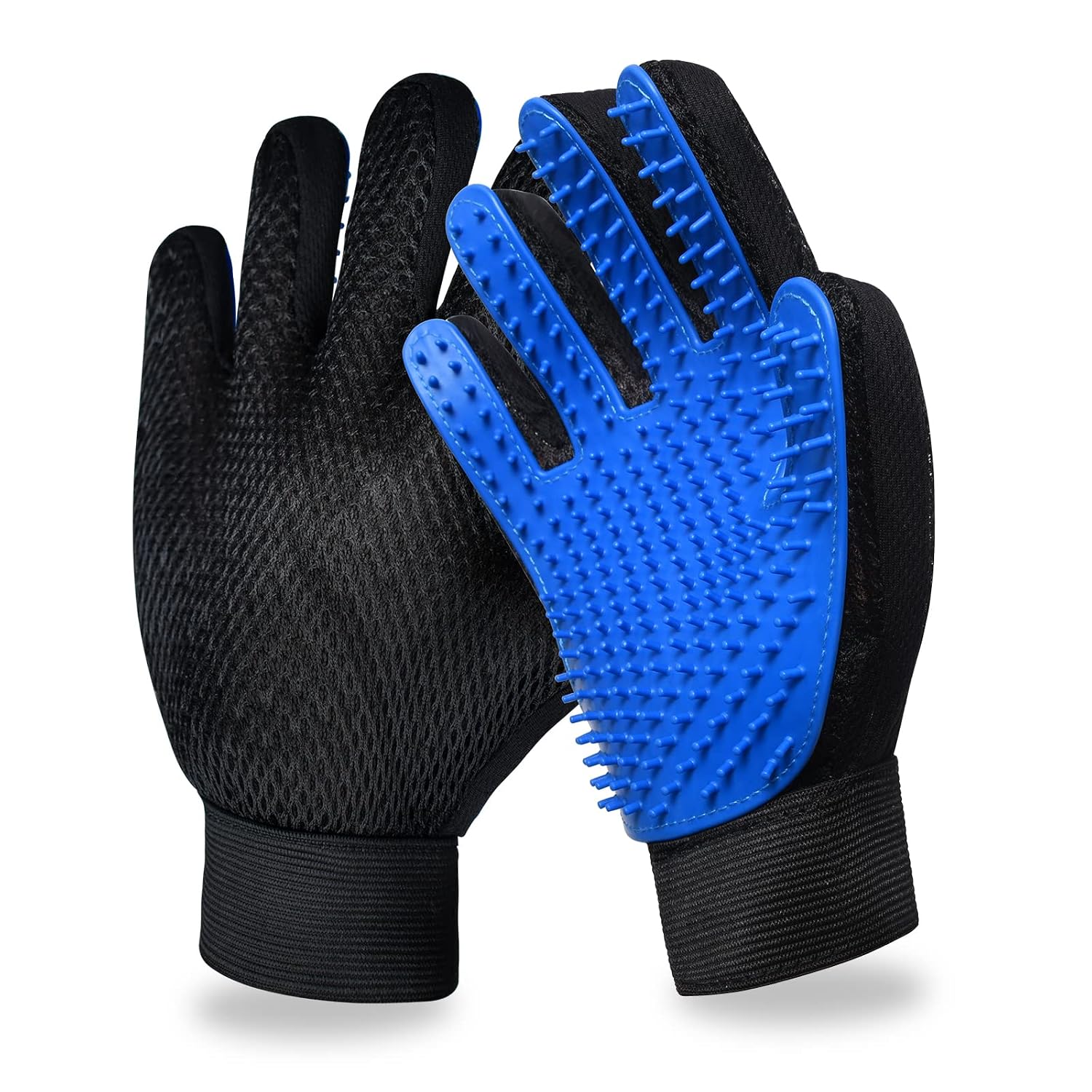
GJEASE Cat Grooming Glove Brush 2-Pack, Pet Hair Remover Tool
Two mitts in one pack, so one can dry while you use the other, and the soft rubber nubs suit cats that dislike being handled with a tool
The nubs work the surface coat, so a dense undercoat still needs something with more reach
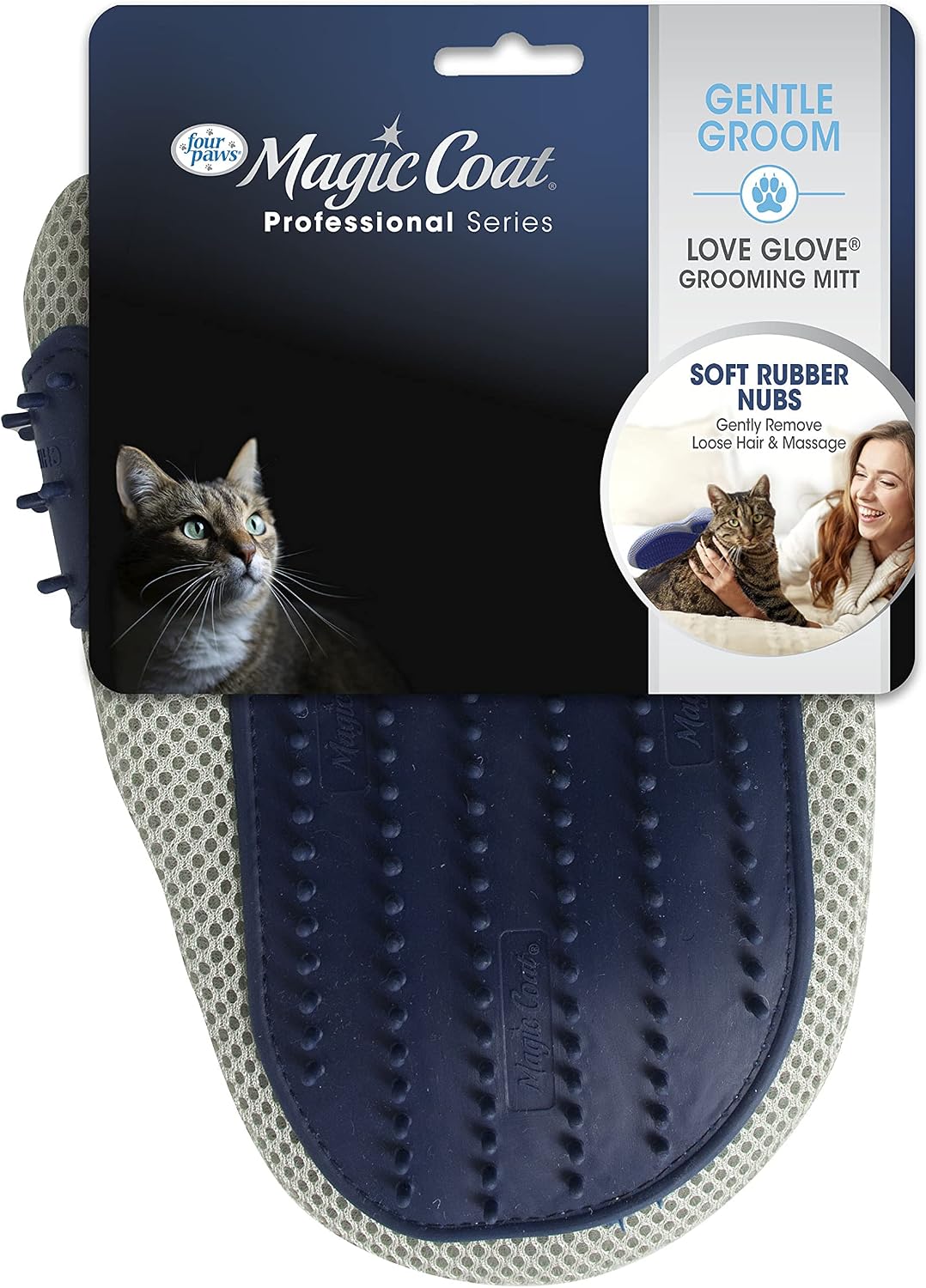
Four Paws Love Glove Cat Grooming Glove
The classic petting-glove design, and the motion reads as affection rather than grooming
A single glove means no spare while one dries, and glove fit matters more than buyers expect
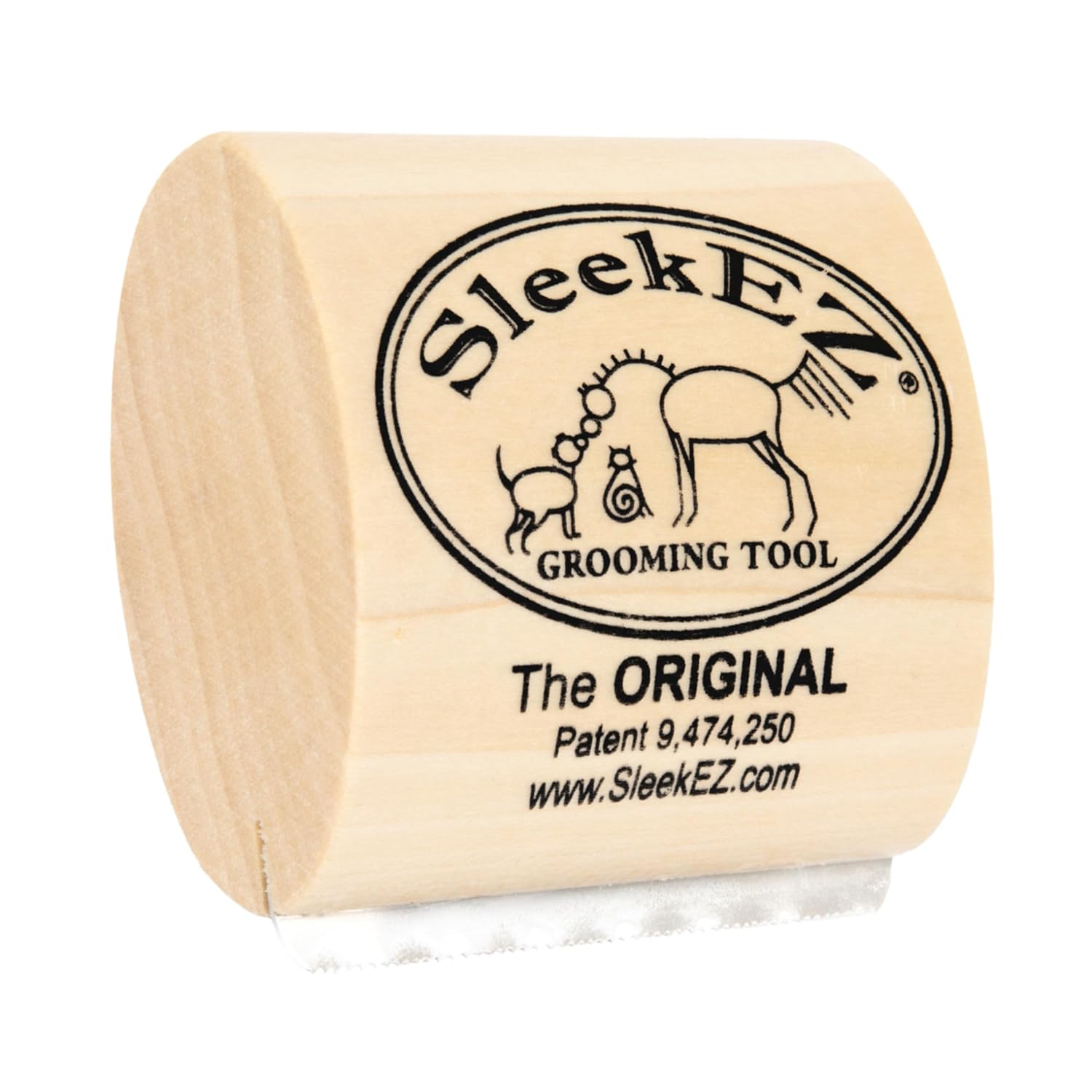
SleekEZ Cat Brush for Shedding – Deshedding Brush for Cats – Patented Grooming Tool for Removing Loose Fur, Undercoat & Hair – Made in USA – Works on Short, Medium & Long Coats
A fine deshedding edge that the maker lists for short, medium and long coats, made in the USA, and it lifts loose undercoat in visible rows
The blade-like edge rewards a light hand, and a cat that dislikes pressure will let you know right away
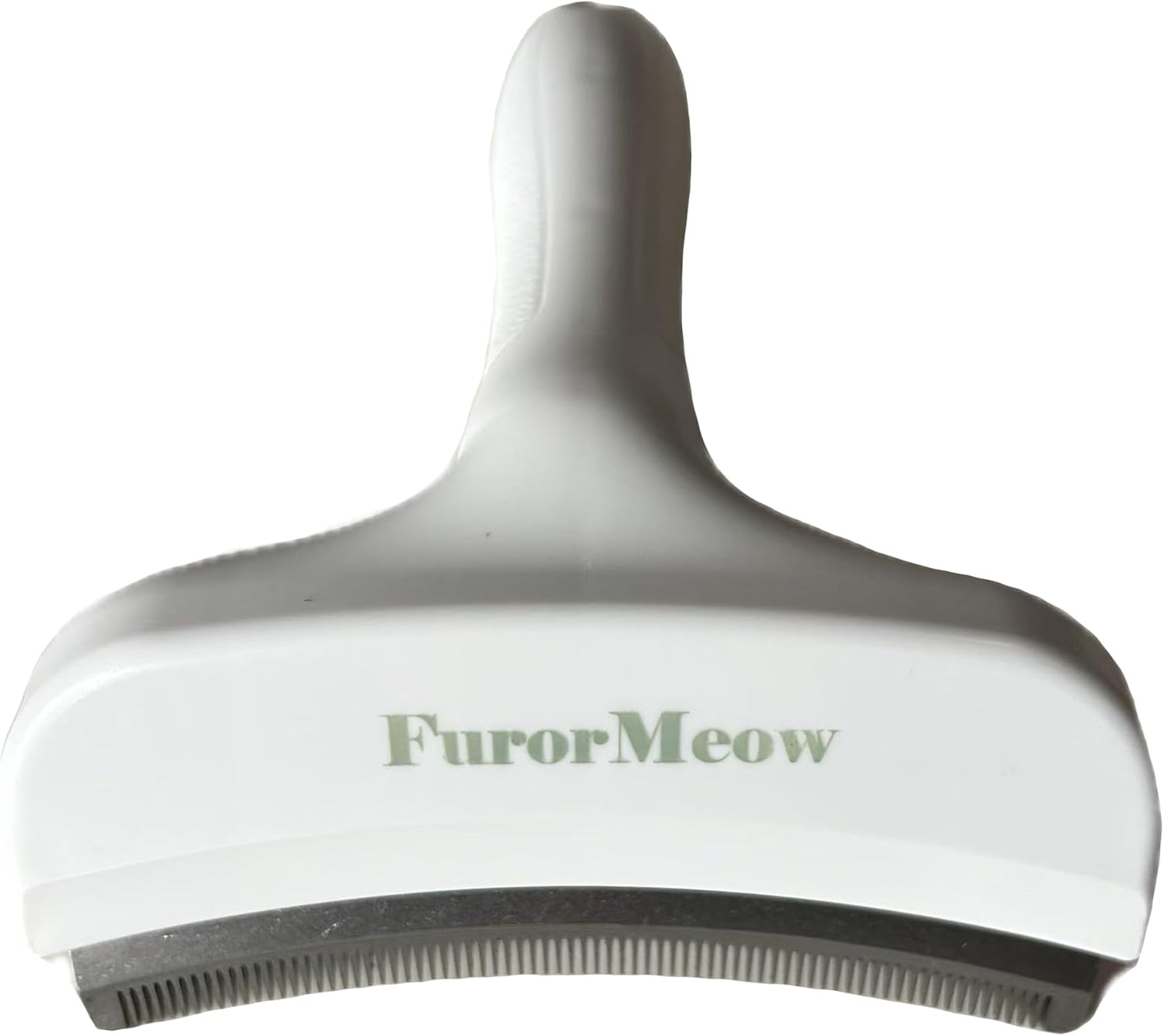
FurorMeow Pet Deshedding Tool with Curve Blade, Cat Grooming Brush, Tight V-shaped Teeth Shedding Comb for Cats and Dogs (White, Large)
Tight V-shaped teeth and a curved blade that follows the body line, in a large size that suits big cats
The tight comb spacing and large head are a poor match for a small or nervous cat
Prices and availability may change.
How to choose: cat brush vs cat grooming glove
Two questions settle most of this. First, where does the loose hair actually sit? Second, what will your cat allow you to do for more than thirty seconds?
The difference between cat brush and cat grooming glove shows up in the first two minutes of a session. A handled tool with a fine deshedding edge or a row of tight teeth parts the topcoat and drags loose undercoat out in visible lines. You can see the hair collect in the teeth, which is satisfying and also a useful signal that you are working at the right depth. A glove works closer to the surface. It lifts the hair that has already worked free and leaves the packed layer underneath where it is.
That does not make the glove the weaker tool. It makes it a different tool, and the difference matters most on cats that will not sit still. A cat that bolts at the sight of a handle will often stand for a rubber mitt because the motion reads as petting. A cat that tolerates handling will get far more hair removed in five minutes with a blade or a comb than in twenty minutes with a glove.
So the choice usually comes down to this. If your cat is dense-coated and reasonably tolerant, start with the handled tool and accept that sessions will be short. If your cat is short-coated, elderly, or simply suspicious of objects, start with the glove and treat the brush as an occasional upgrade. If you are not sure which cat you have, the glove is the lower-risk first purchase because it fails gently: the worst case is that you spend a few minutes petting your cat with a rubber mitt, which is not really a failure at all.
Cat grooming gloves: petting with a purpose
The cat grooming glove vs cat brush debate usually starts with the cat rather than the owner. Gloves exist because most cats will accept being stroked long after they have stopped accepting being groomed.
A grooming glove is a mitt with a field of soft rubber nubs on the palm and fingers. The nubs are a bristle type of sorts, but they are nothing like the wire pins on a slicker or the steel teeth on a comb. They are soft enough that pressing on a ribcage does not hurt, which is exactly why they work on cats that flinch. Dragging the mitt down the back and flanks picks up the loose hair sitting on the surface and rolls it into a grey felt that peels off in one piece.
The GJEASE Cat Grooming Glove Brush 2-Pack is the value option here, and the 2-pack matters more than it sounds. One mitt can be drying while you use the other, and if you have two cats you can keep a glove with each cat's gear instead of washing between sessions. The Four Paws Love Glove is the older, simpler version of the same idea, sold as a single glove, and it is the one people tend to describe as the original petting glove.
Glove fit is the part buyers underestimate. A mitt that is too loose twists around the hand and you end up scrubbing with the back of your fingers. One that is too tight is uncomfortable within a minute and the session ends early. Most of these gloves are one-size, so hand size decides how well the concept works for you.
Cleaning is straightforward: peel the fur off, rinse the nubs under warm water, shake, and air dry. A roller adhesive or a standard lint roller handles whatever lands on the sofa, which will be more than you expect on the first few sessions.
The honest limitation is depth. A glove will not pull a packed winter undercoat out of a dense double coat, and it will not break up a mat. It is a maintenance tool for surface hair, and it is very good at that.
Cat brushes and deshedding tools: teeth, blades, and the undercoat
Handled tools are where the real volume comes off, and the two designs here take different routes to it.
The SleekEZ Cat Brush for Shedding uses a fine deshedding edge: a strip of very close-set teeth that behaves almost like a blade. It is made in the USA, and the maker lists it as suitable for short, medium and long coats, which is unusual because most deshedding tools are tuned to one coat type. Used with a light hand, the edge skims under the topcoat and pulls out dead undercoat in neat rows. Used with a heavy hand, it scrapes, and your cat will tell you so immediately.
The FurorMeow Pet Deshedding Tool takes the other approach. It has a curved blade and tight V-shaped teeth, plus a large head that suits big cats and small dogs. The curve is meant to follow the body so the teeth stay in contact across the flank and the haunch instead of lifting away at the edges. Tight teeth remove more hair per pass, which is efficient, but tight comb spacing also means the tool can drag if the coat is tangled.
Comb spacing is the spec nobody reads and everybody feels. Wide spacing glides through a long coat and leaves more behind. Tight spacing grabs more and demands a cleaner coat underneath. On a cat with a dense short undercoat, tight teeth are the difference between a token amount of fur and a pile of it. On a long-haired cat with fine fur and a tendency to mat, tight teeth are the fastest way to make a grooming session unpleasant.
Whatever the design, technique is the same. Work in short strokes in the direction the coat grows. Let the teeth do the work rather than pressing down. Stop when the tool starts skipping or when the fur on it stops filling up, because past that point you are just scraping skin. Most cats give you about five good minutes, and five good minutes twice a week beats a twenty-minute battle once a month.
Coat length, comb spacing, and glove fit
Coat length decides more than brand loyalty ever will.
Short coats, the kind that feel like velvet and shed in tiny needles, need very little. A glove a few times a week keeps the surface clear and gives you a reason to handle your cat, and a brush every week or two handles the rest. Tight comb spacing on a short coat is fine because there is nothing to tangle.
Medium coats sit in the middle. A glove for daily contact plus a deshedding edge once or twice a week covers the seasonal blowout in spring and autumn.
Long coats are where tools earn their money. A long-haired cat carries a fine undercoat under a long topcoat, and the goal is to reach the loose fur underneath without pulling the topcoat. A fine deshedding edge does that well when the coat is already combed out. A curved blade with tight teeth does it quickly on a big cat that will sit still. Neither should ever be forced through a mat. Mats get worked out with fingers and a wide-tooth comb first, and a mat that will not budge is a job for a groomer.
Glove fit matters more on long coats, because the mitt has to slide through the fur rather than skid across the top of it. A snug fit keeps the nubs in contact with the skin side of the coat, which is where the loose hair is sitting.
Finally, coat length should set your expectations. A short-coated cat may never produce more than a palmful of fur in a session, and that is normal. A dense double coat in March can produce enough to build a second cat, and that is normal too.
What actually matters more than the label
If you are still weighing cat brush or cat grooming glove, the tool is probably not the limiting factor. Three habits matter more than the design you pick.
The first is timing. Groom a cat that has just eaten and is settling into a nap, not a cat that is wound up and looking for trouble. Most cats accept handling far better when they are already relaxed, and a session that starts well usually lasts longer.
The second is session length. Five minutes, twice a week, beats one long session that ends with everyone annoyed. Stop while your cat is still comfortable, give a treat, and put the tool away. The next session will be easier because the last one ended well.
The third is cleanup. Loose fur goes everywhere, and a roller adhesive near the chair you groom in makes the whole routine less annoying. Fur that lands on a cushion and stays there is fur you will be picking off for a week.
A few practical notes that apply to every tool here. Claws are a separate job, and if your cat will not sit for clippers, a trimmer with a nail guard is a different purchase entirely, because grooming fur and trimming nails are two different arguments to have with a cat. Skin problems are separate too. If you see scabs, bald patches, or a cat that suddenly hates being touched on one spot, stop grooming and talk to a vet. No comb fixes that.
And if you are asking the cat brush vs cat grooming glove question because your cat hates everything, buy the simplest tool in the category and spend what you saved on treats. Tolerance is built with repetition, not with equipment.
Should you buy both?
For a lot of households, yes, and the reason is that the two tools do different jobs at different moments.
The handled tool is the deep-clean option. It comes out once or twice a week, does the heavy lifting on the undercoat, and goes back in the drawer. The glove is the daily option. It lives near the sofa, comes out for two minutes when the cat climbs into your lap, and quietly keeps the surface fur under control.
There is also a practical argument for the glove that has nothing to do with hair. Running your hands over a cat every day is how you notice a new lump, a tender spot, or a change in weight before it becomes a bigger problem. A mitt gives you a reason to do that check without making it obvious.
If you are buying in order, buy the handled tool first for a dense-coated cat that tolerates handling, and the glove first for a kitten, a senior cat, or any cat that treats a brush like a threat. The GJEASE 2-pack and the Four Paws Love Glove are both inexpensive enough to test the concept before you commit to a blade. The SleekEZ brush and the FurorMeow tool are the ones to look at when you are ready to remove real volume.
The worst outcome in this category is buying a tool your cat refuses and leaving it in a drawer. Whichever you pick, the tool that gets used twice a week is worth more than the better tool that gets used never.
What we are watching next
Deshedding tools keep moving in small increments. Curved blades that follow the body are becoming more common, and manufacturers are paying more attention to comb spacing than they used to, which is a good thing, because spacing is the spec that decides whether a tool works on your cat.
On the glove side, the interesting question is grip and fit. Most mitts are still one-size, and a better fit would fix the most common complaint about them. If a glove shows up with real sizing, that will be worth testing.
For now, the practical advice does not change. Match the tool to the coat, keep sessions short, and let your cat decide how much handling it will accept. Everything else is marketing.